Which of the following separates proteins solely on the basis of their molecular size?
Which method is used to separate a mixture of lipids?
Proteins are separated on the basis of charge in ?
The most specific test to detect blood stains is:
Glycated hemoglobin (HbA1c) is best measured using?
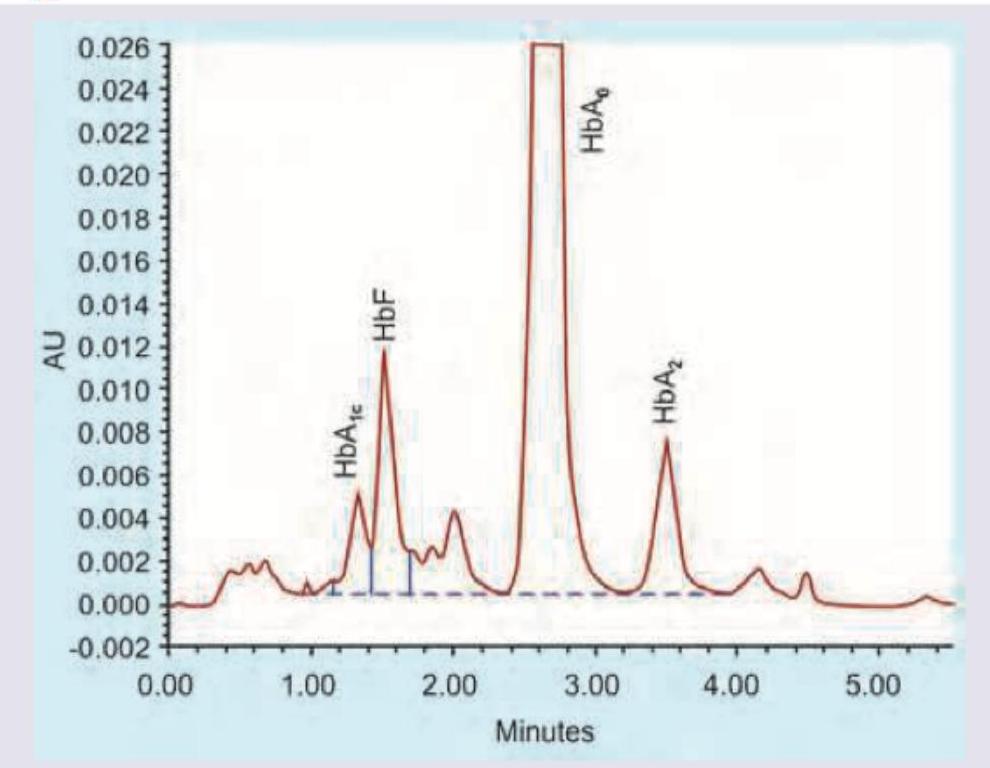
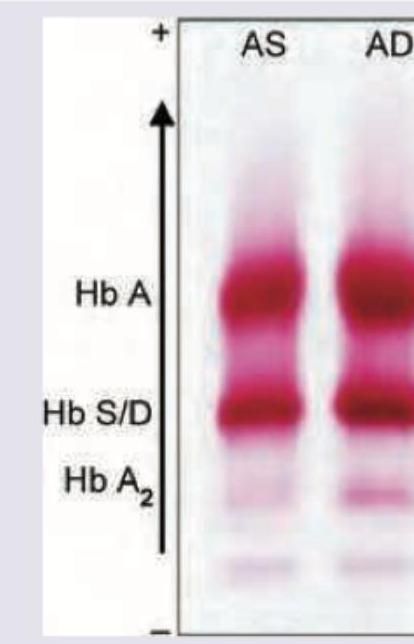
The technique shown in the image is:

Protein purification and separation can be done by all except:
Which technique is used for protein separation based on molecular size?
Expression and release of a repressed emotion is called as
Which of the following methods of protein separation is not dependent on molecular size?
Explanation: ***Gel filtration chromatography*** - Also known as **size-exclusion chromatography**, this method separates proteins based on their **hydrodynamic volume** (molecular size and shape). - Larger proteins pass through the column more quickly because they are excluded from the pores of the stationary phase, while smaller proteins enter the pores and have a longer, more tortuous path. *Isoelectric focusing* - This technique separates proteins based on their **isoelectric point (pI)**, which is the pH at which the protein has no net electrical charge. - Proteins migrate through a pH gradient until they reach the point where their net charge is zero. *Chromatography on a diethylaminoethyl (DEAE) cellulose column* - **DEAE cellulose** is an **anion-exchange resin**, meaning it binds **negatively charged** proteins. - Separation is based on the **net charge** of the protein at a given pH. *Chromatography on a carboxymethyl (CM) cellulose column* - **CM cellulose** is a **cation-exchange resin**, meaning it binds **positively charged** proteins. - Separation is based on the **net charge** of the protein at a given pH.
Explanation: ***Chromatography*** - **Chromatography** (e.g., thin-layer chromatography, gas chromatography, high-performance liquid chromatography) is widely used to separate lipids based on differences in their **polarity**, **molecular weight**, or **solubility** in various solvents. - This method allows for the isolation and identification of different lipid classes and individual lipid species from a complex mixture. *Electrophoresis* - **Electrophoresis** separates molecules based on their **charge** and **size** in an electric field, making it more commonly used for proteins and nucleic acids. - Lipids are generally **uncharged** or have very low charge, which makes them poorly suited for separation by standard electrophoretic methods without modification. *Isoelectric focusing* - **Isoelectric focusing** is a type of electrophoresis that separates molecules based on their **isoelectric point (pI)**, which is the pH at which a molecule has no net charge. - This technique is primarily used for **proteins** and **peptides**, as lipids typically lack ionizable groups necessary for establishing a distinct pI. *PAGE* - **PAGE** (Polyacrylamide Gel Electrophoresis) is a common method used to separate **proteins** and **nucleic acids** based on their size and charge. - Lipids are **hydrophobic** and do not readily migrate through an aqueous polyacrylamide gel matrix, making PAGE unsuitable for their direct separation.
Explanation: ***Ion-exchange chromatography*** - **Ion-exchange chromatography** specifically separates proteins based on their **net surface charge** at a given pH. - A charged stationary phase (cation or anion exchanger) binds to proteins with opposite charges, and proteins are eluted using a salt gradient or pH change. - Proteins with stronger charge interactions elute last, allowing separation based purely on charge differences. *Affinity chromatography* - This technique separates proteins based on **specific binding interactions** between the protein and a ligand immobilized on the stationary phase (e.g., antibody-antigen, enzyme-substrate). - It does not primarily separate based on overall charge. *Ultracentrifugation* - This method separates molecules based on their **size, shape, and density** (sedimentation rate) in a high-speed centrifuge. - It is not primarily used to separate proteins based on their charge. *SDS-PAGE* - **SDS-PAGE** (Sodium Dodecyl Sulfate-Polyacrylamide Gel Electrophoresis) separates proteins primarily based on their **molecular weight** (size). - Proteins are denatured and coated with negatively charged SDS, masking their intrinsic charge and giving them a uniform charge-to-mass ratio.
Explanation: ***Spectroscopic test*** - The **spectroscopic test** is considered the most specific for detecting blood stains because it identifies the characteristic absorption bands of **hemoglobin** and its derivatives. - This test is highly definitive due to the unique **light absorption properties** of blood components, making it less prone to false positives compared to chemical tests. *Benzidine test* - The **benzidine test** is a sensitive preliminary test for blood but is **not specific**, as it reacts with other oxidizing agents (e.g., rust, certain plant peroxidases). - It works by detecting the **peroxidase-like activity of hemoglobin**, leading to color changes but lacks confirmation of blood origin. *Teichmann's test* - **Teichmann's test** (hemin crystal test) is a moderately specific confirmatory test that produces **rhombic crystals of hemin** when heated with glacial acetic acid and a halide salt. - While more specific than presumptive tests, it can sometimes produce **false-negative results** with old or degraded bloodstains and may be less sensitive than spectroscopy. *Orthotoluidine test* - Similar to the benzidine test, the **orthotoluidine test** is another **presumptive test** that detects the peroxidase-like activity of hemoglobin, resulting in a blue-green color change. - It is **highly sensitive but not specific**, meaning it can also give positive reactions with other substances that have similar peroxidase activity, leading to potential false positives.
Explanation: ***Ion exchange chromatography*** - This method separates hemoglobin variants based on their **charge differences** due to the glucose molecule attached to HbA1c. - It is a highly sensitive and specific method for quantifying HbA1c, widely used in clinical laboratories. *Isoelectric focusing* - This technique separates molecules based on their **isoelectric point (pI)**, the pH at which they have no net charge. - While it can differentiate some hemoglobin variants, it is generally **less efficient and more complex** for routine HbA1c measurement compared to ion exchange chromatography. *Affinity chromatography* - This method separates molecules based on their **specific binding affinity** to a ligand immobilized on a stationary phase. - While it has been explored for HbA1c measurement, it is **not the most commonly used** or preferred method due to potential interferences and cost compared to ion exchange chromatography. *Electrophoresis* - This technique separates molecules based on their **charge and size** in an electric field. - While it can separate major hemoglobin variants, it has **lower resolution and accuracy** for routine HbA1c quantification compared to more specialized chromatographic methods, making it less ideal for precise measurement.
Explanation: ***High performance liquid chromatography*** - The image displays a **chromatogram** with distinct peaks labeled HbA1c, HbF, HbA0, and HbA2, separated based on their chemical properties. - This separation and detection method is characteristic of **High Performance Liquid Chromatography (HPLC)**, a technique used for quantifying different hemoglobin fractions. *Tandem mass spectrometry* - **Tandem mass spectrometry (MS/MS)** identifies compounds based on their mass-to-charge ratio and fragmentation patterns, which would look like mass spectra, not peaks on a time-based chromatogram. - While MS/MS is highly sensitive and specific, it doesn't produce the type of **elution profile** seen in the image. *Haemoglobin electrophoresis* - **Hemoglobin electrophoresis** separates hemoglobins based on their electrical charge, resulting in bands on a gel or a densitometric scan, not the **distinct chromatogram peaks** shown here. - While used for hemoglobin analysis, the visual representation is typically different, often displaying bands that reflect migration distance. *Gel electrophoresis* - **Gel electrophoresis** separates molecules, such as proteins or nucleic acids, by size and charge through a gel matrix, producing distinct **bands** that can be visualized. - This method would not produce the continuous **elution peaks over time** as observed in the provided graph, which indicates a liquid chromatography technique.
Explanation: ***Correct: Densitometry*** - **Densitometry** is a quantification technique used to measure the optical density or darkness of a material - It quantifies the amount of protein in a gel or blot **after separation has already occurred** by other methods - It does **not separate or purify** proteins; it only measures and quantifies them - Used for analyzing results from electrophoresis, Western blots, and similar techniques *Incorrect: Electrophoresis* - Separates proteins based on **charge, size, or shape** when subjected to an electric field through a matrix - Common techniques include SDS-PAGE (by molecular weight), IEF (by isoelectric point), and native PAGE - Routinely used for both analytical separation and preparative purification of proteins *Incorrect: Centrifugation* - Separates proteins based on **molecular weight, shape, and density** using centrifugal forces - Used for initial clarification of cell lysates, separating organelles, and concentrating proteins - Differential and density gradient centrifugation are key purification techniques *Incorrect: Chromatography* - Encompasses multiple techniques: **ion-exchange** (charge), **size exclusion** (molecular weight), **affinity** (specific binding), and **hydrophobic interaction** chromatography - Highly effective for both analytical separation and purification of proteins to high purity - Gold standard for protein purification in biochemistry laboratories
Explanation: ***Gel filtration chromatography*** - Also known as **size-exclusion chromatography**, this method separates proteins by passing them through a porous matrix. **Larger proteins** elute first as they cannot enter the pores, while smaller proteins get trapped and elute later. - This technique effectively separates proteins based solely on their **hydrodynamic radius**, which is closely related to their molecular size. *Affinity chromatography* - This method separates proteins based on their **specific binding affinity** to a ligand immobilized on a stationary phase, not molecular size. - It is used for purifying proteins that bind to a specific molecule, such as an antibody or substrate. *HPLC* - **High-performance liquid chromatography** is a general technique that can use various separation mechanisms (e.g., reverse-phase, ion-exchange, size-exclusion) under high pressure. - While it *can* be used for size-exclusion, HPLC itself describes the *method* of chromatographic performance rather than a specific separation principle based on molecular size alone. *Salting out* - This technique separates proteins based on their **solubility** in high salt concentrations. - As salt concentration increases, the proteins lose their hydration shells and precipitate out of solution, with different proteins precipitating at different salt concentrations.
Explanation: **Abreaction** - This term refers to the **expression and release of a repressed emotion**, often in a therapeutic context, providing psychological relief. - It involves re-experiencing a traumatic event or repressed emotions to alleviate their negative impact. - Also known as **catharsis** in psychoanalytic therapy. *Dissociation* - **Dissociation** involves a disruption in the normal integration of consciousness, memory, identity, emotion, perception, body representation, motor control, and behavior. - It describes a mental process that causes a lack of connection in a person's thoughts, memories, feelings, actions, or sense of identity, rather than an active release of emotion. *Confabulation* - **Confabulation** is the creation of false memories in the absence of an intention to deceive. - It is often seen in individuals with specific neurological or psychiatric conditions, where they unconsciously fill in gaps in their memory with fabricated details. *Regression* - **Regression** is a defense mechanism in which an individual faced with anxiety or stress retreats to an earlier developmental stage. - It involves reverting to immature patterns of behavior, rather than the release of a specific, repressed emotion.
Explanation: ***Ion-exchange chromatography*** - This method separates proteins based on their **net charge** at a specific pH. - Proteins bind to a charged resin based on their charge, independent of their size. *Gel filtration chromatography* - Separates proteins based on their **molecular size** and shape as they pass through a porous matrix. - **Larger molecules** elute first as they cannot enter the pores, while smaller molecules are retained. *SDS-PAGE* - **Sodium Dodecyl Sulfate Polyacrylamide Gel Electrophoresis** separates proteins primarily based on their **molecular weight**. - SDS denatures proteins and confers a uniform negative charge, allowing migration through a gel matrix based on size. *Ultracentrifugation* - Separates macromolecules and particles based on their **sedimentation rate**, which is influenced by **molecular mass**, density, and shape. - While molecular size is a factor, density and shape also play significant roles in the separation process.
Get full access to all questions, explanations, and performance tracking.
Start For Free