Which of the following drugs is contraindicated in a patient with myasthenia gravis?
What is true about Ringer's Lactate?
Which patient has the least risk of pulmonary aspiration of gastric contents during induction of anesthesia?
A patient scheduled for elective hip surgery is currently taking aspirin, enalapril, a multivitamin, and metoprolol. The surgery is planned in 5 days. What is the appropriate perioperative management for this patient?
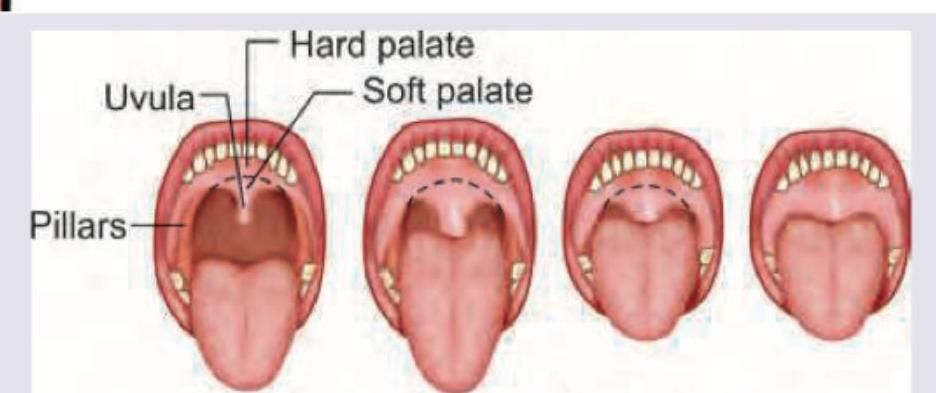
Which of the following is the use of the Mallampatti classification?
What is this classification used for?
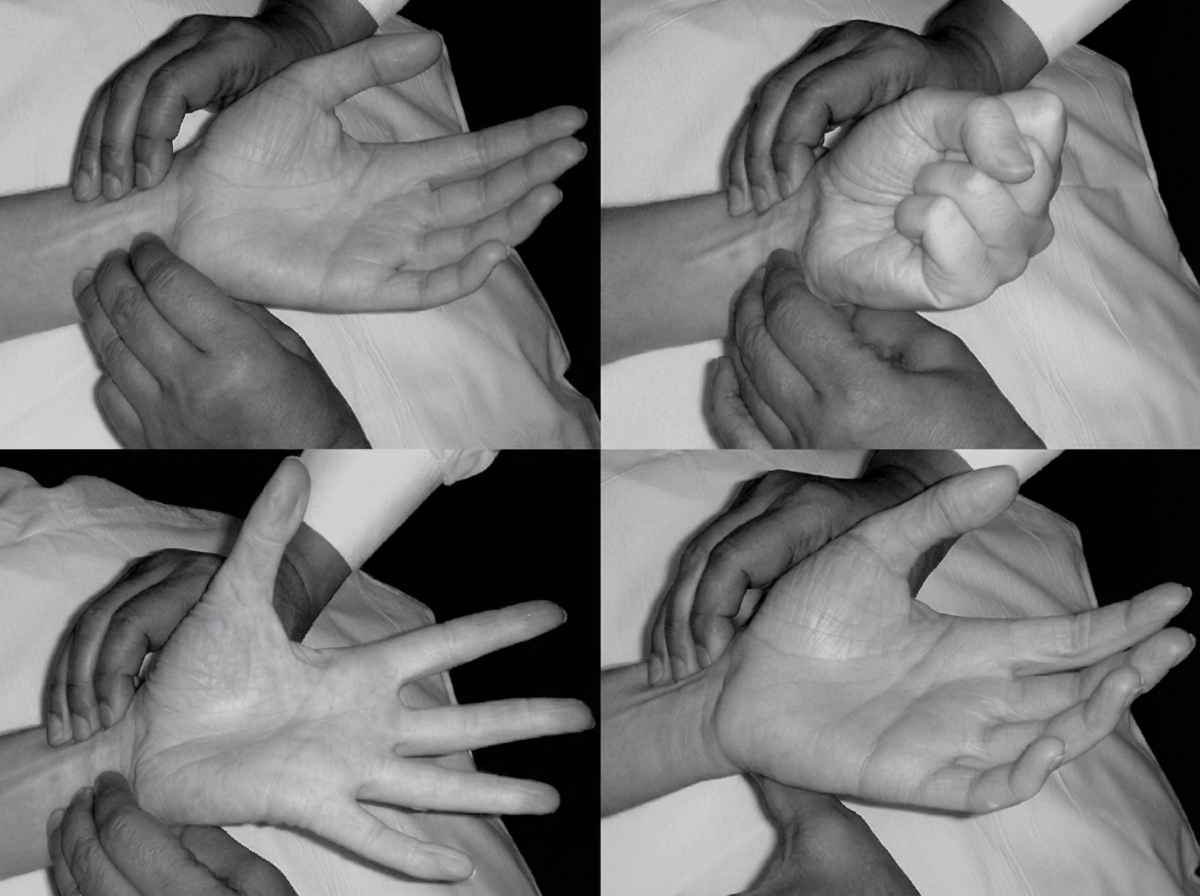
Identify the test performed in the image:
A 56-year-old female has been diagnosed with gallstones and is undergoing a preanaesthesia checkup. She has been a diabetic since last 15 years, but sugar levels are within the limits. Which category of physical status does she fit into?
Perioperative benefit from transfusion is with a haemoglobin level of
Preoperative Samsoon and Young modified, Mallampati test is used for assessing:
Explanation: **Explanation:** The primary pathology in **Myasthenia Gravis (MG)** is the autoimmune destruction of postsynaptic nicotinic acetylcholine receptors (nAChR) at the neuromuscular junction. This leads to a significant reduction in available receptors. **Why Tubocurare is the Correct Answer:** Patients with MG are **exquisitely sensitive** to **Non-Depolarizing Neuromuscular Blocking Agents (NDNMBAs)** like Tubocurare, Vecuronium, or Atracurium. Because they have fewer functional receptors, even a small dose of a competitive antagonist can cause profound, prolonged, and potentially irreversible respiratory paralysis. Therefore, these drugs are generally contraindicated or must be used in drastically reduced doses (1/10th of the normal dose) with extreme caution. **Analysis of Incorrect Options:** * **A. Succinylcholine:** While patients with MG are often **resistant** to Succinylcholine (requiring higher doses to achieve blockade), it is not strictly contraindicated. However, its use is generally avoided if possible due to unpredictable responses. * **C. Pyridostigmine:** This is an acetylcholinesterase inhibitor and is the **first-line treatment** for MG. It increases the availability of acetylcholine at the synapse to improve muscle strength. * **D. Halothane:** While volatile anesthetics can have some muscle relaxant properties, they are not contraindicated and are often used as part of a "gas induction" technique to avoid the need for NMBAs entirely. **High-Yield Clinical Pearls for NEET-PG:** * **Sensitivity Rule:** MG patients are **Sensitive** to Non-depolarizers (NDNMBAs) but **Resistant** to Depolarizers (Succinylcholine). * **Eaton-Lambert Syndrome:** Unlike MG, these patients are **sensitive to both** depolarizers and non-depolarizers. * **Postoperative Care:** The most critical concern in MG patients post-surgery is **respiratory failure**; many require postoperative mechanical ventilation (Osserman criteria).
Explanation: **Explanation:** Ringer’s Lactate (RL) is a balanced salt solution and the most commonly used **isotonic crystalloid** in perioperative care. It is considered isotonic because its osmolarity (approx. 273 mOsm/L) is close to that of human plasma (285–295 mOsm/L), ensuring minimal fluid shifts between intracellular and extracellular compartments. **Analysis of Options:** * **A (Correct):** RL is an **isotonic crystalloid**. While slightly hypotonic compared to plasma, it is clinically classified as isotonic and is the fluid of choice for major surgery and trauma. * **B (Incorrect):** RL is a **crystalloid**, containing low-molecular-weight salts that freely cross the capillary membrane. Colloids (e.g., Albumin, Hetastarch) contain large molecules that remain in the intravascular space. * **C (Incorrect):** The potassium concentration in RL is **4 mEq/L**, whereas the normal range for serum potassium is **3.5–5.5 mEq/L**. While similar, it is not "the same," and RL should be used cautiously in patients with renal failure or hyperkalemia. * **D (Incorrect):** RL helps in acidosis not by direct neutralization, but through **metabolic conversion**. The sodium lactate in RL is metabolized by the **liver** into bicarbonate, which then buffers the acidosis. **High-Yield NEET-PG Pearls:** * **Composition:** Na⁺ (130), Cl⁻ (109), K⁺ (4), Ca²⁺ (3), and Lactate (28) mEq/L. * **Hartmann’s Solution:** Another name for Ringer’s Lactate. * **Contraindication:** Do not co-administer with **blood transfusions** in the same IV line; the calcium in RL can bind with the citrate anticoagulant in blood bags, leading to clot formation. * **Fluid of Choice:** For replacement of extracellular fluid losses, burns, and intraoperative maintenance.
Explanation: ### Explanation The risk of pulmonary aspiration depends on gastric volume and pH (Mendelson’s Syndrome: volume >0.4 mL/kg and pH <2.5). The primary strategy to mitigate this risk is adhering to the **ASA NPO guidelines**. **1. Why Option A is Correct:** While obesity is a known risk factor for increased intra-abdominal pressure and potentially higher residual gastric volume, a patient who has been **NPO for 8 hours** (exceeding the 6-hour requirement for solids) has allowed sufficient time for physiological gastric emptying. Among the given choices, this patient most closely follows standard elective fasting protocols, making their risk the "least" relative to the others. **2. Why the Other Options are Incorrect:** * **Option B:** While clear liquids (like black coffee) require only a 2-hour fast, coffee with milk/cream is treated as a light meal (6 hours). Without specification, any oral intake just 4 hours prior in a non-standardized setting is considered higher risk than an 8-hour fast. * **Option C:** Pregnant patients are always considered to have a **"full stomach"** regardless of fasting duration. This is due to progesterone-induced relaxation of the lower esophageal sphincter (LES) and mechanical displacement of the stomach by the gravid uterus. * **Option D:** A full meal requires a minimum of **8 hours** to clear. 4 hours is insufficient, leaving a high residual volume of solids and acid. **Clinical Pearls for NEET-PG:** * **ASA NPO Guidelines:** Clear liquids (2h), Breast milk (4h), Infant formula/Light meal (6h), Fatty/Fried/Meat (8h). * **Mendelson’s Syndrome:** Chemical pneumonitis caused by aspiration of gastric contents. * **High-Risk Groups:** Diabetics (gastroparesis), Pregnant women (after 12-14 weeks), Patients with GERD, Hiatal hernia, or Bowel obstruction. * **Prophylaxis:** Metoclopramide (prokinetic), H2 blockers (Ranitidine), or non-particulate antacids (Sodium Citrate).
Explanation: ***Correct: Stop enalapril*** - **ACE inhibitors (enalapril) should be discontinued 24-48 hours before elective surgery** - Risk of **refractory intraoperative hypotension** during anesthesia induction, particularly with vasodilatory anesthetics - Associated with increased perioperative complications including hypotension requiring vasopressor support - Can be safely restarted postoperatively once hemodynamic stability is achieved *Incorrect: Stop aspirin to minimize perioperative bleeding risk* - **Aspirin should generally be continued** in patients with cardiovascular indications (CAD, stroke prevention) - Current guidelines recommend continuation for most surgeries except those with very high bleeding risk (neurosurgery, posterior chamber eye surgery) - **Hip surgery is NOT a contraindication** to aspirin continuation - The cardiovascular risk of stopping aspirin outweighs bleeding risk in most cases *Incorrect: Stop metoprolol to increase cardiac output* - **Beta-blockers should be continued perioperatively** in patients already taking them - Abrupt withdrawal increases risk of **rebound hypertension, tachycardia, myocardial ischemia, and MI** - Stopping beta-blockers can precipitate life-threatening cardiovascular events - Should be given on the morning of surgery with a sip of water *Incorrect: Increase aspirin dosage for additional analgesic benefit* - No indication to increase aspirin dose perioperatively - Aspirin is not used as a primary analgesic in surgical settings - Increasing dose would unnecessarily increase bleeding risk without therapeutic benefit
Explanation: ***Correct Option C: Endotracheal intubation*** - The Mallampati classification assesses the visibility of the soft palate, uvula, and tonsillar pillars, which directly correlates with the ease of achieving a satisfactory view during **direct laryngoscopy** - It is a critical component of the **pre-anesthetic airway assessment** used alongside thyromental distance and mouth opening to predict difficult airway management and guide intubation strategy - Classes I-IV predict increasing difficulty in intubation, with Class III-IV indicating potentially difficult airways *Incorrect Option A: To evaluate the fitness of the patient* - Patient fitness evaluation involves holistic assessment of **cardiopulmonary reserve** and functional capacity, ensuring the patient can safely tolerate the physiological stress of surgery and anesthesia - Fitness relies on optimizing chronic medical conditions and functional capacity, not just anatomical classification of the airway opening *Incorrect Option B: To evaluate the pros and cons of surgery* - This evaluation is a clinical and ethical judgment based on the patient's **disease severity**, anticipated benefits, potential complications, and mortality associated with the procedure - The Mallampati score does not directly contribute to weighing the overall risk-benefit ratio of the surgical procedure itself *Incorrect Option D: To evaluate the risk of surgery* - Surgical risk is determined using tools like the **ASA physical status classification** (P1-P6), comorbidities, and type of surgery - While a predicted difficult airway (Mallampati class III or IV) increases the **anesthesia-related risk**, it does not comprehensively define the overall surgical risk profile
Explanation: ***Grading for difficulty/ease of inserting ETT*** - The image displays the **Mallampati classification**, which visually assesses the size of the **tongue relative to the oral cavity**. - This classification helps predict the **ease or difficulty of intubation** by estimating the space available for direct laryngoscopy. *Grading of temporomandibular arthritis* - **Temporomandibular arthritis** involves inflammation of the **jaw joint** and is diagnosed based on symptoms like jaw pain, clicking, and limited movement, as well as imaging. - The image shows anatomical structures of the oral cavity (uvula, soft palate, hard palate, pillars, and tongue body), not related to direct assessment of the TMJ. *Grading of trismus* - **Trismus** refers to **restricted mouth opening** and is typically measured by the interincisal distance (distance between upper and lower teeth when mouth is open). - This classification assesses the visibility of pharyngeal structures, not the degree of mouth opening. *Grading of giant cell arteritis* - **Giant cell arteritis** is a **vasculitis** affecting large and medium-sized arteries, particularly those of the head and neck. - Diagnosis involves clinical symptoms, **biopsy of the temporal artery**, and laboratory findings; it is unrelated to the anatomical features shown for airway assessment.
Explanation: ***Allen's Test*** - The image demonstrates **Allen's test**, performed to assess the patency of the **radial and ulnar arteries** and adequacy of collateral circulation to the hand before radial artery cannulation or harvest. - The examiner compresses **both radial and ulnar arteries** at the wrist; the patient clenches the fist to blanch the hand. The **ulnar artery is then released** — colour return within **< 7 seconds** indicates adequate ulnar collateral circulation (normal/negative test). - This is a mandatory preoperative check before **radial artery catheterisation** or use of the radial artery as a coronary artery bypass graft conduit. *Adson's Test* - Performed for **thoracic outlet syndrome** — the patient extends the neck, rotates the head toward the affected side, and takes a deep breath; obliteration of the **radial pulse** indicates subclavian artery compression. Does NOT involve bilateral wrist artery compression. *Phalen's Test* - Performed for **carpal tunnel syndrome** — maximum **wrist flexion** held for 60 seconds reproduces paraesthesia in the median nerve distribution. Involves wrist posture, not arterial compression. *Finkelstein's Test* - Performed for **De Quervain's tenosynovitis** — the patient folds the thumb into the palm, closes the fingers over it, and deviates the wrist ulnarly; pain over the radial styloid is a positive test. Involves tendons, not vasculature.
Explanation: ***ASA 2*** - The patient has **well-controlled diabetes**, which is considered a mild systemic disease. - An ASA 2 patient has mild systemic disease that does not significantly limit activity. *ASA 1* - This category is for a **healthy person** with no systemic disease. - The patient's diabetes, even if controlled, precludes her from being classified as ASA 1. *ASA 4* - This category indicates a patient with **severe systemic disease** that is a constant threat to life. - Well-controlled diabetes does not pose an immediate threat to life. *ASA 3* - This category is for a patient with **severe systemic disease** that limits activity but is not incapacitating. - Well-controlled diabetes is generally considered a mild, not severe, systemic disease in the absence of complications.
Explanation: **6 - 8 gm/dl** - Transfusions are generally recommended for **symptomatic anemia** or when the hemoglobin level falls below **7 g/dL** in most patients. - For patients undergoing surgery, a hemoglobin range of **6-8 gm/dl** often indicates a need for transfusion to optimize oxygen delivery and prevent complications. *8 - 10 gm/dl* - Hemoglobin levels in this range are often considered stable enough for many patients, and transfusion may not be necessary unless there are specific **cardiovascular risks** or **acute bleeding**. - Routine transfusion for non-symptomatic patients with hemoglobin in this range has not shown significant perioperative benefit and can expose patients to transfusion risks. *< 6 gm/dl* - A hemoglobin level below **6 gm/dl** typically indicates **severe anemia** and almost always warrants transfusion regardless of surgical context due to the high risk of **tissue hypoxia** and organ dysfunction. - While transfusion is definitely beneficial in this range, the question asks about the range where benefit *commences* for perioperative settings, which typically falls slightly higher to prevent severe drops. *> 10 gm/dl* - A hemoglobin level **above 10 gm/dl** is generally considered good and does not usually require transfusion, even in the perioperative setting. - Transfusing patients with hemoglobin levels above this threshold is associated with **no significant clinical benefit** and increases the risk of transfusion-related adverse events.
Explanation: ***Difficulty in intubation*** - The **Mallampati test** classifies the visibility of pharyngeal structures, which directly correlates with the **likelihood of difficult intubation**. - A higher Mallampati score (e.g., Class III or IV) indicates **less visibility of the soft palate, uvula, and fauces**, suggesting potential challenges during airway management. *Preoperative nutrition status of patient* - Preoperative nutritional status is assessed using methods like **albumin levels, BMI, and nutritional risk screening tools**, not the Mallampati score. - While patient health influences surgery, the Mallampati test is specifically for **airway anatomy**. *Patient's overall fitness for surgery* - Overall fitness for surgery involves a comprehensive assessment of **cardiac, pulmonary, renal, and metabolic health**, often using tools like the ASA physical status classification. - The Mallampati test focuses solely on **airway assessment** and does not provide a global measure of surgical fitness. *Blood requirement during surgery* - Blood requirements during surgery are estimated based on the **type of surgery, anticipated blood loss, patient's hemoglobin levels, and coagulation status**, not the Mallampati test. - The Mallampati test is entirely unrelated to **hemostasis or transfusion needs**.
Preoperative Assessment Framework
Practice Questions
ASA Physical Status Classification
Practice Questions
Preoperative Laboratory Testing
Practice Questions
Cardiovascular Evaluation
Practice Questions
Pulmonary Evaluation
Practice Questions
Assessment of the Difficult Airway
Practice Questions
Medication Management
Practice Questions
NPO Guidelines
Practice Questions
Perioperative Anticoagulation Management
Practice Questions
Premedication
Practice Questions
Informed Consent
Practice Questions
Risk Stratification
Practice Questions
Get full access to all questions, explanations, and performance tracking.
Start For Free