
Management of Local Anesthetic Systemic Toxicity — MCQs

First step in management of raised intracranial pressure-
Which of the following anesthetic agents causes the LEAST severe complications when accidentally injected intra-arterially?
Intravenous anesthetic agent of choice for this procedure is?
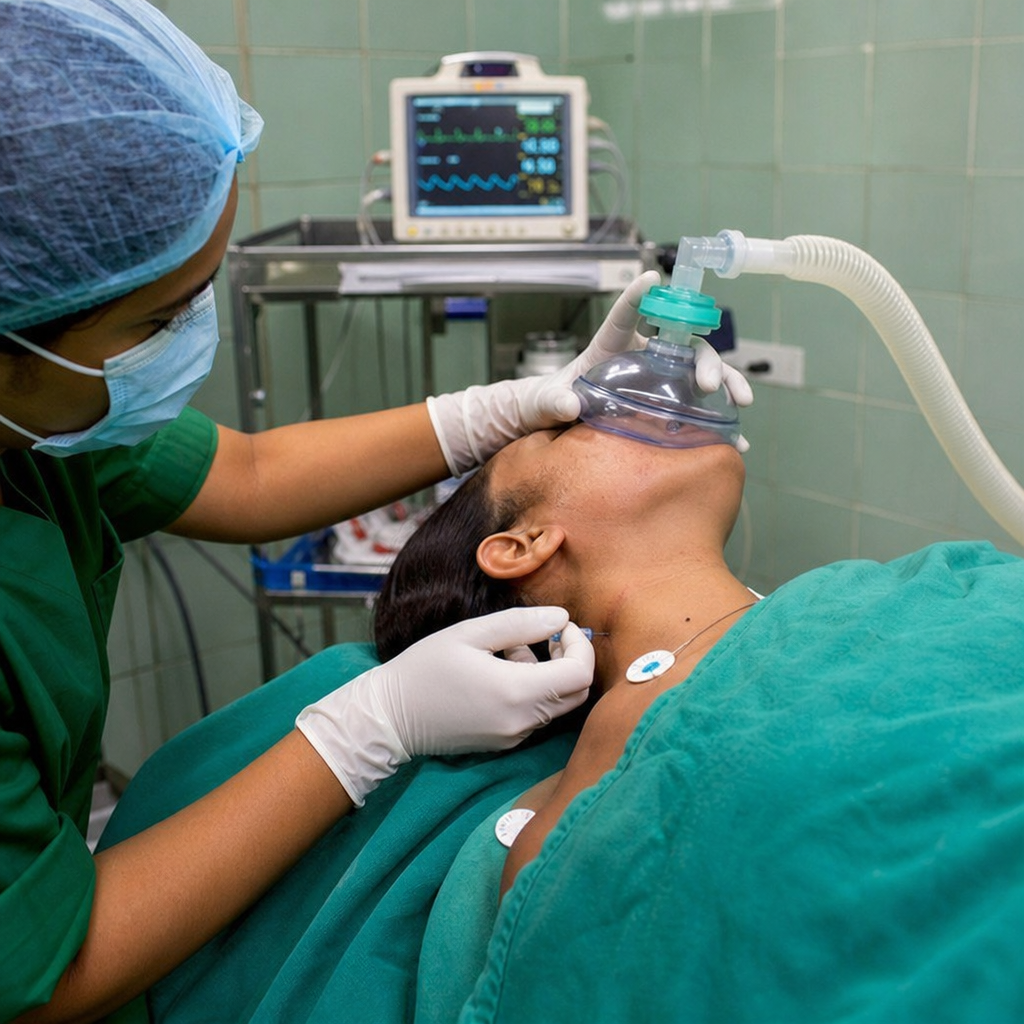
A child during anesthesia with halothane and succinylcholine develops severe stiffness of masseters. What is the most probable diagnosis?
Anesthetic agents causing bradycardia are all except:
Problems which may result from hypotensive anesthesia include:
What is the effect of adding epinephrine to lignocaine (a local anesthetic)?
A young male was administered regional anesthesia with 0.25% bupivacaine. The patient became unresponsive, and the pulse became unrecordable. What is the best management in this situation?
A 25 year old male with roadside accident underwent debridement and reduction of fractured both bones right forearm under axillary block. On the second postoperative day the patient complained of persistent numbness and paresthesia in the right forearm and the hand. The commonest cause of this neurological dysfunction could be all of the following except –
A patient selected for surgery was induced with Thiopentone iv through one of the antecubital veins and complained of severe pain of the whole hand. The next line of management is:
Want unlimited practice?
Get full access to all questions, explanations, and performance tracking.
Scan to download app