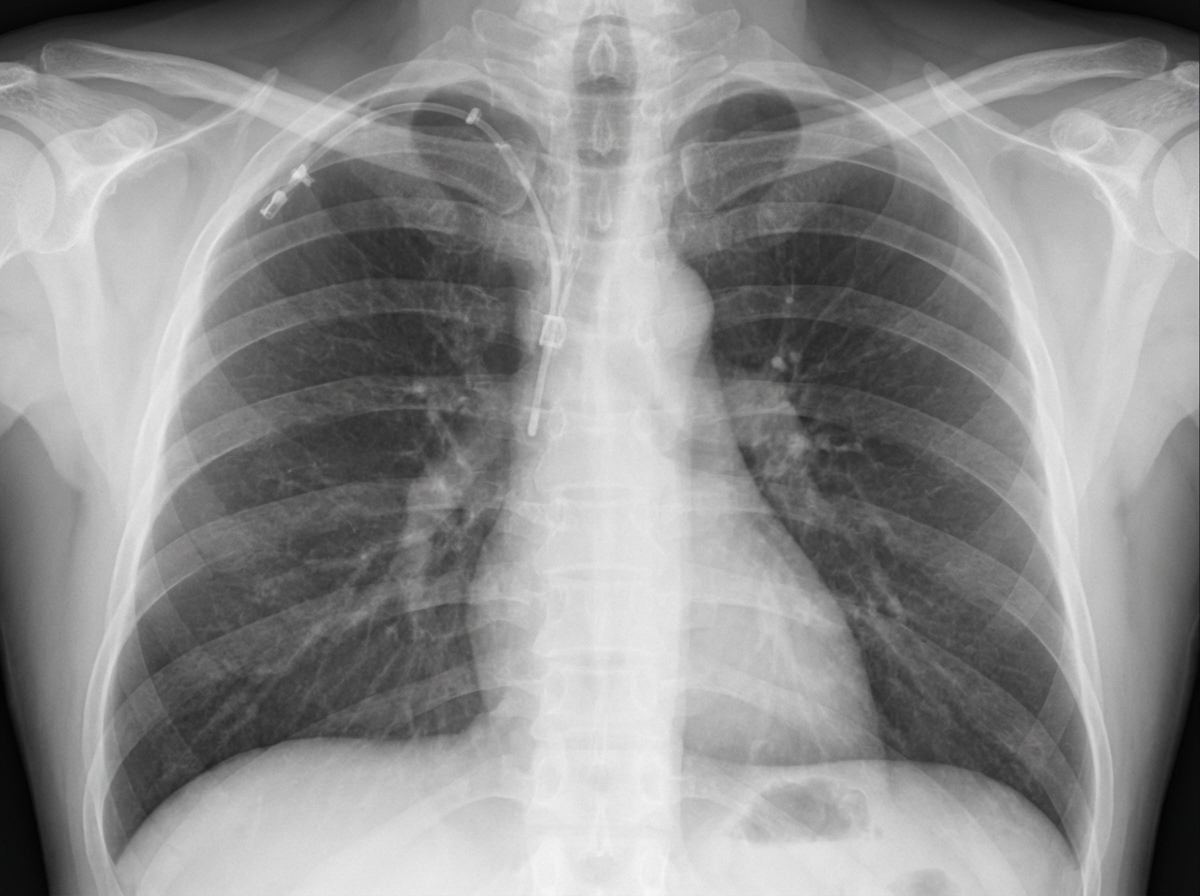
Which of the following is measured by the Bellows spirometer?
Which lung volume cannot be measured by spirometry?
Which of the following parameters indicates the elimination of CO2 from the lungs?
Patient of pneumonia on ventilator with wt. 50 kg. RR 14/min, bicarbonate - 18, pH 7.3, pCO2 48 mmHg, pO2 110 mmHg, PEEP 12 cm H2O, tidal volume 420 mL, SpO2 - 100% with FiO2 90%. What is next step in management?
Risk of adverse effects of SCOLINE is greater in
Which of the following is markedly decreased in restrictive lung disease?
Which of the following is not a risk factor for postoperative pulmonary complication?
In which of the following conditions is Positive end-expiratory pressure (PEEP) beneficial?
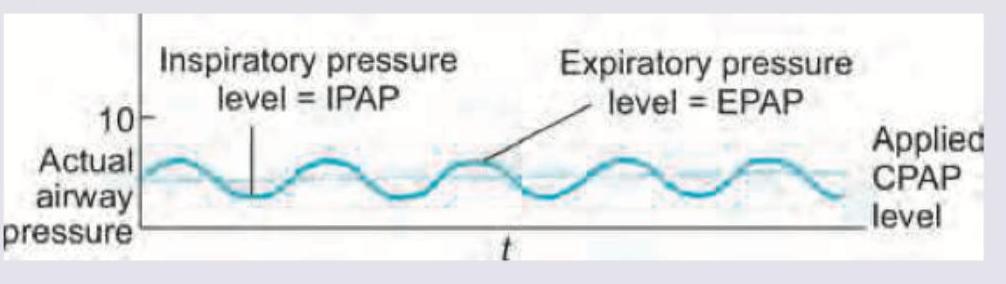
The following ventilation modality is used in:
Which of the following parameters is most critical for maintaining optimal oxygenation?
Explanation: ***ERV*** - The **Bellow's spirometer**, like other spirometers, measures **expiratory reserve volume (ERV)** directly. - Spirometry measures volumes that can be exhaled or inhaled, but not those that remain in the lungs after complete exhalation. *TLC* - **Total lung capacity (TLC)** cannot be measured directly by a spirometer because it includes the **residual volume (RV)**. - TLC is typically calculated using techniques like **helium dilution** or **body plethysmography**. *RV* - **Residual volume (RV)** is the volume of air remaining in the lungs after a maximal exhalation and cannot be expelled. - Since RV cannot be exhaled, it cannot be measured directly by a spirometer; it requires indirect methods. *Closing volume* - **Closing volume** is the lung volume at which small airways begin to close during exhalation. - It is measured using **specialized techniques** involving tracer gases, not standard spirometry.
Explanation: ***RV (Residual Volume)*** - **Residual volume (RV)** is the volume of air remaining in the lungs after a maximal exhalation and cannot be expelled. - Since it cannot be exhaled, it cannot be directly measured by a spirometer, which relies on the movement of air in and out of the lungs. *TV (Tidal Volume)* - **Tidal volume (TV)** is the volume of air inspired or expired with a normal breath. - It is easily measured by a spirometer during normal breathing. *IRV (Inspiratory Reserve Volume)* - **Inspiratory reserve volume (IRV)** is the additional volume of air that can be forcibly inhaled after a normal inspiration. - This volume can be measured by spirometry as it represents a change in lung air volume achievable by the patient. *ERV (Expiratory Reserve Volume)* - **Expiratory reserve volume (ERV)** is the additional volume of air that can be forcibly exhaled after a normal expiration. - This volume can be directly measured by a spirometer during a forced exhalation.
Explanation: ***PaCO2*** - **Partial pressure of carbon dioxide in arterial blood (PaCO2)** directly reflects the efficiency of **alveolar ventilation**, which is the process of eliminating CO2 from the lungs. - When CO2 elimination is adequate, PaCO2 remains within the normal range (35-45 mmHg); higher or lower values indicate ventilatory impairment or hyperventilation, respectively. *PaO2* - **PaO2** measures the partial pressure of **oxygen in arterial blood** and indicates oxygenation, not the efficiency of carbon dioxide elimination. - While CO2 elimination and oxygenation are interdependent, **PaO2** primarily reflects how well oxygen is being transported from the lungs to the blood. *pH* - **pH** indicates the **acidity or alkalinity of the blood**, which is influenced by both respiratory (CO2) and metabolic (bicarbonate) components. - Although CO2 elimination affects pH through the carbonic acid-bicarbonate buffer system, pH itself is an overall measure of acid-base balance, not a direct indicator of CO2 elimination. *HCO3 level* - **Bicarbonate (HCO3-)** is a **metabolic component** of the acid-base balance, primarily regulated by the kidneys. - While it helps buffer CO2-induced acid changes, HCO3 level alone does not directly reflect the efficiency of CO2 elimination from the lungs.
Explanation: **Decrease FiO2** - The patient has an **SpO2 of 100% with a FiO2 of 90%**, indicating **hyperoxia** induced by excessive oxygen delivery. - Decreasing FiO2 is the appropriate next step to prevent **oxygen toxicity** (e.g., absorption atelectasis, free radical damage) while maintaining adequate oxygenation. *Increase PEEP* - The patient's **PaO2 of 110 mmHg** is already well within the normal to high range, suggesting that oxygenation is adequate. - Increasing PEEP would be considered if the patient had **refractory hypoxemia**, not hyperoxia. *Increase tidal volume* - The current tidal volume of **420 mL for a 50 kg patient (8.4 mL/kg)** is already at the higher end of lung-protective ventilation (typically 6-8 mL/kg). - Increasing tidal volume further could lead to **ventilator-induced lung injury** (VILI) due to volutrauma, especially in a patient with pneumonia. *Decrease RR* - The patient has a **pCO2 of 48 mmHg** and a **pH of 7.3**, indicating **respiratory acidosis** (hypoventilation). - Decreasing the respiratory rate would further exacerbate the acidosis by reducing minute ventilation and increasing pCO2, which is inappropriate.
Explanation: ***Spinal cord injury*** - Patients with **spinal cord injury** are at increased risk of developing **hyperkalemia** due to upregulation of extrajunctional acetylcholine receptors, which can be life-threatening after administration of **succinylcholine (Scoline)**. - This risk is highest in the period **7 days to several months post-injury**, making succinylcholine relatively contraindicated during this time. *Thoracic injury* - While thoracic injuries can be severe, they **do not directly lead to the widespread upregulation of extrajunctional acetylcholine receptors** that cause succinylcholine-induced hyperkalemia. - The primary concerns with succinylcholine in thoracic injury relate to its effects on **respiratory drive** or potential for **increased intrathoracic pressure**, but not extreme hyperkalemia. *Head injury* - Patients with head injuries may require rapid sequence intubation, and succinylcholine is often used, but it does **not inherently carry a higher risk of hyperkalemia** due to receptor upregulation. - The main concern with succinylcholine in head injury is a potential, albeit controversial, for a **transient increase in intracranial pressure**, which is different from hyperkalemia. *Bone injury* - **Isolated bone injuries**, even severe ones, do not cause the same profound muscle denervation or immobility that leads to the upregulation of extrajunctional acetylcholine receptors seen in spinal cord injury. - Therefore, the risk of **succinylcholine-induced hyperkalemia** is not significantly elevated in patients with only bone injuries.
Explanation: ***FVC*** - In **restrictive lung disease**, there is a reduction in lung volume due to various causes, leading to a markedly decreased **Forced Vital Capacity (FVC)**. - **FVC** directly measures the total amount of air a person can exhale after a maximal inhalation, which is inherently limited in restrictive conditions. - This is the **hallmark finding** in restrictive lung disease and the most clinically significant decrease. *FEV1* - While **FEV1** (Forced Expiratory Volume in 1 second) is also decreased in restrictive lung disease, its decrease is proportional to the FVC decrease. - A decrease in FEV1 alone is less specific, as it could also indicate obstructive lung disease. - The key is that both FEV1 and FVC decrease together, maintaining a normal or increased ratio. *FEV1/FVC* - The **FEV1/FVC ratio** is typically **normal or even increased** in restrictive lung disease, as both FEV1 and FVC decrease proportionally or FEV1 decreases slightly less. - A decreased FEV1/FVC ratio is characteristic of **obstructive lung disease**, not restrictive. *RV* - **Residual Volume (RV)** is also **decreased** in restrictive lung disease, along with all other lung volumes (TLC, VC, FRC). - However, RV is not measured by standard spirometry and requires body plethysmography or gas dilution techniques. - While RV does decrease, **FVC** is the more clinically significant and readily measurable parameter that is "markedly decreased" and defines restrictive disease on routine pulmonary function testing.
Explanation: ***Patient with 20 pack years of smoking*** - This is a significant risk factor for postoperative pulmonary complications, as **chronic smoking** impairs lung function and mucociliary clearance. - Patients with a history of **20 pack-years or more** are at a substantially increased risk of developing atelectasis, pneumonia, and respiratory failure after surgery. *Normal BMI (18.5-24.9)* - A **normal BMI** is not considered a risk factor for postoperative pulmonary complications; instead, it is associated with a lower risk compared to obesity or underweight states. - Patients with a normal BMI generally have **better respiratory mechanics** and lung volumes, reducing their susceptibility to pulmonary issues. *Age 25-40 years* - This age range is generally associated with a **lower risk** of postoperative pulmonary complications compared to very young or elderly patients. - Younger adults typically have **better physiological reserves** and healthier lungs, contributing to a reduced incidence of respiratory problems post-surgery. *Upper abdominal surgery* - **Upper abdominal surgery** is a significant risk factor for postoperative pulmonary complications due to its proximity to the diaphragm. - It often leads to **diaphragmatic dysfunction**, reduced lung volumes, and increased pain, all of which predispose patients to atelectasis and pneumonia.
Explanation: ***Acute Respiratory Distress Syndrome (ARDS)*** - PEEP is crucial in ARDS to prevent **alveolar collapse** at end-expiration, improving oxygenation and reducing the risk of **ventilator-induced lung injury**. - It helps by **recruiting collapsed alveoli** and maintaining them open, thus increasing the functional residual capacity. *Pneumonia* - While pneumonia can cause hypoxemia, PEEP's benefit is less pronounced unless it progresses to **ARDS** or causes significant **atelectasis**. - Excessive PEEP can lead to barotrauma if lung compliance is relatively normal or if only a limited portion of the lung is affected. *Pulmonary edema* - PEEP can be helpful in **cardiogenic pulmonary edema** by reducing venous return and thus **preload**, as well as improving oxygenation. - However, it's not the primary or most universally beneficial intervention compared to its role in ARDS. *Chronic Obstructive Pulmonary Disease (COPD)* - PEEP must be used cautiously in COPD due to the risk of **dynamic hyperinflation** and **auto-PEEP**, which can increase air trapping. - While it might be cautiously applied to improve oxygenation or reduce work of breathing, it's generally not considered broadly beneficial and can be detrimental if not carefully managed.
Explanation: ***Assessment of extubation potential*** - The image depicts **Continuous Positive Airway Pressure (CPAP)**, as indicated by the "Applied CPAP level" and the continuous positive pressure throughout the respiratory cycle, with slight variations but no distinct inspiratory aid. - CPAP is commonly used as a **weaning modality** to assess a patient's ability to breathe spontaneously and maintain adequate oxygenation and ventilation before extubation. *Meconium aspiration syndrome* - Meconium aspiration syndrome often causes severe respiratory distress, requiring **high-frequency oscillatory ventilation (HFOV)** or **conventional mechanical ventilation** with high PEEP and ventilation strategies to minimize barotrauma and air trapping. - While CPAP might be used in milder cases or during the weaning phase, it is not the primary or defining ventilation modality for initial management of severe MAS. *Bronchiolitis obliterans organizing pneumonia* - **Bronchiolitis obliterans organizing pneumonia (BOOP)**, now known as cryptogenic organizing pneumonia, is a restrictive lung disease that typically responds to **corticosteroids**. - Ventilatory support, if needed, would generally involve conventional mechanical ventilation, not specifically CPAP in its primary management. *Acute exacerbation of chronic bronchitis* - **Acute exacerbations of chronic bronchitis (AECB)**, particularly those leading to hypercapnic respiratory failure, are commonly treated with **non-invasive positive pressure ventilation (NIPPV)**, such as BiPAP, which provides both inspiratory (IPAP) and expiratory (EPAP) pressure support. - While CPAP can be used in some cases, BiPAP is generally preferred for its ability to reduce the work of breathing and improve ventilation in hypercapnic patients.
Explanation: ***PEEP*** - **Positive End-Expiratory Pressure (PEEP)** is crucial for maintaining optimal oxygenation because it prevents **alveolar collapse** at the end of expiration, thereby increasing the **functional residual capacity** and improving gas exchange. - By keeping alveoli open, PEEP increases the number of available alveoli for ventilation, preventing **atelectasis** and optimizing the **venous admixture** from non-ventilated lung units. *FiO2* - While **Fraction of Inspired Oxygen (FiO2)** is essential for providing sufficient oxygen, simply increasing FiO2 without proper alveolar recruitment and patency (often achieved with PEEP) can be less effective and potentially harmful due to **oxygen toxicity**. - High FiO2 can improve oxygenation in cases of **hypoxemia**, but it doesn't address underlying problems like **alveolar collapse** or **ventilation-perfusion mismatch** as directly as PEEP does. *Respiratory rate* - **Respiratory rate** primarily affects **carbon dioxide elimination** (PaCO2) and, to some extent, alveolar ventilation. - While an adequate respiratory rate is necessary for overall gas exchange, it is not the most direct or critical parameter for optimizing **oxygenation** compared to PEEP's role in maintaining alveolar patency. *Tidal volume* - **Tidal volume** also primarily affects **carbon dioxide elimination** and plays a role in overall minute ventilation. - Excessive tidal volume can lead to **ventilator-induced lung injury (VILI)**, while insufficient tidal volume can reduce minute ventilation, but it does not directly optimize oxygenation by preventing **alveolar collapse** in the same way PEEP does.
Get full access to all questions, explanations, and performance tracking.
Start For Free