Child with aspiration risk needs emergency surgery. Best induction sequence is:
Among the following conditions, laparoscopy carries the highest risk in patients with:
You are working in a primary health center (PHC) situated in a high seismic zone. Which of the following actions should you take as part of preparedness for an emergency?
All are absolute contraindications for regional anesthesia EXCEPT:
In anesthesia, fitting of wrong gas cylinder to the anesthesia machine can be prevented by:
In triage, which category of patients is classified as green?
Match the following drugs in Column A with their contraindications in Column B. | Column A | Column B | | :-- | :-- | | 1. Morphine | 1. QT prolongation | | 2. Amiodarone | 2. Thromboembolism | | 3. Vigabatrin | 3. Pregnancy | | 4. Estrogen preparations | 4. Head injury |
Steps in review of patient's history during secondary survey of trauma care can be summarised as
Population covered by a PHC in hilly region is –
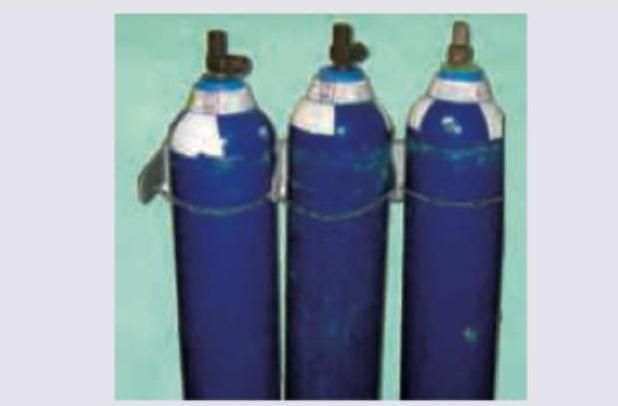
The pin index of the following cylinder is:
Explanation: ***Preoxygenation-propofol-succinylcholine*** - This sequence describes a **rapid sequence intubation (RSI)**, which is the preferred method for patients at high risk of aspiration, including children needing emergency surgery with an unknown fasting status. - **Preoxygenation** provides an oxygen reserve during the apneic period, **propofol** offers rapid induction with good hemodynamic stability, and **succinylcholine** provides fast-onset, short-acting neuromuscular blockade, crucial for preventing aspiration. *Preoxygenation-ketamine-succinylcholine* - While preoxygenation and succinylcholine are appropriate for RSI, **ketamine** may not be the optimal choice for a child with aspiration risk due to its potential to increase secretions and maintain laryngeal reflexes, which could complicate intubation. - Ketamine can also cause **emergence delirium** in some children, making it less favorable for a smooth anesthetic course compared to propofol. *Sevoflurane-propofol-succinylcholine* - **Sevoflurane** is an inhaled anesthetic often used for mask induction in children due to its non-pungent odor and rapid onset. However, it is generally **not suitable for RSI** in patients with aspiration risk as it has a slower induction time compared to intravenous agents and can cause coughing or laryngospasm. - Using both sevoflurane and propofol for induction in an RSI scenario is redundant and prolongs the induction phase, increasing aspiration risk. *Midazolam-propofol-rocuronium* - **Midazolam** is a benzodiazepine used for anxiolysis and sedation but has a **slower onset** and longer duration of action compared to propofol for rapid induction. - **Rocuronium** is a non-depolarizing neuromuscular blocker with a slower onset of action than succinylcholine, making it less ideal for RSI where immediate paralysis for intubation is critical to prevent aspiration.
Explanation: ***COPD*** - **COPD** patients have severely compromised respiratory function, and the **pneumoperitoneum** from CO2 insufflation causes **diaphragmatic splinting** and reduced lung compliance, leading to dangerous **CO2 retention** and respiratory failure. - The increased **intra-abdominal pressure** significantly impairs ventilation in patients who already have limited respiratory reserve, making laparoscopy extremely high-risk. *Diabetes* - While diabetes increases risks of **poor wound healing** and **infection**, these complications are not specifically worse with laparoscopy compared to open surgery. - **Perioperative glucose management** can effectively control diabetes-related risks, and laparoscopy may actually offer benefits like smaller incisions. *Hypertension* - **Hypertension** requires careful **blood pressure monitoring** during surgery but doesn't pose risks unique to laparoscopic procedures. - Well-controlled hypertension with appropriate **antihypertensive medications** allows for safe laparoscopic surgery. *Obesity* - **Obesity** makes laparoscopy technically challenging due to **thick abdominal walls** and need for higher insufflation pressures. - However, laparoscopy is often **preferred over open surgery** in obese patients due to reduced wound complications and faster recovery.
Explanation: ***Conduct a simulation for the disaster and assess the response.*** - **Simulation exercises** are crucial for testing the effectiveness of a disaster preparedness plan and identifying weaknesses in the response system. - This allows for refinement of protocols, training of personnel, and ensuring that all team members understand their roles during an actual emergency. *Ensure all financial and other resources are available for disaster preparedness.* - While important for effective disaster management, simply "ensuring" resources are available is not an action of preparedness, but rather an **enabling condition**. - This statement focuses on the availability of resources rather than a proactive step to prepare the PHC for an emergency. *Increase public awareness through campaigns and loudspeakers.* - **Public awareness campaigns** are vital for community preparedness, but this action is primarily for the general population and not a specific preparedness action for the PHC itself in terms of its operational readiness. - While a PHC might be involved in public awareness, its core preparedness involves internal actions to ensure its functionality during a disaster. *Follow instructions given over the phone or radio by higher officials.* - This describes a reaction during or immediately before a disaster, rather than a proactive **preparedness measure**. - Relying solely on real-time instructions from higher officials during an emergency without prior planning can lead to delays and inefficiencies.
Explanation: ***INR > 2 in ophthalmic procedures*** - While a high INR (international normalized ratio) indicates increased bleeding risk, an INR > 2 is generally considered a **relative contraindication** for most regional anesthesia procedures, especially in ophthalmic cases where the risk of significant hemorrhage might be lower compared to deeper blocks. - The decision to proceed often depends on the specific procedure, patient's overall condition, and a careful risk-benefit analysis, rather than being an absolute bar. *Lack of resuscitation facilities* - The absence of proper **resuscitation equipment and trained personnel** is an absolute contraindication for regional anesthesia, as serious complications (e.g., local anesthetic systemic toxicity, respiratory depression) can occur, requiring immediate intervention. - Performing regional anesthesia in such a setting puts the patient at extreme risk of irreversible harm or death in the event of an adverse reaction. *Infection at injection site* - Performing regional anesthesia through an infected area carries a high risk of introducing bacteria into deeper tissues, including the **neuraxial space** or surrounding nerves, leading to serious complications like **abscess formation, meningitis, or osteomyelitis**. - This is an **absolute contraindication** to prevent the spread of infection. *Patient refusal* - **Informed consent** is a fundamental ethical and legal principle in medicine; a competent patient's refusal to undergo a procedure, including regional anesthesia, must always be respected. - Proceeding against a patient's wishes constitutes **assault and battery** and is an absolute contraindication for any medical intervention.
Explanation: ***Pin index system*** - The **pin index safety system** is a safety feature on anesthetic machines that ensures the correct gas cylinder is connected to the corresponding gas inlet. Each gas cylinder type has a unique pin configuration that only matches the specific yoke for that gas. - This system **prevents accidental connection** of a wrong gas cylinder, which could have serious patient safety implications. *Yoke assembly* - The **yoke assembly** is the component that holds the gas cylinder in place on the anesthesia machine. - While it's part of the connection, it's the **pin index system within the yoke** that provides the safety mechanism, not the yoke assembly itself. *Gas analyser* - A **gas analyzer** is used to measure the concentration of gases being delivered to the patient or exhaled by the patient during anesthesia. - It functions as a **monitoring device** and does not prevent the initial incorrect connection of a gas cylinder. *Bodok seal* - A **Bodok seal** is a type of washer often made of neoprene or nylon that provides a tight seal between the gas cylinder and the yoke assembly. - Its primary function is to **prevent gas leaks**, not to ensure that the correct type of gas cylinder is connected.
Explanation: ***Minor injury patients*** - Patients classified as **green** in triage are those with **minor injuries** that are not immediately life-threatening. - They can often wait for treatment without significant risk of deterioration and may be able to **walk and self-care** to some extent. *Medium risk patients* - This category generally corresponds to **yellow** in triage, indicating patients with **significant injuries** who require care within a few hours. - While not immediately life-threatening, their condition could worsen if treatment is delayed. *High-risk patients* - This category typically corresponds to **red** in triage, signifying patients with **life-threatening injuries** or conditions. - These patients require immediate medical attention to survive. *Dead patients* - Patients who are deceased or have injuries incompatible with life are typically categorized as **black** in triage. - This classification indicates that no medical intervention can save them.
Explanation: ***A-4, B-1, C-3, D-2*** - **Morphine** is contraindicated in **head injury** as it can increase intracranial pressure and mask neurological symptoms. - **Amiodarone** is contraindicated in patients with **QT prolongation** due to its risk of inducing more severe arrhythmias like Torsades de Pointes. - **Vigabatrin** is contraindicated during **pregnancy** due to its potential for teratogenicity and adverse effects on fetal development. - **Estrogen preparations** are contraindicated in patients with a history of **thromboembolism** due to their increased risk of blood clot formation. *A-1, B-3, C-2, D-4* - This option incorrectly matches **Morphine** with QT prolongation and **Estrogen preparations** with head injury, which are not their primary contraindications. - It also incorrectly links **Vigabatrin** with thromboembolism and **Amiodarone** with pregnancy. *A-3, B-2, C-4, D-1* - This choice incorrectly associates **Morphine** with pregnancy and **Vigabatrin** with head injury, which are not the most critical or direct contraindications. - It also misaligns **Amiodarone** with thromboembolism and **Estrogen preparations** with QT prolongation. *A-2, B-4, C-1, D-3* - This option incorrectly matches **Morphine** with thromboembolism and **Amiodarone** with head injury, which are not their most significant contraindications. - It also incorrectly links **Vigabatrin** with QT prolongation and **Estrogen preparations** with pregnancy.
Explanation: ***AMPLE*** - The **AMPLE history** is a mnemonic used during the **secondary survey** in trauma care to gather crucial patient information - It stands for **Allergies, Medications, Past medical history/Pregnancy, Last meal, and Events** surrounding the injury. *TRIAGE* - **Triage** is the process of prioritizing patients based on the severity of their condition and the likelihood of benefit from immediate treatment. - It is an initial assessment done to determine the urgency of care, not a detailed historical review for a single patient. *ABCDE* - The **ABCDE approach** (**Airway, Breathing, Circulation, Disability, Exposure**) is part of the **primary survey** in trauma care. - It focuses on identifying and managing immediate life-threatening conditions. *None of the options* - This option is incorrect because **AMPLE** specifically describes the historical review process during the secondary survey.
Explanation: ***20000*** - The standard population coverage for a **Primary Health Centre (PHC)** in **hilly, tribal, or difficult areas** is **20,000**. - This reduced coverage (compared to 30,000 in plain areas) acknowledges the challenges of **accessibility, terrain, and service delivery** in such regions as per **IPHS norms**. *25000* - This figure **does not correspond** to any standard population norm for PHCs or Sub-Centres as per **Indian Public Health Standards (IPHS)**. - For reference, a Sub-Centre in hilly/tribal areas covers approximately **3,000 population**, not 25,000. *30000* - This is the standard population coverage for a **PHC in plain areas**. - It does not apply to hilly regions, where the population density is typically lower and geographical distances create greater challenges for healthcare delivery. *40000* - This figure **exceeds** the standard population norms for a PHC in any terrain as per **IPHS guidelines**. - It is neither applicable to plain areas (30,000) nor hilly/tribal areas (20,000).
Explanation: ***2,5*** - The image displays a gas cylinder with a **pin index safety system** where pins are evident at positions 2 and 5. This specific pin configuration is standard for **nitrous oxide** cylinders. - The pin index system for medical gases is designed to prevent incorrect gas connections, ensuring that only the proper regulator can be attached to a specific gas cylinder. *1,5* - A pin index of 1,5 is associated with **oxygen** cylinders. The cylinder in the image has a different pin configuration, which indicates it does not contain oxygen. - The physical appearance and color coding (blue body with a white shoulder/top, though not clearly visible in this image other than the body color) of this cylinder are not consistent with oxygen. *3,5* - A pin index of 3,5 is designated for **air** cylinders. The pin configuration in the image does not match this setting. - Each medical gas has a unique and standardized pin index combination to ensure safety and prevent medical errors. *7* - A single pin at position 7 is associated with **carbon dioxide** cylinders. The cylinder in the image clearly shows two pins, not one. - The pin index system relies on precise hole and pin placement to achieve gas-specific connections.
Get full access to all questions, explanations, and performance tracking.
Start For Free