A hospital is designing a protocol for anesthesia services in the interventional radiology suite. Cases include hepatic chemoembolization, biliary interventions, and vascular procedures. Which combination of factors makes general anesthesia more appropriate than conscious sedation?
A radiation oncology department is planning to start providing anesthesia for pediatric patients undergoing radiotherapy. Which is the most critical infrastructure requirement specific to this non-OR anesthesia location?
A 70-year-old patient with ejection fraction of 25% requires cardioversion for atrial fibrillation in the cardiology suite. During propofol induction (1.5 mg/kg), BP drops from 110/70 to 70/40 mmHg. What is the primary pathophysiological mechanism?
During endoscopic retrograde cholangiopancreatography (ERCP) under sedation, a patient develops sudden bradycardia and hypotension after sphincterotomy. Vitals: HR 45/min, BP 80/50 mmHg. What is the most likely mechanism?
A 45-year-old patient scheduled for electroconvulsive therapy (ECT) is on phenelzine for depression. Which anesthetic agent should be avoided?
A 65-year-old patient with severe COPD (FEV1 40% predicted) requires colonoscopy. During propofol sedation, SpO2 drops to 85% despite supplemental oxygen. What is the most appropriate immediate management?
What is the primary reason for maintaining spontaneous ventilation during anesthesia for bronchoscopic procedures?
Why is nitrous oxide contraindicated during anesthesia for interventional neuroradiology procedures?
Which drug is most commonly used for conscious sedation during MRI procedures in pediatric patients?
What is the recommended fasting time for clear fluids before elective non-cardiac catheterization in adults according to ASA guidelines?
Explanation: ***Duration >90 minutes, prone positioning, and need for breath-holding*** - Prolonged procedures and **prone positioning** carry a high risk of **airway obstruction** and restricted access to the patient, making a secured airway via **general anesthesia** necessary. - Precise imaging during vascular or biliary interventions often requires **controlled apnea** (breath-holding), which is only reliably achieved through **neuromuscular blockade** and mechanical ventilation. *Expected moderate pain, advanced age, and multiple comorbidities* - **Moderate pain** can often be managed with **monitored anesthesia care (MAC)** or regional techniques rather than requiring full general anesthesia. - **Advanced age** and **comorbidities** represent increased perioperative risk, but they are not specific indications for general anesthesia; in fact, avoiding GA may be preferred in certain fragile patients. *Patient anxiety, lack of IV access, and obesity* - While **obesity** increases the risk of airway compromise, it does not mandate general anesthesia unless the specific procedural requirements or patient anatomy make **conscious sedation** unsafe. - **Anxiety** is typically manageable with appropriate **anxiolytic sedation**, and **IV access** is a fundamental requirement for both sedation and general anesthesia. *Contrast allergy, renal dysfunction, and coagulopathy* - These factors are related to **radiological risk** and procedural safety rather than the choice of anesthetic technique. - **Coagulopathy** is a contraindication for certain **regional anesthesia** techniques but does not specifically dictate a shift from sedation to **general anesthesia**.
Explanation: ***Remote monitoring system with radiation shielding for anesthesiologist*** - In **radiotherapy suites**, the anesthesiologist must remain outside the treatment bunker due to high-energy **ionizing radiation**, making **remote monitoring** (cameras and remote displays) essential. - This infrastructure ensures continuous clinical assessment of the pediatric patient while prioritizing the **safety and shielding** of the medical staff from radiation exposure. *Temperature regulation system for hypothermia prevention* - While preventing **hypothermia** is important in pediatric anesthesia, it is a standard requirement for all pediatric cases and not specific to the **radiotherapy environment**. - Unlike surgical suites, radiotherapy rooms are typically maintained at room temperature, making this less critical than the unique challenge of **remote visibility**. *Difficult airway cart with video laryngoscope* - Provision of a **difficult airway cart** is a universal safety standard for any **non-OR anesthesia (NORA)** location, not exclusive to radiation oncology. - While vital for emergency management, it does not address the specific **environmental barrier** created by the radiation treatment field. *MRI-compatible anesthesia machine* - An **MRI-compatible machine** is specifically required for **Magnetic Resonance Imaging** suites to avoid projectile hazards from high magnetic fields. - Radiotherapy involves **linear accelerators**, which do not generate the same magnetic environment as MRI, thus non-magnetic equipment is not a requirement here.
Explanation: ***Propofol-induced myocardial depression in compromised ventricle*** - Propofol causes significant **dose-dependent hypotension** by reducing **sympathetic tone** and exerting a direct **negative inotropic effect** on the myocardium. - In patients with a severely low **ejection fraction (EF 25%)**, the heart lacks the **functional reserve** to compensate for this depression, leading to profound cardiovascular collapse. *Coronary steal phenomenon* - This occurs primarily with potent **vasodilators** like **isoflurane** or adenosine, redirecting blood from ischemic to non-ischemic zones. - It is not a classic feature of **propofol induction** and does not explain sudden systemic hypotension in a low EF patient. *Loss of atrial kick after cardioversion* - While atrial fibrillation causes a loss of **atrial kick**, the hypotension in this scenario occurred specifically during **propofol induction**, prior to the procedure. - **Post-cardioversion stunning** can cause transient hypotension, but the timing here points directly to the anesthetic agent. *Excessive preload reduction from venodilation* - Although propofol does cause **venodilation** and decreases **preload**, the primary driver of sudden shock in a 25% EF heart is the inability to maintain **stroke volume** against drug-induced depression. - Preload reduction is a secondary factor compared to the direct **myocardial suppression** and loss of arterial vasomotor tone caused by the induction dose.
Explanation: ***Vagal stimulation from duodenal distension*** - Sudden onset of **bradycardia** and **hypotension** during ERCP is most commonly caused by a **vasovagal reflex** triggered by endoscopic manipulation or duodenal distension. - This triggers an increase in **parasympathetic tone**, which can be acutely managed with **atropine** and cessation of the stimulus. *Acute pancreatitis causing systemic inflammatory response* - While a common complication of **ERCP**, it typically presents hours after the procedure with **severe epigastric pain** and elevated amylase/lipase. - Systemic inflammatory response syndrome (SIRS) in pancreatitis usually leads to **tachycardia**, not the bradycardia observed in this acute setting. *Anaphylaxis to contrast media* - Anaphylaxis generally presents with **tachycardia** as a compensatory response to vasodilation, alongside **bronchospasm**, wheezing, or **urticaria**. - Contrast used in ERCP is typically injected into the ducts; while systemic absorption can occur, it is a less frequent cause of immediate **bradycardic collapse** compared to vagal triggers. *Retroperitoneal perforation with hemorrhage* - Perforation and subsequent hemorrhage would typically manifest as **tachycardia** and progressive hypotension due to **hypovolemia**. - Acute retroperitoneal bleeding after a **sphincterotomy** does not explain the sudden, concurrent drop in heart rate (bradycardia) characteristic of a vagal event.
Explanation: ***Meperidine*** - Meperidine is strictly contraindicated with **Monoamine Oxidase Inhibitors (MAOIs)** like phenelzine due to the risk of a fatal interaction known as **Serotonin Syndrome**. - This interaction can lead to severe **hyperpyrexia**, seizures, respiratory depression, and hemodynamic instability, making it unsafe for patients on phenelzine. *Etomidate* - Etomidate is an induction agent that provides **hemodynamic stability** and has a minimal effect on seizure duration, making it a viable alternative for ECT. - It does not interact with **MAOIs** in the same dangerous manner as certain opioids like meperidine. *Propofol* - Propofol is commonly used in ECT for its rapid onset and recovery, although it may theoretically **shorten seizure duration** compared to methohexital. - It is metabolically compatible with **phenelzine** and does not trigger the serotonergic crisis associated with MAOI drug-drug interactions. *Succinylcholine* - Succinylcholine is the muscle relaxant of choice for ECT to prevent **musculoskeletal injuries** during the induced seizure. - It is safely used alongside **MAOIs**, provided there are no other contraindications like pseudocholinesterase deficiency or hyperkalemia.
Explanation: ***Stop propofol, provide jaw thrust and assist ventilation*** - In the setting of **procedural sedation-induced hypoxemia**, the first priority is to **discontinue the offending sedative** and restore the airway and ventilation. - **Airway maneuvers** such as **jaw thrust** relieve upper airway obstruction, while assisted ventilation (e.g., **Bag-Valve-Mask**) addresses hypoxemia in a patient with **COPD** who has limited respiratory reserve. *Start non-invasive positive pressure ventilation* - While **NIV** is used for chronic management of **COPD exacerbations**, it is not the primary immediate response for **acute respiratory depression** during sedation where physical airway maneuvers are required. - Securing the airway manually and ensuring the patient is breathing is more critical than setting up a **BiPAP/CPAP** machine during an acute desaturation event. *Administer flumazenil* - **Flumazenil** is a specific reversal agent for **benzodiazepines** and has no effect on the respiratory depression caused by **propofol**. - There is no **antagonist** available for propofol; therefore, management is strictly supportive via **airway control** and ventilation. *Increase propofol depth and intubate* - Increasing the dose of **propofol** would worsen the **respiratory depression** and potentially cause cardiovascular collapse in a compromised COPD patient. - **Endotracheal intubation** is a secondary measure; basic life support maneuvers like **bag-mask ventilation** should always be attempted first to reverse transient hypoxemia.
Explanation: ***To maintain negative intrapleural pressure and prevent airway collapse*** - Spontaneous ventilation generates **negative intrapleural pressure**, which provides a **stenting effect** to keep the airways patent during the procedure. - Maintaining this negative pressure is essential to prevent the **collapse of weakened airways**, particularly in patients with conditions like **tracheobronchomalacia**. *To prevent barotrauma in diseased lungs* - While avoiding **positive pressure ventilation** reduces the risk of **barotrauma**, this is not the primary physiological reason for choosing spontaneous breathing in bronchoscopy. - Barotrauma is a general risk of mechanical ventilation, not a specific driver for the **dynamic airway assessment** required during these procedures. *To facilitate better visualization of airways* - Spontaneous breathing allows the clinician to observe **dynamic airway collapse** and functional changes that occur during the normal respiratory cycle. - However, the primary mechanical advantage is the preservation of **airway patency** rather than just the visual clarity of the scope's camera. *To reduce anesthetic requirements* - Choosing a ventilation strategy does not primarily aim to **reduce anesthetic dosage**; in fact, maintaining spontaneous breathing often requires specialized titration of **propofol** or **remifentanil**. - The goal of the technique is **patient safety and airway stability**, not the minimization of pharmacological agents.
Explanation: ***It increases the risk of air embolism expansion*** - **Nitrous oxide** is 34 times more soluble in blood than **nitrogen**; it rapidly diffuses into air-filled spaces, causing existing air bubbles to expand significantly. - In interventional neuroradiology, there is a risk of **iatrogenic air embolism**; expansion of such bubbles can lead to catastrophic **vascular occlusion**. *It interferes with radiological imaging quality* - **Nitrous oxide** does not have radiopaque or radiolucent properties that significantly degrade **digital subtraction angiography (DSA)** or CT quality. - Imaging interference is generally caused by patient movement or metal hardware, not inhaled **anesthetic gases**. *It causes cerebral vasodilation and increases ICP* - While **nitrous oxide** can cause mild **cerebral vasodilation**, this effect is often clinical insignificant when combined with other agents like propofol. - The specific contraindication in neuroradiology is primarily due to **gas volume expansion** rather than its minor effects on **intracranial pressure**. *It causes excessive postoperative nausea* - **Postoperative nausea and vomiting (PONV)** is a known side effect of nitrous oxide but is rarely a strict contraindication for a surgical procedure. - Although PONV is undesirable, the **embolic risk** is a far more critical safety concern during high-risk **neurovascular interventions**.
Explanation: ***Dexmedetomidine*** - **Dexmedetomidine** is an **alpha-2 adrenergic receptor agonist** that provides effective sedation and analgesia without causing significant **respiratory depression**. - It preserves the patient's **airway reflexes** and promotes a state similar to **natural sleep**, making it highly suitable for the prolonged, motion-sensitive environment of an **MRI**. *Midazolam* - While it provides excellent **anxiolysis** and **amnestic effects**, it typically does not provide deep enough sedation for a child to remain perfectly still in an **MRI** scanner. - High doses increase the risk of **respiratory depression** and may occasionally cause **paradoxical agitation** in pediatric patients. *Ketamine* - **Ketamine** is a dissociative anesthetic that often leads to increased **muscle tone** and involuntary movements, which can degrade **MRI image quality**. - It can also cause **excessive salivation** and a prolonged, potentially distressing **recovery period (emergence delirium)** in children. *Propofol* - Although **Propofol** has a rapid onset and recovery, it requires careful monitoring by an anesthesiologist due to the high risk of **apnea** and loss of **airway protection**. - It is generally used for **deep sedation** or general anesthesia rather than the stable, **conscious sedation** typically preferred for basic non-invasive imaging.
Explanation: ***2 hours*** - According to **ASA guidelines**, healthy adults should fast for **2 hours** for **clear liquids** (e.g., water, fruit juices without pulp, carbonated beverages, clear tea, and black coffee) before elective procedures. - This timeframe is chosen to minimize the risk of **pulmonary aspiration** while preventing dehydration and hypoglycemia. *6 hours* - A **6-hour** fasting period is required for a **light meal** (such as toast and clear liquids) or the ingestion of **non-human milk** or infant formula. - Fasting for **clear liquids** for this long is unnecessary and may lead to patient discomfort and **dehydration**. *4 hours* - The **4-hour** rule specifically applies to **breast milk** ingestion in infants, not clear fluids in adults. - There is no specific category in the standard **ASA NPO guidelines** that recommends 4 hours for clear liquids. *1 hour* - A **1-hour** fast is insufficient to ensure adequate **gastric emptying**, potentially increasing the risk of **aspiration pneumonitis** during sedation or anesthesia. - Guidelines mandate at least **2 hours** to allow for the passage of liquids from the stomach into the small intestine.
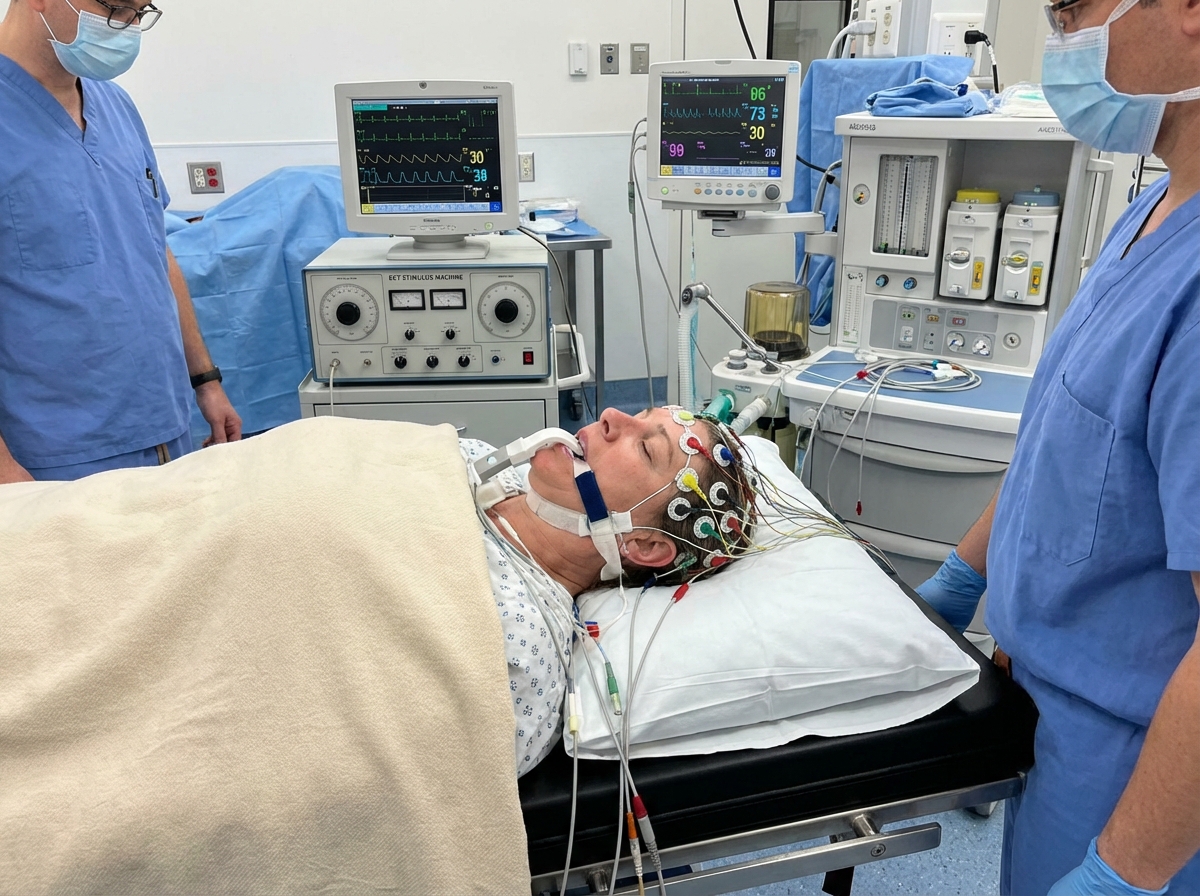
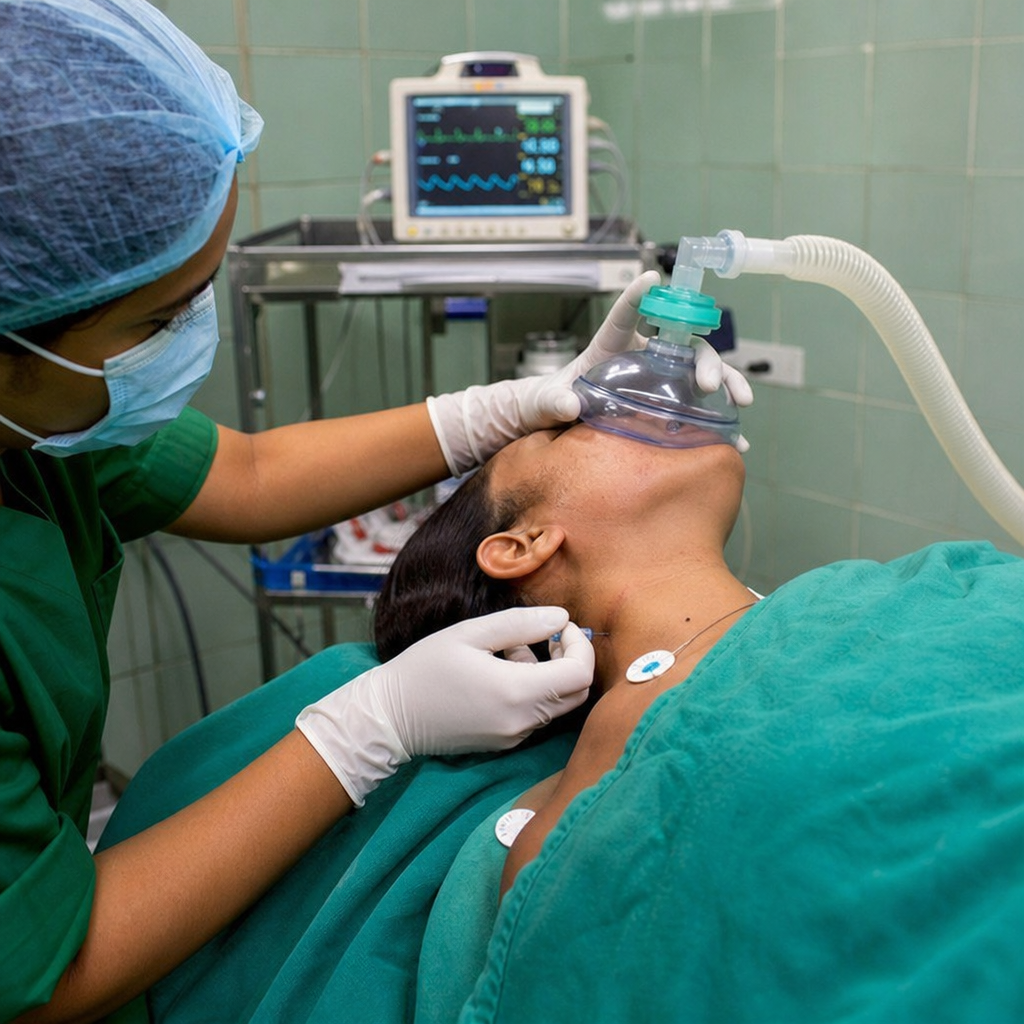
Explanation: **Explanation:** **NORA** stands for **Non-Operating Room Anesthesia**. It refers to the administration of anesthesia or deep sedation in locations outside the traditional operating theater suite. As medical technology advances, more diagnostic and therapeutic procedures are performed in remote locations, making NORA one of the fastest-growing areas in modern anesthesia practice. * **Why Option B is Correct:** The term specifically describes the setting. Common NORA locations include the Radiology suite (MRI, CT), Cardiac Catheterization labs, Endoscopy suites, Interventional Radiology (IR), and Electroconvulsive Therapy (ECT) clinics. * **Why Options A, C, and D are Incorrect:** * **Option A:** "No oral airway" is clinically irrelevant as a definition; airway management in NORA follows the same standards as the OR. * **Option C:** This is factually incorrect; many NORA locations (like Fluoroscopy or CT suites) involve significant radiation exposure, requiring anesthesiologists to wear lead protection. **Clinical Pearls for NEET-PG:** 1. **The "Remote Location" Challenge:** NORA is often considered higher risk due to the "isolated" nature of the site, unfamiliar equipment, and limited space/assistance. 2. **Monitoring Standards:** The ASA (American Society of Anesthesiologists) standards for monitoring are the **same** for NORA as they are for the OR (Pulse oximetry, ECG, BP, and Capnography). 3. **MRI Safety:** In the MRI suite, all equipment (gas machines, monitors, laryngoscopes) must be **non-ferromagnetic** to prevent the "projectile effect." 4. **Common Procedures:** Gastroscopy/Colonoscopy (Endoscopy) and ERCP are the most frequent procedures requiring NORA.
Explanation: ***Propofol*** - Propofol offers a **rapid onset** and **short duration of action**, allowing for quick recovery and discharge post-procedure. - It provides effective sedation, anxiolysis, and amnesia, making it suitable for procedures like colonoscopies, even in patients with a history of **atrial fibrillation**, due to its minimal cardiovascular effects on heart rhythm. *Midazolam* - Midazolam has a **longer half-life** and duration of action compared to propofol, which can delay recovery and discharge. - While effective for sedation, it may cause **respiratory depression** and its effects are less easily titratable than propofol. *Ketamine* - Ketamine provides dissociative anesthesia and **potent analgesia**, but it can cause **tachycardia**, **hypertension**, and **emergence reactions** (hallucinations, delirium). - Its cardiovascular effects and psychomimetic side effects make it less ideal for routine conscious sedation for colonoscopy, especially in a cardiac patient. *Etomidate* - Etomidate is primarily used for **induction of anesthesia** due to its rapid onset and minimal hemodynamic impact. - However, it provides **no analgesia** and can cause **adrenocortical suppression** with prolonged or repeated use, making it less suitable for conscious sedation.
Explanation: ***Local anaesthesia*** - Catheter ablation for SVT is most commonly performed with **local anaesthesia** at the access site (e.g., groin for femoral vein access) and **conscious sedation**. - This approach allows the patient to remain awake and cooperative, which is crucial for monitoring symptoms and for performing maneuvers that help identify the arrhythmogenic focus. *General anaesthesia* - While general anaesthesia can be used, it is **less common** for routine SVT ablation due to potential effects on electrophysiological properties and patient cooperation. - It may be considered for pediatric patients, highly anxious patients, or complex cases requiring precise immobility. *Spinal anaesthesia* - **Spinal anaesthesia** is a regional technique that numbs the lower body and is typically used for surgical procedures below the waist, such as orthopedic or obstetric surgeries. - It is **not suitable** for catheter ablation of the heart, which is a procedure involving vascular access and manipulations within the chest cavity. *No anaesthesia required* - Catheter ablation is an **invasive procedure** involving the insertion of catheters into blood vessels and their advancement into the heart. - Performing this procedure without any form of anaesthesia would cause **significant pain and discomfort** to the patient and is not clinically acceptable.
Anesthesia for Interventional Radiology
Practice Questions
Anesthesia for Gastrointestinal Endoscopy
Practice Questions
Anesthesia for Bronchoscopy
Practice Questions
Anesthesia for Cardioversion
Practice Questions
Anesthesia for Electroconvulsive Therapy
Practice Questions
Anesthesia for MRI and CT
Practice Questions
Anesthesia for Cardiac Catheterization
Practice Questions
Anesthesia for Interventional Cardiology
Practice Questions
Monitored Anesthesia Care
Practice Questions
Sedation Scales and Monitoring
Practice Questions
Remote Location Challenges
Practice Questions
Safety Considerations in Non-Operating Room Anesthesia
Practice Questions
Get full access to all questions, explanations, and performance tracking.
Start For Free