Thoracotomy is indicated in all the following conditions except:
A patient after undergoing thoracotomy complains of severe pain. The BEST method of pain control in this patient would be:
What type of respiratory failure is most commonly observed in post-operative patients?
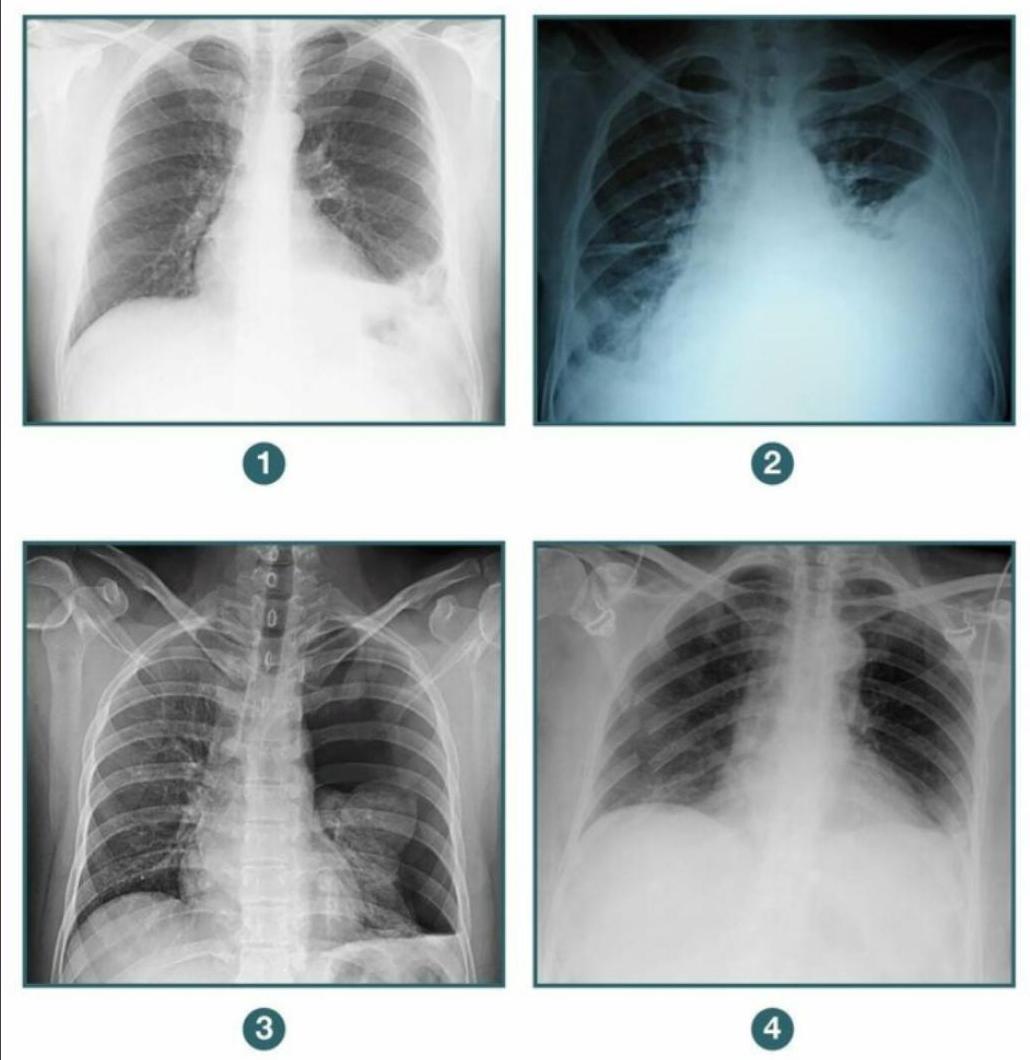
A patient presents to the casualty following blunt trauma to the chest. A chest X-ray was done. Among the following radiographs, in which case would you further evaluate the patient before putting a chest tube? 1. Diaphragmatic hernia 2. Hemothorax 3. Pneumothorax 4. Flail chest
Road traffic accident (RTA) with multiple fractures - initial treatment would be:
Indications for emergency thoracotomy are all of the following except:
All are indications for one-lung ventilation except which of the following?
Child with aspiration risk needs emergency surgery. Best induction sequence is:
What is an absolute indication for surgery in disc prolapse?
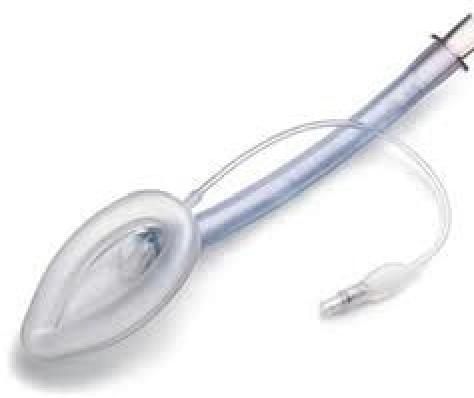
Identify the airway device shown in the image.
Explanation: ***Pulmonary contusion*** - **Pulmonary contusion** is a bruise of the lung parenchyma that typically resolves with **supportive care** (oxygen, fluid management, analgesia, respiratory support) [1]. - It is generally *not* an indication for thoracotomy and is managed **conservatively** in most cases [1]. - Surgical intervention is only considered if complicated by other issues such as **uncontrolled hemorrhage**, massive hemothorax, or other injuries requiring exploration. *Penetrating chest injuries* - While approximately **85% of penetrating chest injuries** are managed conservatively with tube thoracostomy alone, **selective indications** for thoracotomy include: - **Cardiac tamponade** or suspected cardiac injury - **Great vessel injury** with hemodynamic instability - **Massive initial hemothorax** (>1500 mL) or persistent bleeding (>200 mL/hr) - **Trans-mediastinal trajectory** with suspected esophageal or major vascular injury - The key is that *specific criteria* determine need for thoracotomy, not the penetrating injury itself. *Rapidly accumulating haemothorax* - A **rapidly accumulating haemothorax** with **>1500 mL initial output** or **>200 mL/hour for 2-4 consecutive hours** indicates significant ongoing intrathoracic bleeding. - This is an **absolute indication** for thoracotomy for **source identification and hemorrhage control** [2]. - Without surgical intervention, such bleeding leads to **hemodynamic instability**, shock, and death. *Massive air leak* - A **massive persistent air leak** from chest tube, unresponsive to initial management, suggests a large **tracheobronchial injury** or major lung parenchymal disruption [3]. - This persistent leak prevents **lung re-expansion** and adequate ventilation. - Thoracotomy is indicated for **surgical repair** of the damaged bronchus, major airway, or extensive lung laceration [2].
Explanation: ***Intercostal cryoanalgesia*** - **Intercostal cryoanalgesia** involves applying extreme cold to the intercostal nerves, leading to temporary nerve denervation and prolonged pain relief. This technique is particularly effective for **post-thoracotomy pain** due to its targeted action and reduced systemic side effects compared to opioids. - The goal is to provide **long-lasting pain control** specifically at the surgical site, allowing for better respiratory mechanics and early mobilization. *Oral morphine* - Oral morphine can provide systemic pain relief, but its onset of action is slower, and it carries the risk of significant **sedation** and **respiratory depression**, which are major concerns in a patient who has just undergone thoracotomy. - While effective, it may not provide optimal local pain control for incisional pain and often requires higher doses to achieve adequate relief, increasing the risk of adverse effects. *Diazepam rectal suppository* - Diazepam is a **benzodiazepine** primarily used for anxiety, muscle spasms, and seizures, not for severe acute surgical pain. It has **no significant analgesic properties**. - Its sedative effects would be contraindicated after thoracotomy due to the risk of respiratory depression and masking potential neurological changes. *IV fentanyl* - IV fentanyl is a potent opioid with a rapid onset and short duration of action, making it useful for breakthrough pain or during immediate post-operative periods. However, it requires **continuous monitoring** and frequent re-dosing. - Like other opioids, it carries risks of **respiratory depression**, nausea, and sedation, making it less ideal for sustained primary pain control immediately after thoracotomy where lung function is critical.
Explanation: ***Hypoxemic respiratory failure*** - **Hypoxemic respiratory failure** (Type I) is characterized by a **PaO2 less than 60 mmHg** with a normal or low PaCO2, often due to **V/Q mismatch** and **shunt**. - Post-operative patients frequently develop **atelectasis**, **pneumonia**, or **pulmonary edema**, leading to impaired gas exchange and reduced oxygenation. - This is the **most commonly observed type** in the immediate post-operative period. *Hypercapnic respiratory failure* - **Hypercapnic respiratory failure** (Type II) is primarily due to **alveolar hypoventilation**, resulting in a **PaCO2 greater than 50 mmHg**. - While it can occur post-operatively, it is less common than hypoxemic failure and is typically seen with significant **sedation**, **neuromuscular blockade**, or severe **obstructive lung disease**. *Mixed respiratory failure* - **Mixed respiratory failure** involves both **hypoxemia** and **hypercapnia**, indicating severe impairment in both oxygenation and ventilation. - Although it can occur in severe post-operative complications, it is not the *most commonly observed initial presentation* compared to isolated hypoxemia. *Perioperative respiratory failure* - **Perioperative respiratory failure** (Type III) occurs specifically in the surgical setting and involves atelectasis from changes in chest wall mechanics. - While this occurs in the post-operative context, the term is less commonly used, and the **underlying mechanism is primarily hypoxemic** in nature.
Explanation: ***Correct Option: Diaphragmatic hernia*** - A **diaphragmatic hernia** (showing elevated hemidiaphragm with loops of bowel in the hemithorax) requires **further evaluation before chest tube placement** - **CT scan with contrast** or **nasogastric tube with X-ray** should be performed to delineate the anatomy and confirm herniated abdominal contents - **Chest tube placement is contraindicated** or requires extreme caution as it could perforate herniated abdominal organs (stomach, bowel, liver, spleen) - This condition requires **surgical repair**, not chest drainage - The key principle: **Always evaluate thoroughly before intervention when diaphragmatic injury is suspected** *Incorrect Option: Pneumothorax* - A **pneumothorax** (characterized by absence of lung markings in the periphery and visceral pleural line) has a straightforward indication for chest tube - **Chest tube is the definitive management** for significant or symptomatic pneumothorax to re-expand the lung - No additional evaluation needed before chest tube placement in hemodynamically stable patients with confirmed pneumothorax *Incorrect Option: Hemothorax* - A **hemothorax** (showing opacification in the lower lung field with blunting of costophrenic angle and fluid level) has a clear indication for chest tube - **Chest tube is indicated** to drain blood, relieve lung compression, and monitor for ongoing bleeding - Immediate chest tube placement is appropriate once diagnosed *Incorrect Option: Flail chest* - A **flail chest** (multiple rib fractures in two or more places creating unstable chest wall segment) primarily requires **pain management and ventilatory support** - A chest tube is **not indicated for flail chest itself** unless there is an associated pneumothorax or hemothorax - If flail chest is isolated, you would not place a chest tube at all, making this option incorrect for the question asked
Explanation: ***Airway management*** - In trauma, **establishing and maintaining a patent airway** is the absolute priority, as compromised breathing can lead to rapid deterioration and death. - The **ABCs (Airway, Breathing, Circulation)** of trauma care dictate that airway intervention precedes other life-saving measures. *Management of shock* - While crucial, **managing shock (C)** follows **airway (A)** and **breathing (B)** in the primary survey of trauma care. - Addressing profound shock without a patent airway can be ineffective and leads to irreversible damage. *Splinting of limbs* - **Splinting fractures** is important for pain control, preventing further injury, and minimizing blood loss in open fractures, but it is not an immediate life-saving intervention. - This falls under the **secondary survey** or definitive management, after life-threatening issues have been addressed. *Cervical spine protection* - **Cervical spine protection** is essential in trauma to prevent further neurological injury and is performed simultaneously with airway management (often with in-line stabilization). - However, a patent airway is the **most immediate life-sustaining intervention** if the airway is compromised.
Explanation: ***Tension pneumothorax*** - While a life-threatening condition, a **tension pneumothorax** is initially managed with **needle decompression** or **chest tube insertion**, not an immediate emergency thoracotomy. - Emergency thoracotomy is reserved for situations requiring direct repair or control of massive bleeding that cannot be addressed by less invasive means. *Major tracheobronchial injuries* - These injuries can lead to severe **airway obstruction**, **massive air leak**, and **hemorrhage**, necessitating direct surgical repair via emergency thoracotomy. - Prompt surgical intervention is crucial to restore airway integrity and prevent life-threatening respiratory collapse. *Cardiac tamponade* - **Cardiac tamponade** can be caused by penetrating or blunt trauma, leading to circulatory collapse due to compression of the heart. - While initial management may involve pericardiocentesis, persistent or rapidly recurring tamponade, especially after trauma, often requires an **emergency thoracotomy** for direct repair of cardiac injury and evacuation of blood. *Penetrating injuries to anterior chest* - **Penetrating anterior chest injuries** carry a high risk of damage to vital structures such as the heart, great vessels, and major airways. - These injuries often result in rapid **hemodynamic instability**, severe hemorrhage, or cardiac arrest, making emergency thoracotomy essential for direct exploration and definitive repair.
Explanation: ***General anesthesia without lung isolation*** - One-lung ventilation (OLV) is specifically performed to achieve **lung isolation**, which is the opposite of general anesthesia without lung isolation. - The goal of OLV is to collapse one lung to facilitate surgical access or prevent contamination, making general anesthesia without isolation a contraindication. *Bronchopleural fistula* - OLV is indicated in cases of **bronchopleural fistula** to prevent leakage of air from the affected lung into the intact lung. - This helps to maintain adequate ventilation and oxygenation in the healthy lung while the fistula can be managed or repaired. *Massive hemorrhage in one lung* - **Massive hemorrhage** in one lung is a critical indication for OLV to prevent the spread of blood to the contralateral healthy lung. - Isolating the bleeding lung protects the airway and facilitates surgical control of the hemorrhage. *Video-assisted thoracoscopic surgery* - **Video-assisted thoracoscopic surgery (VATS)** procedures frequently require OLV to collapse the operative lung. - This provides a clear surgical field and sufficient working space for the surgeon to perform the procedure without lung movement obstructing the view.
Explanation: ***Preoxygenation-propofol-succinylcholine*** - This sequence describes a **rapid sequence intubation (RSI)**, which is the preferred method for patients at high risk of aspiration, including children needing emergency surgery with an unknown fasting status. - **Preoxygenation** provides an oxygen reserve during the apneic period, **propofol** offers rapid induction with good hemodynamic stability, and **succinylcholine** provides fast-onset, short-acting neuromuscular blockade, crucial for preventing aspiration. *Preoxygenation-ketamine-succinylcholine* - While preoxygenation and succinylcholine are appropriate for RSI, **ketamine** may not be the optimal choice for a child with aspiration risk due to its potential to increase secretions and maintain laryngeal reflexes, which could complicate intubation. - Ketamine can also cause **emergence delirium** in some children, making it less favorable for a smooth anesthetic course compared to propofol. *Sevoflurane-propofol-succinylcholine* - **Sevoflurane** is an inhaled anesthetic often used for mask induction in children due to its non-pungent odor and rapid onset. However, it is generally **not suitable for RSI** in patients with aspiration risk as it has a slower induction time compared to intravenous agents and can cause coughing or laryngospasm. - Using both sevoflurane and propofol for induction in an RSI scenario is redundant and prolongs the induction phase, increasing aspiration risk. *Midazolam-propofol-rocuronium* - **Midazolam** is a benzodiazepine used for anxiolysis and sedation but has a **slower onset** and longer duration of action compared to propofol for rapid induction. - **Rocuronium** is a non-depolarizing neuromuscular blocker with a slower onset of action than succinylcholine, making it less ideal for RSI where immediate paralysis for intubation is critical to prevent aspiration.
Explanation: ***Cauda equina syndrome*** - **Cauda equina syndrome** is a neurological emergency characterized by compression of the cauda equina nerves, leading to symptoms like **saddle anesthesia**, bowel/bladder dysfunction, and severe neurological deficits, necessitating immediate surgical decompression. - Delay in surgery for **cauda equina syndrome** can result in permanent neurological damage, making it an *absolute indication* for surgical intervention within **48 hours**. *Recurrent episodes of sciatica* - While recurrent **sciatica** can be debilitating and may eventually warrant surgery, it is typically managed conservatively initially and is not considered an *absolute emergency* for surgery. - Surgical intervention in recurrent **sciatica** is usually considered when conservative treatments fail over 6-12 weeks, but it is a *relative indication*, not an immediate requirement. *Progressive motor weakness despite conservative management* - **Progressive motor weakness** is a serious concern and represents a *relative indication* for surgery, especially if documented over serial examinations. - Unlike **cauda equina syndrome**, which requires immediate surgery, progressive weakness allows for a brief period of conservative management and surgical planning, though surgery should not be unduly delayed if weakness continues to progress. *Pain not relieved by complete rest* - **Pain not relieved by rest** is a common symptom of disc prolapse and can be an indication for surgery after failed conservative management, but it is not an *absolute emergency* like **cauda equina syndrome**. - This type of pain often indicates discogenic pain or nerve root compression but can often be managed with medications, physical therapy, or injections before surgical consideration.
Explanation: ***Laryngeal Mask Airway*** - The image clearly displays a **Laryngeal Mask Airway (LMA)**, characterized by its inflatable, elliptical cuff designed to seal around the laryngeal inlet. - This supraglottic device is used for airway management in anesthesia and emergencies when endotracheal intubation is not required or feasible. *Nasopharyngeal Airway* - A **nasopharyngeal airway** is a soft, flexible tube inserted through the nose into the posterior pharynx. - It does not have an inflatable cuff or the broad, mask-like structure seen in the image. *Cuffed Endotracheal Tube* - A **cuffed endotracheal tube (ETT)** is a long, narrow tube inserted directly into the trachea, featuring a balloon cuff near the distal end for tracheal sealing. - The device in the image has a much broader, mask-like structure designed to sit above the larynx, not within the trachea. *Guedel Airway* - A **Guedel airway** (or oropharyngeal airway) is a rigid, curved device inserted into the mouth to prevent the tongue from obstructing the airway. - It is typically made of plastic and lacks any inflatable components or the sophisticated design of the device shown.
Get full access to all questions, explanations, and performance tracking.
Start For Free