The maxillary vein accompanies which part of the maxillary artery?
The inferior dental artery is a branch of which of the following?
A 66-year-old woman is unable to open her mouth or jaw because of tetanus resulting from a penetrating wound from a rusty nail. Which of the following muscles would most likely be affected by this condition?
Which of the following is FALSE about hypoglossal nerve paralysis?
Which muscle is the elevator of the eye?
All of the following signs could result from infection within the right cavernous sinus, except?
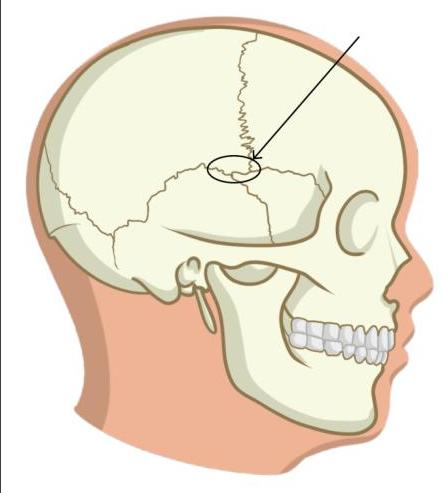
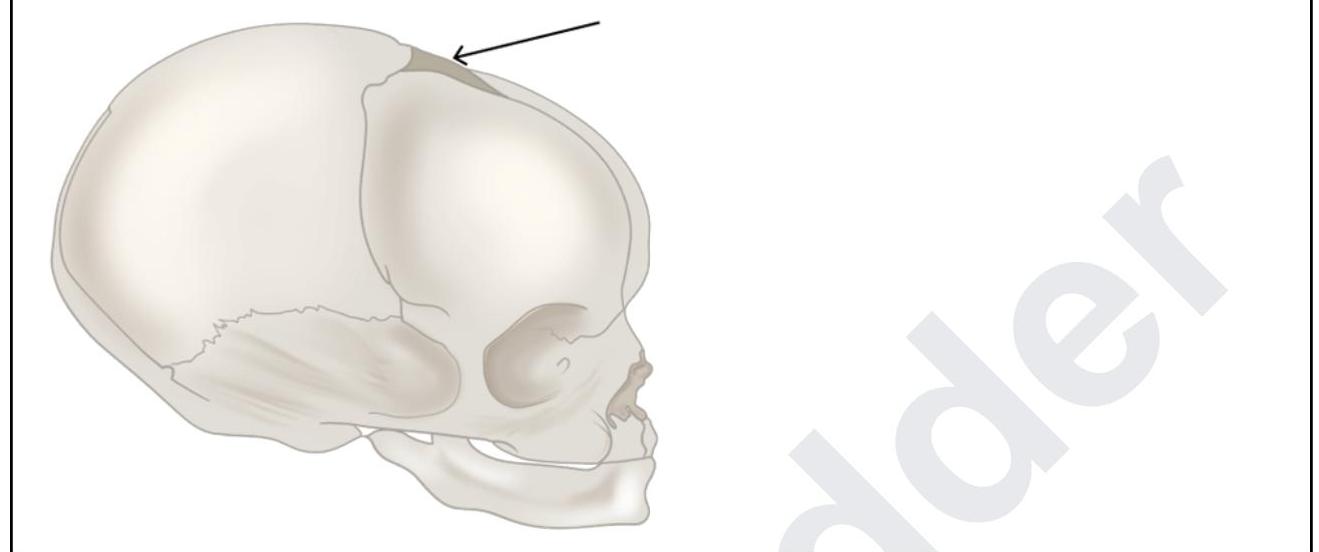
Damage to which of the following vessels most commonly results in epidural hematoma?
Which of the following statements is true about the anatomical course of the nasolacrimal duct?
Which of the following is NOT a digastric muscle?
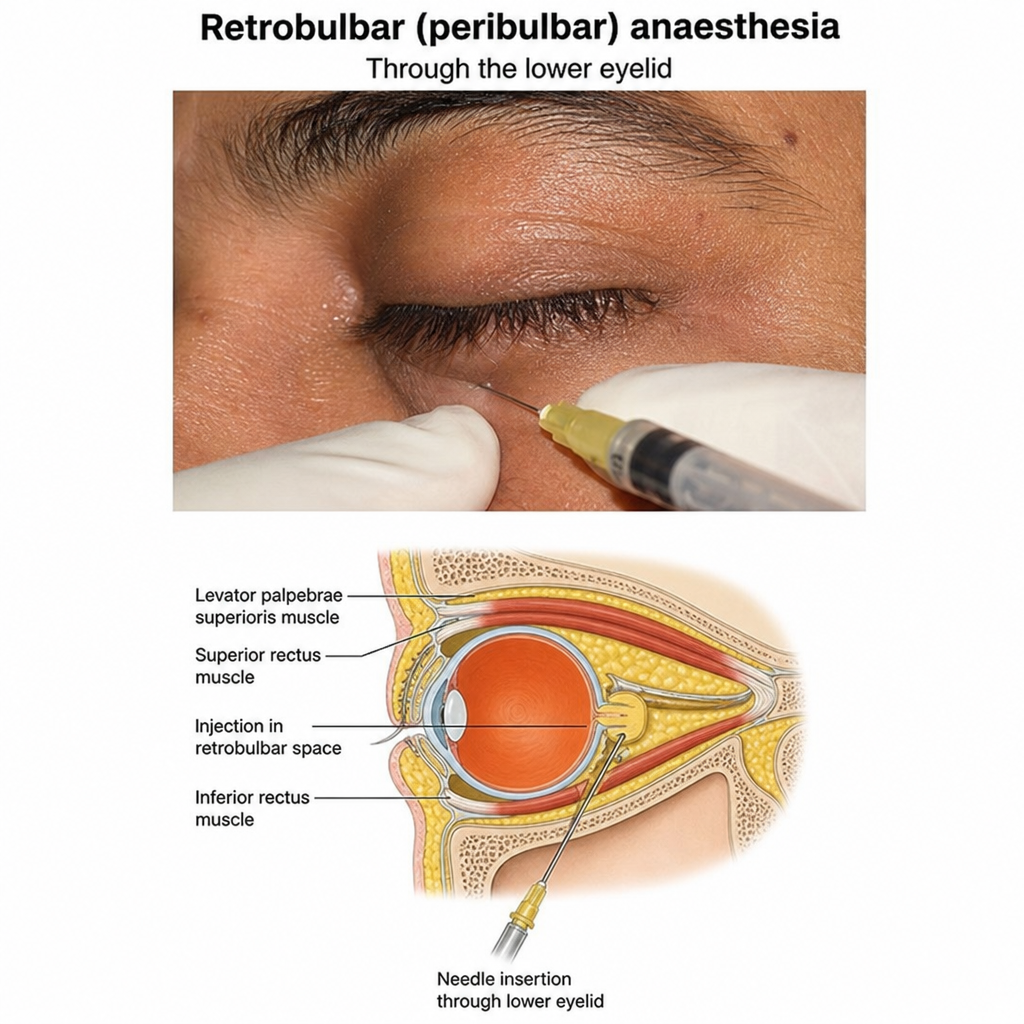
A 24-year-old man is admitted to the hospital after a street fight. Radiographic examination reveals an inferior (blow-out) fracture of the orbit. Orbital structures would most likely be found inferiorly in which of the following spaces?
Explanation: The **maxillary vein** is a short trunk that accompanies only the **first (mandibular) part** of the maxillary artery. It is formed by the confluence of veins from the **pterygoid venous plexus**. It passes backward, between the sphenomandibular ligament and the neck of the mandible, to enter the parotid gland. There, it joins the superficial temporal vein to form the **retromandibular vein**. **Why Option A is correct:** The maxillary artery is divided into three parts based on its relation to the lateral pterygoid muscle. The first part (mandibular part) runs horizontally between the neck of the mandible and the sphenomandibular ligament. The maxillary vein specifically follows this segment before merging into the retromandibular vein. **Why Options B and C are incorrect:** * **Second part (Pterygoid part):** This segment runs obliquely through the infratemporal fossa, either superficial or deep to the lateral pterygoid muscle. Instead of a single vein, this area is occupied by the extensive **pterygoid venous plexus**, which surrounds the second part of the artery. * **Third part (Pterygopalatine part):** This segment enters the pterygopalatine fossa. The venous drainage here consists of small tributaries that eventually drain back into the pterygoid plexus rather than forming a distinct "maxillary vein" accompanying the artery. **High-Yield NEET-PG Pearls:** * **Pterygoid Venous Plexus:** Communicates with the **cavernous sinus** via emissary veins and with the **facial vein** via the deep facial vein. This is a critical route for the spread of orofacial infections. * **Retromandibular Vein:** Formed by the Maxillary vein + Superficial Temporal vein. * **Middle Meningeal Artery:** A key branch of the *first part* of the maxillary artery, passing through the foramen spinosum.
Explanation: The **Maxillary artery** is one of the two terminal branches of the external carotid artery. It is anatomically divided into three parts based on its relation to the lateral pterygoid muscle. **Why Option B is correct:** The **Inferior Dental Artery** (also known as the Inferior Alveolar Artery) arises from the **first part (mandibular part)** of the maxillary artery. It descends to enter the mandibular foramen, travels through the mandibular canal, and supplies the lower teeth, the mandible, and the chin (via the mental branch). **Why other options are incorrect:** * **Option A (Mandibular artery):** This is a common distractor. While the first part of the maxillary artery is *called* the mandibular part, there is no major vessel formally named the "Mandibular artery" in standard human anatomy. * **Option C (Pterygomandibular plexus):** This is a venous plexus located between the temporalis and lateral pterygoid muscles. It is involved in venous drainage, not arterial supply. **High-Yield Clinical Pearls for NEET-PG:** * **Maxillary Artery Parts:** * **1st Part (Mandibular):** Gives off the Deep auricular, Anterior tympanic, Middle meningeal, Accessory meningeal, and **Inferior alveolar** arteries. (Mnemonic: **DAMAI**) * **2nd Part (Pterygoid):** Supplies muscles of mastication (Masseteric, Pterygoid, Deep temporal, Buccal). * **3rd Part (Pterygopalatine):** Enters the pterygopalatine fossa. * **Clinical Correlation:** The inferior alveolar artery is often encountered during dental procedures and mandibular fractures. Its terminal branch, the **mental artery**, emerges from the mental foramen to supply the lower lip.
Explanation: ### Explanation **Correct Option: B. Masseter muscle** The clinical presentation described is **Trismus**, commonly known as "lockjaw." This is a hallmark sign of **Tetanus**, caused by the neurotoxin *tetanospasmin* from *Clostridium tetani*. The toxin prevents the release of inhibitory neurotransmitters (GABA and glycine), leading to sustained, spastic contraction of muscles [1]. The **Masseter muscle** is the most powerful muscle of mastication and is typically the first to exhibit this tonic spasm [1]. The masseter originates from the zygomatic arch and inserts into the lateral aspect of the ramus of the mandible; its primary action is **elevation of the mandible** (closing the jaw). When it undergoes sustained contraction, the patient is unable to open their mouth. **Analysis of Incorrect Options:** * **A. Temporalis muscle:** While also a muscle of mastication that elevates the jaw, the masseter is clinically the primary muscle associated with the initial presentation of "lockjaw" in tetanus. * **C. Sternocleidomastoid muscle:** This is a muscle of the neck (innervated by the Accessory nerve). While it may be involved in later stages of generalized tetanus (contributing to neck stiffness), it does not cause the inability to open the jaw. * **D. Digastric muscle:** The anterior belly of the digastric muscle acts to **depress** the mandible (opening the mouth). In tetanus, the overpowering spasm of the elevators (masseter) overcomes the action of the depressors. **NEET-PG High-Yield Pearls:** 1. **Risus Sardonicus:** A characteristic "ironic smile" seen in tetanus due to the spasm of the **Facial muscles** (specifically the *Risorius*). 2. **Opisthotonus:** An extrapyramidal effect where the back arches due to spasm of the **Erector spinae** muscles. 3. **Nerve Supply:** All muscles of mastication (Masseter, Temporalis, Medial, and Lateral Pterygoids) are supplied by the **Mandibular nerve (V3)**. 4. **First Sign:** Trismus is often the first clinical sign of generalized tetanus due to the short axonal pathway of the cranial nerves supplying the masticatory muscles [1].
Explanation: The **Hypoglossal nerve (CN XII)** is a purely motor nerve responsible for the movement of all intrinsic and extrinsic muscles of the tongue, with the sole exception of the Palatoglossus (supplied by the Vagus nerve/Cranial root of Accessory nerve). ### **Explanation of Options:** * **A. Loss of tactile sensation over the tongue (Correct - False Statement):** Tactile (general) sensation of the tongue is mediated by the **Lingual nerve** (branch of CN V3) for the anterior 2/3rd and the **Glossopharyngeal nerve** (CN IX) for the posterior 1/3rd. Since CN XII is purely motor, its paralysis does not affect sensation. * **B. Deviation of uvula to same side (Incorrect - False Statement/Distractor):** While this is technically a false statement (uvula deviation occurs in **CN X** lesions and deviates to the *opposite* side), in the context of this question, Option A is the most definitive "False" regarding the specific function of the Hypoglossal nerve. * **C. Atrophy of the tongue on involved side (Incorrect - True Statement):** Lower Motor Neuron (LMN) lesions of CN XII lead to denervation, resulting in muscle wasting and fasciculations on the ipsilateral side. * **D. Deviation of tongue to affected side on protrusion (Incorrect - True Statement):** The **Genioglossus** muscle is the "safety muscle" that protrudes the tongue. In a unilateral lesion, the action of the healthy contralateral Genioglossus is unopposed, pushing the tongue toward the paralyzed side. ### **High-Yield Clinical Pearls for NEET-PG:** * **Rule of Tongue Deviation:** "The tongue points toward the lesion" (CN XII) but "The uvula points away from the lesion" (CN X). * **Purely Motor Cranial Nerves:** IV, VI, XI, and XII (Note: III is also motor but carries parasympathetics). * **Supranuclear (UMN) Lesion:** In a cortical stroke, the tongue deviates to the side **opposite** the lesion because the Genioglossus receives contralateral innervation.
Explanation: The movement of the eyeball is controlled by six extraocular muscles. To understand their actions, it is essential to distinguish between the **primary action** (the main movement) and subsidiary actions [1]. **Why Superior Rectus is Correct:** The **Superior Rectus (SR)** is the primary elevator of the eye when it is in the abducted position [1]. It originates from the common tendinous ring and inserts into the superior aspect of the sclera. While its primary action is **elevation**, it also contributes to adduction and intorsion [1]. **Analysis of Incorrect Options:** * **Inferior Oblique (A):** While the Inferior Oblique also elevates the eye (specifically in the adducted position), the Superior Rectus is considered the chief elevator [1]. In clinical testing, the SR is the muscle responsible for looking "up and out." * **Inferior Rectus (B):** This muscle is the primary **depressor** of the eye [1]. Its subsidiary actions include adduction and extorsion. * **Medial Rectus (D):** This muscle has only one action: **adduction** (moving the eye toward the midline/nose) [1]. It has no vertical action. **High-Yield Clinical Pearls for NEET-PG:** * **Mnemonic for Elevation:** "Obliques go Opposite." The Inferior Oblique elevates, and the Superior Oblique depresses [1]. * **The "H" Test:** To isolate the **Superior Rectus**, ask the patient to look **out (abduct) and then up** [1]. * **Nerve Supply:** All extraocular muscles are supplied by the Oculomotor nerve (CN III) **EXCEPT** the Superior Oblique (Trochlear, CN IV) and Lateral Rectus (Abducens, CN VI) — Mnemonic: **LR6SO4**. * **Pure Actions:** Only the Medial and Lateral Recti have single, pure actions (adduction and abduction, respectively) [1]. All other muscles have tertiary actions.
Explanation: To understand this question, one must recall the structures passing through the **cavernous sinus**: Cranial Nerves (CN) III, IV, VI, and the Ophthalmic (V1) and Maxillary (V2) divisions of the Trigeminal nerve, along with the internal carotid artery. ### **Why "Loss of corneal blink reflex" is the correct answer:** The corneal reflex has two limbs: an **afferent** limb (CN V1) and an **efferent** limb (**CN VII - Facial Nerve**). While CN V1 passes through the cavernous sinus, the Facial nerve (CN VII) does **not**. A lesion in the cavernous sinus would impair the afferent sensation but would not cause a total loss of the reflex if the other eye is stimulated (consensual reflex). More importantly, in the context of NEET-PG questions, "Loss of reflex" usually implies the motor component is intact unless specified. Since CN VII is outside the sinus, it remains functional. ### **Analysis of Incorrect Options:** * **A. Loss of pupillary light reflex:** The parasympathetic fibers responsible for pupillary constriction travel with **CN III**, which passes through the lateral wall of the cavernous sinus. Compression leads to a fixed, dilated pupil. * **C. Ptosis:** This occurs due to paralysis of the **Levator palpebrae superioris** (supplied by CN III) and potentially the superior tarsal muscle (sympathetic fibers around the internal carotid). * **D. Right ophthalmoplegia:** This refers to the paralysis of extraocular muscles. Since **CN III, IV, and VI** all traverse the cavernous sinus, an infection here leads to total internal and external ophthalmoplegia. ### **High-Yield Clinical Pearls for NEET-PG:** * **Abducens Nerve (CN VI)** is the most medial structure and is usually the **first nerve affected** in cavernous sinus thrombosis/infections. * **The Internal Carotid Artery** is the only artery in the body that passes through a venous sinus. * **Danger area of the face:** Infections from the upper lip/nose can spread to the cavernous sinus via the **ophthalmic veins** (which lack valves).
Explanation: **Explanation:** The correct answer is **Middle meningeal artery (MMA)**. *Note: There appears to be a discrepancy in the provided key. In standard medical literature and NEET-PG high-yield facts, the Middle Meningeal Artery is the most common source of an Epidural Hematoma (EDH) [1], while cerebral veins (bridging veins) are associated with Subdural Hematomas (SDH) [1].* **1. Why Middle Meningeal Artery is the correct concept:** An epidural hematoma occurs in the potential space between the dura mater and the skull [1]. It is most commonly caused by a skull fracture at the **pterion**—the thinnest part of the skull where the frontal, parietal, temporal, and sphenoid bones meet. The middle meningeal artery (a branch of the maxillary artery) runs directly deep to the pterion; its rupture leads to rapid arterial bleeding that strips the dura away from the bone, creating a characteristic **biconvex (lens-shaped)** opacity on CT. **2. Analysis of Incorrect Options:** * **Anterior communicating artery:** Most common site for berry aneurysms [2]; rupture leads to **Subarachnoid Hemorrhage (SAH)**, not EDH [2]. * **Posterior cerebral artery:** Rupture or occlusion typically leads to visual field defects (e.g., contralateral homonymous hemianopia with macular sparing). * **Cerebral vein (Bridging veins):** These drain the cerebral cortex into the dural venous sinuses. Their rupture (often due to deceleration injuries) results in a **Subdural Hematoma (SDH)** [1], which appears crescent-shaped on CT. **3. Clinical Pearls for NEET-PG:** * **Lucid Interval:** Classically associated with EDH (patient regains consciousness before deteriorating due to increasing intracranial pressure). * **CT Appearance:** EDH is **Biconvex/Lentiform** and does not cross suture lines (but can cross the midline). * **Source of Bleed:** 90% are arterial (MMA); the remaining 10% can be venous (dural sinuses). * **Nerve Involvement:** Expanding EDH can lead to uncal herniation, often compressing **CN III (Oculomotor nerve)**, resulting in a "blown pupil."
Explanation: ### Explanation The **nasolacrimal duct (NLD)** is a membranous canal that conveys tears from the lacrimal sac to the nasal cavity. Understanding its precise orientation is crucial for clinical procedures like probing and dacryocystorhinostomy (DCR). **1. Why Option B is Correct:** The anatomical course of the nasolacrimal duct follows a specific oblique path. From the lacrimal sac, it is directed **downward, backward, and laterally**. * **Downward:** To reach the inferior meatus. * **Backward:** Following the inclination of the maxilla and the lateral wall of the nose. * **Laterally:** Because the nasal cavity widens inferiorly compared to the narrow superior bridge of the nose. **2. Analysis of Incorrect Options:** * **Option A:** Incorrect because the duct moves **laterally**, not medially, as it descends along the lateral wall of the nasal cavity. * **Option C:** The NLD drains into the **anterior part** of the inferior meatus of the nose, not the posterior part. * **Option D:** The NLD is approximately **18 mm** (1.8 cm) in length, not 18 cm. **3. High-Yield Clinical Pearls for NEET-PG:** * **Valve of Hasner (Plica Lacrimalis):** A mucosal fold at the lower end of the NLD that prevents air from entering the lacrimal sac when blowing the nose. * **Development:** It is the last part of the lacrimal apparatus to canalize. Failure of canalization leads to **Congenital Dacryocystitis** (presents with epiphora). * **Bony Canal:** The duct occupies a canal formed by the maxilla, lacrimal bone, and the inferior nasal concha. * **Probing Tip:** When performing lacrimal probing, the probe is passed vertically downward, slightly backward, and laterally to match this anatomical course.
Explanation: ### Explanation A **digastric muscle** is defined as a muscle consisting of two fleshy bellies connected by an intermediate tendon. The question asks to identify which muscle does *not* follow this anatomical arrangement. **1. Why Sternocleidomastoid (SCM) is the Correct Answer:** The **Sternocleidomastoid** is a single-bellied muscle. Although it has two heads of origin (sternal and clavicular), these heads fuse into a single fleshy belly that inserts into the mastoid process. It lacks an intermediate tendon, making it a "bicephalic" muscle rather than a digastric one. **2. Analysis of Incorrect Options:** * **Omohyoid:** A classic digastric muscle of the neck. It has a superior and inferior belly connected by an intermediate tendon, which is held in place by a fascial sling attached to the clavicle. * **Occipitofrontalis:** This muscle consists of the frontal belly and the occipital belly. These two bellies are connected by a wide, flat intermediate tendon known as the **galea aponeurotica** (epicranial aponeurosis). * **Ligament of Treitz (Suspensory muscle of duodenum):** This is often a "catch" in exams. It contains two distinct parts: a skeletal muscle portion (from the diaphragm) and a smooth muscle portion (from the duodenum), making it functionally and structurally a digastric muscle. **3. High-Yield Clinical Pearls for NEET-PG:** * **Other Digastric Muscles:** The **Digastric muscle** itself (Anterior belly: Nerve to Mylohyoid; Posterior belly: Facial nerve) and the **Ligament of Treitz**. * **Nerve Supply Rule:** Digastric muscles often have dual nerve supplies if their bellies originate from different embryological sources (e.g., Digastric muscle bellies come from the 1st and 2nd pharyngeal arches). * **SCM Landmark:** The SCM is the key landmark of the neck, dividing it into anterior and posterior triangles. It is supplied by the **Spinal Accessory Nerve (CN XI)**.
Explanation: ### Explanation **Concept:** The orbit is a pyramid-shaped bony cavity. Its **floor** (inferior wall) is the thinnest and weakest part, primarily formed by the orbital plate of the **maxillary bone**. In a "blow-out" fracture, a sudden increase in intraorbital pressure (usually from a blunt object like a fist or baseball) causes the thin floor to fracture downward. Consequently, orbital contents—such as orbital fat and the **inferior rectus muscle**—herniate into the space immediately below the orbit, which is the **maxillary sinus**. **Analysis of Options:** * **C. Maxillary sinus (Correct):** It forms the immediate inferior boundary of the orbital floor. This is the most common site for blow-out fractures. * **A. Ethmoidal sinus:** These form the **medial wall** (lamina papyracea) of the orbit. While medial wall fractures can occur, they are less common than floor fractures in classic blow-out scenarios. * **B. Frontal sinus:** This is located superior to the orbit within the frontal bone, forming part of the orbital **roof**. * **D. Nasal cavity:** While the nasal cavity is medial to the maxillary sinus, it does not form the direct floor of the orbit. **NEET-PG High-Yield Pearls:** * **Clinical Presentation:** Patients often present with **enophthalmos** (sunken eyeball) and **diplopia** (double vision), especially on upward gaze, due to entrapment of the **inferior rectus muscle**. * **Nerve Involvement:** The **infraorbital nerve** (a branch of CN V2) runs along the orbital floor; its injury leads to anesthesia/paresthesia of the ipsilateral cheek and upper lip. * **Radiology:** Look for the **"Teardrop sign"** on a CT scan, representing herniated orbital fat and muscle hanging into the maxillary sinus.
Skull and Facial Bones
Practice Questions
Scalp and Facial Muscles
Practice Questions
Dural Venous Sinuses
Practice Questions
Cranial Cavity
Practice Questions
Orbit and Contents
Practice Questions
Temporal and Infratemporal Regions
Practice Questions
Pterygopalatine Fossa
Practice Questions
Oral Cavity
Practice Questions
Paranasal Sinuses
Practice Questions
Applied Anatomy and Clinical Correlations
Practice Questions
Get full access to all questions, explanations, and performance tracking.
Start For Free