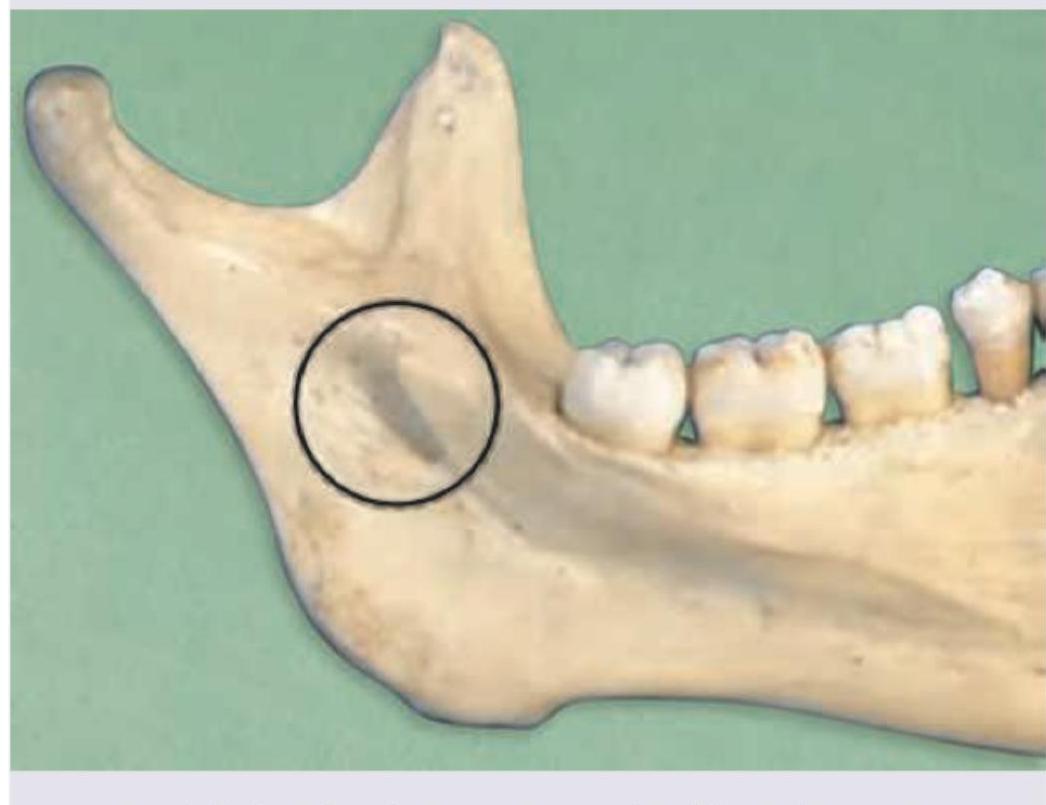
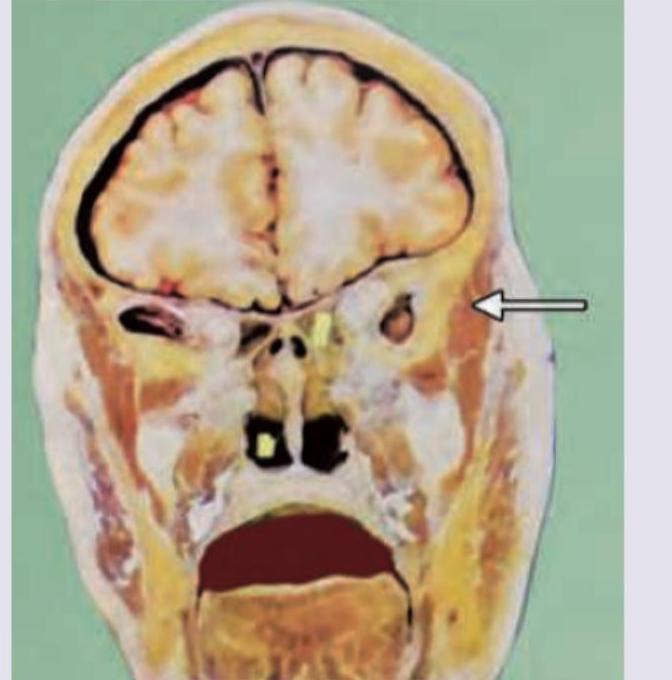
The macula lutea of the retina is located at what distance from the optic disc?
What is the effective diameter of the tympanic membrane?
Taste sensations from the anterior 2/3rd of the tongue are carried by which nerve?
Which of the following does not represent a fascial space for the spread of infection?
What is the length of the optic nerve?
The Internal Acoustic Meatus connects the inner ear to which cranial fossa?
Which of the following is true about the safety muscle of the tongue?
Which of the following papillae is most numerous and covers the presulcal area of the dorsum of the tongue?
Which of the following arteries does NOT supply the auditory tube?
The uncinate process is a part of which bone?
Explanation: The **macula lutea** is an oval, yellowish area near the center of the retina, responsible for high-resolution central vision. Anatomically, it is located **3 mm lateral (temporal)** to the margin of the optic disc and slightly below its horizontal plane [1]. **Why 3 mm is correct:** The distance from the center of the optic disc to the center of the fovea centralis (the pit within the macula) is approximately 3.9 to 4 mm. However, when measuring from the **temporal edge/margin** of the optic disc to the edge of the macula lutea, the standard anatomical distance is **3 mm**. This spatial relationship is crucial for mapping the visual field and understanding the "blind spot" (optic disc), which lacks photoreceptors. **Analysis of Incorrect Options:** * **1 mm & 2 mm:** These distances are too short. The optic disc itself has a diameter of roughly 1.5 mm; placing the macula this close would overlap with the peripapillary region. * **4 mm:** While the distance from the *center* of the disc to the *fovea* is ~4 mm, the question asks for the distance of the macula lutea as a structure from the disc margin, which is consistently defined as 3 mm in standard textbooks like Gray’s Anatomy. **High-Yield Clinical Pearls for NEET-PG:** * **Fovea Centralis:** The thinnest part of the retina, containing only cones (no rods), located at the center of the macula [1]. * **Cherry Red Spot:** Seen in Central Retinal Artery Occlusion (CRAO) and Tay-Sachs disease because the thin fovea allows the visual system to see the vascular choroid through the transparent retina [2]. * **Blood Supply:** The macula is primarily supplied by the **choriocapillaris**; it is devoid of retinal capillaries (Foveal Avascular Zone). * **The Blind Spot:** Corresponds to the optic disc, located 15 degrees nasal to the visual axis [1].
Explanation: The **tympanic membrane (TM)** is a thin, semi-transparent membrane that separates the external auditory canal from the middle ear. Understanding its surface area is crucial for grasping the **impedance matching mechanism** of the ear [1]. ### **Explanation of the Correct Answer** The total surface area of the tympanic membrane is approximately **90 mm²**. However, not all of this area vibrates effectively in response to sound waves. The peripheral part of the membrane is fixed to the tympanic sulcus. Therefore, the **effective vibrating area** (the part that actually transmits sound energy to the ossicles) is only about two-thirds of the total area, which is **approximately 45 mm²** [1]. This value is clinically significant because the ratio between the effective area of the TM (45 mm²) and the area of the stapes footplate (approx. 3.2 mm²) creates a **pressure gain of about 14:1**, contributing significantly to the transformer action of the middle ear [1]. ### **Analysis of Incorrect Options** * **Options A (25 mm²) & B (30 mm²):** These values are too low and do not represent any standard anatomical measurement of the TM. * **Option C (40 mm²):** While close, 45 mm² is the standard textbook value (e.g., Gray’s Anatomy, BD Chaurasia) cited for the effective vibrating diameter in medical entrance exams. ### **High-Yield Clinical Pearls for NEET-PG** * **Total Surface Area:** 90 mm². * **Effective Vibrating Area:** 45 mm² [1]. * **Dimensions:** Approximately 9–10 mm tall and 8–9 mm wide. * **Thickness:** ~0.1 mm. * **Orientation:** It is set obliquely at an angle of **55 degrees** with the floor of the meatus [2]. * **Nerve Supply:** The outer surface is supplied by the Auriculotemporal nerve and the Auricular branch of the Vagus (Arnold’s nerve); the inner surface is supplied by the Glossopharyngeal nerve (via the Tympanic plexus).
Explanation: The tongue has a complex nerve supply derived from its embryological development. The sensory innervation is divided into general sensation (touch/temperature) and special sensation (taste). [1] **Explanation of the Correct Answer:** The **Chorda tympani nerve**, a branch of the **Facial nerve (CN VII)**, is responsible for carrying taste sensations from the **anterior 2/3rd** of the tongue. Although the Lingual nerve (a branch of CN V3) provides general sensation to this area, the Chorda tympani hitches a ride with the Lingual nerve to reach the tongue. The cell bodies for these taste fibers are located in the **Geniculate ganglion**. **Analysis of Incorrect Options:** * **A. Glossopharyngeal nerve (CN IX):** This nerve carries **both** general sensation and taste from the **posterior 1/3rd** of the tongue (including the vallate papillae). [1] * **C. Trigeminal nerve (CN V):** Specifically, the **Lingual nerve** (branch of the Mandibular division) carries **general sensation** (pain, touch, temperature) from the anterior 2/3rd, but not taste. * **D. Greater auricular nerve:** This is a branch of the cervical plexus (C2, C3) that supplies the skin over the parotid gland and the external ear; it has no role in tongue innervation. **High-Yield Clinical Pearls for NEET-PG:** * **Posterior-most part (Vallecula/Epiglottis):** Taste and general sensation are carried by the **Internal Laryngeal nerve** (branch of Vagus, CN X). [1] * **Motor Supply:** All muscles of the tongue (intrinsic and extrinsic) are supplied by the **Hypoglossal nerve (CN XII)**, **EXCEPT** the Palatoglossus, which is supplied by the **Cranial root of the Accessory nerve (via the Pharyngeal plexus)**. * **Developmental Origin:** The anterior 2/3rd develops from the **1st pharyngeal arch**, while the posterior 1/3rd develops from the **3rd pharyngeal arch**.
Explanation: Explanation: The correct answer is **D. Rhinosoteric space**. This is because "Rhinosoteric space" is a non-existent anatomical term; it is a distractor designed to sound like a clinical space. **Understanding Fascial Spaces of the Head and Neck:** Fascial spaces are potential spaces between layers of fascia that are normally filled with loose connective tissue. In the presence of infection (usually odontogenic), these spaces can become actual spaces filled with pus or inflammatory exudate. * **A. Superficial temporal space:** This is a real anatomical space located between the temporal fascia and the temporalis muscle. It is a common site for the spread of odontogenic infections from the upper molars. * **B. Pterygomandibular space:** This is a clinically significant space located between the medial pterygoid muscle and the ramus of the mandible. It contains the inferior alveolar nerve and vessels. It is the target site for the **Inferior Alveolar Nerve Block** and is a frequent site for abscess formation. * **C. Masseteric space:** Also known as the submasseteric space, it lies between the masseter muscle and the lateral surface of the mandibular ramus. Infections here typically cause severe **trismus** (difficulty opening the mouth). **NEET-PG High-Yield Pearls:** * **Masticatory Space:** This is a collective term that includes the masseteric, pterygomandibular, and temporal spaces. * **Ludwig’s Angina:** A life-threatening cellulitis involving the submandibular, sublingual, and submental spaces bilaterally. * **Danger Space:** Located between the alar fascia and the prevertebral fascia; it provides a direct pathway for infection to spread from the pharynx to the **posterior mediastinum**.
Explanation: The optic nerve (Cranial Nerve II) is a vital structure for vision, extending from the lamina cribrosa of the sclera to the optic chiasm. Its total length is approximately **50 mm**, which is a high-yield fact for NEET-PG. ### **Breakdown of the Optic Nerve Segments** The correct answer is **50 mm** because the nerve is divided into four distinct anatomical segments: 1. **Intraocular (1 mm):** The shortest part, where the nerve fibers exit the globe through the lamina cribrosa. 2. **Intraorbital (25–30 mm):** The longest segment. It has an "S-shaped" redundancy to allow for free movement of the eyeball without putting tension on the nerve. 3. **Intracanalicular (6–9 mm):** The portion passing through the optic canal, accompanied by the ophthalmic artery. 4. **Intracranial (10–15 mm):** The segment extending from the optic canal to the optic chiasm. ### **Analysis of Incorrect Options** * **A (20 mm) & B (30 mm):** These values are too short for the total length. 25–30 mm specifically represents only the **intraorbital** portion. * **C (40 mm):** While closer, it underestimates the combined length of the intracranial and intracanalicular segments. ### **Clinical Pearls for NEET-PG** * **Morphology:** The optic nerve is not a true peripheral nerve; it is an outgrowth of the diencephalon. * **Myelination:** It is myelinated by **oligodendrocytes**, not Schwann cells. This explains why it is affected in Multiple Sclerosis. * **Blood Supply:** The central artery of the retina (a branch of the ophthalmic artery) enters the nerve approximately 12 mm behind the eyeball. * **Papilledema:** Increased intracranial pressure is transmitted through the subarachnoid space surrounding the nerve, leading to swelling of the optic disc.
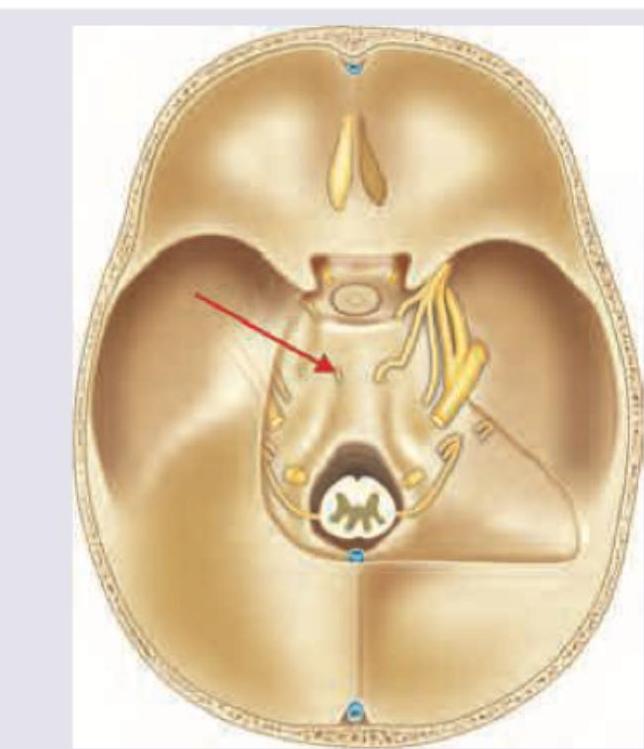
Explanation: **Explanation:** The **Internal Acoustic Meatus (IAM)** is a bony canal located within the **petrous part of the temporal bone**. Its opening (the internal acoustic pore) is situated on the posterior surface of the petrous ridge, which forms the anterolateral boundary of the **Posterior Cranial Fossa**. Therefore, the IAM serves as a conduit connecting the inner ear structures to the posterior cranial fossa, allowing the passage of neurovascular structures to the brainstem. **Analysis of Options:** * **Posterior Cranial Fossa (Correct):** The IAM opens directly into this fossa, transmitting the Facial nerve (VII), Vestibulocochlear nerve (VIII), and the Labyrinthine artery. * **Anterior Cranial Fossa (Incorrect):** This fossa houses the frontal lobes and structures like the cribriform plate (CN I). It is located far anterior to the temporal bone. * **Middle Cranial Fossa (Incorrect):** While the petrous temporal bone forms the floor of the middle cranial fossa, the IAM opens on its *posterior* slope. The middle cranial fossa contains the Foramen Ovale, Rotundum, and Spinosum. * **Posterior and Middle Cranial Fossa (Incorrect):** The IAM is strictly a feature of the posterior fossa. **High-Yield NEET-PG Pearls:** 1. **Contents of IAM:** Remember the mnemonic **"7-up, Coke down"** for the orientation of nerves (Superior: Facial nerve and Superior Vestibular; Inferior: Cochlear nerve and Inferior Vestibular). 2. **Clinical Correlation:** **Acoustic Neuroma** (Vestibular Schwannoma) typically originates within the IAM. As it grows, it expands the meatus and compresses the CN VII and VIII, leading to sensorineural hearing loss and facial palsy. 3. **Boundary:** The petrous ridge separates the middle cranial fossa from the posterior cranial fossa.
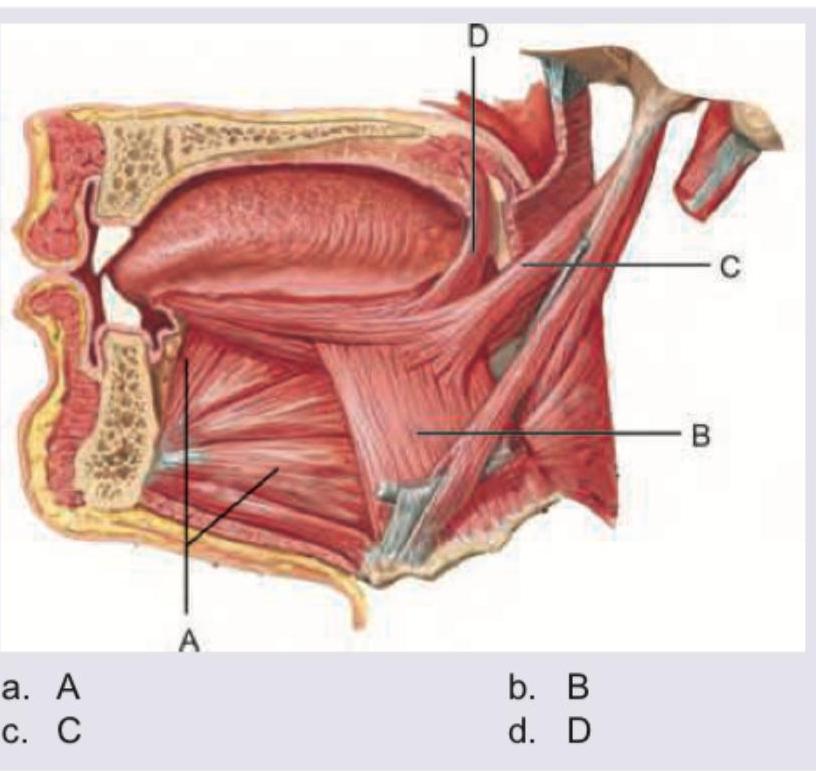
Explanation: The **Genioglossus** is known as the **"Safety Muscle of the Tongue."** It is a fan-shaped extrinsic muscle that forms the bulk of the tongue. ### Why the Correct Answer is Right The genioglossus is responsible for **protruding the tongue**. Its contraction pulls the base of the tongue forward, preventing it from falling backward and obstructing the oropharynx (airway). Like all extrinsic and intrinsic muscles of the tongue (except the Palatoglossus), it is innervated by the **Hypoglossal Nerve (CN XII)**. ### Why the Other Options are Wrong * **Option A:** The cranial part of the accessory nerve (CN XI) joins the Vagus nerve (CN X) to form the pharyngeal plexus. This plexus innervates the **Palatoglossus**, not the genioglossus. * **Option C:** The genioglossus originates from the **superior genial tubercle** of the mandible (symphysis menti), not the hard palate. The muscle that attaches to the palate is the Palatoglossus. ### Clinical Pearls for NEET-PG * **Clinical Testing:** To test the Hypoglossal nerve, ask the patient to protrude their tongue. In **Lower Motor Neuron (LMN)** lesions, the tongue deviates **toward the side of the lesion** due to the unopposed action of the healthy contralateral genioglossus. * **Anesthesia Connection:** During general anesthesia, the genioglossus relaxes. If the patient is supine, the tongue can fall back and cause airway obstruction [1], necessitating the use of an oropharyngeal airway or "jaw thrust" maneuver. * **Origin/Insertion:** Originates from the superior genial tubercle; inserts into the body of the hyoid bone and the entire length of the tongue.
Explanation: The dorsum of the tongue is divided into an anterior two-thirds (presulcal) and a posterior one-third (postsulcal) by the sulcus terminalis. The presulcal area is characterized by various lingual papillae. **Explanation of the Correct Answer:** * **Filiform Papillae (Option A):** These are the **most numerous** papillae on the tongue. They are small, conical projections that cover the entire presulcal dorsal surface. Unlike other papillae, they are **devoid of taste buds** and are primarily responsible for providing friction to move food (mechanical function). Their epithelium is highly keratinized, giving the tongue its characteristic velvety appearance. **Why the Other Options are Incorrect:** * **Fungiform (Option B):** These are mushroom-shaped, reddish spots scattered mainly at the tip and margins of the tongue [1]. They contain taste buds but are far less numerous than filiform papillae. * **Foliate (Option C):** These are leaf-like mucosal folds located on the lateral borders of the tongue near the palatoglossal arch [1]. They are rudimentary in humans. * **Vallate (Option D):** Also known as circumvallate papillae, these are the largest but **least numerous** (8–12 in number). They are arranged in a V-shaped row immediately in front of the sulcus terminalis [1]. **High-Yield NEET-PG Pearls:** * **Taste Buds:** Present in Vallate, Fungiform, and Foliate; **Absent** in Filiform. * **Innervation:** The anterior 2/3rd (where filiform are located) receives general sensation via the **Lingual nerve (V3)** and taste via the **Chorda tympani (VII)**. * **Clinical Note:** Atrophy of filiform papillae results in a "smooth tongue," often seen in nutritional deficiencies like Vitamin B12 or Iron deficiency anemia.
Explanation: ### Explanation The **auditory tube (Eustachian tube)** connects the nasopharynx to the middle ear. Its blood supply is derived from the network of arteries surrounding the infratemporal fossa and the pharyngeal wall. **Why the Stylomastoid Artery is the Correct Answer:** The **stylomastoid artery** is a branch of either the posterior auricular or occipital artery. It enters the stylomastoid foramen to supply the **middle ear (tympanic cavity)**, mastoid antrum, semicircular canals, and the facial nerve. It does **not** contribute to the supply of the auditory tube. **Analysis of Incorrect Options:** The auditory tube receives its blood supply from three main sources: * **Artery of the pterygoid canal:** A branch of the maxillary artery that supplies the cartilaginous part of the tube. * **Ascending pharyngeal artery:** A branch of the external carotid artery that supplies the pharyngeal end of the tube. * **Middle meningeal artery (and its accessory branch):** These branches of the maxillary artery supply the bony and cartilaginous junctions of the tube. **NEET-PG High-Yield Pearls:** * **Innervation:** The nerve supply to the auditory tube is via the **pharyngeal plexus** (for the ostium) and the **tympanic plexus** (CN IX). * **Muscles:** The **Tensor veli palatini** is the primary muscle responsible for opening the auditory tube during swallowing or yawning (often called the "dilator tubae"). * **Clinical Correlation:** Dysfunction of the auditory tube can lead to **Otitis Media with Effusion (Glue Ear)** due to negative pressure in the middle ear. * **Anatomy:** In children, the tube is shorter, wider, and more horizontal, making them more prone to ascending middle ear infections.
Explanation: The **uncinate process** is a thin, hook-like bony projection that belongs to the **ethmoid bone**. It arises from the lateral wall of the nasal cavity and extends postero-inferiorly across the hiatus semilunaris to articulate with the inferior nasal concha. ### Why Ethmoid is Correct: The ethmoid bone is a complex structure forming the roof and lateral walls of the nasal cavity. The uncinate process is one of its key landmarks, forming the medial boundary of the **ethmoidal infundibulum**. It plays a crucial role in the drainage of the anterior group of paranasal sinuses (frontal, maxillary, and anterior ethmoidal). ### Why Other Options are Incorrect: * **Nasal:** These are two small oblong bones forming the bridge of the nose; they do not possess an uncinate process. * **Maxilla:** While the uncinate process articulates with the maxilla to partially close the maxillary hiatus, it is not a part of the maxillary bone itself. * **Frontal:** The frontal bone forms the forehead and the roof of the orbits. It articulates with the ethmoid but does not contain the uncinate process. ### High-Yield Clinical Pearls for NEET-PG: * **Ostiomeatal Complex (OMC):** The uncinate process is a key component of the OMC. Obstruction in this area is a primary cause of chronic sinusitis. * **Surgical Landmark:** In Functional Endoscopic Sinus Surgery (**FESS**), an **uncinatectomy** (removal of the uncinate process) is the first and most critical step to gain access to the maxillary sinus ostium. * **Hiatus Semilunaris:** This is the gap located between the uncinate process (inferiorly) and the ethmoid bulla (superiorly).
Skull and Facial Bones
Practice Questions
Scalp and Facial Muscles
Practice Questions
Dural Venous Sinuses
Practice Questions
Cranial Cavity
Practice Questions
Orbit and Contents
Practice Questions
Temporal and Infratemporal Regions
Practice Questions
Pterygopalatine Fossa
Practice Questions
Oral Cavity
Practice Questions
Paranasal Sinuses
Practice Questions
Applied Anatomy and Clinical Correlations
Practice Questions
Get full access to all questions, explanations, and performance tracking.
Start For Free