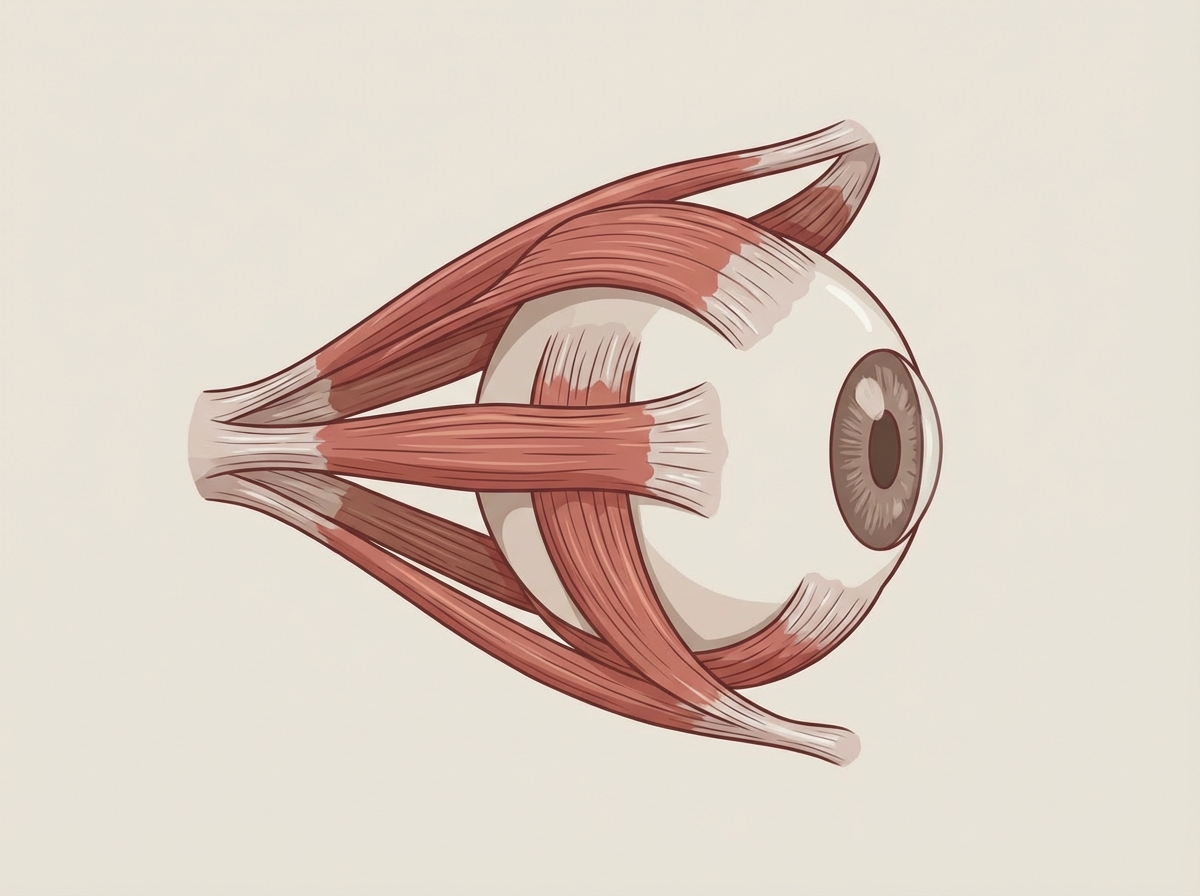
Which statement best describes the muscles of the eye?
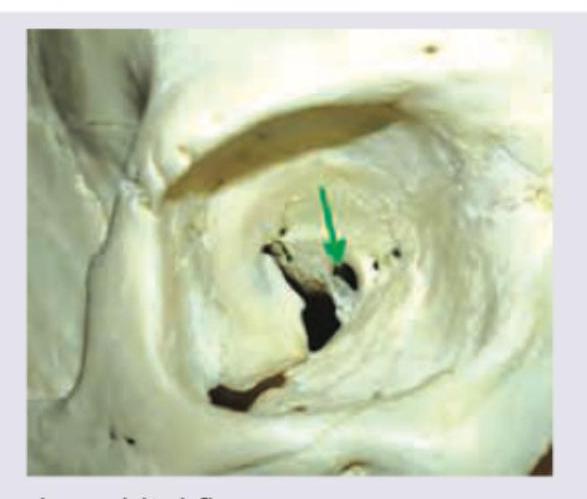
Which of the following structures pass through the superior orbital fissure?
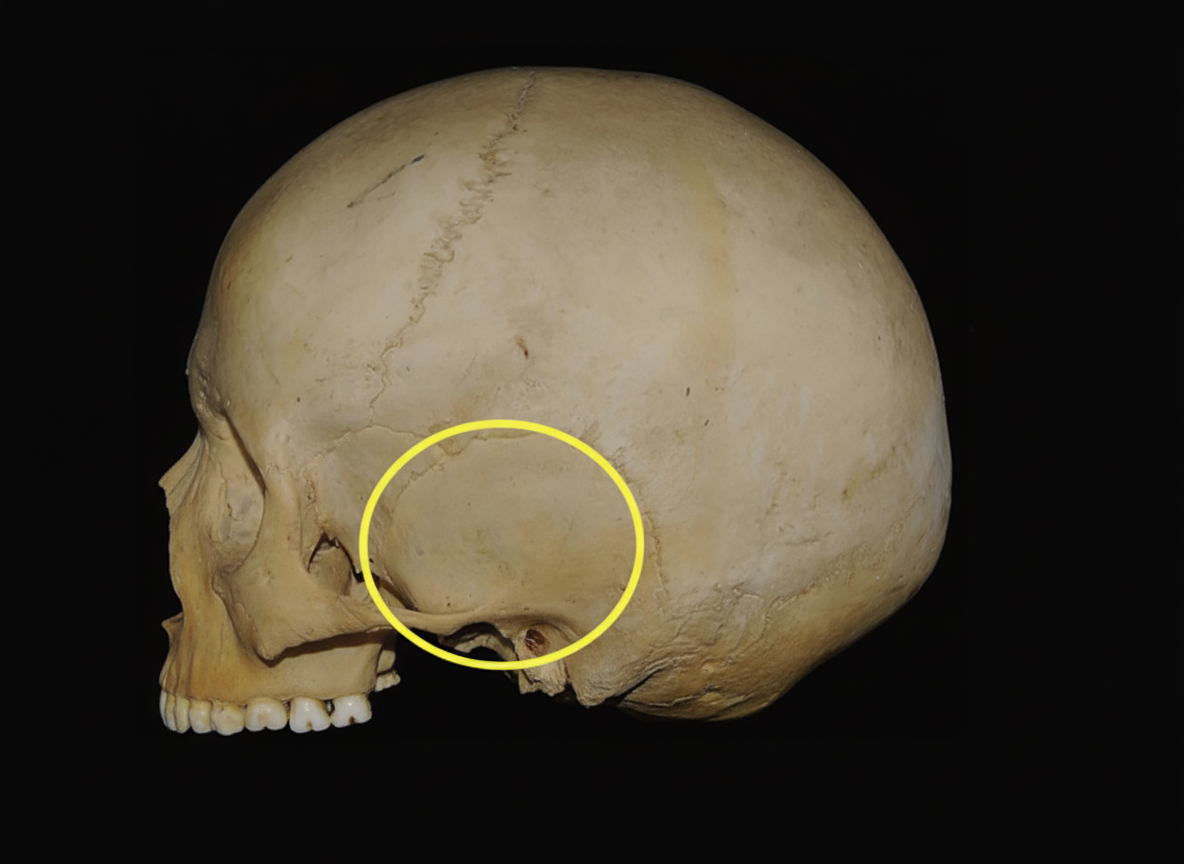
What is the nerve supply of the scalp?
Which of the following cranial nerves does NOT carry parasympathetic fibers for its function?
The tensor tympani muscle is supplied by which nerve?
The nerve that may get injured during the removal of a third molar is:
A Lefort-II fracture involves which of the following bones, except?
The angular vein is formed by which of the following veins?
What types of nerve fibres does the facial nerve contain?
Which of the following statements regarding the metopic suture is incorrect?
Explanation: The muscles of the eye and orbit are frequently tested in NEET-PG, requiring a clear distinction between extraocular and intraocular muscles and their respective nerve supplies. ### **Explanation of the Correct Answer** **Option D** is correct because the **Orbicularis oculi**, the muscle responsible for closing the eyelids, is a muscle of facial expression. Like all muscles of facial expression, it is innervated by the **Facial nerve (CN VII)**. Specifically, the temporal and zygomatic branches mediate this action. In contrast, the opening of the eye is primarily performed by the Levator palpebrae superioris (CN III). ### **Analysis of Incorrect Options** * **Option A:** All recti muscles (Superior, Inferior, Medial, Lateral) arise from the Common Tendinous Ring (Annulus of Zinn). However, the **Superior Oblique** arises from the body of the sphenoid bone, and the **Inferior Oblique** arises from the floor of the orbit (maxilla). * **Option B:** The Superior Oblique is innervated by the **Trochlear nerve (CN IV)**. A simple mnemonic is **SO4LR6**, meaning Superior Oblique is supplied by CN IV and Lateral Rectus by CN VI; all others are by CN III. [1] * **Option C:** The Sphincter pupillae causes miosis (constriction) and is innervated by **parasympathetic fibers** via the short ciliary nerves. Sympathetic nerves innervate the Dilator pupillae. ### **High-Yield Clinical Pearls** * **Bell’s Palsy:** Damage to CN VII leads to the inability to close the eye, risking corneal ulceration. * **Ptosis:** Drooping of the eyelid occurs with CN III palsy (complete ptosis) or Horner’s Syndrome (partial ptosis due to loss of sympathetic supply to Müller’s muscle). * **H-Test:** To isolate the Superior Oblique, ask the patient to look **medially and then downwards**. [1]
Explanation: The **Superior Orbital Fissure (SOF)** is a critical communication between the middle cranial fossa and the orbit. It is anatomically divided into three parts by the **Common Tendinous Ring (Annulus of Zinn)**. ### **Why Option C is Correct** The SOF transmits several cranial nerves and vessels essential for ocular function. The structures passing through it include: 1. **Oculomotor nerve (CN III):** Both superior and inferior divisions. 2. **Trochlear nerve (CN IV).** 3. **Abducent nerve (CN VI).** 4. **Ophthalmic nerve (V1) branches:** Specifically the **L**acrimal, **F**rontal, and **N**asociliary nerves (Mnemonic: **LFN**). 5. **Ophthalmic veins:** Superior and inferior. Option C is the most comprehensive answer as it includes the motor nerves for extraocular muscles (III, IV, VI) and the sensory branches of the ophthalmic nerve (Lacrimal and Nasociliary). ### **Why Other Options are Incorrect** * **Options A, B, and D** are incomplete. While the structures listed in these options do pass through the SOF, they omit key nerves (like the Abducent or Trochlear) that are also transmitted through the fissure. In NEET-PG, when multiple options are technically "correct," the most inclusive/complete list is the intended answer. ### **High-Yield Clinical Pearls for NEET-PG** * **Annulus of Zinn Localization:** * **Above the ring:** Lacrimal, Frontal, and Trochlear nerves (**LFT**), and Superior ophthalmic vein. * **Within the ring:** Superior and Inferior divisions of CN III, Nasociliary nerve, and CN VI. * **Superior Orbital Fissure Syndrome:** Characterized by ophthalmoplegia (palsy of CN III, IV, VI) and anesthesia of the upper eyelid/forehead (V1), often due to trauma or tumors. * **The Optic Canal** (not the SOF) transmits the Optic nerve (CN II) and the Ophthalmic artery.
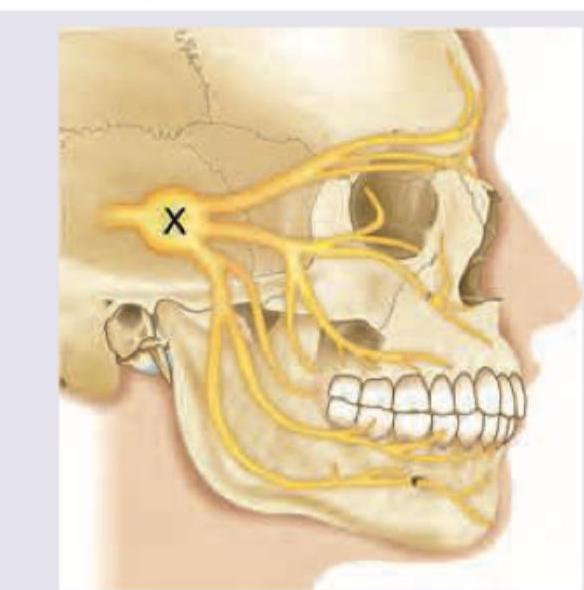
Explanation: The nerve supply of the scalp is a high-yield topic for NEET-PG, characterized by a distinct division between the area in front of the auricle and the area behind it. The scalp is innervated by a total of **10 nerves** on each side (5 in front of the ear and 5 behind). ### **Explanation of the Correct Answer** The correct answer is **D (All of the above)** because the scalp receives sensory innervation from branches of both the **Trigeminal nerve (CN V)** and the **Spinal nerves (C2, C3)**. 1. **Auriculotemporal Nerve:** A branch of the Mandibular division of the Trigeminal nerve (V3). It supplies the skin of the temple and the scalp in the temporal region (anterior to the auricle). 2. **Zygomaticotemporal Nerve:** A branch of the Zygomatic nerve (from the Maxillary division, V2). It supplies a small area of the scalp over the temple. 3. **Occipital Nerves:** These include the **Greater Occipital (C2)** and **Lesser Occipital (C2, C3)** nerves, which supply the posterior part of the scalp up to the vertex. ### **Clinical Pearls for NEET-PG** * **The "5+5" Rule:** In front of the auricle, 4 nerves are sensory (Supratrochlear, Supraorbital, Zygomaticotemporal, Auriculotemporal) and 1 is motor (Temporal branch of Facial nerve). Behind the auricle, 4 are sensory (Great auricular, Lesser occipital, Greater occipital, Third occipital) and 1 is motor (Posterior auricular branch of Facial nerve). * **Vertex Landmark:** The vertex of the scalp is the dividing line where the Trigeminal nerve supply (anterior) meets the Spinal nerve supply (posterior). * **Local Anesthesia:** To achieve a complete scalp block, the anesthetic must be injected circumferentially around the head (the "ring block"), as the nerves emerge from below and travel upward toward the vertex. * **Referred Pain:** Irritation of the cervical nerves (C2, C3) can cause "Occipital Neuralgia," which presents as sharp pain radiating from the base of the skull to the vertex.
Explanation: To master the cranial nerves for NEET-PG, it is essential to remember which nerves carry **General Visceral Efferent (parasympathetic)** fibers [1]. Only four cranial nerves carry these fibers: **III, VII, IX, and X** (mnemonic: **1973**). ### **Why Option A is Correct** * **Fourth Cranial Nerve (Trochlear):** This is a purely motor nerve. Its sole function is to provide somatic motor innervation to the **Superior Oblique** muscle of the eye. It does not possess a parasympathetic nucleus or carry autonomic fibers. ### **Why the Other Options are Incorrect** * **Option C: Third (Oculomotor):** Carries parasympathetic fibers from the **Edinger-Westphal nucleus** to the ciliary ganglion. These fibers supply the sphincter pupillae (for miosis) and the ciliary muscle (for accommodation). * **Option B: Seventh (Facial):** Carries parasympathetic fibers from the **Superior Salivatory nucleus**. These fibers travel via the greater petrosal nerve (to the pterygopalatine ganglion for lacrimation) and the chorda tympani (to the submandibular ganglion for submandibular/sublingual salivation). * **Option D: Ninth (Glossopharyngeal):** Carries parasympathetic fibers from the **Inferior Salivatory nucleus**. These fibers travel via the lesser petrosal nerve to the **otic ganglion** to provide secretomotor supply to the parotid gland. ### **High-Yield NEET-PG Pearls** * **The "1973" Rule:** Cranial nerves 10, 9, 7, and 3 are the only ones with parasympathetic outflow. * **Trochlear Nerve Unique Facts:** It is the only cranial nerve to emerge from the **dorsal** aspect of the brainstem and has the longest intracranial course. * **Vagus Nerve (X):** Provides the most extensive parasympathetic innervation, reaching the thoracic and abdominal viscera up to the splenic flexure of the colon.
Explanation: ### Explanation **Correct Option: A (Anterior branch of the V nerve)** The **Tensor tympani** muscle is derived from the **first pharyngeal arch (Mandibular arch)**. In embryology, muscles are always supplied by the nerve of the arch they originate from. The nerve of the first arch is the **Mandibular nerve (V3)**, which is a branch of the Trigeminal nerve (V). Specifically, the tensor tympani is supplied by a branch from the **nerve to the medial pterygoid**, which arises from the **undivided trunk** (often associated with the anterior division) of the mandibular nerve. **Why other options are incorrect:** * **Option B:** While the Mandibular nerve has a posterior division, it primarily supplies sensory branches (Auriculotemporal, Lingual) and one motor branch (to the Mylohyoid). The nerve to the tensor tympani originates higher up from the main trunk/anterior complex. * **Option C (IX nerve):** The Glossopharyngeal nerve provides sensory supply to the middle ear via the tympanic plexus (Jacobson’s nerve) but does not supply the middle ear muscles. * **Option D (VII nerve):** The Facial nerve supplies the **Stapedius** muscle, which is derived from the **second pharyngeal arch**. This is a common point of confusion for students. **High-Yield Clinical Pearls for NEET-PG:** * **Function:** The tensor tympani pulls the handle of the malleus medially, tensing the tympanic membrane to dampen loud sounds (Acoustic reflex). * **Hyperacusis:** Paralysis of the **Stapedius** (supplied by CN VII) leads to hyperacusis (sensitivity to loud sounds), often seen in Bell’s Palsy. * **Mnemonic:** **T**ensor **T**ympani is supplied by **T**rigeminal (**T**hree/V3). **S**tapedius is supplied by **S**even (VII).
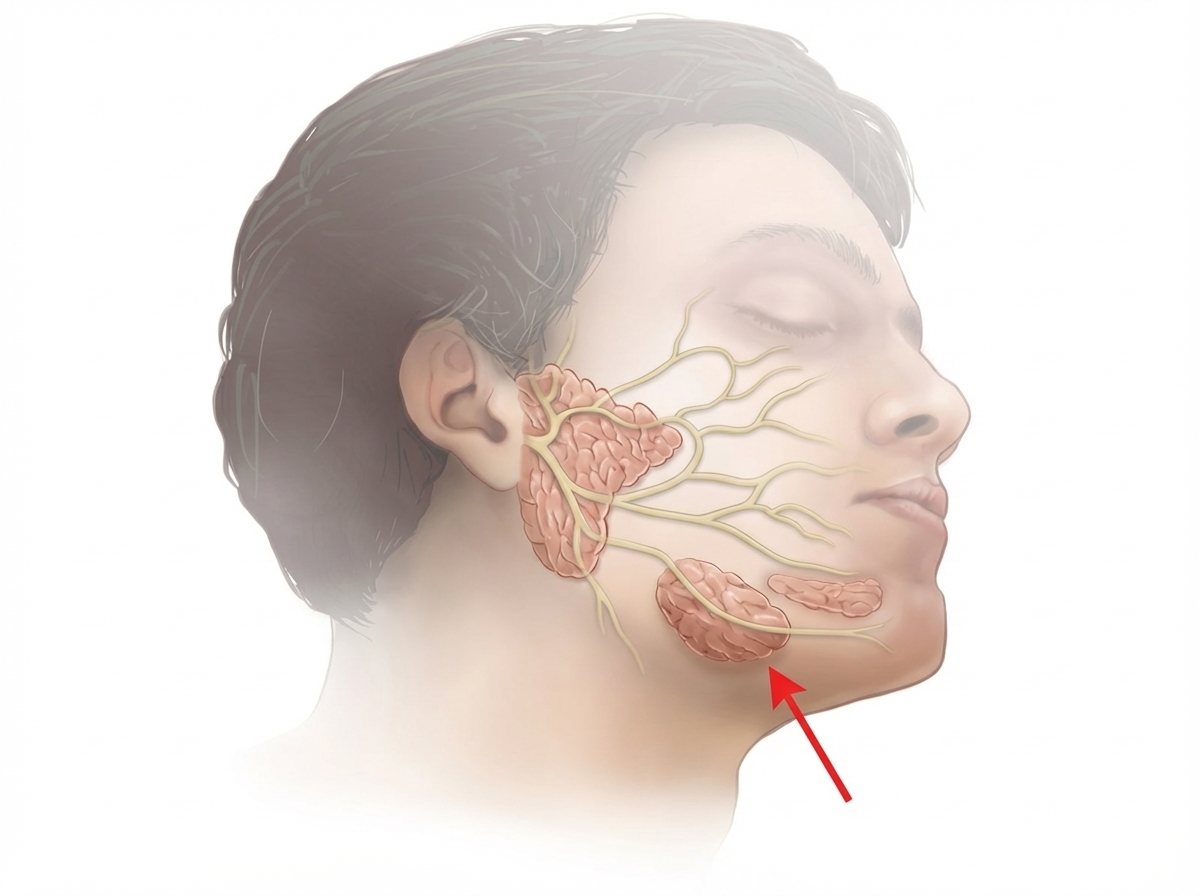
Explanation: The **lingual nerve** is the correct answer due to its intimate anatomical relationship with the mandibular third molar (wisdom tooth). As a branch of the mandibular nerve (V3), it passes forward into the oral cavity, lying medially against the alveolar bone in the **third molar region**. In approximately 15-20% of individuals, the nerve is located at or above the level of the alveolar crest, making it highly vulnerable to injury during surgical extractions, distal incisions, or the elevation of lingual flaps. **Analysis of Incorrect Options:** * **Hypoglossal Nerve (CN XII):** This is the motor nerve for the tongue. It runs deep in the submandibular region, far below the alveolar process of the mandible, and is not at risk during routine dental extractions. * **Facial Nerve (CN VII):** This nerve exits the stylomastoid foramen and branches within the parotid gland to supply muscles of facial expression. It does not enter the oral cavity or the alveolar region. * **Glossopharyngeal Nerve (CN IX):** This nerve provides sensory supply to the posterior 1/3 of the tongue. While it is located in the oropharynx, it lies posterior and medial to the tonsillar fossa, distant from the surgical site of a third molar. **Clinical Pearls for NEET-PG:** * **Injury Presentation:** Damage to the lingual nerve results in **loss of general sensation** (touch/pain) and **loss of taste** (via chorda tympani fibers) to the anterior 2/3 of the tongue on the ipsilateral side. * **Inferior Alveolar Nerve (IAN):** This is the other nerve commonly at risk during third molar surgery, but it typically results in numbness of the lower lip and chin, not the tongue. * **Anatomical Landmark:** The lingual nerve is often described as "looping" under the submandibular (Wharton’s) duct from lateral to medial.
Explanation: **Explanation:** Le Fort fractures are classic patterns of midface fractures used to categorize facial trauma. Understanding the specific fracture lines is crucial for NEET-PG. **Le Fort II (Pyramidal Fracture)** The fracture line in Le Fort II starts at the **nasal bones**, extends through the **lacrimal bones**, crosses the infraorbital rim, and travels through the **maxillary** sinus walls to the pterygoid plates. * **Why Ethmoidal bone is the correct answer:** While the fracture line passes very close to the ethmoid air cells (specifically the lamina papyracea), the **ethmoid bone itself is not considered a primary component** of the classic Le Fort II fracture line. In contrast, the ethmoid bone is characteristically involved in **Le Fort III** (Craniofacial dysjunction), where the fracture involves the medial wall of the orbit and the cribriform plate. **Analysis of Incorrect Options:** * **Maxilla:** This is the primary bone involved; the fracture creates a pyramidal segment of the maxilla that becomes mobile. * **Nasal bone:** The apex of the Le Fort II pyramid starts at the nasofrontal suture or the nasal bones. * **Lacrimal bone:** The fracture line consistently traverses the medial orbital wall, involving the lacrimal bone. **Clinical Pearls for NEET-PG:** * **Le Fort I:** "Floating Palate" (Horizontal fracture above the teeth). * **Le Fort II:** "Pyramidal Fracture" (Involves the infraorbital rim). * **Le Fort III:** "Craniofacial Dysjunction" (Involves the zygomatic arch and ethmoid; the entire face is separated from the skull base). * **Key Sign:** Bilateral circumorbital edema and ecchymosis ("Raccoon eyes") are common in Le Fort II and III.
Explanation: **Explanation:** The **angular vein** is a crucial venous structure located at the medial angle (canthus) of the eye. It is formed by the union of the **supraorbital vein** and the **supratrochlear vein**. Once formed, the angular vein runs obliquely downwards along the side of the nose and continues as the **facial vein** after crossing the lower margin of the orbit. **Analysis of Options:** * **Option D (Correct):** The supraorbital and supratrochlear veins descend from the forehead and unite at the medial angle of the eye to form the angular vein. * **Options A & B (Incorrect):** The **superficial temporal vein** joins the maxillary vein within the parotid gland to form the **retromandibular vein**, not the angular vein. * **Option C (Incorrect):** The retromandibular vein is formed behind the neck of the mandible and has no role in the formation of the angular vein. **High-Yield Clinical Pearls for NEET-PG:** 1. **The "Danger Area" of the Face:** The angular vein communicates with the **superior ophthalmic vein**, which drains directly into the **cavernous sinus**. 2. **Retrograde Infection:** Because facial veins lack valves, infections from the upper lip or nose (furuncles/boils) can spread via the angular and ophthalmic veins to the cavernous sinus, leading to life-threatening **cavernous sinus thrombosis**. 3. **Deep Connections:** The facial vein also communicates with the **pterygoid venous plexus** via the deep facial vein.
Explanation: The facial nerve (CN VII) is a mixed nerve consisting of two distinct roots: a large **motor root** and a smaller **sensory root**, also known as the **nervus intermedius (of Wrisberg)**. ### Why the Correct Answer is Right: The facial nerve is anatomically and functionally divided into: 1. **Motor Root:** Contains Special Visceral Efferent (SVE) fibers that supply the muscles of facial expression (derived from the 2nd branchial arch). 2. **Sensory Root (Nervus Intermedius):** Despite its name, it carries both: * **Sensory fibers:** Special Visceral Afferent (SVA) for taste from the anterior 2/3 of the tongue and General Somatic Afferent (GSA) for the external ear. * **Parasympathetic fibers:** General Visceral Efferent (GVE) fibers for the submandibular, sublingual, and lacrimal glands. ### Why Other Options are Wrong: * **Option A:** Incorrect because it ignores the significant sensory and autonomic components carried by the nervus intermedius. * **Option C & D:** While the facial nerve does carry parasympathetic fibers, it **does not** carry sympathetic fibers in its primary roots. Sympathetic supply to the face travels via plexuses around the internal and external carotid arteries. ### High-Yield Clinical Pearls for NEET-PG: * **Nuclei:** The facial nerve arises from four nuclei: Motor nucleus (SVE), Superior salivatory nucleus (GVE), Lacrimatory nucleus (GVE), and Nucleus tractus solitarius (SVA/GSA). * **Course:** It enters the internal acoustic meatus, passes through the facial canal (the longest bony canal for any nerve), and exits via the **stylomastoid foramen**. * **Bell’s Palsy:** Lower motor neuron lesion of the facial nerve resulting in ipsilateral paralysis of facial muscles, loss of taste (anterior 2/3), and hyperacusis (due to paralysis of the stapedius muscle).
Explanation: **Explanation:** The **metopic suture** (also known as the median frontal suture) is a primary cranial suture that separates the two halves of the frontal bone during fetal development and early childhood. **1. Why Option A is the correct (incorrect statement):** In the majority of individuals, the metopic suture undergoes **synostosis** (fusion) between the ages of **2 and 8 years**. Once fused, it disappears completely. It persists into adulthood in only about **3% to 8%** of the population (a condition known as **metopism**). Therefore, stating it is present in *all* individuals is anatomically incorrect. **2. Analysis of other options:** * **Option B:** It is visible in **norma verticalis** (superior view of the skull) as it extends from the anterior fontanelle (bregma) towards the root of the nose. * **Option C:** Its primary anatomical role is to separate the **right and left frontal bones** before they fuse into a single bone. * **Option D:** It is a midline structure located in the **median plane**, directly superior to the internasal suture. **High-Yield Clinical Pearls for NEET-PG:** * **Metopism:** The persistence of the metopic suture in adults. On an X-ray, it can be mistaken for a **frontal bone fracture**. * **Craniosynostosis:** Premature closure of the metopic suture leads to **Trigonocephaly** (a triangular-shaped forehead). * **Landmark:** The remnant of the metopic suture just above the glabella is often used as an anatomical landmark in forensic medicine.
Skull and Facial Bones
Practice Questions
Scalp and Facial Muscles
Practice Questions
Dural Venous Sinuses
Practice Questions
Cranial Cavity
Practice Questions
Orbit and Contents
Practice Questions
Temporal and Infratemporal Regions
Practice Questions
Pterygopalatine Fossa
Practice Questions
Oral Cavity
Practice Questions
Paranasal Sinuses
Practice Questions
Applied Anatomy and Clinical Correlations
Practice Questions
Get full access to all questions, explanations, and performance tracking.
Start For Free