Which of the following extrinsic muscles closes the oropharyngeal isthmus?
The Jacobson nerve supplies which of the following structures?
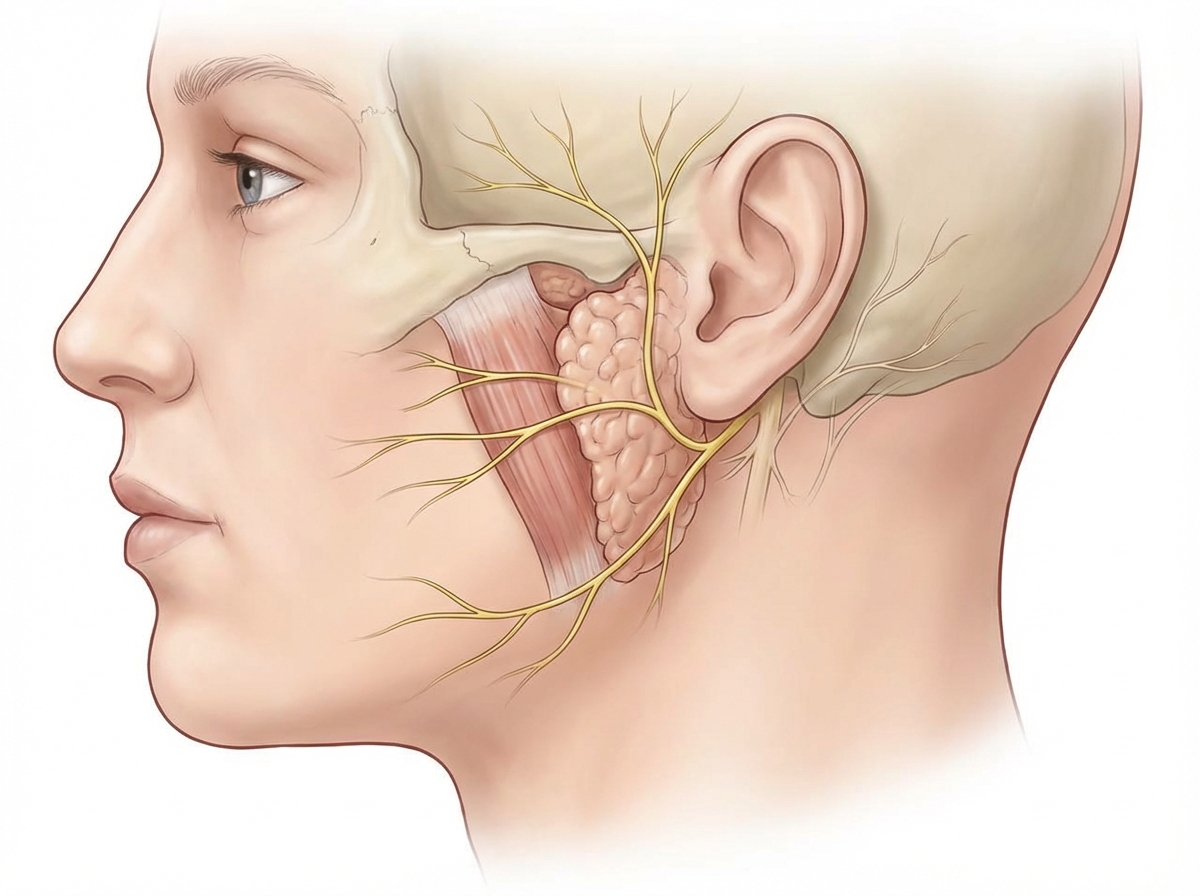
A 6-year-old boy presents with high fever and pain over the parotid gland. Which of the following nerves is responsible for painful sensations from the region of the parotid gland?
The parotid duct can be palpated when?
A bugle player uses which facial muscle to produce sound while playing the instrument?
Cranial nerve VIII is related to which of the following functions?
A patient has loss of sensation at the angle of the mandible and the parotid area. Which of the following nerves is most likely to be injured?
Which of the following muscles is supplied by a direct branch from the trunk of the mandibular division of the trigeminal nerve?
Otic ganglia are related to which cranial nerve?
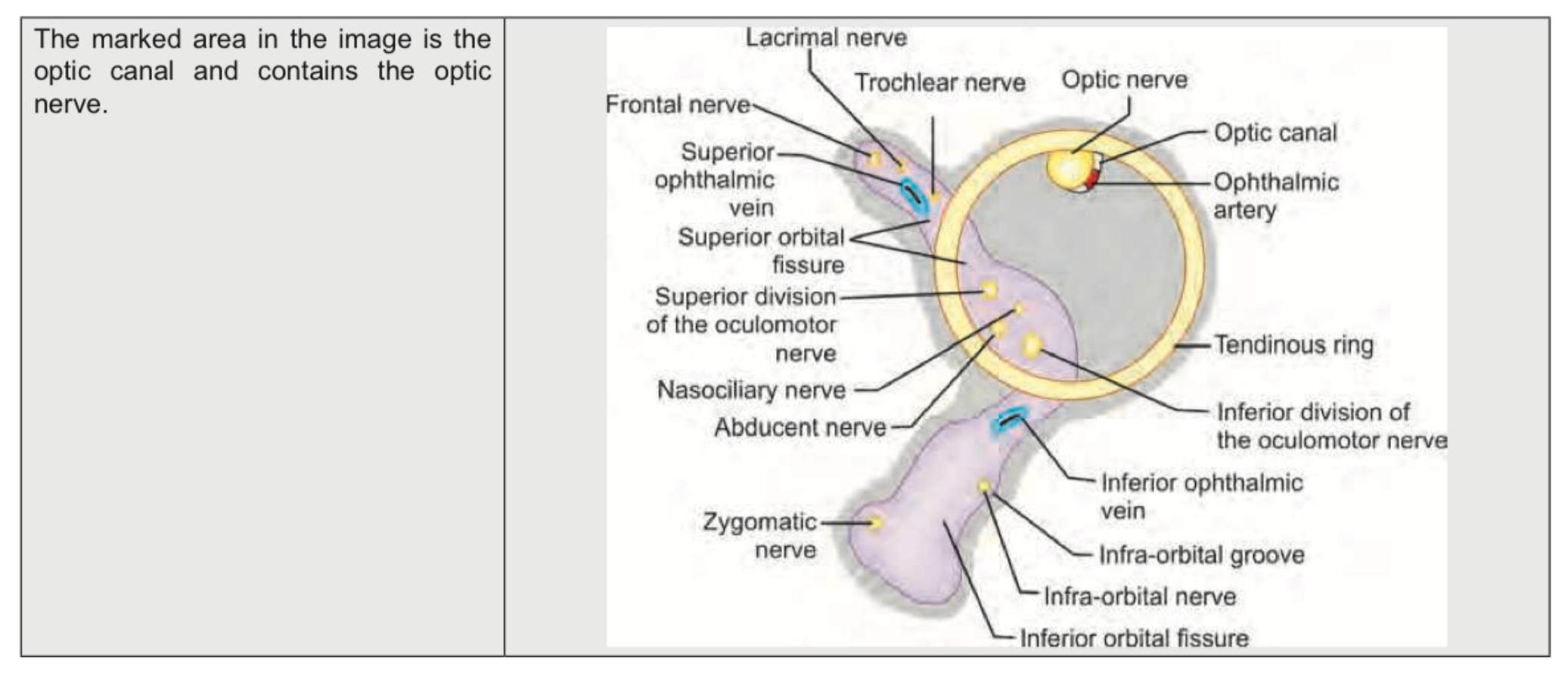
Which of the following structures is not related to the cavernous sinus?
Explanation: **Explanation:** The **oropharyngeal isthmus** (fauces) is the narrow passage between the oral cavity and the oropharynx. It is bounded superiorly by the soft palate, inferiorly by the tongue, and laterally by the palatoglossal arches. **Why Palatoglossus is correct:** The **Palatoglossus** muscle forms the substance of the palatoglossal arch (anterior pillar of fauces). It originates from the palatine aponeurosis and inserts into the side of the tongue. When it contracts, it performs two simultaneous actions: it **pulls the root of the tongue upward** and **pulls the soft palate downward**. This action constricts the space between the arches, effectively closing the oropharyngeal isthmus, which is essential during the first stage of swallowing to prevent food from returning to the mouth. **Analysis of Incorrect Options:** * **Genioglossus:** Known as the "Life-saver muscle," its primary action is to **protrude** the tongue. It does not assist in closing the isthmus. * **Hyoglossus:** This muscle **depresses** and retracts the tongue, which would widen rather than close the isthmus. * **Styloglossus:** This muscle **retracts** and elevates the tongue (assisting in swallowing), but it does not bring the soft palate down to close the isthmus. **High-Yield NEET-PG Pearls:** * **Nerve Supply Exception:** All extrinsic and intrinsic muscles of the tongue are supplied by the **Hypoglossal nerve (CN XII)** EXCEPT the **Palatoglossus**, which is supplied by the **Cranial root of the Accessory nerve (CN XI)** via the Pharyngeal plexus. * **Safety Muscle:** Genioglossus is the "safety muscle" because its contraction prevents the tongue from falling back and obstructing the oropharynx. * **Development:** The Palatoglossus is embryologically derived from the **4th branchial arch**, unlike other tongue muscles which derive from **occipital myotomes**.
Explanation: The Jacobson nerve, also known as the Tympanic nerve, is a branch of the Glossopharyngeal nerve (CN IX). It arises from the inferior ganglion of CN IX and enters the middle ear through the inferior tympanic canaliculus. Why the correct answer is right: Once inside the middle ear, the Jacobson nerve forms the Tympanic Plexus on the surface of the promontory. This plexus provides sensory innervation to the mucous membrane of the middle ear, the auditory (Eustachian) tube, and the mastoid air cells. Therefore, it is the primary sensory supply for the middle ear mucosa. Analysis of incorrect options: * A. Nasal mucosa: This is primarily supplied by the branches of the Ophthalmic (V1) and Maxillary (V2) divisions of the Trigeminal nerve. * C. Oropharyngeal mucosa: While the Glossopharyngeal nerve (CN IX) does provide sensory supply to the oropharynx, it does so via its pharyngeal branches, not the Jacobson nerve branch. High-Yield Clinical Pearls for NEET-PG: * Secretomotor Pathway: The Jacobson nerve carries preganglionic parasympathetic fibers that eventually become the Lesser Petrosal Nerve. These fibers synapse in the Otic Ganglion to provide secretomotor supply to the Parotid Gland. * Referred Ear Pain: Since CN IX supplies both the oropharynx (tonsils) and the middle ear (via Jacobson nerve), pathology in the throat (e.g., post-tonsillectomy or malignancy) can present as referred pain to the ear. * Arnold’s Nerve vs. Jacobson’s Nerve: Do not confuse them. Arnold’s nerve is the auricular branch of the Vagus nerve (CN X) supplying the external auditory canal.
Explanation: The parotid gland is enclosed in a tough, unyielding fibrous capsule called the **parotid fascia** (derived from the investing layer of deep cervical fascia). In conditions like mumps or parotid abscess, the gland swells, stretching this capsule and causing intense pain. **Explanation of the Correct Option:** * **B. Auriculotemporal Nerve:** This is a branch of the **Mandibular nerve (V3)**. It provides sensory innervation to the parotid fascia and the skin overlying the gland. Because the fascia is highly sensitive to stretch, the auriculotemporal nerve is the primary mediator of pain in parotitis. Additionally, it carries postganglionic parasympathetic fibers from the otic ganglion to the gland for secretomotor function. **Explanation of Incorrect Options:** * **A. Facial Nerve:** While the facial nerve (CN VII) traverses the substance of the parotid gland and divides into its five terminal branches within it, it provides **no sensory or motor innervation** to the gland itself. * **C. Lesser Petrosal Nerve:** This is a branch of the glossopharyngeal nerve (CN IX) that carries **preganglionic parasympathetic** fibers to the otic ganglion. It is involved in the secretomotor pathway but does not carry pain sensation from the gland. * **D. Lingual Nerve:** This is a branch of V3 that provides general sensation to the anterior two-thirds of the tongue. It has no anatomical or functional relationship with the parotid gland. **NEET-PG High-Yield Pearls:** * **Great Auricular Nerve (C2, C3):** Also provides sensory innervation to the lower part of the parotid capsule and overlying skin. * **Frey’s Syndrome:** Results from injury to the auriculotemporal nerve; regenerating secretomotor fibers mistakenly join sweat glands, leading to "gustatory sweating." * **Hilton’s Law:** The nerve supplying a joint also supplies the muscles moving the joint and the skin over the insertion of those muscles (often tested alongside sensory nerve questions).
Explanation: The **parotid duct (Stensen’s duct)** is approximately 5 cm long. It emerges from the anterior border of the parotid gland, runs horizontally across the **masseter muscle**, and then turns medially at the muscle's anterior border to pierce the buccinator. **Why Option B is correct:** To palpate the parotid duct clinically, the patient is asked to clench their teeth. This **tenses the masseter muscle**, making its anterior margin firm and distinct. The duct can then be felt as a cord-like structure rolling over the **anterior border of the masseter**, roughly midway between the zygomatic arch and the angle of the mouth. **Analysis of Incorrect Options:** * **Option A:** Depressing the angle of the mandible does not provide the necessary firm muscular background required to roll the duct under the finger. * **Option C:** The duct crosses the body of the masseter and turns at its *anterior* margin; the posterior margin is covered by the parotid gland itself. Relaxing the muscle makes palpation of soft structures difficult. * **Option D:** While the duct *opens* into the oral cavity through the buccal mucosa (opposite the crown of the upper second molar), it is traditionally palpated externally against the masseter for clinical examination of stones (sialolithiasis) or thickening. **High-Yield Clinical Pearls for NEET-PG:** * **Surface Anatomy:** The duct corresponds to the middle third of a line drawn from the tragus of the ear to a point midway between the ala of the nose and the vermilion border of the upper lip. * **Structures Pierced:** From superficial to deep, the duct pierces the buccal pad of fat, the pharyngobasilar fascia, and the **buccinator muscle**. * **Clinical Sign:** A blocked parotid duct (e.g., by a stone) leads to painful swelling of the gland, especially during meals ("mealtime syndrome").
Explanation: The **Buccinator muscle** is the principal muscle of the cheek and is famously known as the **"Trumpeter’s muscle"** or **"Bugler’s muscle."** While playing a wind instrument, the buccinator contracts to compress the cheeks against the teeth and gums. This action expels air forcefully through the lips and prevents the cheeks from over-distending under high intraoral pressure. **Why the other options are incorrect:** * **Orbicularis Oris:** Known as the "Kissing muscle," it encircles the mouth. While it helps in pursing the lips to create a seal around the mouthpiece, it is not the primary muscle responsible for the forceful expulsion of air from the cheeks. * **Platysma:** This is a superficial muscle of the neck that depresses the mandible and pulls the lower lip down (expression of horror). It does not play a functional role in blowing or cheek compression. * **All of the above:** Incorrect because the specific functional requirement of a bugle player (managing cheek pressure) is the hallmark of the buccinator. **High-Yield NEET-PG Pearls:** * **Innervation:** Like all muscles of facial expression, the buccinator is supplied by the **Facial Nerve (CN VII)**—specifically the buccal branch. * **Piercing Structures:** The **Parotid duct (Stensen’s duct)** pierces the buccinator muscle opposite the upper second molar tooth. * **Functional Role:** It is also a "muscle of mastication" in a functional sense (though not embryologically), as it keeps food pushed back onto the occlusal surfaces of the teeth and prevents it from accumulating in the vestibule of the mouth.
Explanation: **Explanation:** The **Cranial Nerve VIII (Vestibulocochlear Nerve)** is a purely sensory nerve responsible for two primary special senses: **hearing** and **balance (equilibrium)** [1]. It consists of two distinct components: 1. **Vestibular division:** Originates from the vestibular ganglion and carries impulses from the semicircular canals, saccule, and utricle to maintain posture and balance [1]. 2. **Cochlear division:** Originates from the spiral ganglion and carries auditory information from the organ of Corti [1]. **Analysis of Options:** * **Option A (Smell):** Mediated by **CN I (Olfactory nerve)**. * **Option B (Taste):** Mediated by **CN VII** (anterior 2/3 of tongue), **CN IX** (posterior 1/3), and **CN X** (epiglottis). * **Option C (Touch):** General somatic sensation from the face is primarily the domain of **CN V (Trigeminal nerve)**. * **Option D (Balance):** This is the correct function of the vestibular component of CN VIII [1]. **High-Yield Clinical Pearls for NEET-PG:** * **Exit Point:** CN VIII enters the petrous part of the temporal bone via the **Internal Acoustic Meatus** (along with CN VII and the labyrinthine artery). * **Acoustic Neuroma (Vestibular Schwannoma):** A benign tumor arising from the Schwann cells of CN VIII, typically at the cerebellopontine (CP) angle. Early symptoms include tinnitus, sensorineural hearing loss, and vertigo [1]. * **Nuclei Location:** The vestibular and cochlear nuclei are located in the **pons and upper medulla**. * **Caloric Reflex Test:** Used to test vestibular function (COWS: Cold Opposite, Warm Same) [1].
Explanation: ### Explanation **1. Why the Correct Answer is Right:** The **Greater Auricular Nerve** is a branch of the **Cervical Plexus (C2, C3)**. It ascends across the sternocleidomastoid muscle to provide cutaneous innervation to the skin over the **angle of the mandible**, the **parotid gland fascia**, and both surfaces of the lower part of the auricle. This is a classic anatomical "trap" because while the mandibular nerve supplies most of the lower face, the skin over the angle of the mandible is a notable exception, being supplied by the spinal nerves (Cervical Plexus) rather than the Cranial Nerve V (Trigeminal). **2. Why the Incorrect Options are Wrong:** * **Mandibular Nerve (V3):** While it supplies the lower teeth and chin, it specifically **does not** supply the skin over the angle of the mandible. * **Auriculotemporal Nerve:** A branch of V3, it supplies the upper part of the auricle, the external auditory meatus, and the temple region. It also carries postganglionic parasympathetic fibers to the parotid gland but does not provide sensation to the skin over the angle. * **Lesser Occipital Nerve (C2):** This nerve supplies the scalp behind and above the auricle. **3. Clinical Pearls for NEET-PG:** * **The "Angle Exception":** Always remember that the skin over the angle of the mandible is the only part of the face not supplied by the Trigeminal nerve. * **Parotid Surgery:** The Greater Auricular Nerve is the most commonly injured nerve during a parotidectomy, leading to numbness in the earlobe and the area over the parotid. * **Nerve Point of the Neck (Erb’s Point):** The Greater Auricular, Lesser Occipital, Transverse Cervical, and Supraclavicular nerves all emerge from the posterior border of the sternocleidomastoid at this point.
Explanation: **Explanation:** The mandibular nerve ($V_3$) is the largest division of the trigeminal nerve. It enters the infratemporal fossa through the foramen ovale and immediately divides into a short **main trunk**, followed by **anterior** and **posterior** divisions. **Why Medial Pterygoid is Correct:** The **nerve to the medial pterygoid** arises directly from the **main trunk** of the mandibular nerve, before it bifurcates into anterior and posterior divisions. This nerve also passes through the otic ganglion (without synapsing) to supply two additional "tensor" muscles: the **tensor tympani** and the **tensor veli palatini**. **Why the Other Options are Incorrect:** * **A, C, and D (Temporalis, Lateral Pterygoid, and Masseter):** These are the remaining muscles of mastication. Their nerve supplies (deep temporal nerves, nerve to lateral pterygoid, and masseteric nerve) all arise from the **anterior division** of the mandibular nerve. **High-Yield NEET-PG Pearls:** * **Mnemonic for Main Trunk branches:** Use "**LMT**" (Like My Trunk) — **L**-Nerve to Lateral pterygoid (Incorrect, it's Medial), **M**-Medial Pterygoid, **T**-Tensor tympani/veli palatini. Alternatively, remember the **Meningeal branch** (nervus spinosus) also arises from the main trunk. * **Sensory vs. Motor:** The anterior division is primarily motor (except for the Buccal nerve, which is sensory). The posterior division is primarily sensory (except for the nerve to the Mylohyoid, which is motor). * **The "Tensors":** If a question asks which nerve supplies the "tensors" of the head (tympani and veli palatini), the answer is always the nerve to the medial pterygoid ($V_3$).
Explanation: ### Explanation The **Otic ganglion** is a peripheral parasympathetic ganglion functionally associated with the **Glossopharyngeal nerve (9th cranial nerve)**. It serves as the relay station for secretomotor fibers to the parotid gland. **Why the 9th Nerve is Correct:** The pathway begins in the **inferior salivatory nucleus** of the medulla. Pre-ganglionic parasympathetic fibers travel via the 9th nerve, its tympanic branch (Jacobson’s nerve), and the **lesser petrosal nerve** to synapse in the otic ganglion. Post-ganglionic fibers then hitchhike along the **auriculotemporal nerve** (a branch of V3) to reach the parotid gland. **Why Other Options are Incorrect:** * **10th Nerve (Vagus):** Primarily supplies parasympathetic innervation to thoracic and abdominal viscera (up to the splenic flexure). It does not relay in the otic ganglion. * **8th Nerve (Vestibulocochlear):** A purely special sensory nerve for hearing and equilibrium; it carries no autonomic fibers. * **7th Nerve (Facial):** While it carries parasympathetic fibers, it is associated with the **Submandibular ganglion** (via chorda tympani) and the **Pterygopalatine ganglion** (via greater petrosal nerve), not the otic ganglion. **High-Yield Clinical Pearls for NEET-PG:** * **Topographical Relation:** Anatomically, the otic ganglion is situated just below the **foramen ovale**, medial to the mandibular nerve (V3). * **Frey’s Syndrome:** Results from injury to the auriculotemporal nerve. During regeneration, parasympathetic fibers (originally for the parotid) mistakenly grow into sympathetic pathways supplying sweat glands, leading to "gustatory sweating." * **Mnemonic (Ganglia & Nerves):** * **C**iliary – **3**rd Nerve * **P**terygopalatine – **7**th Nerve * **S**ubmandibular – **7**th Nerve * **O**tic – **9**th Nerve
Explanation: The **cavernous sinus** is a large venous plexus located on either side of the sella turcica. Understanding its contents is a high-yield topic for NEET-PG, specifically the distinction between structures passing *through* the sinus and those in its *lateral wall*. ### Why the Optic Nerve is the Correct Answer The **Optic nerve (CN II)** is not related to the cavernous sinus. It passes through the **optic canal**, located superomedial to the sinus. It is separated from the cavernous sinus by the bony anterior clinoid process. ### Analysis of Incorrect Options * **Abducent nerve (CN VI):** This is the only cranial nerve that travels **through the center** of the sinus, inferolateral to the internal carotid artery. It is the most commonly affected nerve in cavernous sinus thrombosis. * **Trochlear nerve (CN IV):** This nerve is located in the **lateral wall** of the cavernous sinus, positioned between the oculomotor and ophthalmic nerves. * **Ophthalmic nerve (V1):** This is the superior-most branch of the trigeminal nerve and travels in the lower part of the **lateral wall** of the sinus before exiting via the superior orbital fissure. ### High-Yield Clinical Pearls * **Contents of the Lateral Wall (Superior to Inferior):** Oculomotor (III), Trochlear (IV), Ophthalmic (V1), and Maxillary (V2) nerves. * **Contents passing THROUGH the Sinus:** Internal Carotid Artery (ICA) and Abducent nerve (VI). * **Clinical Correlation:** Cavernous sinus syndrome typically presents with ophthalmoplegia (palsy of III, IV, VI) and sensory loss in the V1/V2 distribution. The **Abducent nerve** is usually the first to be involved because it lies unprotected within the venous space.
Skull and Facial Bones
Practice Questions
Scalp and Facial Muscles
Practice Questions
Dural Venous Sinuses
Practice Questions
Cranial Cavity
Practice Questions
Orbit and Contents
Practice Questions
Temporal and Infratemporal Regions
Practice Questions
Pterygopalatine Fossa
Practice Questions
Oral Cavity
Practice Questions
Paranasal Sinuses
Practice Questions
Applied Anatomy and Clinical Correlations
Practice Questions
Get full access to all questions, explanations, and performance tracking.
Start For Free