In scaphocephaly due to cranial synostosis, which suture is prematurely closed?
Greater bone density is found in which region?
Which structure passes through the infraorbital fissure?
Which of the following nerves is the largest branch of the ophthalmic division of the trigeminal nerve?
Which of the following statements is true regarding the parotid gland?
Lymph from the nose drains to which of the following lymph nodes EXCEPT?
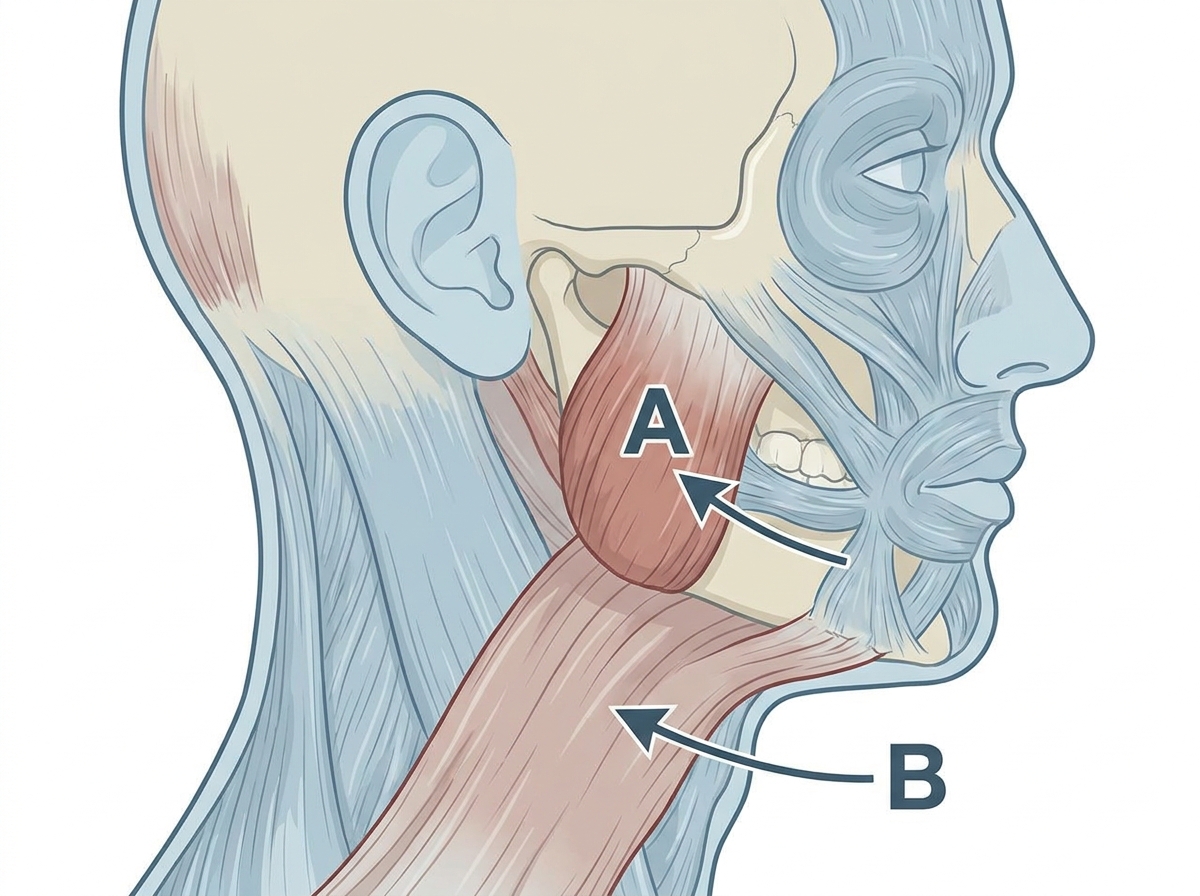
The marginal mandibular branch of the facial nerve is typically located within which anatomical plane?
Which is the smallest cranial nerve?
Which is the longest cranial nerve?
Which cranial nerve passes through Dorello's canal?
Explanation: **Explanation:** **Scaphocephaly** (also known as dolichocephaly) is the most common type of craniosynostosis, accounting for approximately 50% of cases. It results from the **premature closure of the sagittal suture** [1]. 1. **Why Sagittal Suture is Correct:** According to **Virchow’s Law**, when a suture closes prematurely, skull growth is restricted perpendicular to that suture and compensated by overgrowth parallel to it. In sagittal synostosis, the skull cannot grow laterally (width-wise). To accommodate the growing brain, compensatory growth occurs at the coronal and lambdoid sutures, leading to a skull that is abnormally **long (anteroposteriorly) and narrow (laterally)**, resembling the hull of a boat (*Scapha* = boat) [1]. 2. **Why Other Options are Incorrect:** * **Coronal Suture:** Premature closure of one side leads to *Plagiocephaly*; bilateral closure leads to *Brachycephaly* (a short, wide head). * **Lambdoid Suture:** Premature closure is rare and results in posterior *Plagiocephaly* (flattening of the back of the head). * **Metopic Suture (Not listed):** Premature closure leads to *Trigonocephaly* (triangular-shaped forehead). **High-Yield Clinical Pearls for NEET-PG:** * **Most common suture involved:** Sagittal suture (Scaphocephaly). * **Apert Syndrome & Crouzon Syndrome:** Frequently associated with bilateral coronal synostosis. * **Fontanelles:** The anterior fontanelle typically closes by 18–24 months, while the posterior fontanelle closes by 2–3 months. * **Key Image Finding:** "Copper beaten skull" appearance on X-ray may be seen due to increased intracranial pressure in multi-suture synostosis.
Explanation: Bone density in the craniofacial complex is determined by the ratio of cortical (compact) bone to trabecular (cancellous) bone. This distribution follows a predictable pattern based on functional loading and embryological development. **Correct Answer: A. Anterior Mandible** The anterior mandible (symphysis and parasymphysis region) possesses the highest bone density in the oral cavity. It is characterized by a very thick cortical plate and dense, closely packed trabeculae. This structural reinforcement is necessary to withstand the heavy mechanical stresses and torsional forces (mandibular torsion) generated during mastication and speech. **Analysis of Incorrect Options:** * **B. Posterior Mandible:** While the posterior mandible has significant cortical thickness (especially along the external oblique ridge), it generally contains more marrow spaces and less dense trabecular bone compared to the anterior region. * **C. Anterior Maxilla:** The maxilla, being part of the midface, is primarily designed to dissipate forces rather than resist them. It has much thinner cortical plates than the mandible. * **D. Posterior Maxilla:** This region has the **lowest bone density** in the entire dental arch. It is characterized by thin cortical bone and large, sparse marrow spaces, often further compromised by the presence of the maxillary sinus (pneumatization). **Clinical Pearls for NEET-PG:** * **Misch Bone Density Classification:** * **D1:** Dense cortical bone (Anterior mandible) – Best for primary implant stability. * **D2:** Thick cortical/Dense trabecular (Posterior mandible). * **D3:** Thin cortical/Fine trabecular (Anterior maxilla). * **D4:** Fine trabecular (Posterior maxilla) – Highest risk of implant failure. * **Rule of Thumb:** Bone density decreases as you move from **Anterior to Posterior** and from **Mandible to Maxilla**.
Explanation: The **inferior orbital fissure (IOF)** is a key communication between the orbit and the infratemporal/pterygopalatine fossae [1]. ### **Explanation of the Correct Answer** The **Zygomatic nerve** (a branch of the Maxillary nerve, V2) enters the orbit through the inferior orbital fissure. Once inside, it divides into the zygomaticotemporal and zygomaticofacial nerves. Other structures passing through this fissure include the infraorbital nerve, infraorbital artery/vein, and the communication between the inferior ophthalmic vein and the pterygoid venous plexus. ### **Analysis of Incorrect Options** * **A. Trochlear nerve (CN IV):** This nerve enters the orbit through the **Superior Orbital Fissure (SOF)**, specifically passing outside the common tendinous ring (Annulus of Zinn). * **C. Superior ophthalmic vein:** This is the primary venous drainage of the orbit and exits through the **Superior Orbital Fissure** to drain into the cavernous sinus. * **D. Ophthalmic artery:** This artery enters the orbit via the **Optic Canal**, accompanied by the Optic nerve (CN II). ### **NEET-PG High-Yield Pearls** * **Superior Orbital Fissure (SOF) Contents:** * *Outside the Ring:* Lacrimal, Frontal, and Trochlear nerves (LFT), and the Superior Ophthalmic Vein. * *Inside the Ring:* Superior and Inferior divisions of Oculomotor (III), Abducens (VI), and Nasociliary nerve. * **Clinical Correlation:** In **Blow-out fractures** of the orbital floor, the infraorbital nerve (passing through the IOF) is frequently damaged, leading to anesthesia of the cheek and upper gum [1]. * **Mnemonic for IOF:** "**IZY**" – **I**nfraorbital nerve/vessels, **Z**ygomatic nerve, and inferior ophthalmic **Y**-vein (communication).
Explanation: **Explanation:** The **ophthalmic nerve (V1)** is the smallest of the three divisions of the trigeminal nerve. It enters the orbit through the superior orbital fissure, where it divides into three main branches: the **Frontal, Lacrimal, and Nasociliary nerves** (Mnemonic: **FLN**). 1. **Frontal Nerve (Correct):** This is the **largest branch** of the ophthalmic nerve. It runs forward on the levator palpebrae superioris muscle and divides into the supraorbital and supratrochlear nerves, providing sensory innervation to the forehead and scalp. 2. **Lacrimal Nerve:** This is the **smallest branch** of the ophthalmic nerve. It runs along the lateral wall of the orbit to supply the lacrimal gland and the lateral part of the upper eyelid. 3. **Nasociliary Nerve:** This is the intermediate-sized branch and is the **most deeply situated**. It is clinically significant as it provides the sensory root to the ciliary ganglion and branches into the ethmoidal and infratrochlear nerves. 4. **Long Ciliary Nerve:** These are branches of the nasociliary nerve, not direct branches of the ophthalmic division itself. They carry sympathetic fibers to the dilator pupillae muscle. **High-Yield NEET-PG Pearls:** * **Superior Orbital Fissure (SOF) Relations:** The Frontal and Lacrimal nerves enter the orbit **outside** the common tendinous ring (Annulus of Zinn), whereas the Nasociliary nerve enters **inside** the ring. * **Corneal Reflex:** The afferent limb is the **Nasociliary nerve** (branch of V1), and the efferent limb is the **Facial nerve** (CN VII). * **Hutchinson’s Sign:** In Herpes Zoster Ophthalmicus, vesicles on the tip of the nose indicate involvement of the nasociliary nerve, predicting a higher risk of ocular complications.
Explanation: **Explanation:** The parotid gland is the largest of the salivary glands and is enclosed within a tough, unyielding fibrous capsule known as the **parotid fascia**. This fascia is derived from the **investing layer of the deep cervical fascia**, which splits at the lower border of the gland to enclose it. The superficial layer is particularly thick and attached to the zygomatic arch, which explains why parotid swellings (like mumps) are extremely painful due to high tension within the capsule. **Analysis of Options:** * **Option A is incorrect:** The parotid gland is a **purely serous** gland. In contrast, the sublingual gland is primarily mucous, and the submandibular gland is mixed (seromucous). * **Option C is incorrect:** The facial nerve (CN VII) enters the gland through its posterolateral aspect and **divides within the substance of the gland** (at the *pes anserinus*) into its five terminal branches (Temporal, Zygomatic, Buccal, Marginal Mandibular, and Cervical). * **Option D is incorrect:** Secretomotor (parasympathetic) supply is derived from the **Glossopharyngeal nerve (CN IX)**. The pathway involves the tympanic nerve → lesser petrosal nerve → **otic ganglion** (relay) → auriculotemporal nerve. **High-Yield Clinical Pearls for NEET-PG:** * **Structures piercing the gland (Deep to Superficial):** Retromandibular vein, External Carotid Artery, and Facial Nerve (**V.A.N.**). * **Frey’s Syndrome:** Results from injury to the auriculotemporal nerve; regenerating secretomotor fibers mistakenly innervate sweat glands, leading to "gustatory sweating." * **Stensen’s Duct:** Opens into the vestibule of the mouth opposite the **upper second molar** tooth.
Explanation: ### Explanation The lymphatic drainage of the nose is divided into two main components: the external nose and the internal nasal cavity. Understanding this distribution is key to identifying the correct drainage pathways. **Why Paratracheal nodes is the correct answer:** Paratracheal nodes primarily drain the **lower larynx, trachea, and thyroid gland**. They are located in the neck along the sides of the trachea and do not receive direct or indirect lymphatic drainage from any part of the nose [1]. Therefore, they are the "except" in this list. **Analysis of other options:** * **Submandibular nodes:** These nodes receive lymph from the **external nose** (specifically the skin of the vestibule and the tip) and the anterior parts of the nasal cavity. * **Retropharyngeal nodes:** The **posterior part** of the nasal cavity and the paranasal sinuses drain into these nodes, located behind the pharynx. * **Upper deep cervical nodes:** These are the "final common pathway." Lymph from the nose can drain here either **directly** from the posterior nasal cavity or **indirectly** via the submandibular and retropharyngeal nodes. **High-Yield Clinical Pearls for NEET-PG:** * **The "Watershed" Line:** The anterior part of the nose drains to the submandibular nodes, while the posterior part drains to the retropharyngeal and deep cervical nodes. * **Kiesselbach's Plexus:** While not lymphatic, remember this is the most common site for epistaxis (Little’s area) in the nasal septum. * **Deep Cervical Chain:** Almost all lymph from the head and neck eventually drains into the deep cervical chain, specifically the **Jugulodigastric node** (the "tonsillar node") [1].
Explanation: ### Explanation The **marginal mandibular branch** of the facial nerve (CN VII) is of critical importance during neck dissections and submandibular gland surgeries. Its precise anatomical localization is essential to avoid postoperative drooping of the lower lip. **Why Option D is Correct:** After emerging from the parotid gland, the marginal mandibular nerve travels inferiorly, often dipping 1–2 cm below the lower border of the mandible. It runs in the **subplatysmal plane**, lying directly on the deep cervical fascia (investing layer) that covers the submandibular gland. Crucially, it passes **superficial to the facial vein and facial artery**. Surgeons use the facial vein as a landmark: by ligating and reflecting the vein superiorly (the **Hayes Martin maneuver**), the nerve is protected as it is carried upward away from the surgical field. **Analysis of Incorrect Options:** * **Option A & C:** The nerve is deeper than the skin, subcutaneous fat, and the platysma muscle itself. It is protected by the platysma, not embedded within it or the fat above it. * **Option B:** The nerve is **superficial** to the facial vessels. If it were deep to the facial vein, the vein would not serve as a protective landmark during surgery. **Clinical Pearls for NEET-PG:** * **Injury Presentation:** Paralysis of the *depressor anguli oris* muscle, leading to an inability to depress the corner of the mouth (noticeable when smiling or grimacing). * **Safe Incision:** To avoid this nerve, skin incisions for submandibular access (e.g., Risdon incision) should be made at least **2 cm below** the lower border of the mandible. * **Landmark:** The facial vein is the most reliable surgical landmark for identifying and protecting this nerve.
Explanation: The **Trochlear nerve (CN IV)** is identified as the smallest cranial nerve based on the **number of axons** it contains (approximately 2,400–3,400). Despite its small size, it holds several unique anatomical distinctions: it is the only cranial nerve to emerge from the **dorsal (posterior) aspect** of the brainstem, and it has the **longest intracranial course** as it winds around the brainstem to reach the orbit. **Analysis of Options:** * **Olfactory (CN I):** While these are short nerve filaments, they consist of numerous bundles passing through the cribriform plate, making them collectively larger in axonal volume than CN IV. * **Oculomotor (CN III):** This is a significantly larger motor nerve that supplies four of the six extraocular muscles, the levator palpebrae superioris, and carries parasympathetic fibers. * **Accessory (CN XI):** This nerve has a substantial spinal component and a cranial component, supplying large muscles like the Trapezius and Sternocleidomastoid; it is much thicker than the Trochlear nerve. **NEET-PG High-Yield Pearls:** * **Smallest Nerve:** Trochlear (CN IV). * **Largest Nerve:** Trigeminal (CN V) – based on overall girth/thickness. * **Longest Nerve:** Vagus (CN X) – based on its course from the head to the abdomen. * **Longest Intracranial Course:** Trochlear (CN IV). * **Most Fragile/Commonly Injured in Head Trauma:** Trochlear (CN IV) due to its long, thin course. * **Clinical Sign:** CN IV palsy presents with **vertical diplopia** (worse when looking down, e.g., walking downstairs) and a compensatory **head tilt** to the opposite side.
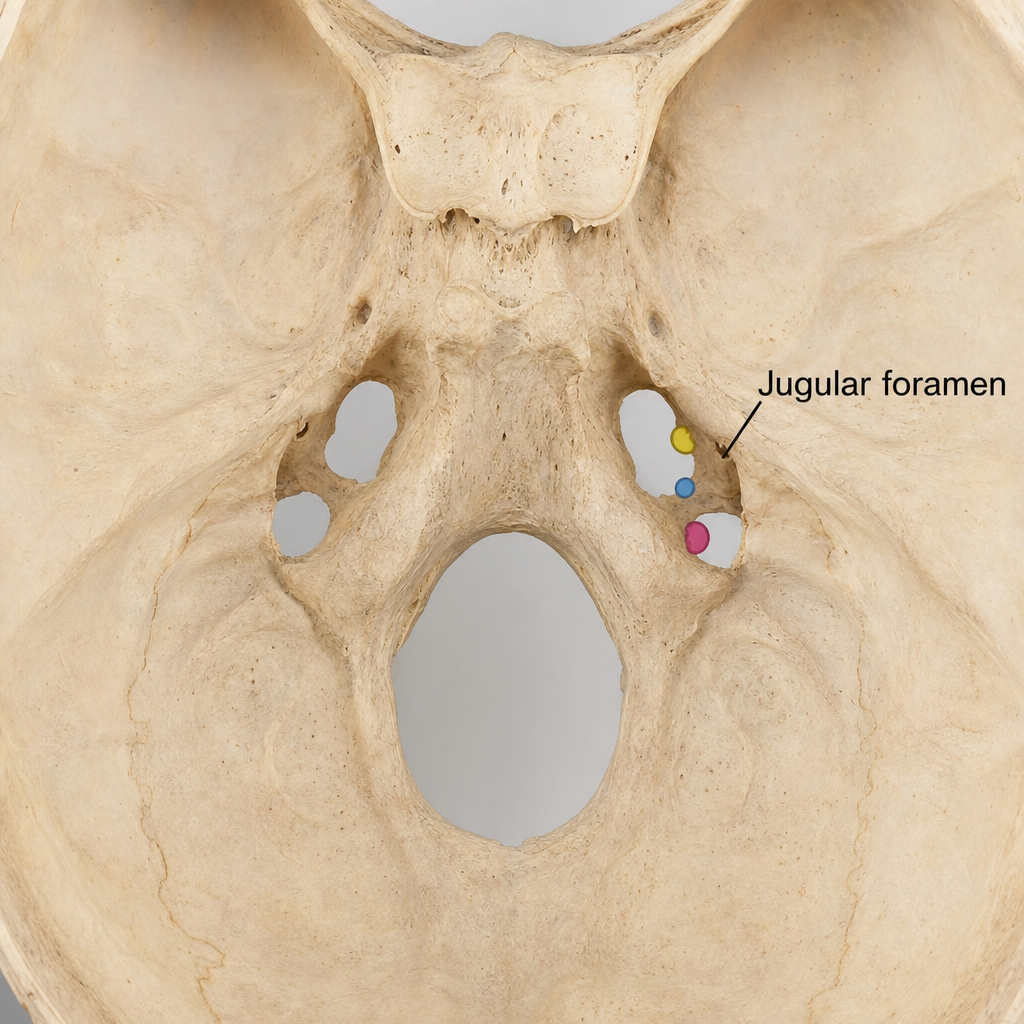
Explanation: ### Explanation **Correct Option: D (Vagus Nerve)** The **Vagus Nerve (CN X)** is the longest cranial nerve in the body. Its name is derived from the Latin word *vagus*, meaning "wandering." Unlike other cranial nerves that are primarily restricted to the head and neck, the Vagus nerve descends through the carotid sheath into the thorax and continues into the abdomen [1]. It provides extensive parasympathetic innervation to visceral organs, extending as far as the splenic flexure of the large intestine [1]. **Analysis of Incorrect Options:** * **A. Optic Nerve (CN II):** This is a relatively short sensory nerve. It is unique because it is embryologically an outgrowth of the forebrain (diencephalon) and is covered by all three layers of meninges [2]. * **B. Abducent Nerve (CN VI):** This nerve has the **longest intracranial course** (specifically the longest subarachnoid course), making it highly susceptible to injury in cases of increased intracranial pressure (ICP). However, its total length is much shorter than the Vagus. * **C. Trigeminal Nerve (CN V):** This is the **largest** cranial nerve in terms of diameter and sensory distribution to the face, but it is not the longest. **High-Yield Clinical Pearls for NEET-PG:** * **Longest Cranial Nerve:** Vagus Nerve (CN X). * **Longest Intracranial Course:** Abducent Nerve (CN VI). * **Smallest/Slenderest Cranial Nerve:** Trochlear Nerve (CN IV). * **Only Cranial Nerve to emerge from the posterior aspect of the brainstem:** Trochlear Nerve (CN IV). * **Vagus Nerve Exit:** It exits the skull through the **Jugular Foramen** along with CN IX and CN XI.
Explanation: **Explanation:** The correct answer is **Abducens nerve (CN VI)**. **Dorello’s canal** is a small osteofibrous conduit located at the tip of the petrous part of the temporal bone, bounded superiorly by the **Gruber’s ligament** (petrosphenoidal ligament). The Abducens nerve (CN VI) enters this canal after leaving the prepontine cistern to reach the cavernous sinus. This is a critical anatomical landmark because the nerve makes a sharp turn within the canal, making it highly susceptible to injury. **Analysis of Incorrect Options:** * **Oculomotor nerve (CN III):** Enters the cavernous sinus by piercing the dura mater lateral to the posterior clinoid process, superior to Dorello’s canal. * **Trigeminal nerve (CN V):** The sensory and motor roots of CN V pass through the **Meckel’s cave** (trigeminal cave), located lateral to the cavernous sinus. * **Facial nerve (CN VII):** Exits the posterior cranial fossa via the **internal acoustic meatus** along with CN VIII. **Clinical Pearls for NEET-PG:** 1. **Gradenigo’s Syndrome:** Characterized by a triad of **suppurative otitis media**, **abducens nerve palsy** (diplopia), and **trigeminal neuralgia** (facial pain). It occurs when an infection of the petrous apex (petrositis) involves Dorello’s canal and the trigeminal ganglion. 2. **Raised Intracranial Pressure (ICP):** CN VI is the most common cranial nerve involved in raised ICP. Because of its long intracranial course and the sharp angulation at Dorello’s canal, it acts as a "false localizing sign." 3. **Contents of Dorello's Canal:** The Abducens nerve and the **inferior petrosal sinus**.
Skull and Facial Bones
Practice Questions
Scalp and Facial Muscles
Practice Questions
Dural Venous Sinuses
Practice Questions
Cranial Cavity
Practice Questions
Orbit and Contents
Practice Questions
Temporal and Infratemporal Regions
Practice Questions
Pterygopalatine Fossa
Practice Questions
Oral Cavity
Practice Questions
Paranasal Sinuses
Practice Questions
Applied Anatomy and Clinical Correlations
Practice Questions
Get full access to all questions, explanations, and performance tracking.
Start For Free