The tympanic plexus is found in which anatomical location?
Which statement best describes the middle ear?
Injury to which of the following structures can cause damage to lacrimal secretion?
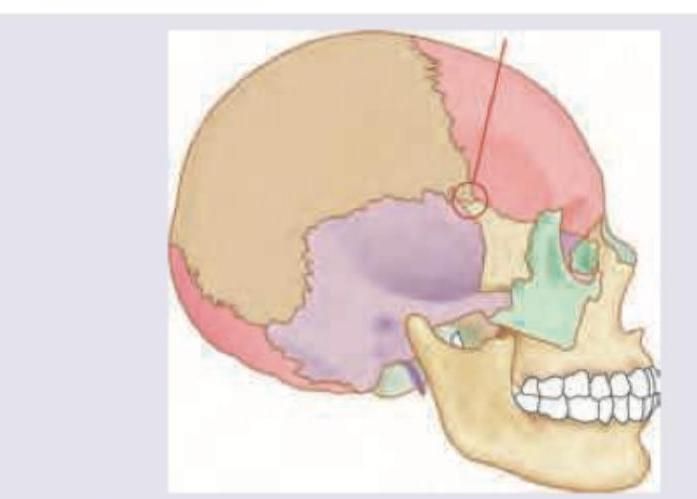
Which bony structure protects the middle meningeal artery?
Which of the following structures does NOT pass through the foramen ovale?
The modiolus at the angle of the mouth is formed by all of the following muscles except?
For remodelling of the palatal vault as it is being translated, from where is the bone removed?
Which muscle is primarily involved in the rotation and protrusion of the mandible?
Which muscle enters the middle ear from the apex of the pyramid?
Which of the following nerves are branches of the mandibular nerve?
Explanation: The **tympanic plexus** is a network of nerves located on the **promontory**, which is a rounded medial projection of the middle ear cavity formed by the basal turn of the cochlea. ### Why the Correct Answer is Right The plexus is primarily formed by the **tympanic nerve (Jacobson’s nerve)**, a branch of the Glossopharyngeal nerve (CN IX), and caroticotympanic nerves from the sympathetic plexus around the internal carotid artery. It lies beneath the mucous membrane covering the promontory. Its primary functional role is to provide sensory innervation to the middle ear, auditory tube, and mastoid air cells, and to provide preganglionic parasympathetic fibers to the **lesser petrosal nerve** for the parotid gland. ### Why Other Options are Wrong * **Option A:** The internal jugular vein is located in the jugular foramen, inferior to the middle ear. While the glossopharyngeal nerve exits nearby, the plexus itself is strictly an intratympanic structure. * **Option C:** The pars tensa is a part of the lateral wall of the middle ear. While the tympanic membrane receives sensory supply from the plexus, the plexus itself is physically located on the **medial wall**. ### High-Yield NEET-PG Pearls * **Jacobson’s Nerve:** A branch of CN IX that enters the middle ear through the inferior tympanic canaliculus. * **Lesser Petrosal Nerve:** The continuation of the tympanic plexus that exits the middle ear to synapse in the **otic ganglion**. * **Clinical Correlation:** Referred pain to the ear (otalgia) during tonsillitis or oropharyngeal tumors occurs because CN IX supplies both the oropharynx and the middle ear via the tympanic plexus.
Explanation: The middle ear (tympanic cavity) is an air-filled space in the petrous temporal bone [1]. Understanding its boundaries and contents is high-yield for NEET-PG. ### **Explanation of the Correct Option** **Option B** is correct. The tympanic cavity is divided into the **tympanic cavity proper** (opposite the membrane) and the **epitympanic recess** (above the membrane level). The epitympanic recess houses the **head of the malleus** and the **body/short process of the incus**. Note: While the question mentions the "head of the stapes," it is anatomically situated at the junction of the recess and the main cavity, making this the most accurate description among the choices. ### **Analysis of Incorrect Options** * **Option A:** The **lateral wall** is formed by the tympanic membrane. The **medial wall** separates the middle ear from the inner ear and features the promontory, oval window, and round window. * **Option C:** The **floor** (jugular wall) of the middle ear is related to the superior bulb of the **internal jugular vein**. The **roof** (tegmental wall) is formed by the *tegmen tympani*, separating it from the middle cranial fossa. * **Option D:** The middle ear communicates with the mastoid antrum and air cells **posteriorly** via the *aditus ad antrum*. Inferiorly, the floor is a thin plate of bone. ### **High-Yield NEET-PG Pearls** * **Nerve Supply:** The **tympanic plexus** (formed by the tympanic branch of the Glossopharyngeal nerve, CN IX) supplies the mucosa. * **Clinical Correlation:** Infections (Otitis Media) can spread superiorly through the roof to cause **temporal lobe abscesses** or inferiorly to cause **jugular vein thrombosis**. * **Muscle Attachment:** The **Tensor tympani** (supplied by V3) attaches to the malleus, while the **Stapedius** (supplied by CN VII) attaches to the neck of the stapes.
Explanation: The **Pterygopalatine ganglion (PPG)** is the correct answer because it serves as the peripheral relay station for the parasympathetic (secretomotor) supply to the lacrimal gland. ### Pathophysiology of Lacrimation The secretomotor pathway for the lacrimal gland is a high-yield NEET-PG topic: 1. **Origin:** Lacrimatory nucleus (Pons). 2. **Course:** Fibers travel via the **Nervus intermedius** (branch of Facial nerve, CN VII) → **Greater Petrosal Nerve** → **Nerve of Pterygoid Canal** (Vidian nerve). 3. **Relay:** These preganglionic fibers synapse in the **Pterygopalatine ganglion**. 4. **Postganglionic Path:** Fibers travel via the Maxillary nerve (V2) → Zygomatic nerve → Zygomaticotemporal nerve → **Lacrimal nerve** (branch of V1) to reach the gland. ### Why the other options are incorrect: * **Ciliary ganglion:** This ganglion is responsible for pupillary constriction (sphincter pupillae) and accommodation (ciliary muscle), not lacrimation [1]. * **Optic nerve (CN II):** This is a purely sensory nerve responsible for vision and the afferent limb of the pupillary light reflex [1]. * **Oculomotor nerve (CN III):** While it carries parasympathetic fibers, these are destined for the ciliary ganglion, not the lacrimal gland [1]. It primarily controls extraocular muscle movement. ### High-Yield Clinical Pearls: * **Crocodile Tears (Bogorad’s Syndrome):** Occurs due to misdirected regeneration of nerve fibers after Facial nerve injury, where fibers intended for the submandibular gland reach the lacrimal gland via the PPG, causing tearing while eating. * **Sluder’s Neuralgia:** Also known as sphenopalatine ganglionitis; involves pain referred to the maxilla and teeth, often associated with nasal congestion and lacrimation.
Explanation: **Explanation:** The **Pterion** is an H-shaped suture located on the lateral aspect of the skull where four bones meet: the frontal, parietal, temporal, and greater wing of the sphenoid. It is clinically significant because it overlies the **anterior (frontal) division of the middle meningeal artery (MMA)**. While the pterion provides a landmark for the artery, the bone here is remarkably thin. A blow to the temple can fracture the pterion, rupturing the underlying MMA and leading to an **epidural (extradural) hematoma**, which typically presents with a "lucid interval." **Analysis of Incorrect Options:** * **A. Nasion:** This is the midline intersection of the internasal and frontonasal sutures. It does not relate to major meningeal vasculature. * **C. Bregma:** This is the anatomical point where the coronal and sagittal sutures meet (the site of the anterior fontanelle in infants). It overlies the superior sagittal sinus, not the MMA. * **D. Occiput:** This refers to the back of the head (occipital bone). The MMA is located laterally and anteriorly relative to this region. **High-Yield NEET-PG Pearls:** * **Middle Meningeal Artery:** A branch of the **maxillary artery** (1st part), which enters the skull through the **foramen spinosum**. * **Epidural Hematoma (EDH):** Characterized by a **biconvex (lens-shaped)** appearance on CT scan, as the blood cannot cross cranial sutures. * **Pterion Bones:** Remember the mnemonic **"F-P-S-T"** (Frontal, Parietal, Sphenoid, Temporal).
Explanation: The **Foramen Ovale** is a critical opening in the greater wing of the sphenoid bone. To remember the structures passing through it, the popular mnemonic **MALE** is used: **M**andibular nerve (V3), **A**ccessory meningeal artery, **L**esser petrosal nerve, and **E**missary vein. ### Why Maxillary Nerve is the Correct Answer: The **Maxillary nerve (V2)** does not pass through the foramen ovale; instead, it exits the middle cranial fossa through the **Foramen Rotundum** to enter the pterygopalatine fossa. This is a classic "trap" in NEET-PG, as both V2 and V3 are branches of the Trigeminal nerve. ### Analysis of Other Options: * **Accessory meningeal artery:** This is a branch of the maxillary artery that enters the cranium through the foramen ovale to supply the dura mater and trigeminal ganglion. * **Lesser petrosal nerve:** A branch of the glossopharyngeal nerve (CN IX) carrying preganglionic parasympathetic fibers to the otic ganglion; it consistently passes through this foramen. * **Emissary vein:** Small veins connecting the cavernous sinus with the pterygoid venous plexus pass through this opening. ### High-Yield Clinical Pearls for NEET-PG: * **Mnemonic "ROSE":** Foramina in the greater wing of sphenoid (medial to lateral) are Foramen **R**otundum (V2), Foramen **O**vale (V3), Foramen **S**pinosum (Middle meningeal artery), and Foramen **E**nosum (of Vesalius). * **Trigeminal Nerve Exit Points:** * V1 (Ophthalmic): Superior Orbital Fissure * V2 (Maxillary): Foramen Rotundum * V3 (Mandibular): Foramen Ovale * **Clinical Significance:** The foramen ovale is the target site for **Trigeminal Rhizotomy** (percutaneous glycerol injection) to treat Trigeminal Neuralgia.
Explanation: ### Explanation The **modiolus** is a dense, fibromuscular condensation located approximately 1.25 cm lateral to the angle of the mouth (commissure). It serves as a crucial "hub" where the fibers of several facial muscles converge and interlacing, allowing for coordinated movement of the lips and cheeks during mastication, speech, and facial expression. **Why Alaque nasi is the correct answer:** The **Levator labii superioris alaeque nasi** (often referred to as the *alaque nasi*) is a muscle of the mid-face that inserts into the lateral cartilage of the nose and the skin of the upper lip. Its primary function is to flare the nostrils and elevate the upper lip. It does **not** extend laterally enough to contribute to the modiolus at the angle of the mouth. **Analysis of Incorrect Options:** * **Triangularis (Depressor anguli oris):** This muscle originates from the mandible and ascends to insert into the modiolus, acting to pull the corner of the mouth downward. * **Buccinator:** The horizontal fibers of the buccinator form the core of the cheek and converge at the modiolus. The central fibers actually decussate (cross) here before entering the lips. * **Orbicularis oris:** This sphincter muscle of the mouth has fibers that interlace directly with other muscles at the modiolus to control the oral opening. **High-Yield Facts for NEET-PG:** * **Muscles forming the Modiolus (Mnemonic: "7-9 muscles"):** The primary contributors are the **Z**ygomaticus major, **L**evator anguli oris, **B**uccinator, **D**epressor anguli oris (Triangularis), and **O**rbicularis oris. (Additional contributors include Risorius and Platysma). * **Clinical Significance:** In dentistry, the modiolus is a critical landmark for **denture stability**. If the teeth of a denture are placed too far buccally, the modiolus can displace the denture during muscle contraction. * **Arterial Supply:** The **facial artery** typically passes deep or lateral to the modiolus, providing a rich blood supply to this highly mobile area.
Explanation: ### Explanation The growth and remodeling of the palate follow the **"V-Principle"** and the concept of **cortical drift**. As the maxilla grows, it is translated in a downward and forward direction. To maintain the shape and depth of the palatal vault during this translation, bone remodeling must occur. **1. Why Option D is Correct:** The palate moves downward through a process of **resorption and deposition**. Bone is resorbed from the **floor of the nasal cavity** (superior surface) and new bone is deposited on the **roof of the oral cavity** (inferior surface). This coordinated action results in the downward "drift" of the entire palatal shelf, effectively enlarging the nasal chamber while maintaining the structural integrity of the hard palate. **2. Why Other Options are Incorrect:** * **Option A:** Remodeling occurs across the entire horizontal shelf of the palatine process, not just a localized area around the incisors. * **Option B:** This describes the opposite of the physiological process. Adding bone to the floor of the mouth (palatal roof) while removing it from the nasal floor is the correct mechanism; Option B reverses the surfaces. * **Option C:** Posterior growth occurs at the maxillary tuberosity to provide space for molar eruption, but this refers to lengthening the arch, not the vertical remodeling of the palatal vault. **3. High-Yield Clinical Pearls for NEET-PG:** * **Translation vs. Drift:** The maxilla is *translated* downward and forward by growth at the sutures, but it *drifts* downward via surface remodeling (resorption/deposition). * **Enlow’s Counterpart Analysis:** The palate is a "growth counterpart" to the maxillary arch. * **Nasal Cavity Expansion:** The resorption at the nasal floor is the primary mechanism for the vertical increase in the size of the nasal air passages during development.
Explanation: The muscles of mastication are a frequent focus in NEET-PG Anatomy. To answer this correctly, one must understand the functional anatomy of the infratemporal fossa. ### **Explanation of the Correct Answer** The **Medial Pterygoid** is a thick, quadrilateral muscle that forms a functional "mandibular sling" with the masseter. * **Protrusion:** When the medial and lateral pterygoids of both sides contract simultaneously, they pull the mandible forward. * **Rotation (Side-to-side movements):** When the medial and lateral pterygoids of one side contract, they rotate the mandible to the opposite side (grinding movement). While the lateral pterygoid is the *primary* protractor, the medial pterygoid is the essential synergistic partner for both protrusion and the rotational grinding motion. ### **Analysis of Incorrect Options** * **A. Masseter:** Primarily acts as a powerful **elevator** (closer) of the jaw. While it aids in slight protrusion, its main role is providing the force for biting. * **C. Temporalis:** The anterior fibers elevate the mandible, but the posterior horizontal fibers are the **only** muscles responsible for **retraction** (pulling the jaw back). * **D. Digastric:** This is a suprahyoid muscle. Its primary action is **depression** of the mandible (opening the mouth) against resistance or when the hyoid is fixed. ### **High-Yield Clinical Pearls for NEET-PG** * **Innervation:** All muscles of mastication are supplied by the **Mandibular nerve (V3)**. * **The "Opener":** The **Lateral Pterygoid** is the only muscle of mastication that helps open the mouth (depress the mandible). * **The "Retractor":** Remember **Temporalis** for retraction. * **The Sling:** The **Masseter** and **Medial Pterygoid** together form the "Mandibular Sling" which holds the angle of the mandible.
Explanation: ### Explanation **Correct Option: A. Stapedius** The **stapedius** is the smallest skeletal muscle in the human body [2]. It is housed within a hollow, cone-shaped bony projection on the posterior wall of the middle ear called the **pyramid** (pyramidal eminence). The muscle fibers converge into a tendon that emerges from the **apex of the pyramid** to insert onto the neck of the stapes. It is embryologically derived from the second pharyngeal arch and is supplied by the **stapedial branch of the facial nerve (CN VII)** [2]. **Incorrect Options:** * **B. Tensor tympani:** This muscle originates from the cartilaginous part of the auditory tube and the bony canal above it. It enters the middle ear through a canal located above the promontory on the anterior/medial wall and inserts into the handle of the malleus [2]. It is supplied by the mandibular nerve (V3). * **C. Tensor palatini:** This is a muscle of the soft palate. While it is involved in opening the Eustachian tube, it does not enter the middle ear cavity [1]. * **D. Auricularis:** These are extrinsic muscles of the pinna (ear flap) located under the scalp; they do not have any anatomical relation to the internal structures of the middle ear [1]. **High-Yield Clinical Pearls for NEET-PG:** * **Acoustic Reflex:** The stapedius contracts in response to loud noises, pulling the stapes posteriorly to dampen vibrations [2]. This protects the inner ear from acoustic trauma. * **Hyperacusis:** Paralysis of the stapedius (often seen in **Bell’s Palsy** due to facial nerve involvement) leads to an increased sensitivity to sound, as the dampening mechanism is lost. * **Development:** Stapedius = 2nd Arch (CN VII); Tensor Tympani = 1st Arch (CN V3).
Explanation: The **Mandibular Nerve (V3)** is the largest branch of the Trigeminal nerve and is unique because it carries both sensory and motor fibers. It exits the skull through the **foramen ovale**. ### **Explanation of the Correct Answer** The mandibular nerve divides into an anterior and a posterior division. The **posterior division** gives rise to three major branches: 1. **Lingual Nerve:** Provides general somatic sensation (touch, pain, temperature) to the anterior 2/3rd of the tongue. 2. **Inferior Alveolar Nerve:** Enters the mandibular foramen to supply the lower teeth. Its terminal branch is the mental nerve. 3. **Auriculotemporal Nerve:** Supplies the TMJ, auricle, and carries postganglionic parasympathetic fibers to the parotid gland. ### **Analysis of Incorrect Options** * **Option A:** While the Lingual nerve is a branch of V3, the **Facial nerve (CN VII)** is a separate cranial nerve, and **Palatine nerves** (Greater and Lesser) are branches of the Maxillary nerve (V2) via the pterygopalatine ganglion. * **Option C:** The **Cervical nerves** (C1-C8) arise from the spinal cord, not the trigeminal nerve. The cervical branch of the Facial nerve (CN VII) supplies the platysma. * **Option D:** Incorrect as it includes the non-mandibular nerves mentioned above. ### **High-Yield NEET-PG Pearls** * **Nerve to Mylohyoid:** This is a branch of the Inferior Alveolar nerve (given off before it enters the mandibular foramen) and supplies the Mylohyoid and the anterior belly of the digastric. * **Chorda Tympani:** A branch of the Facial nerve that joins the Lingual nerve in the infratemporal fossa to carry taste from the anterior 2/3rd of the tongue. * **Foramen Ovale Mnemonic:** Structures passing include **MALE** (Mandibular nerve, Accessory meningeal artery, Lesser petrosal nerve, Emissary veins).
Skull and Facial Bones
Practice Questions
Scalp and Facial Muscles
Practice Questions
Dural Venous Sinuses
Practice Questions
Cranial Cavity
Practice Questions
Orbit and Contents
Practice Questions
Temporal and Infratemporal Regions
Practice Questions
Pterygopalatine Fossa
Practice Questions
Oral Cavity
Practice Questions
Paranasal Sinuses
Practice Questions
Applied Anatomy and Clinical Correlations
Practice Questions
Get full access to all questions, explanations, and performance tracking.
Start For Free