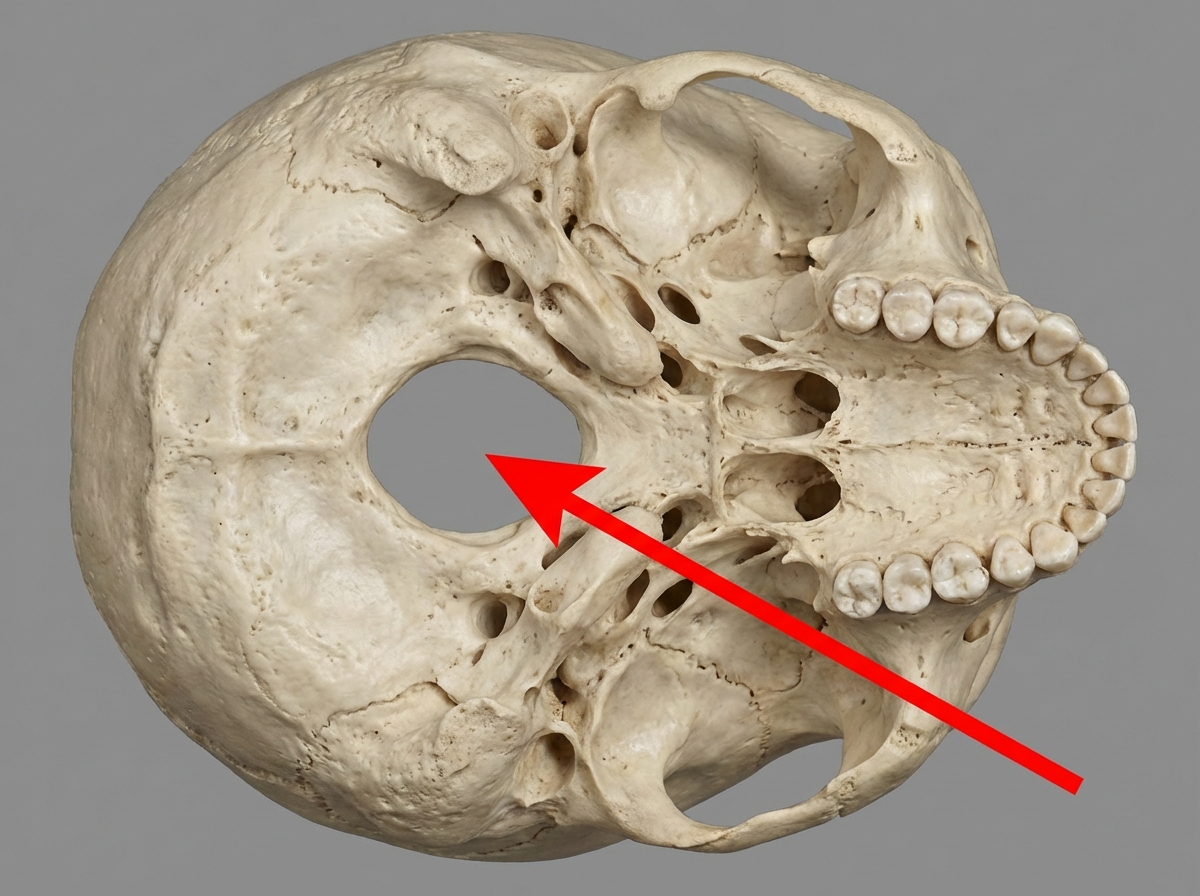
All of the following are branches of the maxillary artery except?
What is the parasympathetic secretomotor nerve supply to the nose?
Which of the following describes the action of the lateral pterygoid muscle on the temporomandibular joint?
A 54-year-old man is admitted to the hospital due to severe headaches. A CT examination reveals an internal carotid artery aneurysm inside the cavernous sinus. Which of the following nerves would be typically affected first?
Which of the following cranial nerve palsies results in the affected eye being positioned "down and out"?
Eye movements are controlled by all of the following cranial nerves except?
Foramen scarpa is another name for which of the following foramina?
All of the following structures are present deep to the pterion except?
Which of the following muscles is NOT an abductor of the eye?
What is the name of the parotid duct?
Explanation: The **Maxillary artery** is the larger terminal branch of the external carotid artery, providing the primary blood supply to the deep structures of the face. It is divided into three parts based on its relation to the lateral pterygoid muscle. ### **Why Option D is Correct** The **Ascending pharyngeal artery** is the smallest and first branch of the **External Carotid Artery (ECA)**, arising from its medial aspect. It ascends between the internal carotid artery and the pharynx. It is not a branch of the maxillary artery. ### **Analysis of Incorrect Options** The other options are all branches of the **third (Pterygopalatine) part** of the maxillary artery, which enters the pterygopalatine fossa: * **Artery to pterygoid canal (A):** Passes through the pterygoid canal to supply the upper pharynx and auditory tube. * **Pharyngeal artery (B):** Passes through the palatovaginal canal to supply the nasopharynx and sphenoid sinus. * **Greater palatine artery (C):** Descends through the greater palatine canal to supply the hard and soft palate. ### **High-Yield NEET-PG Pearls** * **Sphenopalatine Artery:** Known as the **"Artery of Epistaxis,"** it is the terminal branch of the third part of the maxillary artery and the most common source of posterior nosebleeds. * **Middle Meningeal Artery:** A branch of the **first (Mandibular) part**; it enters the skull via the **foramen spinosum**. Rupture of this artery leads to **Extradural Hemorrhage (EDH)**. * **Mnemonic for 3rd part branches:** "**P**ig **I**s **S**o **G**reedy **A**nd **P**athetic" (**P**haryngeal, **I**nfraorbital, **S**phenopalatine, **G**reater palatine, **A**rtery of pterygoid canal, **P**osterior superior alveolar).
Explanation: The parasympathetic secretomotor supply to the nasal glands is essential for mucus production. The correct answer is the **Vidian nerve** (Nerve of the Pterygoid Canal). ### Why the Vidian Nerve is Correct The parasympathetic pathway for the nose begins in the **superior salivary nucleus** (Pons) [1]. Fibers travel via the **Greater Petrosal Nerve** (a branch of CN VII), which joins the **Deep Petrosal Nerve** (sympathetic) to form the **Vidian nerve**. This nerve enters the **pterygopalatine ganglion**, where the preganglionic parasympathetic fibers synapse [1]. Postganglionic fibers then reach the nasal mucosa via the short sphenopalatine nerves to stimulate secretion. ### Why Other Options are Incorrect * **Anterior ethmoid nerve:** A branch of the nasociliary nerve (CN V1), it provides **sensory** innervation to the anterior part of the nasal cavity, not secretomotor. * **Greater palatine nerve:** While it carries some secretomotor fibers to the palatine glands, its primary role in the nose is providing **sensory** supply to the posterior part of the hard palate and inferior concha. * **Inferior orbital nerve:** A branch of the maxillary nerve (CN V2), it primarily provides **sensory** supply to the skin of the cheek, lower eyelid, and upper lip. ### High-Yield Clinical Pearls for NEET-PG * **Vidian Neurectomy:** A surgical procedure performed in cases of severe vasomotor rhinitis to reduce excessive watery rhinorrhea by interrupting the secretomotor pathway. * **Components of Vidian Nerve:** Remember the formula: **Greater Petrosal (Parasympathetic) + Deep Petrosal (Sympathetic) = Vidian Nerve.** * **Relay Center:** The **Pterygopalatine ganglion** is known as the "Hay fever ganglion" [1] because it mediates lacrimation and nasal secretion.
Explanation: **Explanation:** The **lateral pterygoid** is a unique and high-yield muscle of mastication because it is the **only** muscle in this group responsible for **depressing** the mandible (opening the mouth). **Why Depression is Correct:** The muscle consists of two heads. The inferior head originates from the lateral pterygoid plate and inserts into the pterygoid fovea on the neck of the mandible. When both lateral pterygoids contract, they pull the condyle and the articular disc forward (protrusion) and downward along the articular eminence, resulting in the **depression** of the mandible. Gravity and the suprahyoid/infrahyoid muscles assist in this process. **Analysis of Incorrect Options:** * **A. Elevation:** This is the primary action of the **Masseter, Temporalis, and Medial Pterygoid**. These muscles close the jaw. * **C & D. Adduction/Abduction:** These terms are generally not used to describe movements of the temporomandibular joint (TMJ). Instead, lateral movements (side-to-side grinding) occur when the lateral pterygoids contract unilaterally. **High-Yield Clinical Pearls for NEET-PG:** * **Insertion:** The superior head inserts into the **capsule and articular disc** of the TMJ, while the inferior head inserts into the **neck of the mandible**. * **Nerve Supply:** Like all muscles of mastication, it is supplied by the **mandibular nerve (V3)**. * **Clinical Correlation:** If the lateral pterygoid is paralyzed (e.g., V3 lesion), the jaw deviates **toward the side of the lesion** upon opening due to the unopposed action of the healthy contralateral muscle. * **Key Mnemonic:** **L**ateral **L**owers (Depression/Opening); **M**edial **M**unches (Elevation/Closing).
Explanation: ### Explanation **Correct Option: A. Abducens nerve (CN VI)** The **cavernous sinus** is a large venous plexus located on either side of the sella turcica. The internal carotid artery (ICA) and the **abducens nerve (CN VI)** are the only structures that travel **directly through the center** (medial aspect) of the sinus. Because the abducens nerve lies in close proximity to the lateral wall of the ICA, it is the most vulnerable structure and is typically the **first nerve affected** by an enlarging ICA aneurysm [1]. Compression leads to paralysis of the lateral rectus muscle, resulting in internal strabismus (medial squint) and diplopia [1]. **Incorrect Options:** * **B. Oculomotor nerve (CN III):** This nerve is located within the **lateral wall** of the cavernous sinus. It is usually involved later as the aneurysm expands laterally. * **C. Ophthalmic nerve (CN V1):** This is the most superior sensory branch in the **lateral wall**. While it can be compressed, it is not as centrally located as CN VI. * **D. Maxillary nerve (CN V2):** This is the most inferior nerve in the **lateral wall**. Like CN III and V1, it is protected by the dural lining of the lateral wall and is not the first to be impacted by a central vascular expansion. **High-Yield Clinical Pearls for NEET-PG:** 1. **Contents of the Lateral Wall (Superior to Inferior):** Oculomotor (III), Trochlear (IV), Ophthalmic (V1), and Maxillary (V2) nerves. 2. **Contents passing THROUGH the Sinus:** Internal Carotid Artery and Abducens nerve (VI). 3. **Cavernous Sinus Thrombosis:** Often presents with "ophthalmoplegia" (paralysis of extraocular muscles) and loss of sensation in the V1/V2 distribution. 4. **Danger Triangle of Face:** Infections from the upper lip/nose can spread to the cavernous sinus via the **superior ophthalmic vein** or deep facial vein (via pterygoid plexus), as these veins are valveless.
Explanation: The "down and out" position of the eye is a classic clinical sign of **Oculomotor Nerve (CN III) Palsy**. ### **Why Oculomotor Nerve Palsy is Correct** The Oculomotor nerve supplies the majority of the extraocular muscles: Superior Rectus, Inferior Rectus, Medial Rectus, and Inferior Oblique. It also supplies the Levator Palpebrae Superioris (eyelid elevation) and carries parasympathetic fibers to the sphincter pupillae (pupil constriction) [1]. When CN III is paralyzed: 1. **Lateral Rectus (CN VI)** remains unopposed, pulling the eye **outward (abduction)**. 2. **Superior Oblique (CN IV)** remains unopposed, pulling the eye **downward (depression)** and inward (intorsion). The net result is an eye that is deviated **down and out**, accompanied by **ptosis** (drooping eyelid) and a **dilated pupil** (mydriasis) [1]. ### **Why Other Options are Incorrect** * **Trochlear Nerve (CN IV) Palsy:** Affects the Superior Oblique. Patients typically present with an eye that is deviated **upward and inward** (hypertropia). They often tilt their head toward the opposite shoulder to compensate for diplopia. * **Optic Nerve (CN II) Palsy:** This is a sensory nerve responsible for vision and the afferent limb of the light reflex [1]. Palsy causes vision loss or pupillary defects (RAPD) but does not affect eye movement or position. * **Abducens Nerve (CN VI) Palsy:** Affects the Lateral Rectus. The eye cannot abduct, leading to **medial deviation (esotropia)** due to the unopposed action of the Medial Rectus. ### **NEET-PG High-Yield Pearls** * **Rule of Pupil:** In CN III palsy, a **dilated pupil** suggests external compression (e.g., PCom artery aneurysm), while a **pupil-sparing** palsy suggests microvascular ischemia (e.g., Diabetes) [1]. * **Mnemonic for Nerve Supply:** **LR6(SO4)3** — (Lateral Rectus: CN VI; Superior Oblique: CN IV; All others: CN III).
Explanation: The control of eye movements involves the coordination of extraocular muscles by specific motor cranial nerves. [2] **Why Optic Nerve (CN II) is the correct answer:** The **Optic nerve** is a purely **sensory** nerve. Its primary function is to transmit visual information from the retina to the brain. [1] It does not innervate any muscles and, therefore, has no direct role in the motor control of eye movements. **Explanation of incorrect options (Motor Nerves):** The extraocular muscles are controlled by three cranial nerves, often remembered by the formula **LR6(SO4)3**: * **Abducens nerve (CN VI):** Supplies the **Lateral Rectus (LR)** muscle, which is responsible for abduction (moving the eye outward). [2] * **Trochlear nerve (CN IV):** Supplies the **Superior Oblique (SO)** muscle, which primarily depresses the eye in the adducted position and causes intorsion. [2] * **Oculomotor nerve (CN III):** Supplies the remaining four extraocular muscles (**Superior Rectus, Inferior Rectus, Medial Rectus, and Inferior Oblique**) and the Levator palpebrae superioris (which lifts the eyelid). [2] **Clinical Pearls for NEET-PG:** * **CN III Palsy:** Presents with "Down and Out" eye position, ptosis, and a dilated pupil (mydriasis). * **CN IV Palsy:** Most common cause of vertical diplopia; patients often present with a compensatory **head tilt** to the opposite side. * **CN VI Palsy:** Most common isolated cranial nerve palsy; results in medial deviation (esotropia) and inability to abduct the eye. * **Light Reflex:** The Optic nerve (CN II) is the **afferent** limb, while the Oculomotor nerve (CN III) is the **efferent** limb. [1]
Explanation: The **Incisive foramen** (also known as the anterior palatine foramen) is located in the midline of the bony hard palate, immediately posterior to the maxillary incisor teeth. It serves as the opening for the **incisive canal**. Within this canal, there are often four smaller apertures: two lateral (Foramina of Stenson) for the greater palatine arteries and two median (anterior and posterior). The **Foramina of Scarpa** specifically refer to these median openings, which transmit the **nasopalatine nerves** (the left nerve through the posterior and the right through the anterior foramen). In many individuals, these merge into a single incisive foramen, making "Foramen of Scarpa" a classic anatomical synonym for the incisive foramen complex. **Analysis of Incorrect Options:** * **A. Mental foramen:** Located on the anterolateral aspect of the body of the mandible, it transmits the mental nerve and vessels. It is not associated with Scarpa. * **C. Infraorbital foramen:** Located on the maxillary bone below the infraorbital margin, it transmits the infraorbital nerve (a branch of V2) and vessels. * **D. Supraorbital foramen:** Located on the supraorbital margin of the frontal bone, it transmits the supraorbital nerve and vessels. **High-Yield Clinical Pearls for NEET-PG:** * **Contents:** The incisive foramen transmits the **Nasopalatine nerve** (sensory to the anterior palate) and the **Greater palatine artery** (terminal branch). * **Clinical Significance:** It is the site for the **Nasopalatine nerve block**, used for dental procedures involving the anterior palate. * **Radiology:** On periapical X-rays, the incisive foramen appears as an ovoid radiolucency between the roots of the central incisors; it should not be confused with a periapical cyst (radicular cyst).
Explanation: **Explanation:** The **pterion** is an H-shaped suture on the lateral aspect of the skull where the frontal, parietal, temporal, and sphenoid (greater wing) bones meet. It is a critical anatomical landmark because the bone is thin and overlies several vital structures. **Why Option D is correct:** The **temporal branch of the facial nerve** is a **superficial** structure. It travels within the superficial fascia (SMAS) of the temple to reach the frontalis muscle. It is located external to the skull and the temporalis muscle, not deep to the pterion. **Why the other options are incorrect:** * **Anterior division of Middle Meningeal Artery (MMA):** This is the most clinically significant structure deep to the pterion. Trauma to the pterion can rupture this artery, leading to an **extradural hemorrhage (EDH)**. * **Middle Meningeal Vein:** This vein accompanies the MMA and lies in the grooves on the inner surface of the skull, deep to the pterion. * **Sylvian Point:** This represents the site where the lateral sulcus (Sylvian fissure) of the brain divides into its three branches. It lies deep to the pterion, marking the location of the **Insula** and the **Middle Cerebral Artery (MCA)**. **High-Yield Facts for NEET-PG:** * **Location:** The pterion is found 4 cm superior to the zygomatic arch and 3.5 cm posterior to the frontozygomatic suture. * **Clinical Correlation:** A blow to the pterion often results in a "lucid interval" followed by rapid deterioration due to an EDH (biconvex/lens-shaped on CT). * **Deepest structures:** From superficial to deep at the pterion: Bone → MMA/Vein → Dura mater → Sylvian point → Insula.
Explanation: To master extraocular muscle actions for NEET-PG, it is essential to distinguish between the primary, secondary, and tertiary actions based on the muscle's insertion relative to the optical axis. [1] ### **Explanation** The **Superior Rectus** is primarily an elevator. Because it approaches the eyeball from a medial angle (originating at the Annulus of Zinn), its contraction pulls the eye medially, making it an **adductor**, not an abductor. [1] Its full action profile includes Elevation (primary), Intorsion (secondary), and Adduction (tertiary). ### **Analysis of Other Options** * **Lateral Rectus (Option D):** This is the pure **primary abductor** of the eye, supplied by the Abducens nerve (CN VI). [1] * **Superior Oblique (Option A):** While its primary action is intorsion, its anatomical path (passing through the trochlea) ensures that it pulls the posterior aspect of the globe medially, thereby moving the cornea laterally. Thus, it is an **abductor**. [1] * **Inferior Oblique (Option C):** Similar to the superior oblique, it inserts behind the equator. Its contraction results in elevation, extorsion, and **abduction**. [1] ### **High-Yield NEET-PG Pearls** * **The "RAD" Mnemonic:** **R**ecti are **AD**ductors (except the Lateral Rectus). Therefore, Superior and Inferior Recti adduct the eye. * **The "O's Abduct" Rule:** Both **O**bliques (Superior and Inferior) are **abductors**. [1] * **Testing Position:** To isolate the **Superior Rectus**, ask the patient to look **outward (abduct)** and then upward. This aligns the visual axis with the muscle's pull. * **Nerve Supply:** Remember **LR6(SO4)3**—Lateral Rectus (CN VI), Superior Oblique (CN IV), and all others (CN III).
Explanation: **Explanation:** The **parotid duct** is known as **Stensen’s duct**. It is approximately 5 cm long and emerges from the anterior border of the parotid gland. It runs superficially over the masseter muscle, pierces the buccinator muscle, and opens into the vestibule of the mouth opposite the **crown of the upper second molar tooth**. **Analysis of Options:** * **A. Stensen’s duct (Correct):** Named after Nicolas Steno, this is the primary excretory duct of the parotid gland (the largest salivary gland). * **B. Nasolacrimal duct:** This duct drains tears from the lacrimal sac into the **inferior meatus** of the nasal cavity. It is not associated with salivary glands. * **C. Wharton’s duct:** This is the excretory duct of the **submandibular gland**. It opens at the sublingual papilla on the side of the frenulum of the tongue. **High-Yield Clinical Pearls for NEET-PG:** * **Surface Anatomy:** The duct corresponds to the middle third of a line drawn from the tragus of the ear to a point midway between the ala of the nose and the red margin of the upper lip. * **Sialolithiasis:** While stones are most common in Wharton’s duct (due to alkaline, calcium-rich, and viscous secretions), they can also occur in Stensen’s duct. * **Structures pierced by the duct:** Skin, superficial fascia, parotid plexus of the facial nerve, buccopharyngeal fascia, buccal pad of fat, and the **buccinator muscle**.
Skull and Facial Bones
Practice Questions
Scalp and Facial Muscles
Practice Questions
Dural Venous Sinuses
Practice Questions
Cranial Cavity
Practice Questions
Orbit and Contents
Practice Questions
Temporal and Infratemporal Regions
Practice Questions
Pterygopalatine Fossa
Practice Questions
Oral Cavity
Practice Questions
Paranasal Sinuses
Practice Questions
Applied Anatomy and Clinical Correlations
Practice Questions
Get full access to all questions, explanations, and performance tracking.
Start For Free