A 47-year-old woman presents with signs of cavernous sinus thrombosis. Radiographic examination reveals a pituitary tumor involving the cavernous sinus. The tumor is suspected to have damaged the patient's right abducens nerve. In which direction will the physician most likely ask the patient to turn her right eye to confirm the abducens nerve damage, assuming she is unable to perform this task?
Which bone does not contribute to the medial wall of the orbit?
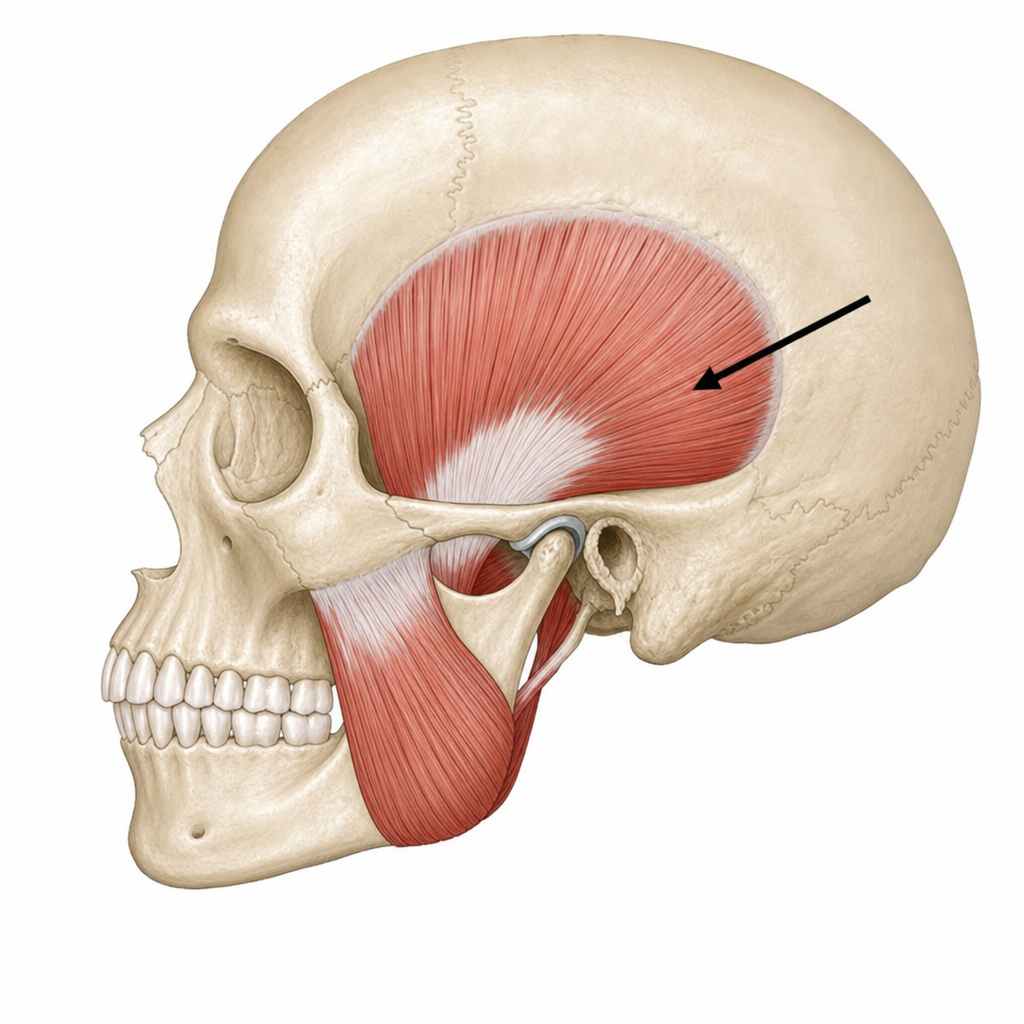
The structure damaged in the given condition is responsible for all except:

The lambda is the meeting point of which sutures?
Which nerve crosses the submandibular gland?
Damage to the middle meningeal artery typically results in which type of intracranial hemorrhage?
Which of the following extraocular muscles does not arise from the annulus of Zinn?
Ptosis is due to which of the following?
What overlies the lateral wall of the mastoid antrum?
Which of the following is NOT a terminal branch of the facial nerve?
Explanation: **Explanation:** The **Abducens nerve (CN VI)** provides motor innervation to the **Lateral Rectus (LR)** muscle [1]. The primary action of the lateral rectus is **abduction**, which moves the eye **outward** (away from the midline) [1]. In the setting of a pituitary tumor invading the cavernous sinus, the abducens nerve is often the first cranial nerve affected because it runs centrally through the sinus (adjacent to the internal carotid artery), whereas CN III, IV, and V₁/V₂ are protected within the lateral wall. If the right abducens nerve is damaged, the patient will be unable to abduct the right eye. **Analysis of Options:** * **B. Outward (Correct):** Testing abduction directly assesses the Lateral Rectus (CN VI) [1]. Failure to move the eye laterally confirms abducens palsy. * **A. Inward:** This is **adduction**, primarily mediated by the **Medial Rectus** (CN III) [1]. * **C. Downward:** This is **depression**, mediated by the **Inferior Rectus** (CN III) and **Superior Oblique** (CN IV) [1]. * **D. Down and out:** This is the classic "resting position" of the eye in a **Complete Third Nerve (Oculomotor) Palsy**, caused by the unopposed action of the Superior Oblique and Lateral Rectus. **High-Yield NEET-PG Pearls:** 1. **Cavernous Sinus Contents:** CN III, IV, V₁, and V₂ are in the lateral wall. **CN VI and the Internal Carotid Artery (ICA)** are located medially within the sinus. 2. **First Sign:** Because of its central location, CN VI is typically the first nerve compressed in cavernous sinus pathology (e.g., thrombosis or ICA aneurysm). 3. **Clinical Presentation:** Patients with CN VI palsy present with **horizontal diplopia** that worsens when looking toward the affected side and a "convergent squint" (esotropia) at rest.
Explanation: The medial wall of the orbit is a thin, fragile structure often referred to as the "lamina papyracea" (due to the paper-thin nature of the ethmoid bone) [1]. To remember the bones forming the medial wall, use the mnemonic **"My Little Eye Sits"**: **M**axilla (frontal process), **L**acrimal, **E**thmoid (orbital plate), and **S**phenoid (body). **Why Zygoma is the correct answer:** The **Zygomatic bone** (Option D) forms the **lateral wall** and the lateral part of the **floor** of the orbit. It does not extend medially and therefore does not contribute to the medial wall. **Analysis of incorrect options:** * **Ethmoid (A):** This is the largest contributor to the medial wall. Its orbital plate is extremely thin, making it a common site for the spread of infection from the ethmoid sinuses into the orbit (orbital cellulitis) [1]. * **Lacrimal (B):** This small bone forms the anterior part of the medial wall and contains the lacrimal fossa for the lacrimal sac. * **Frontal (C):** While primarily forming the roof, the frontal bone contributes to the uppermost part of the medial wall where it articulates with the ethmoid and lacrimal bones. **NEET-PG High-Yield Pearls:** 1. **Thinnest Wall:** The medial wall (specifically the ethmoid bone) is the thinnest wall of the orbit. 2. **Strongest Wall:** The lateral wall (formed by the Zygoma and Greater wing of Sphenoid) is the strongest. 3. **Blow-out Fracture:** Most commonly involves the **floor** (Maxilla), but the medial wall is the second most common site. 4. **Apex:** The optic canal is located in the Lesser wing of the Sphenoid at the orbital apex.
Explanation: ***Parotid gland secretion*** - The **parotid gland** receives parasympathetic innervation from the **glossopharyngeal nerve (CN IX)** via the **otic ganglion**, not the facial nerve. - Secretion is controlled through the **lesser petrosal nerve** pathway, which is completely independent of **CN VII**. *Taste sensation of anterior 2/3rd tongue* - The **chorda tympani** branch of the facial nerve carries taste fibers from the anterior two-thirds of the tongue. - Damage to CN VII results in **loss of taste sensation** (ageusia) on the affected side of the anterior tongue. *Lacrimal gland secretion* - The **greater petrosal nerve** (branch of CN VII) provides parasympathetic innervation to the **lacrimal gland** via the **pterygopalatine ganglion**. - Facial nerve palsy causes **decreased tear production** and potential **dry eye** on the affected side. *Platysma contraction* - The **platysma muscle** is innervated by the **cervical branch** of the facial nerve. - CN VII palsy results in **weakness of neck skin tensing** and loss of platysma contraction during facial expressions.
Explanation: ### Explanation The **lambda** is a key craniometric landmark located at the posterior aspect of the skull. It represents the junction where the **sagittal suture** (running midline between the two parietal bones) meets the **lambdoid suture** (separating the parietal bones from the occipital bone) [1]. In the fetal and neonatal skull, this area is occupied by a membrane-filled space known as the **posterior fontanelle**. This fontanelle typically closes by 2–3 months of age, becoming the bony landmark known as the lambda [1]. #### Analysis of Options: * **Option C (Correct):** The sagittal and lambdoid sutures intersect at the lambda. Its name is derived from the Greek letter 'Lambda' ($\lambda$), which the shape of the sutures resembles [1]. * **Option A (Incorrect):** The meeting point of the **coronal and sagittal sutures** is the **bregma**. In infants, this is the site of the anterior fontanelle (the largest fontanelle), which usually closes by 18–24 months [1]. * **Option B (Incorrect):** The coronal and lambdoid sutures do not meet [1]. The coronal suture is at the front of the skull, while the lambdoid is at the back. #### High-Yield Clinical Pearls for NEET-PG: * **Pterion:** The H-shaped junction of the frontal, parietal, temporal, and sphenoid (greater wing) bones. It is clinically significant because it overlies the **anterior division of the middle meningeal artery**; a fracture here can lead to an extradural hematoma (EDH). * **Asterion:** The junction of the lambdoid, parietomastoid, and occipitomastoid sutures. It marks the site of the **posterolateral (mastoid) fontanelle**. * **Metopic Suture:** A persistent frontal suture found in approximately 3-8% of individuals [1]. * **Craniosynostosis:** Premature closure of sutures [2]. Closure of the sagittal suture leads to **scaphocephaly** (long, narrow head), the most common type.
Explanation: The submandibular gland is a key anatomical landmark in the submandibular triangle. To answer this question correctly, one must distinguish between nerves that are in close **proximity** to the gland versus the one that specifically **crosses its superficial surface**. ### Why the Facial Nerve is Correct The **marginal mandibular branch of the facial nerve** (CN VII) descends from the parotid gland, passes below the angle of the mandible, and **crosses the superficial surface** of the submandibular gland. It lies deep to the platysma and the investing layer of deep cervical fascia. This is a critical surgical landmark; during submandibular gland excision, the incision is made at least 2 cm below the mandible to avoid injuring this nerve, which would result in drooping of the corner of the mouth. ### Why Other Options are Incorrect * **Lingual Nerve:** This nerve is related to the **deep surface** of the gland. It "loops" around the submandibular duct (Wharton’s duct), passing from lateral to medial. It does not cross the superficial surface. * **Hypoglossal Nerve (CN XII):** This nerve also lies **deep** to the submandibular gland, running on the surface of the hyoglossus muscle. * **Glossopharyngeal Nerve (CN IX):** This nerve is located much deeper and higher in the carotid triangle and oropharynx; it does not have a direct anatomical relationship with the submandibular gland. ### NEET-PG High-Yield Pearls * **The "Double Crossing":** The Lingual nerve crosses the submandibular duct twice (lateral to medial). * **Ganglion:** The submandibular ganglion (parasympathetic) is suspended from the lingual nerve and supplies secretomotor fibers to the gland. * **Blood Supply:** The **facial artery** grooves the posterior part of the gland before hooking over the mandible. * **Surgical Safety:** To protect the marginal mandibular nerve, the "Hayes Martin" maneuver (ligating and retracting the facial vein upwards) is often used.
Explanation: The **middle meningeal artery (MMA)**, a branch of the maxillary artery, enters the skull through the foramen spinosum and runs between the internal surface of the skull and the dura mater. It is most vulnerable to injury at the **pterion**, where the skull is thinnest. Damage to this artery leads to an **Epidural Hemorrhage (EDH)**, as blood collects in the potential space between the periosteal layer of the dura and the bone [1]. **Why the other options are incorrect:** * **Subdural Hemorrhage (SDH):** Typically results from the tearing of **bridging veins** as they cross the subdural space to enter the dural venous sinuses [1]. It is common in elderly patients or following blunt trauma. * **Subarachnoid Hemorrhage (SAH):** Most commonly caused by the rupture of a **berry aneurysm** in the Circle of Willis [2]. Blood collects between the arachnoid and pia mater. * **Intracerebral Hemorrhage:** Occurs within the brain parenchyma, often due to chronic hypertension causing rupture of **Charcot-Bouchard aneurysms** [1]. **High-Yield Clinical Pearls for NEET-PG:** * **Radiology:** On a CT scan, EDH appears as a **biconvex (lentiform)**, hyperdense collection that does *not* cross cranial sutures (but can cross the midline). * **Clinical Presentation:** Classically features a **"Lucid Interval"**—a period of temporary improvement in consciousness followed by rapid neurological deterioration. * **Anatomical Landmark:** The MMA is located deep to the **pterion**, the H-shaped junction of the frontal, parietal, temporal, and sphenoid bones.
Explanation: ### Explanation The **Common Tendinous Ring (Annulus of Zinn)** is a fibrous ring surrounding the optic canal and the medial part of the superior orbital fissure at the apex of the orbit. It serves as the primary origin for the four recti muscles. **Why Superior Oblique is the Correct Answer:** The **Superior Oblique** muscle does not arise from the Annulus of Zinn [1]. Instead, it originates from the body of the **sphenoid bone**, specifically superomedial to the optic canal. It then travels forward to the trochlea (a fibrocartilaginous pulley) before reflecting backward to insert into the sclera [1]. Similarly, the **Inferior Oblique** is unique because it is the only extraocular muscle to arise from the **anterior** part of the orbital floor (maxilla). **Analysis of Incorrect Options:** * **Inferior Rectus (A), Medial Rectus (B), and Lateral Rectus (C):** Along with the Superior Rectus, these four muscles originate directly from the Annulus of Zinn [1]. The Lateral Rectus is unique in that it has two heads of origin, between which pass the oculomotor, abducens, and nasociliary nerves. **High-Yield Clinical Pearls for NEET-PG:** * **Mnemonic for Recti:** All **Recti** arise from the **Ring** (Annulus of Zinn). * **Structures passing WITHIN the Ring:** Optic nerve, Ophthalmic artery, Superior and Inferior divisions of Oculomotor nerve (CN III), Nasociliary nerve, and Abducens nerve (CN VI). * **Structures passing OUTSIDE the Ring (Superior Orbital Fissure):** Lacrimal nerve, Frontal nerve, and Trochlear nerve (CN IV) — Mnemonic: **LFT**. * **Innervation:** All extraocular muscles are supplied by CN III except Superior Oblique (**SO4**) and Lateral Rectus (**LR6**) [1].
Explanation: **Explanation:** **Ptosis** (drooping of the upper eyelid) occurs due to the paralysis of the muscles responsible for elevating the eyelid. The primary muscle involved is the **Levator Palpebrae Superioris (LPS)**, which is embryologically and functionally supplied by the **Oculomotor Nerve (3rd Cranial Nerve)**. * **Why Option A is correct:** The 3rd Cranial Nerve (CN III) supplies the LPS muscle. A complete 3rd nerve palsy results in severe ptosis because the LPS can no longer lift the lid. Additionally, CN III carries parasympathetic fibers to the constrictor pupillae; thus, a "surgical" 3rd nerve palsy often presents with a dilated, non-reactive pupil alongside ptosis [1]. * **Why Options B, C, and D are incorrect:** * **4th Nerve (Trochlear):** Supplies the Superior Oblique muscle. Palsy causes vertical diplopia and head tilting, not ptosis. * **5th Nerve (Trigeminal):** Provides sensory innervation to the face and motor supply to muscles of mastication. It does not control eyelid elevation. * **6th Nerve (Abducens):** Supplies the Lateral Rectus muscle. Palsy leads to medial squint (esotropia) and loss of abduction, not ptosis. **High-Yield Clinical Pearls for NEET-PG:** 1. **Partial Ptosis:** Can occur in **Horner’s Syndrome** due to paralysis of **Müller’s muscle** (superior tarsal muscle), which is supplied by sympathetic fibers. 2. **Pseudoptosis:** Seen in Enophthalmos or Phthisis bulbi, where the eyelid lacks structural support. 3. **Myasthenia Gravis:** A common neuromuscular cause of fatigable ptosis. 4. **Rule of Thumb:** If ptosis is associated with a "down and out" eye position, think **3rd Nerve Palsy**.
Explanation: The **mastoid antrum** is an air-filled cavity within the petrous part of the temporal bone that communicates anteriorly with the middle ear via the aditus ad antrum. ### Why the Correct Answer is Right: The **suprameatal triangle (Macewen’s triangle)** is the surgical landmark for the mastoid antrum. It is located on the outer surface of the temporal bone, bounded superiorly by the supramastoid crest, anteriorly by the posterosuperior margin of the external auditory meatus, and posteriorly by a vertical tangent to the posterior margin of the meatus. The mastoid antrum lies approximately **12–15 mm deep** to this triangle in adults. ### Why the Other Options are Wrong: * **Tegmen tympani:** This is a thin plate of bone that forms the **roof** (superior wall) of the mastoid antrum and middle ear, separating them from the middle cranial fossa. * **Mastoid process:** This is the large bony projection behind the ear. While the antrum is located within the mastoid part of the temporal bone, the "process" itself forms the lateral and inferior bulk, but the specific surgical "overlay" is the suprameatal triangle. * **Tympanic plate:** This forms the anterior, inferior, and part of the posterior wall of the external acoustic meatus, not the lateral wall of the antrum. ### Clinical Pearls for NEET-PG: * **Mastoidectomy:** The suprameatal triangle is the primary landmark used by surgeons to drill into the mastoid antrum to treat chronic mastoiditis. * **Depth Variation:** In newborns, the mastoid antrum is very superficial (only ~2 mm deep) because the mastoid process has not yet developed. * **Spina Meatalis (Henle’s spine):** A small bony projection at the anteroinferior margin of the suprameatal triangle, also used as a landmark.
Explanation: The **facial nerve (CN VII)**, after emerging from the stylomastoid foramen, enters the parotid gland and divides into five terminal motor branches. These branches supply the muscles of facial expression. ### Why "Mandibular nerve" is the correct answer: The **Mandibular nerve (V3)** is the third division of the **Trigeminal nerve (CN V)**. It is a mixed nerve that provides sensory innervation to the lower face and motor innervation to the muscles of mastication (e.g., masseter, temporalis). It is *not* a branch of the facial nerve. The confusion often arises because the facial nerve has a branch with a similar name: the *Marginal Mandibular* branch. ### Why the other options are incorrect: The facial nerve typically divides into five terminal branches (mnemonic: **"To Zanzibar By Motor Car"**): * **Temporal (C):** Supplies the frontalis, orbicularis oculi, and corrugator supercilii. * **Zygomatic:** Supplies the orbicularis oculi. * **Buccal:** Supplies the buccinator and muscles of the upper lip. * **Marginal Mandibular (B):** Supplies the muscles of the lower lip and chin (e.g., depressor anguli oris). * **Cervical (D):** Supplies the platysma muscle. ### High-Yield Clinical Pearls for NEET-PG: * **Pes Anserinus:** The branching pattern of the facial nerve within the parotid gland is called the *pes anserinus* (goose’s foot). * **Parotid Surgery:** During a parotidectomy, the facial nerve is the most important structure to preserve. It divides the gland into superficial and deep lobes (though this is a functional, not anatomical, division). * **Bell’s Palsy:** Lower motor neuron lesion of the facial nerve results in paralysis of all five terminal branches on the affected side. * **Safety Muscle:** The **Stapedius** is also supplied by the facial nerve (nerve to stapedius) before it exits the stylomastoid foramen.
Skull and Facial Bones
Practice Questions
Scalp and Facial Muscles
Practice Questions
Dural Venous Sinuses
Practice Questions
Cranial Cavity
Practice Questions
Orbit and Contents
Practice Questions
Temporal and Infratemporal Regions
Practice Questions
Pterygopalatine Fossa
Practice Questions
Oral Cavity
Practice Questions
Paranasal Sinuses
Practice Questions
Applied Anatomy and Clinical Correlations
Practice Questions
Get full access to all questions, explanations, and performance tracking.
Start For Free