Who introduced electroconvulsive therapy (ECT)?
Which of the following is NOT true about conus medullaris syndrome?
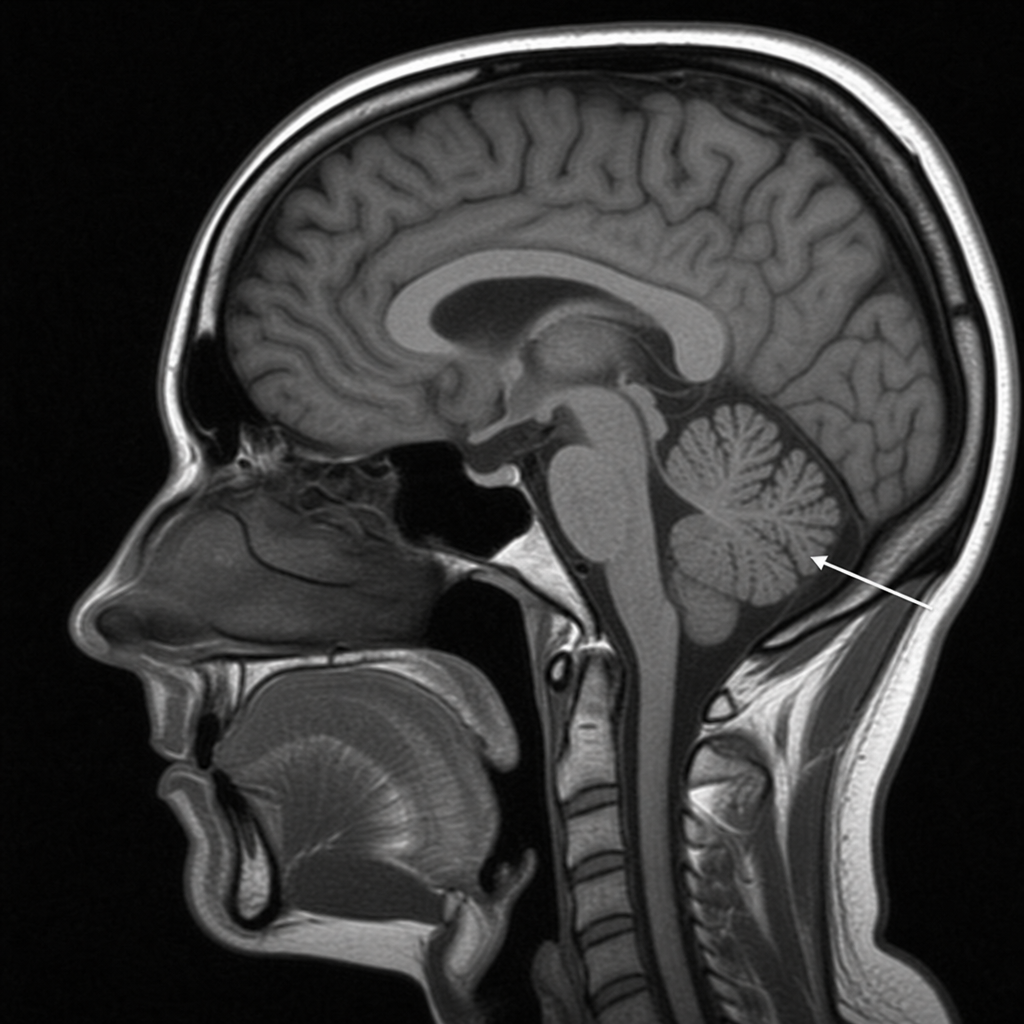
Identify the marked structure:
In the sagittal section of the brain given below the colored area represents the paracentral lobule. Which of the following structures are affected in a lesion to this area?
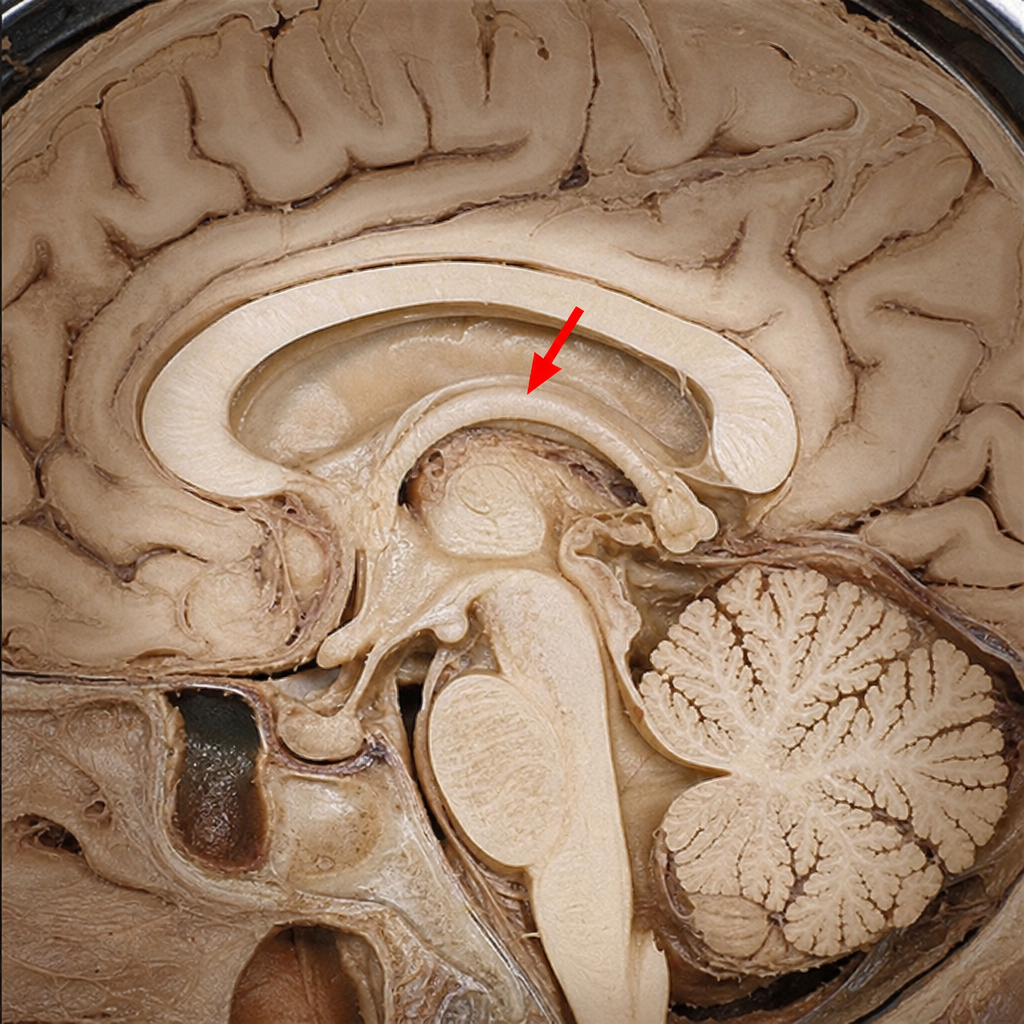
Identify the structure marked in the image given below.
Which nerve is not related to olfaction?
During a neck dissection, a nerve was identified and marked that is most likely the vagus nerve (CN X). Which of the following is NOT a functional component of the vagus nerve?
Which of the following nerves gives sensory supply to the orbit?
Name the pathways marked as $X$ and $Y$.

Which of the following is correct about lesion in the basal ganglia marked as $X$ and its manifestation?

Explanation: **Explanation:** The correct answer is **Lucio Bini**. Electroconvulsive Therapy (ECT) was pioneered in **1938** by two Italian psychiatrists, **Ugo Cerletti and Lucio Bini**. They developed the technique after observing that induced seizures could alleviate symptoms of severe psychosis, particularly schizophrenia. Their first successful human trial involved a patient with schizophrenia in Rome, marking a revolutionary shift in biological psychiatry. **Analysis of Options:** * **Lucio Bini (Correct):** Co-inventor of ECT. He was primarily responsible for developing the electrical apparatus used to deliver the controlled shocks. * **Manfred Bleuler:** He was a Swiss psychiatrist known for his extensive longitudinal studies on schizophrenia. He was the son of Eugen Bleuler (who coined the term "schizophrenia"), but he did not invent ECT. * **Martin Seligman (Moerin Seligman):** An American psychologist famous for the theory of **"Learned Helplessness,"** which is a foundational concept in the understanding of clinical depression. * **Sigmund Freud:** The father of **Psychoanalysis**. His work focused on the unconscious mind, dream analysis, and talk therapy rather than biological or somatic treatments like ECT. **Clinical Pearls for NEET-PG:** * **First ECT:** Performed in 1938 in Rome. * **Mechanism:** Induces a generalized tonic-clonic seizure; the therapeutic effect is linked to neurotransmitter modulation and neuroplasticity. * **Modern ECT:** Now performed as **"Modified ECT"** under general anesthesia and muscle relaxants (Succinylcholine) to prevent musculoskeletal injuries. * **Indications:** Severe depression with suicidal risk (Treatment of choice), treatment-resistant schizophrenia, and acute mania. * **Most common side effect:** Retrograde and anterograde amnesia.
Explanation: **Explanation:** **Conus Medullaris Syndrome (CMS)** occurs due to injury to the terminal end of the spinal cord (usually at the L1-L2 vertebral level). Understanding the distinction between CMS and Cauda Equina Syndrome (CES) is a high-yield topic for NEET-PG. **Why Option B is the correct answer (The False Statement):** In CMS, the lesion is located at the **sacral segments** of the spinal cord. The **Knee jerk (L2-L4)** is mediated by segments above the conus; therefore, it is typically **preserved/normal**. While the ankle jerk (S1-S2) may be affected, the statement that "both knee and ankle jerks are absent" is incorrect. In contrast, both are usually absent in Cauda Equina Syndrome because it involves multiple nerve roots. **Analysis of other options:** * **Option A:** CMS specifically involves the sacral (S3-S5) and coccygeal segments of the spinal cord. * **Option C:** Since CMS is technically a spinal cord (CNS) lesion, the plantar reflex remains **flexor** (normal) or is absent. An extensor response (Babinski sign) is rare but more likely here than in CES, which is a pure lower motor neuron (LMN) lesion. * **Option D:** **Saddle anesthesia** (sensory loss over S3-S5 dermatomes) is a hallmark of CMS and is typically **symmetrical** and bilateral. **High-Yield Clinical Pearls for NEET-PG:** 1. **Level of Lesion:** CMS occurs at **L1-L2**; CES occurs below **L2**. 2. **Onset:** CMS has a **sudden, bilateral** onset; CES is often gradual and asymmetrical. 3. **Autonomic Dysfunction:** Early and severe urinary/fecal incontinence and impotence are characteristic of **Conus Medullaris Syndrome**. 4. **Pain:** Radicular pain is severe in CES but mild/absent in CMS.
Explanation: ***Internal capsule***- This highly organized tract of **white matter** separates the **lentiform nucleus** (globus pallidus and putamen) laterally from the **caudate nucleus** and **thalamus** medially in axial/coronal brain sections.- It contains vital ascending sensory fibers and all descending **cortical efferent fibers**, including the **corticospinal tract**.*Body of fornix*- The **fornix** is an arched **white matter** tract situated inferior to the **corpus callosum** and superior to the **third ventricle** in the midline of the brain.- It connects the **hippocampi** to the **mammillary bodies** and is a critical part of the **limbic system** involved in memory.*Globus pallidus*- The **globus pallidus** is a **gray matter** structure and forms the inner, medial portion of the **lentiform nucleus**.- It is situated immediately **lateral** to the **internal capsule** and plays a crucial inhibitory role in the **basal ganglia motor circuit***Lateral ventricle*- The **lateral ventricles** are C-shaped, paired, **CSF-filled** spaces located within the cerebral hemispheres.- They are typically situated adjacent to the **caudate nucleus** head/body, appearing as **hypodense** (dark) fluid spaces on neuroimaging.
Explanation: ***Perineum and leg*** - The **paracentral lobule**, located on the medial surface of the cerebral hemisphere, contains the primary motor and somatosensory cortical areas for the contralateral **leg**, **foot**, and **perineum**. - A lesion in this area, often due to an **anterior cerebral artery (ACA) stroke**, typically results in motor and sensory deficits in the contralateral leg and foot, and may also cause **urinary incontinence** due to involvement of the cortical micturition center. *Scapular region and neck* - The cortical representations for the scapular region and neck are located on the **superolateral surface** of the precentral and postcentral gyri, not on the medial surface where the paracentral lobule lies. - These areas are supplied by the **middle cerebral artery (MCA)**, not the ACA. *Trunk and shoulder* - According to the **motor and sensory homunculus**, the trunk and shoulder areas are located more superiorly and laterally on the cerebral cortex, lateral to the paracentral lobule. - A lesion affecting these areas would involve the superolateral convexity of the hemisphere, which has a different vascular supply (MCA). *Face and neck* - The cortical areas for the face and neck are situated on the **inferolateral aspect** of the precentral and postcentral gyri. - Lesions here are characteristic of an **MCA stroke** and would result in contralateral facial weakness and sensory loss, sparing the lower limbs.
Explanation: ***Internal Capsule***- The **internal capsule** is a V-shaped structure of densely packed white matter tracts situated deep within the cerebral hemispheres.- It contains crucial ascending and descending fibers, including the **corticospinal tract** (motor fibers) and **thalamocortical projections** (sensory fibers).*External capsule*- The **external capsule** is a thin sheet of white matter located *lateral* to the **lenticular nucleus** (putamen and globus pallidus).- It separates the **putamen** from the **claustrum**.*Caudate nucleus*- The **caudate nucleus** is a C-shaped component of the **basal ganglia**, typically situated medial to the internal capsule and forming the lateral wall of the anterior horn of the **lateral ventricle**.- Damage to this structure is often implicated in **Huntington's disease**.*Putamen*- The **putamen** is the larger, more lateral gray matter structure of the **lenticular nucleus**, located lateral to the internal and external capsules.- It is a core component of the **basal ganglia**, involved primarily in controlling learned motor movements.
Explanation: ***Hypoglossal (Correct Answer)*** - The **Hypoglossal nerve (CN XII)** is a **purely motor nerve** that innervates the intrinsic and extrinsic muscles of the tongue. - It has **no sensory function** and is **not related to olfaction** in any way. - It does not contribute to smell, taste, or nasal sensation. *Trigeminal (Incorrect)* - The **Trigeminal nerve (CN V)**, particularly its ophthalmic (V1) and maxillary (V2) divisions, provides **general sensory innervation to the nasal mucosa**. - It mediates sensations of **irritation, burning, and cooling** from chemical stimuli (chemesthesis) in the nasal cavity, which accompanies the olfactory experience. - While not true olfaction, it contributes to the overall nasal sensory experience alongside CN I (olfactory nerve). *Glossopharyngeal (Incorrect)* - The **Glossopharyngeal nerve (CN IX)** provides **taste sensation** from the posterior third of the tongue [1]. - While primarily involved in taste (gustation) rather than olfaction, taste and smell are closely integrated in **flavor perception** [1]. - This question tests the distinction between nerves directly involved in nasal/smell sensation versus purely motor nerves. *Vagus (Incorrect)* - The **Vagus nerve (CN X)** provides **taste sensation** from the epiglottis and pharynx. - Like CN IX, it contributes to **flavor perception** through the integration of taste and smell [1]. - It has sensory components related to the aerodigestive tract, making it more related to the broader sensory experience than the purely motor hypoglossal nerve. **Key Concept:** Only the **olfactory nerve (CN I)** is responsible for true olfaction [2]. Among the options given, Hypoglossal is the only purely motor nerve with no sensory role in smell, taste, or nasal sensation.
Explanation: ***General somatic efferent*** - **GSE** fibers innervate muscles derived from **somites**, typically cranial nerves that control the extraocular muscles (CN III, IV, VI) or the tongue muscles (CN XII). - The vagus nerve (CN X) does not carry GSE fibers; its motor components are **Special Visceral Efferent (SVE)** for pharyngeal/laryngeal muscles, and **General Visceral Efferent (GVE)** for parasympathetic supply. *General visceral afferent* - **GVA** fibers are a major functional component of the vagus nerve, providing **visceral sensation** from the respiratory, cardiovascular, and gastrointestinal systems. - These fibers monitor stretch receptors in the lungs, **baroreceptors** in the aortic arch, and sensation from the abdominal viscera, crucial for reflex regulation. *General visceral efferent* - **GVE** fibers represent the **parasympathetic outflow** of the vagus nerve below the neck, innervating smooth muscle, cardiac muscle, and glands. - This component is responsible for decreasing **heart rate**, promoting **bronchoconstriction**, and increasing gastrointestinal motility and secretion. *General somatic afferent* - **GSA** fibers carry general sensory information (pain, temperature, touch) from parts of the head and are present in the vagus nerve. - CN X GSA fibers provide sensation from a small area of the external auditory meatus and the external surface of the **tympanic membrane**.
Explanation: ***Trigeminal nerve*** - The **Ophthalmic division (V1)** of the Trigeminal nerve (CN V) is the primary source of general sensation for structures within the orbit, including the globe, conjunctiva, and lacrimal gland. - Its key branches, which include the **frontal**, **lacrimal**, and **nasociliary nerves**, are responsible for carrying these sensory fibers. *Vagus nerve* - The Vagus nerve (CN X) is primarily involved in **parasympathetic control** of the thoracic and abdominal viscera, and motor supply to the pharynx and larynx. - It does not supply the orbit with any **general sensory** fibers; its distribution is mainly to the neck, chest, and abdomen. *Hypoglossal nerve* - The Hypoglossal nerve (CN XII) is a purely **somatic motor nerve** originating from the medulla. - Its function is restricted to supplying the **intrinsic and extrinsic muscles of the tongue**, having no role in orbital innervation or sensation. *Oculomotor nerve* - The Oculomotor nerve (CN III) is predominantly a **motor nerve** that supplies four of the six extraocular muscles and the **Levator palpebrae superioris**. - While it carries **parasympathetic fibers** to the ciliary ganglion, it does not provide **general sensory** supply to the orbital structures.
Explanation: ***X = Ventral corticospinal pathway and Y = Lateral corticospinal pathway*** - The diagram illustrates the **corticospinal tracts**, which control voluntary movement. Pathway Y shows fibers descending from the cortex, **decussating** (crossing over) at the pyramids, and then continuing down the contralateral side to innervate distal muscles, characteristic of the **lateral corticospinal tract**. - Pathway X shows fibers that descend **ipsilaterally** (on the same side) from the cortex, then decussate at the spinal cord level to innervate proximal muscles, which is typical for the **ventral (anterior) corticospinal tract**. *X = Ventral corticospinal pathway and Y = Lateral spinothalamic Pathway* - The **lateral spinothalamic pathway** is an ascending sensory pathway for pain and temperature, originating in the spinal cord and ascending to the thalamus, rather than a descending motor pathway as shown by Y. - The pathways shown (X and Y) are clearly originating from the motor cortex (precentral gyrus) and descending to muscles, indicating they are **motor pathways**, not sensory. *X = Ventral corticospinal pathway and Y = Lateral spinocerebellar pathway* - The **lateral spinocerebellar pathway** is predominantly an ascending pathway carrying unconscious proprioceptive information to the cerebellum, not a descending motor pathway synapsing on lower motor neurons for voluntary muscle control. - Pathway Y is shown forming synapses with **anterior horn cells** controlling skeletal muscles, indicating it is a part of the motor system originating from the precentral gyrus. *X = Lateral corticospinal pathway and Y = Ventral corticospinal pathway* - This option incorrectly identifies pathway X as lateral and Y as ventral. The diagram clearly shows that pathway Y crosses over at the level of the pyramids (medulla) to descend on the contralateral side, which is the defining characteristic of the **lateral corticospinal pathway**. - Pathway X descends Ipsilaterally and crosses at segmental levels in the spinal cord, which is characteristic of the **ventral (anterior) corticospinal pathway**.
Explanation: ***Subthalamic nucleus: Flinging movements*** - The image shows structure 'X' indicating the **subthalamic nucleus (STN)**. Lesions in the STN are classically associated with **hemiballismus**, which presents as sudden, wild, continuous flinging movements of the contralateral arm and/or leg. - The STN plays a critical role in the **indirect pathway of the basal ganglia**, inhibiting unwanted movements. Damage to this nucleus disrupts this inhibition, leading to hyperkinetic disorders. *Caudate: Semipurposive involuntary movement* - The caudate nucleus (marked in orange in the image, but higher and more anterior than X) is primarily involved in motor control, learning, and memory. - Lesions in the caudate nucleus are typically associated with **Huntington's disease**, which manifests as chorea (dance-like, semi-purposive involuntary movements), but this is due to **degeneration rather than an acute lesion**. *Globus pallidus: Semipurposive movement* - The globus pallidus (represented by the green and dark green structures lateral to the thalamus) is involved in regulating voluntary movement. - Lesions in the globus pallidus can lead to various movement disorders, including **dystonia** or **athetosis**, but "semipurposive movement" is a vague description and not specifically characteristic of isolated pallidal lesions. *Lenticular nucleus: Oculogyric movements* - The lenticular nucleus (comprising the globus pallidus and putamen, which is the light green structure) is involved in motor control. - **Oculogyric crises** are typically associated with dysfunction in the brainstem, specifically the **dopaminergic pathways** and sometimes basal ganglia involvement, rather than a primary lesion in the lenticular nucleus itself. They are often seen in conditions like **post-encephalitic parkinsonism** or as a side effect of certain medications.
Cerebral Hemispheres
Practice Questions
Diencephalon
Practice Questions
Brainstem
Practice Questions
Cerebellum
Practice Questions
Basal Ganglia
Practice Questions
Limbic System
Practice Questions
Ventricular System and CSF
Practice Questions
Blood Supply of the Brain
Practice Questions
Cranial Nerves and Nuclei
Practice Questions
Functional Systems and Pathways
Practice Questions
Applied Neuroanatomy
Practice Questions
Neuroimaging Correlations
Practice Questions
Get full access to all questions, explanations, and performance tracking.
Start For Free