Which of the following nerves does not carry parasympathetic fibers?
Which area is involved in memory deficit following a posterior cerebral artery embolism?
Which nucleus is primarily involved in Alzheimer's disease?
Which of the following is NOT a part of the epithalamus?
The phenomenon of "sparing of the macula" is due to the collateral circulation between which of the following arteries?
Which of the following nerve fibers are present in the genu of the internal capsule?
Which of the following muscles or structures is supplied by the third cranial nerve (oculomotor nerve)?
The internal capsule is formed by which of the following types of fibres?
The nucleus of the oculomotor nerve is located in which part of the brainstem?
A 26-year-old man undergoing chemotherapy for Hodgkin's lymphoma experiences severe vomiting. Which location in the brain is responsible for these symptoms?
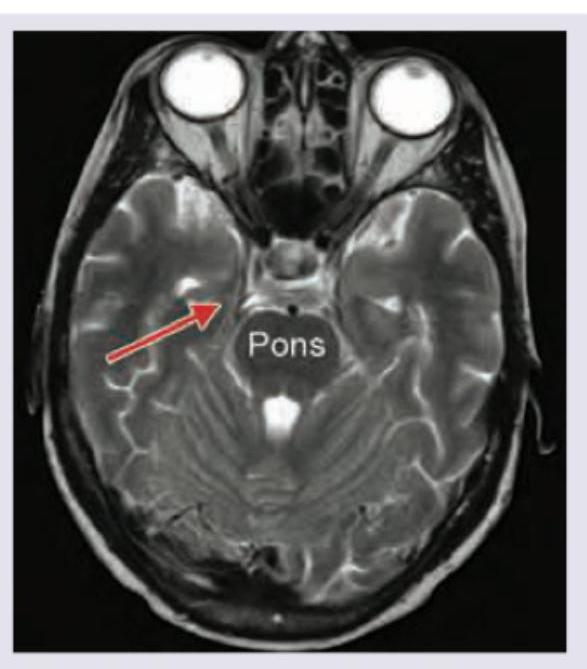
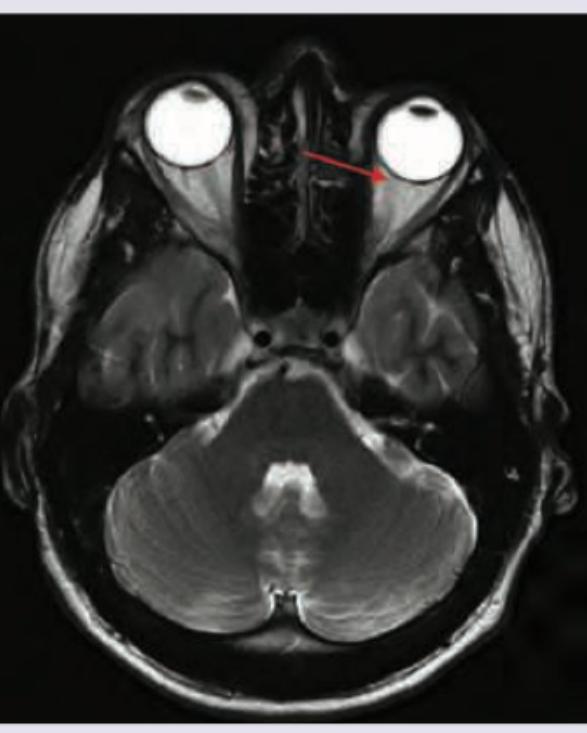
Explanation: **Explanation:** The parasympathetic nervous system (craniosacral outflow) involves four specific cranial nerves that carry preganglionic parasympathetic fibers to various ganglia in the head and neck. These are **Cranial Nerves III, VII, IX, and X**. **Why Trochlear (CN IV) is the correct answer:** The **Trochlear nerve** is a pure motor nerve. Its sole function is to provide somatic efferent innervation to the **Superior Oblique** muscle of the eye. It does not possess any autonomic (parasympathetic) nuclei or fibers. **Analysis of Incorrect Options:** * **Oculomotor (CN III):** Carries parasympathetic fibers from the **Edinger-Westphal nucleus** to the ciliary ganglion [1]. These fibers innervate the sphincter pupillae (miosis) and ciliary muscles (accommodation) [1]. * **Facial (CN VII):** Carries fibers from the **superior salivatory nucleus**. These fibers travel via the greater petrosal nerve (to the pterygopalatine ganglion for lacrimation) and the chorda tympani (to the submandibular ganglion for salivation). * **Glossopharyngeal (CN IX):** Carries fibers from the **inferior salivatory nucleus** via the lesser petrosal nerve to the otic ganglion, providing secretomotor supply to the parotid gland. **High-Yield Clinical Pearls for NEET-PG:** * **Mnemonic:** Remember **3, 7, 9, 10** as the "Parasympathetic Cranial Nerves." * **Vagus Nerve (CN X):** Provides the most extensive parasympathetic innervation, reaching the thoracic and abdominal viscera up to the junction of the proximal 2/3 and distal 1/3 of the transverse colon. * **Purely Sensory Nerves:** I, II, VIII. * **Purely Motor Nerves:** IV, VI, XI, XII. [2] * **Mixed Nerves:** III, V, VII, IX, X. (Note: CN III is functionally mixed due to its parasympathetic component).
Explanation: ### Explanation **Correct Answer: B. Hippocampal gyrus** The **Posterior Cerebral Artery (PCA)** is the primary source of blood supply to the medial aspect of the temporal lobe and the occipital lobe. The **hippocampus** and the **parahippocampal gyrus**, located in the medial temporal lobe, are critical structures for the formation of new memories (anterograde memory) and spatial navigation. [1, 5] An embolism or infarct in the PCA territory leads to ischemia of these structures, resulting in significant memory deficits. [2] **Analysis of Incorrect Options:** * **A. Prefrontal cortex:** Supplied primarily by the **Anterior Cerebral Artery (ACA)**. It is involved in executive functions, personality, and social behavior, rather than primary memory consolidation. * **C. Angular gyrus:** Located in the parietal lobe (Brodmann area 39), it is supplied by the **Middle Cerebral Artery (MCA)**. Damage here typically results in Gerstmann syndrome (acalculia, agraphia, finger agnosia, and left-right disorientation). * **D. Superior temporal gyrus:** Contains Wernicke’s area (in the dominant hemisphere) and the primary auditory cortex. It is supplied by the **MCA**. Lesions here lead to sensory aphasia, not isolated memory loss. [3] **High-Yield Clinical Pearls for NEET-PG:** * **Visual Deficits:** The most common sign of a PCA infarct is **contralateral homonymous hemianopia with macular sparing** (due to collateral supply to the occipital pole from the MCA). * **Thalamic Syndrome:** PCA occlusion can involve the thalamus, leading to contralateral sensory loss followed by agonizing burning pain (Dejerine-Roussy syndrome). * **Bilateral PCA Infarct:** Can result in **Anton syndrome**, where a patient is cortically blind but denies their blindness (confabulation).
Explanation: **Explanation:** **1. Nucleus Basalis of Meynert (Correct Answer):** Located in the substantia innominata of the basal forebrain, the Nucleus Basalis of Meynert (NBM) is the primary source of cholinergic (acetylcholine) innervation to the entire cerebral cortex. In **Alzheimer’s disease**, there is a selective and profound degeneration of these cholinergic neurons. This loss leads to a significant deficit in acetylcholine levels [2], which is directly linked to the cognitive decline and memory impairment seen in patients. Most current pharmacological treatments (Cholinesterase inhibitors like Donepezil) aim to compensate for this loss [1]. **2. Analysis of Incorrect Options:** * **Superior Salivary Nucleus:** This is a parasympathetic nucleus of the Facial Nerve (CN VII) located in the pons. It is responsible for the secretomotor supply to the submandibular, sublingual, and lacrimal glands. It has no role in cognitive function or Alzheimer's. * **Ventromedial Nucleus of Thalamus:** This nucleus is primarily involved in motor control, acting as a relay station for the basal ganglia and cerebellum to the motor cortex. (Note: The Ventromedial nucleus of the *Hypothalamus* is the satiety center; neither is linked to Alzheimer's). **Clinical Pearls for NEET-PG:** * **Neurotransmitter involved:** Acetylcholine (ACh) is decreased in Alzheimer’s [2]. * **Histopathological Hallmarks:** Amyloid plaques (extracellular) and Neurofibrillary tangles (intracellular, composed of hyperphosphorylated Tau protein) [2]. * **Early Sign:** Atrophy of the **Hippocampus** is often the earliest radiological sign of Alzheimer’s disease. * **Other Basal Forebrain Nuclei:** The Medial Septal Nucleus also provides cholinergic input, specifically to the hippocampus.
Explanation: The **epithalamus** is the most dorsal part of the diencephalon, forming the roof of the third ventricle [1]. It primarily connects the limbic system to other parts of the brain. ### **Why "Geniculate Body" is the Correct Answer** The **Geniculate bodies** (Lateral and Medial) are components of the **Metathalamus**, not the epithalamus. * The **Lateral Geniculate Body (LGB)** is a relay station for the visual pathway [5]. * The **Medial Geniculate Body (MGB)** is a relay station for the auditory pathway [3]. ### **Analysis of Incorrect Options (Parts of Epithalamus)** * **A. Pineal body:** An endocrine gland that secretes melatonin and regulates circadian rhythms. It is the most prominent part of the epithalamus [1]. * **C. Trigonum habenulae:** A small triangular area containing the habenular nuclei. It serves as a relay station for olfactory and visceral pathways to the brainstem. * **D. Posterior commissure:** A rounded band of white fibers crossing the midline. It is vital for the **bilateral pupillary light reflex** [4]. ### **High-Yield NEET-PG Pearls** 1. **Diencephalon Components:** Thalamus, Hypothalamus, Epithalamus, and Metathalamus [2]. 2. **Habenular Nuclei:** Known as the "reward-negative" center; it integrates smell with emotional responses. 3. **Pineal Calcification:** Often visible on X-rays/CT scans after age 17; it serves as a useful midline marker for radiologists [1]. 4. **Parinaud’s Syndrome:** Compression of the **superior colliculi and posterior commissure** (often by a pineal tumor) leads to upward gaze palsy.
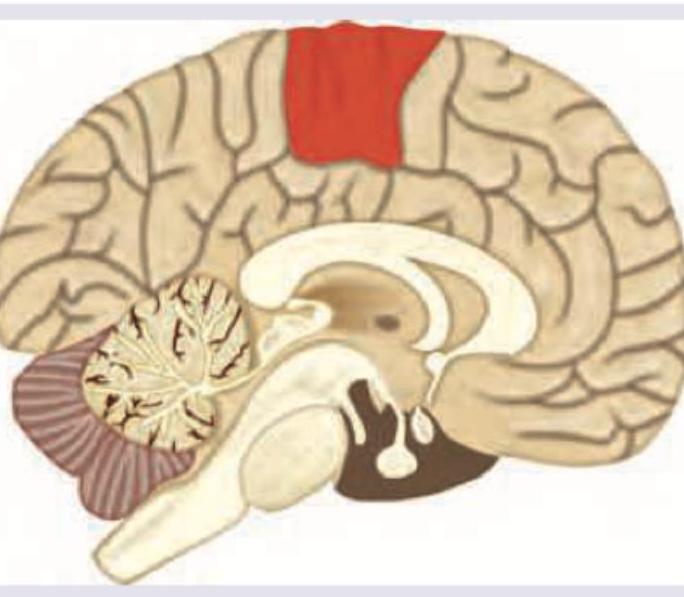
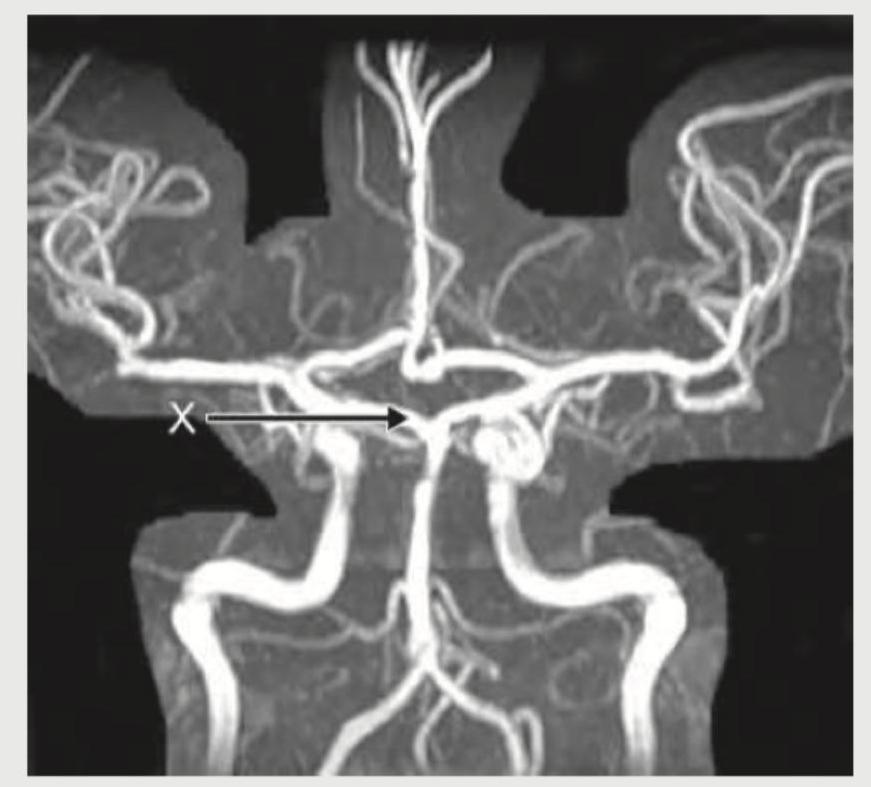
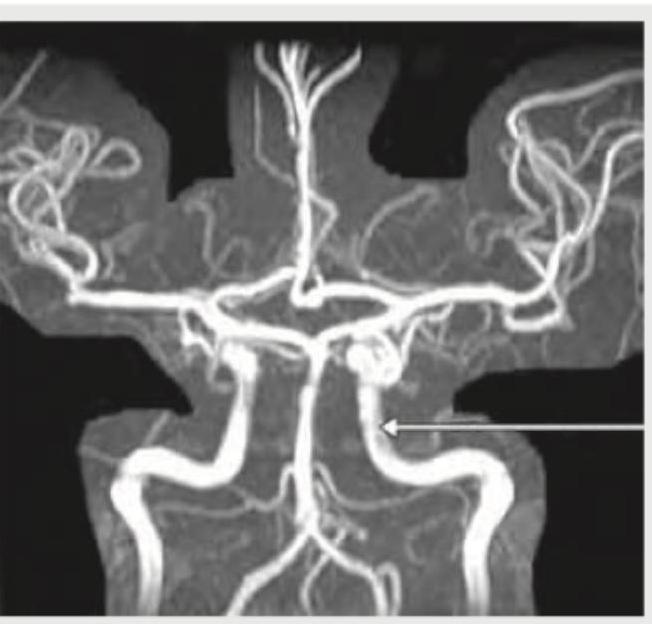
Explanation: The phenomenon of **macular sparing** occurs in patients with a **Posterior Cerebral Artery (PCA) occlusion** resulting in contralateral homonymous hemianopia [1]. Despite the loss of the rest of the visual field, the central vision (macula) remains intact. **1. Why Option A is Correct:** The primary visual cortex (Brodmann area 17) is located in the occipital lobe [2]. While the majority of the visual cortex is supplied by the **Posterior Cerebral Artery (PCA)**, the extreme posterior pole—which represents the **macula** (central vision)—is a "watershed area." It receives a dual blood supply from both the **PCA** and the **Middle Cerebral Artery (MCA)**. If the PCA is occluded, the MCA provides sufficient collateral circulation to keep the macular representation functional [1]. **2. Why Other Options are Incorrect:** * **Option B & C:** The **Anterior Cerebral Artery (ACA)** primarily supplies the medial surface of the frontal and parietal lobes (motor and sensory areas for the lower limbs). It does not reach the occipital pole or contribute to the visual cortex. * **Option D:** While all three arteries form the Circle of Willis, the specific collateralization at the occipital pole involves only the MCA and PCA. **3. Clinical Pearls for NEET-PG:** * **Lesion Site:** Macular sparing is a hallmark of **occipital lobe lesions** (vascular) [1]. * **Macular Involvement:** If a patient has homonymous hemianopia *without* macular sparing, the lesion is likely in the **optic tract** or **lateral geniculate nucleus (LGN)**, where dual supply does not exist [2]. * **Cortical Representation:** The macula occupies a disproportionately large area of the primary visual cortex (cortical magnification), making it more resilient to small focal insults [1].
Explanation: The **internal capsule** is a compact bundle of projection fibers (both afferent and efferent) that pass between the thalamus and caudate nucleus medially, and the lentiform nucleus laterally. ### **Why Option A is Correct** The **genu** (the "bend" of the internal capsule) primarily contains two types of fibers: 1. **Corticobulbar (Corticonuclear) fibers:** These are motor fibers traveling from the cortex to the cranial nerve nuclei in the brainstem [1]. Their axons traverse through the genu of the internal capsule and the cerebral peduncle to descend toward the brainstem [1]. 2. **Sensory fibers:** Specifically, the **Superior Thalamic Radiation**, which carries sensory information from the ventral nuclei of the thalamus to the postcentral gyrus [2]. While the posterior limb contains the bulk of general sensory fibers, the genu serves as a transition zone containing these thalamocortical projections. ### **Why the Other Options are Incorrect** Options B, C, and D refer to **Corticospinal (pyramidal) fibers**. These fibers are located in the **Posterior Limb** of the internal capsule, organized in a specific somatotopic map (from anterior to posterior): * **Motor fibers for the Upper Limb:** Located in the anterior part of the posterior limb [1]. * **Motor fibers for the Trunk:** Located middle to the upper limb fibers. * **Motor fibers for the Lower Limb:** Located in the most posterior part of the posterior limb. ### **High-Yield NEET-PG Pearls** * **Blood Supply:** The genu is primarily supplied by the **Lenticulostriate arteries** (branches of the Middle Cerebral Artery) and sometimes the **Recurrent Artery of Heubner** (branch of the Anterior Cerebral Artery). * **Clinical Correlation:** A small infarct in the genu typically presents with **pure motor stroke** affecting the face and tongue (due to corticobulbar involvement) without significant limb weakness [1]. * **Somatotopy Mnemonic:** In the posterior limb, the order is **FATL** (Face is in the Genu; then Arm, Trunk, and Leg in the posterior limb).
Explanation: The **Oculomotor nerve (CN III)** is the primary motor nerve for eye movements. It originates from the midbrain and supplies four of the six extraocular muscles, as well as the levator palpebrae superioris. [2] ### Why the Correct Answer is Right: The **Inferior Oblique muscle** is supplied by the **inferior division** of the Oculomotor nerve. [2] This nerve also supplies the Superior Rectus, Inferior Rectus, and Medial Rectus muscles. Its primary action is to elevate, abduct, and laterally rotate the eyeball. [2], [3] ### Why the Other Options are Wrong: * **A. Superior Oblique:** This muscle is supplied by the **Trochlear nerve (CN IV)**. (Mnemonic: SO4). [3] * **C. Lateral Rectus:** This muscle is supplied by the **Abducens nerve (CN VI)**. (Mnemonic: LR6). [2] * **D. Dilator Pupillae:** This muscle is under **sympathetic** control (from the superior cervical ganglion). In contrast, CN III carries *parasympathetic* fibers to the **Sphincter pupillae** and **Ciliary muscle** via the ciliary ganglion. [1] ### NEET-PG High-Yield Pearls: * **Mnemonic for Extraocular Supply:** **LR6SO4R3** (Lateral Rectus by 6, Superior Oblique by 4, Rest by 3). * **Clinical Presentation of CN III Palsy:** Characterized by **"Down and Out"** eye position, ptosis (drooping eyelid), and a dilated, non-reactive pupil (mydriasis). * **Surgical Importance:** The nerve to the inferior oblique also carries the preganglionic parasympathetic fibers to the ciliary ganglion. * **Weber’s Syndrome:** A midbrain stroke affecting the CN III fascicles and the cerebral peduncle, leading to ipsilateral CN III palsy and contralateral hemiplegia.
Explanation: The **internal capsule** is a large, V-shaped bundle of white matter that serves as the primary gateway for information traveling to and from the cerebral cortex [2]. ### Why Projection Fibres is Correct **Projection fibres** are defined as axons that connect the cerebral cortex with lower centers such as the thalamus, brainstem, or spinal cord. The internal capsule is the most significant collection of these fibres [3]. It contains: * **Ascending (Sensory) fibres:** Primarily the thalamocortical radiations [2]. * **Descending (Motor) fibres:** Including the corticospinal and corticobulbar tracts [1], [3]. These fibres converge from the **corona radiata** to pass through the narrow space between the basal ganglia and the thalamus [4]. ### Why Other Options are Incorrect * **A & B. Association Fibres (Short and Long):** These connect different cortical areas within the **same hemisphere**. Short fibres (U-fibres) connect adjacent gyri, while long fibres (e.g., Arcuate fasciculus, Cingulum) connect distant lobes. They do not descend to lower centers. * **C. Commissural Fibres:** These connect corresponding functional areas of the **two different hemispheres**. The largest example is the **corpus callosum**. ### High-Yield Clinical Pearls for NEET-PG * **Blood Supply:** The **posterior limb** (carrying the corticospinal tract) is supplied by the **Charcot’s artery** (Lenticulostriate branch of the Middle Cerebral Artery), often called the "artery of cerebral hemorrhage" [4]. * **Anatomical Boundaries:** * **Anterior Limb:** Between the Head of the Caudate nucleus and the Lentiform nucleus [4]. * **Genu:** Contains corticobulbar fibres [1]. * **Posterior Limb:** Between the Thalamus and the Lentiform nucleus [4]. * **Lesion Presentation:** A small infarct in the posterior limb causes **contralateral hemiplegia** due to the high density of motor projection fibres in this narrow region [4].
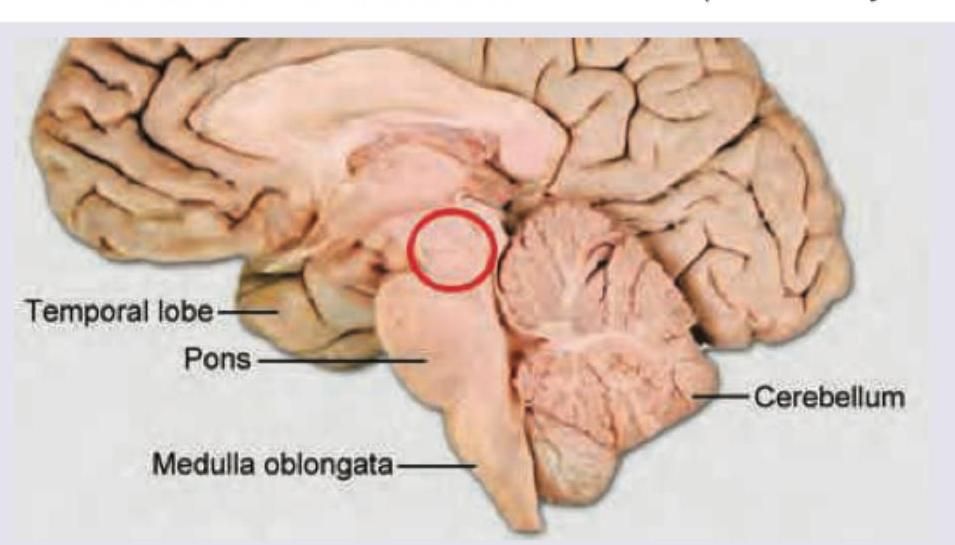
Explanation: **Explanation:** The **Oculomotor nerve (CN III)** originates from the **Midbrain**. Specifically, its nucleus is located in the tegmentum of the midbrain at the level of the **superior colliculus**, ventral to the cerebral aqueduct [1]. It consists of the motor nucleus (supplying extraocular muscles) and the Edinger-Westphal nucleus (parasympathetic supply to the sphincter pupillae and ciliary muscles) [1]. **Analysis of Options:** * **Midbrain (Correct):** This is the site of origin for CN III and CN IV (Trochlear nerve). While CN III is at the level of the superior colliculus, CN IV is at the level of the inferior colliculus. * **Pons:** This part of the brainstem houses the nuclei for CN V (Trigeminal), CN VI (Abducens), CN VII (Facial), and CN VIII (Vestibulocochlear). * **Medulla:** This contains the nuclei for the lower cranial nerves: CN IX (Glossopharyngeal), CN X (Vagus), CN XI (Accessory), and CN XII (Hypoglossal). * **Thalamus:** This is a relay station in the diencephalon, not part of the brainstem, and does not house cranial nerve nuclei. **High-Yield Clinical Pearls for NEET-PG:** 1. **Rule of 4s:** The first two CNs (I, II) are above the brainstem; CN III and IV are in the **Midbrain**; CN V-VIII are in the **Pons**; CN IX-XII are in the **Medulla**. 2. **Weber’s Syndrome:** A midbrain lesion affecting the CN III fascicles and the descending corticospinal tract, resulting in ipsilateral CN III palsy and contralateral hemiplegia. 3. **Edinger-Westphal Nucleus:** This is the preganglionic parasympathetic nucleus of CN III responsible for the **pupillary light reflex** and accommodation [1].
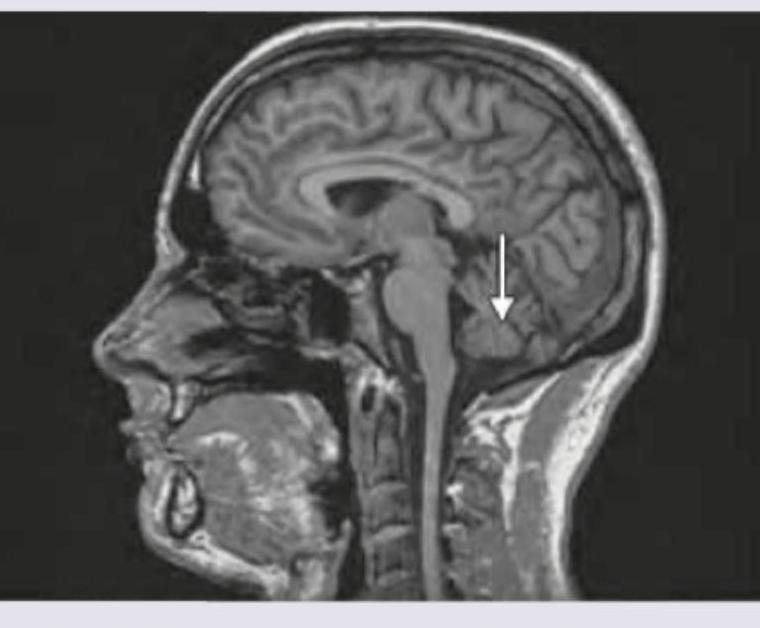
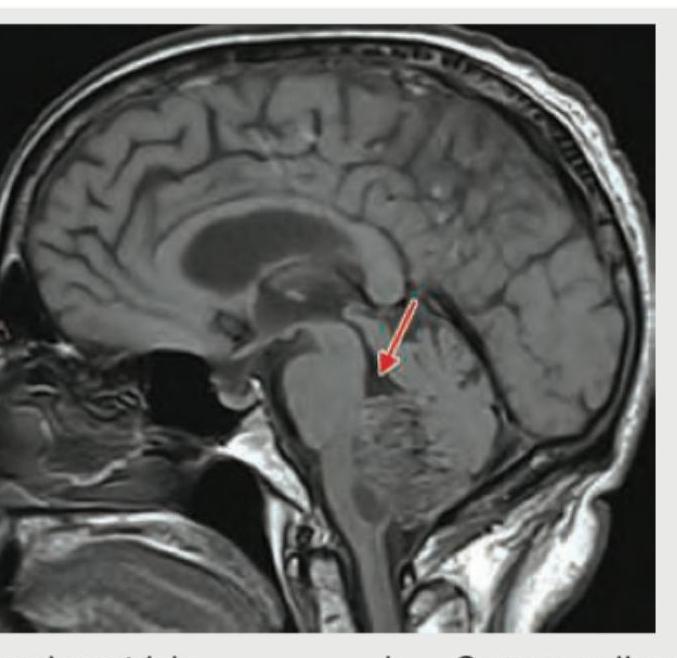
Explanation: ### Explanation **Correct Option: A. Area postrema** The **Area postrema** is the "Chemoreceptor Trigger Zone" (CTZ) of the brain. It is located in the floor of the **fourth ventricle** at the level of the **obex**. It is one of the **Circumventricular Organs (CVOs)**, meaning it lacks a blood-brain barrier (BBB). This allows it to sense circulating toxins, metabolic changes, and emetogenic chemotherapy drugs (like cisplatin or those used for Hodgkin’s lymphoma) directly from the blood, subsequently triggering the vomiting reflex. **Incorrect Options:** * **B. Tuber cinereum:** A hollow eminence of gray matter situated between the mammillary bodies and the optic chiasm. It is part of the hypothalamus and involved in circadian rhythms and histamine release, not vomiting. * **C. Organum vasculosum of the lamina terminalis (OVLT):** A CVO located in the anterior wall of the third ventricle. It is primarily responsible for sensing changes in plasma osmolarity and regulating thirst/fluid balance. * **D. Median eminence:** A CVO located at the base of the hypothalamus. It serves as the interface between the neural and endocrine systems, where hypothalamic hormones are released into the hypophyseal portal system. **High-Yield Facts for NEET-PG:** 1. **Circumventricular Organs (CVOs):** These are specialized areas with fenestrated capillaries (no BBB). They are divided into **Sensory** (Area postrema, OVLT, Subfornical organ) and **Secretory** (Neurohypophysis, Pineal gland, Median eminence). 2. **Vomiting Center:** While the Area postrema senses toxins, the "integrating center" for vomiting is the **Nucleus Tractus Solitarius (NTS)** in the medulla. 3. **Receptors:** The Area postrema is rich in **5-HT3, D2, and NK1 receptors**, which are the primary targets for anti-emetic drugs (e.g., Ondansetron, Metoclopramide, Aprepitant).
Cerebral Hemispheres
Practice Questions
Diencephalon
Practice Questions
Brainstem
Practice Questions
Cerebellum
Practice Questions
Basal Ganglia
Practice Questions
Limbic System
Practice Questions
Ventricular System and CSF
Practice Questions
Blood Supply of the Brain
Practice Questions
Cranial Nerves and Nuclei
Practice Questions
Functional Systems and Pathways
Practice Questions
Applied Neuroanatomy
Practice Questions
Neuroimaging Correlations
Practice Questions
Get full access to all questions, explanations, and performance tracking.
Start For Free