A patient presents with a gradually progressive, painless mass persisting for 10 years. The mass is firm to nodular and shows variable consistency within different areas of the swelling. What is the most probable diagnosis?
Dohlman surgery in Zenker's diverticulum is:-
Cushing ulcers are:-
A 40 years old male was brought emergency with severe abdominal pain. On examination, pulse rate was 112/minute and systolic BP was 80 mmHg. Chest x-ray is given below. What is the most appropriate management?
Which of the following is true about tenosynovitis of the finger?
NEET-PG 2019 - Surgery NEET-PG Practice Questions and MCQs
Question 11: A patient presents with a gradually progressive, painless mass persisting for 10 years. The mass is firm to nodular and shows variable consistency within different areas of the swelling. What is the most probable diagnosis?
- A. Dermoid cyst
- B. Malignancy
- C. Sebaceous cyst
- D. Pleomorphic adenoma (Correct Answer)
Explanation: ***Pleomorphic adenoma*** - A **gradually progressive**, **painless mass** that has been present for 10 years, with a **firm to nodular** consistency and variability at different sites, is highly characteristic of a pleomorphic adenoma. - This benign tumor of salivary glands is known for its **slow growth** and **variable histological composition**, leading to its characteristic consistency. *Dermoid cyst* - Dermoid cysts are typically **present from birth** or early childhood and tend to be **soft and doughy** in consistency, rather than firm or nodular with variable consistency. - While painless, their growth pattern and texture differ from the described mass. *Malignancy* - A mass that has been present for **10 years** and is still described as **gradually progressive** but painless is less likely to be a malignancy, as most malignant tumors tend to grow more rapidly and often present with pain or other symptoms over such a long period. - Malignancies usually demonstrate a more infiltrative and aggressive growth pattern. *Sebaceous cyst* - A sebaceous cyst (epidermoid cyst) typically presents as a **smooth, movable, dome-shaped lump** and contains a cheesy, malodorous material, which is not consistent with a firm to nodular mass with varying consistency. - While they can be long-standing and painless, their characteristic feel and contents are different.
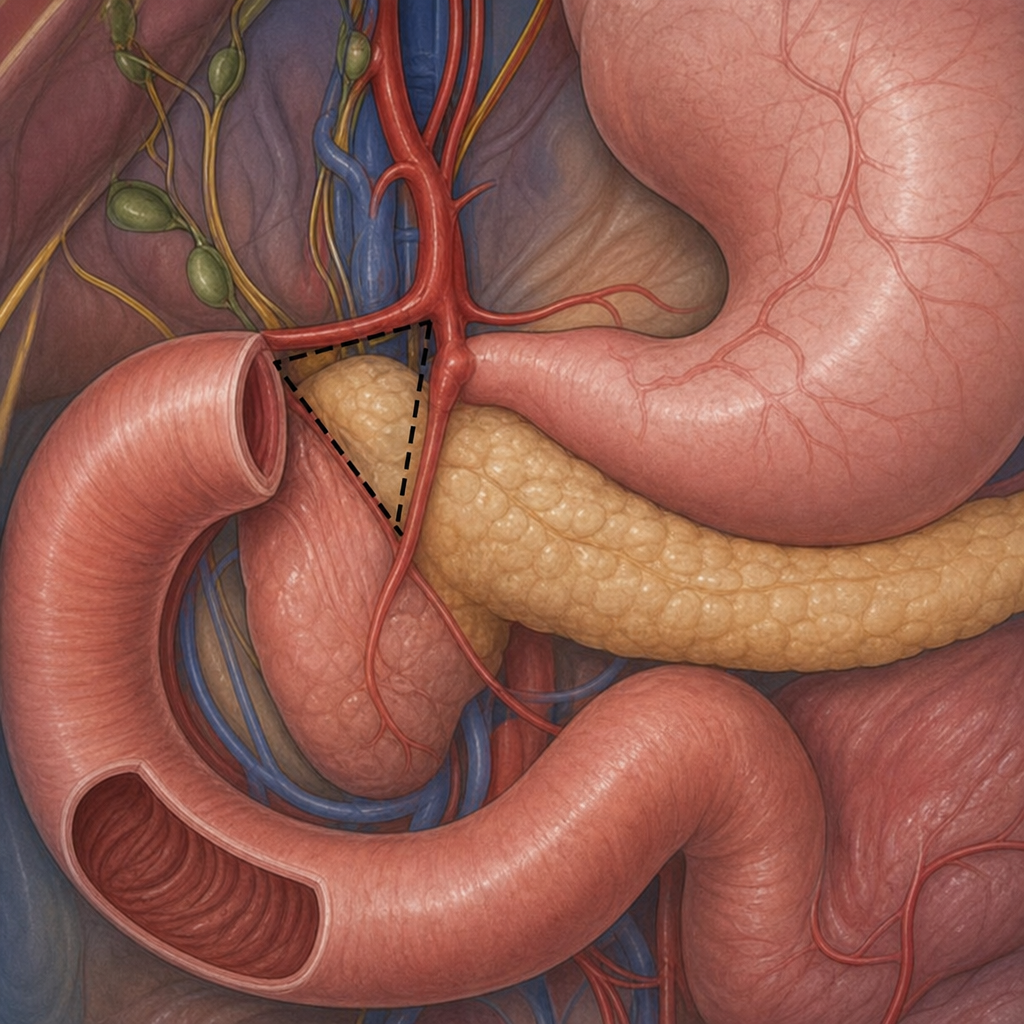
Question 12: Dohlman surgery in Zenker's diverticulum is:-
- A. Endoscopic electrocautery technique (Correct Answer)
- B. Endoscopic suturing of pouch
- C. Laser division of pouch
- D. Endoscopic stapling of septum
Explanation: ***Endoscopic electrocautery technique*** - The **Dohlman procedure** (Dohlman-Mattsson procedure, 1960) is an **endoscopic electrosurgical technique** that uses **diathermy/electrocautery** to divide the cricopharyngeal muscle (the septum between the esophagus and the diverticulum). - This method creates a common cavity between the esophagus and the diverticulum, allowing food to pass freely and preventing pooling. - It is one of the **classic endoscopic approaches** for treating Zenker's diverticulum and remains widely used. *Endoscopic suturing of pouch* - Endoscopic suturing is not the primary technique for the Dohlman procedure. - The goal is to **divide the septum**, not to suture or reduce the pouch itself. *Laser division of pouch* - **Laser division** of the cricopharyngeal muscle is another endoscopic approach, often called **endoscopic laser diverticulostomy**. - While effective, this is a **different technique** from the Dohlman procedure, which specifically uses electrocautery. *Endoscopic stapling of septum* - **Endoscopic stapling** (using an endoscopic stapler to divide the septum) is associated with the **Collard-Peracchia technique** or endoscopic stapling diverticulostomy. - While this is a modern and effective approach, it is **not the Dohlman procedure**, which historically and traditionally refers to the electrocautery technique.
Question 13: Cushing ulcers are:-
- A. Stress ulcers in hiatus hernia
- B. Stress ulcers in burns
- C. Stress ulcers in depression
- D. Stress ulcers in head injury (Correct Answer)
Explanation: ***Stress ulcers in head injury*** - **Cushing ulcers** are acute **gastric or duodenal ulcers** that develop after a severe **head injury** or other central nervous system trauma. - The pathophysiology involves **vagal overstimulation** due to increased intracranial pressure, leading to hypersecretion of **gastric acid** and reduced mucosal blood flow. *Stress ulcers in hiatus hernia* - A **hiatus hernia** is a condition where part of the stomach protrudes through the diaphragm into the chest cavity, which can predispose to reflux and esophagitis. - While patients with hiatus hernia might develop ulcers, these are not specifically termed Cushing ulcers, and the primary cause is mechanical or reflux-related, not neurological. *Stress ulcers in burns* - **Stress ulcers** that occur in burn patients are known as **Curling ulcers**, not Cushing ulcers. - These are typically caused by **hypovolemia, vasoconstriction**, and **ischemia** of the gastrointestinal mucosa due to significant fluid loss and systemic inflammatory response. *Stress ulcers in depression* - **Depression** is a mood disorder that can influence gastrointestinal function through the **gut-brain axis**, potentially affecting motility and visceral hypersensitivity. - However, depression is not directly associated with the formation of acute stress ulcers like Cushing ulcers, which are primarily linked to severe CNS injury.
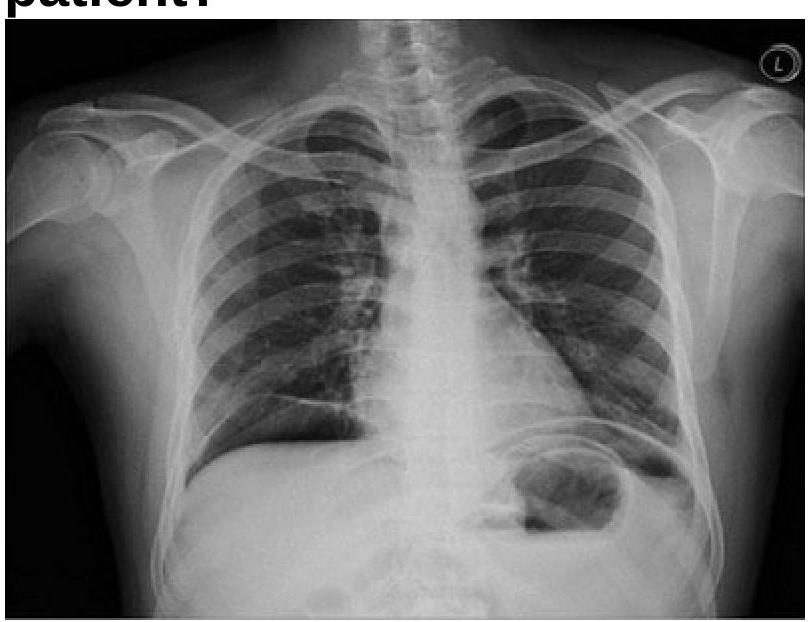
Question 14: A 40 years old male was brought emergency with severe abdominal pain. On examination, pulse rate was 112/minute and systolic BP was 80 mmHg. Chest x-ray is given below. What is the most appropriate management?
- A. Exploratory laparotomy (Correct Answer)
- B. Saline wash of stomach
- C. Intercostal tube drainage
- D. IV antibiotics
Explanation: ***Exploratory laparotomy*** - The chest x-ray shows **pneumoperitoneum (air under the diaphragm)**, which, combined with severe abdominal pain, tachycardia, and hypotension (signs of **septic shock**), is highly indicative of a **perforated viscus**. - **Emergency exploratory laparotomy** is the definitive treatment to identify and repair the perforation, control contamination, and prevent further deterioration. *Saline wash of stomach* - This procedure is typically used for gastric lavage in cases of **poisoning or drug overdose**, or to clear the stomach in preparation for endoscopy. - It does not address a viscus perforation or the widespread abdominal contamination and systemic septic response seen in this patient. *Intercostal tube drainage* - **Intercostal tube drainage** (chest tube placement) is used to drain air (pneumothorax) or fluid (pleural effusion, hemothorax, empyema) from the pleural space, not the abdominal cavity. - While there is air visible on the x-ray, it is **subdiaphragmatic (pneumoperitoneum)**, not within the pleural space, and thus a chest tube would be ineffective and inappropriate. *IV antibiotics* - **Intravenous antibiotics** are crucial for managing sepsis associated with a perforated viscus and should be administered promptly. - However, antibiotics alone are **not sufficient** to treat the underlying mechanical problem of a perforation, which requires surgical repair to prevent ongoing bacterial contamination and sepsis.
Question 15: Which of the following is true about tenosynovitis of the finger?
- A. Treatment is conservative.
- B. Fingers held in mild extension / Extension deformity at the involved fingers.
- C. With involvement of little finger the infection can spread to the ring finger.
- D. Tenosynovitis of little finger will spread to thumb rather than ring finger. (Correct Answer)
Explanation: ***Tenosynovitis of little finger will spread to thumb rather than ring finger.*** - The **little finger's flexor tendon sheath** connects directly to the **ulnar bursa**, which communicates with the **radial bursa** (thumb's sheath) in approximately **80% of individuals** through the space of Parona. - This **bursal communication** creates a direct pathway for infection spread from the little finger to the thumb, making it the most common route of propagation in flexor tenosynovitis. *With involvement of little finger the infection can spread to the ring finger.* - While anatomically possible through **fascial plane connections**, direct spread to the ring finger is **less common** than spread to the thumb via established bursal pathways. - The **ulnar bursa-radial bursa connection** provides a more direct and frequently utilized route for infection propagation than lateral spread to adjacent digits. *Treatment is conservative.* - **Purulent flexor tenosynovitis** requires urgent **surgical incision and drainage** to prevent irreversible tendon damage and loss of function. - Conservative treatment with antibiotics alone is inadequate for established infections and may lead to **tendon necrosis** and permanent disability. *Fingers held in mild extension / Extension deformity at the involved fingers.* - Patients with tenosynovitis characteristically hold the affected finger in **mild flexion** as part of **Kanavel's four cardinal signs**. - **Extension** of the finger causes severe pain due to stretching of the inflamed tendon sheath, so patients avoid this position naturally.