Anatomy
1 questionsWhich nerve supplies the area marked as ‘Area B’ in the image?

NEET-PG 2019 - Anatomy NEET-PG Practice Questions and MCQs
Question 71: Which nerve supplies the area marked as ‘Area B’ in the image?
- A. Ulnar nerve
- B. Median nerve
- C. Radial nerve (Correct Answer)
- D. Posterior interosseous nerve
Explanation: ***Radial nerve*** - Area B represents the sensory distribution of the **radial nerve**, specifically its superficial branch. - The radial nerve provides sensory innervation to the **dorsal (back) aspect of the hand** over the radial (lateral) side, including the thumb, index, middle, and radial half of the ring finger up to the proximal interphalangeal joints. - The superficial branch of the radial nerve also innervates the **anatomical snuffbox** and the radial side of the dorsum of the hand. - **Note:** The radial nerve does NOT supply the palmar surface of the hand; its sensory distribution is limited to the dorsal aspect. *Ulnar nerve* - The ulnar nerve provides sensory innervation to the **medial 1.5 fingers** (little finger and ulnar half of ring finger) on both palmar and dorsal aspects. - It also supplies the **hypothenar eminence** and medial portion of the palm and dorsal hand. - This distribution corresponds to **Area C** in the image, not Area B. *Median nerve* - The median nerve provides sensory innervation to the **lateral 3.5 fingers** (thumb, index, middle, and radial half of ring finger) on the **palmar surface**. - It also supplies the **palmar aspect** of these digits and the **nail beds (dorsal tips)** of the same fingers. - This distribution corresponds to **Area A** in the image, not Area B. *Posterior interosseous nerve* - The **posterior interosseous nerve (PIN)** is a **motor branch** of the radial nerve with no cutaneous sensory distribution. - It supplies the extensor muscles of the posterior forearm compartment. - It does not provide sensory innervation to the skin of the hand.
Biochemistry
1 questionsAll of the following are examples of Dietary fibre except for which of the following?
NEET-PG 2019 - Biochemistry NEET-PG Practice Questions and MCQs
Question 71: All of the following are examples of Dietary fibre except for which of the following?
- A. Starch (Correct Answer)
- B. Pectin
- C. Lignin
- D. Cellulose
Explanation: ***Correct: Starch*** - **Starch** is a **polysaccharide** that serves as a **storage carbohydrate** in plants and is readily digestible by human enzymes, breaking down into glucose. - While it's a carbohydrate found in plant foods, it does not fit the definition of dietary fibre which is generally resistant to human digestive enzymes. *Incorrect: Pectin* - **Pectin** is a type of **soluble dietary fibre** found in fruits, particularly apples and citrus. - It forms a gel in water, contributing to satiety and helping to **lower cholesterol** and **regulate blood sugar**. *Incorrect: Lignin* - **Lignin** is a **non-carbohydrate dietary fibre** that provides structural support in plants. - It is an **insoluble fibre** and is resistant to breakdown by digestive enzymes, aiding in bulk formation in stool. *Incorrect: Cellulose* - **Cellulose** is a major component of **plant cell walls** and is a type of **insoluble dietary fibre**. - It adds bulk to stool, promoting regularity and preventing constipation.
Community Medicine
1 questionsWhich of the following is not an epidemiological indicator?
NEET-PG 2019 - Community Medicine NEET-PG Practice Questions and MCQs
Question 71: Which of the following is not an epidemiological indicator?
- A. None of the options (Correct Answer)
- B. ABER
- C. Annual falciparum incidence
- D. Annual parasite index
Explanation: ***None of the options*** - All listed options—**ABER (Annual Blood Examination Rate)**, **Annual parasite index**, and **Annual falciparum incidence**—are indeed widely recognized and utilized **epidemiological indicators**, particularly in the context of malaria surveillance and control. - As such, there is no option presented that is *not* an epidemiological indicator. *ABER* - **ABER (Annual Blood Examination Rate)** is an epidemiological indicator used to assess the annual number of blood smears examined per 1000 population. - It helps to measure the **intensity of surveillance** and case detection efforts in a given area for diseases like malaria. *Annual parasite index* - The **Annual Parasite Index (API)** is an epidemiological indicator that measures the number of confirmed malaria cases per 1000 population per year. - It is crucial for assessing **malaria endemicity** and the burden of the disease in a specific region. *Annual falciparum incidence* - **Annual falciparum incidence** is an epidemiological indicator specifically tracking the number of *Plasmodium falciparum* malaria cases per 1000 population per year. - This indicator is essential for monitoring the **severity and transmission of the most dangerous form of malaria**.
Internal Medicine
2 questionsWhich type of cardiomyopathy is associated with alcohol abuse?
What are the essential major blood culture criteria for diagnosing infective endocarditis?
NEET-PG 2019 - Internal Medicine NEET-PG Practice Questions and MCQs
Question 71: Which type of cardiomyopathy is associated with alcohol abuse?
- A. Hypertrophic cardiomyopathy
- B. Dilated cardiomyopathy (Correct Answer)
- C. Pericarditis
- D. Myocarditis
Explanation: ### Dilated cardiomyopathy - Chronic **alcohol abuse** is a well-established cause of **dilated cardiomyopathy**, leading to weakening and enlargement of the ventricles [1]. - This condition results in impaired systolic function and can cause **heart failure** [1]. *Hypertrophic cardiomyopathy* - This condition is primarily characterized by **pathological thickening of the heart muscle**, often genetic, and is not directly caused by alcohol abuse. - It leads to issues with relaxation and filling of the heart, rather than dilation and weakness. *Pericarditis* - **Pericarditis** is the inflammation of the sac surrounding the heart (pericardium), most commonly caused by viral infections, autoimmune diseases, or injury. - It is not directly linked to alcohol abuse as a primary cause. *Myocarditis* - **Myocarditis** is the inflammation of the heart muscle, often triggered by viral infections, autoimmune reactions, or certain medications. - While heavy alcohol use can weaken the heart, myocarditis is primarily an inflammatory process not directly caused by alcohol.
Question 72: What are the essential major blood culture criteria for diagnosing infective endocarditis?
- A. Single positive culture of Coxiella burnetii (Correct Answer)
- B. Single positive culture of Corynebacterium species
- C. Both HACEK and Coxiella cultures
- D. Single positive culture of HACEK group
Explanation: ***Single positive culture of Coxiella burnetii*** - A single positive blood culture for **Coxiella burnetii** or **anti-phase I IgG antibody titer > 1:800** is considered a major criterion for infective endocarditis due to its highly pathogenic nature in this context [1], [2]. - This organism is a known cause of **culture-negative endocarditis**, and specific serology or molecular tests are often required for diagnosis [1]. *Single positive culture of Corynebacterium species* - **Corynebacterium species** are often considered **contaminants** in blood cultures, especially *Corynebacterium jeikeium*, and typically require multiple positive cultures, often from different sites, to be considered significant pathogens for infective endocarditis [2]. - A single positive culture of these organisms alone is generally insufficient to meet major diagnostic criteria for endocarditis [2]. *Both HACEK and Coxiella cultures* - While both **HACEK organisms** and **Coxiella burnetii** can cause endocarditis, the combination of both is not a specific major criterion in itself. - The diagnostic criteria address each organism individually [2]. *Single positive culture of HACEK group* - **HACEK organisms** (**H**aemophilus, **A**ggregatibacter, **C**ardiobacterium, **E**ikenella, **K**ingella) are well-known causes of endocarditis, but usually require **two separate positive blood cultures** for infective endocarditis major criteria [2]. - A single positive culture of a HACEK organism is typically classified as a minor criterion unless other supporting evidence is present.
Microbiology
2 questionsA 6-year-old boy presents with fever and chills, cough, rapid breathing, difficulty breathing, and chest pain. A culture from a respiratory sample shows Gram-positive bacteria. What is the most likely organism causing this infection?
What is the causative organism for the condition depicted in the image?

NEET-PG 2019 - Microbiology NEET-PG Practice Questions and MCQs
Question 71: A 6-year-old boy presents with fever and chills, cough, rapid breathing, difficulty breathing, and chest pain. A culture from a respiratory sample shows Gram-positive bacteria. What is the most likely organism causing this infection?
- A. Streptococcus pyogenes
- B. Streptococcus pneumoniae (Correct Answer)
- C. Staphylococcus aureus
- D. Propionibacterium acnes
Explanation: ***Streptococcus pneumoniae*** - This clinical picture describes typical symptoms of **pneumonia** in a child, including fever, cough, rapid and difficult breathing, and chest pain. - **_Streptococcus pneumoniae_** is the most common bacterial cause of community-acquired pneumonia in children. The respiratory sample showing gram-positive bacteria further supports this. *Staphylococcus aureus* - While **_Staphylococcus aureus_** can cause pneumonia, it is less common than _Streptococcus pneumoniae_ in community-acquired cases in healthy children and often associated with more severe, necrotizing forms or post-viral infections. - While it is a **Gram-positive bacterium**, its clinical presentation would not be the most likely first choice for typical pneumonia symptoms in this age group. *Propionibacterium acnes* - **_Propionibacterium acnes_** (now *Cutibacterium acnes*) is primarily associated with **acne vulgaris** and, less commonly, opportunistic infections related to implanted devices or some rare soft tissue infections. - It is not a typical cause of primary respiratory infections like pneumonia. *Streptococcus pyogenes* - **_Streptococcus pyogenes_** (Group A Streptococcus) is known for causing **pharyngitis** (strep throat), skin infections (impetigo, cellulitis), and scarlet fever. - While it can rarely cause pneumonia, it is not a common cause, and the constellation of symptoms points more strongly to _Streptococcus pneumoniae_.
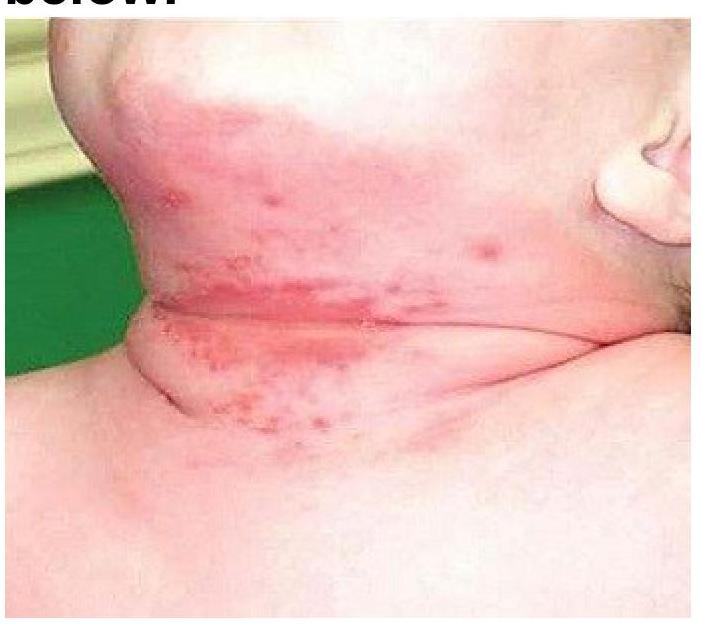
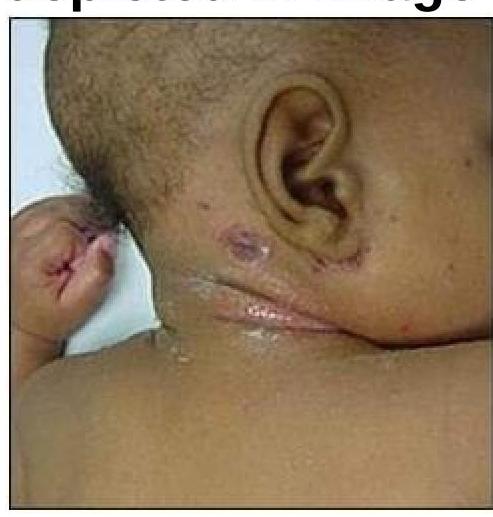
Question 72: What is the causative organism for the condition depicted in the image?
- A. Staphylococci (Correct Answer)
- B. Candidal infection
- C. Streptococcus
- D. Actinomycetes
Explanation: ***Staphylococci*** - The image shows **impetigo** with **crusted lesions**, consistent with **_Staphylococcus aureus_** infection. - **Staphylococcus aureus** is a major causative organism of impetigo, particularly **bullous impetigo**, and commonly produces the characteristic **honey-colored crusts** seen in non-bullous forms as well. - This superficial bacterial skin infection is highly contagious and responds well to topical or systemic antibiotics. *Candidal infection* - **Candidal infections** (e.g., candidiasis) typically present as **erythematous patches** with satellite lesions, or white plaques in mucosal areas, which is not consistent with the image. - This fungal infection is often seen in immunocompromised individuals or in warm, moist skin folds, not as crusted superficial lesions. *Streptococcus* - While **_Streptococcus pyogenes_** can also cause impetigo (especially non-bullous impetigo), the clinical presentation in the image is most consistent with **staphylococcal infection**. - Streptococcal infections may present similarly but can also cause other conditions like cellulitis or erysipelas with distinct features. *Actinomycetes* - **Actinomycosis** is a rare, chronic bacterial infection that forms **abscesses and sinus tracts**, often with "sulfur granules," which is distinct from the superficial skin lesions shown. - This infection usually involves deeper tissues and presents as a chronic, indolent infection, unlike the acute superficial presentation of impetigo.
Obstetrics and Gynecology
1 questionsWhich of the following treatments is used for vulvar atrophy and itching?
NEET-PG 2019 - Obstetrics and Gynecology NEET-PG Practice Questions and MCQs
Question 71: Which of the following treatments is used for vulvar atrophy and itching?
- A. Estrogen ointment (Correct Answer)
- B. Antihistamines
- C. Tamoxifen
- D. None of the options
Explanation: ***Estrogen ointment*** * **Estrogen ointment** is the primary treatment for vulvar atrophy and itching because it directly addresses the underlying cause of these symptoms, which is the decline in estrogen levels after **menopause**. * By restoring estrogen to the vulvar tissues, it helps to **thicken the epithelium**, improve blood flow, and increase lubrication, thereby alleviating dryness, itching, and discomfort. *Antihistamines* * **Antihistamines** are used to treat allergic reactions and reduce itching associated with conditions like hives or insect bites, but they do not address the hormonal deficiency causing vulvar atrophy. * While they might temporarily relieve some itching, they do not treat the underlying **tissue thinning** and dryness characteristic of vulvar atrophy. *Tamoxifen* * **Tamoxifen** is a selective estrogen receptor modulator (SERM) primarily used in the treatment and prevention of breast cancer, as it blocks estrogen's effects in breast tissue. * However, in vulvovaginal tissues, **tamoxifen can actually worsen atrophy and dryness** due to its anti-estrogenic effects, making it an inappropriate treatment for vulvar atrophy. *None of the options* * This option is incorrect because **estrogen ointment** is a well-established and effective treatment specifically designed to address vulvar atrophy and associated itching, by restoring estrogen levels to the affected tissues.
Orthopaedics
1 questionsWhich part of scaphoid fracture is most susceptible to avascular necrosis?
NEET-PG 2019 - Orthopaedics NEET-PG Practice Questions and MCQs
Question 71: Which part of scaphoid fracture is most susceptible to avascular necrosis?
- A. Distal 1/3rd
- B. Middle 1/3rd
- C. Proximal 1/3rd (Correct Answer)
- D. Scaphoid Tubercle
Explanation: ***Proximal 1/3rd*** - The **scaphoid bone** has a **retrograde blood supply**, meaning blood vessels enter distally and flow towards the proximal pole. - A fracture in the **proximal 1/3rd** can disrupt the blood supply to the **proximal fragment**, making it highly susceptible to **avascular necrosis**. *Distal 1/3rd* - Fractures in the **distal 1/3rd** of the scaphoid generally have a robust blood supply due to the entry of vessels from the distal pole. - While still requiring proper management, the risk of **avascular necrosis** is significantly lower compared to proximal fractures. *Middle 1/3rd* - Fractures in the **middle 1/3rd** (waist) of the scaphoid are common and can still compromise blood flow to the proximal segment, but the risk of **avascular necrosis** is intermediate. - The more proximal the fracture within the middle third, the higher the risk of **avascular necrosis**. *Scaphoid Tubercle* - The **scaphoid tubercle** is a distal projection of the scaphoid bone. - Fractures of the **scaphoid tubercle** are extra-articular and typically have an excellent blood supply; thus, they are at very low risk for **avascular necrosis**.
Psychiatry
1 questionsThe Confusion Assessment Method (CAM) is used for which of the following?
NEET-PG 2019 - Psychiatry NEET-PG Practice Questions and MCQs
Question 71: The Confusion Assessment Method (CAM) is used for which of the following?
- A. Schizophrenia
- B. Delirium (Correct Answer)
- C. Dementia
- D. Depression
Explanation: ***Delirium*** - The Confusion Assessment Method (CAM) is a widely used and highly sensitive and specific tool for the rapid identification of **delirium**. - It assesses for acute onset and fluctuating course, inattention, disorganized thinking, and altered level of consciousness. *Schizophrenia* - Schizophrenia is a chronic mental health disorder primarily characterized by **psychosis**, including hallucinations, delusions, and disorganized thought. - While patients with schizophrenia can experience cognitive difficulties, specialized scales like the Positive and Negative Syndrome Scale (PANSS) are used, not the CAM. *Dementia* - Dementia is a gradual and progressive decline in cognitive function, including memory, thinking, and reasoning, severe enough to interfere with daily life. - Tools like the mini-mental state examination (MMSE) or Montreal Cognitive Assessment (MoCA) are used for screening and assessing dementia, not the CAM. *Depression* - Depression is a mood disorder characterized by persistent sadness, loss of interest, and other emotional and physical symptoms. - Assessment tools like the Hamilton Depression Rating Scale (HDRS) or Patient Health Questionnaire-9 (PHQ-9) are used for depression.