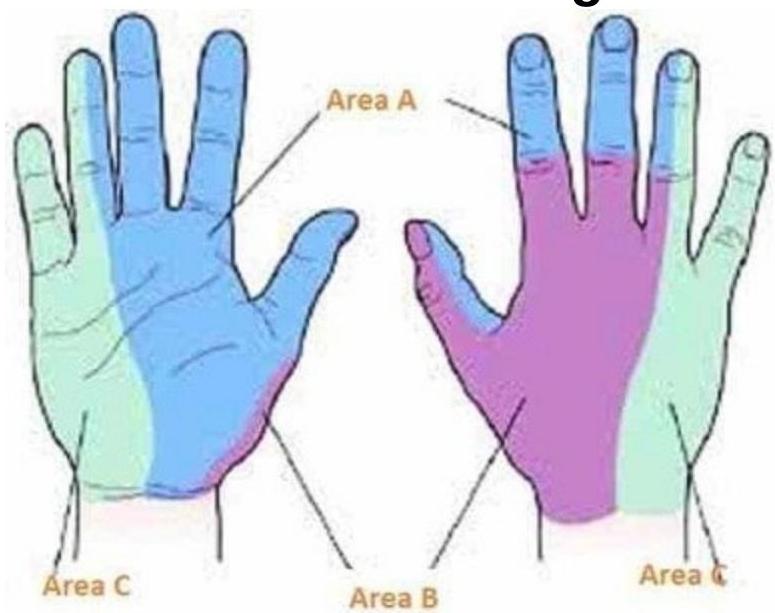
Anatomy
1 questionsThe most common site of the branchial cyst is:
NEET-PG 2019 - Anatomy NEET-PG Practice Questions and MCQs
Question 61: The most common site of the branchial cyst is:
- A. Posterior border of sternocleidomastoid
- B. Anterior border of sternocleidomastoid (Correct Answer)
- C. Digastric muscle
- D. Omohyoid muscle
Explanation: ***Anterior border of sternocleidomastoid*** - Branchial cysts most commonly present as a mass along the **anterior border of the sternocleidomastoid muscle**, typically in the upper to middle third of the neck [3]. - This location corresponds to the embryological remnants of the **second branchial cleft**. *Posterior border of sternocleidomastoid* - Cysts or masses in this region are less likely to be branchial cysts and might indicate other conditions like **lymphadenopathy** or a **cystic hygroma** [1]. - The posterior border is not the typical embryological location for branchial cleft remnants to form cysts. *Digastric muscle* - While the digastric muscle is located in the neck, cysts directly associated with this muscle are rare and usually of **different embryological origin** (e.g., salivary gland cysts or submandibular space infections). - Branchial cysts are specifically tied to the branchial apparatus remnants. *Omohyoid muscle* - The omohyoid muscle crosses the lower neck, and masses in its vicinity are typically not branchial cysts but could involve **thyroid pathology**, **lymph nodes**, or **vascular anomalies** [2]. - This location is anatomically distinct from the typical presentation of a branchial cleft cyst.
Community Medicine
1 questionsWhich research method is most appropriate for studying the progression of a disease over time?
NEET-PG 2019 - Community Medicine NEET-PG Practice Questions and MCQs
Question 61: Which research method is most appropriate for studying the progression of a disease over time?
- A. Cohort Study (Correct Answer)
- B. Cross sectional study
- C. Randomized Control Trials
- D. Interventional Studies
Explanation: ***Cohort Study*** - A **cohort study** observes a group of individuals over a period of time, allowing researchers to track the **natural progression of a disease** from exposure through onset and various stages. - This design is ideal for investigating the **incidence** of disease and identifying risk factors over time. *Cross sectional study* - A **cross-sectional study** assesses exposure and outcome at a **single point in time**, providing a snapshot. - It cannot establish temporality or observe disease progression, as it does not follow individuals over time. *Randomized Control Trials* - **Randomized controlled trials (RCTs)** are primarily designed to evaluate the **effectiveness of interventions** or treatments by comparing outcomes between an experimental group and a control group. - While they follow participants over time, their main goal is not to study the natural progression of an untreated disease. *Interventional Studies* - **Interventional studies** involve manipulating an exposure or treatment to observe its effect, often to test a hypothesis about a causal relationship. - While they track outcomes over time, their focus is on the impact of the intervention rather than the natural history or progression of a disease without intervention.
Internal Medicine
4 questionsIn which condition are solitary lytic lesions typically seen?
Most common type of gallstone is?
Which of the following statements about deep venous thrombosis (DVT) is incorrect?
What are the essential major blood culture criteria for diagnosing infective endocarditis?
NEET-PG 2019 - Internal Medicine NEET-PG Practice Questions and MCQs
Question 61: In which condition are solitary lytic lesions typically seen?
- A. Atherosclerosis
- B. Multiple myeloma (Correct Answer)
- C. Mitral stenosis
- D. Osteosarcoma
Explanation: ***Multiple myeloma*** - **Solitary lytic lesions**, also known as **"punched-out" lesions**, are a classic radiographic finding in multiple myeloma due to **plasma cell proliferation** in the bone [1]. - Patients often have **elevated serum proteins** and show signs of **renal impairment** and anemia, alongside these bone lesions [1]. *Atherosclerosis* - Primarily affects **blood vessels**, leading to plaque formation, and does not cause **lytic bone lesions**. - Clinical manifestations focus on **cardiovascular disease** rather than bone abnormalities. *Mitral stenosis* - Affects the **heart valves** and results in **heart failure** symptoms rather than causing lytic lesions in bones. - Clinical findings include **dyspnea** and signs of **pulmonary congestion**, which are unrelated to bone pathology. *Osteoblast* - Osteoblasts are **bone-forming cells**, and while they may be involved in certain bone diseases, they do not create **solitary lytic lesions**. - Lytic lesions typically arise from **osteoclast activity** or **tumor infiltration**, not from osteoblastic processes [1].
Question 62: Most common type of gallstone is?
- A. Pure cholesterol stones (Correct Answer)
- B. Pigment stones
- C. Calcium bilirubinate
- D. Mixed stones
Explanation: ***Mixed stones*** - Mixed gallstones, typically composed of **cholesterol** and **pigment**, are the most prevalent type, accounting for about 70-80% of cases [1]. - They are often associated with **biliary stasis** and **inflammation**, contributing to their formation. *Pigment stones* - Pigment stones are less common, usually representing about 10-20% of gallstones [1]. They are primarily formed from **bilirubin** and are associated with conditions causing **hemolysis**. - They may lead to **complications**, but their overall incidence is lower compared to mixed stones. *Calcium bilirubinate* - These stones are a type of **pigment stone**, formed in conditions like chronic hemolytic anemia, but they are relatively rare overall [1]. - They specifically result from **excess bilirubin**, unlike the mixed stones' composition which includes **cholesterol**. *Pure cholesterol stones* - Pure cholesterol stones occur in about 10-15% of cases, developing primarily due to **supersaturation of cholesterol** in bile. - They are less common than mixed stones and typically present as **large, yellowish stones** in the gallbladder.
Question 63: Which of the following statements about deep venous thrombosis (DVT) is incorrect?
- A. Mostly bilateral (Correct Answer)
- B. Most common clinically presents as pain and tenderness in calf
- C. Some cases may directly present as pulmonary thromboembolism
- D. Clinical assessment highly reliable
Explanation: ***Mostly bilateral*** - DVT is typically **unilateral**, affecting one limb [2]. Bilateral DVT is less common, making this statement incorrect [2]. - The symptoms of **pain, swelling, and tenderness** are usually localized to one leg [1]. *Most common clinically presents as pain and tenderness in calf* - **Calf pain and tenderness** are common clinical presentations of DVT, especially in the lower extremities [1]. - Other common signs include **swelling, warmth, and redness** in the affected leg [1]. *Some cases may directly present as pulmonary thromboembolism* - A significant concern with DVT is that a **clot can dislodge** and travel to the lungs, causing a **pulmonary embolism (PE)**, which can be the initial presentation [1]. - PE is a potentially life-threatening complication and may present with **dyspnea, chest pain, and hemoptysis**. *Clinical assessment highly reliable* - **Clinical assessment alone is not highly reliable** for diagnosing DVT due to its variable and often non-specific presentation [2]. - A definitive diagnosis usually requires objective diagnostic tests such as **compression ultrasonography** or **D-dimer assay** [3].
Question 64: What are the essential major blood culture criteria for diagnosing infective endocarditis?
- A. Single positive culture of Coxiella burnetii (Correct Answer)
- B. Single positive culture of Corynebacterium species
- C. Both HACEK and Coxiella cultures
- D. Single positive culture of HACEK group
Explanation: ***Single positive culture of Coxiella burnetii*** - A single positive blood culture for **Coxiella burnetii** or **anti-phase I IgG antibody titer > 1:800** is considered a major criterion for infective endocarditis due to its highly pathogenic nature in this context [1], [2]. - This organism is a known cause of **culture-negative endocarditis**, and specific serology or molecular tests are often required for diagnosis [1]. *Single positive culture of Corynebacterium species* - **Corynebacterium species** are often considered **contaminants** in blood cultures, especially *Corynebacterium jeikeium*, and typically require multiple positive cultures, often from different sites, to be considered significant pathogens for infective endocarditis [2]. - A single positive culture of these organisms alone is generally insufficient to meet major diagnostic criteria for endocarditis [2]. *Both HACEK and Coxiella cultures* - While both **HACEK organisms** and **Coxiella burnetii** can cause endocarditis, the combination of both is not a specific major criterion in itself. - The diagnostic criteria address each organism individually [2]. *Single positive culture of HACEK group* - **HACEK organisms** (**H**aemophilus, **A**ggregatibacter, **C**ardiobacterium, **E**ikenella, **K**ingella) are well-known causes of endocarditis, but usually require **two separate positive blood cultures** for infective endocarditis major criteria [2]. - A single positive culture of a HACEK organism is typically classified as a minor criterion unless other supporting evidence is present.
Obstetrics and Gynecology
1 questionsWhat is the presenting diameter of a fully flexed head?
NEET-PG 2019 - Obstetrics and Gynecology NEET-PG Practice Questions and MCQs
Question 61: What is the presenting diameter of a fully flexed head?
- A. Suboccipito-frontal diameter
- B. Occipito-frontal diameter
- C. Biparietal diameter
- D. Suboccipito-bregmatic diameter (Correct Answer)
Explanation: ***Suboccipito-bregmatic diameter*** - This diameter measures from the **nape of the neck** (**suboccipital region**) to the **anterior fontanelle** (**bregma**), which is the smallest presenting diameter of the fetal head when it is in **full flexion**. - A fully flexed head presents the smallest and most favorable diameter for vaginal birth, allowing for optimal passage through the birth canal. *Suboccipito-frontal diameter* - This diameter is measured from the **nape of the neck to the center of the forehead**, indicating a less flexed head than the suboccipito-bregmatic diameter. - While it represents some flexion, it is not the ideal presenting diameter for a fully flexed head and is larger than the suboccipito-bregmatic diameter. *Occipito-frontal diameter* - This diameter is measured from the **occipital protuberance to the forehead**, representing a **deflexed** or **partially flexed** head. - This presentation is less favorable for vaginal delivery as it is a larger diameter than either the suboccipito-bregmatic or suboccipito-frontal diameters. *Biparietal diameter* - This diameter measures the **widest transverse diameter of the fetal head**, between the two parietal eminences. - While clinically important for assessing head size and growth, it is **not a presenting longitudinal diameter** that describes the leading part of the fetal head during engagement and descent.
Orthopaedics
1 questionsWhich part of scaphoid fracture is most susceptible to avascular necrosis?
NEET-PG 2019 - Orthopaedics NEET-PG Practice Questions and MCQs
Question 61: Which part of scaphoid fracture is most susceptible to avascular necrosis?
- A. Distal 1/3rd
- B. Middle 1/3rd
- C. Proximal 1/3rd (Correct Answer)
- D. Scaphoid Tubercle
Explanation: ***Proximal 1/3rd*** - The **scaphoid bone** has a **retrograde blood supply**, meaning blood vessels enter distally and flow towards the proximal pole. - A fracture in the **proximal 1/3rd** can disrupt the blood supply to the **proximal fragment**, making it highly susceptible to **avascular necrosis**. *Distal 1/3rd* - Fractures in the **distal 1/3rd** of the scaphoid generally have a robust blood supply due to the entry of vessels from the distal pole. - While still requiring proper management, the risk of **avascular necrosis** is significantly lower compared to proximal fractures. *Middle 1/3rd* - Fractures in the **middle 1/3rd** (waist) of the scaphoid are common and can still compromise blood flow to the proximal segment, but the risk of **avascular necrosis** is intermediate. - The more proximal the fracture within the middle third, the higher the risk of **avascular necrosis**. *Scaphoid Tubercle* - The **scaphoid tubercle** is a distal projection of the scaphoid bone. - Fractures of the **scaphoid tubercle** are extra-articular and typically have an excellent blood supply; thus, they are at very low risk for **avascular necrosis**.
Psychiatry
1 questionsThe Confusion Assessment Method (CAM) is used for which of the following?
NEET-PG 2019 - Psychiatry NEET-PG Practice Questions and MCQs
Question 61: The Confusion Assessment Method (CAM) is used for which of the following?
- A. Schizophrenia
- B. Delirium (Correct Answer)
- C. Dementia
- D. Depression
Explanation: ***Delirium*** - The Confusion Assessment Method (CAM) is a widely used and highly sensitive and specific tool for the rapid identification of **delirium**. - It assesses for acute onset and fluctuating course, inattention, disorganized thinking, and altered level of consciousness. *Schizophrenia* - Schizophrenia is a chronic mental health disorder primarily characterized by **psychosis**, including hallucinations, delusions, and disorganized thought. - While patients with schizophrenia can experience cognitive difficulties, specialized scales like the Positive and Negative Syndrome Scale (PANSS) are used, not the CAM. *Dementia* - Dementia is a gradual and progressive decline in cognitive function, including memory, thinking, and reasoning, severe enough to interfere with daily life. - Tools like the mini-mental state examination (MMSE) or Montreal Cognitive Assessment (MoCA) are used for screening and assessing dementia, not the CAM. *Depression* - Depression is a mood disorder characterized by persistent sadness, loss of interest, and other emotional and physical symptoms. - Assessment tools like the Hamilton Depression Rating Scale (HDRS) or Patient Health Questionnaire-9 (PHQ-9) are used for depression.
Radiology
1 questionsWhich of the following is water soluble contrast?
NEET-PG 2019 - Radiology NEET-PG Practice Questions and MCQs
Question 61: Which of the following is water soluble contrast?
- A. Barium
- B. Iodine (Correct Answer)
- C. Bromine
- D. Calcium
Explanation: ***Iodine*** - **Iodinated contrast media** (containing iodine atoms) are the most commonly used **water-soluble contrast agents** in medical imaging. - Examples include **non-ionic iodinated compounds** (iohexol, iopamidol, iopromide) and **ionic compounds** (diatrizoate, iothalamate). - The **iodine atoms** provide radiodensity (X-ray attenuation), while the organic molecular structure ensures **water solubility**. - These agents are safely excreted by the kidneys and are used intravenously for CT angiography, intravenous urography, and contrast-enhanced CT scans. *Barium* - **Barium sulfate** is a **water-insoluble** compound used as an oral or rectal contrast agent for imaging the gastrointestinal tract. - It remains in the GI lumen and is not absorbed; if extravasated into soft tissues, it can cause significant inflammatory reactions. - Used for barium swallow, barium meal, barium follow-through, and barium enema studies. *Bromine* - **Bromine** is not used as a contrast agent in medical imaging due to its high toxicity and unsuitability for diagnostic purposes. - It does not form stable, non-toxic water-soluble compounds appropriate for clinical imaging. *Calcium* - **Calcium** is a natural component of bone and provides intrinsic radiodensity on plain X-rays. - It is not administered as an exogenous contrast agent for diagnostic imaging purposes.