In which condition is a Cushing ulcer most likely to occur?
In which condition are solitary lytic lesions typically seen?
What are the essential major blood culture criteria for diagnosing infective endocarditis?
Most common type of gallstone is?
MRP2 associated with which of the following?
A patient presents with hoarseness of voice and a clinical condition as shown in the image. Identify the lesion:
A patient with a known case of acute pancreatitis develops breathlessness and bilateral basal crepitations on day 4. What is the most likely diagnosis based on the chest radiography image?

True about decorticate rigidity:
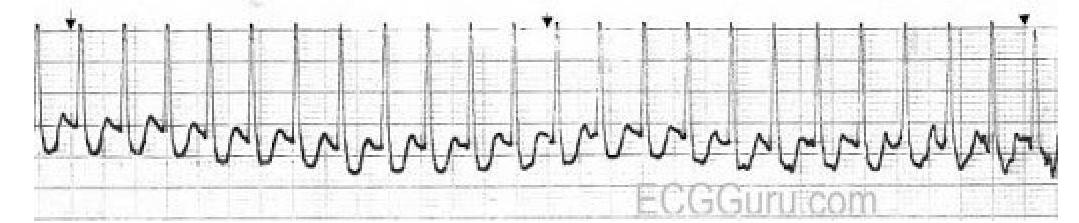
Identify the diagnosis based on the provided ECG image.
Most characteristic cardiovascular defect seen in Rubella-
NEET-PG 2019 - Internal Medicine NEET-PG Practice Questions and MCQs
Question 11: In which condition is a Cushing ulcer most likely to occur?
- A. Burns
- B. Head injury (Correct Answer)
- C. Cell necrosis
- D. Stress
Explanation: ***Head injury*** - A **Cushing ulcer** is a specific type of **stress ulcer** that is a common complication of **severe head trauma** or other central nervous system injuries [1]. - The pathogenesis involves increased **intracranial pressure (ICP)**, leading to stimulation of the vagus nerve, which in turn causes increased **gastric acid secretion** and potential ulcer formation [1]. *Burns* - **Burns** can cause another type of stress ulcer known as a **Curling ulcer**, which is associated with hypovolemia and ischemia, not directly with head injury [1]. - While both are stress-induced ulcers, their underlying mechanisms and inciting events differ [1]. *Cell necrosis* - **Cell necrosis** is a general term for cell death and is not a direct cause of a Cushing ulcer. - While cell death may occur in various conditions, it does not specifically lead to the gastric ulceration seen in Cushing's phenomenon. *Stress* - While a Cushing ulcer is a type of **stress ulcer**, "stress" alone is too general an answer. - The precise mechanism for a Cushing ulcer involves the neurological effects of a head injury leading to increased vagal stimulation and gastric acid production, making "head injury" a more specific and accurate answer.
Question 12: In which condition are solitary lytic lesions typically seen?
- A. Atherosclerosis
- B. Multiple myeloma (Correct Answer)
- C. Mitral stenosis
- D. Osteosarcoma
Explanation: ***Multiple myeloma*** - **Solitary lytic lesions**, also known as **"punched-out" lesions**, are a classic radiographic finding in multiple myeloma due to **plasma cell proliferation** in the bone [1]. - Patients often have **elevated serum proteins** and show signs of **renal impairment** and anemia, alongside these bone lesions [1]. *Atherosclerosis* - Primarily affects **blood vessels**, leading to plaque formation, and does not cause **lytic bone lesions**. - Clinical manifestations focus on **cardiovascular disease** rather than bone abnormalities. *Mitral stenosis* - Affects the **heart valves** and results in **heart failure** symptoms rather than causing lytic lesions in bones. - Clinical findings include **dyspnea** and signs of **pulmonary congestion**, which are unrelated to bone pathology. *Osteoblast* - Osteoblasts are **bone-forming cells**, and while they may be involved in certain bone diseases, they do not create **solitary lytic lesions**. - Lytic lesions typically arise from **osteoclast activity** or **tumor infiltration**, not from osteoblastic processes [1].
Question 13: What are the essential major blood culture criteria for diagnosing infective endocarditis?
- A. Single positive culture of Coxiella burnetii (Correct Answer)
- B. Single positive culture of Corynebacterium species
- C. Both HACEK and Coxiella cultures
- D. Single positive culture of HACEK group
Explanation: ***Single positive culture of Coxiella burnetii*** - A single positive blood culture for **Coxiella burnetii** or **anti-phase I IgG antibody titer > 1:800** is considered a major criterion for infective endocarditis due to its highly pathogenic nature in this context [1], [2]. - This organism is a known cause of **culture-negative endocarditis**, and specific serology or molecular tests are often required for diagnosis [1]. *Single positive culture of Corynebacterium species* - **Corynebacterium species** are often considered **contaminants** in blood cultures, especially *Corynebacterium jeikeium*, and typically require multiple positive cultures, often from different sites, to be considered significant pathogens for infective endocarditis [2]. - A single positive culture of these organisms alone is generally insufficient to meet major diagnostic criteria for endocarditis [2]. *Both HACEK and Coxiella cultures* - While both **HACEK organisms** and **Coxiella burnetii** can cause endocarditis, the combination of both is not a specific major criterion in itself. - The diagnostic criteria address each organism individually [2]. *Single positive culture of HACEK group* - **HACEK organisms** (**H**aemophilus, **A**ggregatibacter, **C**ardiobacterium, **E**ikenella, **K**ingella) are well-known causes of endocarditis, but usually require **two separate positive blood cultures** for infective endocarditis major criteria [2]. - A single positive culture of a HACEK organism is typically classified as a minor criterion unless other supporting evidence is present.
Question 14: Most common type of gallstone is?
- A. Pure cholesterol stones (Correct Answer)
- B. Pigment stones
- C. Calcium bilirubinate
- D. Mixed stones
Explanation: ***Mixed stones*** - Mixed gallstones, typically composed of **cholesterol** and **pigment**, are the most prevalent type, accounting for about 70-80% of cases [1]. - They are often associated with **biliary stasis** and **inflammation**, contributing to their formation. *Pigment stones* - Pigment stones are less common, usually representing about 10-20% of gallstones [1]. They are primarily formed from **bilirubin** and are associated with conditions causing **hemolysis**. - They may lead to **complications**, but their overall incidence is lower compared to mixed stones. *Calcium bilirubinate* - These stones are a type of **pigment stone**, formed in conditions like chronic hemolytic anemia, but they are relatively rare overall [1]. - They specifically result from **excess bilirubin**, unlike the mixed stones' composition which includes **cholesterol**. *Pure cholesterol stones* - Pure cholesterol stones occur in about 10-15% of cases, developing primarily due to **supersaturation of cholesterol** in bile. - They are less common than mixed stones and typically present as **large, yellowish stones** in the gallbladder.
Question 15: MRP2 associated with which of the following?
- A. Rotor syndrome
- B. Dubin-Johnson syndrome (Correct Answer)
- C. Crigler-Najjar syndrome
- D. Gilbert syndrome
Explanation: No changes were made to the original explanation because the available references provided insufficient evidence to support the specific claims about the MRP2 gene and the characteristic 'dark liver' appearance of Dubin-Johnson syndrome. While the references discuss hyperbilirubinemia and mentions Gilbert and Crigler-Najjar syndromes [1], they do not explicitly detail the MRP2 mutation or the pathology of Dubin-Johnson and Rotor syndromes necessary for high-accuracy medical citation [2].
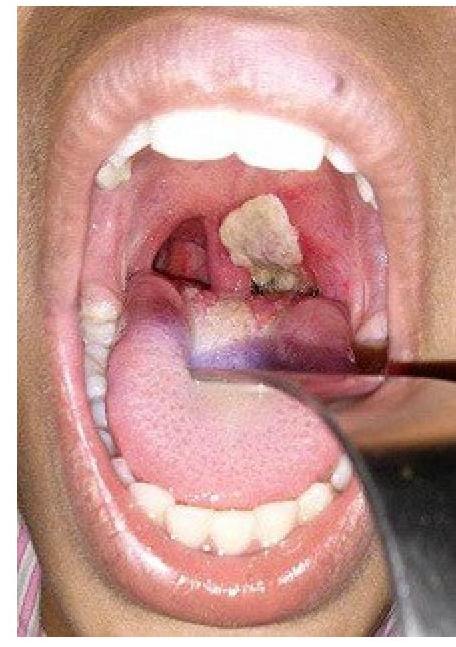
Question 16: A patient presents with hoarseness of voice and a clinical condition as shown in the image. Identify the lesion:
- A. Diphtheria (Correct Answer)
- B. Follicular tonsillitis
- C. Aphthous ulcer
- D. Membranous tonsillitis
Explanation: ***Diphtheria*** - The image shows a **thick, grayish-white pseudomembrane** covering the tonsils and likely extending to other parts of the pharynx, which is a classic sign of diphtheria. - **Hoarseness** indicates laryngeal involvement, a severe complication of diphtheria due to pseudomembrane formation extending to the larynx, potentially causing airway obstruction. *Follicular tonsillitis* - This condition presents with **pus-filled follicles** or spots on the tonsils, which are typically yellow or white, rather than a confluent membrane. - While it causes throat pain and fever, it generally does not lead to the formation of a **firm, adherent pseudomembrane** or significant hoarseness from laryngeal obstruction as seen in diphtheria. *Aphthous ulcer* - An aphthous ulcer is a **small, painful, shallow sore** with a white or yellowish center and a red border, typically found on the non-keratinized oral mucosa. - It does not present as a widespread, thick membranous lesion covering the tonsils and causing hoarseness. *Membranous tonsillitis* - While "membranous tonsillitis" describes the presence of a membrane on the tonsils, this term is often used generally. However, the specific characteristics in the image (thick, grayish, adherent membrane with severe symptoms like hoarseness) are pathognomonic for **diphtheria**. - Other causes of membranous tonsillitis, such as infectious mononucleosis, typically present with a less adherent membrane and often lack the severe systemic toxicity and potential for rapid airway compromise seen in diphtheria.
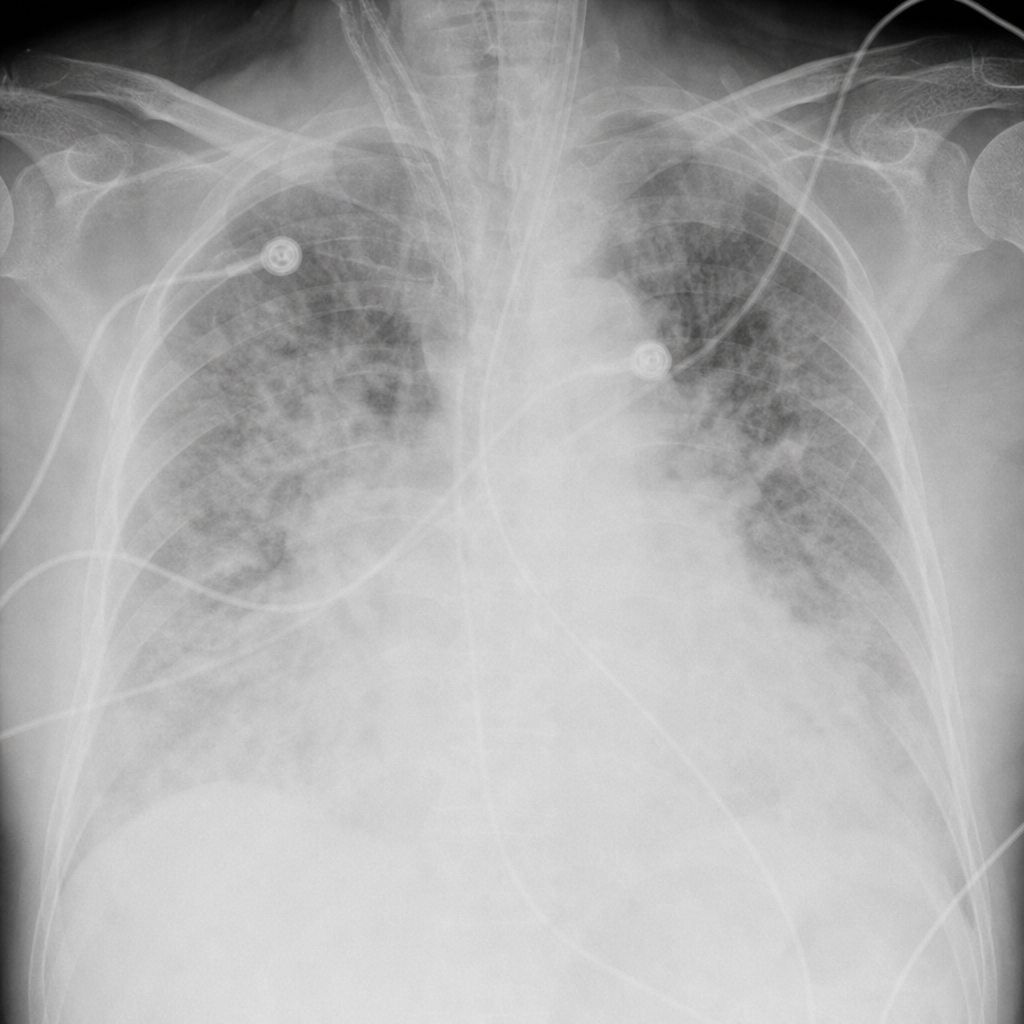
Question 17: A patient with a known case of acute pancreatitis develops breathlessness and bilateral basal crepitations on day 4. What is the most likely diagnosis based on the chest radiography image?
- A. Bilateral pneumonia
- B. Carcinogenic Pulmonary Embolism
- C. Lung collapse (atelectasis)
- D. Acute Respiratory Distress Syndrome (ARDS) (Correct Answer)
Explanation: ***Acute Respiratory Distress Syndrome (ARDS)*** - The chest radiograph shows **bilateral patchy infiltrates** and **diffuse alveolar opacities** consistent with ARDS, especially in the context of **acute pancreatitis** as a known risk factor. - The development of **breathlessness** and **bilateral basal crepitations** (rales) on day 4 further supports ARDS due to fluid accumulation in the lungs. *Bilateral pneumonia* - While pneumonia can cause bilateral infiltrates, the **symmetrical and widespread distribution** seen on this radiograph, combined with the context of acute pancreatitis, makes ARDS a more likely diagnosis. - Pneumonia typically presents with fever, productive cough, and lung consolidation, which are not specifically highlighted as primary symptoms over the breathlessness. *Carcinogenic Pulmonary Embolism* - Pulmonary embolism typically manifests with **sudden onset dyspnea**, pleuritic chest pain, and sometimes hemoptysis, and chest X-rays are often normal or show subtle findings like a **Westermark sign** or Hampton's hump. - The widespread bilateral infiltrates seen in the image are **not characteristic of pulmonary embolism**. *Lung collapse (atelectasis)* - Atelectasis usually appears as a ** localised area of increased opacification**, often with volume loss (e.g., tracheal deviation, elevated hemidiaphragm), and is often unilateral or segmental. - The **diffuse, bilateral, and often fluffy infiltrates** seen in this image are not consistent with typical atelectasis.
Question 18: True about decorticate rigidity:
- A. Flexion of lower limbs & extension of upper limbs
- B. Rigidity is less pronounced than decerebrate rigidity (Correct Answer)
- C. Removal of cerebral cortex and basal ganglia
- D. None of the options
Explanation: ***Rigidity is less pronounced than decerebrate rigidity*** - **Decorticate rigidity** indicates damage above the **red nucleus**, disrupting descending inhibitory pathways from the cortex. [1] - While reflecting serious brain injury, it is generally considered a **less severe prognosis** than decerebrate rigidity because the red nucleus and some rubrospinal tract functions remain intact. *Flexion of lower limbs & extension of upper limbs* - **Decorticate rigidity** typically presents with **flexion of the upper limbs** (adduction, internal rotation, elbow flexion, wrist flexion), and **extension of the lower limbs** (adduction, extension, internal rotation) [1]. - This characteristic posture, often described as "mummy baby" or "posture of salvation," is due to uninhibited activity of the **rubrospinal tract** and the absence of cortical input [1]. *Removal of cerebral cortex and basal ganglia* - **Decorticate rigidity** results from lesions that interrupt the descending pathways **above the red nucleus** (e.g., in the cerebral hemispheres or internal capsule) [1]. - This specifically means the **cerebral cortex** is "removed" in terms of its functional input, but the basal ganglia are within the affected region. *None of the options* - This option is incorrect because the statement about decorticate rigidity being **less pronounced than decerebrate rigidity** is accurate. - The other clinical description and neurological basis are distinct from true decorticate rigidity.
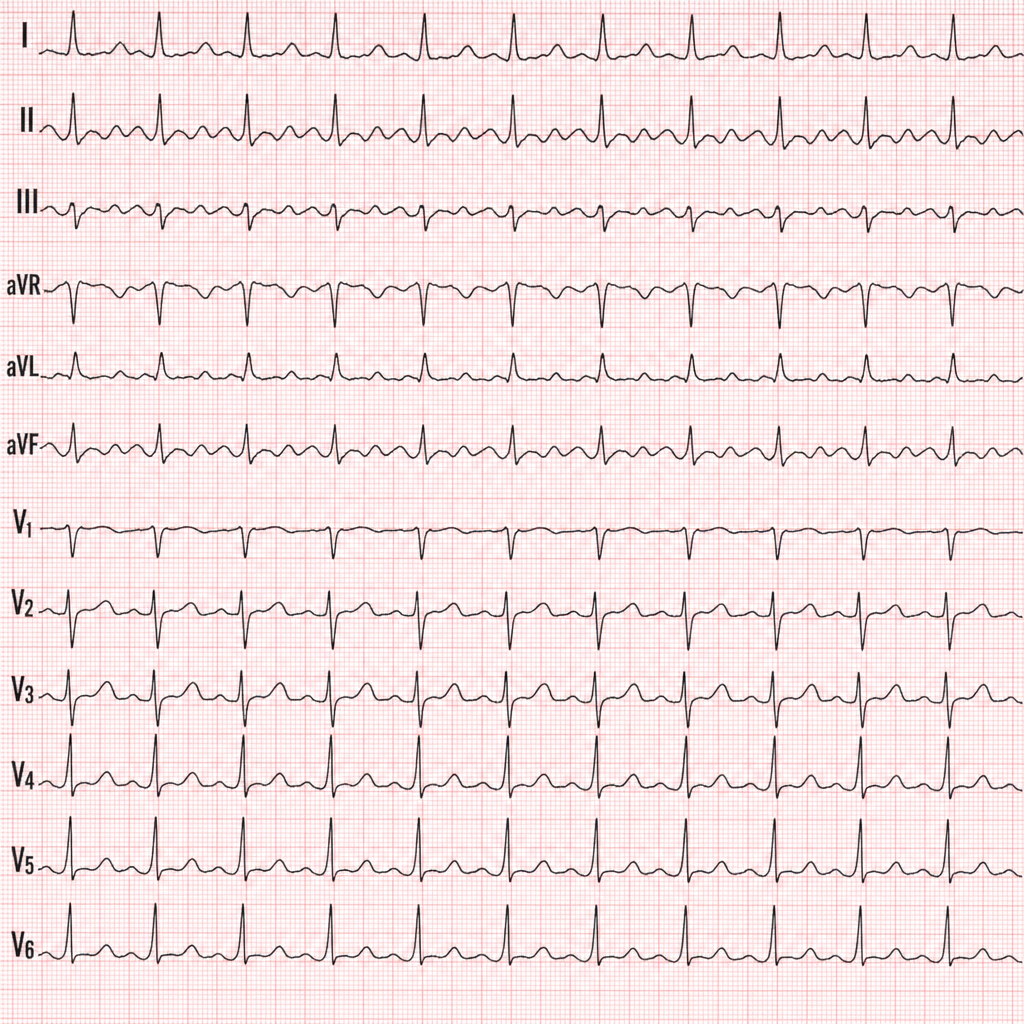
Question 19: Identify the diagnosis based on the provided ECG image.
- A. VT
- B. PSVT (Correct Answer)
- C. AT
- D. Ventricular fibrillation
Explanation: ***PSVT*** - The ECG shows a **narrow complex tachycardia** with a regular rhythm and a high heart rate, characteristic of **paroxysmal supraventricular tachycardia (PSVT)**. - P waves are often **buried within the QRS complex** or T waves, or may be retrograde, which can be seen as small deflections or changes in the baseline in some leads. *VT* - **Ventricular tachycardia** is characterized by a **wide QRS complex** (>0.12 seconds), which is not observed in this ECG. - While VT can be regular, the primary distinguishing feature is the QRS duration. *AT* - **Atrial tachycardia (AT)** is another form of supraventricular tachycardia, but it typically shows **distinct P waves** with an abnormal morphology, often separate from the T wave, which are not clearly visible or consistently distinct in this tracing. - While it can present with narrow complex tachycardia, the mechanism differs from re-entrant PSVT. *Ventricular fibrillation* - **Ventricular fibrillation** is characterized by **chaotic, irregular electrical activity** with no distinguishable P waves, QRS complexes, or T waves, representing disorganized ventricular depolarization. - The ECG in the image shows a consistent, regular rhythm with identifiable, albeit narrow, QRS complexes.
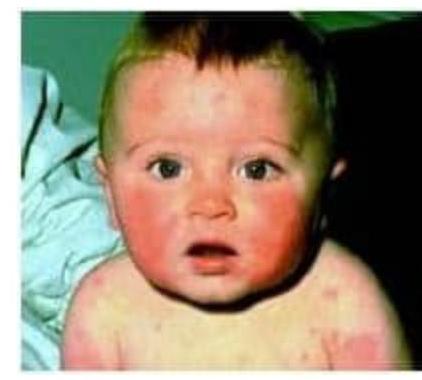
Question 20: Most characteristic cardiovascular defect seen in Rubella-
- A. Patent ductus arteriosus (Correct Answer)
- B. Coarctation of the aorta
- C. Ventricular septal defect
- D. Pulmonary artery stenosis
Explanation: ***Patent ductus arteriosus*** - **Patent ductus arteriosus (PDA)** is the most characteristic cardiovascular defect associated with congenital rubella syndrome [1]. - The rubella virus can interfere with the normal closure of the **ductus arteriosus** during fetal development [1]. *Coarctation of the aorta* - **Coarctation of the aorta** is a narrowing of the aorta and is not typically linked to congenital rubella syndrome [1]. - It is often associated with syndromes like **Turner syndrome** or bicuspid aortic valve, which are not mentioned here [1]. *Ventricular septal defect* - **Ventricular septal defects (VSDs)** are common congenital heart defects, but they are not specifically characteristic of congenital rubella [1]. - VSDs are more frequently associated with conditions like **Down syndrome** or can occur in isolation [1]. *Pulmonary artery stenosis* - While **pulmonary artery stenosis** can occur as a congenital heart defect, it is less commonly the primary cardiovascular manifestation of congenital rubella syndrome. - **Peripheral pulmonary artery stenosis** can be seen in rubella, but PDA is the most characteristic overarching defect [1].