NEET-PG 2019 — ENT
5 Previous Year Questions with Answers & Explanations
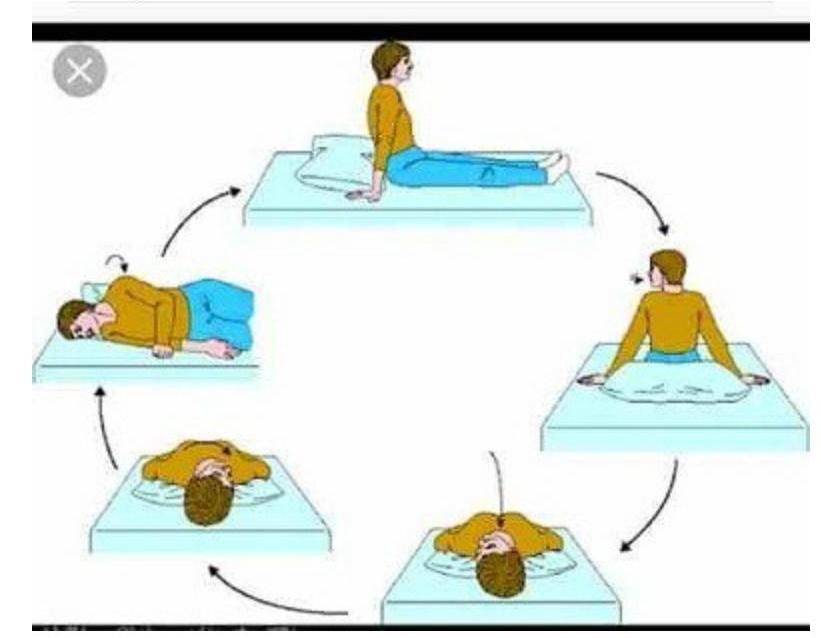
Identify the maneuver shown in the image.
Inspiratory stridor is found in what kind of lesions:
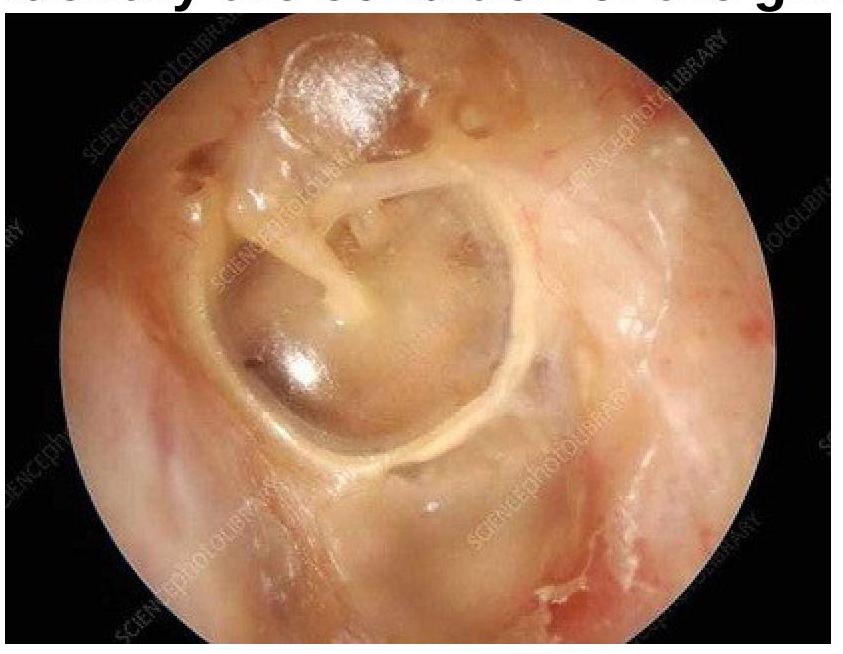
Identify the condition of the given image:
A patient presents with hoarseness and laryngoscopy reveals a warty, cauliflower-like growth on the vocal cord. Identify the most likely lesion.
Inspiratory stridor is due to lesions of:
NEET-PG 2019 - ENT NEET-PG Practice Questions and MCQs
Question 1: Identify the maneuver shown in the image.
- A. Brandt-Daroff
- B. Epley (Correct Answer)
- C. Foster
- D. Semont
Explanation: ***Epley*** - The image displays the classic sequence of head and body movements characteristic of the **Epley maneuver**, designed to reposition otoconia from the semicircular canals back into the utricle. - This maneuver involves a series of specific head turns and body positions, often starting in an upright seated position, then lying down while turning the head, and rotating the body, as depicted. *Brandt daroff* - The **Brandt-Daroff exercises** involve rapid, self-administered movements between sitting and lying on one side, then sitting up and lying on the other side. - These exercises are typically performed multiple times a day and differ in their sequence from the repositioning maneuvers shown. *Foster* - The **Foster maneuver**, also known as the "half-somersault maneuver," is a self-administered variant used for posterior canal BPPV, particularly when the Epley maneuver is difficult to perform. - It involves beginning in a kneeling position, looking up, placing the head on the floor, and tucking the chin, which is distinct from the sequence shown. *Semont* - The **Semont maneuver** involves rapid movement from a sitting position to lying on one side with the head turned up, then rapidly moving to lie on the opposite side with the head turned down. - While it is a repositioning maneuver for BPPV, its specific rapid movements and head orientations differ from those illustrated in the image.
Question 2: Inspiratory stridor is found in what kind of lesions:
- A. Supraglottic (Correct Answer)
- B. Subglottic
- C. Tracheal
- D. Bronchus
Explanation: ***Supraglottic*** - Lesions in the **supraglottic** region (e.g., epiglottitis, supraglottic foreign body) cause inspiratory stridor due to the collapse of soft tissues above the vocal cords during inspiration. - The narrowed airway during inspiration creates a high-pitched, harsh sound. *Subglottic* - **Subglottic** lesions typically cause a **biphasic stridor**, meaning stridor is present during both inspiration and expiration. - This is because the subglottis is a rigid area; narrowing at this level causes turbulent airflow during both phases of breathing. *Tracheal* - **Tracheal** lesions can produce **biphasic stridor** if they are in the cervical trachea due to fixed airway narrowing. - If the lesion is in the lower, intrathoracic trachea, it might primarily cause **expiratory stridor** or a biphasic stridor depending on the degree of narrowing and its fixity. *Bronchus* - Lesions in the **bronchus** (e.g., foreign body, tumor) typically lead to **expiratory stridor** or wheezing. - Airway narrowing at this level causes air trapping and turbulent flow predominantly during exhalation when the bronchial walls naturally constrict.
Question 3: Identify the condition of the given image:
- A. Acquired cholesteatoma
- B. Congenital cholesteatoma
- C. Rupture of tympanic membrane
- D. Keratosis obturans (Correct Answer)
Explanation: ***Keratosis obturans*** - The image shows a **plug of desquamated keratin** filling the external auditory canal. This is the characteristic appearance of keratosis obturans. - This condition is often associated with severe pain, conductive hearing loss, and sometimes **bone erosion** of the external auditory canal. *Acquired cholesteatoma* - This condition involves a **retraction pocket** or **perforation** of the tympanic membrane with ingrowth of keratinizing squamous epithelium into the middle ear, forming a sac. - The image does not show a retraction pocket or a middle ear mass, which are typical features of acquired cholesteatoma. *Congenital cholesteatoma* - This is a **pearly white mass** located behind an intact tympanic membrane, without any history of ear infections or perforations. - The image shows an external auditory canal filled with a plug, not a middle ear mass behind an intact tympanic membrane. *Rupture of tympanic membrane* - A rupture of the tympanic membrane would present as a **visible defect or perforation** in the eardrum. - The image shows an accumulation of material within the ear canal, and the tympanic membrane itself is not clearly visible or perforated in a manner indicative of rupture.
Question 4: A patient presents with hoarseness and laryngoscopy reveals a warty, cauliflower-like growth on the vocal cord. Identify the most likely lesion.
- A. Laryngeal papilloma (Correct Answer)
- B. Laryngeal malignancy
- C. Tracheomalacia
- D. Reinke’s edema
Explanation: ***Laryngeal papilloma*** - **Hoarseness** and a **warty, cauliflower-like growth** on the vocal cord are classic descriptions of a laryngeal papilloma, often caused by **HPV infection**. - These lesions can be solitary or multiple, and while benign, they can recur and cause voice changes and respiratory obstruction. *Laryngeal malignancy* - While hoarseness is a common symptom of laryngeal malignancy, the description of a **"warty, cauliflower-like growth"** is more characteristic of a papilloma than most typical carcinomas, which might appear more ulcerative or infiltrative. - Malignancies are more commonly associated with risk factors like **smoking and alcohol use**, and often present with other symptoms like dysphagia or weight loss. *Tracheomalacia* - **Tracheomalacia** refers to softening of the tracheal cartilage, leading to airway collapse, typically causing stridor or respiratory distress. - It does not present as a **discrete growth** on the vocal cords but rather as a diffuse structural weakness of the trachea. *Reinke’s edema* - **Reinke's edema** (polypoid corditis) is characterized by a **gelatinous or fluid-filled swelling** of the vocal cords, usually associated with chronic irritation like smoking. - It presents as a swollen, boggy appearance of the vocal cords, not a warty or cauliflower-like growth.
Question 5: Inspiratory stridor is due to lesions of:
- A. Supraglottis
- B. Trachea
- C. Bronchi
- D. Subglottis (Correct Answer)
Explanation: ***Subglottis*** - **Inspiratory stridor** is classically associated with **subglottic lesions**, such as **croup (laryngotracheobronchitis)** and **subglottic stenosis**. - The **subglottis** is the **narrowest part of the pediatric airway**, making it particularly susceptible to significant obstruction from inflammation or narrowing. - During inspiration, the negative intrathoracic pressure causes **dynamic collapse** of the subglottic region when narrowed, producing characteristic **high-pitched inspiratory stridor**. - Common causes: **Croup**, subglottic stenosis, subglottic hemangioma. *Supraglottis* - Supraglottic lesions (epiglottis, aryepiglottic folds) can also cause **inspiratory stridor**, particularly in **acute epiglottitis**. - However, supraglottic pathology more commonly presents with **muffled voice** (hot potato voice), **dysphagia**, **drooling**, and **tripod positioning**. - The stridor from supraglottic lesions tends to be **lower-pitched** and is often accompanied by more prominent systemic symptoms. *Trachea* - Tracheal lesions typically produce **biphasic stridor** (both inspiratory and expiratory phases) due to fixed obstruction in the main conducting airway. - The trachea is a more rigid structure; obstruction produces a **harsh, lower-pitched** sound heard in both respiratory phases. - Examples: tracheal stenosis, tracheomalacia, tracheal tumors. *Bronchi* - Bronchial lesions cause **expiratory wheezing** rather than stridor, due to dynamic collapse of small airways during exhalation. - Bronchial obstruction affects the lower airways and presents as **polyphonic wheeze** rather than the monophonic sound of stridor.