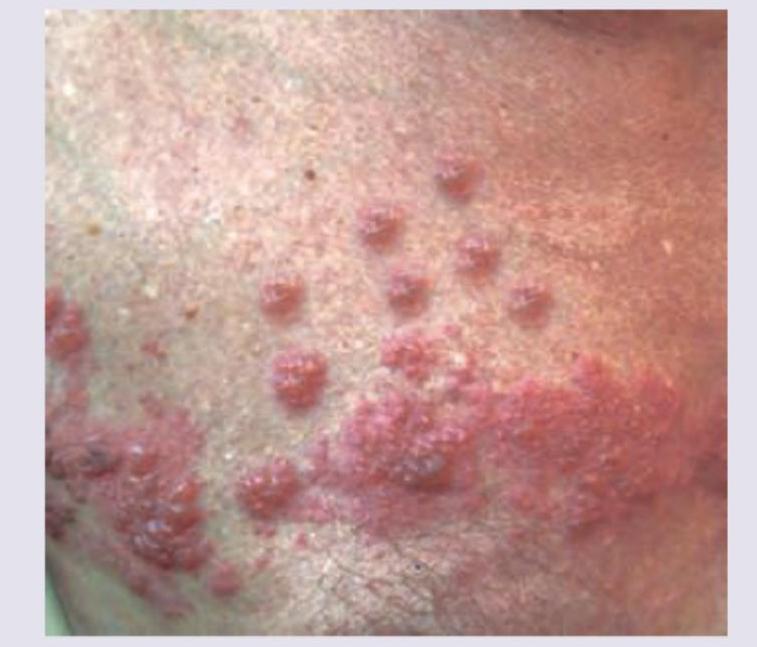
Identify the parasite shown in the image.

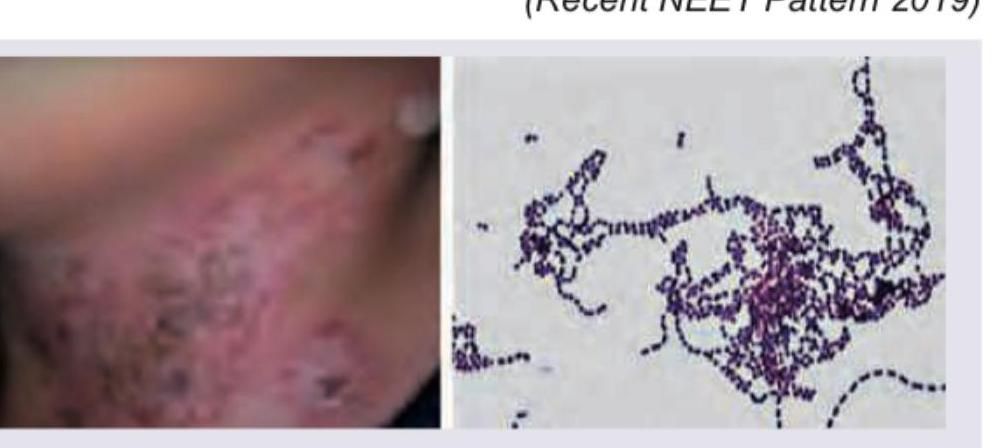
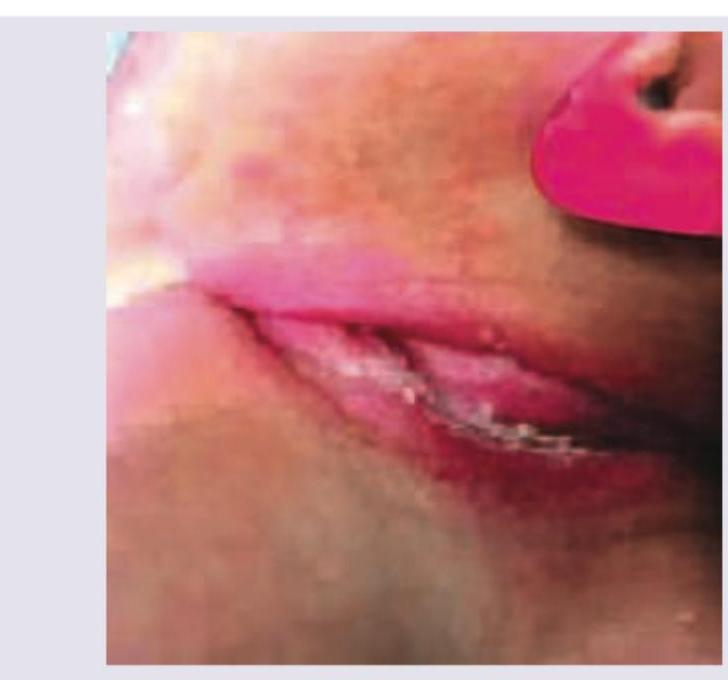
A child presents with the following lesion in the neck folds. The gram stain from the lesion is shown below. Comment on the diagnosis.
What is the diagnosis of the lesion visible in neck folds of this child?
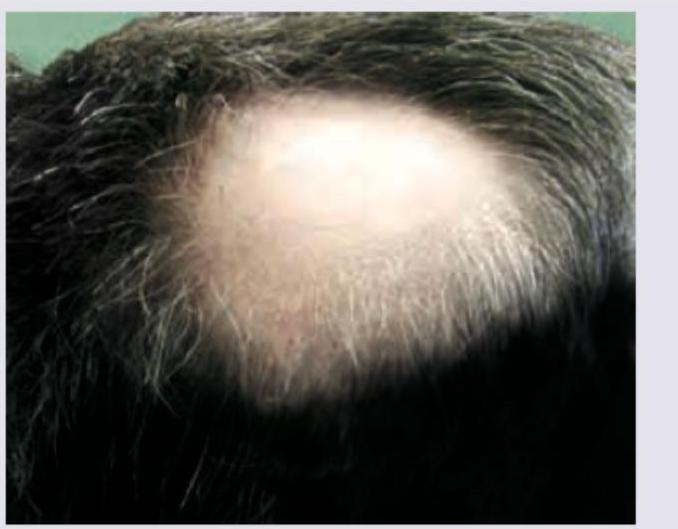
In a patient with the following lesion on scalp, what changes are seen in the nails?
The following image shows

NEET-PG 2019 - Dermatology NEET-PG Practice Questions and MCQs
Question 11: Identify the parasite shown in the image.
- A. Sarcoptes scabiei (Correct Answer)
- B. Pediculus humanus capitis
- C. Pthirus pubis
- D. Dermatobia hominis
Explanation: ***Sarcoptes scabiei*** - The image displayed is a characteristic microscopic view of **_Sarcoptes scabiei_**, the mite responsible for scabies. Key features include its **round to oval body** shape and the presence of **spines and setae** on its dorsal surface, which are visible. - The short, stubby legs with prominent suckers are consistent with the morphology used for burrowing into the skin. *Pediculus humanus capitis* - This parasite, the **head louse**, has a more **elongated body** shape and distinct legs with claws adapted for gripping hair shafts, which is not what is seen in the image. - Head lice are typically found on the scalp and attach nits (eggs) to hair, unlike the burrowing nature of the organism shown. *Pthirus Pubis* - **_Pthirus pubis_**, or the **pubic louse** (crab louse), has a distinctly **crab-like appearance** with broad bodies and large, clawed legs, especially the second and third pairs, which is not consistent with the image. - These lice typically infest coarse body hair, such as pubic hair, eyelashes, and eyebrows. *Dermatobia hominis* - **_Dermatobia hominis_** is the **human botfly**, and its larval stage (maggot) causes **cutaneous myiasis**. The image does not show a maggot-like larva but rather a microscopic mite. - The morphology of a botfly larva is worm-like and segmented, featuring prominent spines for anchoring within the host's skin.
Question 12: A child presents with the following lesion in the neck folds. The gram stain from the lesion is shown below. Comment on the diagnosis.
- A. Impetigo contagiosa
- B. Erythrasma (Correct Answer)
- C. Scrofuloderma
- D. Scrum pox
Explanation: **Erythrasma** - The image shows a **reddish-brown, finely wrinkled lesion** in an intertriginous area (neck folds), consistent with erythrasma. - The gram stain reveals **long, filamentous Gram-positive bacilli**, characteristic of *Corynebacterium minutissimum*, the causative agent of erythrasma. *Impetigo contagiosa* - This typically presents as **honey-colored crusted lesions** or vesicles, often caused by *Staphylococcus aureus* or *Streptococcus pyogenes*. - Gram stain would show **Gram-positive cocci** (clusters for staph, chains for strep), not filamentous bacilli. *Scrofuloderma* - This is a form of **cutaneous tuberculosis**, typically presenting as **nontender subcutaneous nodules** that eventually ulcerate and discharge caseous material. - Diagnosis is confirmed by identifying acid-fast bacilli or histology showing granulomas; the gram stain and lesion appearance are not consistent. *Scrum pox* - This is a **viral skin infection** (often herpes simplex virus) seen in wrestlers, presenting as **vesicular or ulcerative lesions**. - It would not show filamentous Gram-positive bacilli on a bacterial gram stain.
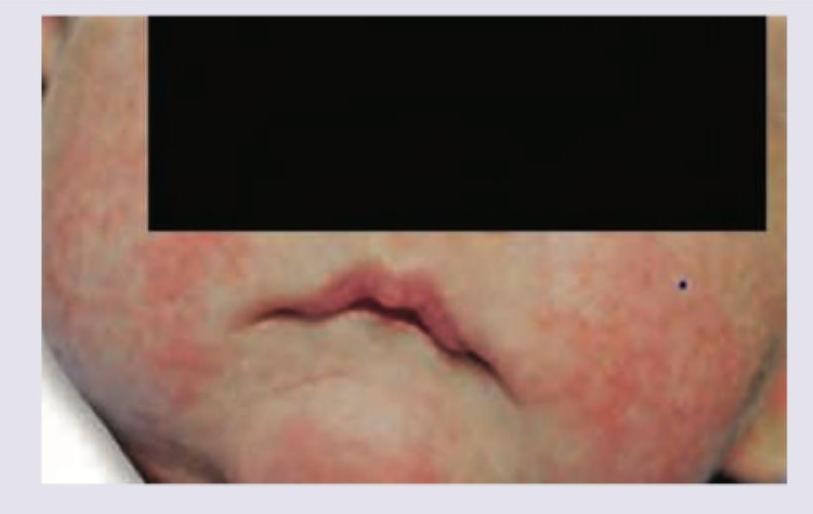
Question 13: What is the diagnosis of the lesion visible in neck folds of this child?
- A. SSSS
- B. Intertriginous candida (Correct Answer)
- C. Impetigo
- D. Ecthyma
Explanation: ***Intertriginous candida*** - The image shows **erythema, scaling, and white satellite lesions** in a skin fold, which is characteristic of candidal intertrigo. - This condition thrives in **warm, moist environments** like neck folds of infants, often presenting with burning and itching. *SSSS* - **Staphylococcal Scalded Skin Syndrome (SSSS)** is characterized by widespread **erythema and superficial blistering**, leading to skin peeling, which is not seen here. - It usually involves a more diffuse rash and often has a **positive Nikolsky sign**, unlike the localized lesion shown. *Impetigo* - **Impetigo** typically presents with **honey-colored crusts** and is caused by bacterial infection, primarily *Staphylococcus aureus* or *Streptococcus pyogenes*. - While it can occur in skin folds, the characteristic white, cheesy appearance and satellite lesions seen in the image are not typical of impetigo. *Ecthyma* - **Ecthyma** is a more severe, ulcerative form of impetigo, characterized by **punched-out ulcers with adherent crusts** that extend into the dermis. - The lesion in the image does not show the deep ulceration or dense, dark crusts associated with ecthyma.
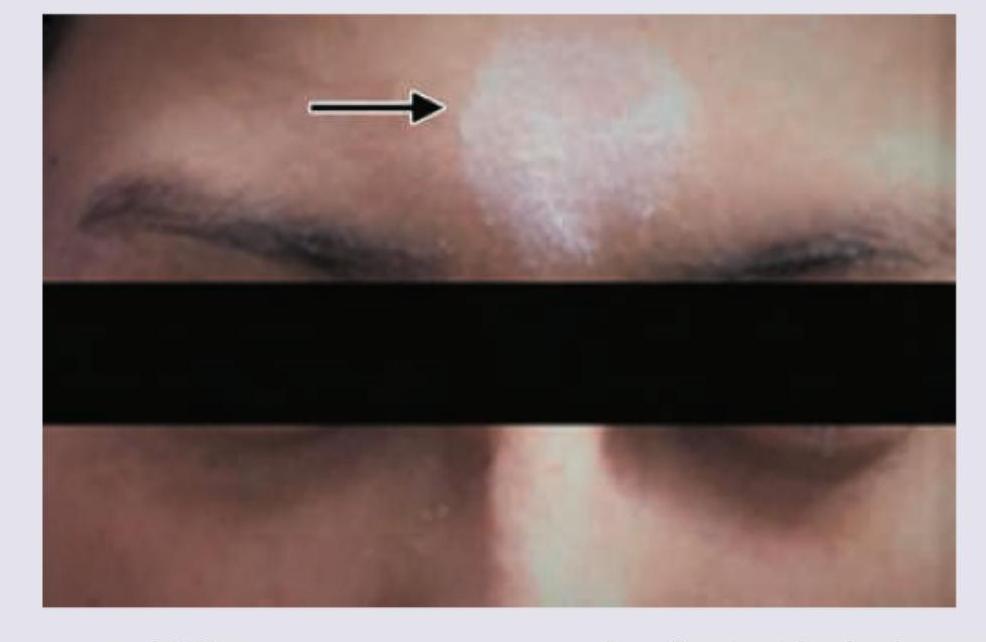
Question 14: In a patient with the following lesion on scalp, what changes are seen in the nails?
- A. Azure nails
- B. Dorsal pterygium of nails
- C. Pitting of nails (Correct Answer)
- D. Yellow nail discolouration
Explanation: ***Pitting of nails*** - The image shows a patch of **alopecia areata** on the scalp. **Nail pitting** is the most common and characteristic nail change associated with alopecia areata, occurring in **10-66% of cases**. - Pitting appears as small depressions or **"ice-pick" marks** on the nail surface, resulting from defective nail matrix keratinization. - Other nail changes in alopecia areata include **trachyonychia (rough nails), red spotted lunulae, onycholysis**, and **Beau's lines**. *Dorsal pterygium of nails* - **Dorsal pterygium** occurs when the proximal nail fold fuses with and extends over the nail plate, creating a wing-like scar. - This is classically associated with **lichen planus, trauma, burns, vasculitis**, and **graft-versus-host disease** — **NOT alopecia areata**. - It can lead to permanent nail dystrophy or nail loss. *Azure nails* - **Azure nails** (blue nails) are typically associated with **Wilson's disease** (copper accumulation) or **minocycline use**, not alopecia areata. - They represent a blue-gray discoloration of the nail bed or lunula. *Yellow nail discolouration* - **Yellow nail syndrome** is a rare condition characterized by slow-growing, thickened, yellow nails, often associated with **lymphedema** and **respiratory problems** (pleural effusions, chronic bronchitis). - It is not linked to alopecia areata.
Question 15: The following image shows
- A. Dermoid cyst
- B. Sebaceous cyst
- C. Neurofibroma
- D. Encephalocele (Correct Answer)
Explanation: ***Encephalocele*** - The image shows a **protrusion (sac) on the scalp** of a child, suggesting a congenital defect where brain tissue and/or meninges herniate through a defect in the skull. This is characteristic of an **encephalocele**. - **Encephaloceles** often present as a skin-covered or membranous sac, typically found along the midline of the skull, as depicted in the image. *Dermoid cyst* - A dermoid cyst is a **benign tumor** that contains mature skin structures like hair follicles and sebaceous glands. - While they can occur on the scalp, they are typically **smaller, firmer, and do not communicate with the intracranial cavity**, unlike the large, soft-appearing protrusion in the image. *Sebaceous cyst* - A sebaceous cyst, or epidermoid cyst, is a **closed sac under the skin** filled with keratin and fatty material. - These are generally **firm, mobile, and do not represent a herniation of intracranial contents**, making them unlikely given the size and appearance of the lesion. *Neurofibroma* - A neurofibroma is a **benign tumor of nerve sheath cells** that can manifest as a skin lesion or subcutaneous nodule. - While they can vary in size, they usually appear as soft, fleshy growths and are **not associated with a skull defect or herniation of brain tissue**, which is the defining feature of the lesion shown.