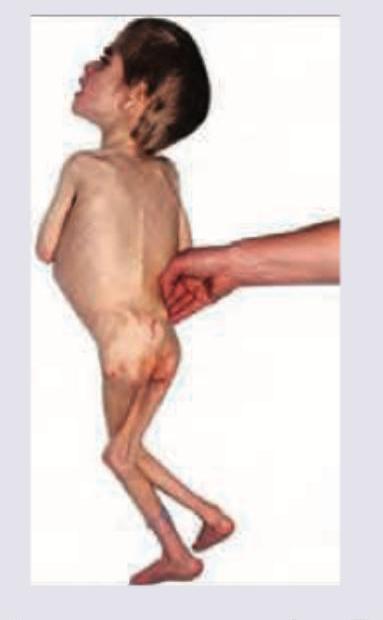
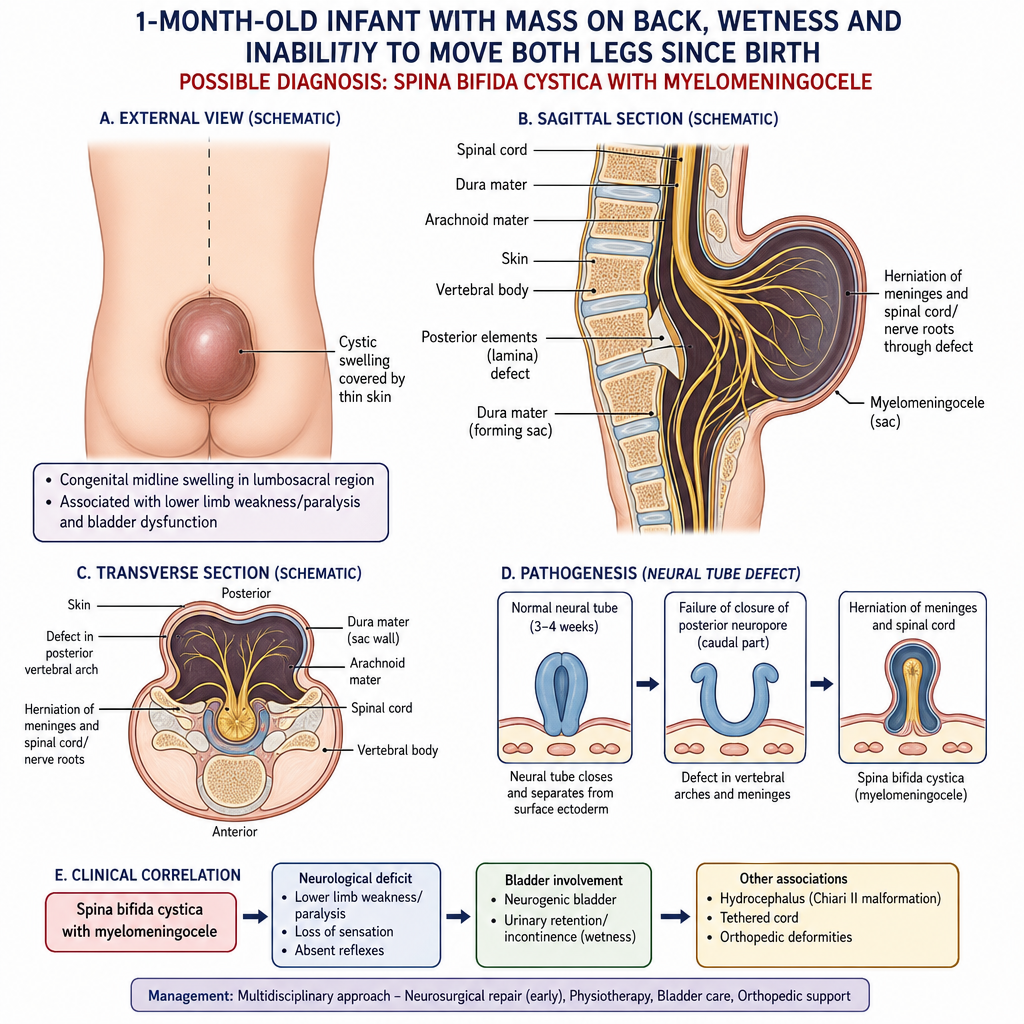
Child has not passed stool by 2nd day of life. X-Ray study done shows:

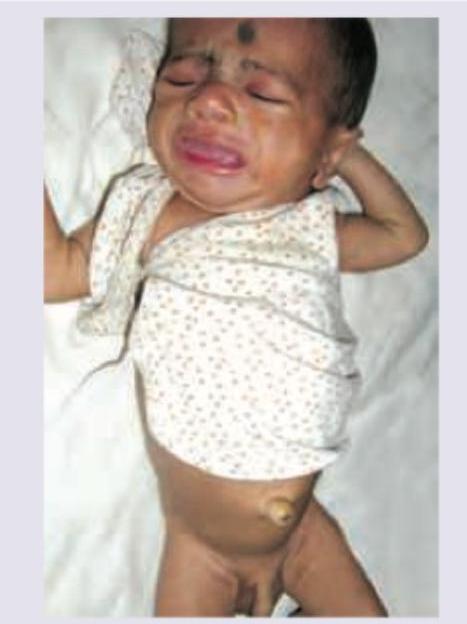
A neonate presents with the clinical features shown in the image below. What is the most likely diagnosis?
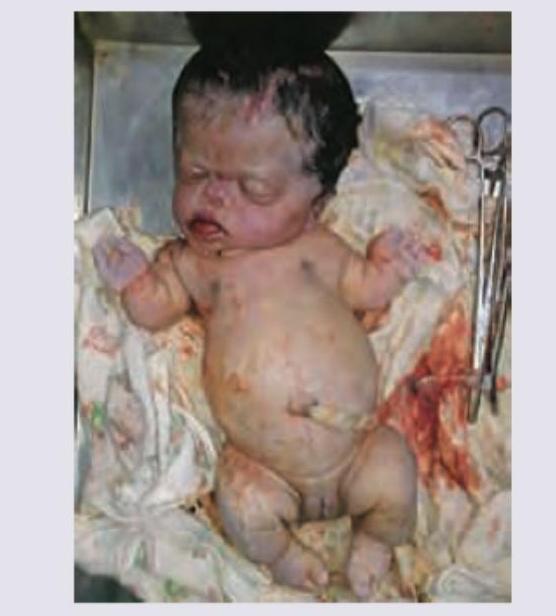
A newborn presents with macrosomia, plethoric appearance, and generalized edema. The image shows:
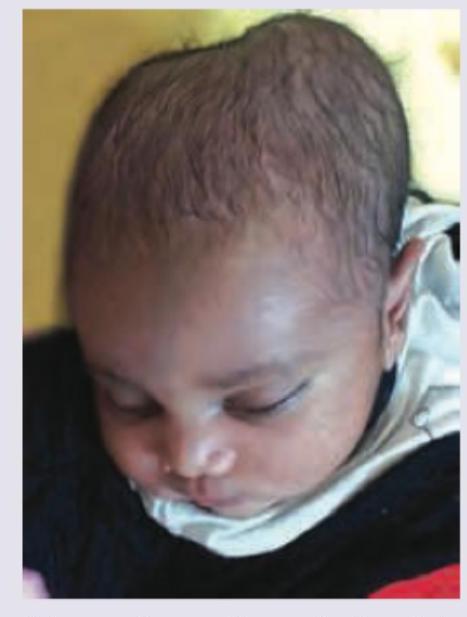
All are true about the swelling on scalp of a 2-day old neonate except: (Recent NEET Pattern 2016-17)
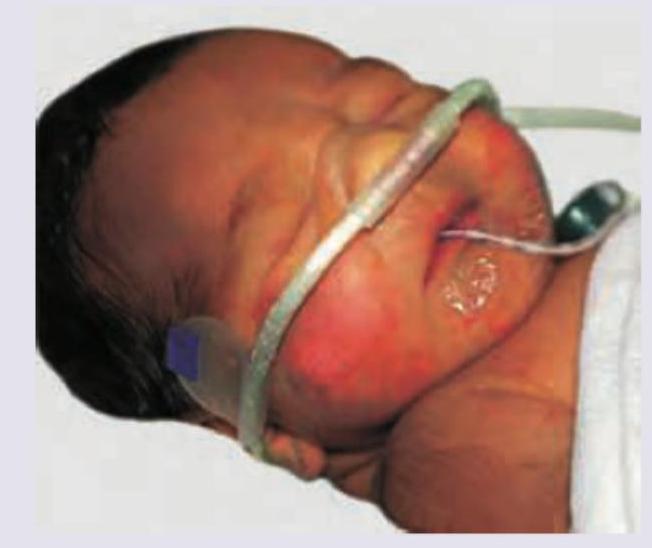
Which of the following interventions is being done in this neonate?
A 3-year-old child presents with sudden onset generalized petechiae and bruise on forehead. Sternal tenderness is absent and liver and spleen are not palpable. Bone marrow aspiration is normal. Probable cause is? (Recent NEET Pattern 2016-17)
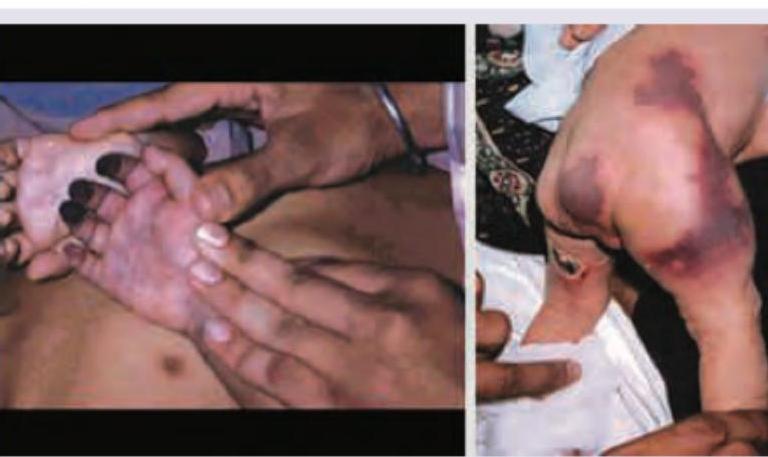
A 6-month-old child brought by parents for diffuse ecchymosis on extremities and trunk. Probable diagnosis is? (Recent NEET Pattern 2016-17)
A 3-year-old child presents with bleeding from nose and Periorbital Ecchymosis. Sternal tenderness and bone pain is present. Peripheral smear shows presence of fragmented RBC and helmet cells. The most probable diagnosis is? (Recent NEET Pattern 2016-17)
A 2-year-old child presents with growth retardation, pallor, bruising and has palpable spleen 5 cm below left costal margin. Bone marrow examination is shown below. Which is incorrect about the clinical diagnosis? (Recent NEET Pattern 2016-17)

A 6-month-old infant with a progressively increasing abdominal lump. Investigations revealed a stage IVs neuroblastoma. All are correct about the condition except:
NEET-PG 2017 - Pediatrics NEET-PG Practice Questions and MCQs
Question 11: Child has not passed stool by 2nd day of life. X-Ray study done shows:
- A. Cystic fibrosis
- B. Duodenal atresia (Correct Answer)
- C. CHPS
- D. Anorectal malformation
Explanation: ***Duodenal atresia*** - The abdominal X-ray images display the classic **"double bubble sign"**, which is highly characteristic of duodenal atresia. This sign consists of two distinct air-filled loops, one representing the distended stomach and the other the dilated proximal duodenum, with no distal gas. - The clinical presentation of a neonate not passing stool by the second day of life, combined with the characteristic radiological findings, points directly to an **upper gastrointestinal obstruction** like duodenal atresia. *Cystic fibrosis* - While cystic fibrosis can cause **meconium ileus** leading to intestinal obstruction in newborns, it typically presents with diffuse intestinal distension rather than the localized "double bubble" pattern. - Meconium ileus on X-ray would show numerous dilated loops of small bowel with a **"ground-glass" appearance** due to trapped meconium, not the distinct two bubbles seen here. *CHPS* - **Congenital hypertrophic pyloric stenosis (CHPS)** typically manifests later, between 3-6 weeks of age, with projectile non-bilious vomiting, not as early as the second day of life with findings of intestinal obstruction on X-ray. - The X-ray findings in CHPS would show a **distended stomach but without the second bubble** representing a dilated duodenum often seen in duodenal atresia. *Anorectal malformation* - **Anorectal malformations** are lower gastrointestinal obstructions, meaning a significant portion of the bowel would be distended with gas, and the X-ray would not show the isolated "double bubble" sign. - Diagnosis is often made by physical examination demonstrating an **imperforate anus** or abnormal anal opening, in conjunction with plain abdominal radiographs that would show distal intestinal obstruction.
Question 12: A neonate presents with the clinical features shown in the image below. What is the most likely diagnosis?
- A. Down syndrome
- B. Congenital hypothyroidism (Correct Answer)
- C. Ellis-Van Creveld syndrome
- D. Turner syndrome
Explanation: ***Congenital hypothyroidism*** - The image shows a neonate with **macroglossia** (large tongue), **umbilical hernia**, and possibly **puffy eyelids** and **dull facies**, all characteristic signs of congenital hypothyroidism. - Other features often include **hypotonia**, **feeding difficulties**, **prolonged jaundice**, and **constipation**. *Down syndrome* - While Down syndrome can present with **hypotonia** and some shared features, the characteristic **epicanthal folds**, **simian crease**, **brushfield spots**, and flattened facial profile are not clearly evident. - Macroglossia is common but other features like an umbilical hernia would be less specific. *Ellis-Van Creveld syndrome* - This syndrome is characterized by **chondroectodermal dysplasia**, typically presenting with **polydactyly**, **short-limbed dwarfism**, **nail dysplasia**, and **cardiac defects**. - These distinct skeletal and ectodermal abnormalities are not visible in the presented image. *Turner syndrome* - Turner syndrome (XO karyotype) primarily affects females and is characterized by **short stature**, **webbed neck**, **lymphedema of hands and feet**, and **cardiac anomalies** (e.g., coarctation of the aorta). - The features shown in the image, such as macroglossia and umbilical hernia, are not typical of Turner syndrome.
Question 13: A newborn presents with macrosomia, plethoric appearance, and generalized edema. The image shows:
- A. Infant of diabetic mother (Correct Answer)
- B. Achondroplasia
- C. Hemi-hypertrophy
- D. Albright hereditary osteodystrophy
Explanation: ***Infant of diabetic mother*** - The image shows a **macrosomic** infant with a **plethoric appearance**, generalized **edema**, and a **"cherubic" facial appearance** with a prominent philtrum and perioral cyanosis, all characteristic features of an infant of a diabetic mother. - Maternal diabetes leads to fetal **hyperinsulinemia**, resulting in increased fat deposition, organomegaly, and altered growth patterns. *Achondroplasia* - Achondroplasia is characterized by **proximal limb shortening** (rhizomelia), a large head with a prominent forehead, and a flattened nasal bridge. - The pictured infant does not show these specific skeletal dysplasias. *Hemi-hypertrophy* - Hemi-hypertrophy involves **asymmetric growth**, where one side or part of the body is significantly larger than the other. - The infant in the image exhibits generalized, symmetrical macrosomia rather than unilateral overgrowth. *Albright hereditary osteodystrophy* - Albright hereditary osteodystrophy is a genetic disorder associated with short stature, **obesity**, brachydactyly (short digits), and typically presents with features related to **pseudohypoparathyroidism** (e.g., hypocalcemia, hyperphosphatemia). - The characteristic findings of this syndrome, such as brachydactyly, are not evident in the image.
Question 14: All are true about the swelling on scalp of a 2-day old neonate except: (Recent NEET Pattern 2016-17)
- A. Heals from periphery (Correct Answer)
- B. Can lead to prolongation of physiological Jaundice
- C. Painless
- D. Sub-periosteal bleeding with gradual hardening
Explanation: ***Heals from periphery*** - This is the **INCORRECT statement** about cephalohematoma in a neonate - Cephalohematomas do NOT heal from the periphery like a skin wound - Instead, the blood clot gradually **liquefies and is reabsorbed** over weeks to months (typically 2-3 months) - Resorption occurs uniformly or may even start centrally, not from the edges - This is the **exception** among the given statements *Sub-periosteal bleeding with gradual hardening* - This accurately describes **cephalohematoma**, a common birth injury - It is a **subperiosteal collection of blood** confined by suture lines - The blood undergoes **organization and calcification** over time, leading to gradual hardening - A bony rim may be palpable at the edges after 2-3 weeks *Can lead to prolongation of physiological Jaundice* - Breakdown of red blood cells within the cephalohematoma releases **bilirubin** - This increased bilirubin load can contribute to **prolonged physiological jaundice** - The large blood collection acts as an extravascular source of bilirubin *Painless* - Cephalohematoma is generally **painless** to touch for the neonate - Unlike caput succedaneum or infections, the blood collection does not cause acute pain - The swelling may appear large but is not tender
Question 15: Which of the following interventions is being done in this neonate?
- A. Nasal CPAP and orogastric tube to decompress stomach (Correct Answer)
- B. Positive pressure ventilation and NG tube to decompress stomach
- C. Surfactant therapy and NG tube to decompress stomach
- D. Oxygen hood
Explanation: ***Nasal CPAP and orogastric tube to decompress stomach*** - The image shows a neonate with a device inserted into the nostrils for **nasal continuous positive airway pressure (nCPAP)**, used to support breathing. - Additionally, a tube is visible in the neonate's mouth leading to the stomach, which is an **orogastric (OG) tube** used for feeding or stomach decompression, especially important when using CPAP as air can be swallowed. *Positive pressure ventilation and NG tube to decompress stomach* - This option refers to positive pressure ventilation, which typically involves an **endotracheal tube** or mask/bag, neither of which is clearly depicted as the primary respiratory support. - An **NG tube (nasogastric tube)** would be inserted through the nose, but the tube shown for gastric access is in the mouth (orogastric). *Surfactant therapy and NG tube to decompress stomach* - **Surfactant therapy** is administered directly into the lungs, usually via an endotracheal tube, and is not a visible intervention in the image itself. - As noted previously, the tube for gastric decompression appears to be **orogastric**, not nasogastric. *Oxygen hood* - An **oxygen hood** is a clear plastic dome placed over the neonate's head to deliver oxygen, which is not what is shown in the image. - The visible tubes are for respiratory support and gastric access, indicating a more direct and invasive form of intervention than an oxygen hood.
Question 16: A 3-year-old child presents with sudden onset generalized petechiae and bruise on forehead. Sternal tenderness is absent and liver and spleen are not palpable. Bone marrow aspiration is normal. Probable cause is? (Recent NEET Pattern 2016-17)
- A. Aplastic anemia
- B. Acute ITP (Correct Answer)
- C. Acute leukemia
- D. Dengue hemorrhagic fever
Explanation: ***Acute ITP*** - A 3-year-old child presenting with **sudden onset petechiae and ecchymoses (bruise on forehead)**, without signs of systemic illness (no sternal tenderness, non-palpable liver/spleen), and a normal bone marrow is highly suggestive of **Idiopathic Thrombocytopenic Purpura (ITP)**. ITP is characterized by isolated thrombocytopenia due to autoimmune destruction of platelets. - The **normal bone marrow**, in particular, rules out conditions like leukemia and aplastic anemia, where bone marrow pathology would be evident. *Aplastic anemia* - **Aplastic anemia** would typically present with **pancytopenia** (affecting all blood cell lines), leading to symptoms like pallor, fatigue, infections, and bleeding. - A **bone marrow aspiration** in aplastic anemia would show a **hypocellular marrow** with a reduction in hematopoietic cells, which contradicts the "normal" finding in this case. *Acute leukemia* - **Acute leukemia** in children often presents with **bone pain (sternal tenderness)**, fever, fatigue, and organomegaly (enlarged liver and spleen) due to infiltration of leukemic cells. - A **bone marrow aspiration** would reveal a **hypercellular marrow** with a large proportion of blasts, which is not consistent with the "normal" bone marrow finding provided. *Dengue hemorrhagic fever* - **Dengue hemorrhagic fever** typically presents with symptoms like high fever, severe headache, muscle and joint pain, and often signs of bleeding (like petechiae and bruising) and can lead to severe thrombocytopenia. - However, it is usually preceded by a **fever** and other systemic symptoms, which are not mentioned in this sudden onset presentation in the given case scenario.
Question 17: A 6-month-old child brought by parents for diffuse ecchymosis on extremities and trunk. Probable diagnosis is? (Recent NEET Pattern 2016-17)
- A. Disseminated intravascular coagulation
- B. A.P.L.A.S
- C. Dengue hemorrhagic fever
- D. Protein C deficiency (Correct Answer)
Explanation: ***Protein C deficiency*** - A 6-month-old with **diffuse ecchymoses on extremities and trunk** is classic for **homozygous protein C deficiency** presenting as **purpura fulminans**. - Severe congenital protein C deficiency typically manifests in **early infancy** (within first few weeks to months) with widespread purpuric lesions, skin necrosis, and thrombotic complications. - The presentation includes **large ecchymotic patches** that can progress to necrosis, affecting extremities and trunk as described. - This is the **most likely diagnosis** for this age group and clinical presentation in the absence of other systemic features. *Disseminated intravascular coagulation* - DIC causes diffuse bleeding and purpura due to consumption coagulopathy and microthrombi formation. - However, DIC is a **secondary complication** requiring an underlying trigger (sepsis, trauma, malignancy) with acute systemic illness. - The child would typically present with **multiple bleeding sites**, systemic signs, and evidence of the underlying condition—not isolated ecchymosis. *A.P.L.A.S (Antiphospholipid Antibody Syndrome)* - Neonatal antiphospholipid syndrome from maternal antibodies presents in the **neonatal period** (first 28 days of life), not at 6 months. - APLAS primarily causes **thrombotic events** (stroke, renal vein thrombosis) rather than diffuse ecchymosis alone. - This diagnosis is **extremely rare** in infancy and would not be the probable diagnosis for isolated ecchymotic presentation at this age. *Dengue hemorrhagic fever* - Dengue requires **exposure in endemic areas** and presents with fever, headache, myalgia, and characteristic rash followed by hemorrhagic manifestations. - More common in **older children and adults**; the 6-month-old age and absence of fever/systemic symptoms make this unlikely. - The clinical picture describes ecchymosis without mention of fever or other dengue features.
Question 18: A 3-year-old child presents with bleeding from nose and Periorbital Ecchymosis. Sternal tenderness and bone pain is present. Peripheral smear shows presence of fragmented RBC and helmet cells. The most probable diagnosis is? (Recent NEET Pattern 2016-17)
- A. Acute myeloid Leukemia (Correct Answer)
- B. Acute Idiopathic thrombocytopenic purpura
- C. Hemophilia A
- D. Battered baby syndrome
Explanation: ***Acute myeloid Leukemia*** - The combination of **bleeding manifestations** (nose bleeding, periorbital ecchymosis), **bone pain and sternal tenderness** (from marrow infiltration), and **fragmented RBCs with helmet cells** (schistocytes) on peripheral smear is highly suggestive of **Acute Myeloid Leukemia complicated by DIC**. - **Fragmented RBCs and helmet cells** indicate **microangiopathic hemolytic anemia (MAHA)**, which in the context of acute leukemia suggests **disseminated intravascular coagulation (DIC)** - a well-known complication of AML, especially **acute promyelocytic leukemia (AML-M3)**. - **Bone pain and sternal tenderness** are characteristic features of leukemic infiltration of bone marrow. - **Bleeding** occurs due to thrombocytopenia from marrow replacement and consumption in DIC. *Battered baby syndrome* - While trauma/abuse can cause periorbital ecchymosis and bleeding, the presence of **sternal tenderness, bone pain** (suggesting marrow pathology), and **schistocytes on peripheral smear** is NOT typical of trauma alone. - Schistocytes would only occur in trauma if there is severe DIC from massive injury with shock, which would present as a critically ill child with multiorgan dysfunction. - The constellation of findings here points to **hematologic malignancy**, not physical abuse. *Acute Idiopathic thrombocytopenic purpura* - ITP causes **bleeding manifestations** due to isolated **thrombocytopenia**, leading to nosebleeds and ecchymosis. - However, **bone pain, sternal tenderness**, and **fragmented RBCs with helmet cells** are NOT features of ITP. - ITP has a normal peripheral smear except for decreased platelets. *Hemophilia A* - Hemophilia A is a **coagulation disorder** characterized by **factor VIII deficiency**, leading to bleeding into joints and deep tissues. - **Bone pain and sternal tenderness** are not characteristic of hemophilia. - **Fragmented RBCs and helmet cells** do not occur in hemophilia. - Periorbital ecchymosis from minor trauma can occur, but the complete clinical picture does not fit.
Question 19: A 2-year-old child presents with growth retardation, pallor, bruising and has palpable spleen 5 cm below left costal margin. Bone marrow examination is shown below. Which is incorrect about the clinical diagnosis? (Recent NEET Pattern 2016-17)
- A. Defect on chromosome 3 (Correct Answer)
- B. Glucosylceramide accumulation in reticulo-endothelial cells
- C. Bleeding episodes
- D. Erlenmeyer flask deformity of the distal femur
Explanation: ***Defect on chromosome 3*** - The clinical presentation (growth retardation, pallor, bruising, massive splenomegaly) and the bone marrow image showing a **Gaucher cell** (macrophage with a characteristic "crinkled paper" or "crumpled tissue paper" cytoplasm due to glucocerebroside accumulation) are classic for **Gaucher disease**. - Gaucher disease is caused by a **deficiency of the enzyme glucocerebrosidase**, which is encoded by the GBA gene located on **chromosome 1q21**, not chromosome 3. Therefore, a defect on chromosome 3 is incorrect. *Glucosylceramide accumulation in reticulo-endothelial cells* - This is a correct feature of Gaucher disease, where the deficient enzyme **glucocerebrosidase** leads to the accumulation of its substrate, **glucocerebroside (glucosylceramide)**, primarily within macrophages (reticulo-endothelial cells). - These lipid-laden macrophages are known as **Gaucher cells** and are pathognomonic for the disease. *Bleeding episodes* - **Thrombocytopenia** (low platelet count) is a common hematological manifestation in Gaucher disease, often due to **hypersplenism** caused by massive splenomegaly and direct bone marrow infiltration. - This low platelet count can lead to an increased tendency for **bruising and bleeding episodes**, which is consistent with the patient's bruising. *Erlenmeyer flask deformity of the distal femur* - This is a characteristic **radiological finding** in Gaucher disease, particularly in the long bones. - It refers to the **widening of the distal metaphysis** of the femur, resembling an Erlenmeyer flask, due to bone marrow infiltration by Gaucher cells.
Question 20: A 6-month-old infant with a progressively increasing abdominal lump. Investigations revealed a stage IVs neuroblastoma. All are correct about the condition except:
- A. Favorable prognosis
- B. Can regress spontaneously
- C. Low dose cyclophosphamide
- D. Most common stage of neuroblastoma (Correct Answer)
Explanation: ***Most common stage of neuroblastoma*** - Stage IVs neuroblastoma is typically seen in infants under 1 year of age, but it is **not the most common stage** overall. - While it has distinct features, stage IV (disseminated disease with distant metastases) is generally considered the most common presentation of neuroblastoma at diagnosis across all age groups. *Favorable prognosis* - Stage IVs neuroblastoma generally has a **favorable prognosis** due to its unique biological behavior compared to other advanced stages. - This stage is characterized by **spontaneous regression** in many cases, contributing to better outcomes despite widespread disease. *Can regress spontaneously* - A hallmark of Stage IVs neuroblastoma is the potential for **spontaneous regression**, often without intensive therapy. - This characteristic is attributed to specific biological features of the tumor cells in this subset of patients. *Low dose cyclophosphamide* - For stage IVs neuroblastoma, particularly in symptomatic cases, **low-dose chemotherapy**, such as cyclophosphamide, is often used. - The goal is to manage symptoms and encourage regression rather than aggressive eradication, given the tumor's favorable biology.