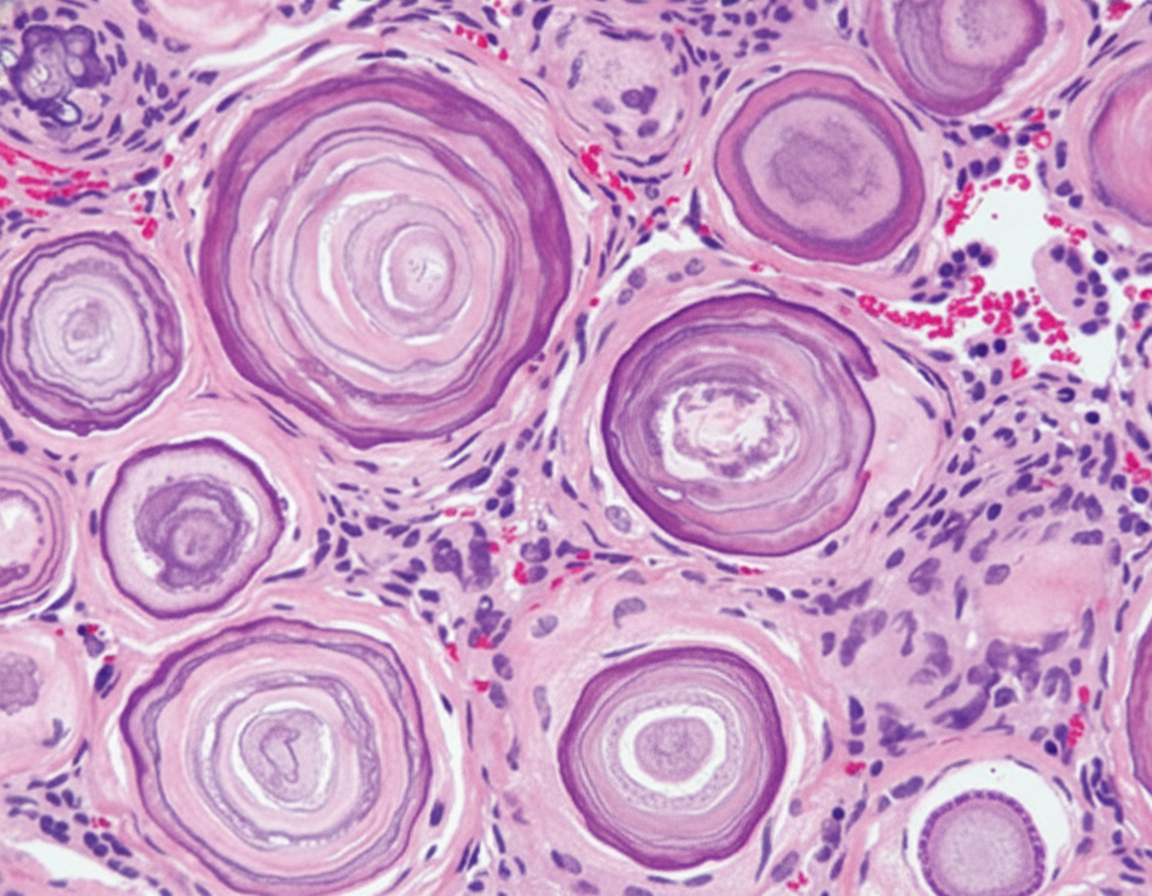
All are true about the brain tumour associated with the below mentioned histopathological findings except:
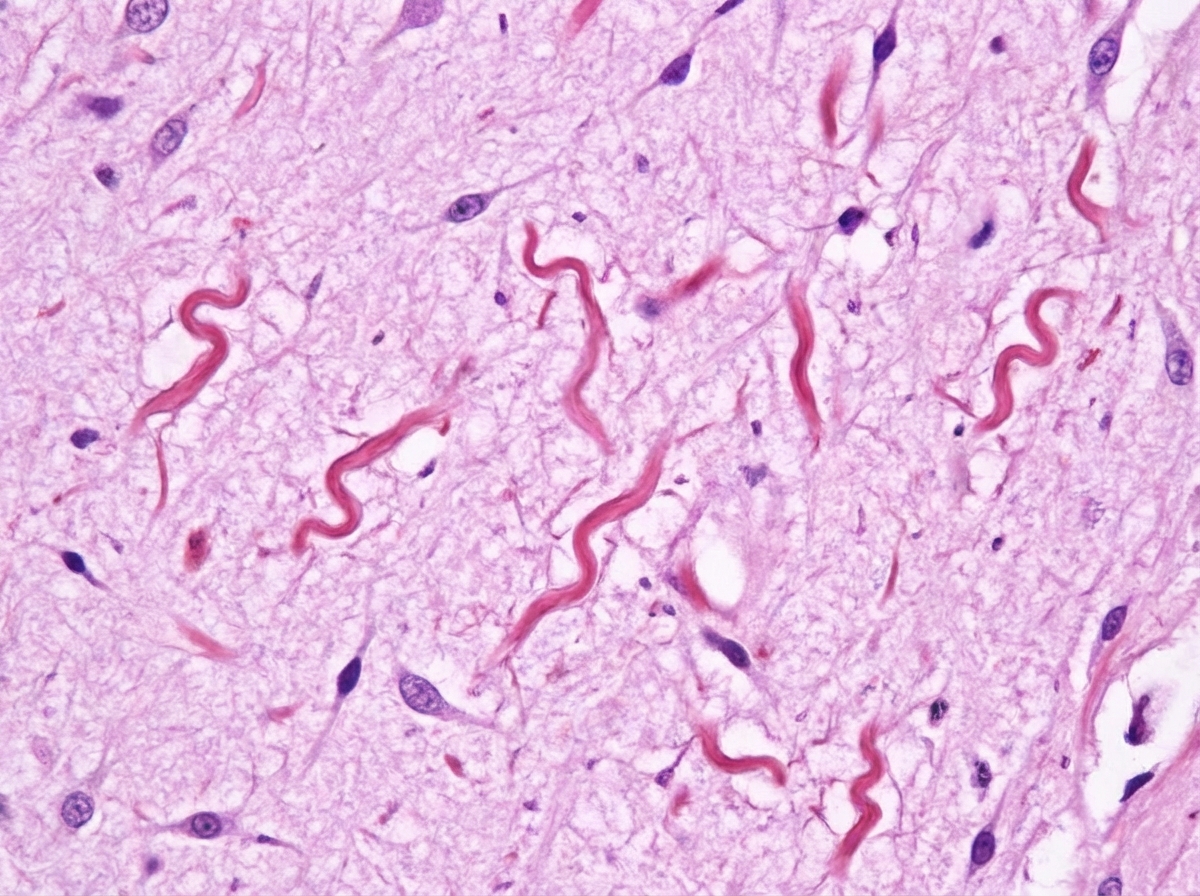
Cork screw inclusion bodies in brain biopsy specimen are seen in:
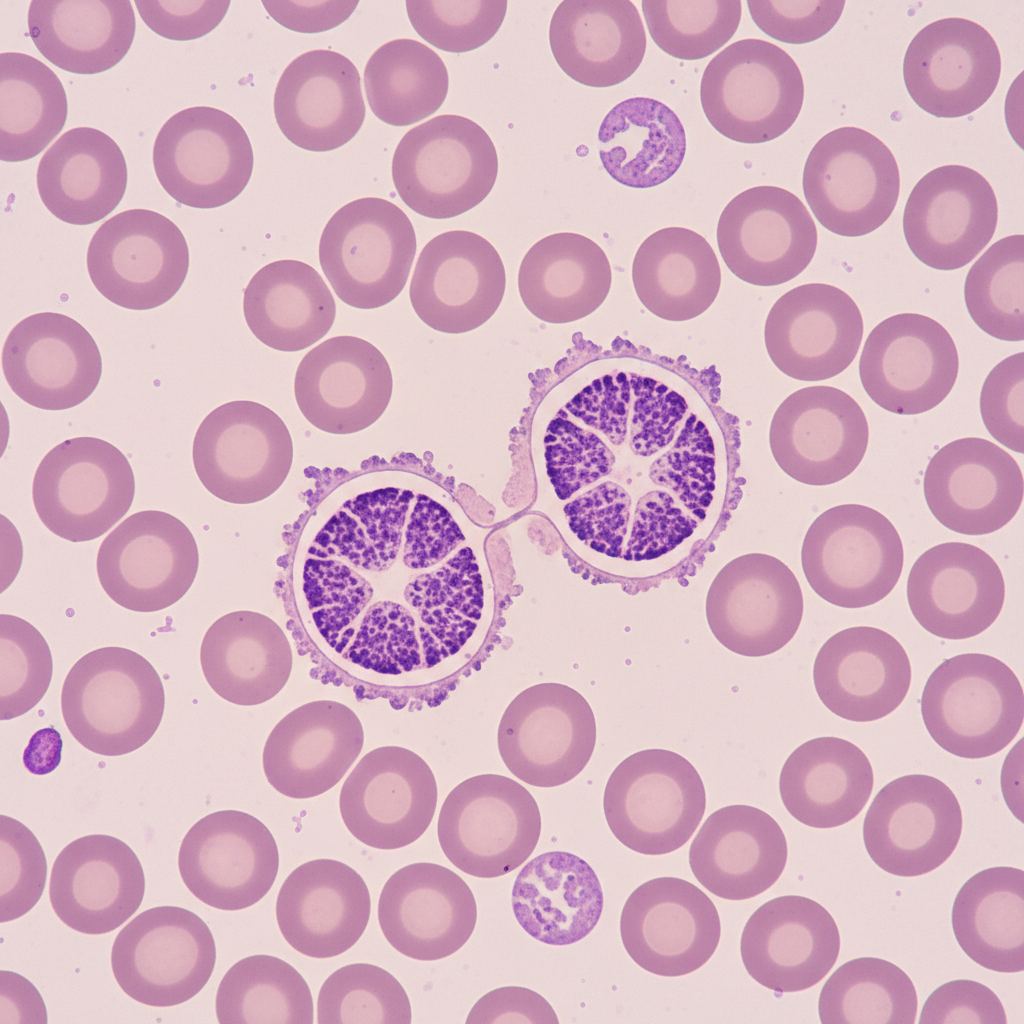
The image shows: (Recent NEET Pattern 2016-17)
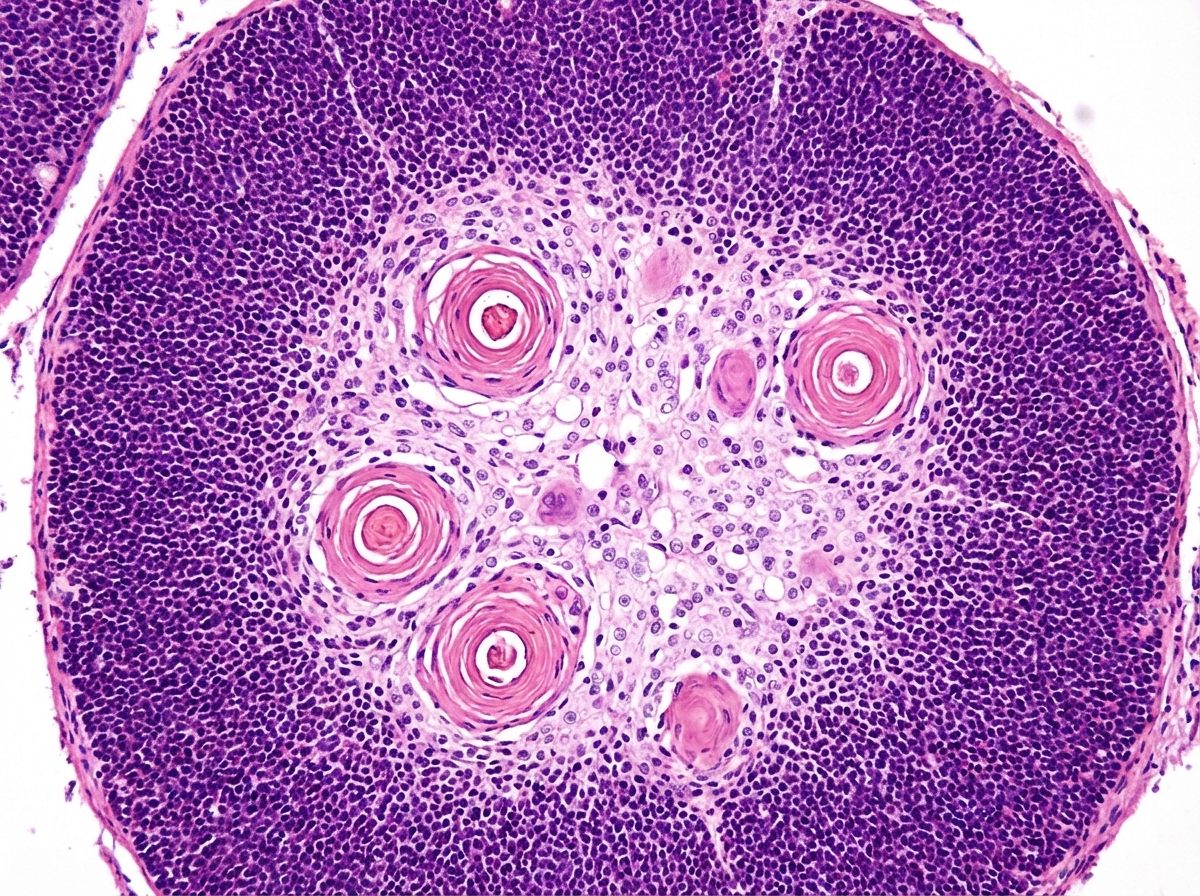
Identify the tissue:

NEET-PG 2017 - Pathology NEET-PG Practice Questions and MCQs
Question 11: All are true about the brain tumour associated with the below mentioned histopathological findings except:
- A. Most frequent cytogenetic abnormality is deletion of 22q
- B. Association with NF-1 (Correct Answer)
- C. Intracranial calcification
- D. Psammoma bodies
- E. Most common extra-axial tumor in adults
Explanation: ***Association with NF-1*** - The histopathological findings described (likely referring to **meningioma** based on the other options) are not typically associated with **Neurofibromatosis type 1 (NF-1)** [1]. - **NF-1** is more commonly linked to **optic nerve gliomas**, neurofibromas, and other peripheral nerve sheath tumors. *Most frequent cytogenetic abnormality is deletion of 22q* - **Deletion of 22q** is the most common cytogenetic abnormality found in **meningiomas** [2]. - This deletion often involves the **NF2 gene**, which is a tumor suppressor gene [2]. *Intracranial calcification* - **Intracranial calcification** is a common finding in **meningiomas**, particularly in older lesions [2]. - These calcifications can be seen on imaging studies like CT scans. *Psammoma bodies* - **Psammoma bodies** are characteristic histological features of **meningiomas**, especially the meningothelial and transitional subtypes [1][2]. - They are concentric, lamellated calcified structures formed from degenerating cells. **References:** [1] Cross SS. Underwood's Pathology: A Clinical Approach. 6th ed. Common Clinical Manifestations Of Central And Peripheral Nervous System Disease, pp. 727-728. [2] Kumar V, Abbas AK, et al.. Robbins and Cotran Pathologic Basis of Disease. 9th ed. The Central Nervous System, pp. 1316-1317.
Question 12: Cork screw inclusion bodies in brain biopsy specimen are seen in:
- A. Medulloblastoma
- B. Pilocytic astrocytoma (Correct Answer)
- C. Ependymoma
- D. Pinealoma
- E. Glioblastoma
Explanation: ***Pilocytic astrocytoma*** - **Rosenthal fibers**, which have a **corkscrew appearance**, are characteristic histological findings in pilocytic astrocytomas. - These are **eosinophilic, elongated, glial inclusions** often found in the processes of tumor cells. - Pilocytic astrocytomas are typically **benign (WHO Grade I)** tumors commonly found in children and young adults. *Medulloblastoma* - Characterized by **small, round blue cells** and a high mitotic index, often forming **Homer-Wright rosettes**. - **Rosenthal fibers** are not typically associated with medulloblastoma. *Ependymoma* - Characterized by **ependymal rosettes** (tumor cells arranged around a central lumen) and **perivascular pseudorosettes** (tumor cells radiating around blood vessels). - Lacks the presence of **corkscrew inclusion bodies (Rosenthal fibers)**. *Pinealoma* - This is a general term for tumors of the pineal gland, which can include pineocytomas and pineoblastomas. - While various histological features can be seen depending on the specific type, **Rosenthal fibers** are not a characteristic finding for these tumors. *Glioblastoma* - The most common malignant primary brain tumor in adults, characterized by **pseudopalisading necrosis** and **microvascular proliferation**. - Histologically shows pleomorphic cells, not the organized **Rosenthal fibers** seen in pilocytic astrocytoma.
Question 13: The image shows: (Recent NEET Pattern 2016-17)
- A. Golgi body
- B. Barr body
- C. Davidson body
- D. Pelger-Huet anomaly (Correct Answer)
- E. Döhle bodies
Explanation: ***Pelger-Huet anomaly*** - The image shows a **neutrophil** with a **bilobed nucleus** (pince-nez appearance) and unusually **coarse chromatin**, which is characteristic of the Pelger-Huët anomaly. - This is a harmless inherited condition where neutrophils fail to segment properly, but their function remains normal. *Golgi body* - The Golgi body (or Golgi apparatus) is an **organelle** found in most eukaryotic cells that is involved in packaging proteins and lipids into vesicles. - It is an intracellular structure and not typically visible as a distinct feature like the one pointed to in a peripheral blood smear. *Barr body* - A Barr body is an **inactivated X chromosome** found in the somatic cells of females. - It appears as a small, dense, dark-staining structure in the periphery of the nucleus, and while it can be confused with a drumstick appendage, the shape in the image is not typical for a Barr body. *Davidson body* - A Davidson body (or drumstick) is a small **drumstick-shaped nuclear appendage** found on the neutrophils of some females, representing the inactive X chromosome. - While it is a nuclear appendage, the structure in the image is more consistent with the characteristic bilobed nucleus of Pelger-Huët anomaly rather than a distinct drumstick appendage. *Döhle bodies* - Döhle bodies are **cytoplasmic inclusions** that appear as pale blue-gray patches in the cytoplasm of neutrophils, representing aggregates of rough endoplasmic reticulum. - They are seen in infections, burns, pregnancy, and toxic states, but the finding in the image is a **nuclear abnormality**, not a cytoplasmic inclusion.
Question 14: Identify the tissue:
- A. Lymph node
- B. Tonsil
- C. Spleen
- D. Thymus (Correct Answer)
- E. Bone marrow
Explanation: ***Thymus*** - The presence of a **cortex** and **medulla**, along with **Hassall's corpuscles** (epithelial reticular cells arranged concentrically), is characteristic of the thymus [1]. - The thymus is responsible for **T-cell maturation** and selection [1]. *Lymph node* - Lymph nodes typically show a distinct **cortex** with lymphoid follicles (B-cell areas) and a **paracortex** (T-cell area), but lack Hassall's corpuscles. - They function in **filtering lymph** and initiating immune responses. *Tonsil* - Tonsils are characterized by **crypts** lined by stratified squamous epithelium and prominent **lymphoid follicles** beneath the epithelium, which are not the primary features here. - They are part of the **Waldeyer's ring** and serve as a first line of defense against inhaled and ingested pathogens. *Spleen* - The spleen has distinct **red pulp** (involved in filtering blood and removing old red blood cells) and **white pulp** (lymphoid areas with periarteriolar lymphoid sheaths and follicles), but does not contain Hassall's corpuscles. - It is a major site for **immune surveillance** and blood filtration. **References:** [1] Kumar V, Abbas AK, et al.. Robbins and Cotran Pathologic Basis of Disease. 9th ed. Diseases of White Blood Cells, Lymph Nodes, Spleen, and Thymus, p. 634.