Anatomy
2 questionsAll investigations are useful in work up of this condition except:

A 2-day-old neonate under phototherapy unit. For exchange transfusion serum bilirubin-albumin ratio should be: (Recent NEET Pattern 2016-17)
NEET-PG 2017 - Anatomy NEET-PG Practice Questions and MCQs
Question 81: All investigations are useful in work up of this condition except:
- A. Urine for meconium particles
- B. Invertogram at 24 hours (Correct Answer)
- C. Ultrasound
- D. Lateral pelvic radiography
Explanation: ***Urine for meconium particles*** - **Urine for meconium particles** is actually a valuable and standard investigation in **anorectal malformations** to detect **rectourinary fistulas**. - The presence of meconium in urine indicates a **communication between the rectum and urinary tract**, which is crucial information for surgical planning and management. *Invertogram at 24 hours* - An **invertogram** is a plain X-ray taken with the infant inverted for 3-5 minutes, allowing gas in the rectum to rise to the highest point. - This helps determine the **level of rectal pouch termination** relative to the **pubococcygeal line**, which is essential for distinguishing between high and low anorectal malformations. *Ultrasound* - **Perineal ultrasound** can assess the **perineal body thickness**, presence of a **rectal pouch**, and help visualize **fistulous connections**. - It is particularly useful in **real-time assessment** of the anatomy and can identify associated **genitourinary anomalies** commonly seen with anorectal malformations. *Lateral pelvic radiography* - A **lateral pelvic radiograph** provides information about the **sacral anatomy** and helps assess the **level of anorectal malformation**. - It is crucial for identifying associated **sacral anomalies** (sacral dysgenesis, hemisacrum) which occur in up to 60% of patients with anorectal malformations and affect surgical outcomes.
Question 82: A 2-day-old neonate under phototherapy unit. For exchange transfusion serum bilirubin-albumin ratio should be: (Recent NEET Pattern 2016-17)
- A. $>3.5$ (Correct Answer)
- B. $<3.5$
- C. $>35$
- D. $<35$
Explanation: ***$>3.5$*** - A **serum bilirubin-albumin ratio greater than 3.5** is a common guideline indicating the need for exchange transfusion in neonates, especially those at high risk or with rapidly rising bilirubin levels. - This ratio helps assess the risk of **bilirubin-induced neurotoxicity (kernicterus)**, as unbound (free) bilirubin can cross the blood-brain barrier [1]. *$<3.5$* - A bilirubin-albumin ratio **less than 3.5** typically suggests a lower risk of neurotoxicity and may indicate that phototherapy is sufficient to manage hyperbilirubinemia [2]. - In such cases, the **binding capacity of albumin** for bilirubin is considered adequate to prevent significant free bilirubin accumulation [1]. *$>35$* - A serum bilirubin-albumin ratio of **greater than 35** would represent an extremely high and clinically improbable value. - Clinically, the bilirubin-albumin ratio is typically used with values in the single digits, making a value of 35 or higher incongruent with standard medical guidelines. *$<35$* - While technically true that $<35$ would include the correct threshold, it is not sufficiently specific to denote the critical value for exchange transfusion. - This range is too broad and does not pinpoint the specific bilirubin-albumin ratio that prompts intervention.
Internal Medicine
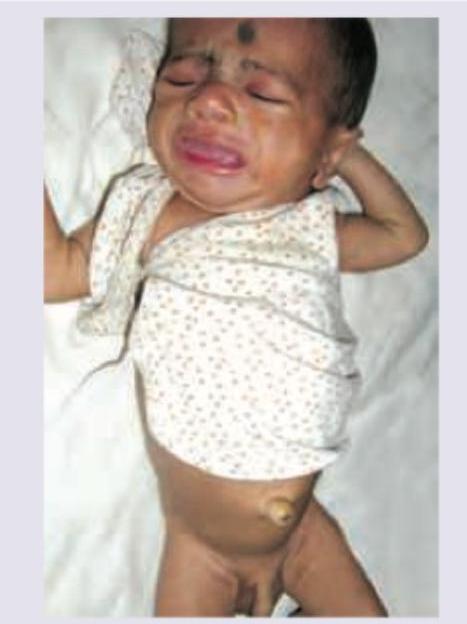
1 questionsWhich of the following infections in most commonly seen in this transfusion dependant child shown below?

NEET-PG 2017 - Internal Medicine NEET-PG Practice Questions and MCQs
Question 81: Which of the following infections in most commonly seen in this transfusion dependant child shown below?
- A. Listeria monocytogenes
- B. Yersinia enterocolitica (Correct Answer)
- C. Acinetobacter
- D. Pneumococcus
Explanation: ***Yersinia enterocolitica*** - Transfusion-dependent patients, especially those with **iron overload** (common in thalassemia), are particularly susceptible to **Yersinia enterocolitica** infections because *Yersinia* thrives in iron-rich environments. - The image shows a child with marked hepatosplenomegaly (outlined on the abdomen), which is characteristic of conditions leading to transfusion dependence and subsequent iron overload, such as **thalassemia major**. *Listeria monocytogenes* - While *Listeria* can cause serious infections, particularly in immunocompromised individuals and neonates, its association with **iron overload** from transfusions is not as prominent as *Yersinia*. - **Listeriosis** typically presents as meningitis, sepsis, or febrile gastroenteritis. *Acinetobacter* - *Acinetobacter* species are often associated with **nosocomial infections**, affecting critically ill or immunocompromised patients in hospital settings, but not specifically linked to iron overload or transfusion dependence as a primary risk factor like *Yersinia*. - Infections commonly include pneumonia, urinary tract infections, and wound infections. *Pneumococcus* - **Pneumococcal infections** are common in children, especially those with asplenia or functional asplenia (which can occur in thalassemia due to splenic sequestration), but a direct link to **transfusion-associated iron overload** as a specific risk factor for severe pneumococcal disease is not the primary association like *Yersinia*. - These infections typically manifest as pneumonia, meningitis, and otitis media.
Pathology
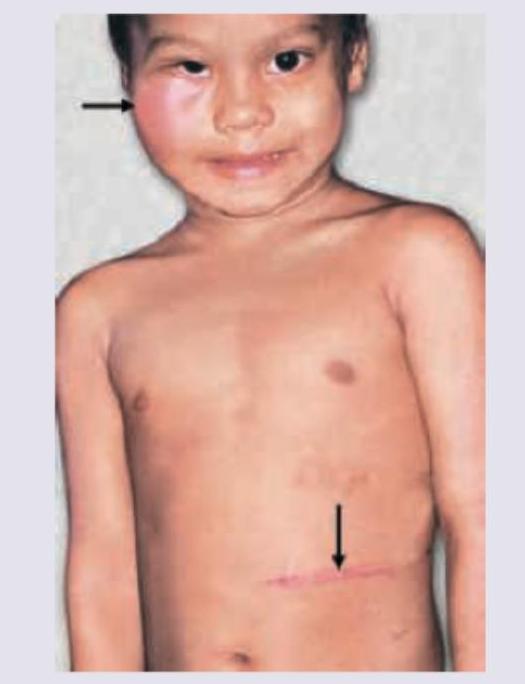
1 questionsA 3-year-old child has presented with abdominal lump and peculiar appearance of eyes. All genes are responsible for development of this condition except:
NEET-PG 2017 - Pathology NEET-PG Practice Questions and MCQs
Question 81: A 3-year-old child has presented with abdominal lump and peculiar appearance of eyes. All genes are responsible for development of this condition except:
- A. WT1
- B. P53
- C. Beta-catenin
- D. K-ras gene (Correct Answer)
Explanation: ***K-ras gene*** - The K-ras gene is an **oncogene** commonly associated with various adult cancers, such as pancreatic and colorectal cancer, but it is **not typically implicated** in the development of Wilms tumor or retinoblastoma. - While K-ras mutations can drive cell proliferation, they are not a characteristic genetic alteration in the syndrome suggested by the child's presentation. *WT1* - The **WT1 gene** is a **tumor suppressor gene** whose inactivation is directly linked to the development of **Wilms tumor**, a common pediatric kidney cancer presenting as an abdominal lump [1], [2]. - Mutations in WT1 are also associated with **WAGR syndrome** (Wilms tumor, Aniridia, Genitourinary anomalies, and intellectual disability), which explains the "peculiar appearance of eyes" (aniridia) [1]. *P53* - The **P53 tumor suppressor gene** (also known as TP53) is a master regulator of the cell cycle and apoptosis [3]. - Mutations in p53 are associated with **Li-Fraumeni syndrome**, which increases the risk of various cancers, including Wilms tumor and osteosarcoma, although it's less specific to the eye abnormalities seen here. *Beta-catenin* - **Beta-catenin** (encoded by the CTNNB1 gene) is involved in various cellular processes, including cell adhesion and **Wnt signaling pathway** [3]. - Mutations in beta-catenin, particularly oncogenic activation, have been found in a subset of **Wilms tumors**, contributing to their development and progression. **References:** [1] Kumar V, Abbas AK, et al.. Robbins and Cotran Pathologic Basis of Disease. 9th ed. Diseases of Infancy and Childhood, pp. 487-488. [2] Cross SS. Underwood's Pathology: A Clinical Approach. 6th ed. (Basic Pathology) introduces the student to key general principles of pathology, both as a medical science and as a clinical activity with a vital role in patient care. Part 2 (Disease Mechanisms) provides fundamental knowledge about the cellular and molecular processes involved in diseases, providing the rationale for their treatment. Part 3 (Systematic Pathology) deals in detail with specific diseases, with emphasis on the clinically important aspects., pp. 211-212. [3] Kumar V, Abbas AK, et al.. Robbins and Cotran Pathologic Basis of Disease. 9th ed. Neoplasia, pp. 305-306.
Pediatrics
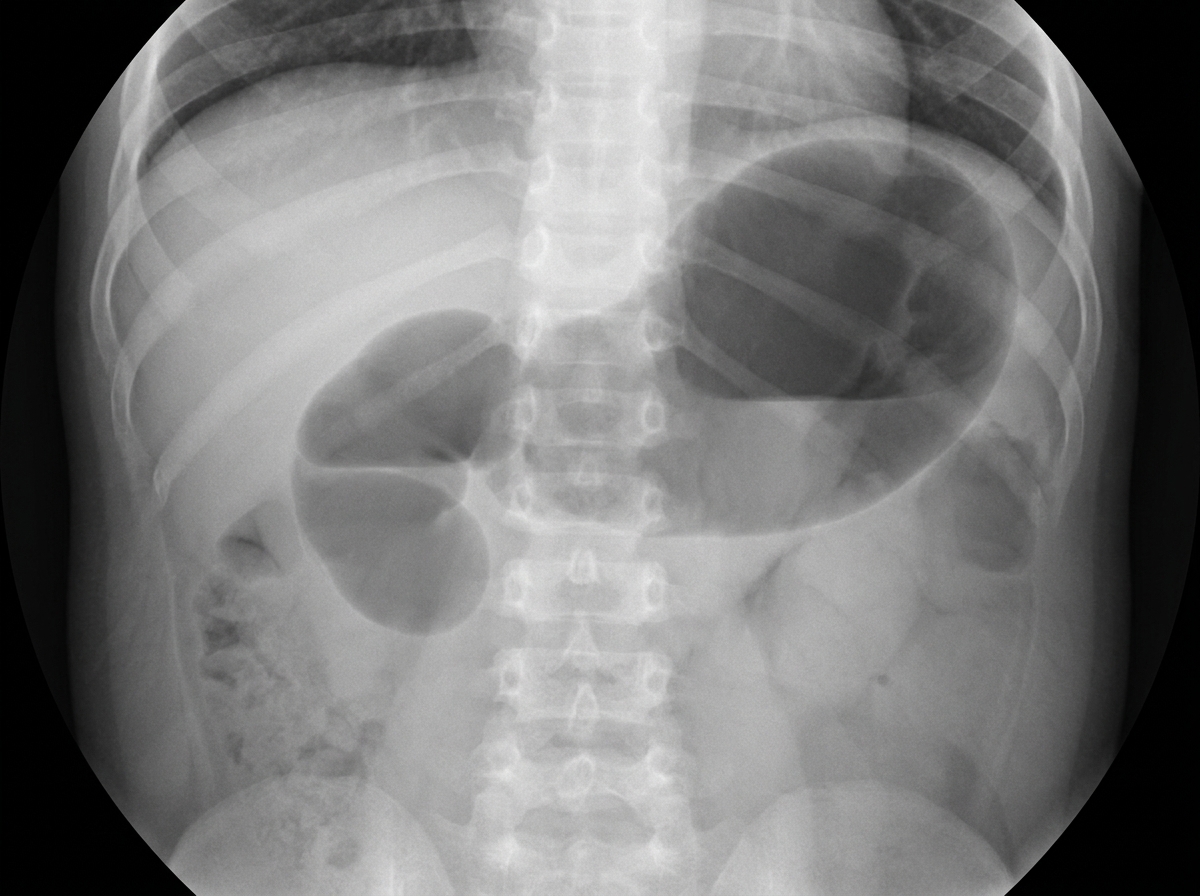
5 questionsChild has not passed stool by 2nd day of life. X-Ray study done shows:

A neonate presents with the clinical features shown in the image below. What is the most likely diagnosis?

A newborn presents with macrosomia, plethoric appearance, and generalized edema. The image shows:

All are true about the swelling on scalp of a 2-day old neonate except: (Recent NEET Pattern 2016-17)

Which of the following interventions is being done in this neonate?

NEET-PG 2017 - Pediatrics NEET-PG Practice Questions and MCQs
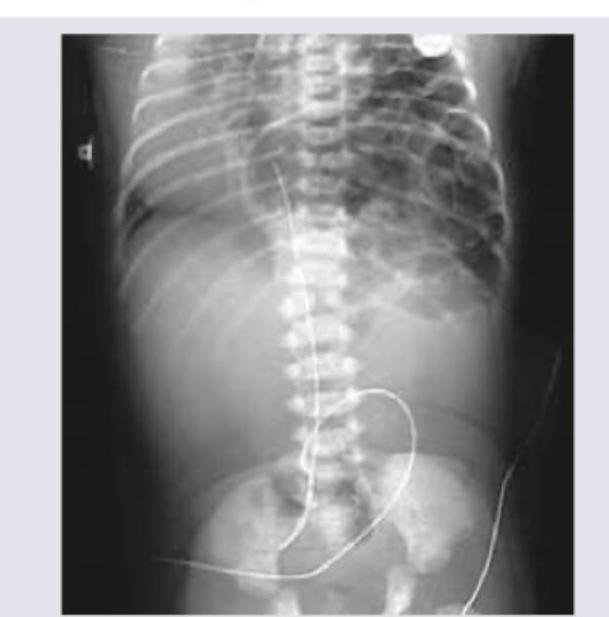
Question 81: Child has not passed stool by 2nd day of life. X-Ray study done shows:
- A. Cystic fibrosis
- B. Duodenal atresia (Correct Answer)
- C. CHPS
- D. Anorectal malformation
Explanation: ***Duodenal atresia*** - The abdominal X-ray images display the classic **"double bubble sign"**, which is highly characteristic of duodenal atresia. This sign consists of two distinct air-filled loops, one representing the distended stomach and the other the dilated proximal duodenum, with no distal gas. - The clinical presentation of a neonate not passing stool by the second day of life, combined with the characteristic radiological findings, points directly to an **upper gastrointestinal obstruction** like duodenal atresia. *Cystic fibrosis* - While cystic fibrosis can cause **meconium ileus** leading to intestinal obstruction in newborns, it typically presents with diffuse intestinal distension rather than the localized "double bubble" pattern. - Meconium ileus on X-ray would show numerous dilated loops of small bowel with a **"ground-glass" appearance** due to trapped meconium, not the distinct two bubbles seen here. *CHPS* - **Congenital hypertrophic pyloric stenosis (CHPS)** typically manifests later, between 3-6 weeks of age, with projectile non-bilious vomiting, not as early as the second day of life with findings of intestinal obstruction on X-ray. - The X-ray findings in CHPS would show a **distended stomach but without the second bubble** representing a dilated duodenum often seen in duodenal atresia. *Anorectal malformation* - **Anorectal malformations** are lower gastrointestinal obstructions, meaning a significant portion of the bowel would be distended with gas, and the X-ray would not show the isolated "double bubble" sign. - Diagnosis is often made by physical examination demonstrating an **imperforate anus** or abnormal anal opening, in conjunction with plain abdominal radiographs that would show distal intestinal obstruction.
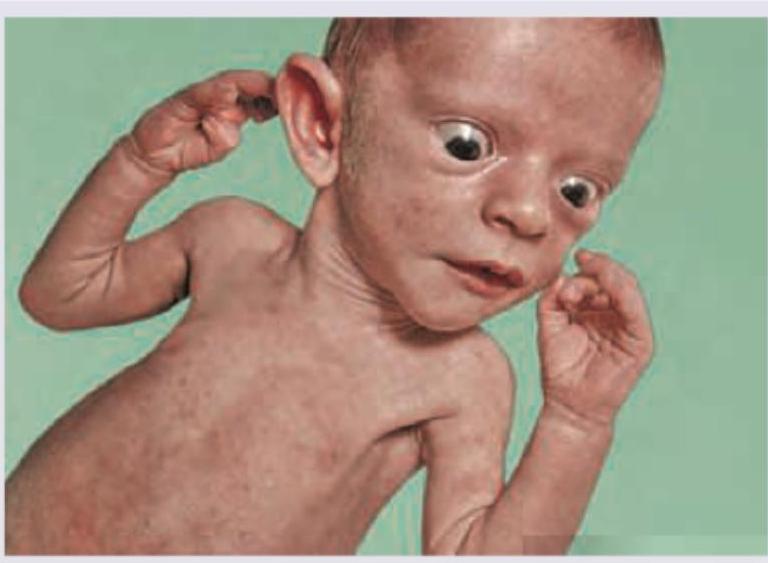
Question 82: A neonate presents with the clinical features shown in the image below. What is the most likely diagnosis?
- A. Down syndrome
- B. Congenital hypothyroidism (Correct Answer)
- C. Ellis-Van Creveld syndrome
- D. Turner syndrome
Explanation: ***Congenital hypothyroidism*** - The image shows a neonate with **macroglossia** (large tongue), **umbilical hernia**, and possibly **puffy eyelids** and **dull facies**, all characteristic signs of congenital hypothyroidism. - Other features often include **hypotonia**, **feeding difficulties**, **prolonged jaundice**, and **constipation**. *Down syndrome* - While Down syndrome can present with **hypotonia** and some shared features, the characteristic **epicanthal folds**, **simian crease**, **brushfield spots**, and flattened facial profile are not clearly evident. - Macroglossia is common but other features like an umbilical hernia would be less specific. *Ellis-Van Creveld syndrome* - This syndrome is characterized by **chondroectodermal dysplasia**, typically presenting with **polydactyly**, **short-limbed dwarfism**, **nail dysplasia**, and **cardiac defects**. - These distinct skeletal and ectodermal abnormalities are not visible in the presented image. *Turner syndrome* - Turner syndrome (XO karyotype) primarily affects females and is characterized by **short stature**, **webbed neck**, **lymphedema of hands and feet**, and **cardiac anomalies** (e.g., coarctation of the aorta). - The features shown in the image, such as macroglossia and umbilical hernia, are not typical of Turner syndrome.
Question 83: A newborn presents with macrosomia, plethoric appearance, and generalized edema. The image shows:
- A. Infant of diabetic mother (Correct Answer)
- B. Achondroplasia
- C. Hemi-hypertrophy
- D. Albright hereditary osteodystrophy
Explanation: ***Infant of diabetic mother*** - The image shows a **macrosomic** infant with a **plethoric appearance**, generalized **edema**, and a **"cherubic" facial appearance** with a prominent philtrum and perioral cyanosis, all characteristic features of an infant of a diabetic mother. - Maternal diabetes leads to fetal **hyperinsulinemia**, resulting in increased fat deposition, organomegaly, and altered growth patterns. *Achondroplasia* - Achondroplasia is characterized by **proximal limb shortening** (rhizomelia), a large head with a prominent forehead, and a flattened nasal bridge. - The pictured infant does not show these specific skeletal dysplasias. *Hemi-hypertrophy* - Hemi-hypertrophy involves **asymmetric growth**, where one side or part of the body is significantly larger than the other. - The infant in the image exhibits generalized, symmetrical macrosomia rather than unilateral overgrowth. *Albright hereditary osteodystrophy* - Albright hereditary osteodystrophy is a genetic disorder associated with short stature, **obesity**, brachydactyly (short digits), and typically presents with features related to **pseudohypoparathyroidism** (e.g., hypocalcemia, hyperphosphatemia). - The characteristic findings of this syndrome, such as brachydactyly, are not evident in the image.
Question 84: All are true about the swelling on scalp of a 2-day old neonate except: (Recent NEET Pattern 2016-17)
- A. Heals from periphery (Correct Answer)
- B. Can lead to prolongation of physiological Jaundice
- C. Painless
- D. Sub-periosteal bleeding with gradual hardening
Explanation: ***Heals from periphery*** - This is the **INCORRECT statement** about cephalohematoma in a neonate - Cephalohematomas do NOT heal from the periphery like a skin wound - Instead, the blood clot gradually **liquefies and is reabsorbed** over weeks to months (typically 2-3 months) - Resorption occurs uniformly or may even start centrally, not from the edges - This is the **exception** among the given statements *Sub-periosteal bleeding with gradual hardening* - This accurately describes **cephalohematoma**, a common birth injury - It is a **subperiosteal collection of blood** confined by suture lines - The blood undergoes **organization and calcification** over time, leading to gradual hardening - A bony rim may be palpable at the edges after 2-3 weeks *Can lead to prolongation of physiological Jaundice* - Breakdown of red blood cells within the cephalohematoma releases **bilirubin** - This increased bilirubin load can contribute to **prolonged physiological jaundice** - The large blood collection acts as an extravascular source of bilirubin *Painless* - Cephalohematoma is generally **painless** to touch for the neonate - Unlike caput succedaneum or infections, the blood collection does not cause acute pain - The swelling may appear large but is not tender
Question 85: Which of the following interventions is being done in this neonate?
- A. Nasal CPAP and orogastric tube to decompress stomach (Correct Answer)
- B. Positive pressure ventilation and NG tube to decompress stomach
- C. Surfactant therapy and NG tube to decompress stomach
- D. Oxygen hood
Explanation: ***Nasal CPAP and orogastric tube to decompress stomach*** - The image shows a neonate with a device inserted into the nostrils for **nasal continuous positive airway pressure (nCPAP)**, used to support breathing. - Additionally, a tube is visible in the neonate's mouth leading to the stomach, which is an **orogastric (OG) tube** used for feeding or stomach decompression, especially important when using CPAP as air can be swallowed. *Positive pressure ventilation and NG tube to decompress stomach* - This option refers to positive pressure ventilation, which typically involves an **endotracheal tube** or mask/bag, neither of which is clearly depicted as the primary respiratory support. - An **NG tube (nasogastric tube)** would be inserted through the nose, but the tube shown for gastric access is in the mouth (orogastric). *Surfactant therapy and NG tube to decompress stomach* - **Surfactant therapy** is administered directly into the lungs, usually via an endotracheal tube, and is not a visible intervention in the image itself. - As noted previously, the tube for gastric decompression appears to be **orogastric**, not nasogastric. *Oxygen hood* - An **oxygen hood** is a clear plastic dome placed over the neonate's head to deliver oxygen, which is not what is shown in the image. - The visible tubes are for respiratory support and gastric access, indicating a more direct and invasive form of intervention than an oxygen hood.
Radiology
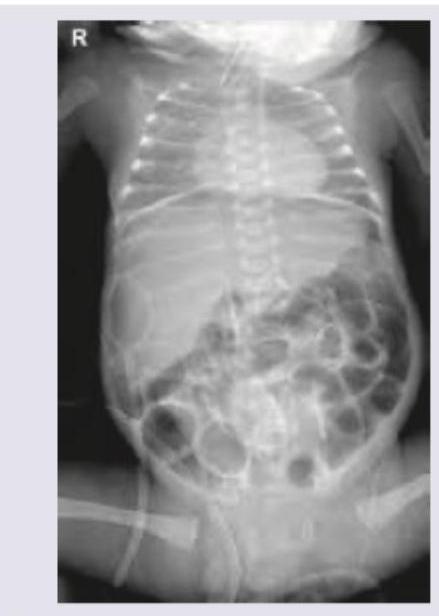
1 questionsIdentify the condition on the basis of infantogram shown in the image:

NEET-PG 2017 - Radiology NEET-PG Practice Questions and MCQs
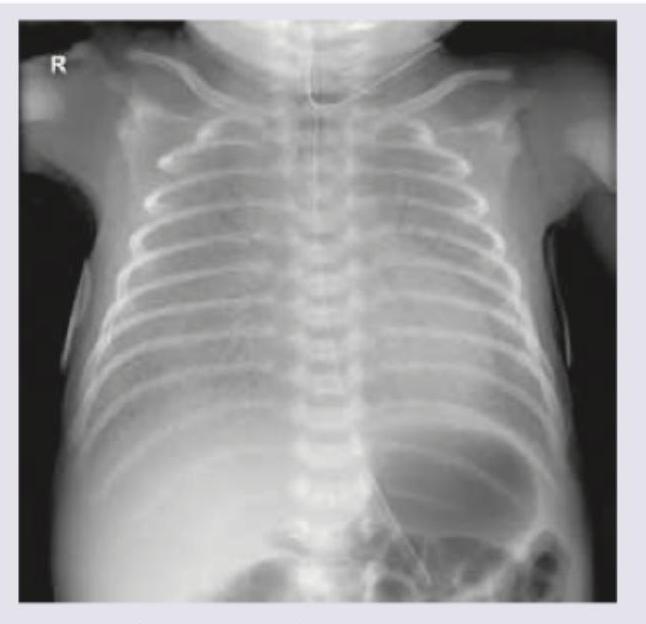
Question 81: Identify the condition on the basis of infantogram shown in the image:
- A. Congenital diaphragmatic hernia (Correct Answer)
- B. Cystic adenomatoid malformation
- C. Pneumomediastinum
- D. Congenital lobar emphysema
Explanation: ***Congenital diaphragmatic hernia*** - The infantogram shows loops of **bowel within the thoracic cavity**, displacing the heart and mediastinum. - This classic appearance, with visible **gas-filled loops** in the chest, is characteristic of a congenital diaphragmatic hernia, typically on the left side (Bochdalek hernia). *Cystic adenomatoid malformation* - This condition involves an abnormal growth of lung tissue forming **cysts**; these cysts typically appear as discrete radiolucencies or a solid mass within the lung. - Unlike in the image, it does not typically show distinct **bowel loops in the chest cavity**. *Pneumomediastinum* - This condition is characterized by air in the **mediastinum**, which would appear as lucency outlining the mediastinal structures, such as the heart and great vessels. - It does not involve the presence of **abdominal contents** within the chest cavity. *Congenital lobar emphysema* - This condition presents with **hyperinflation of a single lobe** (usually left upper lobe) causing mass effect and mediastinal shift. - It appears as a hyperlucent, overexpanded lobe, but does not show **bowel gas pattern** or abdominal contents in the thorax.