Dermatology
1 questionsA 45-year-old Ulcerative colitis patient presents with multiple painful lesions on both legs. What is the diagnosis?

NEET-PG 2017 - Dermatology NEET-PG Practice Questions and MCQs
Question 61: A 45-year-old Ulcerative colitis patient presents with multiple painful lesions on both legs. What is the diagnosis?
- A. Pyoderma gangrenosum (Correct Answer)
- B. Febrile neutropenic dermatosis
- C. Necrotizing fasciitis
- D. Granulomatosis with polyangiitis
Explanation: ***Pyoderma gangrenosum*** - This patient has **ulcerative colitis**, which is strongly associated with **pyoderma gangrenosum**, a neutrophilic dermatosis. - The image shows characteristic **painful, rapidly expanding ulcers** with violaceous, undermined borders, typical of pyoderma gangrenosum. *Febrile neutropenic dermatosis* - This condition (also known as **Sweet syndrome**) occurs in patients with **neutropenia** and **fever**, presenting with painful erythematous plaques or nodules. - While systemic illness like ulcerative colitis can predispose to skin conditions, the specific presentation and lack of mentioned neutropenia make this less likely. *Necrotizing fasciitis* - **Necrotizing fasciitis** is a rapidly progressive, life-threatening infection of the deep fascia and subcutaneous tissue, typically presenting with severe pain, erythema, swelling, and crepitus. - The lesions in the image appear to be chronic ulcers with specific borders rather than acute, rapidly spreading infection of necrotizing fasciitis. *Granulomatosis with polyangiitis* - Also known as **Granulomatosis with polyangiitis (GPA)**, formerly **Wegener's granulomatosis**, this is an autoimmune vasculitis primarily affecting the respiratory tract and kidneys, and can cause skin lesions such as palpable purpura, nodules, or ulcers. - While skin lesions can occur, the characteristic features of **pyoderma gangrenosum** and its strong association with inflammatory bowel disease make it a more probable diagnosis in this context.
General Medicine
3 questionsA 55-year-old diabetic patient develops sudden onset hemiparesis and facial asymmetry. NCCT scan shows:

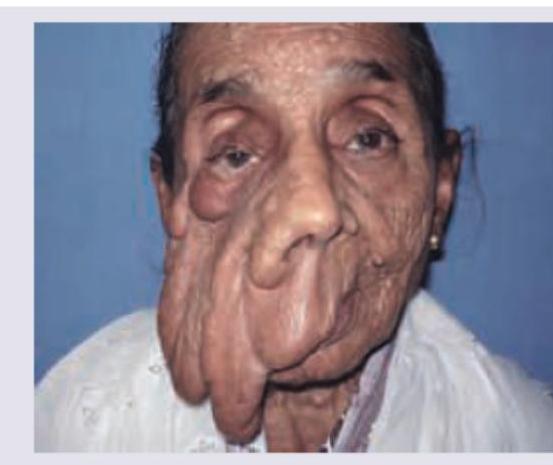
A 35-year-old woman presents with breathlessness at rest. She also complains of a skin lesion on nose which has increased in size for last 6 months. What is the diagnosis?

All are causes of following tongue appearance except: (Recent NEET Pattem 2016-17)

NEET-PG 2017 - General Medicine NEET-PG Practice Questions and MCQs
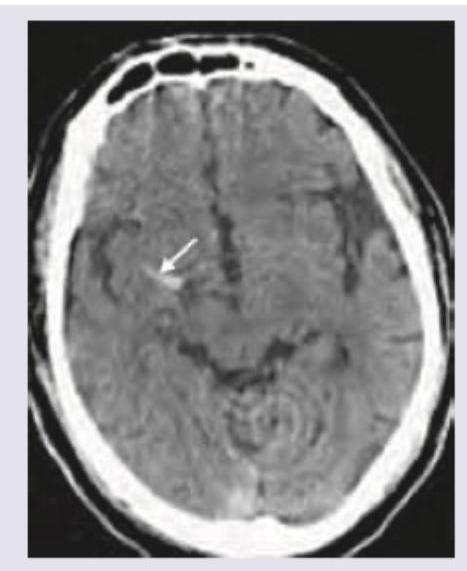
Question 61: A 55-year-old diabetic patient develops sudden onset hemiparesis and facial asymmetry. NCCT scan shows:
- A. Hyperdense MCA sign (Correct Answer)
- B. Cystic encephalomalacia
- C. Subarachnoid hemorrhage
- D. Lobar hemorrhage
Explanation: ***Hyperdense MCA sign*** - The image exhibits a **bright (hyperdense) area** within the Sylvian fissure, indicated by the white arrow, representing a **thrombus occluding the middle cerebral artery (MCA)**. This is a direct sign of acute **ischemic stroke**. - Clinical presentation of sudden onset hemiparesis and facial asymmetry in a diabetic patient strongly suggests an **ischemic stroke**, and the hyperdense MCA sign on NCCT confirms a proximal vessel occlusion. *Cystic encephalomalacia* - This refers to the **end stage of an infarct**, where brain tissue is replaced by **CSF-filled cysts** and gliosis, appearing as hypodense areas. - This finding would indicate an **old stroke**, not an acute event causing sudden neurological deficits. *Subarachnoid hemorrhage* - This condition involves **blood in the subarachnoid space**, appearing as hyperdensity within the **sulci and basal cisterns**. - While it features hyperdensity, the location in the image (within the Sylvian fissure, consistent with MCA) and the patient's symptoms are not typical for isolated subarachnoid hemorrhage. *Lobar hemorrhage* - A lobar hemorrhage is an **intraparenchymal bleed** within a lobe of the brain, appearing as a **focal, well-defined hyperdense lesion within the brain parenchyma**. - The hyperdensity in the image is linear and located within a vascular structure, consistent with an occluded vessel rather than a parenchymal bleed.
Question 62: A 35-year-old woman presents with breathlessness at rest. She also complains of a skin lesion on nose which has increased in size for last 6 months. What is the diagnosis?
- A. Sarcoidosis (Correct Answer)
- B. Phakomatosis
- C. Pulmonary lymphagiomatosis
- D. DRESS syndrome
Explanation: ***Sarcoidosis*** - Sarcoidosis is a multisystem **granulomatous disease** that commonly involves the lungs (causing **breathlessness**) and skin (manifesting as **lesions on the nose**, such as lupus pernio). The chest X-ray likely shows lung involvement like **bilateral hilar lymphadenopathy** or interstitial infiltrates. - The combination of **pulmonary symptoms** and characteristic **skin lesions** in a young to middle-aged adult is highly suggestive of sarcoidosis. *Phakomatosis* - Phakomatoses are a group of syndromes characterized by tumors or malformations of the skin, nervous system, and sometimes other organs. - While they can have skin lesions (e.g., neurofibromas, angiomas) and sometimes central nervous system or visceral involvement, **breathlessness is not a primary or typical presenting symptom**, and their CXR findings are usually normal unless there is specific lung involvement not characteristic of sarcoidosis. *Pulmonary lymphangiomatosis* - Pulmonary lymphangiomatosis is a rare, benign disease involving the proliferation of **lymphatic vessels** within the lung parenchyma, mediastinum, and pleura. - While it can cause breathlessness, **skin lesions on the nose are not a feature** of this condition, making it an unlikely diagnosis in this clinical context. *DRESS syndrome* - **DRESS (Drug Rash with Eosinophilia and Systemic Symptoms) syndrome** is a severe adverse drug reaction characterized by a widespread skin rash, fever, eosinophilia, and internal organ involvement (e.g., liver, kidneys). - While it presents with a skin lesion and systemic symptoms, the **onset is usually acute** following drug exposure, and the skin lesion on the nose described as increasing in size over 6 months is not typical for DRESS. Additionally, the pulmonary involvement differs from granulomatous disease.
Question 63: All are causes of following tongue appearance except: (Recent NEET Pattem 2016-17)
- A. Melkersson-Rosenthal syndrome
- B. Down syndrome
- C. Genetic basis
- D. HIV (Correct Answer)
Explanation: ***HIV*** - The image shows a **fissured tongue**, which is characterized by **grooves and furrows** on the dorsal surface of the tongue. - While other conditions can cause a fissured tongue, **HIV** itself is *not* considered a direct cause of this specific tongue morphology. Oral manifestations of HIV typically include **candidiasis**, **hairy leukoplakia**, or Kaposi's sarcoma. *Melkersson-Rosenthal syndrome* - This syndrome is characterized by a triad of **relapsing facial paralysis**, **persistent orofacial swelling**, and a **fissured tongue**. - Therefore, a fissured tongue is a recognized clinical feature of Melkersson-Rosenthal syndrome. *Down syndrome* - Individuals with Down syndrome (Trisomy 21) frequently present with various oral manifestations, including a **fissured tongue** (also known as scrotal tongue or plicated tongue). - This is a common and characteristic finding in this genetic condition. *Genetic basis* - A **fissured tongue** can have a **genetic predisposition** and may occur as an isolated familial trait. - It can be inherited as an **autosomal dominant trait** and is often seen without any associated syndromic conditions.
Internal Medicine
2 questionsA patient presents with GCS of 7 with nuchal rigidity and bloody CSF. Which is incorrect regarding this condition? (Recent NEET Pattern 2016-17)

A patient of swine flu has developed severe respiratory distress. Which of the following findings confirm the diagnosis of ARDS in this patient?
NEET-PG 2017 - Internal Medicine NEET-PG Practice Questions and MCQs
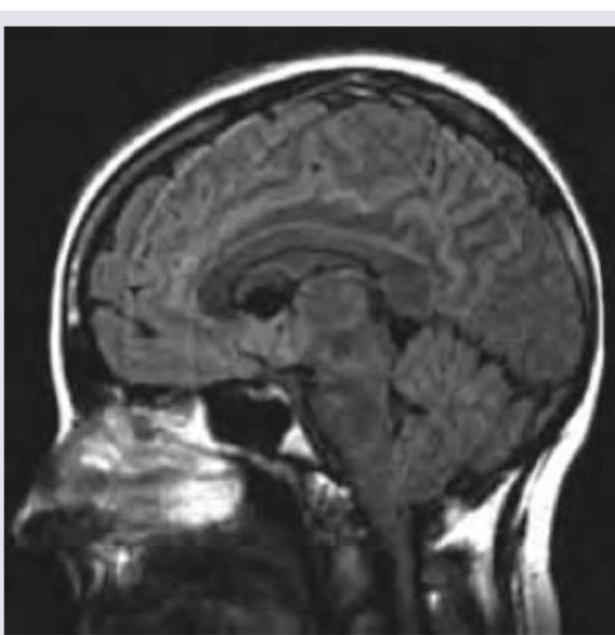
Question 61: A patient presents with GCS of 7 with nuchal rigidity and bloody CSF. Which is incorrect regarding this condition? (Recent NEET Pattern 2016-17)
- A. Blood in sylvian fissure
- B. Seizures
- C. Intraventricular extension
- D. IV ceftriaxone (Correct Answer)
Explanation: **IV ceftriaxone** - The clinical presentation of **GCS of 7**, **nuchal rigidity**, and **bloody CSF** is highly suggestive of a **subarachnoid hemorrhage (SAH)**, not a bacterial infection like meningitis. - **Ceftriaxone** is an antibiotic commonly used to treat bacterial meningitis, which is not indicated here as the primary issue is hemorrhage, not infection. *Blood in sylvian fissure* - **Blood in the sylvian fissure** is a common finding in **subarachnoid hemorrhage**, as this area contains major cerebral arteries susceptible to aneurysm rupture. - CT scans often show hyperdense (bright) blood within the sulci and cisterns, including the sylvian fissure. *Seizures* - **Seizures** are a relatively common complication of **subarachnoid hemorrhage**, especially in the acute phase due to blood irritating the cerebral cortex. - They can occur in up to 10-20% of SAH patients and are a significant predictor of poorer outcomes. *Intraventricular extension* - **Intraventricular extension** of blood indicates a more severe hemorrhage and is often associated with a worse prognosis in **subarachnoid hemorrhage**. - The presence of blood within the ventricles can lead to **hydrocephalus** and increased intracranial pressure.
Question 62: A patient of swine flu has developed severe respiratory distress. Which of the following findings confirm the diagnosis of ARDS in this patient?
- A. PaO₂/FiO₂ ratio < 200 and PCWP > 18 mm Hg
- B. PaO₂/FiO₂ ratio < 400 and PCWP > 18 mm Hg
- C. PaO₂/FiO₂ ratio < 100 and PCWP < 18 mm Hg
- D. PaO₂/FiO₂ ratio < 300 and PCWP < 18 mm Hg (Correct Answer)
Explanation: PaO₂/FiO₂ ratio < 300 and PCWP < 18 mm Hg - According to the Berlin definition of ARDS, a PaO₂/FiO₂ ratio less than 300 mmHg indicates impaired gas exchange [1]. - A pulmonary capillary wedge pressure (PCWP) less than 18 mmHg rules out cardiogenic pulmonary edema as the primary cause of respiratory distress, which is essential to diagnose ARDS [1]. PaO₂/FiO₂ ratio < 200 and PCWP > 18 mm Hg - A PaO₂/FiO₂ ratio less than 200 mmHg would indicate severe ARDS, but the elevated PCWP > 18 mm Hg suggests that the primary issue is cardiogenic pulmonary edema, not ARDS. - In ARDS, the problem is non-cardiogenic pulmonary edema secondary to capillary leakage in the lungs, thus a low PCWP is a diagnostic criterion [1]. PaO₂/FiO₂ ratio < 400 and PCWP > 18 mm Hg - A PaO₂/FiO₂ ratio less than 400 mmHg is not a specific criterion for ARDS; the cutoff is 300 mmHg. - An elevated PCWP > 18 mm Hg indicates fluid overload due to cardiac dysfunction, which points away from ARDS. PaO₂/FiO₂ ratio < 100 and PCWP < 18 mm Hg - While a PaO₂/FiO₂ ratio less than 100 mmHg indicates profound hypoxemia consistent with severe ARDS, the diagnosis of ARDS is made at a ratio of < 300 mmHg. - This option describes a very severe form of ARDS but the key diagnostic cutoff for ARDS is < 300 mmHg, not specifically less than 100 mmHg for the confirmation of ARDS per the Berlin definition.
Pathology
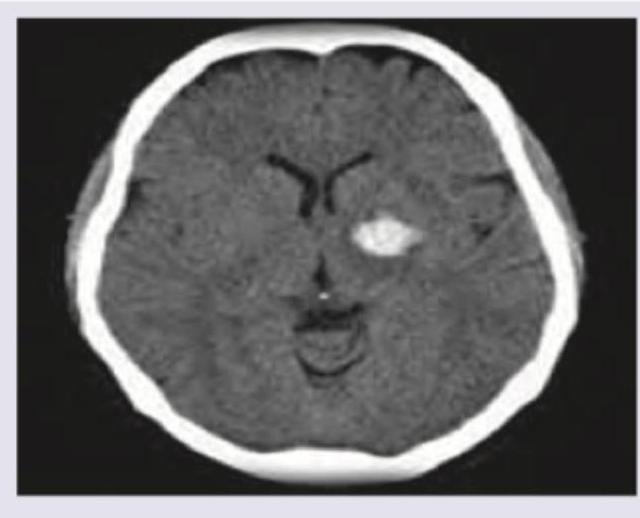
1 questionsWhat is the correct diagnosis based on the image shown below?

NEET-PG 2017 - Pathology NEET-PG Practice Questions and MCQs
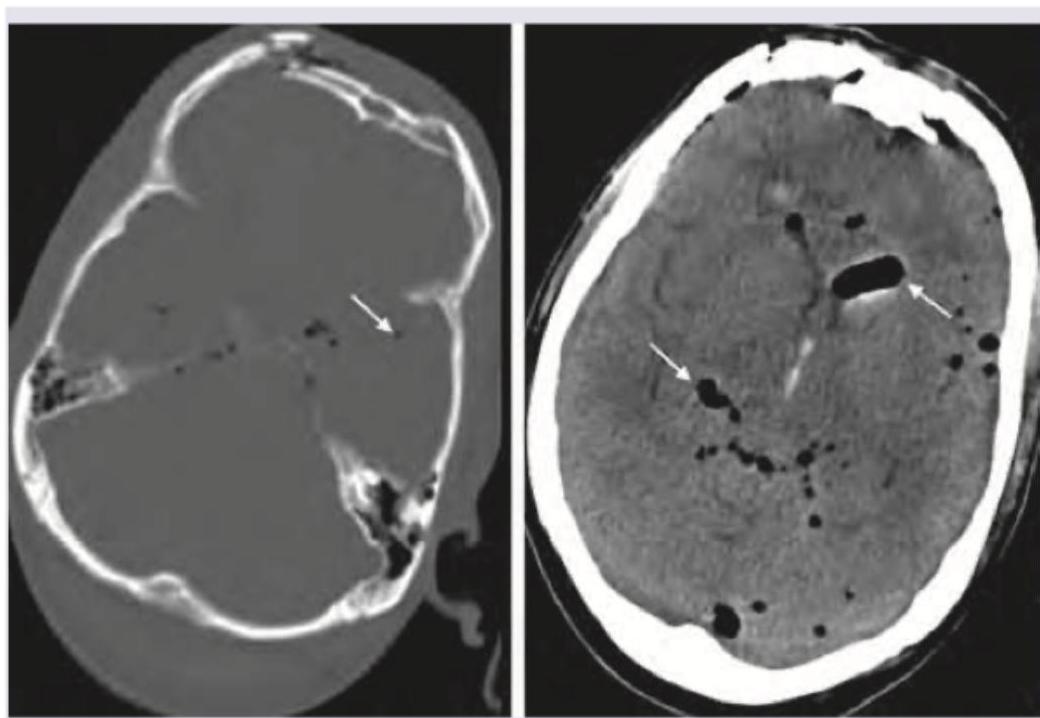
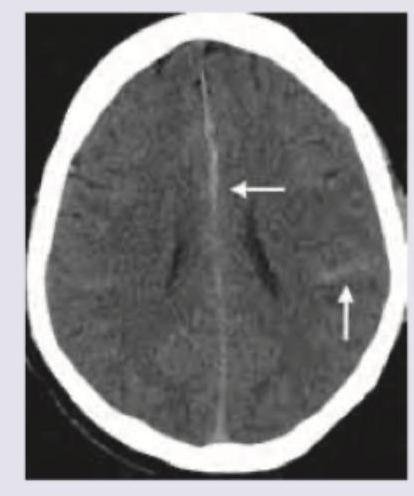
Question 61: What is the correct diagnosis based on the image shown below?
- A. Lacunar stroke
- B. Dense MCA sign (Correct Answer)
- C. Subarachnoid hemorrhage
- D. Intraventricular hemorrhage
Explanation: ***Dense MCA sign*** - The image displays a hyperdense (bright) appearance of the **Middle Cerebral Artery (MCA)**, particularly noticeble in the Sylvian fissure on the left side (indicated by the shorter arrow). This is highly suggestive of a **thrombus within the MCA lumen**, one of the earliest signs of an acute ischemic stroke on non-contrast CT [1]. - This finding is a strong indicator of **large vessel occlusion** and is crucial for guiding acute stroke management, such as the administration of thrombolytics or mechanical thrombectomy [1]. *Lacunar stroke* - Lacunar strokes are typically **small, deep infarcts** caused by occlusion of small penetrating arteries, which are not directly visible as a hyperdense vessel sign on non-contrast CT [3]. - The image shows a larger-scale vascular finding, not a small, isolated infarct characteristic of a lacunar stroke [3]. *Subarachnoid hemorrhage* - Subarachnoid hemorrhage (SAH) appears as **high-density blood** filling the subarachnoid spaces, fissures, and sulci [2]. - While the image shows some hyperdensity, it is specifically confined to a major arterial structure (MCA), not diffuse within the subarachnoid space as seen in SAH. *Intraventricular hemorrhage* - Intraventricular hemorrhage (IVH) is characterized by **hyperdense blood within the ventricular system** of the brain [2]. - The image does not show blood within the ventricles; the hyperdensity is clearly located along the course of a major cerebral artery. **References:** [1] Kumar V, Abbas AK, et al.. Robbins and Cotran Pathologic Basis of Disease. 9th ed. The Central Nervous System, pp. 1266-1268. [2] Cross SS. Underwood's Pathology: A Clinical Approach. 6th ed. Common Clinical Manifestations Of Central And Peripheral Nervous System Disease, pp. 706-707. [3] Kumar V, Abbas AK, et al.. Robbins and Cotran Pathologic Basis of Disease. 9th ed. The Central Nervous System, pp. 1269-1270.
Radiology
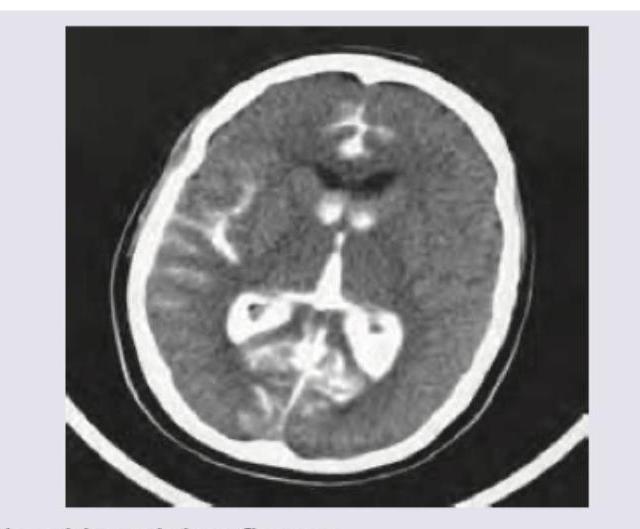
3 questionsWhich is correct about the intracranial bleeding shown below?

The CXR shows markings near the costophrenic angle. Which of the following is the cause of these markings? (Recent NEET Pattern 2016-17)

The CT chest of a patient given below shows presence of: (Recent NEET Pattern 2016-17)

NEET-PG 2017 - Radiology NEET-PG Practice Questions and MCQs
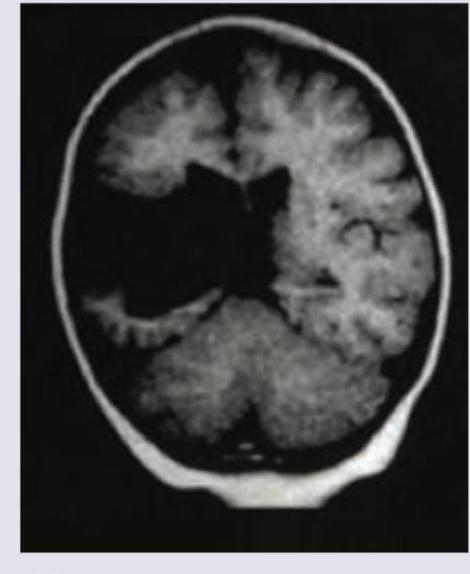
Question 61: Which is correct about the intracranial bleeding shown below?
- A. Chronic subdural hematoma, hypodensity (Correct Answer)
- B. Acute subdural hematoma, hypodensity
- C. Chronic epidural hematoma, hyperdensity
- D. Acute epidural hematoma, hyperdensity
Explanation: ***Chronic subdural hematoma, hypodensity*** - The image displays a crescent-shaped collection of fluid with **hypodense characteristics** (darker than brain parenchyma) that crosses suture lines, which is typical for a subdural hematoma. - The **hypodensity indicates older, chronic blood** where the hemoglobin has degraded, differentiating it from acute (hyperdense) or subacute (isodense) collections. *Acute subdural hematoma, hypodensity* - An **acute subdural hematoma** would typically appear **hyperdense** (bright) on CT due to fresh blood. - The observed collection is clearly hypodense, ruling out an acute presentation. *Chronic epidural hematoma, hyperdensity* - An **epidural hematoma** is typically **lenticular (lens-shaped)** and does not cross suture lines, unlike the crescent shape seen here. - While chronic blood *can* be hypodense, an epidural hematoma by definition is outside the dura mater and would not present with this morphology. *Acute epidural hematoma, hyperdensity* - An **acute epidural hematoma** is characterized by a **lenticular (lens-shaped) hyperdense** collection of blood, which is distinctly different from the crescent-shaped, hypodense collection in the image. - Epidural hematomas occur between the dura mater and the skull, typically from arterial injury, and are bound by sutures.
Question 62: The CXR shows markings near the costophrenic angle. Which of the following is the cause of these markings? (Recent NEET Pattern 2016-17)
- A. Lymphangitis carcinomatosis (Correct Answer)
- B. Pulmonary alveolar proteinosis
- C. Lung abscess
- D. Pneumatocele
Explanation: ***Lymphangitis carcinomatosis*** - The image shows **reticulonodular interstitial markings** with preserved lung volumes, particularly prominent near the costophrenic angle, which are classic for **lymphangitis carcinomatosis**. - This condition is caused by the infiltration of **malignant cells into the lymphatic channels** of the lung, leading to thickening of the interlobular septa and a characteristic radiographic appearance. *Pulmonary alveolar proteinosis* - This condition typically presents with diffuse ground-glass opacities and consolidation, often described as a **"crazy-paving" pattern** on CT, which is not seen here. - It involves the accumulation of lipoproteinaceous material within the **alveoli**, rather than lymphatic infiltration. *Lung abscess* - A lung abscess would appear as a **cavitated lesion** with an air-fluid level, indicating necrosis and fluid accumulation, which is distinctly different from the interstitial markings in the image. - It is typically caused by **bacterial infection** and is a focal process, not diffuse interstitial infiltration. *Pneumatocele* - A pneumatocele is a **thin-walled, air-filled cyst** commonly seen after pneumonia in children or trauma, appearing as a clear, defined space on imaging. - It does not present with the diffuse reticulonodular pattern or interstitial thickening characteristic of the image.
Question 63: The CT chest of a patient given below shows presence of: (Recent NEET Pattern 2016-17)
- A. Bronchiectasis (Correct Answer)
- B. Pneumatoceles
- C. Normal scan
- D. Loculated empyema
Explanation: ***Bronchiectasis*** - The CT image shows a cluster of **dilated, thick-walled bronchi** in the left lung, which are characteristic findings of bronchiectasis, especially when they are larger than adjacent pulmonary arteries. - The arrow specifically points to these abnormal, saccular dilations of the bronchi, often described as a **"cluster of grapes"** or **cystic appearance**. *Pneumatoceles* - **Pneumatoceles** are typically thin-walled, air-filled cysts that develop as a complication of pneumonia or trauma, and are usually solitary or few in number, not a widespread cluster of dilated airways. - They also often resolve spontaneously, unlike the chronic, irreversible bronchial dilation seen in the image. *Normal scan* - A **normal CT chest scan** would show finely branching airways that progressively narrow as they extend peripherally, without the presence of prominent thick-walled, dilated bronchi or cystic changes. - The image clearly depicts significant structural abnormalities in the left lung making a normal scan highly improbable. *Loculated empyema* - A **loculated empyema** would appear as a collection of pus within the pleural space, characterized by **fluid attenuation**, internal septations, and enhancement of the pleura. - None of these features are the primary findings seen in this image, which shows dilated airways rather than pleural fluid collections.