Anatomy
3 questionsIn the sarcomere diagram shown below, what do the marked areas X and Y represent?

Which of the following area of visual cortex is related to color vision?

Name the pathways marked as $X$ and $Y$.

NEET-PG 2017 - Anatomy NEET-PG Practice Questions and MCQs
Question 341: In the sarcomere diagram shown below, what do the marked areas X and Y represent?
- A. X=H zone, Y=A band (Correct Answer)
- B. X=A band, Y=H band
- C. X=Z line, Y=M line
- D. X=M line, Y=Z line
Explanation: ***X=H zone, Y=A band*** - **X** points to the central region of the A band, visible only in a relaxed sarcomere, which is called the **H zone**, containing only thick myosin filaments. - **Y** encompasses the entire length of the thick filaments, including the regions where they overlap with thin filaments, defining the **A band**. *X=A band, Y=H band* - This is incorrect because X specifically indicates the central, lighter region within the A band, which is the H zone. - Y points to the entire segment occupied by the thick filaments, which is the A band. *X=Z line, Y=M line* - The **Z line** marks the boundaries of a sarcomere, anchoring the thin (actin) filaments, and is not indicated by X. - The **M line** is the central line within the H zone that anchors the thick (myosin) filaments, and is not indicated by Y. *X=M line, Y=Z line* - As explained, X indicates the **H zone**, which is a broader region than the M line. - Y indicates the **A band**, and not the Z line; the Z line is located at the ends of the sarcomere.
Question 342: Which of the following area of visual cortex is related to color vision?
- A. V1
- B. V8 (Correct Answer)
- C. V2
- D. V3
Explanation: ***V8*** - **V8** is a specific area within the human **visual cortex** that has been implicated in **color perception**. - Damage to this area can lead to **cerebral achromatopsia**, a condition where individuals lose the ability to perceive colors. *V1* - **V1**, also known as the **primary visual cortex**, processes basic visual information such as orientation, spatial frequency, and color. - While it processes color information, it is not considered the primary or most specialized area for **color vision** compared to V8. *V2* - **V2** receives input from V1 and is involved in processing more complex visual features, including **form, depth, and color**. - It plays a role in color processing but is less specialized for this function than V8. *V3* - **V3** is primarily involved in processing **dynamic form** and motion, with some contribution to complex visual features. - It is not extensively associated with **color perception** as its main function.
Question 343: Name the pathways marked as $X$ and $Y$.
- A. $X=$ Ventral corticospinal pathway and $Y=$ Lateral spinothalamic Pathway
- B. $X=$ Ventral corticospinal pathway and $Y=$ Lateral corticospinal pathway (Correct Answer)
- C. $X=$ Ventral corticospinal pathway and $Y=$ Lateral spinocerebellar pathway
- D. $X=$ Lateral corticospinal pathway and $Y=$ Ventral corticospinal pathway
Explanation: ***X = Ventral corticospinal pathway and Y = Lateral corticospinal pathway*** - The diagram illustrates the **corticospinal tracts**, which control voluntary movement. Pathway Y shows fibers descending from the cortex, **decussating** (crossing over) at the pyramids, and then continuing down the contralateral side to innervate distal muscles, characteristic of the **lateral corticospinal tract**. - Pathway X shows fibers that descend **ipsilaterally** (on the same side) from the cortex, then decussate at the spinal cord level to innervate proximal muscles, which is typical for the **ventral (anterior) corticospinal tract**. *X = Ventral corticospinal pathway and Y = Lateral spinothalamic Pathway* - The **lateral spinothalamic pathway** is an ascending sensory pathway for pain and temperature, originating in the spinal cord and ascending to the thalamus, rather than a descending motor pathway as shown by Y. - The pathways shown (X and Y) are clearly originating from the motor cortex (precentral gyrus) and descending to muscles, indicating they are **motor pathways**, not sensory. *X = Ventral corticospinal pathway and Y = Lateral spinocerebellar pathway* - The **lateral spinocerebellar pathway** is predominantly an ascending pathway carrying unconscious proprioceptive information to the cerebellum, not a descending motor pathway synapsing on lower motor neurons for voluntary muscle control. - Pathway Y is shown forming synapses with **anterior horn cells** controlling skeletal muscles, indicating it is a part of the motor system originating from the precentral gyrus. *X = Lateral corticospinal pathway and Y = Ventral corticospinal pathway* - This option incorrectly identifies pathway X as lateral and Y as ventral. The diagram clearly shows that pathway Y crosses over at the level of the pyramids (medulla) to descend on the contralateral side, which is the defining characteristic of the **lateral corticospinal pathway**. - Pathway X descends Ipsilaterally and crosses at segmental levels in the spinal cord, which is characteristic of the **ventral (anterior) corticospinal pathway**.
Anesthesiology
5 questionsWhich of the knobs shown below represent the knob controlling oxygen flow in the anesthesia machine?

What ventilation modality is shown below?

Which of the following Mapleson system is shown below?

What does the following capnographic recording represent?

All are complications of this anesthesia technique except: (Recent NEET Pattern 2016-17)

NEET-PG 2017 - Anesthesiology NEET-PG Practice Questions and MCQs
Question 341: Which of the knobs shown below represent the knob controlling oxygen flow in the anesthesia machine?
- A. Blue (Correct Answer)
- B. Yellow
- C. Green
- D. None
Explanation: ***Blue*** - In anesthesia machines, the blue knob typically controls the flow of **nitrous oxide**. However, in the provided image, the blue knob is labeled with "O2" (implied by the digital display indicating "10" which typically refers to **liters per minute of oxygen**). The question asks for the knob controlling oxygen flow, and based on the provided image, the blue knob corresponds to oxygen. - The digital display next to the blue knob reads "10", which in the context of anesthesia machines, usually signifies a flow rate in **liters per minute**. Given that the question asks for the oxygen flow control, and it is common for oxygen to be blue-coded in some parts of the world, this is the most logical choice depicted. *Yellow* - The yellow knob is labeled "Air" (implied by the digital display indicating "10"). This knob would control the flow of **medical air**, not oxygen. - Medical air is a distinct gas from oxygen, used for different purposes in anesthesia. *Green* - The green knob is labeled "N2O," representing **nitrous oxide**. This knob controls the flow of nitrous oxide, which is an anesthetic gas. - Nitrous oxide is typically color-coded blue in some regions (like the US) but green in others (like the UK/Europe), similar to how oxygen can be white or green. However, in this specific image, green is clearly labeled N2O. *None* - This option is incorrect because the image clearly shows a knob, specifically the blue one, designated for oxygen flow (implied by the "O2" display). - The presence of color-coded knobs with corresponding digital displays for gas flow negates the possibility of "None" being the correct answer.
Question 342: What ventilation modality is shown below?
- A. High frequency jet ventilation
- B. Nasal CPAP (Correct Answer)
- C. Inverse ratio ventilation
- D. Intermittent positive pressure ventilation
Explanation: ***Nasal CPAP*** - The image shows a device applied to the nose of an infant, providing a continuous flow of air which is characteristic of **Nasal Continuous Positive Airway Pressure (nCPAP)**. - This modality helps maintain lung volume, improve oxygenation, and reduce the work of breathing in neonates with respiratory distress. *High frequency jet ventilation* - This modality involves delivering small tidal volumes at very **high frequencies** (hundreds of breaths per minute) through a specialized ventilator and endotracheal tube. - The image does not depict an **endotracheal tube** or the rapid, small tidal volume delivery characteristic of jet ventilation. *Inverse ratio ventilation* - This is a mode of **mechanical ventilation** where the inspiratory time is longer than the expiratory time (I:E ratio > 1:1), typically used in intubated patients. - The image shows a non-invasive nasal device, not an **intubated patient** on a mechanical ventilator. *Intermittent positive pressure ventilation* - This refers to delivering breaths with positive pressure, either invasively (via endotracheal tube) or non-invasively (via mask), to assist or control breathing. - While CPAP provides positive pressure, "intermittent positive pressure ventilation" implies cyclical breaths, which is not the primary defining feature shown, and CPAP (continuous pressure) is a more specific and accurate description for the depicted setup.
Question 343: Which of the following Mapleson system is shown below?
- A. Mapleson C
- B. Mapleson A
- C. Mapleson B
- D. Mapleson D (Correct Answer)
Explanation: ***Mapleson D*** - This system is characterized by the **fresh gas inlet (FG)** being close to the patient end (P) and the **reservoir bag** and **adjustable pressure-limiting (APL) valve (T)** being further away, typically near the expiratory limb. The corrugated tube separates the bag and valve from the patient. - The image clearly depicts the **fresh gas entering near a reservoir bag**, which is then connected via a corrugated tube to the patient end, with an **APL valve (T)** situated near the patient, right before the patient connection, which is characteristic of the Mapleson D system. *Mapleson A* - In a Mapleson A system, the **fresh gas inlet** is located near the **reservoir bag**, which is positioned far from the patient. The APL valve is also near the reservoir bag. - This arrangement is highly efficient for **spontaneous ventilation** but less so for controlled ventilation. The image shows a different configuration. *Mapleson B* - The Mapleson B system has both the **fresh gas inlet** and the **APL valve** close to the patient, with the reservoir bag at the end of a long expiratory limb. - This system is **not very efficient** for either spontaneous or controlled ventilation due to significant rebreathing potential, which is unlike the depicted system. *Mapleson C* - This system is similar to Mapleson B but with a **shorter expiratory limb**, making it more compact. - Both the **fresh gas inlet** and the **APL valve** are near the patient, with the reservoir bag also close to the patient. The image clearly shows a long corrugated tube, making this option incorrect.
Question 344: What does the following capnographic recording represent?
- A. Asthma (Correct Answer)
- B. Spontaneous extubation
- C. Raised ICT
- D. Air embolism
Explanation: ***Asthma*** - The capnographic tracing shows a characteristic **shark fin waveform**, indicative of **expiratory airflow obstruction**. - This waveform is generated due to uneven emptying of the alveoli, where CO2 continues to be exhaled at a reduced rate during the later phase of expiration. *Spontaneous extubation* - Spontaneous extubation would typically result in a **complete loss of the capnography waveform** due to disconnection from the airway. - The tracing shown still clearly depicts expired CO2, inconsistent with complete extubation. *Raised ICT* - Raised intracranial tension (ICT) can affect breathing patterns (e.g., Cheyne-Stokes, hyperventilation), but it does not directly produce a a **shark fin capnography waveform**. - Capnography reflects CO2 elimination, which can be indirectly affected by changes in ventilatory drive from raised ICT but not in this specific shape. *Air embolism* - An air embolism would cause a sudden **drop in end-tidal CO2 (EtCO2)**, often to zero, due to obstruction of pulmonary blood flow, leading to alveolar dead space. - The waveform shown does not depict a sudden drop to zero or significantly reduced EtCO2.
Question 345: All are complications of this anesthesia technique except: (Recent NEET Pattern 2016-17)
- A. Bradycardia
- B. Sudden cardiac arrest
- C. Decrease in vital capacity
- D. Paralytic ileus (Correct Answer)
Explanation: **SPINAL ANESTHESIA COMPLICATIONS ANALYSIS:** ***Paralytic ileus*** - While spinal anesthesia can cause some **decreased bowel motility** due to sympathetic blockade, true **paralytic ileus** is primarily associated with **abdominal surgery**, **prolonged opioid use**, **electrolyte imbalances**, or **systemic illness**. - **Paralytic ileus** is not considered a direct complication of spinal anesthesia technique itself, making it the exception among the given options. *Bradycardia* - Direct result of **sympathetic blockade** affecting **cardiac accelerator fibers**, leading to unopposed **vagal activity**. - Common complication of spinal anesthesia due to blocked sympathetic innervation that normally maintains heart rate. *Sudden cardiac arrest* - Rare but serious complication from severe **bradycardia** and **hypotension**, especially with **high spinal blocks**. - Can occur when sympathetic blockade extends too high, affecting critical **cardiovascular control mechanisms**. *Decrease in vital capacity* - Results from **motor blockade** of **intercostal muscles** and potentially **phrenic nerve** with high spinal blocks. - Respiratory compromise can be significant, particularly in patients with pre-existing **pulmonary disease**. **Conclusion:** Paralytic ileus is the exception as it is not a direct complication of spinal anesthesia, unlike the other cardiovascular and respiratory complications listed.
General Medicine
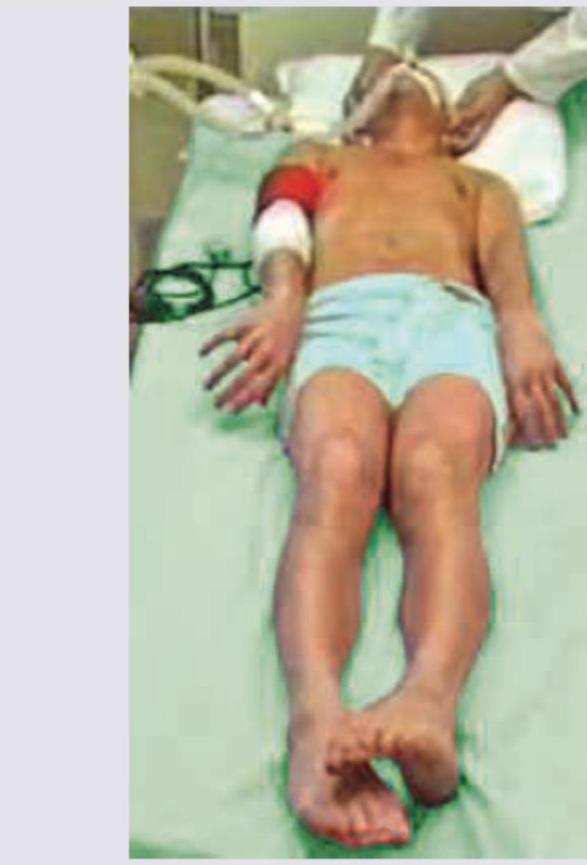
1 questionsThe following test is performed for evaluating the integrity of: (Recent NEET Pattern 2016-17)

NEET-PG 2017 - General Medicine NEET-PG Practice Questions and MCQs
Question 341: The following test is performed for evaluating the integrity of: (Recent NEET Pattern 2016-17)
- A. Basal ganglia
- B. Cerebellum (Correct Answer)
- C. Corticospinal pathway
- D. Spinothalamic pathway
Explanation: ***Cerebellum*** - The image depicts a person performing a **tandem gait** (walking heel-to-toe along a straight line), which is a common test for **cerebellar function**. - The cerebellum is critical for **coordination**, balance, and **fine motor control**, including the ability to maintain a straight path during walking. *Basal ganglia* - The basal ganglia are primarily involved in the **initiation and modulation of movement**, and their dysfunction leads to characteristic movement disorders such as **Parkinsonism (bradykinesia, rigidity, tremor)** or **Huntington's disease (chorea)**. - While gait can be affected in basal ganglia disorders (e.g., shuffling gait in Parkinson's), tandem gait specifically emphasizes balance and coordination more directly attributed to cerebellar function. *Corticospinal pathway* - The **corticospinal pathway** (pyramidal tract) is responsible for **voluntary, skilled movements**, particularly of the distal limbs. - Damage to this pathway typically results in **weakness (paresis)**, spasticity, and hyperreflexia, which would manifest as difficulty with initiating or executing movements rather than purely balance and coordination issues highlighted by tandem gait. *Spinothalamic pathway* - The spinothalamic pathway transmits **pain** and **temperature** sensations from the body to the brain. - Evaluating this pathway involves sensory testing (e.g., pinprick, hot/cold sensation), which is unrelated to the motor task of tandem walking.
Physiology
1 questionsWhich wave is seen in the given EEG recording?

NEET-PG 2017 - Physiology NEET-PG Practice Questions and MCQs
Question 341: Which wave is seen in the given EEG recording?
- A. Alpha waves
- B. Beta waves
- C. Epsilon wave
- D. Delta waves (Correct Answer)
Explanation: ***Delta waves*** - The highlighted EEG activity shows **large amplitude, low-frequency waves** (typically 0.5-4 Hz), which are characteristic of delta waves. - Delta waves are normally associated with **deep sleep** (NREM stage 3) or **pathological conditions** in awake adults, indicating significant brain dysfunction. *Alpha waves* - Alpha waves have a frequency range of **8-13 Hz** and typically appear when an individual is in a relaxed, awake state with eyes closed. - The waves in the image are much slower and higher in amplitude than typical alpha waves. *Beta waves* - Beta waves are characterized by a higher frequency range of **14-30 Hz** and are associated with active thinking, alertness, and concentration. - The observed activity is significantly slower and higher in amplitude than beta waves. *Epsilon wave* - The term "epsilon wave" is not a standard classification for EEG brain waves in the context of normal or common pathological activity, unlike alpha, beta, theta, and delta waves. - In cardiology, "epsilon wave" refers to a specific finding on an ECG in **Arrhythmogenic Right Ventricular Cardiomyopathy (ARVC)**, not an EEG.