Dermatology
1 questionsA 38-year-old man presents with the manifestation shown in the image. He has a number of family members suffering from the same condition, though the severity is different in different members. Which of the following statements is false regarding this condition?

NEET-PG 2017 - Dermatology NEET-PG Practice Questions and MCQs
Question 21: A 38-year-old man presents with the manifestation shown in the image. He has a number of family members suffering from the same condition, though the severity is different in different members. Which of the following statements is false regarding this condition?
- A. Autosomal dominant condition
- B. Chromosomal abnormality seen in chromosome 17
- C. Café-au-lait spots and neurofibromas are characteristic features
- D. Basal cell carcinoma (Correct Answer)
Explanation: ***Basal cell carcinoma*** - Basal cell carcinoma is a type of skin cancer that is **not typically a primary manifestation** of Neurofibromatosis Type 1 (NF1). - While individuals with NF1 may have an increased risk of certain cancers, basal cell carcinoma is **not one of the characteristic features** of the condition. - **This statement is FALSE**, making it the correct answer to this question. *Autosomal dominant condition* - Neurofibromatosis Type 1 (NF1) is inherited in an **autosomal dominant pattern**, meaning only one copy of the mutated gene is needed to cause the disorder. - The patient's history of **multiple family members** suffering from the same condition with varying severity is consistent with autosomal dominant inheritance. - **This statement is TRUE.** *Chromosomal abnormality seen in chromosome 17* - Neurofibromatosis Type 1 is caused by a mutation in the **NF1 gene**, located on **chromosome 17 (17q11.2)**. - This gene encodes for **neurofibromin**, a tumor suppressor protein, and its dysfunction leads to the characteristic features of NF1. - **This statement is TRUE.** *Café-au-lait spots and neurofibromas are characteristic features* - The image displays characteristic features of NF1, including **café-au-lait spots** (large, hyperpigmented macules) and **neurofibromas** (benign tumors of nerve sheath cells). - These are classic diagnostic findings in Neurofibromatosis Type 1, along with axillary/inguinal freckling and Lisch nodules. - **This statement is TRUE.**
Microbiology
1 questionsAll are true about Helicobacter pylori on special stain preparation of stomach except:
NEET-PG 2017 - Microbiology NEET-PG Practice Questions and MCQs
Question 21: All are true about Helicobacter pylori on special stain preparation of stomach except:
- A. Steiner stain preparation
- B. S shaped non-flagellated bacteria (Correct Answer)
- C. Dormant stage is coccoid form
- D. Attaches but does not invade the cells
Explanation: ***S shaped non-flagellated bacteria*** - *H. pylori* are generally **spiral-shaped** or **curved rods**, not typically S-shaped, and are characterized by their **polar flagella** which are essential for their motility in the viscous gastric mucus. - The presence of flagella is a key feature distinguishing *H. pylori* and enabling its survival in the stomach environment. *Steiner stain preparation* - The **Steiner silver stain** is commonly used to visualize *H. pylori* in gastric biopsies, demonstrating them as dark, helical organisms. - While effective, other stains like Giemsa or Warthin-Starry are also used, but Steiner stain is a valid method for detection. *Dormant stage is coccoid form* - Under stressful conditions, such as antibiotic exposure or prolonged culture, *H. pylori* can transform into a **coccoid form**. - This coccoid form is considered a **viable but non-culturable** dormant stage, potentially contributing to persistence and recurrence of infection. *Attaches but does not invade the cells* - *H. pylori* colonizes the **mucus layer** and attaches to the apical surface of gastric epithelial cells but generally **does not invade** the cells. - Its effects are mediated by toxins and enzymes released into the extracellular space, leading to inflammation and cellular damage without direct intracellular invasion.
Pathology
8 questionsIdentify the types of gastric ulcers labeled A and B in the image below.

A 20-year-old college student presents with 7 day history of nausea and feeling feverish. He has tenderness in right upper quadrant and admits to high risk sexual behavior. The liver biopsy marking $X$ shows:

The resected specimen of a kidney is seen below. What is the diagnosis?

Comment on type of glomerulonephritis present in the kidney biopsy slide. (Recent NEET Pattern 2016-17)

All are causes of this glomerular presentation except: (Recent NEET Pattern 2016-17)
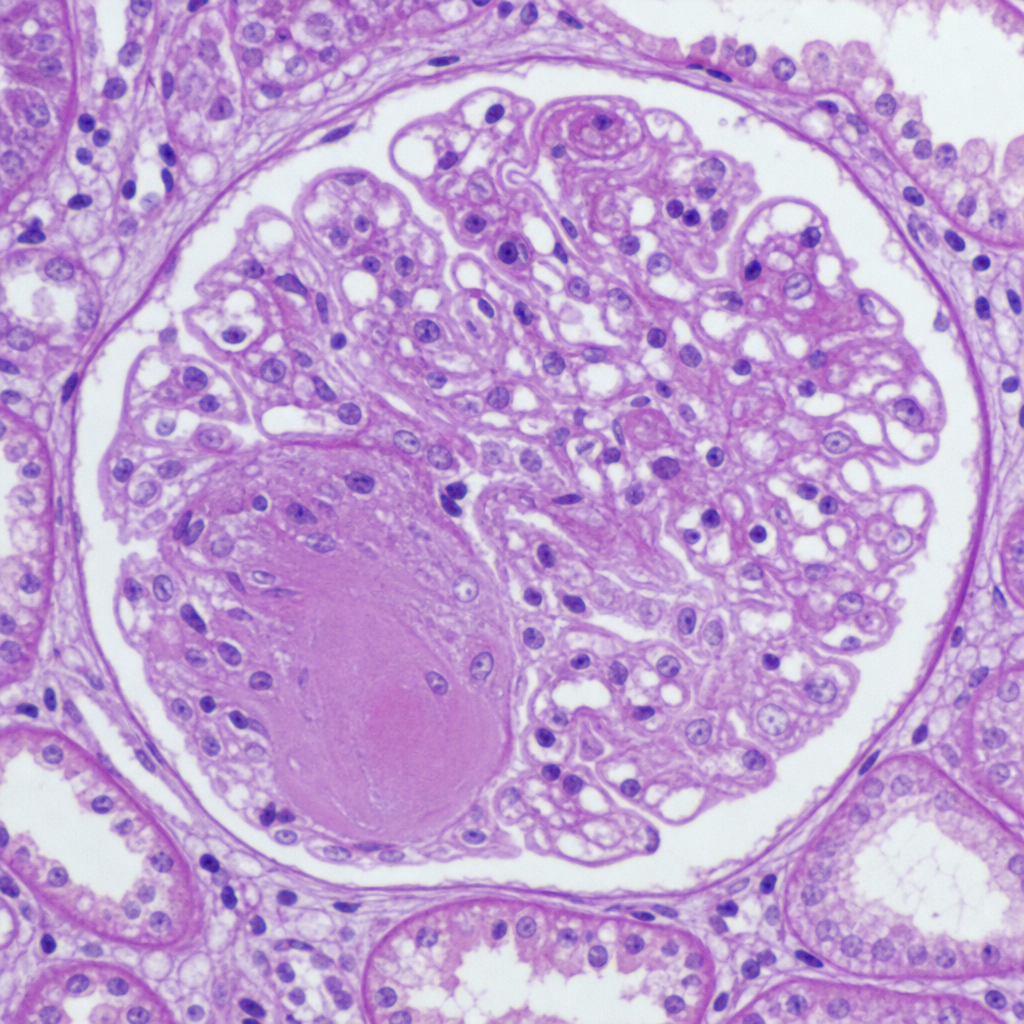
All are true about the presentation in kidney biopsy shown except: (Recent NEET Pattern 2016-17)

Comment on the diagnosis of light microscopy finding in kidney biopsy. (Recent NEET Pattern 2016-17)

A 24 -year-old male patient with undescended testis has a lump in the groin since birth which was increasing since last 6 months. The resected specimen is shown below. All are correct about the condition except:

NEET-PG 2017 - Pathology NEET-PG Practice Questions and MCQs
Question 21: Identify the types of gastric ulcers labeled A and B in the image below.
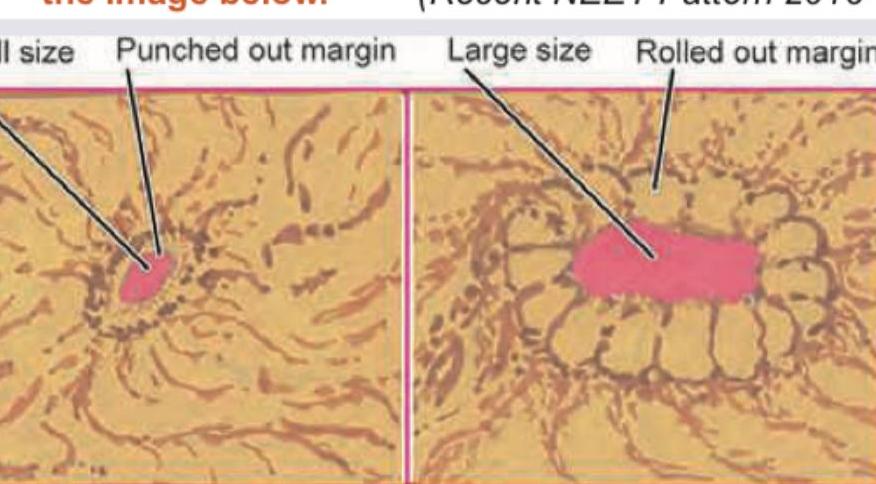
- A. A=Benign gastric ulcer, B=Malignant gastric ulcer (Correct Answer)
- B. A=Malignant gastric ulcer, B=Benign gastric ulcer
- C. A=Leiomyoma, B=Malignant gastric ulcer
- D. A=Chronic hyperplastic gastritis, B=Malignant gastric ulcer
Explanation: ***A=Benign gastric ulcer, B=Malignant gastric ulcer*** - Image A shows a **punched-out**, **clean-based ulcer** with radiating folds, characteristic features of a **benign gastric ulcer**. - Image B depicts an **irregular**, **raised-edge ulcer** with a necrotic base, which is typical of a **malignant gastric ulcer** [1]. *A=Malignant gastric ulcer, B=Benign gastric ulcer* - Image A's features (smooth, punched-out) are inconsistent with a **malignant ulcer**, which is typically irregular and raised [1]. - Image B's features (irregular, raised, necrotic) are not consistent with a **benign ulcer**, which is usually clean and well-demarcated. *A=Leiomyoma, B=Malignant gastric ulcer* - A **leiomyoma** is a submucosal tumor, usually presenting as a smooth, firm mass, not an ulcerated lesion like in Image A. - Image B is consistent with a **malignant gastric ulcer** [1], but Image A is not a leiomyoma. *A=Chronic hyperplastic gastritis, B=Malignant gastric ulcer* - **Chronic hyperplastic gastritis** involves thickened gastric folds and inflammation, not a discrete ulceration as seen in Image A. - While Image B is consistent with a **malignant gastric ulcer** [1], Image A does not represent chronic hyperplastic gastritis. **References:** [1] Kumar V, Abbas AK, et al.. Robbins and Cotran Pathologic Basis of Disease. 9th ed. The Gastrointestinal Tract, p. 779.
Question 22: A 20-year-old college student presents with 7 day history of nausea and feeling feverish. He has tenderness in right upper quadrant and admits to high risk sexual behavior. The liver biopsy marking $X$ shows:
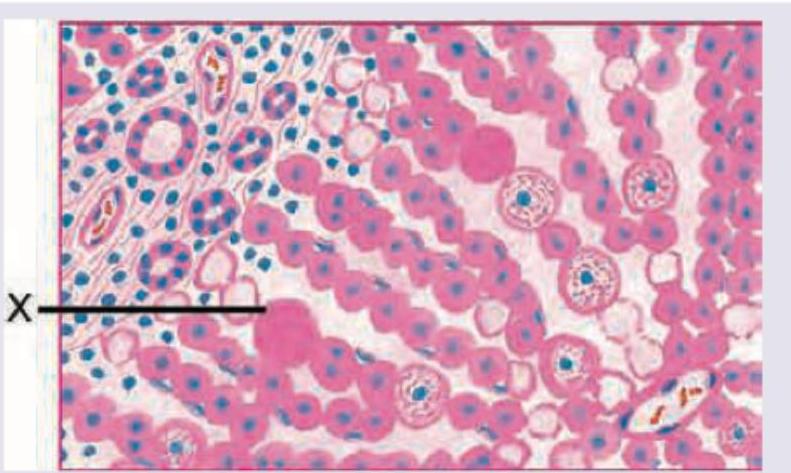
- A. Mallory hyaline body
- B. Councilman body (Correct Answer)
- C. Russell body
- D. Normal kupffer cell
Explanation: ***Councilman body*** - The clinical presentation (nausea, fever, RUQ tenderness, high-risk sexual behavior) is highly suggestive of **acute viral hepatitis**, likely **Hepatitis B** given the risk factors. - **Councilman bodies** (also known as **apoptotic bodies**) are characteristic findings in acute viral hepatitis, representing **apoptotic hepatocytes** [1]. *Mallory hyaline body* - **Mallory bodies** (or **Mallory-Denk bodies**) are typically seen in **alcoholic hepatitis** and other forms of **chronic liver injury**, not acute viral hepatitis [2]. - They are composed of **intermediate filaments** (cytokeratins) and other proteins, indicating hepatocyte damage. *Russell body* - **Russell bodies** are **eosinophilic inclusions** found within the cytoplasm of **plasma cells**, representing **accumulations of immunoglobulins**. - They are associated with conditions involving plasma cell proliferation, such as **multiple myeloma**, and are not a feature of acute viral hepatitis. *Normal kupffer cell* - **Kupffer cells** are **resident macrophages** of the liver and are normally present in the sinusoids. - While they play a role in inflammation, their presence alone as "normal" does not represent the specific pathological change expected in acute viral hepatitis, which is hepatocyte apoptosis [1]. **References:** [1] Cross SS. Underwood's Pathology: A Clinical Approach. 6th ed. Common Clinical Problems From Liver And Biliary System Disease, pp. 386-387. [2] Cross SS. Underwood's Pathology: A Clinical Approach. 6th ed. Common Clinical Problems From Liver And Biliary System Disease, pp. 389-390.
Question 23: The resected specimen of a kidney is seen below. What is the diagnosis?
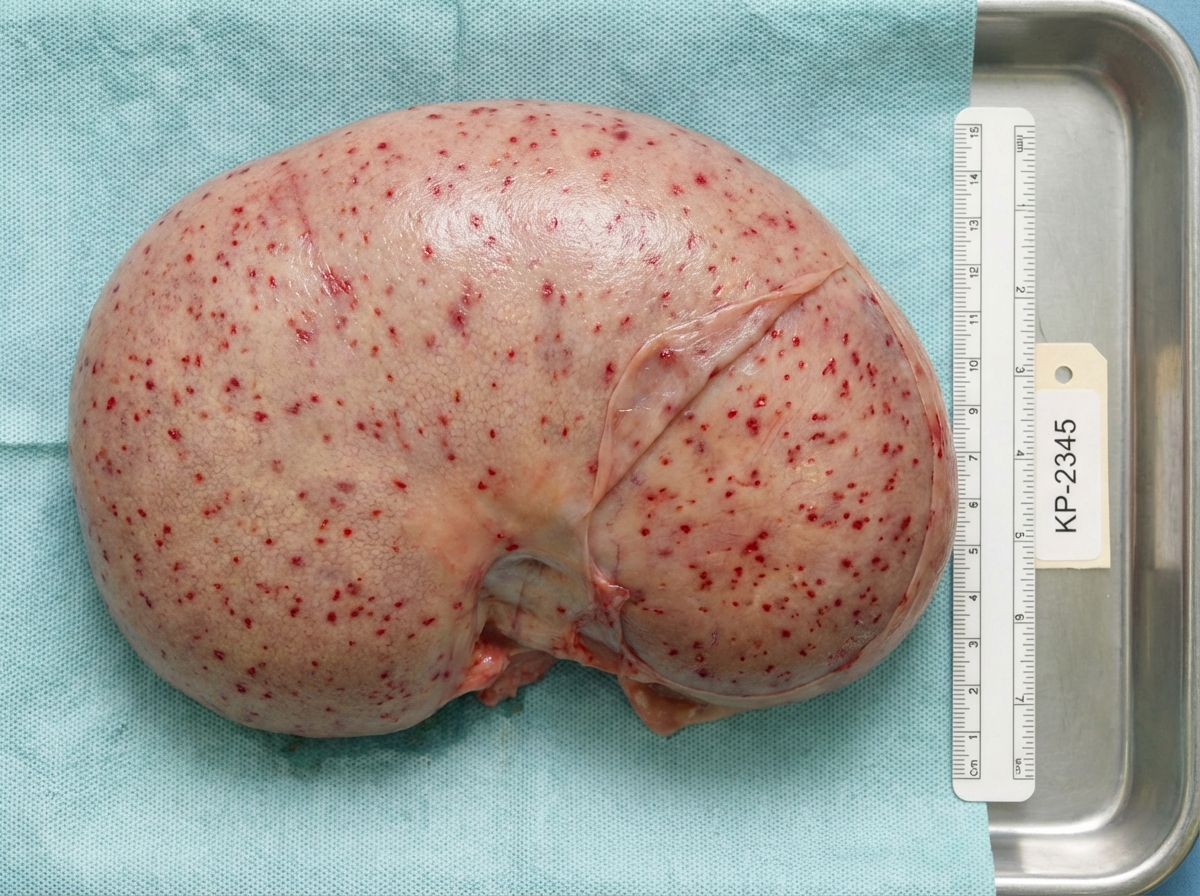
- A. Amyloidosis
- B. Acute poststreptococcal glomerulonephritis
- C. Flea bitten kidney of malignant hypertension (Correct Answer)
- D. Chronic glomerulonephritis
- E. Acute tubular necrosis
Explanation: ***Flea bitten kidney of malignant hypertension*** - The term "flea-bitten kidney" describes the gross appearance of the kidney in **malignant hypertension**, characterized by numerous pinpoint hemorrhages on the cortical surface [1]. - These hemorrhages result from the rupture of **arterioles and capillaries** due to severe, uncontrolled high blood pressure [1]. *Amyloidosis* - In **amyloidosis**, the kidneys typically appear enlarged, pale, and waxy due to the deposition of **amyloid protein**. - It does not typically present with the characteristic pinpoint hemorrhages seen in a "flea-bitten" appearance. *Acute poststreptococcal glomerulonephritis* - In **acute poststreptococcal glomerulonephritis (APSGN)**, the kidneys are usually enlarged and pale, often with a smooth surface. - While there can be some congestion, the classic "flea-bitten" appearance with widespread petechial hemorrhages is not a typical gross finding. *Chronic glomerulonephritis* - **Chronic glomerulonephritis** typically leads to shrunken, granular, and scarred kidneys due to long-standing inflammation and fibrosis. - The gross appearance is usually one of atrophy and scarring, not the acute hemorrhagic spots described as "flea-bitten." **References:** [1] Kumar V, Abbas AK, et al.. Robbins and Cotran Pathologic Basis of Disease. 9th ed. The Kidney, p. 945.
Question 24: Comment on type of glomerulonephritis present in the kidney biopsy slide. (Recent NEET Pattern 2016-17)
- A. Acute glomerulonephritis
- B. Crescentic glomerulonephritis (Correct Answer)
- C. Focal segmental glomerulosclerosis
- D. Diffuse glomerulosclerosis
- E. Membranous glomerulonephritis
Explanation: ***Crescentic glomerulonephritis*** - The presence of **crescents** in the glomeruli is the hallmark of **crescentic glomerulonephritis**, indicating severe glomerular injury [1]. - Crescents are formed by the proliferation of **parietal epithelial cells** and infiltration of macrophages, leading to rapid decline in renal function [1]. *Acute glomerulonephritis* - This is a broad term that can encompass various forms of glomerulonephritis, but it does not specifically describe the **morphological finding of crescents**. - Acute glomerulonephritis often presents with **nephritic syndrome** (hematuria, proteinuria, hypertension), but the biopsy finding of crescents is more specific [1]. *Focal segmental glomerulosclerosis* - Characterized by **sclerosis** (scarring) affecting **some glomeruli** (focal) and **only parts of the glomerular tuft** (segmental). - It typically presents with **nephrotic syndrome** (heavy proteinuria, edema, hypoalbuminemia), which is distinct from the rapid renal failure seen with crescents. *Diffuse glomerulosclerosis* - This term implies widespread **sclerosis** affecting **all glomeruli**, often seen in advanced chronic kidney disease. - It does not specifically describe the **active inflammatory process** and crescent formation characteristic of crescentic glomerulonephritis [2]. **References:** [1] Cross SS. Underwood's Pathology: A Clinical Approach. 6th ed. Common Clinical Problems From Diseases Of The Urinary And Male Genital Tracts, pp. 528-529. [2] Cross SS. Underwood's Pathology: A Clinical Approach. 6th ed. Common Clinical Problems From Diseases Of The Urinary And Male Genital Tracts, pp. 536-537.
Question 25: All are causes of this glomerular presentation except: (Recent NEET Pattern 2016-17)
- A. HIV
- B. Reflux nephropathy (Correct Answer)
- C. Hepatitis B
- D. Heroin abuse
- E. Obesity
Explanation: ***Reflux nephropathy*** - This condition primarily causes **tubulointerstitial damage** and **scarring**, leading to chronic kidney disease, but it is not a direct cause of a primary glomerular presentation like **focal segmental glomerulosclerosis (FSGS)**. - While it can lead to proteinuria, it's usually due to secondary glomerular changes from chronic damage rather than a primary glomerular disease. *HIV* - **HIV-associated nephropathy (HIVAN)** is a common cause of **collapsing FSGS**, a specific glomerular presentation [1] [2]. - It is characterized by rapid progression to end-stage renal disease and often presents with heavy proteinuria [1]. *Hepatitis B* - Hepatitis B infection is strongly associated with **membranous nephropathy** and, less commonly, with **membranoproliferative glomerulonephritis (MPGN)**, both of which are distinct glomerular presentations [1]. - These conditions involve immune complex deposition in the glomeruli. *Heroin abuse* - Heroin abuse is a well-known cause of **focal segmental glomerulosclerosis (FSGS)**, often presenting as **heroin-associated nephropathy** [3] [4]. - This condition typically leads to significant proteinuria and progressive renal failure [3] [4]. **References:** [1] Cross SS. Underwood's Pathology: A Clinical Approach. 6th ed. Common Clinical Problems From Diseases Of The Urinary And Male Genital Tracts, pp. 531-532. [2] Kumar V, Abbas AK, et al.. Robbins and Cotran Pathologic Basis of Disease. 9th ed. The Kidney, pp. 924-925. [3] Kumar V, Abbas AK, et al.. Robbins and Cotran Pathologic Basis of Disease. 9th ed. The Kidney, pp. 927-928. [4] Cross SS. Underwood's Pathology: A Clinical Approach. 6th ed. Common Clinical Problems From Diseases Of The Urinary And Male Genital Tracts, pp. 530-531.
Question 26: All are true about the presentation in kidney biopsy shown except: (Recent NEET Pattern 2016-17)
- A. Loss of foot processes
- B. IgG and properdin deposits (Correct Answer)
- C. Hyalinosis
- D. Seen with HIV associated nephropathy
- E. Presents with nephrotic syndrome
Explanation: ***IgG and properdin deposits*** - The question asks for what is *not* true about the presentation in a kidney biopsy. **IgG and properdin deposits** are characteristic of **dense deposit disease (DDD)** or C3 glomerulopathy, not typically seen in the context of **focal segmental glomerulosclerosis (FSGS)**, which is often implied by the other options. - FSGS is primarily a podocyte disorder, and while immune deposits can occur, IgG and properdin are not its defining immunofluorescence features. In FSGS, immunofluorescence is negative other than non-specific trapping of IgM and C3 in the segmental lesions [1]. The diagnosis requires absence of immune deposits on IF [4]. *Loss of foot processes* - **Loss of foot processes** (podocyte effacement) is a hallmark ultrastructural finding in conditions causing **proteinuria**, including **focal segmental glomerulosclerosis (FSGS)** and minimal change disease [1][3]. - This morphological change is directly responsible for increased glomerular permeability to proteins. Podocyte injury is an underlying mechanism of proteinuria in FSGS [3]. *Hyalinosis* - **Hyalinosis** refers to the accumulation of homogeneous, eosinophilic material, often plasma proteins, within the glomerulus. - It is a characteristic feature of **focal segmental glomerulosclerosis (FSGS)**, particularly in the sclerotic segments, with segmental obliteration of glomerular capillary tufts by sclerosis frequently accompanied by hyalinosis [1]. *Seen with HIV associated nephropathy* - **HIV-associated nephropathy (HIVAN)** is a specific form of **collapsing focal segmental glomerulosclerosis (FSGS)** [1][2]. - It is characterized by prominent tubular microcysts and severe interstitial inflammation and fibrosis, in addition to the collapsing glomerular lesions. FSGS may be secondary to infection such as HIV [3], and the collapsing variant has an unfavorable course [2]. **References:** [1] Cross SS. Underwood's Pathology: A Clinical Approach. 6th ed. Common Clinical Problems From Diseases Of The Urinary And Male Genital Tracts, pp. 531-532. [2] Kumar V, Abbas AK, et al.. Robbins and Cotran Pathologic Basis of Disease. 9th ed. The Kidney, pp. 924-925. [3] Kumar V, Abbas AK, et al.. Robbins and Cotran Pathologic Basis of Disease. 9th ed. The Kidney, pp. 927-928. [4] Cross SS. Underwood's Pathology: A Clinical Approach. 6th ed. Common Clinical Problems From Diseases Of The Urinary And Male Genital Tracts, pp. 530-531.
Question 27: Comment on the diagnosis of light microscopy finding in kidney biopsy. (Recent NEET Pattern 2016-17)
- A. Focal segmental glomerulosclerosis
- B. Diffuse glomerulosclerosis
- C. Nodular glomerulosclerosis (Correct Answer)
- D. Minimal change disease
- E. Membranoproliferative glomerulonephritis
Explanation: ***Nodular glomerulosclerosis*** - This finding is characteristic of **diabetic nephropathy**, specifically the **Kimmelstiel-Wilson lesions** [1]. - It involves the formation of **nodular deposits** in the mesangium, leading to glomerulosclerosis. *Focal segmental glomerulosclerosis* - Characterized by **sclerosis** affecting only **some glomeruli** (focal) and only **parts of the glomerular tuft** (segmental). - It is a common cause of **nephrotic syndrome** and is often associated with HIV, heroin abuse, or genetic mutations. *Diffuse glomerulosclerosis* - Implies widespread sclerosis affecting **most or all glomeruli diffusely**. - This is a general term and can be seen in various end-stage renal diseases, not specific to a single primary diagnosis like nodular glomerulosclerosis. *Minimal change disease* - On light microscopy, the glomeruli appear **normal**, hence the term "minimal change" [2]. - The characteristic finding is **effacement of foot processes** on electron microscopy [2], and it is a common cause of nephrotic syndrome in children. **References:** [1] Kumar V, Abbas AK, et al.. Robbins and Cotran Pathologic Basis of Disease. 9th ed. The Endocrine System, p. 1121. [2] Kumar V, Abbas AK, et al.. Robbins and Cotran Pathologic Basis of Disease. 9th ed. The Kidney, pp. 922-923.
Question 28: A 24 -year-old male patient with undescended testis has a lump in the groin since birth which was increasing since last 6 months. The resected specimen is shown below. All are correct about the condition except:
- A. Does not invade the tunica (Correct Answer)
- B. Tumor maintains the testis contour
- C. Necrosis commonly starts from center of tumor
- D. PAS positive tumor cells in sheets
Explanation: ***Does not invade the tunica*** - This statement is incorrect. **Seminomas**, which are common in undescended testes, often **invade the tunica albuginea** and rete testis. - Invasion of the tunica is a common feature of testicular germ cell tumors, including seminoma, and is an important prognostic factor. *Tumor maintains the testis contour* - **Seminomas** typically grow as a large, homogeneous mass that can **replace the testicular parenchyma** but often maintains the overall contour of the testis. - The tumor expands within the tunica albuginea, leading to an enlarged but often still ovoid shape of the testis. *Necrosis commonly starts from center of tumor* - **Necrosis** is a common feature in larger **seminomas**, and it typically starts in the **center of the tumor** due to inadequate blood supply as the tumor outgrows its vascularization. - This central necrosis can lead to cystic degeneration within the tumor. *PAS positive tumor cells in sheets* - **Seminoma cells** are typically rich in **glycogen**, which stains **PAS (Periodic Acid-Schiff) positive** [1]. - These cells are characteristically arranged in **sheets or lobules** separated by delicate fibrovascular septa, often with a prominent lymphocytic infiltrate [1]. **References:** [1] Kumar V, Abbas AK, et al.. Robbins and Cotran Pathologic Basis of Disease. 9th ed. The Lower Urinary Tract and Male Genital System, pp. 980-982.