Anatomy
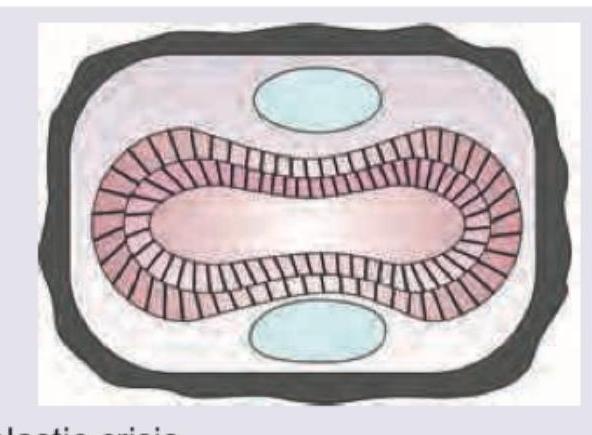
4 questionsAll are true about the terminal area marked 'X' in this bacteria except:

Which of the following is correct about the image shown?

Which of the following bacteria will have following appearance?

A 25-year-old abattoir worker presents with myoclonus and amnesia for recent and remote events for last 1 year. MRI head was performed. All statements are correct about the organisms leading to this disease except:

NEET-PG 2017 - Anatomy NEET-PG Practice Questions and MCQs
Question 241: All are true about the terminal area marked 'X' in this bacteria except:
- A. Volutin granules
- B. Strongly eosinophilic (Correct Answer)
- C. Function as storage reservoir for phosphate
- D. Also found in Yersinia pestis
Explanation: ***Strongly eosinophilic*** - The terminal areas marked 'X' represent **metachromatic granules** (also called volutin granules) which stain reddish-purple with methylene blue, a basic dye, indicating they are **basophilic**, not eosinophilic. - Eosinophilic structures stain well with acidic dyes like eosin, resulting in a pink or red color. *Volutin granules* - The terminal areas marked 'X' are characteristic **volutin granules**, also known as **metachromatic granules**, which are inclusions seen in certain bacteria. - These granules are prominent in *Corynebacterium diphtheriae*, which typically exhibits a **club-shaped** or **cuneiform** morphology. *Function as storage reservoir for phosphate* - Volutin granules primarily serve as a **storage reservoir for inorganic polyphosphate**, which is crucial for the bacterium's energy metabolism and various cellular processes. - This stored phosphate can be utilized when environmental phosphate levels are low. *Also found in Yersinia pestis* - **Bipolar staining**, which resembles prominent granules at the ends of the bacteria (similar to the appearance of volutin granules), is a characteristic feature of *Yersinia pestis*. - This gives *Yersinia pestis* a distinctive "safety pin" appearance on Wright-Giemsa or Wayson stain.
Question 242: Which of the following is correct about the image shown?
- A. A = Monotrichous, B = Lophotrichous, C = Amphitrichous, D = Peritrichous (Correct Answer)
- B. A = Lophotrichous, B = Monotrichous, C = Amphitrichous, D = Peritrichous
- C. A = Monotrichous, B = Lophotrichous, C = Peritrichous, D = Amphitrichous
- D. A = Peritrichous, B = Lophotrichous, C = Amphitrichous, D = Monotrichous
Explanation: ***A = Monotrichous, B = Lophotrichous, C = Amphitrichous, D = Peritrichous*** - Image **A** shows a bacterium with a **single flagellum at one pole**, which is the classic presentation of **Monotrichous** flagellation. - Image **B** depicts a bacterium with a **tuft of multiple flagella originating from one pole**, characteristic of **Lophotrichous** arrangement. - Image **C** shows a bacterium with **single flagella at both opposite poles**, consistent with **Amphitrichous** flagellation. - Image **D** demonstrates **flagella distributed uniformly over the entire bacterial cell surface**, which is the defining feature of **Peritrichous** flagellation. - This option correctly identifies all four flagellar arrangements as per standard microbiological classification. *A = Lophotrichous, B = Monotrichous, C = Amphitrichous, D = Peritrichous* - Incorrectly identifies image A as **Lophotrichous** (which requires multiple flagella at one pole), when it clearly shows only a single flagellum. - Also incorrectly labels image B as **Monotrichous** (single flagellum), when it displays a tuft of multiple flagella at one pole. *A = Monotrichous, B = Lophotrichous, C = Peritrichous, D = Amphitrichous* - Incorrectly identifies image C as **Peritrichous**, but the image shows flagella only at two opposite poles, not distributed all over the cell. - Misidentifies image D as **Amphitrichous** (flagella at two poles only), when it clearly shows flagella covering the entire bacterial surface. *A = Peritrichous, B = Lophotrichous, C = Amphitrichous, D = Monotrichous* - Incorrectly labels image A as **Peritrichous** (flagella all over), when it shows a single polar flagellum characteristic of Monotrichous arrangement. - Misidentifies image D as **Monotrichous** (single flagellum), when it demonstrates the peritrichous pattern with flagella distributed over the entire surface.
Question 243: Which of the following bacteria will have following appearance?
- A. Vibrio cholerae
- B. Alcaligenes faecalis (Correct Answer)
- C. Spirilla
- D. Salmonella typhi
Explanation: ***Alcaligenes faecalis*** - The image shown is a **rod-shaped bacterium** with a **tuft of flagella at each pole**, resulting in a **bipolar flagellation** pattern typical of *Alcaligenes faecalis*. - This arrangement of flagella (amphitrichous) is characteristic for motility in this specific bacterium. *Vibrio cholerae* - *Vibrio cholerae* is a **curved rod** (comma-shaped) and typically possesses a **single polar flagellum** (monotrichous), which is different from the structure shown. - Its unique shape and flagellar arrangement are key identifiers in microbiology. *Spirilla* - **Spirilla** are **spiral-shaped bacteria** with a rigid, wavy form, which is distinctly different from the rod shape depicted in the image. - They can have various flagellar arrangements, but their overall morphology is elongated and coiled, not straight. *Salmonella typhi* - *Salmonella typhi* is a **rod-shaped bacterium** but it is typically **peritrichous**, meaning it has flagella distributed all over its cell surface, not just at the poles. - The image clearly shows flagella only at the ends, ruling out *Salmonella typhi*.
Question 244: A 25-year-old abattoir worker presents with myoclonus and amnesia for recent and remote events for last 1 year. MRI head was performed. All statements are correct about the organisms leading to this disease except:
- A. Sensitive to ethylene dioxide (Correct Answer)
- B. Absence of nucleic acid
- C. CSF examination of patient shows presence of protein 14.3.3
- D. MRI shows cortical ribboning
Explanation: ***Sensitive to ethylene dioxide*** - Prions, the causative agents of Creutzfeldt-Jakob Disease (CJD), are **resistant to conventional sterilization methods**, including ethylene oxide, radiation, and disinfectants like formaldehyde. This statement is incorrect. - They are primarily inactivated by methods that denature proteins, such as **autoclaving at high temperatures and pressures** or strong sodium hydroxide solutions. *Absence of nucleic acid* - **Prions are infectious proteinaceous particles** that lack nucleic acid (DNA or RNA), which distinguishes them from viruses, bacteria, and other conventional pathogens. - They propagate by inducing conformational changes in normal host proteins. *CSF examination of patient shows presence of protein 14.3.3* - The presence of **14-3-3 protein** in cerebrospinal fluid (CSF) is a significant and widely used diagnostic marker for **Creutzfeldt-Jakob Disease (CJD)**. - Elevated levels of this protein indicate neuronal damage and are often found in patients with rapidly progressive dementia caused by prions. *MRI shows cortical ribboning* - **Cortical ribboning**, characterized by hyperintense signal changes in the cerebral cortex on diffusion-weighted imaging (DWI) and fluid-attenuated inversion recovery (FLAIR) sequences, is a **highly characteristic finding in MRI scans of patients with CJD**. - This MRI finding, along with involvement of the basal ganglia and thalamus, supports the diagnosis of CJD.
ENT
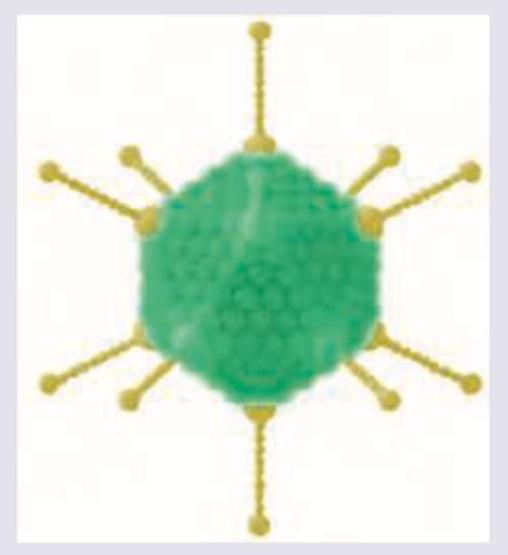
1 questionsA 15-year-old female presents with nasal obstruction and occasional profuse epistaxis for last 8 weeks. Nasal speculum view and histopathology of resected lesion is given. All are correct about the diagnosis except:

NEET-PG 2017 - ENT NEET-PG Practice Questions and MCQs
Question 241: A 15-year-old female presents with nasal obstruction and occasional profuse epistaxis for last 8 weeks. Nasal speculum view and histopathology of resected lesion is given. All are correct about the diagnosis except:
- A. Multiple fungal spherules embedded in stroma of connective tissue
- B. Best cultured on nasal inoculation in hamster (Correct Answer)
- C. Infection originates from stagnant water
- D. Surgical excision is best treatment
Explanation: *Best cultured on nasal inoculation in hamster* - This statement is **incorrect** because *Rhinosporidium seeberi*, the causative agent of rhinosporidiosis (which is indicated by the images and clinical presentation), is an **uncultivable organism** in artificial media or animal models. - Its complex life cycle and specific host requirements make *in vitro* or *in vivo* culture challenging and largely unsuccessful. *Multiple fungal spherules embedded in stroma of connective tissue* - The histopathology image clearly shows characteristic **spherules** of varying sizes, containing numerous endospores, embedded within the connective tissue stroma, which is typical for rhinosporidiosis. - These spherules represent different stages of the organism's life cycle. *Infection originates from stagnant water* - *Rhinosporidium seeberi* is commonly found in **stagnant water** (rivers, ponds) and is often associated with swimming, bathing, or working in such environments. - Exposure to contaminated water is the primary mode of transmission for this rare chronic granulomatous disease. *Surgical excision is best treatment* - **Surgical excision** of the mass with electrocoagulation of the base is considered the most effective treatment for rhinosporidiosis to prevent recurrence. - Anti-fungal medications like dapsone may be used as an adjunct to reduce recurrence rates.
Microbiology
4 questionsWhich of the following eggs is seen in stool microscope examination?

Which of the following worms is shown in the specimen?

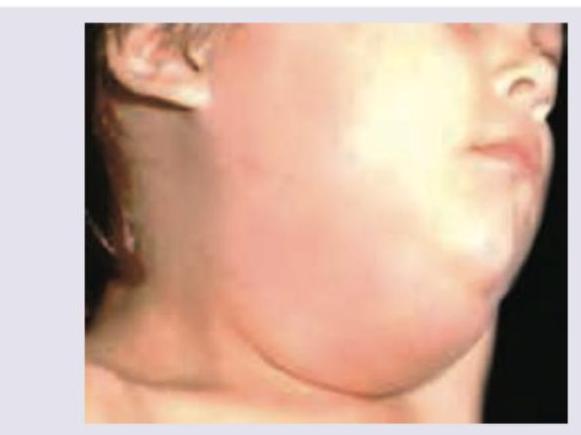
All are correct about the organism causing the following lesion except:

Which of the following is correct about the vegetative fungal spores?

NEET-PG 2017 - Microbiology NEET-PG Practice Questions and MCQs
Question 241: Which of the following eggs is seen in stool microscope examination?
- A. Trichuris trichiura (Correct Answer)
- B. Taenia species
- C. Ascaris lumbricoides
- D. Enterobius vermicularis
Explanation: ***Trichuris trichiura (whipworm) egg*** - The image displays a **barrel-shaped egg** with prominent, translucent **polar plugs (mucous plugs)** at each end, which is characteristic of *Trichuris trichiura* (whipworm) - These eggs measure approximately **50-54 × 22-23 μm** and have a thick, smooth shell with characteristic bipolar plugs - Found in **stool samples** during microscopic examination, indicating whipworm infection *Ascaris lumbricoides* - Eggs are **oval/round** (45-75 × 35-50 μm), not barrel-shaped - Have a thick, mammillated (bumpy) outer coat when unfertilized, or smooth when fertilized - **No polar plugs** - this is the key differentiating feature *Enterobius vermicularis* - Eggs are **asymmetrically oval** and flattened on one side (50-60 × 20-30 μm) - **No polar plugs** present - Rarely seen in stool; best detected by **perianal scotch tape test** *Taenia species* - Eggs are **spherical** (30-40 μm diameter) with radial striations - Contain a **six-hooked embryo (hexacanth)** inside - **No polar plugs** and completely different morphology
Question 242: Which of the following worms is shown in the specimen?
- A. Ascaris lumbricoides (Correct Answer)
- B. Trichinella
- C. Wuchereria bancrofti
- D. Trichuris trichiura
Explanation: ***Ascaris lumbricoides*** - The image displays a collection of **large, creamy-white to yellowish-brown, roundworms** that are characteristic of *Ascaris lumbricoides*. These worms are often referred to as **giant roundworms** due to their size. - They are typically found in the **intestines** and can grow up to 35 cm in length, which is consistent with the appearance of the worms in the specimen jar. *Trichinella* - *Trichinella* species are **much smaller** and are typically not visible as macroscopic worms in a specimen jar in this manner. - They are primarily known for causing **trichinellosis**, where larvae encyst in muscle tissue, rather than forming large masses in the intestines. *Wuchereria bancrofti* - *Wuchereria bancrofti* causes **lymphatic filariasis** and its adult worms reside in the lymphatic system. - These worms are **thin and thread-like** and are generally much smaller and more delicate than the worms shown in the specimen, which appear robust. *Trichuris trichiura* - *Trichuris trichiura*, also known as **whipworm**, has a characteristic **whip-like appearance** with a thin anterior portion and a thicker posterior end. - While they are intestinal nematodes, they are generally **smaller** and have a distinct morphology not seen in the specimen.
Question 243: All are correct about the organism causing the following lesion except:
- A. Reynold Braude phenomenon (Correct Answer)
- B. Gram positive yeast cells
- C. Chlamydospores obtained on cornmeal agar
- D. Creamy patches that on removal lead to red oozing patches
Explanation: ***Reynold Braude phenomenon*** - The **Reynolds-Braude phenomenon** is associated with **Staphylococcus aureus** and refers to the increased invasiveness of *S. aureus* in the presence of certain other bacteria. - This phenomenon is **not characteristic of *Candida albicans***, the organism responsible for the oral candidiasis (thrush) shown in the image. - **This is the correct answer** to this "except" question. *Gram positive yeast cells* - *Candida albicans* is a **Gram-positive yeast** that appears purple/blue on Gram staining. - It typically shows **budding yeast cells** and **pseudohyphae** on microscopy. - This statement is TRUE for *Candida albicans*. *Chlamydospores obtained on cornmeal agar* - **Chlamydospores** are thick-walled, large, round terminal spores that are characteristic of *Candida albicans*. - They are best demonstrated on **cornmeal agar with Tween 80** (or rice agar), which is the standard medium for their production. - The presence of chlamydospores is a key identifying feature that helps differentiate *C. albicans* from other *Candida* species. - This statement is TRUE for *Candida albicans*. *Creamy patches that on removal lead to red oozing patches* - The image shows **creamy white patches** on an inflamed oral mucosa, characteristic of **pseudomembranous candidiasis** (oral thrush). - These patches can be **scraped off**, revealing an **erythematous, bleeding** (red oozing) underlying surface. - This is a classic clinical presentation of oral candidiasis. - This statement is TRUE for *Candida albicans*.
Question 244: Which of the following is correct about the vegetative fungal spores?
- A. A = Arthrospores, B= Blastospores, C= Chlamydospores
- B. A = Blastospores, B= Arthrospores, C= Chlamydospores (Correct Answer)
- C. A = Blastospores, B= Chlamydospores, C= Arthrospores
- D. A = Chlamydospores, B= Arthrospores, C= Blastospores
Explanation: **A = Blastospores, B= Arthrospores, C= Chlamydospores** - Image A depicts **blastospores**, which are asexually produced spores formed by **budding** from a parent cell, giving them a distinct tear-drop or oval shape. - Image B illustrates **arthrospores**, which are formed by the **fragmentation** of a hyphal cell into barrel-shaped segments. - Image C shows **chlamydospores**, characterized by their **thick-walled**, resistant, and usually spherical or oval structure within a hypha. *A = Arthrospores, B= Blastospores, C= Chlamydospores* - This option incorrectly identifies image A as arthrospores, which are typically barrel-shaped and result from hyphal fragmentation, not the budding pattern seen in image A. - Image B is incorrectly labeled as blastospores, but the fragmentation pattern is characteristic of arthrospores. *A = Blastospores, B= Chlamydospores, C= Arthrospores* - While image A is correctly identified as blastospores, this option misidentifies image B as chlamydospores. - Image C does not show arthrospores; the thick-walled structure is characteristic of chlamydospores, not the barrel-shaped arthrospores. *A = Chlamydospores, B= Arthrospores, C= Blastospores* - This option incorrectly identifies image A as chlamydospores, which are thick-walled resistant structures, not the budding spores visible in the image. - It also incorrectly labels image C as blastospores; the thick-walled appearance is typical of chlamydospores, not budded blastospores.
Ophthalmology
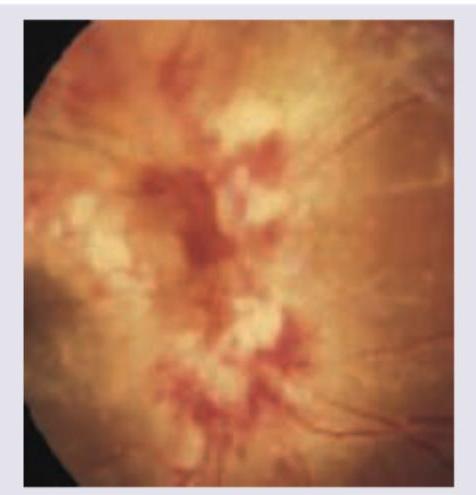
1 questionsA 40-year-old AIDS positive patient complains of seeing floaters followed by progressive reduction in visual acuity over next weeks. Fundus examination was performed. All are true about the causative agent except: (Recent NEET Pattern 2016-17)
NEET-PG 2017 - Ophthalmology NEET-PG Practice Questions and MCQs
Question 241: A 40-year-old AIDS positive patient complains of seeing floaters followed by progressive reduction in visual acuity over next weeks. Fundus examination was performed. All are true about the causative agent except: (Recent NEET Pattern 2016-17)
- A. Eosinophilic intranuclear inclusions (Correct Answer)
- B. Shed in semen
- C. Largest virus in human herpes virus
- D. Leads to pizza pie retinopathy
Explanation: ***Eosinophilic intranuclear inclusions*** - The causative agent of **CMV retinitis** (Cytomegalovirus) typically forms **basophilic intranuclear inclusions** (owl's eye inclusions), not eosinophilic ones. - This statement is therefore incorrect regarding CMV. *Shed in semen* - **CMV** is commonly shed in various bodily fluids, including **semen**, urine, and saliva, contributing to its transmission. - This is a true characteristic of CMV. *Largest virus in human herpes virus* - **CMV** (Human herpesvirus 5) is indeed the **largest virus in the human herpesvirus family**, both in terms of genome size and virion size. - This is a true characteristic of CMV. *Leads to pizza pie retinopathy* - The classic description of **CMV retinitis** on fundus examination is often referred to as "**pizza pie retinopathy**" or "cottage cheese and ketchup" appearance, due to its characteristic retinal hemorrhages and white, necrotic areas. - This is a true clinical manifestation of CMV retinitis.