ENT
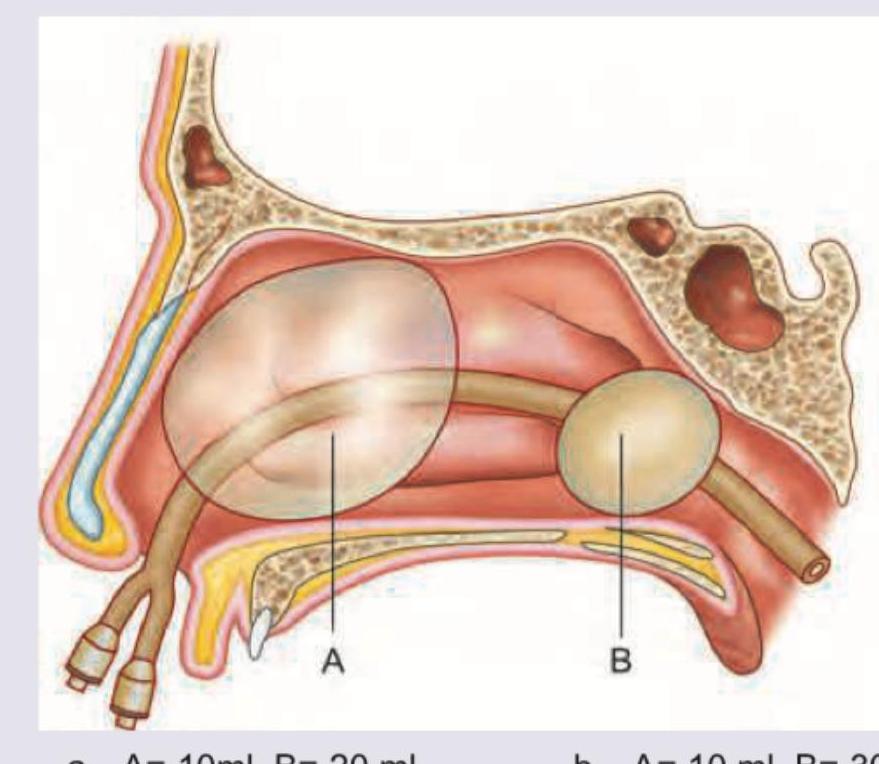
4 questionsThe volume of the balloons shown in epistaxis balloon is: (Recent NEET Pattern 2016-17)
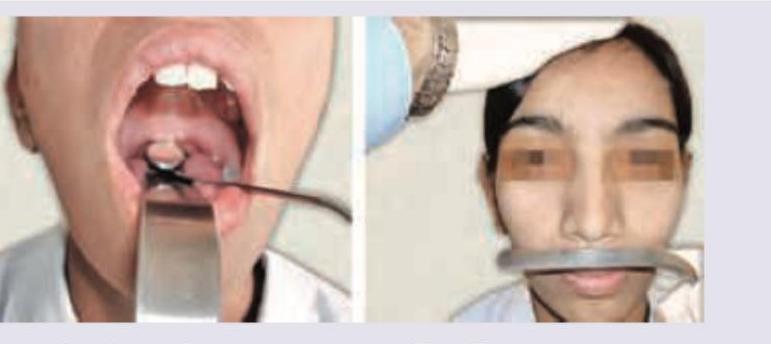
The image shows which of the following tests being performed? (Recent NEET Pattern 2016-17)
All are contraindications to the procedure shown below except:

All of the following are correct about the image shown except:

NEET-PG 2017 - ENT NEET-PG Practice Questions and MCQs
Question 201: The volume of the balloons shown in epistaxis balloon is: (Recent NEET Pattern 2016-17)
- A. 72. (d) (Correct Answer)
- B. 73. (b)
- C. 74. (b)
- D. 75. (c)
Explanation: ***72. (d)*** - This option is indicated to be the correct answer, and without the full image context (which would include labels for the options a, b, c, d with specific volumes), we must assume this represents the correct volume combination for balloons A and B. For a typical epistaxis balloon, the **anterior balloon (A)** is designed to fill the anterior nasal cavity and the **posterior balloon (B)** is designed to seal the choana. - While exact volumes can vary by device, commonly, the anterior balloon (A) has a larger volume capacity than the posterior balloon (B) to effectively tamponade the larger anterior nasal space. *73. (b)* - Without specific volume values for options, it's impossible to confirm why this is incorrect. However, if this option provided volumes inconsistent with established medical device specifications for epistaxis balloons, it would be incorrect. - The volumes chosen must be suitable for effective tamponade without causing excessive pressure or tissue necrosis. *74. (b)* - Similar to the above, without the actual content of option 'b' (e.g., "A = 10ml, B = 20ml" from the provided image fragment text), it's difficult to specifically explain its incorrectness. However, if the implied volumes contradict the typical anatomical requirements and device design for epistaxis control, it is incorrect. - The relative sizes of the balloons (A larger than B, generally) are crucial for proper placement and function. *75. (c)* - Again, the lack of specific volume values for option 'c' (e.g., "A = 30ml, B = 10ml" from the provided image fragment text) prevents a direct explanation. Nevertheless, if the volumes listed do not correspond to the physiological requirements for anterior and posterior nasal packing, or if they are atypical for standard epistaxis devices, this option would be incorrect. - **Over-inflation** or **under-inflation** with incorrect volumes can lead to ineffective treatment or complications like pressure necrosis.
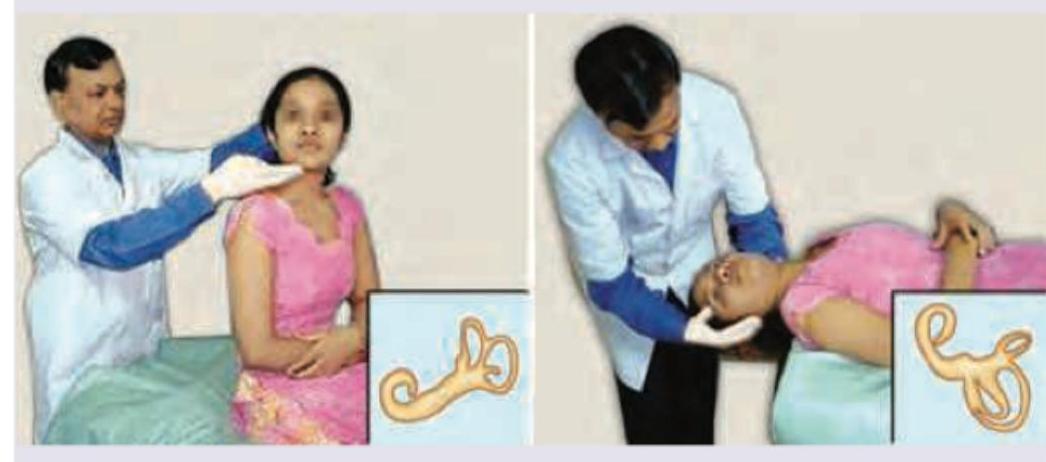
Question 202: The image shows which of the following tests being performed? (Recent NEET Pattern 2016-17)
- A. A= Indirect laryngoscopy, B= Spatula test (Correct Answer)
- B. A= Posterior rhinoscopy, B= Spatula test
- C. A= Direct laryngoscopy, B= Spatula test
- D. A= Anterior rhinoscopy, B= Spatula test
Explanation: ***A= Indirect laryngoscopy, B= Spatula test*** - Image A depicts a mirror being used to visualize the larynx through the oral cavity, which is characteristic of **indirect laryngoscopy**. - Image B shows a spatula being used to apply pressure to the tongue or jaw while observing for a reflex action, which is consistent with the **spatula test** for tetanus. *A= Posterior rhinoscopy, B= Spatula test* - **Posterior rhinoscopy** involves visualizing the nasopharynx via a mirror placed behind the soft palate, which is not what is shown in Image A. - While Image B correctly shows a spatula test, Image A is clearly not a posterior rhinoscopy. *A= Direct laryngoscopy, B= Spatula test* - **Direct laryngoscopy** uses a laryngoscope to directly visualize the larynx without a mirror, often requiring sedation, which differs from the technique in Image A. - Image A shows the use of a mirror for visualization, thus ruling out direct laryngoscopy. *A= Anterior rhinoscopy, B= Spatula test* - **Anterior rhinoscopy** involves examining the anterior nasal cavity using a nasal speculum, which is not depicted in Image A. - Image A shows examination of the oral cavity and pharynx with a mirror, not the anterior nasal cavity.
Question 203: All are contraindications to the procedure shown below except:
- A. Acute maxillary sinusitis
- B. Antral cyst (Correct Answer)
- C. Fractured maxilla
- D. Children less than 3 years
Explanation: The image displays a procedure known as **antral lavage** or **maxillary sinus washout**, which involves puncturing the maxillary sinus and irrigating it, typically through the inferior meatus using a Lichtwitz cannula. This procedure is performed to drain pus or fluid from the maxillary sinus and collect samples for diagnostic purposes. ***Antral cyst*** - An antral cyst is a benign, fluid-filled lesion within the maxillary sinus, and its presence does not contraindicate antral lavage. In fact, if the cyst causes symptoms or obstructs drainage, lavage might be performed to assess the sinus, though surgical removal might be ultimately indicated. - The procedure can sometimes help differentiate between a simple cyst and other conditions, or provide temporary relief if the cyst is causing pressure symptoms. *Acute maxillary sinusitis* - While antral lavage is often performed for **chronic sinusitis** or diagnostic purposes in suspected acute sinusitis that is not responding to medical treatment, it is generally **contraindicated in acute, uncomplicated maxillary sinusitis** due to the risk of spreading infection, increased pain, and potential for complications like orbital cellulitis if there is active inflammation and pus under pressure. - Initial management of acute sinusitis typically involves antibiotics, decongestants, and analgesics. *Fractured maxilla* - A **fractured maxilla** presents a significant contraindication because the structural integrity of the bone is compromised. Puncturing the sinus in such a situation could lead to further displacement of bone fragments, increased hemorrhage, direct injury to vital structures, or introduction of infection into surrounding tissues. - Any manipulation of the sinus floor or walls could worsen the fracture or impede healing. *Children less than 3 years* - Antral lavage is generally **contraindicated in children under the age of 3 years** due to the underdeveloped state of their paranasal sinuses, especially the maxillary sinuses. - The sinus walls are thin and fragile, increasing the risk of orbital or intracranial penetration, and children this young are often uncooperative, making the procedure difficult and dangerous.
Question 204: All of the following are correct about the image shown except:
- A. Omega shaped epiglottis
- B. High pitched expiratory stridor (Correct Answer)
- C. Cry is normal
- D. 10% cases need surgery due to development of OSA or Cor Pulmonale
Explanation: ***High pitched expiratory stridor*** - The image depicts an **omega-shaped epiglottis** and collapsed aryepiglottic folds, consistent with **laryngomalacia**. - Laryngomalacia typically presents with **inspiratory stridor**, not expiratory, resulting from airway collapse during inspiration. - **This is the EXCEPT answer** - high-pitched expiratory stridor is NOT a feature of laryngomalacia. *Omega shaped epiglottis* - The image clearly shows an **omega-shaped epiglottis**, a characteristic feature of **laryngomalacia**. - This anatomical variation contributes to the collapse of supraglottic structures during inspiration. *Cry is normal* - In laryngomalacia, the **vocal cords** themselves are not affected, so the **cry typically remains normal**. - The abnormal sounds (stridor) arise from the supraglottic structures, not the vocal cord function during crying. *10% cases need surgery due to development of OSA or Cor Pulmonale* - While most cases of laryngomalacia are self-limiting, approximately **10% of infants may require surgical intervention** (supraglottoplasty). - This is usually due to severe symptoms like **obstructive sleep apnea (OSA)**, failure to thrive, or the rare development of **cor pulmonale**.
Orthopaedics
4 questionsWhat is correct about the fracture shown in the figure?

The given nature of injury will lead to the development of:

The contracture shown in the image is associated with all except:

The test performed below shows testing of which of the following nerve: (Recent NEET Pattern 2016-17)

NEET-PG 2017 - Orthopaedics NEET-PG Practice Questions and MCQs
Question 201: What is correct about the fracture shown in the figure?
- A. A= Bennett fracture, B= Rolando fracture (Correct Answer)
- B. A= Rolando fracture, B= Bennett fracture
- C. A= Boxer's fracture, B= Bennett fracture
- D. A= Bennett fracture, B= Boxer's fracture
Explanation: ***A= Bennett fracture, B= Rolando fracture*** * **Bennett fracture** (A) is an **intra-articular fracture** of the base of the first metacarpal bone with a characteristic **two-part fracture** pattern. It involves a small fragment of the metacarpal base remaining attached to the carpometacarpal joint, while the rest of the metacarpal is dislocated. * **Rolando fracture** (B) is a **comminuted intra-articular fracture** at the base of the first metacarpal. It is characterized by a **Y or T-shaped fracture pattern**, indicating a more complex, three-part or more fragment involvement compared to a Bennett fracture. *A= Rolando fracture, B= Bennett fracture* * This option incorrectly identifies A as a Rolando fracture; Image A clearly shows a **two-part fracture** typical of a Bennett fracture, not the comminuted pattern of a Rolando. * Similarly, B is incorrectly identified as a Bennett fracture as it depicts a **multi-fragmented, Y-shaped fracture**, which defines a Rolando fracture. *A= Boxer's fracture, B= Bennett fracture* * **Boxer's fracture** is a fracture of the **neck of the fifth metacarpal**, which is not depicted in either image A or B. Both images show fractures at the base of the first metacarpal. * Image A is a **Bennett fracture**, not a Boxer's fracture, and B is a **Rolando fracture**, not a Bennett fracture. *A= Bennett fracture, B= Boxer's fracture* * While A is correctly identified as a **Bennett fracture**, B is incorrectly identified as a Boxer's fracture. * As previously stated, a **Boxer's fracture affects the fifth metacarpal**, whereas image B clearly shows a fracture of the first metacarpal base with multiple fragments.
Question 202: The given nature of injury will lead to the development of:
- A. Jersey finger
- B. Mallet finger (Correct Answer)
- C. Jammed finger
- D. Boxer knuckle
Explanation: ***Mallet finger*** - The image shows a **rupture of the extensor tendon** at its insertion into the distal phalanx, or an avulsion fracture of the distal phalanx, causing an inability to extend the distal interphalangeal (DIP) joint. - This injury results in the characteristic **flexion deformity** of the DIP joint, known as mallet finger. *Jersey finger* - This injury involves the **rupture of the flexor digitorum profundus tendon** from its insertion at the base of the distal phalanx. - Patients cannot actively **flex their DIP joint**, unlike the extensor tendon injury shown. *Jammed finger* - This is a general term for an **axial load injury** to the finger, usually causing a sprain or mild fracture without a specific tendon rupture as depicted. - It typically results from impact on the fingertip, leading to **ligamentous injury** or joint capsule damage. *Boxer knuckle* - **Boxer's knuckle** refers to a sagital band rupture at the metacarpophalangeal (MCP) joint, affecting the central slip of the extensor tendon. - This injury primarily involves the **MCP joint** and not the DIP joint, as shown in the image.
Question 203: The contracture shown in the image is associated with all except:
- A. Seen in cirrhosis
- B. Involves the ring and little finger
- C. Table top test is negative (Correct Answer)
- D. Clostridial collagenase for resolution
Explanation: ***Table top test is negative*** - The image shows a hand affected by **Dupuytren's contracture**, characterized by fixed flexion deformities of the finger joints. - In Dupuytren's contracture, the **tabletop test** is typically **positive** (meaning the hand cannot be laid flat on a table) when the metacarpophalangeal (MCP) or proximal interphalangeal (PIP) joint contracture exceeds 30 degrees, indicating significant fascial thickening and shortening. *Seen in cirrhosis* - **Dupuytren's contracture** is indeed associated with conditions like **alcoholism** and **liver cirrhosis**, though the exact pathophysiological link is not fully understood. - Other associated conditions include diabetes mellitus, manual labor, and certain anti-epileptic medications. *Involves the ring and little finger* - Dupuytren's contracture most commonly affects the **ulnar side of the hand**, particularly the **ring finger** and **little finger**, due to fibrosis and shortening of the palmar fascia. - It can also involve the middle finger and rarely the index finger and thumb. *Clostridial collagenase for resolution* - **Collagenase clostridium histolyticum (CCH)**, derived from *Clostridium histolyticum*, is an approved non-surgical treatment for Dupuytren's contracture. - It works by injecting the enzyme directly into the palmar cord to **dissolve the collagen fibers** responsible for the contracture, allowing for manipulation to release the contracture.
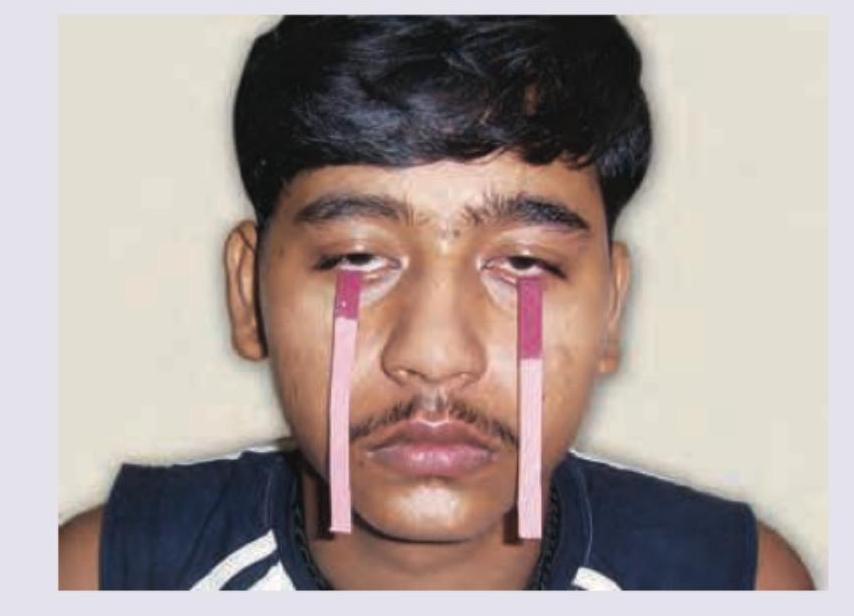
Question 204: The test performed below shows testing of which of the following nerve: (Recent NEET Pattern 2016-17)
- A. Median nerve
- B. Ulnar nerve (Correct Answer)
- C. Radial nerve
- D. Axillary nerve
Explanation: ***Ulnar nerve*** - The image shows a patient with inability to adequately flex the **ring and little fingers**, a classic sign of **ulnar nerve palsy**. This is known as the **"ulnar claw"** when the patient attempts to make a fist or extend the fingers. - The ulnar nerve innervates most of the **intrinsic hand muscles**, including the **interossei** and the **medial two lumbricals (ring and little fingers)**, which are responsible for flexion at the metacarpophalangeal joints and extension at the interphalangeal joints of these digits. *Median nerve* - **Median nerve injury** typically results in inability to **oppose the thumb** (ape hand deformity) and sensory loss over the radial three and a half digits. - It affects the **flexor muscles of the forearm** and the **thenar muscles**, not primarily the ring and little finger flexion shown. *Radial nerve* - **Radial nerve injury** causes **wrist drop** and **finger drop** due to paralysis of the extensors of the wrist and fingers. - It primarily affects **extension** of the wrist and fingers, rather than the intrinsic hand function of flexion shown in the image. *Axillary nerve* - The **axillary nerve** primarily innervates the **deltoid muscle** and **teres minor**, responsible for shoulder abduction and external rotation. - Injury to the axillary nerve would result in **shoulder weakness** and sensory loss over the lateral shoulder, with no direct impact on hand or finger function.
Radiology
1 questionsThe given X-ray of paranasal sinuses shows which view?

NEET-PG 2017 - Radiology NEET-PG Practice Questions and MCQs
Question 201: The given X-ray of paranasal sinuses shows which view?
- A. Caldwell view
- B. Orthopantomogram
- C. Waters' view (Correct Answer)
- D. Luc's View
Explanation: ***Waters' view*** - This view, also known as the **occipitomental view**, is primarily used to visualize the **maxillary sinuses**. - Key features include the **maxillary sinuses** being projected above the petrous ridges, allowing clear visualization of their floors and the inferolateral orbital walls. - The patient's mouth is open in this view, and the **petrous pyramids are projected below the maxillary sinuses**. *Caldwell view* - Also known as the **occipitofrontal view**, it primarily visualizes the **frontal sinuses** and anterior ethmoid air cells. - In a Caldwell view, the **petrous ridges** obscure the lower third of the orbits. *Orthopantomogram* - An **Orthopantomogram (OPG)** is a panoramic dental X-ray that shows all the teeth and surrounding bones in a single image. - It provides a broad view of the **mandible** and **maxilla**, which is not depicted in the image. *Luc's View* - Luc's view is an uncommon projection, sometimes referring to a **lateral view of the maxillary sinus** or a **basal/submentovertex view**. - It is used to visualize the **sphenoid sinus** and **posterior structures**, not the maxillary sinuses as prominently shown in this image.
Surgery
1 questionsAll are correct about the procedure performed in the patient except:

NEET-PG 2017 - Surgery NEET-PG Practice Questions and MCQs
Question 201: All are correct about the procedure performed in the patient except:
- A. Skin incision is not sutured to prevent surgical emphysema
- B. Tracheal incision is a transverse incision starting from the first tracheal ring
- C. Performed under general anesthesia in infants
- D. Skin incision is a vertical midline incision from cricoid cartilage to suprasternal notch (Correct Answer)
Explanation: ***Skin incision is a vertical midline incision from cricoid cartilage to suprasternal notch*** - Standard tracheostomy technique uses a **horizontal skin incision** approximately two fingerbreadths above the suprasternal notch, not a vertical midline incision. - Vertical incisions are **never recommended** for elective tracheostomies due to poor cosmetic results and increased risk of hypertrophic scarring. - This statement is **definitively incorrect** and represents the most clearly wrong option. *Tracheal incision is a transverse incision starting from the first tracheal ring* - While the **first tracheal ring should ideally be avoided** to prevent cricoid cartilage injury and subglottic stenosis, the phrasing "starting from" allows some interpretation. - Standard practice is to make the tracheal incision between the **2nd-3rd or 3rd-4th tracheal rings**. - However, this option is less definitively incorrect compared to the vertical incision statement. *Skin incision is not sutured to prevent surgical emphysema* - This is a **correct technique** that can be employed to allow air escape and prevent subcutaneous emphysema. - While not universally practiced, leaving the skin partially unsutured is a valid approach in certain clinical scenarios. *Performed under general anesthesia in infants* - Pediatric tracheostomy is **correctly performed under general anesthesia** to ensure optimal airway control and patient immobility. - This is **standard practice** for infants and young children.