Anatomy
2 questionsWhat is correct about the composition of fluid in the area marked as $X$ ?

All are correct about the part marked as $X$ and $Y$ except:

NEET-PG 2017 - Anatomy NEET-PG Practice Questions and MCQs
Question 181: What is correct about the composition of fluid in the area marked as $X$ ?
- A. Na = 150 mEq/L, K = 3 mEq/L, Chloride = 125 mEq/L
- B. Na = 3 mEq/L, K = 150 mEq/L, Chloride = 125 mEq/L (Correct Answer)
- C. Na = 50 mEq/L, K = 30 mEq/L, Chloride = 125 mEq/L
- D. Na = 150 mEq/L, K = 30 mEq/L, Chloride = 125 mEq/L
Explanation: ***Na = 3 mEq/L, K = 150 mEq/L, Chloride = 125 mEq/L*** - The area marked 'X' represents the **scala media** in the cochlear cross-section, which contains **endolymph**. - Endolymph has a unique ionic composition with **high potassium concentration** (150 mEq/L) and **low sodium concentration** (3 mEq/L), similar to intracellular fluid. *Na = 150 mEq/L, K = 3 mEq/L, Chloride = 125 mEq/L* - This composition represents **perilymph**, found in the **scala vestibuli** and **scala tympani**, not in the scala media. - Perilymph has high Na+ and low K+ concentrations, resembling **cerebrospinal fluid** and extracellular fluid. *Na = 150 mEq/L, K = 30 mEq/L, Chloride = 125 mEq/L* - The **potassium level of 30 mEq/L** is intermediate and doesn't match any physiological cochlear fluid composition. - This value is too high for perilymph (normally 3 mEq/L) and too low for endolymph (normally 150 mEq/L). *Na = 50 mEq/L, K = 30 mEq/L, Chloride = 125 mEq/L* - The **sodium concentration of 50 mEq/L** is abnormally low for any extracellular fluid compartment. - Neither the Na+ nor K+ values correspond to the known ionic gradients essential for **cochlear hair cell function**.
Question 182: All are correct about the part marked as $X$ and $Y$ except:
- A. $X$ is utricle and has anterior upward slope of 30 degrees (Correct Answer)
- B. $Y$ is ductus reuniens
- C. $Y$ connects utricle to cochlear duct
- D. $X$ is utricle and receives 5 openings of three semicircular canals
Explanation: This is an EXCEPT question - we need to identify the **incorrect** statement. ***$X$ is utricle and has anterior upward slope of 30 degrees*** ✓ **INCORRECT STATEMENT - This is the answer** - The **utricle's macula** is oriented **horizontally** when the head is in normal anatomical position, NOT at a 30-degree anterior upward slope - It is the **saccule's macula** that has an orientation closer to vertical (approximately 30° from vertical in some references) - The utricle detects **linear acceleration in the horizontal plane** - **This statement is FALSE, making it the correct answer to this EXCEPT question** *$X$ is utricle and receives 5 openings of three semicircular canals* ✓ **CORRECT STATEMENT** - This is anatomically **correct**. The utricle receives **five openings** from the three semicircular canals - The three semicircular canals (anterior, posterior, and lateral) have five openings because the **anterior and posterior canals share a common crus** - **This statement is TRUE, so it is not the answer** *$Y$ is ductus reuniens* ✓ **INCORRECT STATEMENT (but see note)** - $Y$ appears to point to the **saccule**, which is one of the **otolith organs** in the vestibule - The **ductus reuniens** is a small duct that connects the saccule to the cochlear duct, not the saccule itself - However, **without seeing the image**, if Y points to the ductus reuniens itself, this could be correct - Based on typical anatomy diagrams, Y most likely indicates the saccule, making this statement incorrect *$Y$ connects utricle to cochlear duct* ✓ **INCORRECT STATEMENT** - $Y$ is the **saccule**, not a connecting duct - The saccule connects to the cochlear duct via the **ductus reuniens** - The saccule does NOT directly connect the utricle to the cochlear duct - Anatomically, the utricle and saccule connect via the **utriculosaccular duct** **Key Point**: Since this is an EXCEPT question asking "All are correct EXCEPT", only **Option A** is the definitively FALSE statement about the anatomy. Options B and C are also incorrect statements, but Option A is the clearest incorrect statement based on standard anatomical orientation of the utricle's macula.
Ophthalmology
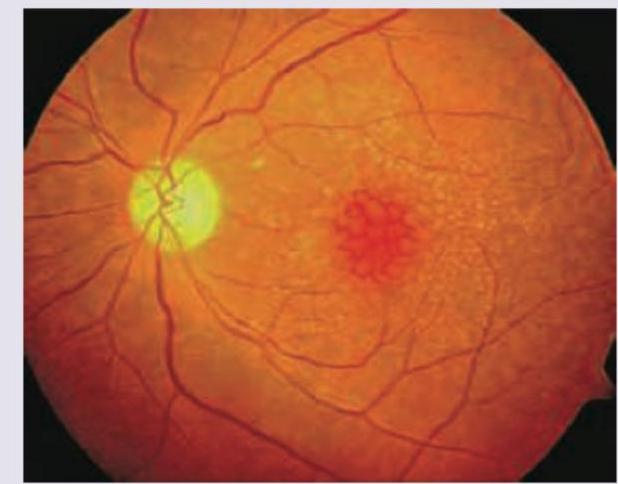
6 questionsA 75-year-old Englishman living in India presents to OPD with complaints of gradual onset painless, progressive blurring of central vision. He says he could earlier drive to the hospital by himself but is not able to do so now. Slit lamp examination is normal. Fundus examination is given below. What is the diagnosis?
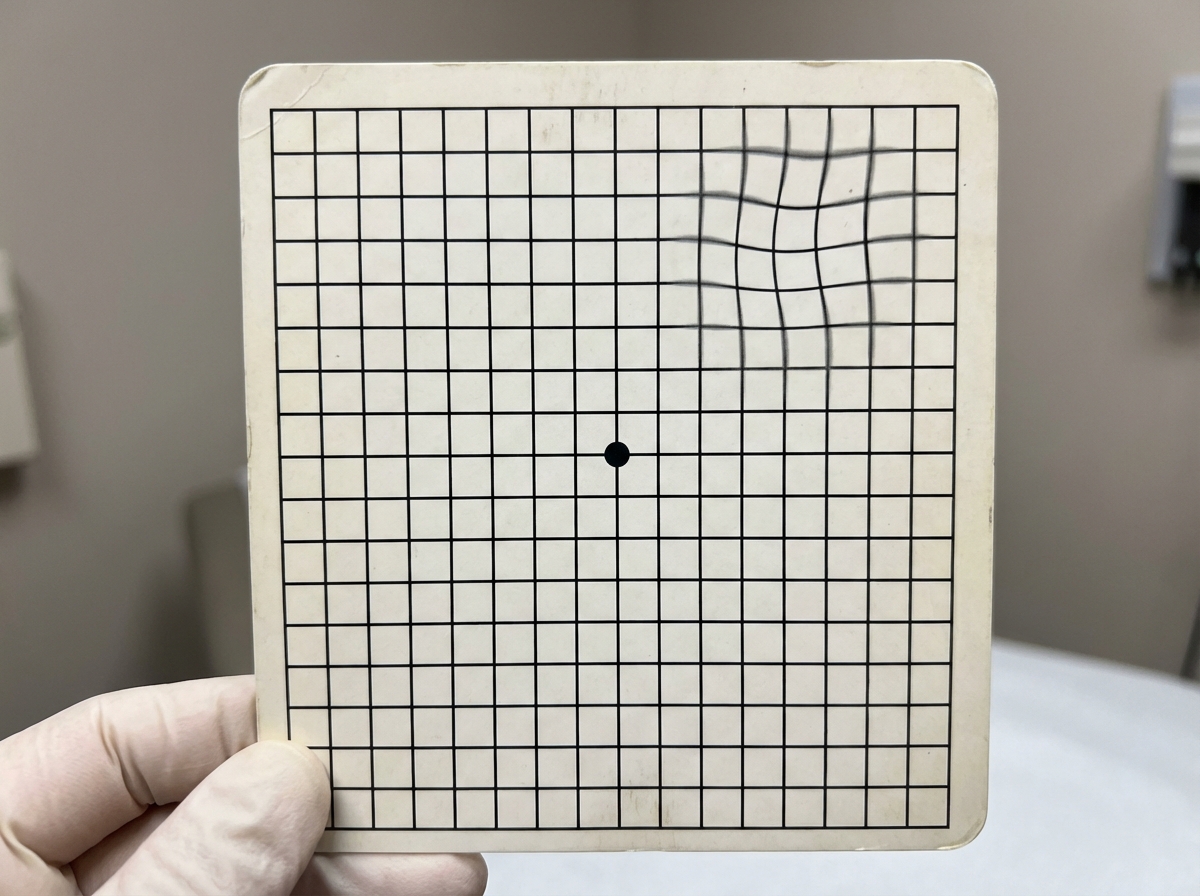
The test shown below is used for the evaluation of
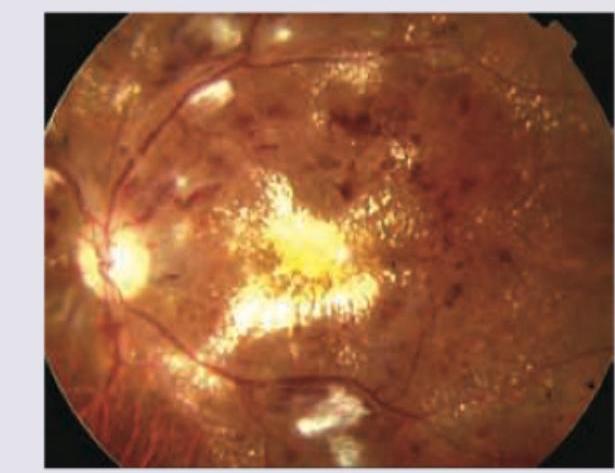
A 60-year-old patient during annual check-up had a report of HbA1C of $10 \%$. What does the given fundus examination show?
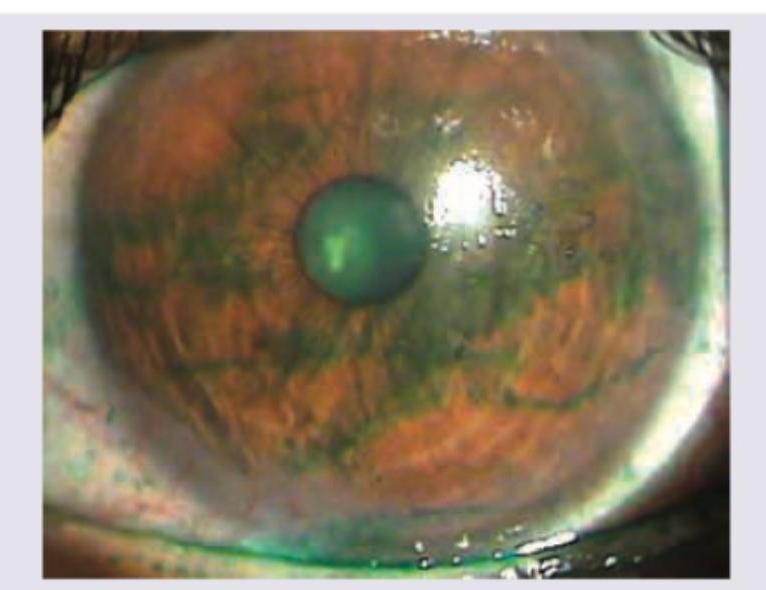
All are used for the treatment of the condition shown below except:

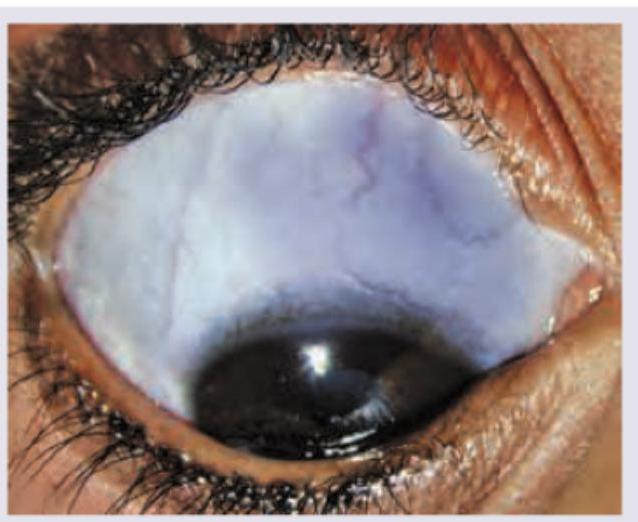
A 30-year-old woman presents with painful eye swelling. Based on the clinical photograph shown, the most likely diagnosis is:

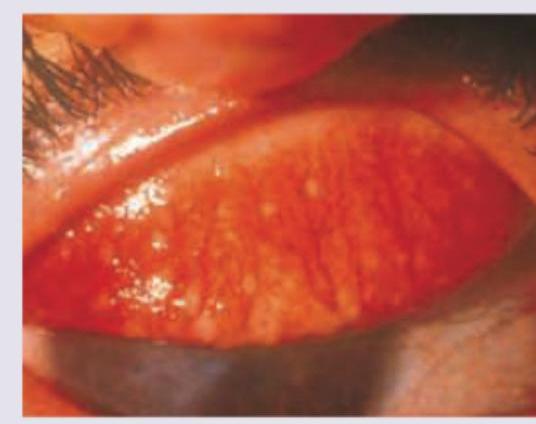
A patient presents with itching in eyes with redness of eyelids. What is correct about the image shown below? (Recent NEET Pattern 2016-17)

NEET-PG 2017 - Ophthalmology NEET-PG Practice Questions and MCQs
Question 181: A 75-year-old Englishman living in India presents to OPD with complaints of gradual onset painless, progressive blurring of central vision. He says he could earlier drive to the hospital by himself but is not able to do so now. Slit lamp examination is normal. Fundus examination is given below. What is the diagnosis?
- A. Central serous retinopathy
- B. Cystoid macular edema
- C. Rhegmatogenous retinal detachment
- D. Age-related macular degeneration (Correct Answer)
Explanation: ***Age-related macular degeneration*** - The patient's age (75 years), gradual painless progressive blurring of **central vision**, and the presence of **drusen** (small yellow deposits) and a **macular hemorrhage** (red spot) on the fundus exam are all characteristic features of wet age-related macular degeneration. - The inability to drive due to vision loss further points to significant central vision impairment, which is a hallmark of AMD, especially the wet form due to **neovascularization** and hemorrhage. *Central serous retinopathy* - Typically affects younger to middle-aged individuals, often associated with stress or corticosteroid use, contrasting with the patient's age. - Characterized by **serous fluid detachment** of the neurosensory retina, not usually significant hemorrhage as seen in the image. *Cystoid macular edema* - Presents with **cyst-like fluid accumulation** within the retina, often leading to a flower petal-like appearance on imaging, which is not depicted in this fundus image. - Can be associated with various conditions like diabetes, retinal vein occlusion, or inflammation, and while it causes central vision loss, the funduscopic appearance here is more consistent with AMD. *Rhegmatogenous retinal detachment* - Usually presents with sudden vision loss, **floaters**, or **flashes of light**, and a "curtain" coming over the vision, which differs from the gradual onset described. - Fundus examination would typically show a detached, billowing retina, often with a retinal tear, not the macular changes with drusen and hemorrhage seen here.
Question 182: The test shown below is used for the evaluation of
- A. Macular degeneration (Correct Answer)
- B. Glaucoma
- C. Cataracts
- D. Retinal detachment
Explanation: ***Macular degeneration*** - The image shown is an **Amsler grid**, a diagnostic tool used to detect **visual disturbances** caused by changes in the retina, especially the macula. - The straight lines appearing wavy or distorted, as seen in the right panel, are characteristic findings in **macular degeneration** or other macular pathologies. - The Amsler grid is the standard screening tool for **age-related macular degeneration (AMD)** and other macular disorders. *Glaucoma* - Glaucoma primarily affects the **optic nerve** and typically causes **peripheral vision loss**, which is not directly assessed by an Amsler grid. - Visual field tests (perimetry) are used for glaucoma diagnosis, not the Amsler grid. *Cataracts* - Cataracts involve **clouding of the lens** of the eye, leading to blurred vision, glare, and difficulty with night vision. - They do not typically cause the **distortion of straight lines** that an Amsler grid helps to detect. *Retinal detachment* - Retinal detachment usually presents with symptoms like flashes of light, **floaters**, or a curtain-like shadow in the vision. - While it can affect vision, the Amsler grid specifically detects **macular distortion**, which is the hallmark of macular pathology rather than peripheral retinal detachment.
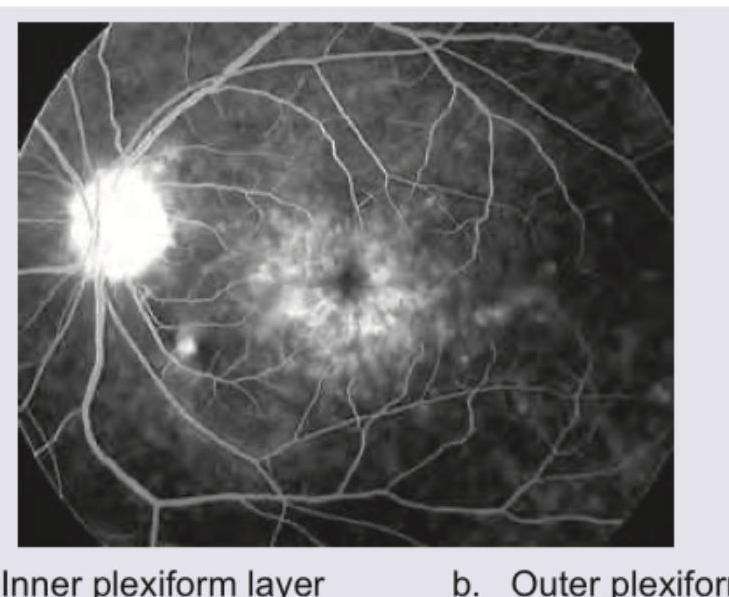
Question 183: A 60-year-old patient during annual check-up had a report of HbA1C of $10 \%$. What does the given fundus examination show?
- A. Proliferative retinopathy (Correct Answer)
- B. Nonproliferative retinopathy
- C. Neovascularization of the disc
- D. Subhyaloid hemorrhage
Explanation: ***Proliferative retinopathy*** - The image shows **neovascularization**, which are new, abnormal blood vessels growing on the surface of the retina or optic disc. This is the hallmark of proliferative retinopathy. - There are also extensive **hard exudates**, retinal hemorrhages, and signs of significant retinal damage consistent with advanced diabetic retinopathy. *Nonproliferative retinopathy* - This stage is characterized by **microaneurysms**, **dot and blot hemorrhages**, hard exudates, and cotton wool spots, but crucially **lacks neovascularization**. - While many features of nonproliferative retinopathy are present (e.g., hemorrhages, exudates), the presence of visible new vessels confirms progression to the proliferative stage. *Neovascularization of the disc* - While **neovascularization of the disc** (NVD) is indeed a feature seen in the image, characterized by the growth of new abnormal vessels on or within one disc diameter of the optic disc, it is a *component* or *sign* of proliferative retinopathy, not the overarching diagnosis. - Proliferative retinopathy encompasses NVD and/or neovascularization elsewhere (NVE), along with other severe changes. *Subhyaloid hemorrhage* - A **subhyaloid hemorrhage** appears as a boat-shaped or D-shaped collection of blood lying beneath the posterior hyaloid face, often obscuring retinal details. - While hemorrhage is present in the image, there is no distinct subhyaloid collection of blood; instead, the picture shows widespread intraretinal and likely preretinal hemorrhages as part of the severe proliferative process.
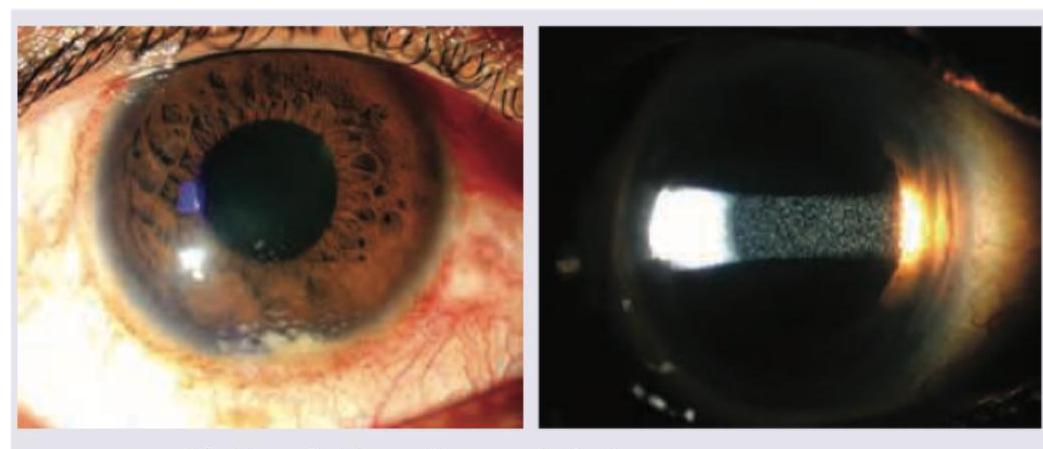
Question 184: All are used for the treatment of the condition shown below except:
- A. Electrolysis
- B. Canthoplasty (Correct Answer)
- C. Electrodiathermy
- D. Cryotherapy
Explanation: ***Canthoplasty*** - The image depicts **trichiasis**, a condition where eyelashes grow inwards and rub against the cornea. Canthoplasty is a surgical procedure that **modifies the outer or inner canthus of the eye** (the corners) and is not primarily used to address misdirected eyelashes. - Canthoplasty is typically performed for conditions like **ectropion** or **entropion** to correct eyelid position, or for cosmetic purposes, not for direct removal or redirection of individual eyelashes. *Electrolysis* - **Electrolysis** is a common and effective method for treating trichiasis by destroying the hair follicle with an electric current, preventing regrowth. - This procedure targets individual misdirected eyelashes, providing a long-term solution. *Electrodiathermy* - **Electrodiathermy** (also known as diathermy) uses high-frequency electrical currents to generate heat, which can be applied to destroy hair follicles, similar to electrolysis. - It is an effective treatment for permanent removal of eyelashes in cases of trichiasis. *Cryotherapy* - **Cryotherapy** involves freezing the eyelash follicles to destroy them, preventing further abnormal growth. - This technique is another viable option for the permanent removal of eyelashes in trichiasis and can be applied to a group of misdirected lashes.
Question 185: A 30-year-old woman presents with painful eye swelling. Based on the clinical photograph shown, the most likely diagnosis is:
- A. Acute dacryocystitis (Correct Answer)
- B. Lacrimal gland carcinoma
- C. Orbital cellulitis
- D. Hordeolum externum
Explanation: ***Acute dacryocystitis*** - The image shows a **painful, erythematous, and swollen area** at the medial canthus below the **medial palpebral ligament**, characteristic of acute inflammation of the lacrimal sac. - This condition results from **obstruction of the nasolacrimal duct**, leading to bacterial infection and abscess formation in the lacrimal sac. *Lacrimal gland carcinoma* - This condition typically presents as a **slow-growing mass** in the upper outer quadrant of the orbit, often causing **proptosis and displacement** of the globe, rather than acute inflammation at the medial canthus. - While it can be painful, the **acute inflammatory signs** and specific location seen in the image are not typical of lacrimal gland carcinoma. *Orbital cellulitis* - Orbital cellulitis involves inflammation and infection of the **orbital tissues posterior to the orbital septum**, causing generalized swelling of the eyelids, proptosis, pain with eye movements, and potentially vision loss. - The localized swelling near the medial canthus with obvious inflammatory signs is more consistent with a dacryocystitis, whereas orbital cellulitis would involve a broader area of swelling and often more systemic symptoms. *Hordeolum externum* - A hordeolum externum, or stye, is an acute **localized infection of a hair follicle or sebaceous gland** (gland of Zeis or Moll) along the eyelid margin. - The swelling seen in the image is much larger and more medially located, involving the lacrimal sac area, rather than being confined to the eyelid margin.
Question 186: A patient presents with itching in eyes with redness of eyelids. What is correct about the image shown below? (Recent NEET Pattern 2016-17)
- A. Trichiasis
- B. Blepharitis (Correct Answer)
- C. Blepharospasm
- D. Distichiasis
Explanation: ***Blepharitis*** - The image shows **redness** and **inflammation of the eyelid margins**, often accompanied by scales or crusts at the base of the eyelashes. This is characteristic of blepharitis. - The history of **itching** and **redness of eyelids** further supports the diagnosis, as these are common symptoms of blepharitis, an immune-mediated inflammation. *Trichiasis* - This condition involves **misdirected eyelashes** that grow inwards and rub against the surface of the eye. - While it can cause irritation, the primary feature in the image is inflammation and crusting of the eyelid margin, not just misdirected lashes. *Blepharospasm* - **Blepharospasm** is an involuntary, repetitive, bilateral twitching or forceful closure of the eyelids. - This is a neurological condition affecting eyelid movement and is not depicted by the visible inflammation in the image. *Distichiasis* - **Distichiasis** is a rare condition where there is an extra row of eyelashes growing from the meibomian gland openings on the eyelid margin. - The image does not show an extra row of lashes; instead, it indicates inflammation and debris along the existing lash line.
Physiology
2 questionsWhat is correct about the composition of fluid in the area marked as X?

The image given below shows stapedial reflex. What does ' $X$ ' denote?

NEET-PG 2017 - Physiology NEET-PG Practice Questions and MCQs
Question 181: What is correct about the composition of fluid in the area marked as X?
- A. Na = 150 mEq/L, K = 3 mEq/L, Chloride = 125 mEq/L
- B. Na = 152 mEq/L, K = 30 mEq/L, Chloride = 125 mEq/L
- C. Na = 50 mEq/L, K = 30 mEq/L, Chloride = 125 mEq/L
- D. Na = 3 mEq/L, K = 150 mEq/L, Chloride = 125 mEq/L (Correct Answer)
Explanation: ***Na = 3 mEq/L, K = 150 mEq/L, Chloride = 125 mEq/L*** - The area marked as X points to the **endolymph** within the scala media of the cochlea, which has a unique high **potassium concentration** (~150 mEq/L) and low **sodium concentration** (~3 mEq/L). - This composition is maintained by the **stria vascularis** and is essential for proper **hair cell function** and hearing transduction. - The high K⁺/low Na⁺ ratio creates the **endocochlear potential** (+80 mV) necessary for cochlear amplification. *Na = 150 mEq/L, K = 3 mEq/L, Chloride = 125 mEq/L* - This represents typical **extracellular fluid** or **perilymph** composition with high sodium and low potassium, which is the opposite of endolymph. - The **perilymph** is found in the scala vestibuli and scala tympani, not in the area marked as X (scala media). *Na = 152 mEq/L, K = 30 mEq/L, Chloride = 125 mEq/L* - The sodium level is too high and potassium too low to represent **endolymph**, which requires an extreme K⁺/Na⁺ gradient for proper cochlear function. - These intermediate values don't match any specific **cochlear fluid compartment** and would not support normal hearing. *Na = 50 mEq/L, K = 30 mEq/L, Chloride = 125 mEq/L* - Both sodium and potassium levels are insufficient to create the **electrochemical gradient** necessary for cochlear hair cell depolarization. - These values don't correspond to either **endolymph** or **perilymph** compositions found in the inner ear.
Question 182: The image given below shows stapedial reflex. What does ' $X$ ' denote?
- A. Superior olivary complex (Correct Answer)
- B. Medial geniculate body
- C. Superior colliculus
- D. Lateral lemniscus
Explanation: ***Superior olivary complex*** - The image depicts the neural pathway for the **stapedial reflex**, where sound input from the cochlea is processed, and the signal travels to the superior olivary complex. - From the superior olivary complex (labeled 'X'), signals project to the **facial nerve nucleus**, which then innervates the **stapedius muscle** to contract and dampen sound. *Medial geniculate body* - The medial geniculate body is part of the **thalamus** and is involved in processing auditory information before it reaches the auditory cortex. - It is a more rostral structure in the auditory pathway and is not directly involved in the brainstem reflex arc of the stapedius reflex at the labeled point 'X'. *Superior colliculus* - The superior colliculus is primarily involved in **visual reflexes** and directing gaze towards salient stimuli. - Although it has some multimodal sensory integration, it is not a key relay in the auditory pathway for the stapedial reflex. *Lateral lemniscus* - The lateral lemniscus is an **ascending auditory pathway** in the brainstem, carrying information from the cochlear nuclei and superior olivary complex to higher centers like the inferior colliculus. - While it carries auditory signals, "X" represents a more specific processing center (superior olivary complex) that integrates bilateral auditory input and projects to motor nuclei for acoustic reflexes.