Obstetrics and Gynecology
2 questionsIdentify the instrument:

Identify the instrument:

NEET-PG 2017 - Obstetrics and Gynecology NEET-PG Practice Questions and MCQs
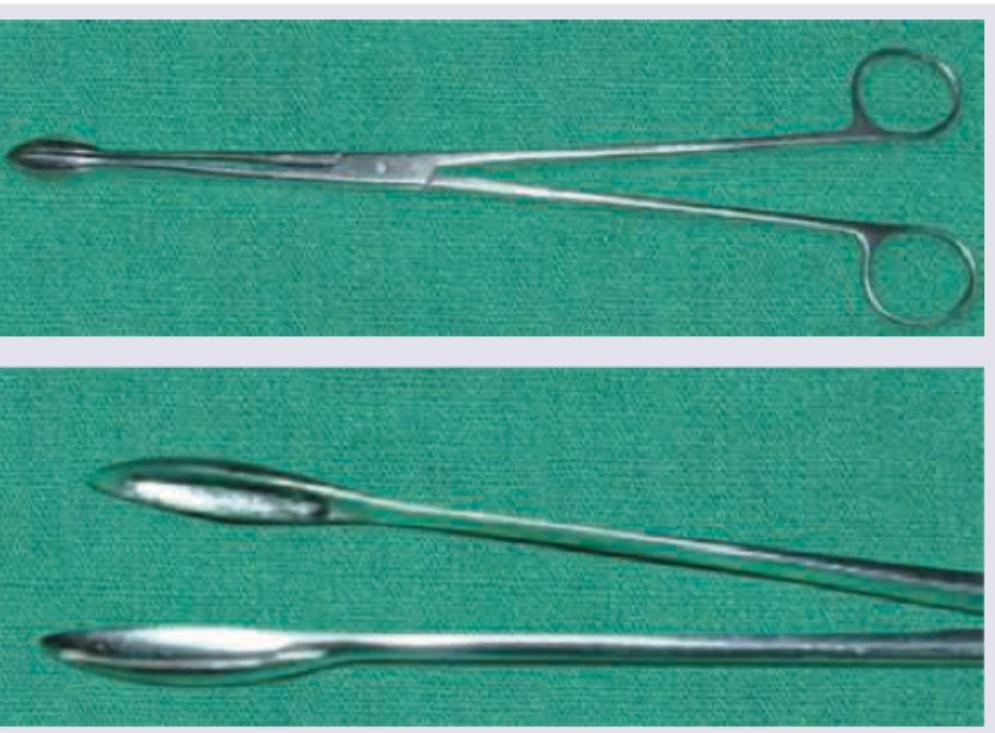
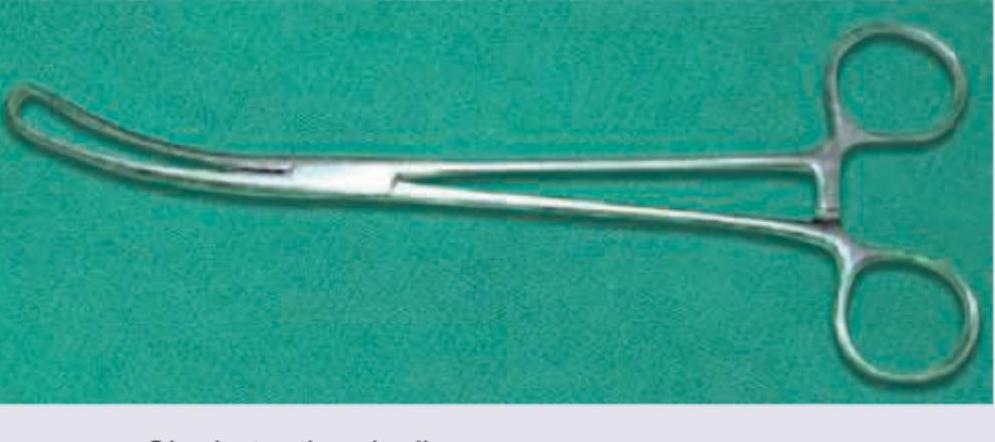
Question 171: Identify the instrument:
- A. Ovum-holding forceps
- B. Artery forceps
- C. Babcock forceps (Correct Answer)
- D. Kocher forceps
Explanation: ***Babcock forceps*** - Babcock forceps are characterized by their **atraumatic, rounded, fenestrated jaws** with a serrated inner surface that allows for a secure grip on delicate tissues without causing significant damage. - They are commonly used in surgery to **grasp and hold tubular structures** such as the bowel, fallopian tubes, or blood vessels without crushing them. *Ovum-holding forceps* - Ovum-holding forceps have **delicate, smooth or minimally serrated jaws** designed to handle small, fragile structures. - They are primarily used in **assisted reproductive procedures** or to grasp delicate tissues during gynecologic surgeries without causing trauma. *Artery forceps* - Artery forceps (e.g., Crile or Halstead mosquito forceps) have **narrow, serrated jaws** that run the full length of the tip. - They are designed to **clamp blood vessels** to control bleeding and typically have a locking mechanism. *Kocher forceps* - Kocher forceps are distinguished by their **transverse serrations** and **1x2 teeth** at the tip of the jaws. - These features provide a **strong, secure grip** on tough tissues but can be traumatic, making them unsuitable for delicate structures.
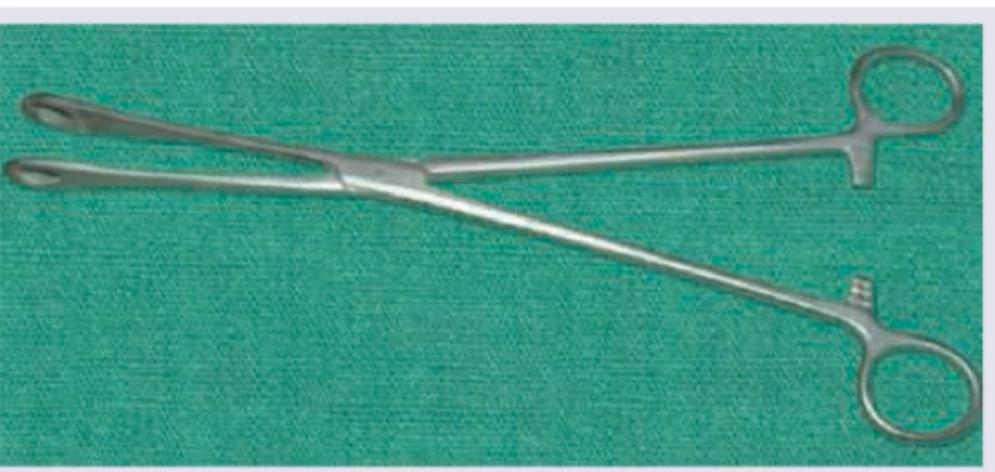
Question 172: Identify the instrument:
- A. Single tooth vulsellum
- B. Tenaculum
- C. Artery forceps (Correct Answer)
- D. Ovum-holding forceps
Explanation: ***Artery forceps*** - The image displays a common **hemostatic clamp** or artery forceps, characterized by its **ring handles**, **ratchet mechanism**, and **serrated jaws**, which are designed to grasp and occlude blood vessels. - The jaws are often curved or straight, and they interlock to provide a secure grip, classifying it as a **clamping instrument**. *Single tooth vulsellum* - A vulsellum has **sharp, pointed teeth** at its tips, designed to grasp dense tissue like the cervix, which is not seen here. - Vulsellums typically have a much more aggressive and pointed jaw design compared to the image. *Tenaculum* - A tenaculum is similar to a vulsellum but often has **finer, sharper points** for piercing tissue, especially the cervix during gynecological procedures. - The instrument in the image lacks the piercing tips characteristic of a tenaculum. *Ovum-holding forceps* - Ovum-holding forceps have **fenestrated (windowed) jaws** with rounded edges, designed to gently grasp fragile tissues like the ovum or polyps without causing trauma. - The instrument shown has completely closed, serrated jaws, not open fenestrated ones.
Ophthalmology
7 questionsThe following alphabet of Snellen's chart will subtend an angle of how many minutes at nodal point of the eye?

The chart shown in the image is:

Identify the stain instilled in the eye in the following image:

A patient from slum presents with grittiness in eyes. Everted eyelid shows: (Recent NEET Pattern 2016-17)

All are causes of the presentation shown below except:

A 30-year-old school teacher presents with complaints of red eye with photophobia. Ocular findings are shown below. All are true about the condition shown except: (Recent NEET Pattern 2016-17)

The given FFA appearance occurs due to accumulation of dye in which of the following layers of retina?

NEET-PG 2017 - Ophthalmology NEET-PG Practice Questions and MCQs
Question 171: The following alphabet of Snellen's chart will subtend an angle of how many minutes at nodal point of the eye?
- A. 1
- B. 3
- C. 5 (Correct Answer)
- D. 10
Explanation: ***Correct Option: 5 minutes*** - The **entire optotype (letter)** of a Snellen's chart subtends an angle of **5 minutes of arc** at the nodal point of the eye when viewed from the standard testing distance - This is the fundamental design principle of the Snellen chart for visual acuity testing - At 6 meters (20 feet), a letter on the 6/6 (20/20) line subtends 5 minutes of arc in total height and width - This standardization allows for consistent visual acuity measurement across different testing scenarios *Incorrect: 1 minute* - This is the angle subtended by **each component part** of the letter (e.g., the width of a stroke or gap between strokes) - Not the angle for the entire letter - Used to define the detail that must be resolved for normal vision *Incorrect: 3 minutes* - No standard optical principle supports this value - Not related to Snellen chart design parameters *Incorrect: 10 minutes* - This angle is too large for standard Snellen chart optotypes - Would indicate significantly reduced visual acuity requirements - Not consistent with 6/6 (20/20) vision standards
Question 172: The chart shown in the image is:
- A. Ishihara's chart
- B. Snellen's chart (Correct Answer)
- C. Farnsworth-Munsell hue test
- D. Pelli-Robson chart
Explanation: ***Snellen's chart*** - The image displays a series of rows with **optotypes (letters)** that decrease in size, which is characteristic of a **Snellen chart**. - This chart is specifically used to measure **visual acuity** by determining the smallest row of letters a person can read at a specific distance. *Ishihara's chart* - **Ishihara charts** are used to test for **color blindness** and consist of plates with colored dots that form numbers or patterns, which are not depicted in the image. - The chart shown focuses on letter recognition and size differentiation, not color perception. *Farnsworth-Munsell hue test* - The **Farnsworth-Munsell hue test** is used for precise **color discrimination** and involves arranging caps of varying hues in a continuum. - This test is distinct from the letter-based visual acuity chart shown in the image. *Pelli-Robson chart* - The **Pelli-Robson chart** is used to measure **contrast sensitivity**, presenting letters of a constant size but decreasing contrast. - While it uses letters, the chart in the image has letters of decreasing size, indicating a visual acuity test rather than contrast sensitivity.
Question 173: Identify the stain instilled in the eye in the following image:
- A. Fluorescein stain (Correct Answer)
- B. Rose Bengal stain
- C. Lissamine green stain
- D. Rhodamine stain
Explanation: ***Fluorescein stain*** - The image shows a **green-yellow fluorescence** under cobalt blue light, which is characteristic of **fluorescein dye** pooling in areas of epithelial defect or healthy tear film. - Fluorescein is a commonly used diagnostic dye in ophthalmology to visualize **corneal abrasions**, ulcers, or contact lens-related issues as it stains damaged corneal epithelial cells. *Rose Bengal stain* - **Rose Bengal** stains devitalized epithelial cells and mucus a **red or purple color**, not green or yellow. - It is particularly useful for identifying **dry eye syndrome** and herpes simplex keratitis but would appear distinctly different from the image. *Lissamine green stain* - **Lissamine green** stains damaged or devitalized conjunctival and corneal cells a **blue-green color**, similar to Rose Bengal. - While it has a greenish hue, it typically does not fluoresce and produces a distinct staining pattern different from the bright, uniform green seen with fluorescein under blue light. *Rhodamine stain* - **Rhodamine** dyes, which are typically **red or pink fluorescent**, are not routinely used as a standard ophthalmic stain for general corneal evaluation. - Its spectral properties and clinical applications are distinct from the common diagnostic dyes used on the ocular surface.
Question 174: A patient from slum presents with grittiness in eyes. Everted eyelid shows: (Recent NEET Pattern 2016-17)
- A. Trachoma (Correct Answer)
- B. Vernal conjunctivitis
- C. Eales disease
- D. Phlyctenular keratoconjunctivitis
Explanation: ***Trachoma*** - The image shows **conjunctival follicles** and **gritty sensation** in a patient from a slum, which are classic signs of Trachoma caused by *Chlamydia trachomatis*. The everted eyelid typically reveals these characteristic follicles. - Trachoma is prevalent in areas with **poor sanitation** and **limited access to water**, consistent with a "slum" setting. *Vernal conjunctivitis* - Characterized by **giant papillae (cobblestone papillae)** on the upper tarsal conjunctiva, often associated with a history of allergies and intense itching. - While it can cause grittiness, the picture does not show the typical giant papillae, but rather smaller, more numerous follicles. *Eales disease* - This is an **idiopathic inflammatory vaso-occlusive disease** affecting the retinal vessels, primarily in young adult males. - It presents with **recurrent vitreous hemorrhages and retinal detachment**, not primarily with conjunctival findings or grittiness. *Phlyctenular keratoconjunctivitis* - Involves the formation of **phlyctenules** (small, nodular lesions) on the conjunctiva or cornea, often associated with delayed hypersensitivity to microbial antigens, such as *Staphylococcus* or *Mycobacterium tuberculosis*. - While it can cause grittiness and photophobia, the follicular pattern in the image is not typical of phlyctenules.
Question 175: All are causes of the presentation shown below except:
- A. Marfan syndrome
- B. Ehlers-Danlos syndrome
- C. Buphthalmos (Correct Answer)
- D. High hypermetropia
Explanation: ***Buphthalmos*** - **Buphthalmos** refers to congenital glaucoma causing **enlargement of the eyeball** with increased corneal diameter (>12 mm). - Classical features include **corneal edema**, **Haab's striae**, and **increased intraocular pressure**. - Buphthalmos does **NOT cause blue sclera**. The sclera in congenital glaucoma is typically normal in color, though the enlarged globe and corneal changes are prominent. - This is the correct answer as it does not cause the presentation shown (blue sclera). *Marfan syndrome* - **Marfan syndrome** is a genetic disorder affecting **fibrillin-1**, leading to connective tissue abnormalities. - Causes **scleral thinning** resulting in **blue sclera** due to visualization of underlying choroidal pigment. - Other ocular features include **ectopia lentis** (upward lens subluxation), **myopia**, and **retinal detachment**. - Systemic features: aortic root dilation, tall stature, arachnodactyly, pectus deformities. *Ehlers-Danlos syndrome* - A group of inherited connective tissue disorders with **collagen defects** (various types affecting different collagen types). - Causes **blue sclera** due to **scleral thinning** and transparency. - Other features include **skin hyperextensibility**, **joint hypermobility**, **tissue fragility**, and easy bruising. - Ocular complications: keratoconus, retinal detachment, globe rupture with minimal trauma. *High hypermetropia* - While **high hypermetropia** primarily refers to a refractive error with light focusing behind the retina, in the context of this question it likely refers to conditions with **nanophthalmos** (abnormally small eye). - Some forms of **microphthalmos with nanophthalmos** can have associated **scleral thickening or abnormalities** that may give a bluish appearance in rare syndromic cases. - However, this association is tenuous compared to the clear connective tissue disorders listed above.
Question 176: A 30-year-old school teacher presents with complaints of red eye with photophobia. Ocular findings are shown below. All are true about the condition shown except: (Recent NEET Pattern 2016-17)
- A. Mutton-fat keratic precipitates
- B. Dalen-Fuchs nodules
- C. Aqueous flare
- D. Muddy iris (Correct Answer)
Explanation: ***Muddy iris*** - A "muddy iris" appearance refers to loss of the normal iris architecture and fine details due to **diffuse iris stromal edema** - This is a characteristic feature of **non-granulomatous (acute) anterior uveitis**, not granulomatous uveitis - The images show **granulomatous anterior uveitis** (evidenced by mutton-fat KPs), where muddy iris is typically **absent** or less prominent - **This is the correct answer** as it is NOT a typical feature of the condition shown *Mutton-fat keratic precipitates* - The left image shows large, greasy-looking deposits on the corneal endothelium - These are characteristic **mutton-fat keratic precipitates (KPs)** composed of macrophages and epithelioid cells - These are **pathognomonic for granulomatous uveitis** and are clearly visible in the condition shown *Dalen-Fuchs nodules* - These are yellowish-white collections of lymphocytes and epithelioid cells between **Bruch's membrane and the RPE** in the peripheral fundus - They are a feature of **granulomatous posterior uveitis**, particularly in **Vogt-Koyanagi-Harada (VKH) disease** and sympathetic ophthalmia - While not visible in these anterior segment images, they **can coexist** in patients with granulomatous panuveitis *Aqueous flare* - The right image (slit lamp beam) shows visible **aqueous flare** - cloudiness in the anterior chamber - This indicates **protein leakage** from breakdown of the blood-aqueous barrier - This is a **direct sign of active inflammation** and is commonly seen in both granulomatous and non-granulomatous uveitis
Question 177: The given FFA appearance occurs due to accumulation of dye in which of the following layers of retina?
- A. Inner plexiform layer (Correct Answer)
- B. Outer plexiform layer
- C. Ganglion cell layer
- D. Outer nuclear layer
Explanation: ***Inner plexiform layer*** - In **cystoid macular edema (CME)**, fluid accumulation occurs in multiple retinal layers, with the **inner plexiform layer** and **inner nuclear layer** being significantly involved. - The characteristic **petaloid (flower-petal) pattern** on fluorescein angiography results from fluid accumulation arranged around the foveal center in a radial pattern. - The **Müller cells**, which span the retina vertically, contribute to the formation of cystoid spaces when their supporting function is disrupted. **Note:** While the **outer plexiform layer (Henle's layer)** is classically described as the primary site of CME in many textbooks due to the radial arrangement of Henle fibers, fluid accumulation also prominently involves the **inner nuclear and inner plexiform layers**, and different imaging modalities and stages of CME may show variable involvement. *Outer plexiform layer* - The outer plexiform layer (also called **Henle's layer** at the macula) is frequently cited as a primary site of fluid accumulation in CME. - The radial arrangement of photoreceptor axons (Henle fibers) in this layer can contribute to the characteristic petaloid pattern. - Modern OCT imaging often shows cystoid spaces involving both outer plexiform and inner nuclear layers. *Ganglion cell layer* - The ganglion cell layer is the most superficial retinal layer containing neuronal cell bodies. - This layer is **not typically involved** in the cystoid fluid accumulation pattern of CME. - Edema here would present differently, potentially obscuring vessels or causing diffuse thickening. *Outer nuclear layer* - The outer nuclear layer contains photoreceptor cell bodies (nuclei of rods and cones). - This layer is **not characteristically involved** in CME's petaloid pattern. - Fluid in this layer is more associated with conditions like **outer retinal edema**, **retinoschisis**, or certain forms of retinal detachment.
Physiology
1 questionsWhich of the following cells in the brain are responsible for handling information regarding ability to read the slide below? (Recent NEET Pattern 2016-17)

NEET-PG 2017 - Physiology NEET-PG Practice Questions and MCQs
Question 171: Which of the following cells in the brain are responsible for handling information regarding ability to read the slide below? (Recent NEET Pattern 2016-17)
- A. Magnocellular cells
- B. Parvocellular cells (Correct Answer)
- C. Purkinje cells
- D. Pyramidal cells
Explanation: ***Parvocellular cells*** - **Parvocellular cells** (P-cells) are responsible for processing detailed visual information, including **color**, **form**, and fine **texture**. Reading the Ishihara test requires the ability to distinguish specific colors and fine patterns. - They have **small receptive fields** and transmit information about high spatial resolution and chromatic detail, crucial for tasks such as reading and recognizing fine visual cues. *Magnocellular cells* - **Magnocellular cells** (M-cells) are primarily involved in detecting **motion** and processing **low-spatial frequency information**, such as global shape and location. - They have **large receptive fields** and are not primarily responsible for detailed color or pattern discrimination needed for reading. *Purkinje cells* - **Purkinje cells** are a type of large, extensively branched neuron located in the **cerebellar cortex**. - Their primary function is motor coordination, balance, and motor learning, not visual processing or reading. *Pyramidal cells* - **Pyramidal cells** are excitatory neurons found in the cerebral cortex and hippocampus, characterized by their pyramidal-shaped cell bodies. - While they are involved in complex cognitive functions, including parts of visual perception, they are not the specific cells in the primary visual pathway responsible for initial processing of fine details and color as required for reading this type of visual test.