General Medicine
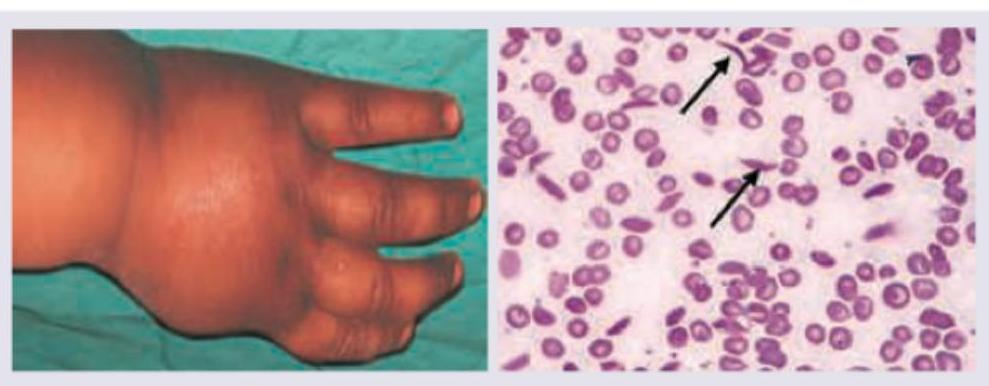
1 questionsComment on the diagnosis in the patient shown below?
NEET-PG 2017 - General Medicine NEET-PG Practice Questions and MCQs
Question 91: Comment on the diagnosis in the patient shown below?
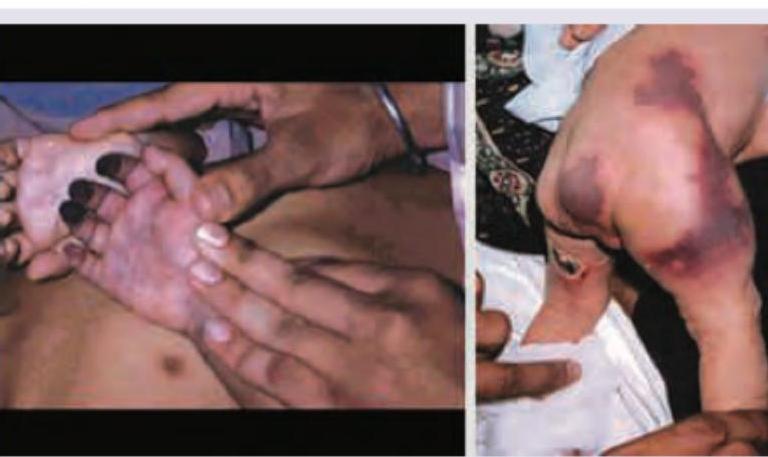
- A. Squaring of metacarpals
- B. Hand and foot syndrome (Correct Answer)
- C. Sub-periosteal resorption
- D. Peripheral oedema with iron deficiency anemia
Explanation: ***Hand and foot syndrome*** - The image shows **swelling and dactylitis** of the fingers, along with a peripheral blood smear demonstrating **sickle cells** (indicated by arrows). This combination is characteristic of hand-foot syndrome, also known as **dactylitis**, which is often the first manifestation of **sickle cell disease** in infants and young children. - **Dactylitis** results from **vaso-occlusion** in the small bones of the hands and feet, leading to painful swelling. *Squaring of metacarpals* - **Squaring of metacarpals** is not a typical finding in sickle cell disease and does not correlate with the observed hand swelling and erythrocyte morphology. - This term is sometimes used to describe changes seen in conditions like **rheumatoid arthritis**, but not in the context of dactylitis associated with sickle cells. *Sub-periosteal resorption* - **Sub-periosteal resorption** is a hallmark radiological finding in **hyperparathyroidism**, affecting bones, typically in the phalanges. - It is not directly suggested by the hand swelling (which is soft tissue/marrow oedema) or the presence of sickle cells in the blood smear. *Peripheral oedema with iron deficiency anemia* - While the picture shows **peripheral oedema** (swelling), the concomitant finding of **sickle cells** in the blood smear strongly indicates **sickle cell disease**, not iron deficiency anemia. - **Iron deficiency anemia** typically presents with microcytic hypochromic red cells, not sickle-shaped cells, and while it can cause fatigue and pallor, it does not directly lead to the dactylitis seen here.
Internal Medicine
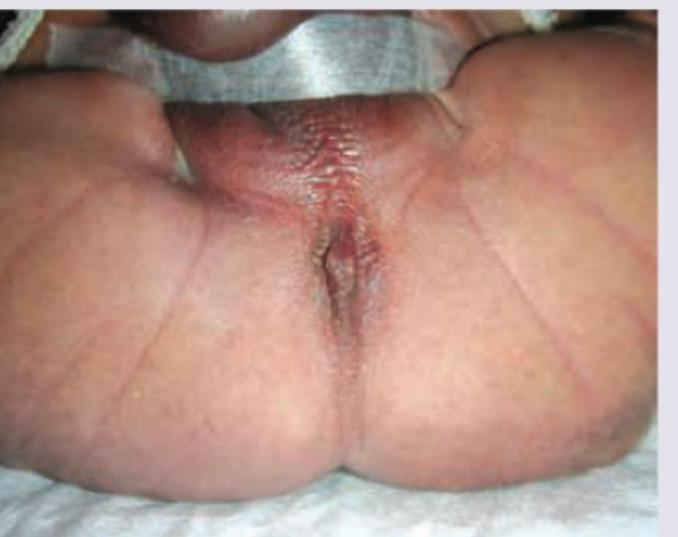
1 questionsThe child is having skeletal abnormality in arms and hands. Which possible heart disease is seen in this condition?

NEET-PG 2017 - Internal Medicine NEET-PG Practice Questions and MCQs
Question 91: The child is having skeletal abnormality in arms and hands. Which possible heart disease is seen in this condition?
- A. ASD (Correct Answer)
- B. PDA
- C. VSD
- D. TOF
Explanation: ***ASD*** - The image shows a child with **phocomelia** or **hypoplastic radius/ulna**, a characteristic skeletal abnormality of the arms and hands, strongly associated with **Holt-Oram syndrome** - **Holt-Oram syndrome** is an **autosomal dominant** disorder caused by mutations in the **TBX5** gene, characterized by upper limb defects (absent/hypoplastic thumb, triphalangeal thumb, radial hypoplasia) and congenital heart defects - The most common cardiac defect is **ASD (ostium secundum type)**, followed by VSD — making ASD the correct answer *PDA* - **Patent ductus arteriosus (PDA)** is a common congenital heart defect but is **not specifically associated** with the upper limb skeletal abnormalities of Holt-Oram syndrome - PDA is classically seen in **premature infants** or associated with **rubella** infection, without specific upper limb skeletal anomalies *VSD* - **Ventricular septal defect (VSD)** is the **second most common** cardiac defect in Holt-Oram syndrome (after ASD), but it is less frequently associated than ASD - VSD is also the most common congenital heart defect overall, but without the specific upper limb skeletal findings, it would not be the first-line answer here *TOF* - **Tetralogy of Fallot (TOF)** comprises pulmonary stenosis, VSD, overriding aorta, and right ventricular hypertrophy - TOF is **not characteristically associated** with Holt-Oram syndrome or upper limb skeletal abnormalities; it is classically associated with cyanotic "tet spells" in infants
Obstetrics and Gynecology
1 questionsA pregnant woman undergoes a routine antenatal ultrasound scan in the second trimester. The sonologist notes an abnormal appearance of the fetal skull. What is the sign demonstrated in the given antenatal USG image?

NEET-PG 2017 - Obstetrics and Gynecology NEET-PG Practice Questions and MCQs
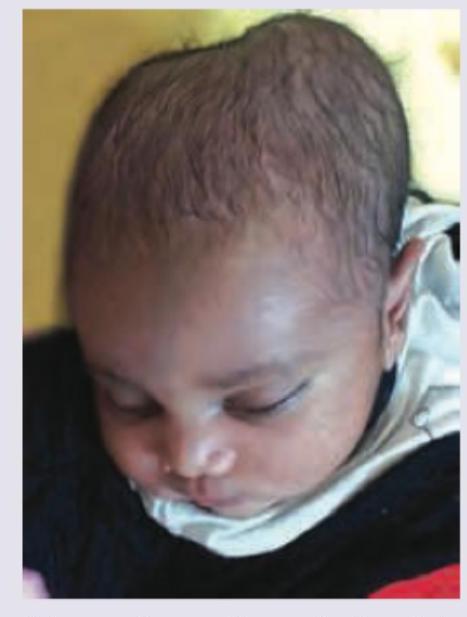
Question 91: A pregnant woman undergoes a routine antenatal ultrasound scan in the second trimester. The sonologist notes an abnormal appearance of the fetal skull. What is the sign demonstrated in the given antenatal USG image?
- A. Boomerang sign
- B. Spring coiled sign
- C. Banana sign
- D. Lemon sign (Correct Answer)
Explanation: ***Lemon sign*** - The **lemon sign** refers to the shape of the fetal skull on ultrasound, where the frontal bones are indented, making the head appear lemon-shaped. - This sign is often associated with **Chiari II malformation** and spina bifida, where there is downward displacement of the cerebellar vermis and fourth ventricle. *Boomerang sign* - The **boomerang sign** is typically observed in imaging of the knee, referring to a meniscal tear where the displaced fragment resembles a boomerang. - It is not a sign used for fetal cranial abnormalities in ultrasound. *Spring coiled sign* - The **spring coiled sign** is a feature seen in intussusception on ultrasound, where layers of bowel are invaginated within another, resembling a coiled spring. - This sign is related to intestinal pathology, not fetal head anomalies. *Banana sign* - The **banana sign** describes the appearance of the cerebellum on fetal ultrasound when it is displaced or compressed due to Chiari II malformation, making it appear banana-shaped. - While also associated with Chiari II, the image provided shows the **head shape**, not the cerebellum, aligning with the lemon sign.
Pediatrics
7 questionsA 3-year-old child presents with sudden onset generalized petechiae and bruise on forehead. Sternal tenderness is absent and liver and spleen are not palpable. Bone marrow aspiration is normal. Probable cause is? (Recent NEET Pattern 2016-17)
A 6-month-old child brought by parents for diffuse ecchymosis on extremities and trunk. Probable diagnosis is? (Recent NEET Pattern 2016-17)

A 3-year-old child presents with bleeding from nose and Periorbital Ecchymosis. Sternal tenderness and bone pain is present. Peripheral smear shows presence of fragmented RBC and helmet cells. The most probable diagnosis is? (Recent NEET Pattern 2016-17)
A 2-year-old child presents with growth retardation, pallor, bruising and has palpable spleen 5 cm below left costal margin. Bone marrow examination is shown below. Which is incorrect about the clinical diagnosis? (Recent NEET Pattern 2016-17)

A 6-month-old infant with a progressively increasing abdominal lump. Investigations revealed a stage IVs neuroblastoma. All are correct about the condition except:
A 3-year-old girl brought with swelling in left eye which had shown rapid growth in last 4 weeks. On examination it is a bulbous fleshy mass about 5 x 4 cm arising from lower eyelid. No organomegaly or was noted and lymph node examination was unremarkable. The Complete blood counts are normal. Probable diagnosis is?
All are true about the child shown in the image except:

NEET-PG 2017 - Pediatrics NEET-PG Practice Questions and MCQs
Question 91: A 3-year-old child presents with sudden onset generalized petechiae and bruise on forehead. Sternal tenderness is absent and liver and spleen are not palpable. Bone marrow aspiration is normal. Probable cause is? (Recent NEET Pattern 2016-17)
- A. Aplastic anemia
- B. Acute ITP (Correct Answer)
- C. Acute leukemia
- D. Dengue hemorrhagic fever
Explanation: ***Acute ITP*** - A 3-year-old child presenting with **sudden onset petechiae and ecchymoses (bruise on forehead)**, without signs of systemic illness (no sternal tenderness, non-palpable liver/spleen), and a normal bone marrow is highly suggestive of **Idiopathic Thrombocytopenic Purpura (ITP)**. ITP is characterized by isolated thrombocytopenia due to autoimmune destruction of platelets. - The **normal bone marrow**, in particular, rules out conditions like leukemia and aplastic anemia, where bone marrow pathology would be evident. *Aplastic anemia* - **Aplastic anemia** would typically present with **pancytopenia** (affecting all blood cell lines), leading to symptoms like pallor, fatigue, infections, and bleeding. - A **bone marrow aspiration** in aplastic anemia would show a **hypocellular marrow** with a reduction in hematopoietic cells, which contradicts the "normal" finding in this case. *Acute leukemia* - **Acute leukemia** in children often presents with **bone pain (sternal tenderness)**, fever, fatigue, and organomegaly (enlarged liver and spleen) due to infiltration of leukemic cells. - A **bone marrow aspiration** would reveal a **hypercellular marrow** with a large proportion of blasts, which is not consistent with the "normal" bone marrow finding provided. *Dengue hemorrhagic fever* - **Dengue hemorrhagic fever** typically presents with symptoms like high fever, severe headache, muscle and joint pain, and often signs of bleeding (like petechiae and bruising) and can lead to severe thrombocytopenia. - However, it is usually preceded by a **fever** and other systemic symptoms, which are not mentioned in this sudden onset presentation in the given case scenario.
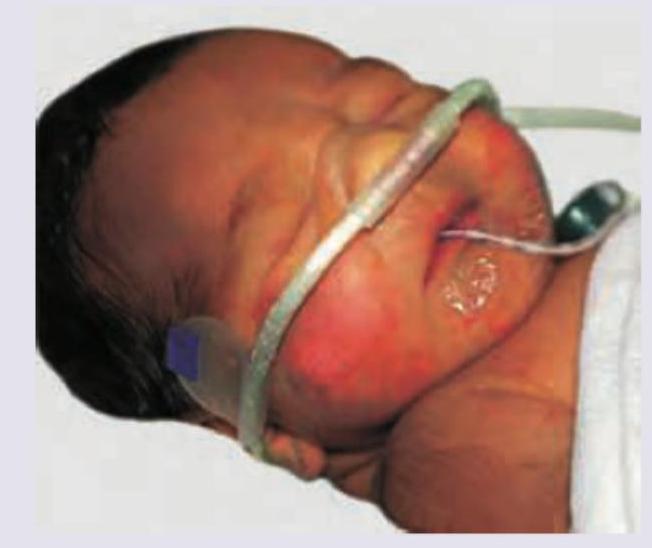
Question 92: A 6-month-old child brought by parents for diffuse ecchymosis on extremities and trunk. Probable diagnosis is? (Recent NEET Pattern 2016-17)
- A. Disseminated intravascular coagulation
- B. A.P.L.A.S
- C. Dengue hemorrhagic fever
- D. Protein C deficiency (Correct Answer)
Explanation: ***Protein C deficiency*** - A 6-month-old with **diffuse ecchymoses on extremities and trunk** is classic for **homozygous protein C deficiency** presenting as **purpura fulminans**. - Severe congenital protein C deficiency typically manifests in **early infancy** (within first few weeks to months) with widespread purpuric lesions, skin necrosis, and thrombotic complications. - The presentation includes **large ecchymotic patches** that can progress to necrosis, affecting extremities and trunk as described. - This is the **most likely diagnosis** for this age group and clinical presentation in the absence of other systemic features. *Disseminated intravascular coagulation* - DIC causes diffuse bleeding and purpura due to consumption coagulopathy and microthrombi formation. - However, DIC is a **secondary complication** requiring an underlying trigger (sepsis, trauma, malignancy) with acute systemic illness. - The child would typically present with **multiple bleeding sites**, systemic signs, and evidence of the underlying condition—not isolated ecchymosis. *A.P.L.A.S (Antiphospholipid Antibody Syndrome)* - Neonatal antiphospholipid syndrome from maternal antibodies presents in the **neonatal period** (first 28 days of life), not at 6 months. - APLAS primarily causes **thrombotic events** (stroke, renal vein thrombosis) rather than diffuse ecchymosis alone. - This diagnosis is **extremely rare** in infancy and would not be the probable diagnosis for isolated ecchymotic presentation at this age. *Dengue hemorrhagic fever* - Dengue requires **exposure in endemic areas** and presents with fever, headache, myalgia, and characteristic rash followed by hemorrhagic manifestations. - More common in **older children and adults**; the 6-month-old age and absence of fever/systemic symptoms make this unlikely. - The clinical picture describes ecchymosis without mention of fever or other dengue features.
Question 93: A 3-year-old child presents with bleeding from nose and Periorbital Ecchymosis. Sternal tenderness and bone pain is present. Peripheral smear shows presence of fragmented RBC and helmet cells. The most probable diagnosis is? (Recent NEET Pattern 2016-17)
- A. Acute myeloid Leukemia (Correct Answer)
- B. Acute Idiopathic thrombocytopenic purpura
- C. Hemophilia A
- D. Battered baby syndrome
Explanation: ***Acute myeloid Leukemia*** - The combination of **bleeding manifestations** (nose bleeding, periorbital ecchymosis), **bone pain and sternal tenderness** (from marrow infiltration), and **fragmented RBCs with helmet cells** (schistocytes) on peripheral smear is highly suggestive of **Acute Myeloid Leukemia complicated by DIC**. - **Fragmented RBCs and helmet cells** indicate **microangiopathic hemolytic anemia (MAHA)**, which in the context of acute leukemia suggests **disseminated intravascular coagulation (DIC)** - a well-known complication of AML, especially **acute promyelocytic leukemia (AML-M3)**. - **Bone pain and sternal tenderness** are characteristic features of leukemic infiltration of bone marrow. - **Bleeding** occurs due to thrombocytopenia from marrow replacement and consumption in DIC. *Battered baby syndrome* - While trauma/abuse can cause periorbital ecchymosis and bleeding, the presence of **sternal tenderness, bone pain** (suggesting marrow pathology), and **schistocytes on peripheral smear** is NOT typical of trauma alone. - Schistocytes would only occur in trauma if there is severe DIC from massive injury with shock, which would present as a critically ill child with multiorgan dysfunction. - The constellation of findings here points to **hematologic malignancy**, not physical abuse. *Acute Idiopathic thrombocytopenic purpura* - ITP causes **bleeding manifestations** due to isolated **thrombocytopenia**, leading to nosebleeds and ecchymosis. - However, **bone pain, sternal tenderness**, and **fragmented RBCs with helmet cells** are NOT features of ITP. - ITP has a normal peripheral smear except for decreased platelets. *Hemophilia A* - Hemophilia A is a **coagulation disorder** characterized by **factor VIII deficiency**, leading to bleeding into joints and deep tissues. - **Bone pain and sternal tenderness** are not characteristic of hemophilia. - **Fragmented RBCs and helmet cells** do not occur in hemophilia. - Periorbital ecchymosis from minor trauma can occur, but the complete clinical picture does not fit.
Question 94: A 2-year-old child presents with growth retardation, pallor, bruising and has palpable spleen 5 cm below left costal margin. Bone marrow examination is shown below. Which is incorrect about the clinical diagnosis? (Recent NEET Pattern 2016-17)
- A. Defect on chromosome 3 (Correct Answer)
- B. Glucosylceramide accumulation in reticulo-endothelial cells
- C. Bleeding episodes
- D. Erlenmeyer flask deformity of the distal femur
Explanation: ***Defect on chromosome 3*** - The clinical presentation (growth retardation, pallor, bruising, massive splenomegaly) and the bone marrow image showing a **Gaucher cell** (macrophage with a characteristic "crinkled paper" or "crumpled tissue paper" cytoplasm due to glucocerebroside accumulation) are classic for **Gaucher disease**. - Gaucher disease is caused by a **deficiency of the enzyme glucocerebrosidase**, which is encoded by the GBA gene located on **chromosome 1q21**, not chromosome 3. Therefore, a defect on chromosome 3 is incorrect. *Glucosylceramide accumulation in reticulo-endothelial cells* - This is a correct feature of Gaucher disease, where the deficient enzyme **glucocerebrosidase** leads to the accumulation of its substrate, **glucocerebroside (glucosylceramide)**, primarily within macrophages (reticulo-endothelial cells). - These lipid-laden macrophages are known as **Gaucher cells** and are pathognomonic for the disease. *Bleeding episodes* - **Thrombocytopenia** (low platelet count) is a common hematological manifestation in Gaucher disease, often due to **hypersplenism** caused by massive splenomegaly and direct bone marrow infiltration. - This low platelet count can lead to an increased tendency for **bruising and bleeding episodes**, which is consistent with the patient's bruising. *Erlenmeyer flask deformity of the distal femur* - This is a characteristic **radiological finding** in Gaucher disease, particularly in the long bones. - It refers to the **widening of the distal metaphysis** of the femur, resembling an Erlenmeyer flask, due to bone marrow infiltration by Gaucher cells.
Question 95: A 6-month-old infant with a progressively increasing abdominal lump. Investigations revealed a stage IVs neuroblastoma. All are correct about the condition except:
- A. Favorable prognosis
- B. Can regress spontaneously
- C. Low dose cyclophosphamide
- D. Most common stage of neuroblastoma (Correct Answer)
Explanation: ***Most common stage of neuroblastoma*** - Stage IVs neuroblastoma is typically seen in infants under 1 year of age, but it is **not the most common stage** overall. - While it has distinct features, stage IV (disseminated disease with distant metastases) is generally considered the most common presentation of neuroblastoma at diagnosis across all age groups. *Favorable prognosis* - Stage IVs neuroblastoma generally has a **favorable prognosis** due to its unique biological behavior compared to other advanced stages. - This stage is characterized by **spontaneous regression** in many cases, contributing to better outcomes despite widespread disease. *Can regress spontaneously* - A hallmark of Stage IVs neuroblastoma is the potential for **spontaneous regression**, often without intensive therapy. - This characteristic is attributed to specific biological features of the tumor cells in this subset of patients. *Low dose cyclophosphamide* - For stage IVs neuroblastoma, particularly in symptomatic cases, **low-dose chemotherapy**, such as cyclophosphamide, is often used. - The goal is to manage symptoms and encourage regression rather than aggressive eradication, given the tumor's favorable biology.
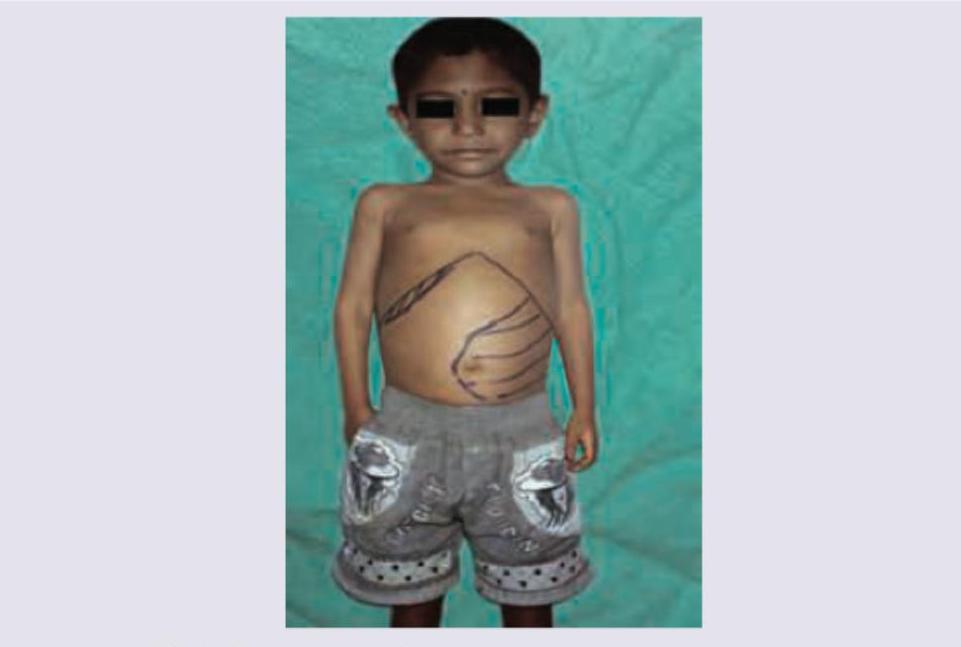
Question 96: A 3-year-old girl brought with swelling in left eye which had shown rapid growth in last 4 weeks. On examination it is a bulbous fleshy mass about 5 x 4 cm arising from lower eyelid. No organomegaly or was noted and lymph node examination was unremarkable. The Complete blood counts are normal. Probable diagnosis is?
- A. Retinoblastoma
- B. Rhabdomyosarcoma (Correct Answer)
- C. Chloroma
- D. Orbital metastasis
Explanation: ***Rhabdomyosarcoma*** - This is the most common **primary orbital malignancy in children**, often presenting as a rapidly growing, fleshy periorbital mass, consistent with the 3-year-old girl's symptoms. - The rapid growth (4 weeks) and the description of a **bulbous, fleshy mass** arising from the eyelid are classic presentations of rhabdomyosarcoma. *Retinoblastoma* - This is a malignancy of the retina and typically presents with **leukocoria (white pupillary reflex)**, strabismus, or vision impairment, not usually as an external fleshy mass arising from the eyelid. - While it is a common pediatric eye tumor, its clinical presentation differs significantly from the described external swelling. *Chloroma* - Also known as granulocytic sarcoma, chloroma is an extramedullary manifestation of **acute myeloid leukemia** and would typically be associated with systemic symptoms of leukemia (e.g., anemia, thrombocytopenia, leukocytosis/leukopenia) and abnormal blood counts. - The patient's normal CBC and lack of organomegaly/lymphadenopathy make chloroma less likely. *Orbital metastasis* - While possible, orbital metastases in children are rare and typically arise from **neuroblastoma** or occasionally other primary tumors. - Such metastases usually present with features suggestive of the primary tumor, which are not mentioned here.
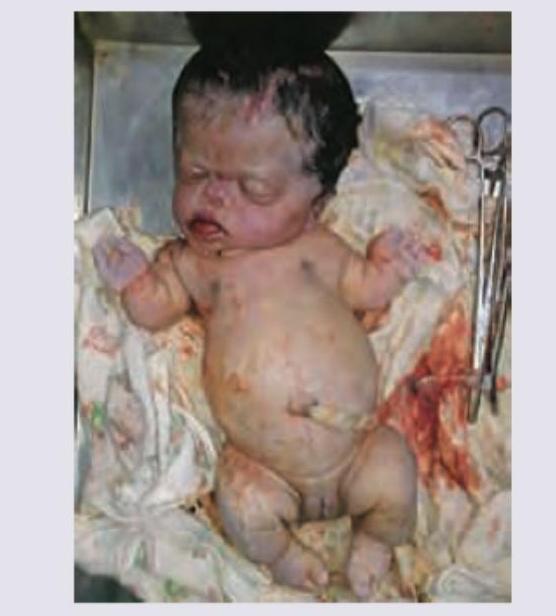
Question 97: All are true about the child shown in the image except:
- A. Baggy pants appearance
- B. Apathy
- C. Reduced MAC
- D. Delayed skin pinch (Correct Answer)
Explanation: ***Delayed skin pinch*** - Delayed skin pinch, also known as **poor skin turgor**, is a sign of **dehydration**, which is more characteristic of **kwashiorkor** or severe acute malnutrition with significant fluid loss, rather than marasmus alone. - In marasmus, although there is severe wasting, **skin turgor is often preserved** due to the absence of significant edema. - This is the **EXCEPTION** - it is NOT a typical feature of pure marasmus. *Baggy pants appearance* - The **extreme loss of subcutaneous fat and muscle mass** in marasmus causes the skin around the buttocks and thighs to hang loosely, creating a "baggy pants" or "old man" appearance. - This is a **hallmark feature** indicating severe wasting in marasmus. *Apathy* - Children with severe marasmus often exhibit **apathy, irritability, and decreased activity**, reflecting their profound energy deficit and associated psychological distress. - This is a common neurological and behavioral manifestation of **severe malnutrition**. *Reduced MAC* - **Mid-upper arm circumference (MAC)** is severely reduced in marasmus due to the significant loss of both fat and muscle tissue in the upper arm. - A **MAC less than 11.5 cm** is a key diagnostic criterion for **severe acute malnutrition** in children aged 6-59 months.