The following delivery is seen with which type of pelvis?

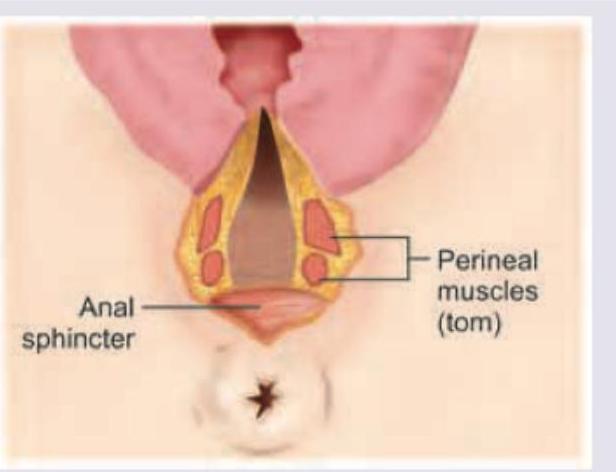
Which degree of obstetric anal sphincter injury is seen here?
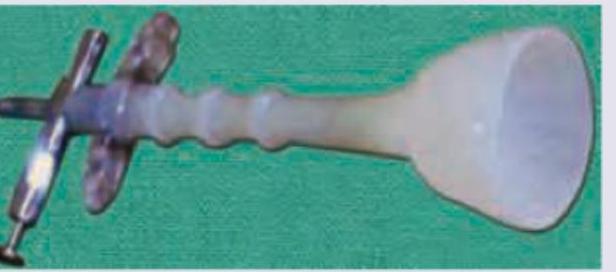
All are correct regarding the device shown here except:
A 19-year-old woman presents to the emergency department complaining of lesions on her vulva. They have been present for several months but are now beginning to interfere with intercourse. Which viral subtypes are responsible for most cases of this disease? (Recent Neet Pattern 2016-17)
A Lethargic hypoglycemic girl neonate has the following genital appearance. What is the probable cause? (Recent Neet Pattern 2016-17)

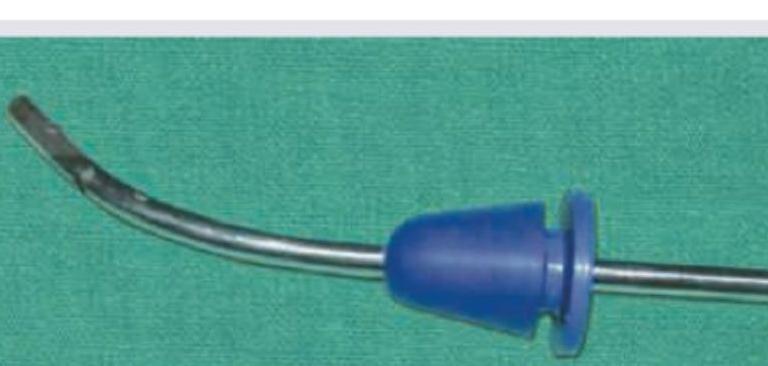
Which of the following is incorrect about the instrument shown below? (Recent Neet Pattern 2016-17)
Identify the instrument:

Identify the instrument:

Identify the instrument:

Which is not correct regarding the contraceptive method being used?

NEET-PG 2017 - Obstetrics and Gynecology NEET-PG Practice Questions and MCQs
Question 11: The following delivery is seen with which type of pelvis?
- A. Anthropoid pelvis (Correct Answer)
- B. Gynecoid pelvis
- C. Android pelvis
- D. Platypelloid pelvis
Explanation: ***Anthropoid pelvis*** - This image illustrates the typical presentation of an **anthropoid pelvis**, characterized by an **oval-shaped inlet** that is wider from front to back than side to side. - This pelvic shape often facilitates a persistent **occiput posterior (OP)** position of the fetal head, as seen in the superior image, due to the longer anteroposterior diameter. *Gynecoid pelvis* - The **gynecoid pelvis** is considered the classic female pelvis, with a **rounded, slightly oval inlet** and a well-suited shape for vaginal delivery, allowing for normal fetal rotation. - It does not typically result in the persistent occiput posterior presentation and the more anterior/posterior orientation of the fetal skull shown. *Android pelvis* - An **android pelvis** has a **heart-shaped inlet** and prominent ischial spines, making it less favorable for vaginal delivery, often requiring descent in an occiput posterior position but with a narrower subpubic arch. - This type of pelvis is associated with higher rates of C-sections due to potential for cephalopelvic disproportion, and the fetal head typically encounters more difficulty at the outlet. *Platypelloid pelvis* - The **platypelloid pelvis** is characterized by a **flattened oval inlet** with a wide transverse diameter and a short anteroposterior diameter, making it the least common and least favorable for vaginal delivery. - This shape often results in the fetal head entering in a transverse arrest position, rather than the anteroposterior orientation suggested by the image.
Question 12: Which degree of obstetric anal sphincter injury is seen here?
- A. First degree
- B. Second degree
- C. Third degree (Correct Answer)
- D. Fourth degree
Explanation: ***Third degree*** - The image shows a laceration involving the **anal sphincter complex** but the **anal epithelium** is intact. - This corresponds to a **third-degree** tear, where the external and/or internal anal sphincter is torn but the mucosa is preserved. *First degree* - This degree of tear involves only the **perineal skin** and **vaginal mucosa**, without affecting underlying fascia or muscle. - The image clearly shows involvement of the anal sphincter, which is beyond a first-degree tear. *Second degree* - This involves the **perineal muscles** but the **anal sphincter** is intact. - The image illustrates that the anal sphincter itself is torn, not just the perineal muscles superficial to it. *Fourth degree* - This is the most severe tear, involving the **anal sphincter complex** and extending through the **anal epithelium** (mucosa) into the lumen of the rectum. - In the depicted image, the anal epithelium appears to be intact, differentiating it from a fourth-degree injury.
Question 13: All are correct regarding the device shown here except:
- A. Placed 6 cm anterior to posterior fontanelle (Correct Answer)
- B. Should generate effective vacuum of 0.8 Kg / cm^2
- C. Traction at right angles to the cup
- D. Traction is released in between uterine contractions
Explanation: ***Placed 6 cm anterior to posterior fontanelle*** - This is the **incorrect statement** - proper vacuum cup placement should be approximately **3 cm anterior to the posterior fontanelle** at the flexion point of the fetal head. - Placing the cup **6 cm anterior** would be too far forward, increasing risk of **cup dislodgement**, **subgaleal hemorrhage**, and ineffective traction. *Should generate effective vacuum of 0.8 Kg / cm^2* - This is a **correct statement** - effective vacuum pressure should be between **0.6 to 0.8 kg/cm^2** (500-600 mmHg). - This pressure range ensures adequate suction for delivery while minimizing risk of **fetal scalp injury**. *Traction at right angles to the cup* - This is a **correct statement** - traction must be applied **perpendicular to the cup plane** for optimal force transmission. - This technique prevents **cup dislodgement** and ensures efficient pulling force along the **birth canal axis**. *Traction is released in between uterine contractions* - This is a **correct statement** - traction should be **released between contractions** to prevent excessive force and allow fetal head repositioning. - Continuous traction can cause **fetal trauma** and **cup dislodgement** due to sustained pressure without uterine support.
Question 14: A 19-year-old woman presents to the emergency department complaining of lesions on her vulva. They have been present for several months but are now beginning to interfere with intercourse. Which viral subtypes are responsible for most cases of this disease? (Recent Neet Pattern 2016-17)
- A. Types 6 and 11 (Correct Answer)
- B. Types 6 and 18
- C. Types 11 and 16
- D. Types 11 and 31
Explanation: ***Types 6 and 11*** - Human Papillomavirus (HPV) **types 6 and 11** are responsible for approximately 90% of all cases of **genital warts (condyloma acuminata)**. - These types are considered low-risk HPV as they rarely lead to cancer but can cause significant discomfort and interfere with sexual activity due to their physical presence. *Types 6 and 18* - While **HPV type 6** is a common cause of genital warts, **HPV type 18** is a high-risk type primarily associated with **cervical cancer**, not typically with vulvar warts. - Combining a low-risk and a high-risk type in this manner does not accurately represent the primary cause of condyloma acuminata. *Types 11 and 16* - **HPV type 11** causes genital warts, but **HPV type 16** is a **high-risk HPV** type strongly associated with cervical and other anogenital cancers. - While both can cause lesions, type 16 is not a primary cause of benign genital warts; it's a major cause of malignancies. *Types 11 and 31* - **HPV type 11** is linked to genital warts, but **HPV type 31** is another **high-risk HPV** type associated with cervical cancer, not typically with benign vulvar warts. - Similar to the previous option, this combination incorrectly mixes a benign wart-causing type with a high-risk oncogenic type when addressing the cause of vulvar lesions.
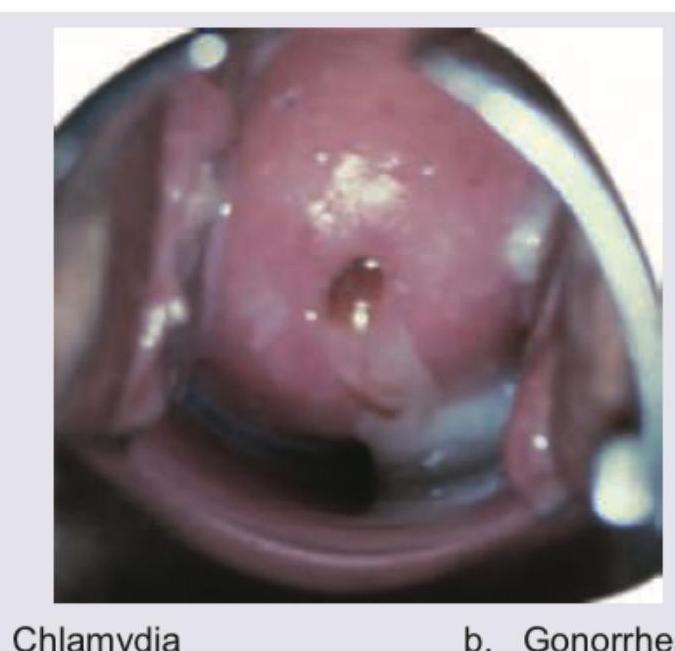
Question 15: A Lethargic hypoglycemic girl neonate has the following genital appearance. What is the probable cause? (Recent Neet Pattern 2016-17)
- A. Congenital adrenal hyperplasia (Correct Answer)
- B. Ovotesticular disorder of sexual differentiation
- C. Turner syndrome
- D. Klinefelter syndrome
Explanation: ***Congenital adrenal hyperplasia*** - The image shows **ambiguous genitalia (clitoromegaly/phallic structure with fused labia)** in a neonate presenting with **lethargy and hypoglycemia**, which are symptoms of **salt-wasting crisis**. - This clinical picture in a presumed genetic female is highly suggestive of **21-hydroxylase deficiency**, the most common form of CAH, leading to excess adrenal androgens and mineralocorticoid deficiency. *Ovotesticular disorder of sexual differentiation* - This condition involves the presence of both **ovarian and testicular tissue**, leading to ambiguous genitalia. - While it can cause ambiguous genitalia, it does not typically present with the acute metabolic crisis (hypoglycemia, lethargy) seen in this neonate, which points to a hormonal deficiency. *Turner syndrome* - **Turner syndrome (45, XO)** affects genetic females and is characterized by the absence of one X chromosome, typically resulting in **female external genitalia** that are usually normal or immature. - It does not cause ambiguous genitalia or the metabolic derangements (hypoglycemia) characteristic of adrenal insufficiency. *Klinefelter syndrome* - **Klinefelter syndrome (47, XXY)** affects genetic males and typically presents with **normal male external genitalia** at birth. - Features like hypogonadism and gynecomastia become apparent later in puberty, and it is not associated with ambiguous genitalia or neonatal metabolic crises.
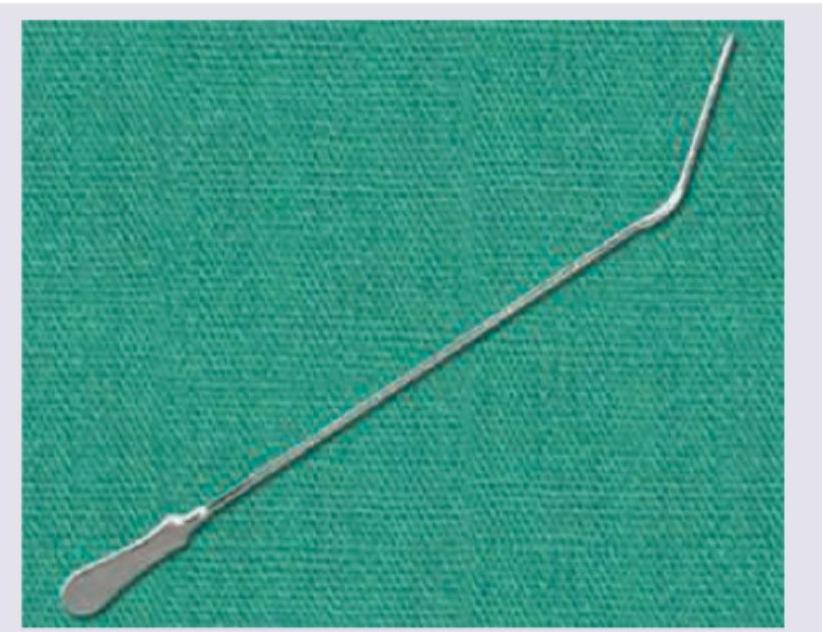
Question 16: Which of the following is incorrect about the instrument shown below? (Recent Neet Pattern 2016-17)
- A. Used to determine uterine size
- B. Passed till it meets resistance at the fundus
- C. Contraindicated in postpartum state (Correct Answer)
- D. Malleable sound
Explanation: ***Contraindicated in postpartum state*** - The instrument shown is a **uterine sound**, used to measure the **depth of the uterine cavity**. It is **not contraindicated in the postpartum state**; in fact, it can be used cautiously to check for retained products of conception or assess the uterine cavity, keeping in mind the uterus is softer and more prone to perforation. - This statement is **INCORRECT**, making it the right answer to this question. *Used to determine uterine size* - A **uterine sound** is primarily used to measure the **length of the uterine cavity from the external os to the fundus**, which helps determine uterine size. - This measurement is crucial for procedures like **IUD insertion**, endometrial biopsy, and hysteroscopy. - This is a **CORRECT** statement about the uterine sound. *Passed till it meets resistance at the fundus* - The uterine sound is passed through the **cervical canal** until it gently touches the **fundus** (top) of the uterus. - The measurement is read from the marking on the instrument corresponding to the external cervical os, typically ranging from **6-8 cm** in normal uteri. - This is a **CORRECT** statement about the technique. *Malleable sound* - The image depicts a **uterine sound**, which is typically made of **malleable metal** (usually stainless steel). - Its malleability allows it to be bent or shaped to match the **curvature of the uterus** (anteversion/retroversion), reducing the risk of perforation and facilitating accurate measurement. - This is a **CORRECT** statement about the instrument.
Question 17: Identify the instrument:
- A. Rubin insufflation cannula
- B. Uterine sound
- C. Suction cannula
- D. Mucus sucker (Correct Answer)
Explanation: ***Mucus sucker*** - The image displays a device with a **curved tip** and a connecting piece, characteristic of a mucus sucker used for aspirating secretions. - This instrument is commonly used in **neonates** and **infants** to clear the airway from mucus or amniotic fluid. *Rubin insufflation cannula* - A Rubin insufflation cannula is typically used for **uterotubal insufflation**, a procedure to test the patency of fallopian tubes. - It has a more rigid, straight design with a cone-shaped tip to seal the cervix, which is different from the curved tip shown. *Uterine sound* - A uterine sound is a malleable, slender instrument used to **measure the depth and direction** of the uterine cavity. - Its design is typically straight or slightly curved, but lacks the suction port and associated components seen in the image. *Suction cannula* - While a mucus sucker is a type of suction cannula, a general suction cannula often refers to instruments like a **Yankauer suction tip** or **Frazier suction tip**. - These are typically used in different surgical fields with varied tip designs and sizes, and the specific instrument shown is clearly identifiable as a mucus sucker due to its characteristic shape for neonatal use.
Question 18: Identify the instrument:
- A. Ovum-holding forceps
- B. Artery forceps
- C. Babcock forceps (Correct Answer)
- D. Kocher forceps
Explanation: ***Babcock forceps*** - Babcock forceps are characterized by their **atraumatic, rounded, fenestrated jaws** with a serrated inner surface that allows for a secure grip on delicate tissues without causing significant damage. - They are commonly used in surgery to **grasp and hold tubular structures** such as the bowel, fallopian tubes, or blood vessels without crushing them. *Ovum-holding forceps* - Ovum-holding forceps have **delicate, smooth or minimally serrated jaws** designed to handle small, fragile structures. - They are primarily used in **assisted reproductive procedures** or to grasp delicate tissues during gynecologic surgeries without causing trauma. *Artery forceps* - Artery forceps (e.g., Crile or Halstead mosquito forceps) have **narrow, serrated jaws** that run the full length of the tip. - They are designed to **clamp blood vessels** to control bleeding and typically have a locking mechanism. *Kocher forceps* - Kocher forceps are distinguished by their **transverse serrations** and **1x2 teeth** at the tip of the jaws. - These features provide a **strong, secure grip** on tough tissues but can be traumatic, making them unsuitable for delicate structures.
Question 19: Identify the instrument:
- A. Single tooth vulsellum
- B. Tenaculum
- C. Artery forceps (Correct Answer)
- D. Ovum-holding forceps
Explanation: ***Artery forceps*** - The image displays a common **hemostatic clamp** or artery forceps, characterized by its **ring handles**, **ratchet mechanism**, and **serrated jaws**, which are designed to grasp and occlude blood vessels. - The jaws are often curved or straight, and they interlock to provide a secure grip, classifying it as a **clamping instrument**. *Single tooth vulsellum* - A vulsellum has **sharp, pointed teeth** at its tips, designed to grasp dense tissue like the cervix, which is not seen here. - Vulsellums typically have a much more aggressive and pointed jaw design compared to the image. *Tenaculum* - A tenaculum is similar to a vulsellum but often has **finer, sharper points** for piercing tissue, especially the cervix during gynecological procedures. - The instrument in the image lacks the piercing tips characteristic of a tenaculum. *Ovum-holding forceps* - Ovum-holding forceps have **fenestrated (windowed) jaws** with rounded edges, designed to gently grasp fragile tissues like the ovum or polyps without causing trauma. - The instrument shown has completely closed, serrated jaws, not open fenestrated ones.
Question 20: Which is not correct regarding the contraceptive method being used?
- A. Inner ring can irritate penis
- B. Made of polyurethane
- C. Has lower failure rate than male condom (Correct Answer)
- D. Pregnancy can occur if penis enters between the device and vagina
Explanation: ***Has lower failure rate than male condom*** - The **female condom** (as depicted in the image) generally has a **higher typical use failure rate** than the male condom based on most effectiveness studies. - While male condoms have an 18% typical use failure rate, female condoms have a typical use failure rate of about 21%. *Inner ring can irritate penis* - The flexible, **inner ring** of the female condom, which helps secure it in place against the cervix, can potentially cause **irritation to the penis** during intercourse due to friction. - This is a known concern for some users and their partners. *Made of polyurethane* - Female condoms are traditionally made of **polyurethane**, which is a synthetic rubber suitable for individuals with **latex allergies**, allowing for use with oil-based lubricants. - Newer versions may also be made of **nitrile** or other synthetic materials. *Pregnancy can occur if penis enters between the device and vagina* - If the **penis slips between the outer ring** of the female condom and the vaginal wall, sperm can be deposited directly into the vagina, leading to potential **pregnancy**. - Proper insertion and positioning are crucial to prevent this type of user error.