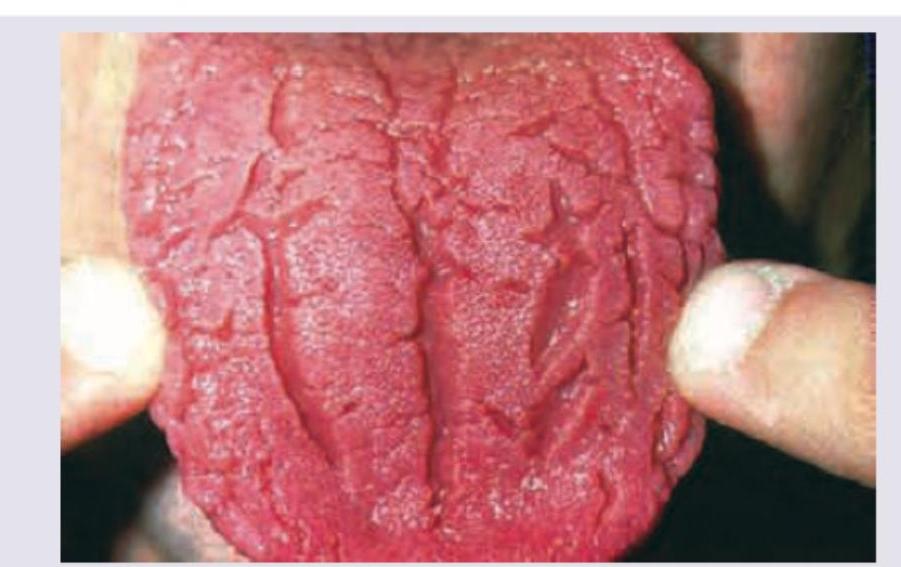
All are causes of following tongue appearance except: (Recent NEET Pattem 2016-17)
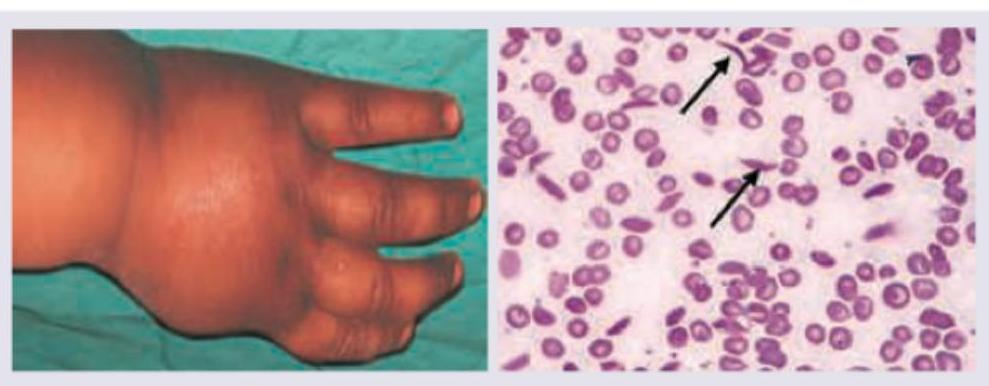
Comment on the diagnosis in the patient shown below?
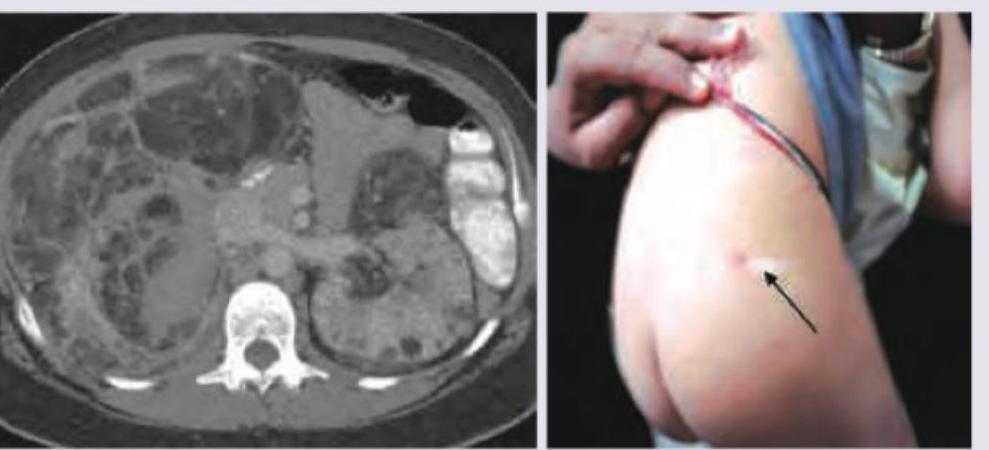
A 2-year-old mentally retarded child with the marked skin lesion presents with left side flank pain. CT scan of abdomen shows -50 to -60 HU densities of the lesions in kidney and liver. The most probable diagnosis is?
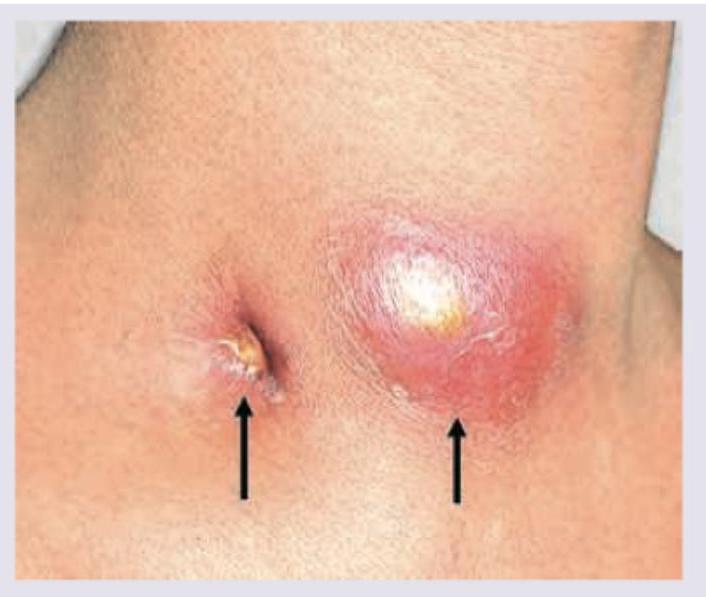
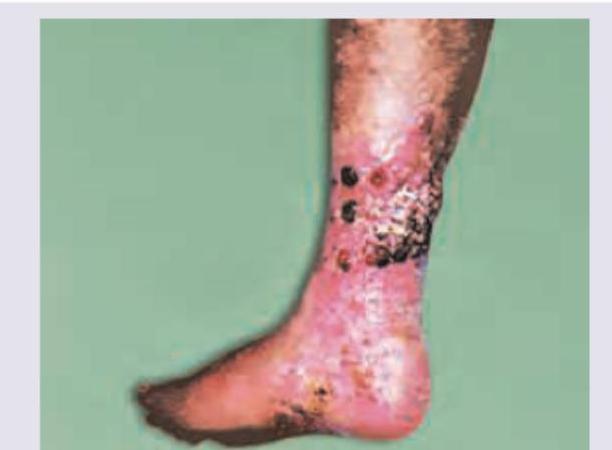
A 35-year-old HIV+ patient presents with the following lesion in the neck. What is correct about the management?
A 30-year-old AIDS patient presents with complaints as shown below. All are true about the condition except?
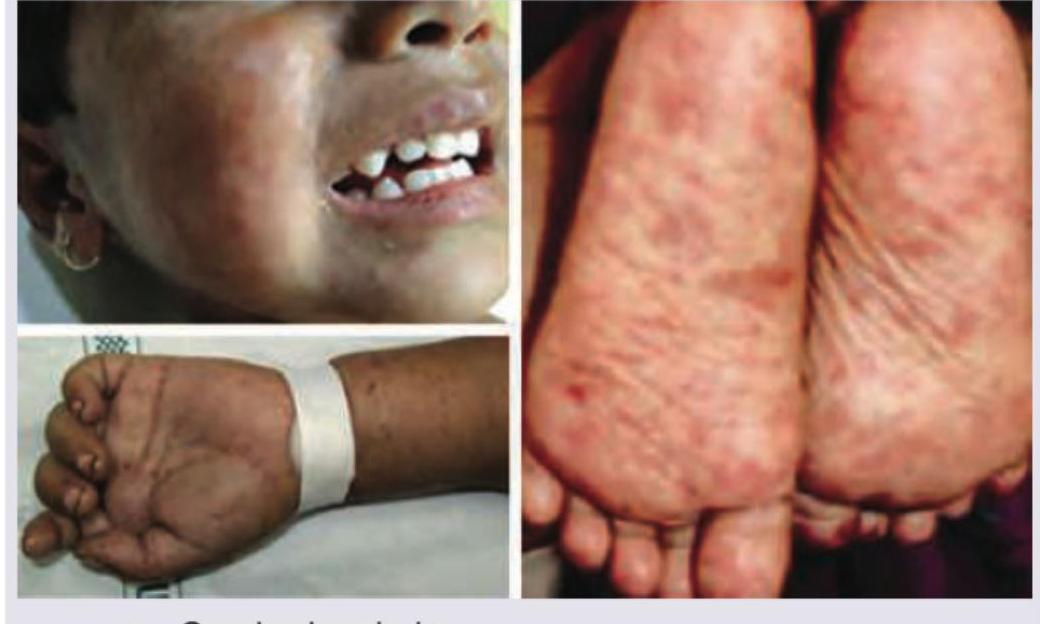
A 6-year-old child from Kashmir is brought to New Delhi hospital in a delirious condition with history of high grade fever for last 10 days. He is nonresponsive to commands and blanching rash is noted all over the body especially soles and palms. Per abdomen examination shows splenohepatomegaly. Probable diagnosis is:
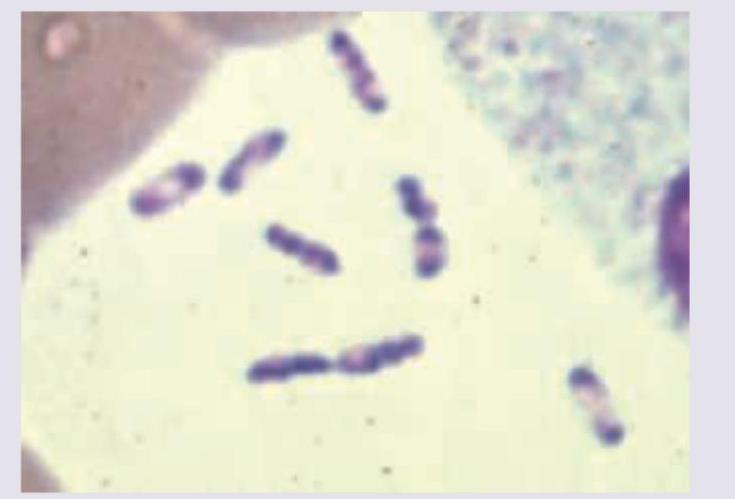
All are correct about the organism shown in the image except: (Recent NEET Pattern 2016-17)
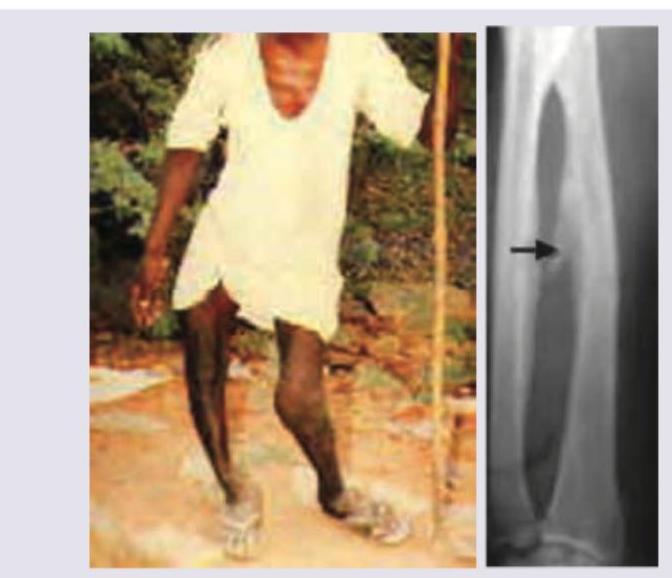
All are correct about the condition shown below except:
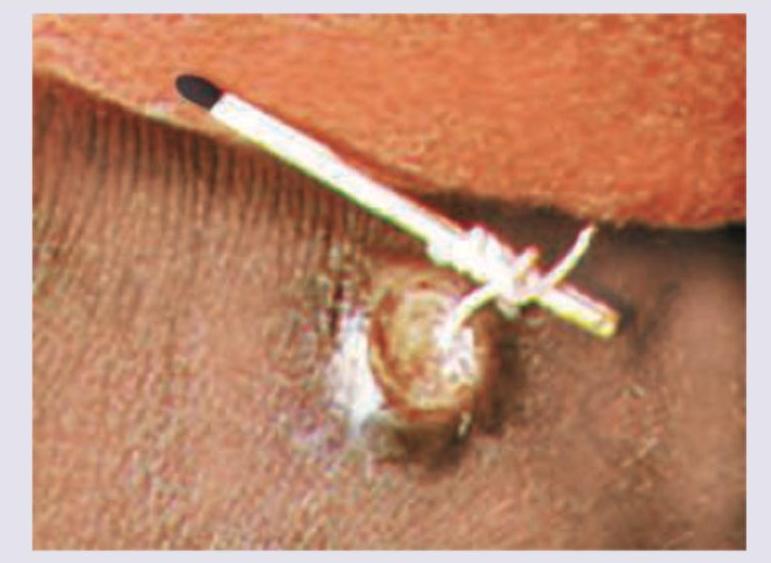
Which of the following is correct about the image shown?
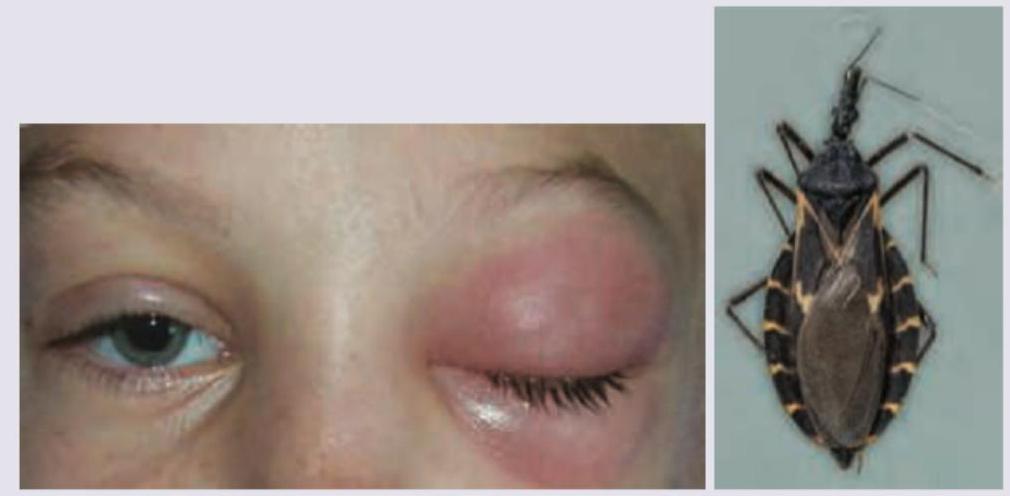
A diplomat from Peru was posted to India last week. Today he has brought his 10-year-old daughter to your clinic since the child has developed this swelling in the eye and feels feverish. Comment on the clinical sign and the insect bite responsible for the same:
NEET-PG 2017 - General Medicine NEET-PG Practice Questions and MCQs
Question 11: All are causes of following tongue appearance except: (Recent NEET Pattem 2016-17)
- A. Melkersson-Rosenthal syndrome
- B. Down syndrome
- C. Genetic basis
- D. HIV (Correct Answer)
Explanation: ***HIV*** - The image shows a **fissured tongue**, which is characterized by **grooves and furrows** on the dorsal surface of the tongue. - While other conditions can cause a fissured tongue, **HIV** itself is *not* considered a direct cause of this specific tongue morphology. Oral manifestations of HIV typically include **candidiasis**, **hairy leukoplakia**, or Kaposi's sarcoma. *Melkersson-Rosenthal syndrome* - This syndrome is characterized by a triad of **relapsing facial paralysis**, **persistent orofacial swelling**, and a **fissured tongue**. - Therefore, a fissured tongue is a recognized clinical feature of Melkersson-Rosenthal syndrome. *Down syndrome* - Individuals with Down syndrome (Trisomy 21) frequently present with various oral manifestations, including a **fissured tongue** (also known as scrotal tongue or plicated tongue). - This is a common and characteristic finding in this genetic condition. *Genetic basis* - A **fissured tongue** can have a **genetic predisposition** and may occur as an isolated familial trait. - It can be inherited as an **autosomal dominant trait** and is often seen without any associated syndromic conditions.
Question 12: Comment on the diagnosis in the patient shown below?
- A. Squaring of metacarpals
- B. Hand and foot syndrome (Correct Answer)
- C. Sub-periosteal resorption
- D. Peripheral oedema with iron deficiency anemia
Explanation: ***Hand and foot syndrome*** - The image shows **swelling and dactylitis** of the fingers, along with a peripheral blood smear demonstrating **sickle cells** (indicated by arrows). This combination is characteristic of hand-foot syndrome, also known as **dactylitis**, which is often the first manifestation of **sickle cell disease** in infants and young children. - **Dactylitis** results from **vaso-occlusion** in the small bones of the hands and feet, leading to painful swelling. *Squaring of metacarpals* - **Squaring of metacarpals** is not a typical finding in sickle cell disease and does not correlate with the observed hand swelling and erythrocyte morphology. - This term is sometimes used to describe changes seen in conditions like **rheumatoid arthritis**, but not in the context of dactylitis associated with sickle cells. *Sub-periosteal resorption* - **Sub-periosteal resorption** is a hallmark radiological finding in **hyperparathyroidism**, affecting bones, typically in the phalanges. - It is not directly suggested by the hand swelling (which is soft tissue/marrow oedema) or the presence of sickle cells in the blood smear. *Peripheral oedema with iron deficiency anemia* - While the picture shows **peripheral oedema** (swelling), the concomitant finding of **sickle cells** in the blood smear strongly indicates **sickle cell disease**, not iron deficiency anemia. - **Iron deficiency anemia** typically presents with microcytic hypochromic red cells, not sickle-shaped cells, and while it can cause fatigue and pallor, it does not directly lead to the dactylitis seen here.
Question 13: A 2-year-old mentally retarded child with the marked skin lesion presents with left side flank pain. CT scan of abdomen shows -50 to -60 HU densities of the lesions in kidney and liver. The most probable diagnosis is?
- A. Familial Angiolipomatosis
- B. ADPKD
- C. V.H.L
- D. Tuberous sclerosis (Correct Answer)
Explanation: ***Tuberous sclerosis*** - The combination of **mental retardation**, **skin lesions** (ash-leaf spots are shown in the image), and **renal/hepatic lesions** with characteristic negative HU densities (-50 to -60 HU, consistent with fat in angiomyolipomas) is highly suggestive of Tuberous Sclerosis Complex. - Tuberous sclerosis involves benign tumors (hamartomas) in multiple organs, including the **brain**, **skin**, **kidneys** (angiomyolipomas), and **liver** (hepatic angiomyolipomas), which explains the diverse clinical presentation. *Familial Angiolipomatosis* - While it involves **angiomyolipomas**, it typically does not present with the widespread neurological abnormalities like **mental retardation** or characteristic skin lesions seen in Tuberous Sclerosis. - This condition is often limited to the presence of multiple bilateral renal angiomyolipomas. *ADPKD* - **Autosomal dominant polycystic kidney disease (ADPKD)** primarily involves numerous **renal cysts** with positive or near-zero Hounsfield units (HU), and sometimes hepatic cysts, but does not present with **mental retardation** or **fat-containing lesions** (negative HU) in the kidneys or liver. - The cystic lesions in ADPKD typically have HU values similar to water (0-20 HU). *V.H.L* - **Von Hippel-Lindau disease (VHL)** is characterized by **hemangioblastomas** of the CNS and retina, **renal cell carcinoma**, **pheochromocytomas**, and **pancreatic cysts/tumors**. - VHL does not typically cause the **skin lesions** (ash-leaf spots) or **mental retardation** as described, nor are the kidney lesions characterized by negative HU on CT.
Question 14: A 35-year-old HIV+ patient presents with the following lesion in the neck. What is correct about the management?
- A. ATT for another 6 months
- B. Gravity drainage + ATT (Correct Answer)
- C. Anti-gravity drainage + ATT
- D. Incision and drainage
Explanation: ***Gravity drainage + ATT*** - The image shows a **scrofula**, presenting as an abscess in the cervical lymph nodes, likely due to **tuberculous lymphadenitis**. In such cases, **gravity drainage** is crucial to evacuate the purulent material effectively, especially in the neck region. - **Anti-tubercular therapy (ATT)** is the mainstay for treating tuberculosis, and it must be initiated in combination with drainage to eradicate the infection. *ATT for another 6 months* - While ATT is essential, it is **insufficient as a standalone treatment** for a mature draining abscess like the one depicted. - Simply continuing ATT without addressing the localized collection of pus would likely result in delayed healing and potential complications. *Anti-gravity drainage + ATT* - **Anti-gravity drainage** is generally not feasible or effective for abscesses in the neck, as gravity aids in the natural flow of exudates. - This approach would go against the principles of surgical drainage for fluid collections. *Incision and drainage* - While **incision and drainage (I&D)** is a standard procedure for many abscesses, caution is exercised in tuberculous lymphadenitis (scrofula) due to the risk of creating a **continuous fistula** or **non-healing sinus**. - **Repeat aspirations** or **gravity drainage** with concurrent ATT are preferred over formal incision and drainage to minimize scarring and fistula formation.
Question 15: A 30-year-old AIDS patient presents with complaints as shown below. All are true about the condition except?
- A. Vascular tumor
- B. Not seen in transfusion related AIDS
- C. HHV 8
- D. Benign tumor (Correct Answer)
Explanation: ***Benign tumor*** - **Kaposi's sarcoma** is a **malignant vascular tumor** characterized by abnormal proliferation of endothelial cells, making the statement that it's a benign tumor incorrect. - The lesions shown in the image (purplish-red to brownish plaques and nodules on the lower leg, typical in an AIDS patient) are highly suggestive of Kaposi's sarcoma, which is definitively not benign. *Vascular tumor* - **Kaposi's sarcoma** is indeed a **vascular tumor** that arises from endothelial cells and is characterized by the formation of new blood vessels. - The appearance of the lesions in the image, with their characteristic color and nodular/plaque-like morphology, is consistent with their vascular origin. *Not seen in transfusion related AIDS* - **Kaposi's sarcoma** can occur in individuals with **AIDS resulting from any mode of transmission**, including transfusion-related AIDS, as it is linked to the immunosuppression caused by HIV, not the specific mode of acquisition. - While it's more commonly associated with certain risk groups (e.g., homosexual men), the underlying immunosuppression is the key factor, meaning it can manifest regardless of how HIV was acquired. *HHV 8* - **Kaposi's sarcoma** is strongly associated with and considered a B-cell lymphotropic infection caused by the **Human Herpesvirus 8 (HHV-8)**, also known as Kaposi's sarcoma-associated herpesvirus (KSHV). - HHV-8 infection is a prerequisite for the development of Kaposi's sarcoma, particularly in immunocompromised individuals like those with AIDS.
Question 16: A 6-year-old child from Kashmir is brought to New Delhi hospital in a delirious condition with history of high grade fever for last 10 days. He is nonresponsive to commands and blanching rash is noted all over the body especially soles and palms. Per abdomen examination shows splenohepatomegaly. Probable diagnosis is:
- A. Cerebral malaria
- B. Dengue hemorrhagic fever
- C. Rickettsia (Correct Answer)
- D. SSPE
Explanation: ***Rickettsia*** - The combination of **high-grade fever**, **delirium**, **non-blanching rash** on palms and soles, and **splenohepatomegaly** is highly suggestive of severe rickettsial infection, especially with the child being from Kashmir where rickettsial diseases like Indian Tick Typhus are endemic. - The **non-blanching rash** (petechial/purpuric) on palms and soles is a classic, though not universally present, sign of severe rickettsial infection, reflecting vascular damage. *Cerebral malaria* - While cerebral malaria can cause **delirium**, **high fever**, and **splenohepatomegaly**, it typically does not present with a prominent **blanching rash** on the palms and soles. - Malaria is often endemic in Kashmir, but the rash pattern described is less typical for it. *Dengue hemorrhagic fever* - Dengue hemorrhagic fever can cause high fever, rash, and in severe cases, neurological symptoms due to shock or encephalopathy. However, the rash is typically **maculopapular** or **petechial**, and while it can involve extremities, the prominent *blanching* nature and distribution solely on **palms and soles** are less characteristic. - While splenomegaly can occur, prominent **splenohepatomegaly** in conjunction with this specific rash and neurological status points away from uncomplicated or even severe dengue as the primary diagnosis. *SSPE* - **Subacute sclerosing panencephalitis (SSPE)** is a chronic, progressive, and fatal neurodegenerative disease that usually develops several years after measles infection. - It presents with progressive neurological deterioration, including **cognitive decline**, **myoclonus**, and **seizures**, but does not typically involve acute high fever or a rash like the one described.
Question 17: All are correct about the organism shown in the image except: (Recent NEET Pattern 2016-17)
- A. Safety pin appearance
- B. Direct immunofluorescence for F1 antigen in sputum
- C. Pneumonic plague is the predominant presentation (Correct Answer)
- D. Doxycycline is used for prophylaxis in house-hold contacts of pneumonic plague
Explanation: **Pneumonic plague is the predominant presentation** - **Bubonic plague** is the most common form of plague, accounting for approximately 80-90% of cases. - While pneumonic plague is highly dangerous and can be transmitted person-to-person, it is **not the predominant clinical form** globally. *Safety pin appearance* - The image shows bipolar staining, which gives *Yersinia pestis* its characteristic **"safety pin" appearance** under microscopy. - This is a classic diagnostic feature when stained with **Giemsa or Wayson stain**. *Direct immunofluorescence for F1 antigen in sputum* - **F1 antigen** is a major virulence factor of *Yersinia pestis* and is produced in large quantities by the bacterium. - **Direct immunofluorescence (DIF)** for detecting F1 antigen in patient samples like sputum is a rapid and specific diagnostic method for plague, especially pneumonic plague. *Doxycycline is used for prophylaxis in house-hold contacts of pneumonic plague* - Due to the high transmissibility and severity of pneumonic plague, **post-exposure prophylaxis (PEP)** is crucial for close contacts. - **Doxycycline** is a recommended antibiotic for PEP alongside other options like ciprofloxacin or levofloxacin.
Question 18: All are correct about the condition shown below except:
- A. Calcification of interosseous membrane (Correct Answer)
- B. Multiple lytic lesions in vertebra
- C. Barrel chest
- D. Bony exostosis in limb bones
Explanation: ***Calcification of interosseous membrane*** - The image shows features consistent with **fluorosis**, a condition caused by excessive fluoride intake. While fluorosis can lead to widespread calcification of ligaments and tendons, **calcification of the interosseous membrane** is a characteristic but often later finding. - The patient exhibits **genu valgum** (knock-knees) and the radiograph of the forearm shows diffuse increased bone density and osteosclerosis, typical of fluorosis. *Multiple lytic lesions in vertebra* - **Fluorosis** primarily causes **osteosclerosis** (increased bone density) and periosteal bone formation, not lytic lesions. - **Lytic lesions in vertebrae** are more often associated with conditions like multiple myeloma, metastatic cancer, or infections, which involve bone destruction rather than excessive bone formation. *Barrel chest* - **Barrel chest** is typically associated with chronic obstructive pulmonary disease (COPD) or other respiratory conditions that cause hyperinflation of the lungs. - While **skeletal deformities** are common in advanced fluorosis, a "barrel chest" is not a direct or characteristic manifestation of the condition. *Bony exostosis in limb bones* - **Bony exostoses** (osteochondromas) are generally seen in hereditary multiple exostoses or can be isolated benign bone tumors. - While fluorosis causes irregular new bone formation and thickening of long bones, specific, discrete **bony exostoses** are not a typical feature; rather, it's a more generalized osteosclerosis and periostitis.
Question 19: Which of the following is correct about the image shown?
- A. Cutaneous Larva migrans
- B. Visceral larva migrans
- C. Tenia solium
- D. Dracunculus (Correct Answer)
Explanation: ***Dracunculus*** - The image shows a procedure for extracting a **guinea worm (Dracunculus medinensis)** by gradually winding it around a stick. - This characteristic method of removal is pathognomonic for **dracunculiasis**. *Cutaneous Larva migrans* - This condition presents as **serpiginous, erythematous, pruritic tracks** on the skin, caused by hookworm larvae. - It does not involve a visible worm being extracted with a stick. *Visceral larva migrans* - This is caused by the migration of nematode larvae (typically *Toxocara canis* or *cati*) through internal organs, with systemic symptoms. - It does not manifest as a worm emerging from a skin lesion. *Tenia solium* - *Taenia solium* (pork tapeworm) infection can manifest as taeniasis (intestinal infection) or **cysticercosis** (larval cysts in tissues). - Neither of these presentations involves a worm being manually extracted from a skin lesion in this manner.
Question 20: A diplomat from Peru was posted to India last week. Today he has brought his 10-year-old daughter to your clinic since the child has developed this swelling in the eye and feels feverish. Comment on the clinical sign and the insect bite responsible for the same:
- A. Faget sign, Reduvid bug
- B. Chigger allergy, Trombiculid mites
- C. Romana sign, Triatomine bug (Correct Answer)
- D. Eschar, Cimex Lectularis
Explanation: ***Romana sign, Triatomine bug*** - The image depicts **Romana sign**, characterized by **unilateral periorbital edema**, which is a classic early clinical manifestation of **Chagas disease** (American trypanosomiasis). - This sign is caused by the bite of a **Triatomine bug** (also known as a **kissing bug**) near the eye or by rubbing its feces containing *Trypanosoma cruzi* into the eye. The diplomat's origin from Peru suggests a potential exposure in an endemic region. *Faget sign, Reduvid bug* - **Faget's sign** is a clinical finding where the **pulse rate remains normal or decreases** despite a fever, which is typically found in diseases like **typhoid fever** or **yellow fever**, not associated with a specific insect bite causing periorbital edema. - While Triatomine bugs belong to the **Reduviidae family**, "Reduvid bug" is a broad term, and Faget's sign is unrelated to the described swelling. *Chigger allergy, Trombiculid mites* - **Chigger bites** (from Trombiculid mites) typically cause intensely **itchy, reddish welts or papules**, often in clusters, commonly on ankles, wrists, or waistbands. - They do not typically present as a significant unilateral periorbital edema like Romana sign and are not a cause of Chagas disease. *Eschar, Cimex Lectularis* - An **eschar** is a dark, scab-like lesion that occurs due to necrosis of skin tissue, often seen in conditions like **rickettsial diseases** (e.g., scrub typhus) following a tick or mite bite. - **Cimex Lectularis** refers to **bed bugs**, which cause itchy, erythematous wheals or papules, often in a linear pattern, but do not produce an eschar or Romana sign.