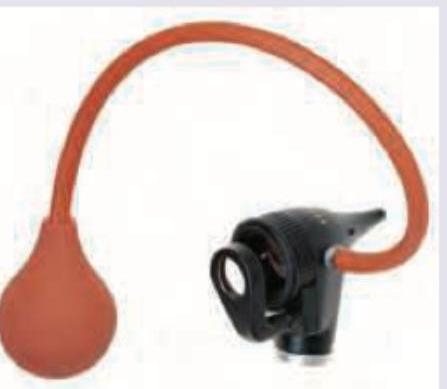
The volume of the balloons shown in epistaxis balloon is: (Recent NEET Pattern 2016-17)
The image shows which of the following tests being performed? (Recent NEET Pattern 2016-17)
All are contraindications to the procedure shown below except:
All of the following are correct about the image shown except:
A 15-year-old female presents with nasal obstruction and occasional profuse epistaxis for last 8 weeks. Nasal speculum view and histopathology of resected lesion is given. All are correct about the diagnosis except:
NEET-PG 2017 - ENT NEET-PG Practice Questions and MCQs
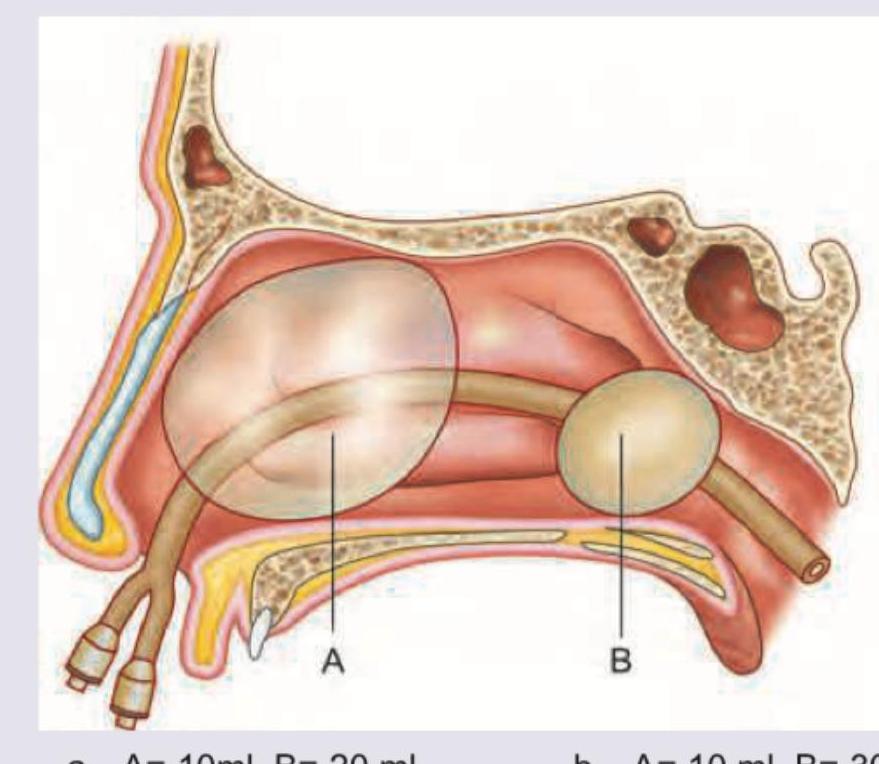
Question 11: The volume of the balloons shown in epistaxis balloon is: (Recent NEET Pattern 2016-17)
- A. 72. (d) (Correct Answer)
- B. 73. (b)
- C. 74. (b)
- D. 75. (c)
Explanation: ***72. (d)*** - This option is indicated to be the correct answer, and without the full image context (which would include labels for the options a, b, c, d with specific volumes), we must assume this represents the correct volume combination for balloons A and B. For a typical epistaxis balloon, the **anterior balloon (A)** is designed to fill the anterior nasal cavity and the **posterior balloon (B)** is designed to seal the choana. - While exact volumes can vary by device, commonly, the anterior balloon (A) has a larger volume capacity than the posterior balloon (B) to effectively tamponade the larger anterior nasal space. *73. (b)* - Without specific volume values for options, it's impossible to confirm why this is incorrect. However, if this option provided volumes inconsistent with established medical device specifications for epistaxis balloons, it would be incorrect. - The volumes chosen must be suitable for effective tamponade without causing excessive pressure or tissue necrosis. *74. (b)* - Similar to the above, without the actual content of option 'b' (e.g., "A = 10ml, B = 20ml" from the provided image fragment text), it's difficult to specifically explain its incorrectness. However, if the implied volumes contradict the typical anatomical requirements and device design for epistaxis control, it is incorrect. - The relative sizes of the balloons (A larger than B, generally) are crucial for proper placement and function. *75. (c)* - Again, the lack of specific volume values for option 'c' (e.g., "A = 30ml, B = 10ml" from the provided image fragment text) prevents a direct explanation. Nevertheless, if the volumes listed do not correspond to the physiological requirements for anterior and posterior nasal packing, or if they are atypical for standard epistaxis devices, this option would be incorrect. - **Over-inflation** or **under-inflation** with incorrect volumes can lead to ineffective treatment or complications like pressure necrosis.
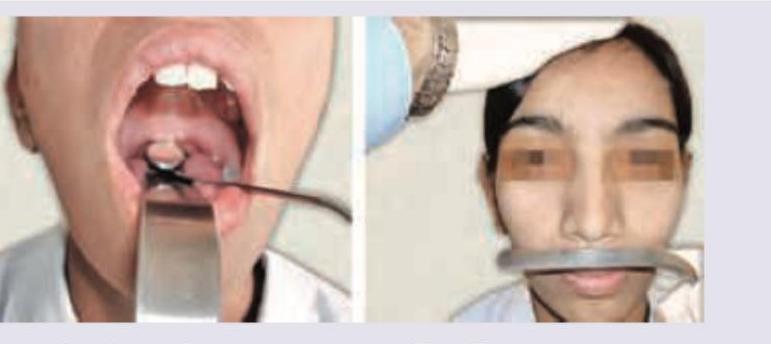
Question 12: The image shows which of the following tests being performed? (Recent NEET Pattern 2016-17)
- A. A= Indirect laryngoscopy, B= Spatula test (Correct Answer)
- B. A= Posterior rhinoscopy, B= Spatula test
- C. A= Direct laryngoscopy, B= Spatula test
- D. A= Anterior rhinoscopy, B= Spatula test
Explanation: ***A= Indirect laryngoscopy, B= Spatula test*** - Image A depicts a mirror being used to visualize the larynx through the oral cavity, which is characteristic of **indirect laryngoscopy**. - Image B shows a spatula being used to apply pressure to the tongue or jaw while observing for a reflex action, which is consistent with the **spatula test** for tetanus. *A= Posterior rhinoscopy, B= Spatula test* - **Posterior rhinoscopy** involves visualizing the nasopharynx via a mirror placed behind the soft palate, which is not what is shown in Image A. - While Image B correctly shows a spatula test, Image A is clearly not a posterior rhinoscopy. *A= Direct laryngoscopy, B= Spatula test* - **Direct laryngoscopy** uses a laryngoscope to directly visualize the larynx without a mirror, often requiring sedation, which differs from the technique in Image A. - Image A shows the use of a mirror for visualization, thus ruling out direct laryngoscopy. *A= Anterior rhinoscopy, B= Spatula test* - **Anterior rhinoscopy** involves examining the anterior nasal cavity using a nasal speculum, which is not depicted in Image A. - Image A shows examination of the oral cavity and pharynx with a mirror, not the anterior nasal cavity.
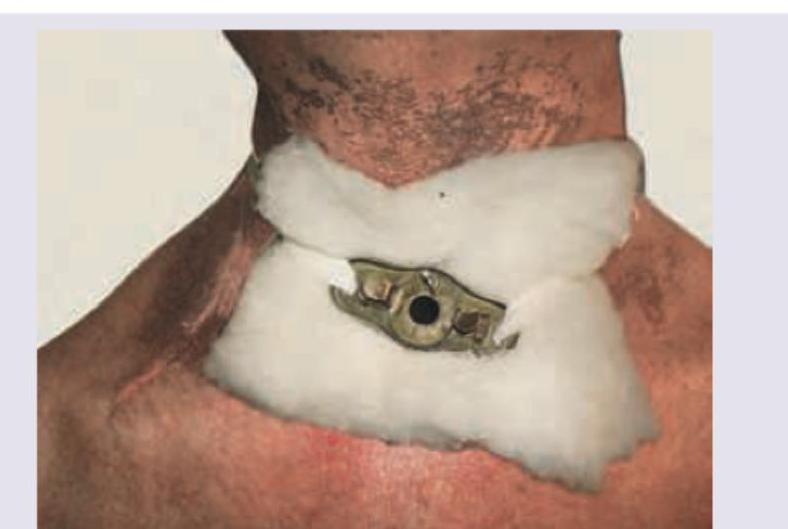
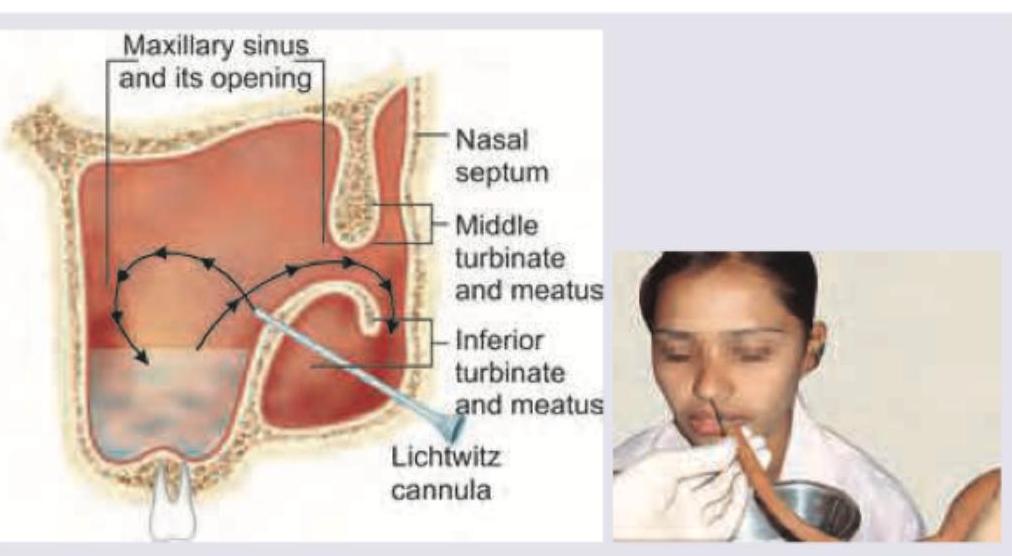
Question 13: All are contraindications to the procedure shown below except:
- A. Acute maxillary sinusitis
- B. Antral cyst (Correct Answer)
- C. Fractured maxilla
- D. Children less than 3 years
Explanation: The image displays a procedure known as **antral lavage** or **maxillary sinus washout**, which involves puncturing the maxillary sinus and irrigating it, typically through the inferior meatus using a Lichtwitz cannula. This procedure is performed to drain pus or fluid from the maxillary sinus and collect samples for diagnostic purposes. ***Antral cyst*** - An antral cyst is a benign, fluid-filled lesion within the maxillary sinus, and its presence does not contraindicate antral lavage. In fact, if the cyst causes symptoms or obstructs drainage, lavage might be performed to assess the sinus, though surgical removal might be ultimately indicated. - The procedure can sometimes help differentiate between a simple cyst and other conditions, or provide temporary relief if the cyst is causing pressure symptoms. *Acute maxillary sinusitis* - While antral lavage is often performed for **chronic sinusitis** or diagnostic purposes in suspected acute sinusitis that is not responding to medical treatment, it is generally **contraindicated in acute, uncomplicated maxillary sinusitis** due to the risk of spreading infection, increased pain, and potential for complications like orbital cellulitis if there is active inflammation and pus under pressure. - Initial management of acute sinusitis typically involves antibiotics, decongestants, and analgesics. *Fractured maxilla* - A **fractured maxilla** presents a significant contraindication because the structural integrity of the bone is compromised. Puncturing the sinus in such a situation could lead to further displacement of bone fragments, increased hemorrhage, direct injury to vital structures, or introduction of infection into surrounding tissues. - Any manipulation of the sinus floor or walls could worsen the fracture or impede healing. *Children less than 3 years* - Antral lavage is generally **contraindicated in children under the age of 3 years** due to the underdeveloped state of their paranasal sinuses, especially the maxillary sinuses. - The sinus walls are thin and fragile, increasing the risk of orbital or intracranial penetration, and children this young are often uncooperative, making the procedure difficult and dangerous.
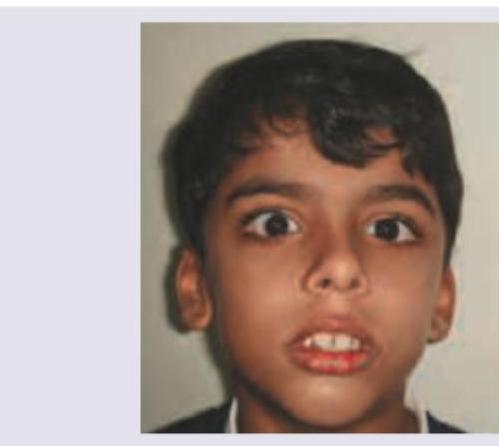
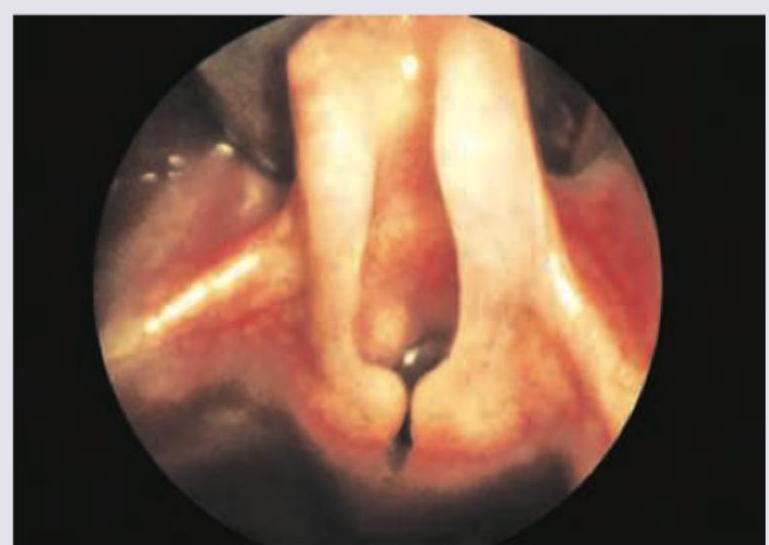
Question 14: All of the following are correct about the image shown except:
- A. Omega shaped epiglottis
- B. High pitched expiratory stridor (Correct Answer)
- C. Cry is normal
- D. 10% cases need surgery due to development of OSA or Cor Pulmonale
Explanation: ***High pitched expiratory stridor*** - The image depicts an **omega-shaped epiglottis** and collapsed aryepiglottic folds, consistent with **laryngomalacia**. - Laryngomalacia typically presents with **inspiratory stridor**, not expiratory, resulting from airway collapse during inspiration. - **This is the EXCEPT answer** - high-pitched expiratory stridor is NOT a feature of laryngomalacia. *Omega shaped epiglottis* - The image clearly shows an **omega-shaped epiglottis**, a characteristic feature of **laryngomalacia**. - This anatomical variation contributes to the collapse of supraglottic structures during inspiration. *Cry is normal* - In laryngomalacia, the **vocal cords** themselves are not affected, so the **cry typically remains normal**. - The abnormal sounds (stridor) arise from the supraglottic structures, not the vocal cord function during crying. *10% cases need surgery due to development of OSA or Cor Pulmonale* - While most cases of laryngomalacia are self-limiting, approximately **10% of infants may require surgical intervention** (supraglottoplasty). - This is usually due to severe symptoms like **obstructive sleep apnea (OSA)**, failure to thrive, or the rare development of **cor pulmonale**.
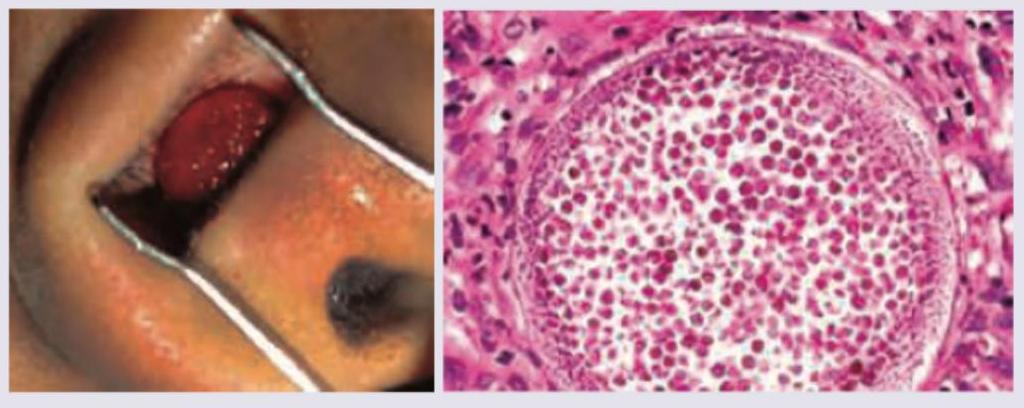
Question 15: A 15-year-old female presents with nasal obstruction and occasional profuse epistaxis for last 8 weeks. Nasal speculum view and histopathology of resected lesion is given. All are correct about the diagnosis except:
- A. Multiple fungal spherules embedded in stroma of connective tissue
- B. Best cultured on nasal inoculation in hamster (Correct Answer)
- C. Infection originates from stagnant water
- D. Surgical excision is best treatment
Explanation: *Best cultured on nasal inoculation in hamster* - This statement is **incorrect** because *Rhinosporidium seeberi*, the causative agent of rhinosporidiosis (which is indicated by the images and clinical presentation), is an **uncultivable organism** in artificial media or animal models. - Its complex life cycle and specific host requirements make *in vitro* or *in vivo* culture challenging and largely unsuccessful. *Multiple fungal spherules embedded in stroma of connective tissue* - The histopathology image clearly shows characteristic **spherules** of varying sizes, containing numerous endospores, embedded within the connective tissue stroma, which is typical for rhinosporidiosis. - These spherules represent different stages of the organism's life cycle. *Infection originates from stagnant water* - *Rhinosporidium seeberi* is commonly found in **stagnant water** (rivers, ponds) and is often associated with swimming, bathing, or working in such environments. - Exposure to contaminated water is the primary mode of transmission for this rare chronic granulomatous disease. *Surgical excision is best treatment* - **Surgical excision** of the mass with electrocoagulation of the base is considered the most effective treatment for rhinosporidiosis to prevent recurrence. - Anti-fungal medications like dapsone may be used as an adjunct to reduce recurrence rates.