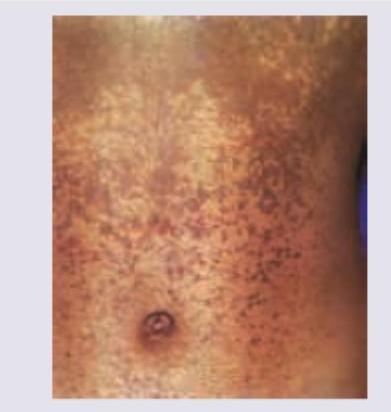
A 25-year-old construction worker presents with following skin lesions. All are true about the image shown except: (Recent NEET Pattern 2016-17)
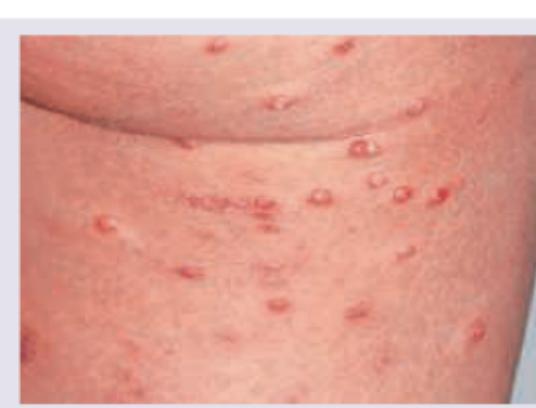
Identify the lesion shown in the image:
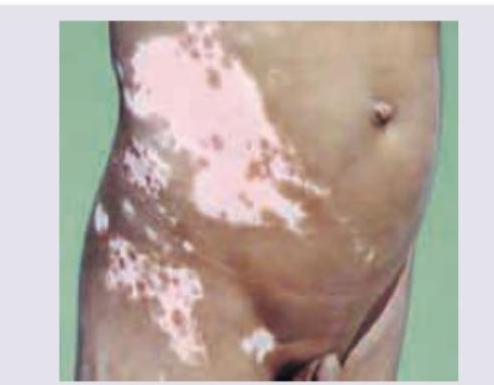
A 13-year-old boy presents with patchy depigmented skin on the right flank and upper thigh in segmental distribution, as shown in the image. The depigmentation started 1 year back but has been static for last 4 months. Mother reports use of topical steroids which was ineffective. Diagnosis is?
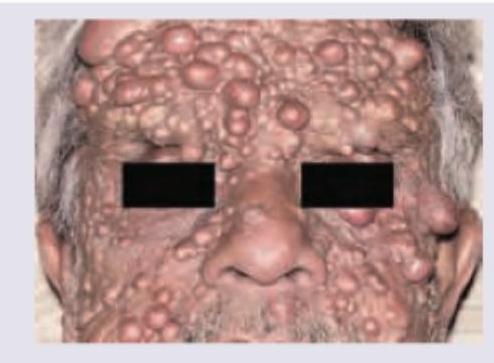
What is the diagnosis based on the clinical image shown?
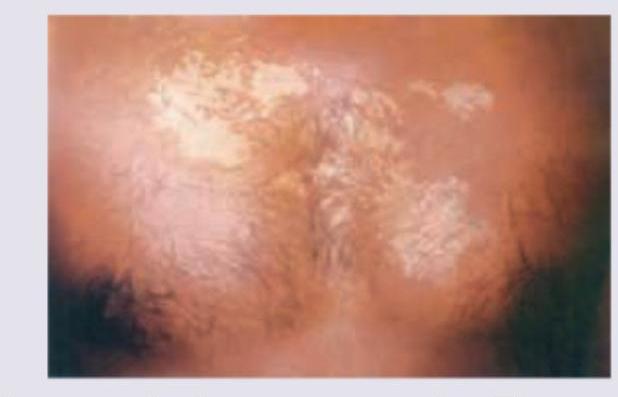
What is the most likely diagnosis of the image provided below?
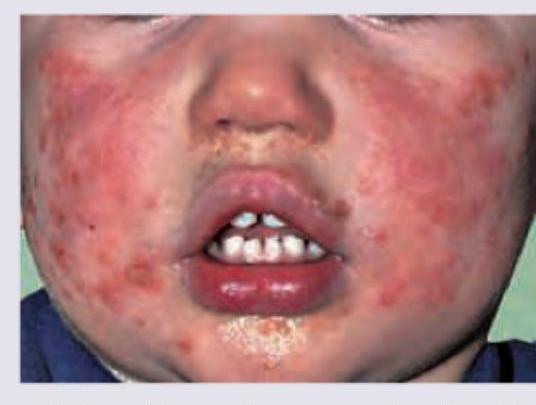
A patient presents with oral mucosal lesions. Identify the condition shown in the image:
Identify the lesion:

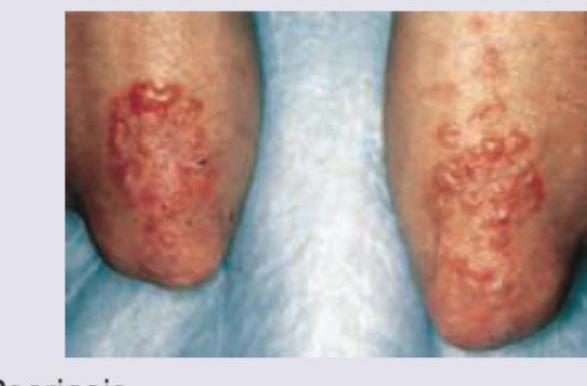
Identify the lesion:

A patient presents with violaceous papules over the knuckles and mottled pigmentation on the dorsum of hands. Identify the lesion:
A 41-year-old male complains of itching on the upper chest for one month. What is the most likely diagnosis?

NEET-PG 2017 - Dermatology NEET-PG Practice Questions and MCQs
Question 11: A 25-year-old construction worker presents with following skin lesions. All are true about the image shown except: (Recent NEET Pattern 2016-17)
- A. Wood's lamp will produce yellow fluorescence
- B. KOH mount shows spaghetti and meat ball appearance
- C. Caused by Malassezia furfur
- D. Oral terbinafine is drug of choice (Correct Answer)
Explanation: ***Correct Answer: Oral terbinafine is drug of choice*** - **Oral terbinafine is NOT the drug of choice** for tinea versicolor, making this the correct answer to the "EXCEPT" question - **Malassezia species lack the enzyme** (squalene epoxidase) necessary to convert terbinafine into its active form - Terbinafine is primarily used for **dermatophyte infections** (tinea corporis, cruris, pedis), not Malassezia infections - **Drug of choice for tinea versicolor**: Topical azoles (ketoconazole shampoo, selenium sulfide) or oral azoles (fluconazole, itraconazole) for extensive disease *Incorrect: Wood's lamp will produce yellow fluorescence* - This statement is TRUE, so it is not the exception - Wood's lamp examination reveals characteristic **yellow-gold to coppery-orange fluorescence** in tinea versicolor - The fluorescence is due to production of **porphyrins (malassezin)** by the *Malassezia* organism *Incorrect: KOH mount shows spaghetti and meat ball appearance* - This statement is TRUE, so it is not the exception - **KOH mount** of skin scrapings shows short, stubby **hyphae** (spaghetti) and round **spores** (meatballs) - This is the **pathognomonic microscopic finding** for *Malassezia furfur* *Incorrect: Caused by Malassezia furfur* - This statement is TRUE, so it is not the exception - The image shows **hypopigmented and hyperpigmented patches** on the trunk, characteristic of tinea versicolor - Caused by dimorphic yeast ***Malassezia furfur*** (also *M. globosa*, *Pityrosporum ovale*) - Normal skin commensal that becomes pathogenic in hot, humid conditions
Question 12: Identify the lesion shown in the image:
- A. Molluscum contagiosum (Correct Answer)
- B. Herpes simplex
- C. Pityriasis rosea
- D. Gianotti-Crosti syndrome
Explanation: ***Molluscum contagiosum*** - The image shows **multiple, discrete, flesh-colored to pink, dome-shaped papules** with a characteristic **umbilicated center**. These features are classic for **molluscum contagiosum**. - This viral skin infection is caused by the **molluscum contagiosum virus (MCV)**, a Poxvirus, and is highly contagious, often affecting children or sexually active adults. *Herpes simplex* - Herpes simplex typically presents as **grouped vesicles on an erythematous base**, which later erode and crust. - The lesions seen in the image are **solid papules with central umbilication**, not fluid-filled vesicles or erosions. *Pityriasis rosea* - Pityriasis rosea characteristically begins with a **'herald patch'**, followed by a generalized eruption of smaller, oval, pinkish-red patches with fine scale arranged in a **'Christmas tree' pattern** on the trunk. - The depicted lesions are small, umbilicated papules, not scaly patches with a characteristic distribution. *Gianotti-Crosti syndrome* - Gianotti-Crosti syndrome, also known as papular acrodermatitis of childhood, presents with **monomorphic, flesh-colored to reddish-brown papules** or papulovesicles primarily on the **cheeks, buttocks, and extensor surfaces** of the extremities. - While papular, the lesions in the image have a distinct **umbilicated appearance** not typical for Gianotti-Crosti syndrome, and their distribution is not clearly suggestive of acrodermatitis.
Question 13: A 13-year-old boy presents with patchy depigmented skin on the right flank and upper thigh in segmental distribution, as shown in the image. The depigmentation started 1 year back but has been static for last 4 months. Mother reports use of topical steroids which was ineffective. Diagnosis is?
- A. Piebaldism
- B. Segmental vitiligo (Correct Answer)
- C. Hypomelanosis of Ito
- D. Hypopigmented streaks
Explanation: ***Segmental vitiligo*** - The presentation of **depigmented skin** in a **segmental distribution** on one side of the body, starting in childhood at 13 years old, is characteristic of **segmental vitiligo**. - Its **static nature** for four months, unlike progressive widespread vitiligo, and **ineffectiveness of topical steroids** further support this diagnosis. *Piebaldism* - Characterized by a **congenital absence of melanocytes** in affected areas, typically presenting at birth with a **white forelock** and symmetrically distributed patches. - Unlike the described case, piebaldism is **stable throughout life** and does not usually appear at 12 years of age or show a segmental pattern extending along dermatomes. *Hypomelanosis of Ito* - This condition is characterized by **streaky or whorled hypopigmentation** following **Blaschko's lines**, often associated with **neurological, skeletal, or ocular abnormalities**. - While it presents in early childhood in a linear or segmental pattern, the lesions are **hypopigmented (lighter than surrounding skin)**, not completely depigmented like in the clinical image, and its lesions are usually static or mildly progressive which isn't completely consistent *Hypopigmented streaks* - This is a descriptive term rather than a specific diagnosis, and while the lesions might appear streaky, the term doesn't encompass the **complete depigmentation**, **segmental distribution**, and **onset characteristics** detailed in the case. - The term "hypopigmented" refers to *reduced* pigmentation, whereas the image and description suggest *complete absence* of pigment, which is depigmentation.
Question 14: What is the diagnosis based on the clinical image shown?
- A. Proteus syndrome
- B. Cruveilhier-Baumgarten disease
- C. Dermal neurofibroma
- D. Plexiform neurofibroma (Correct Answer)
Explanation: ***Plexiform neurofibroma*** - The image displays numerous **nodular, flesh-colored to hyperpigmented lesions** predominantly on the face, characteristic of **plexiform neurofibromas**, which are often present in **Neurofibromatosis type 1 (NF1)**. - These lesions are typically soft, sometimes described as feeling like a "bag of worms" on palpation, due to the proliferation of neural tissue, and can cause significant disfigurement. *Proteus syndrome* - Proteus syndrome is characterized by **overgrowth of various tissues**, bones, and organs, leading to asymmetric and disproportionate growth. - While it can involve skin lesions such as **cerebriform connective tissue nevi**, the appearance in the image with diffuse, multiple, distinct neurofibroma-like nodules does not align with the typical presentation of Proteus syndrome. *Cruveilhier-Baumgarten disease* - This is a rare condition characterized by the presence of an **umbilical caput medusae** (dilated veins radiating from the umbilicus), due to portal hypertension with a patent umbilical vein not seen in the image. - It relates to circulatory abnormalities in the abdomen and does not present with cutaneous lesions as shown in the image. *Dermal neurofibroma* - While dermal neurofibromas are benign nerve sheath tumors that can occur on the skin, they are typically **discrete, solitary, or few in number**, often presenting as soft, sessile or pedunculated lesions. - The extensive, diffuse, and nodular appearance across the entire face in the image suggests a more widespread and deeply intertwined growth pattern characteristic of **plexiform neurofibromas**, rather than isolated dermal neurofibromas.
Question 15: What is the most likely diagnosis of the image provided below?
- A. Tinea versicolor (Correct Answer)
- B. Tinea corporis
- C. Pityriasis alba
- D. Vitiligo
Explanation: ***Correct: Tinea versicolor*** - The image shows **hypopigmented patches** with subtle scaling, which are characteristic features of tinea versicolor caused by *Malassezia furfur*. - The condition often presents as lighter patches on darker skin or darker patches on lighter skin, and the **fine scale** is often enhanced by scratching. - KOH mount shows **"spaghetti and meatballs" appearance** (short hyphae and round spores). *Incorrect: Tinea corporis* - This condition typically presents as **annular, erythematous lesions** with raised borders and central clearing, often referred to as "ringworm," which is not seen in the image. - Tinea corporis lesions are usually **pruritic** and can occur anywhere on the body, though their appearance is distinct from the diffuse, scaly patches shown. *Incorrect: Pityriasis alba* - Pityriasis alba presents as **ill-defined, hypopigmented macules or patches** often associated with mild scaling, primarily affecting the face, neck, and upper extremities in children and adolescents. - While it causes hypopigmentation, the texture and slight scaling in the image are more indicative of tinea versicolor, especially in an adult. *Incorrect: Vitiligo* - Vitiligo is characterized by **completely depigmented, white macules and patches** with sharply demarcated borders, due to the destruction of melanocytes. - Unlike the patchy, somewhat scaly hypopigmentation seen here, vitiligo lesions typically have a **chalk-white appearance** and lack any scale.
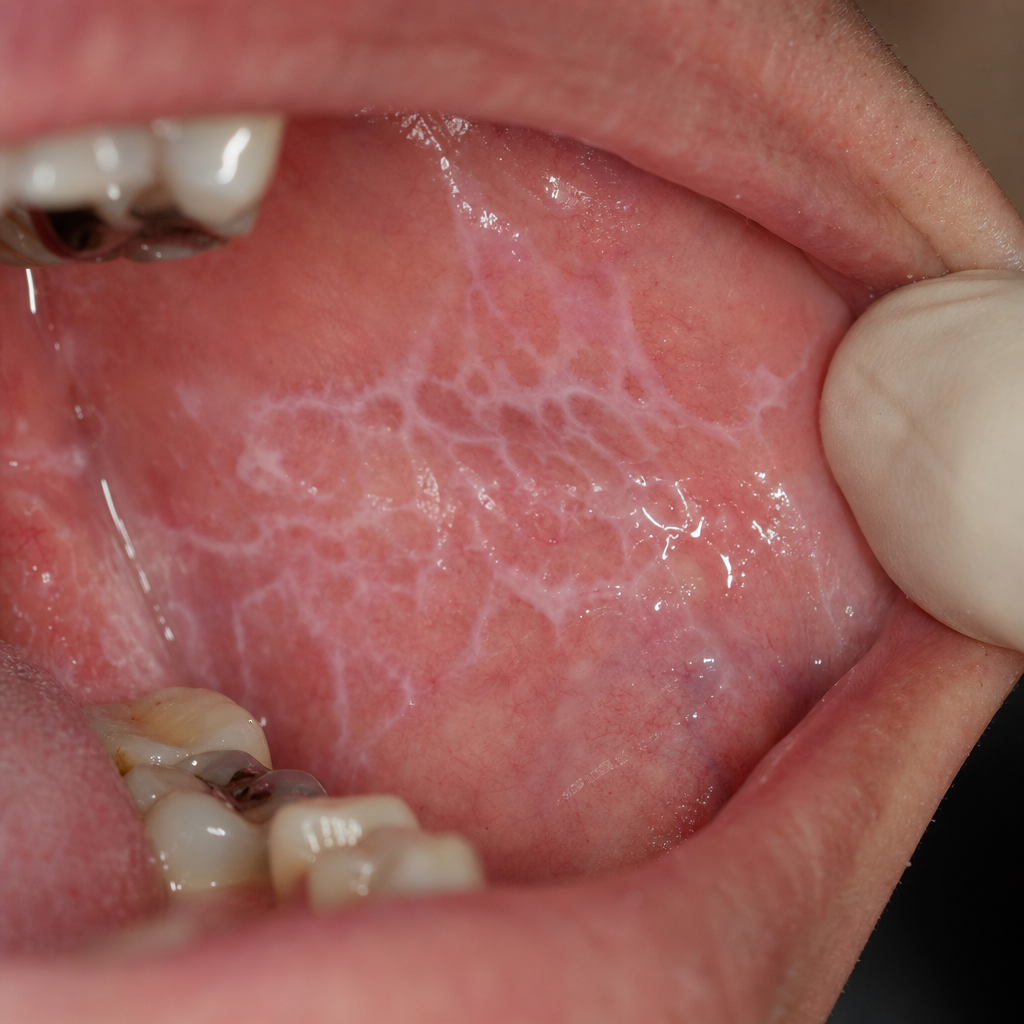
Question 16: A patient presents with oral mucosal lesions. Identify the condition shown in the image:
- A. Lichen planus (Correct Answer)
- B. Dermatomyositis
- C. Psoriasis
- D. Dermatitis herpetiformis
Explanation: - ***Lichen planus*** - The image exhibits **Wickham's striae**, which are characteristic fine, white, lacy patterns seen on the surface of papules and plaques in lichen planus, especially on mucosal surfaces. - Lichen planus often presents as **pruritic, purple, polygonal papules**, and this appearance is consistent with its oral manifestation. - *Dermatomyositis* - Dermatomyositis is characterized by **Gottron's papules** (violaceous papules over bony prominences, especially knuckles) and a **heliotrope rash** on the eyelids. - The lesion in the image does not show these typical features of dermatomyositis. - *Psoriasis* - Psoriasis typically presents as **erythematous plaques with silvery scales**, often on extensor surfaces, and can show pinpoint bleeding (Auspitz sign) when scales are removed. - The lacy, reticular white pattern (Wickham's striae) seen in the image is not a feature of psoriasis. - *Dermatitis herpetiformis* - Dermatitis herpetiformis is characterized by intensely **pruritic vesicles and bullae** symmetrically distributed, often on extensor surfaces, associated with celiac disease. - The lesion in the image is not vesicular or bullous, nor does it present with the characteristic distribution of dermatitis herpetiformis.
Question 17: Identify the lesion:
- A. Psoriasis
- B. Dermatitis herpetiformis
- C. Erythema marginatum
- D. Dermatomyositis (Correct Answer)
Explanation: ***Dermatomyositis*** - The image shows **Gottron's papules** over the extensor surfaces of the elbows, which are characteristic of dermatomyositis. These are violaceous, erythematous, flat-topped papules. - While typically found on the **dorsum of the hands** over the MCP and IP joints, they can also occur on elbows, knees, and ankles. *Psoriasis* - Psoriasis typically presents with **well-demarcated erythematous plaques** covered with silvery scales, especially on extensor surfaces. - The lesions in the image lack the characteristic **silvery scaling** of psoriasis. *Dermatitis herpetiformis* - This condition presents with intensely **itchy, polymorphic lesions**, including vesicles, bullae, and excoriations, arranged in a symmetrical fashion, often on extensor surfaces. - The lesions in the image are papular and nodular, not exhibiting the characteristic **vesicular or bullous eruption** of dermatitis herpetiformis. *Erythema marginatum* - Erythema marginatum is a **transient, non-pruritic erythematous rash** with serpiginous borders and central clearing, typically seen in **acute rheumatic fever**. - The lesions in the image are fixed papules/nodules without the characteristic migrating or rapidly changing appearance of erythema marginatum.
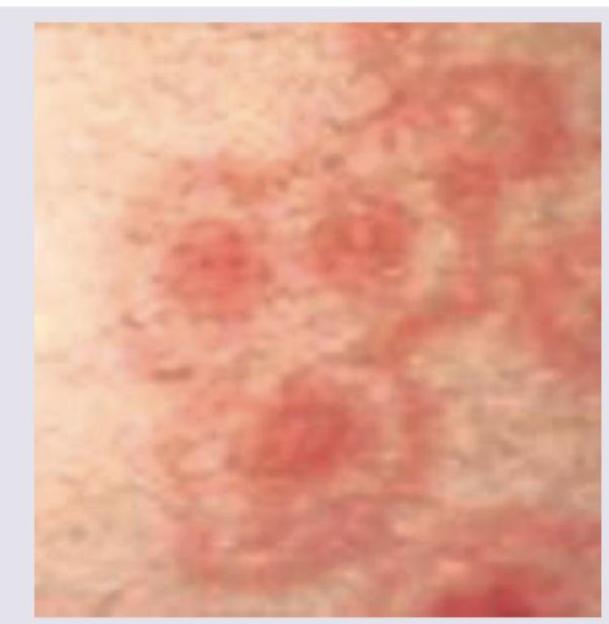
Question 18: Identify the lesion:
- A. Psoriasis
- B. Dermatitis herpetiformis
- C. Erythema marginatum
- D. Erythema multiforme (Correct Answer)
Explanation: ***Erythema multiforme*** - The image displays characteristic **“target lesions”** with concentric rings of redness and sometimes a central blister, which are hallmarks of erythema multiforme. - This condition is an acute, self-limiting inflammatory skin reaction, often triggered by infections (especially **HSV**) or medications. *Psoriasis* - Psoriasis typically presents as well-demarcated, **erythematous plaques** covered with **silvery scales**, which are not seen here. - Lesions frequently occur on extensor surfaces (elbows, knees) and the scalp. *Dermatitis herpetiformis* - Characterized by intensely **pruritic (itchy) vesicles and bullae** (blisters) that often appear in a symmetrical distribution. - It is strongly associated with **celiac disease** and typically affects the extensor surfaces and buttocks. *Erythema marginatum* - Consists of **migratory, macular, non-pruritic, erythematous lesions with central clearing** and serpiginous (wavy) borders. - It is a rare manifestation of **acute rheumatic fever** and does not typically show the concentric rings or blister formation seen in the image.
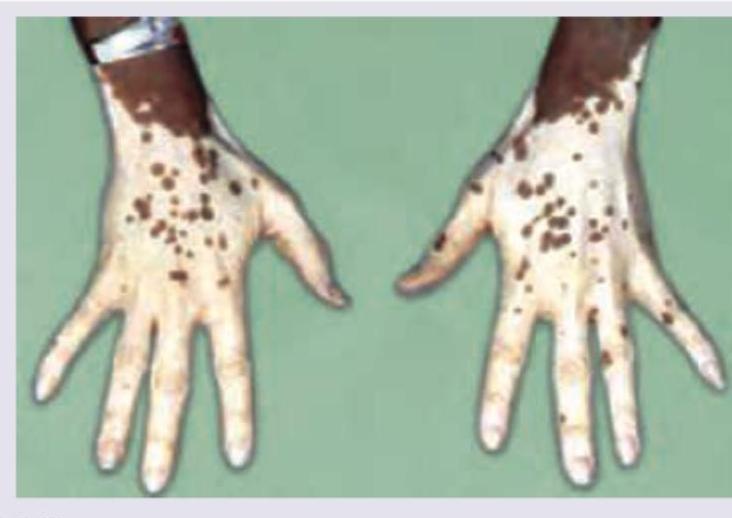
Question 19: A patient presents with violaceous papules over the knuckles and mottled pigmentation on the dorsum of hands. Identify the lesion:
- A. Vitiligo
- B. Dermatitis herpetiformis
- C. Erythema marginatum
- D. Dermatomyositis (Correct Answer)
Explanation: ***Dermatomyositis*** - The image exhibits **Gottron's papules**, which are violaceous, erythematous papules over the **dorsal aspects of the interphalangeal joints** (knuckles), a **pathognomonic cutaneous finding** in dermatomyositis - Additionally, the **spotted hyperpigmentation and hypopigmentation** (poikiloderma) on the dorsum of the hands is another common skin manifestation of dermatomyositis, especially in sun-exposed areas - Dermatomyositis is an **idiopathic inflammatory myopathy** with characteristic cutaneous and muscular involvement *Vitiligo* - Vitiligo presents as **well-demarcated depigmented macules or patches** due to destruction of melanocytes, resulting in a stark **white/chalky appearance** - The lesions in the image are **papular and violaceous** with combination of hyper- and hypopigmentation, not uniform complete depigmentation - Lacks the characteristic milky-white patches of vitiligo *Dermatitis herpetiformis* - Characterized by **intensely pruritic, grouped vesicles** on erythematous base, mainly on extensor surfaces (elbows, knees, buttocks) - Associated with **celiac disease** (gluten sensitivity) - The lesions in the image lack the typical **vesicular/blistering** appearance and are located specifically over the knuckles, not the classic distribution *Erythema marginatum* - Presents as **migratory, transient, non-pruritic, erythematous macules** with clear centers forming annular/serpiginous patterns - Classic cutaneous manifestation of **acute rheumatic fever** (Jones criteria) - The lesions in the image are **papular, fixed, and violaceous**, not flat erythematous rings
Question 20: A 41-year-old male complains of itching on the upper chest for one month. What is the most likely diagnosis?
- A. Pityriasis rosea (Correct Answer)
- B. Dermatitis herpetiformis
- C. Erythema marginatum
- D. Dermatomyositis
Explanation: ***Pityriasis rosea*** - This condition often starts with a **herald patch**, followed by a widespread rash of smaller, oval, pinkish-brown patches, often on the trunk, back, and upper extremities. - The lesions classically align along skin cleavage lines forming a **Christmas tree pattern**, and are frequently associated with pruritus (itching). *Dermatitis herpetiformis* - Characterized by intensely pruritic, **grouped vesicles and papules**, most commonly symmetrical on extensor surfaces like elbows, knees, and buttocks. This presentation is not typical of the provided image. - It is strongly associated with **celiac disease** and is usually seen in younger individuals. *Erythema marginatum* - This is a rare, transient, and **non-pruritic rash** characterized by rapidly enlarging, ring-shaped lesions with a raised, red border and clear center. - It's a key diagnostic criterion for **acute rheumatic fever** and does not typically present with the widespread itchy lesions seen in the image. *Dermatomyositis* - This is an inflammatory myopathy presenting with characteristic skin rashes such as **Gottron's papules** (over knuckles), a heliotrope rash (periorbital edema with a violaceous discoloration), and photosensitivity. - While it can cause itching, the primary skin lesions are distinct from those seen in the image and it is usually accompanied by **muscle weakness**.