Anatomy
1 questionsWhat can cause the absence of fructose in seminal fluid?
INI-CET 2023 - Anatomy INI-CET Practice Questions and MCQs
Question 11: What can cause the absence of fructose in seminal fluid?
- A. None of the above
- B. Congenital absence of seminal vesicle
- C. Ejaculatory duct obstruction
- D. Both of the above (Correct Answer)
Explanation: ***Both of the above*** - **Fructose** in seminal fluid is primarily produced by the **seminal vesicles**, providing energy for sperm motility. - Therefore, either a **congenital absence of seminal vesicles** or an **ejaculatory duct obstruction** (preventing seminal vesicle secretions from reaching the ejaculate) would lead to the absence of fructose. *Congenital absence of seminal vesicle* - The **seminal vesicles** are the primary source of fructose in seminal fluid. - If a person is born without these glands, **fructose will be absent** from their seminal fluid. *Ejaculatory duct obstruction* - An obstruction in the **ejaculatory ducts** would block the passage of secretions from the **seminal vesicles** and vasoepididymis into the urethra. - This prevents **fructose** (from the seminal vesicles) and sperm (from the testes/epididymis) from being present in the ejaculate. *None of the above* - This option is incorrect because both **congenital absence of seminal vesicles** and **ejaculatory duct obstruction** are valid causes for the absence of fructose in seminal fluid.
Biochemistry
3 questionsDNA sequence is determined by?
Liver produces ketones but cannot use it due to the deficiency of which of the following enzyme?
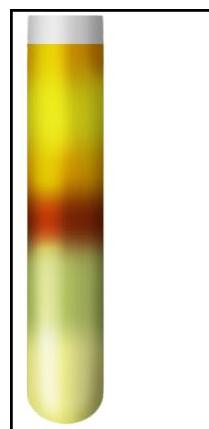
A urine sample shows a maroon-colored ring at the interface of two layers after adding reagents. Identify the test:
INI-CET 2023 - Biochemistry INI-CET Practice Questions and MCQs
Question 11: DNA sequence is determined by?
- A. Sanger sequencing (Correct Answer)
- B. PCR
- C. FISH
- D. Gel electrophoresis
Explanation: ***Correct: Sanger sequencing*** - **Sanger sequencing** (chain-termination method) is the gold standard technique used to determine the exact order of nucleotides within a DNA molecule - It uses dideoxynucleotides (ddNTPs) to terminate DNA strand elongation at specific bases, producing fragments of varying lengths - These fragments are separated by capillary electrophoresis and the sequence is read based on the terminal fluorescent label - Directly determines DNA sequence with high accuracy *Incorrect: PCR* - **Polymerase Chain Reaction (PCR)** amplifies specific DNA segments to create millions of copies - It does NOT determine the sequence itself - it only makes copies of DNA - PCR-amplified DNA can be used as a template for subsequent sequencing, but PCR itself doesn't reveal sequence information *Incorrect: FISH* - **Fluorescence in situ hybridization (FISH)** detects and localizes specific DNA sequences on chromosomes - Used for chromosomal mapping and detecting chromosomal abnormalities - Does not determine the nucleotide sequence *Incorrect: Gel electrophoresis* - Separates DNA fragments based on size and charge - Used to analyze DNA but cannot determine the specific nucleotide sequence - Useful for visualizing DNA after amplification or restriction digestion
Question 12: Liver produces ketones but cannot use it due to the deficiency of which of the following enzyme?
- A. Alkaline phosphatase
- B. Alanine transaminase
- C. Thiophorase (Correct Answer)
- D. Thiolase
Explanation: ***Thiophorase*** - The liver lacks **thiophorase (succinyl-CoA:3-ketoacid CoA transferase)**, which is crucial for converting **acetoacetate** to **acetoacetyl-CoA**. - This enzyme deficiency prevents the liver from utilizing ketones as an energy source, even though it is a primary site for their production. *Alkaline phosphatase* - **Alkaline phosphatase** is a non-specific enzyme found in various tissues, including bone, liver, and intestine. - Its primary role is to **hydrolyze phosphate esters**, and it is not directly involved in ketone metabolism. *Alanine transaminase* - **Alanine transaminase (ALT)** is a liver enzyme primarily involved in **amino acid metabolism**, specifically in the transfer of an amino group from alanine to α-ketoglutarate. - It plays no direct role in the synthesis or utilization of ketone bodies. *Thiolase* - **Thiolase** is an enzyme involved in both the synthesis and breakdown of ketone bodies. - It converts **two acetyl-CoA molecules into acetoacetyl-CoA** during ketogenesis and also cleaves acetoacetyl-CoA into two acetyl-CoA molecules during ketolysis in extrahepatic tissues.
Question 13: A urine sample shows a maroon-colored ring at the interface of two layers after adding reagents. Identify the test:
- A. Rothera's test (Correct Answer)
- B. Benedict's test
- C. Biuret test
- D. Fehling's test
Explanation: ***Rothera's test*** - The image displays a **maroon-colored ring** at the interface of two layers, which is a characteristic positive result for Rothera's test. - Rothera's test is used to detect the presence of **ketone bodies**, specifically **acetone and acetoacetate**, in urine. *Benedict's test* - Benedict's test is used to detect **reducing sugars**, such as glucose, in urine. - A positive Benedict's test typically produces a color change from blue to green, yellow, orange, or brick-red precipitate after heating, which is not what is seen here. *Biuret test* - The Biuret test is used to detect **peptide bonds** and thus the presence of **proteins**. - A positive Biuret test results in a **violet or purple color** when proteins are present, which is different from the reaction shown. *Fehling's test* - Fehling's test is another test used to detect the presence of **reducing sugars** in a sample. - A positive result is indicated by the formation of a **brick-red precipitate** of cuprous oxide after heating, which is not consistent with the image.
Community Medicine
2 questionsA person is bitten by a dog. The dog and the person are fully immunized. There is a small abrasion mark on the site of bite. What would you advise to the person?
Match the following: Column A: a. Syphilis b. Chickenpox c. COVID-19 d. Hepatitis A Column B: 1. 6 Days 2. 90 Days 3. 16 Days 4. 28 Days
INI-CET 2023 - Community Medicine INI-CET Practice Questions and MCQs
Question 11: A person is bitten by a dog. The dog and the person are fully immunized. There is a small abrasion mark on the site of bite. What would you advise to the person?
- A. Amoxiclav
- B. Metronidazole
- C. Ciprofloxacin
- D. Observation (Correct Answer)
Explanation: ***Observation*** - This is a **Category II exposure** (minor abrasion/scratch) according to **WHO rabies classification**. With both the dog and person **fully immunized**, the recommended management is **immediate wound washing** with soap and water followed by **observation of the dog for 10 days**. - If the dog remains healthy during the 10-day observation period, no further rabies post-exposure prophylaxis is needed. The person's prior vaccination provides adequate protection. - **Prophylactic antibiotics are NOT routinely indicated** for minor abrasions in immunized individuals when the wound can be properly cleaned. The risk of significant bacterial infection in superficial wounds is low with proper wound care. - This approach follows **WHO and IAPSM guidelines** for rational dog bite management, avoiding unnecessary antibiotic use. *Amoxiclav* - Prophylactic antibiotics like **amoxicillin-clavulanate** are reserved for **high-risk wounds**: deep puncture wounds (Category III), wounds near bones/joints, hand/face wounds, delayed presentation (>8 hours), or immunocompromised patients. - A **small abrasion** in an immunized person does not meet criteria for routine antibiotic prophylaxis. Over-prescription contributes to **antimicrobial resistance**. - The primary concern in dog bite management is **rabies prevention**, not routine bacterial prophylaxis for minor wounds. *Metronidazole* - **Metronidazole** alone has limited coverage against common bite wound pathogens and would not be appropriate even if antibiotics were indicated. - It lacks activity against aerobic organisms like *Pasteurella* and *Staphylococcus* species commonly found in dog bites. *Ciprofloxacin* - **Ciprofloxacin** is not the first-line antibiotic for dog bites even when prophylaxis is indicated, due to limited anaerobic and Gram-positive coverage. - More importantly, antibiotics are **not routinely needed** for this Category II exposure with proper wound care and observation.
Question 12: Match the following: Column A: a. Syphilis b. Chickenpox c. COVID-19 d. Hepatitis A Column B: 1. 6 Days 2. 90 Days 3. 16 Days 4. 28 Days
- A. a-2, b-3, c-1, d-4 (Correct Answer)
- B. a-3, b-4, c-2, d-1
- C. a-1, b-4, c-2, d-3
- D. a-3, b-4, c-1, d-2
Explanation: ***a-2, b-3, c-1, d-4*** - **Syphilis**: 90 days represents the **maximum incubation period** for *Treponema pallidum* (range 10-90 days, typical 21 days). While not the most common presentation time, it remains medically accurate and is the only viable match among available options. - **Chickenpox**: 16 days falls within the typical incubation period for **varicella-zoster virus** (range 10-21 days, commonly 14-16 days). - **COVID-19**: 6 days is consistent with the **median incubation period** for SARS-CoV-2 (range 2-14 days, mean 5-6 days). - **Hepatitis A**: 28 days represents the **typical incubation period** for HAV (range 15-50 days, average 28-30 days). *a-3, b-4, c-2, d-1* - Incorrectly assigns **Syphilis** 16 days (below the 10-90 day range's typical value), **COVID-19** 90 days (far exceeding the 2-14 day range), and **Hepatitis A** only 6 days (well below the minimum 15-day period). *a-1, b-4, c-2, d-3* - Incorrectly matches **Syphilis** with 6 days (insufficient for *T. pallidum* to produce primary chancre), **Chickenpox** with 28 days (exceeds the typical VZV range), and **Hepatitis A** with 16 days (below typical range). *a-3, b-4, c-1, d-2* - Incorrectly assigns **Syphilis** 16 days, **Chickenpox** 28 days (exceeding typical range), and **Hepatitis A** 90 days (inconsistent with acute HAV infection pattern).
Internal Medicine
1 questionsCalculate Anion Gap? Na: 145 K: 4 CI: 90 HCO3 : 15
INI-CET 2023 - Internal Medicine INI-CET Practice Questions and MCQs
Question 11: Calculate Anion Gap? Na: 145 K: 4 CI: 90 HCO3 : 15
- A. 28
- B. 35
- C. 12
- D. 40 (Correct Answer)
Explanation: ***40*** - The anion gap is calculated using the formula: **Na - (Cl + HCO3)**. - Plugging in the values: **145 - (90 + 15) = 145 - 105 = 40**. *28* - This value would result if there were a different **bicarbonate** or **chloride** level or a miscalculation. - For example, if the bicarbonate was 30 instead of 15, the calculation would be 145 - (90 + 30) = 145 - 120 = 25, which is closer but still not 28. *35* - This value is obtained if there's an error in summing the **anions** or subtracting from **sodium**. - For instance, if the bicarbonate was incorrectly taken as 20, the calculation would be 145 - (90 + 20) = 145 - 110 = 35. *12* - A value of 12 represents a **normal anion gap**, indicating that the patient in this scenario has a high anion gap [1]. - This result would only occur if the sum of **chloride and bicarbonate** were around 133, which is not the case here.
Obstetrics and Gynecology
2 questionsA 15-year-old girl child with primary amenorrhea has pubic hair, prepubertal breast, blind vagina, clitoromegaly, and normal testosterone. Karyotype given is 46 XY , what is the cause?
Least chances of perinatal transmission are seen in?
INI-CET 2023 - Obstetrics and Gynecology INI-CET Practice Questions and MCQs
Question 11: A 15-year-old girl child with primary amenorrhea has pubic hair, prepubertal breast, blind vagina, clitoromegaly, and normal testosterone. Karyotype given is 46 XY , what is the cause?
- A. 17 hydroxylase deficiency
- B. 5-alpha reductase deficiency (Correct Answer)
- C. Swyer syndrome
- D. Complete AIS
Explanation: ***5-alpha reductase deficiency*** - The presence of **primary amenorrhea**, **pubic hair**, **clitoromegaly**, **blind vagina**, and a **46 XY karyotype** with **normal testosterone** levels points to 5-alpha reductase deficiency. In this condition, the body cannot convert testosterone to the more potent dihydrotestosterone (DHT) needed for external male genitalia development in utero. - Individuals with this condition are typically raised as girls, but at puberty, they develop **virilization** (e.g., clitoromegaly, deepening voice, pubic hair) due to an increase in testosterone, which can still exert some androgenic effects. *17 hydroxylase deficiency* - This deficiency affects both adrenal and gonadal steroid synthesis, leading to **hypertension**, **hypokalemia**, and **primary amenorrhea** in 46 XY individuals. - It would also result in **low testosterone levels**, which contradicts the normal testosterone mentioned in the case. *Swyer syndrome* - Swyer syndrome (46 XY pure gonadal dysgenesis) is characterized by a **46 XY karyotype** but rudimentary or streak gonads, leading to **primary amenorrhea** and an **absence of secondary sexual characteristics** (no breast development, no pubic hair). - These individuals have **low testosterone** and high gonadotropins, and they present with a **female phenotype** and a **uterus**, which contradicts the features of pubic hair and clitoromegaly. *Complete AIS* - Complete Androgen Insensitivity Syndrome (CAIS) also presents with a **46 XY karyotype**, **primary amenorrhea**, and a **blind vagina**. - However, individuals with CAIS have **undescended testes** that produce testosterone, but their cells cannot respond to it due to defective androgen receptors, resulting in **breast development** at puberty (due to peripheral conversion of testosterone to estrogen) and **absent or sparse pubic/axillary hair** (since androgen receptors are non-functional). - The presence of **pubic hair** and **clitoromegaly** in this case rules out CAIS.
Question 12: Least chances of perinatal transmission are seen in?
- A. Rubella
- B. Hepatitis B
- C. HSV (Correct Answer)
- D. CMV
Explanation: ***HSV*** - **Perinatal transmission of HSV** is rare, occurring in approximately 1 in 3,000 to 1 in 20,000 live births, primarily from contact with maternal genital lesions during vaginal delivery. - Transmission rates are lowest when the mother has **recurrent herpes lesions** due to the presence of maternal antibodies offering some fetal protection. *Rubella* - **Congenital rubella syndrome** carries a high risk of transmission (up to 90%) if the mother contracts rubella in the first trimester. - It can lead to severe birth defects such as **heart abnormalities**, **cataracts**, and **deafness**. *Hepatitis B* - The risk of **vertical transmission of Hepatitis B** is significant, especially if the mother is HBeAg-positive (up to 90%). - Without intervention, chronic infection develops in 70-90% of infected infants, often leading to **liver disease** later in life. *CMV* - **Congenital CMV infection** is the most common congenital viral infection, with a transmission rate of 30-40% in primary maternal infection. - It can cause severe neurological deficits, **sensorineural hearing loss**, and **developmental delays** in affected infants.
Ophthalmology
1 questionsWhich of the following lens is used in direct gonioscopy?
INI-CET 2023 - Ophthalmology INI-CET Practice Questions and MCQs
Question 11: Which of the following lens is used in direct gonioscopy?
- A. Koeppe (Correct Answer)
- B. Goldmann
- C. Richardson
- D. Zeiss
Explanation: ***Koeppe*** - The **Koeppe lens** is designed for direct gonioscopy, providing a wide-angle view of the **anterior chamber angle**. - It is typically used with the patient in a **supine position** and requires a coupling solution to be placed directly on the cornea. *Goldmann* - The **Goldmann lens** (3-mirror lens) is used for **indirect gonioscopy** and is characterized by mirrors that reflect the image of the angle. - It is used at a **slit lamp** and provides a magnified view as the light is reflected through the mirrors. *Richardson* - The **Richardson-Shaffer lens** is another direct gonioscopy lens, similar to the Koeppe lens. - However, the question asks for "**the**" lens used in direct gonioscopy, and **Koeppe** is the most commonly recognized and frequently used direct gonioscopy lens. - Richardson-Shaffer is less commonly used in modern practice compared to Koeppe. *Zeiss* - The **Zeiss lens** (4-mirror lens) is used for **indirect gonioscopy** and allows a rapid 360-degree view of the angle. - It is commonly used with a **slit lamp** and requires minimal or no coupling fluid due to its small contact surface.