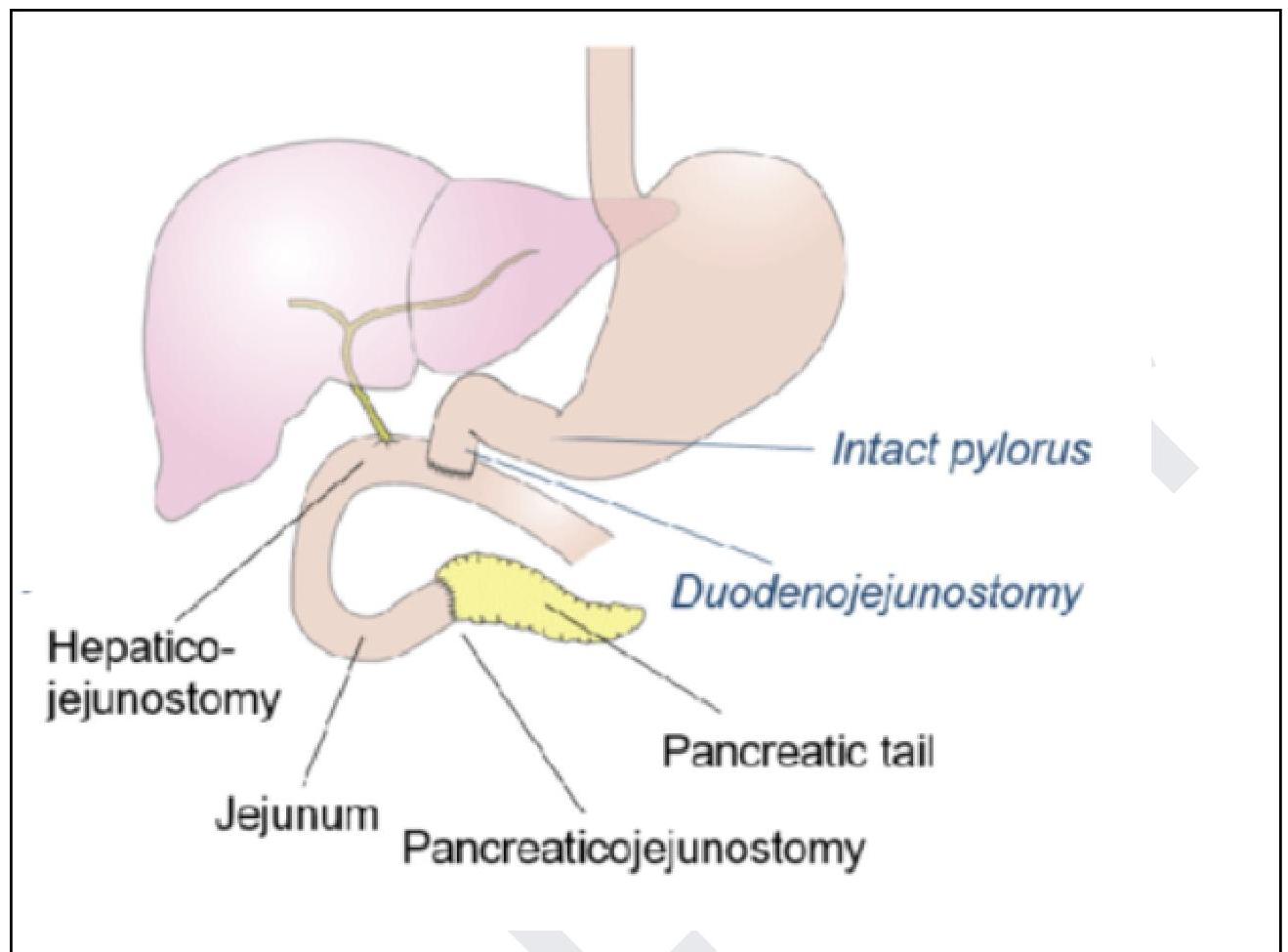
Question 11: The following procedure is performed for the management of?
- A. Gallbladder carcinoma
- B. Distal cholangiocarcinoma (Correct Answer)
- C. Chronic calcific pancreatitis
- D. Advanced gastric carcinoma
Explanation: ***Distal cholangiocarcinoma***
- The image shows a **Pylorus-preserving Whipple procedure (PPPD)**, which involves resection of the pancreatic head, duodenum, gallbladder, and part of the common bile duct, followed by reconstruction.
- This procedure is primarily performed for malignancies of the **pancreatic head**, **distal bile duct (cholangiocarcinoma)**, and **ampulla of Vater**, as they often cause obstructive jaundice and are resectable.
*Gallbladder carcinoma*
- While gallbladder carcinoma can involve the bile ducts, this specific reconstruction (PPPD) is more commonly associated with tumors of the pancreatic head or distal bile duct rather than the gallbladder itself, which might be managed with a **cholecystectomy** and possibly **liver resection**.
- The type of resection and reconstruction varies significantly based on the extent and location of gallbladder cancer.
*Chronic calcific pancreatitis*
- Surgical management for chronic pancreatitis, especially with calcifications, typically involves drainage procedures (e.g., **Puestow procedure** due to dilated pancreatic duct or **Frey procedure**) or resection of the pancreatic head (e.g., **Beger procedure**).
- While some resections of the pancreatic head are performed for chronic pancreatitis, the depicted procedure is specifically designed for malignancies of the pancreatic head region, not primarily for the sequelae of chronic calcific pancreatitis unless associated with a mass suspicious for malignancy.
*Advanced gastric carcinoma*
- Advanced gastric carcinoma is typically managed by **gastrectomy** (partial or total) with lymphadenectomy, not a Whipple procedure.
- The image clearly shows an **intact pylorus** and the stomach mostly preserved, which is inconsistent with advanced gastric carcinoma requiring major gastric resection.
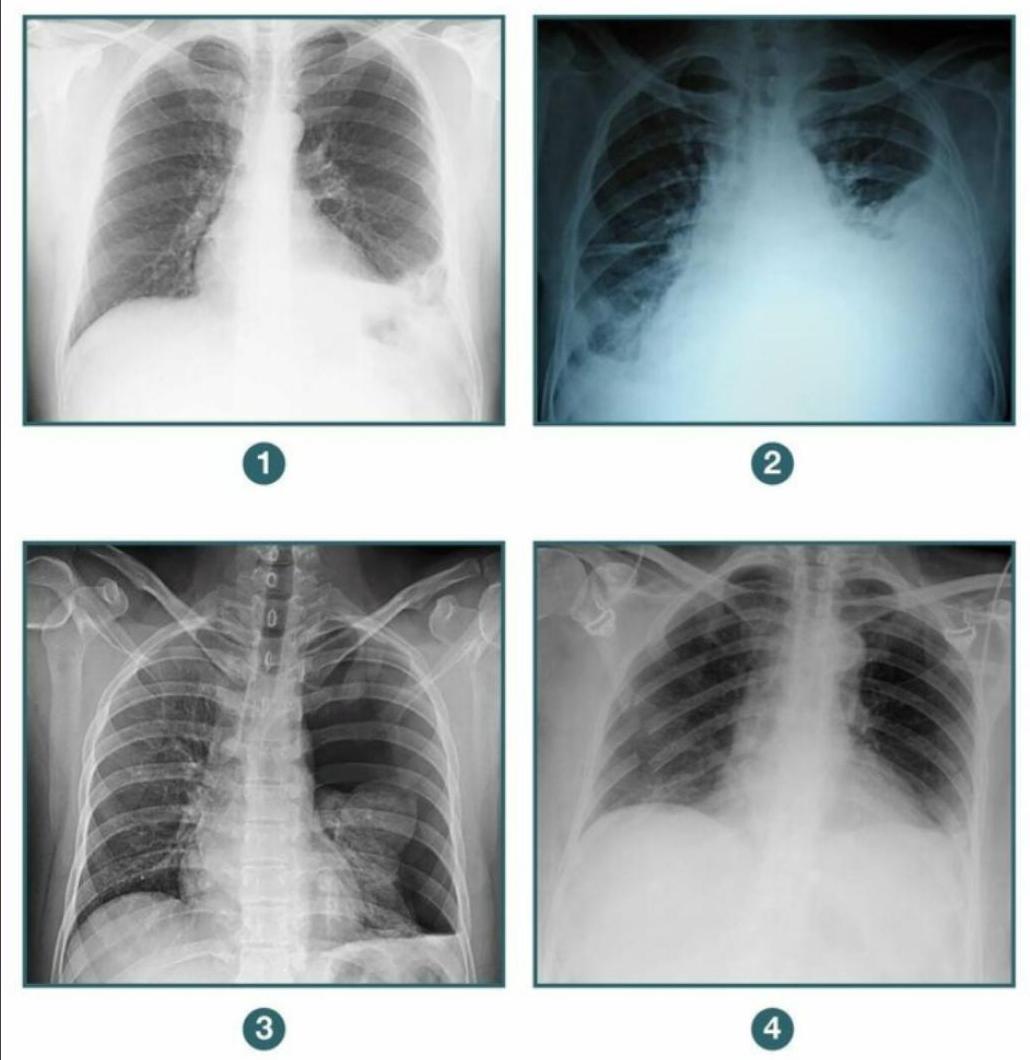
Question 12: A patient presents to the casualty following blunt trauma to the chest. A chest X-ray was done. Among the following radiographs, in which case would you further evaluate the patient before putting a chest tube?
1. Diaphragmatic hernia
2. Hemothorax
3. Pneumothorax
4. Flail chest
- A. Flail chest
- B. Pneumothorax
- C. Diaphragmatic hernia (Correct Answer)
- D. Hemothorax
Explanation: ***Correct Option: Diaphragmatic hernia***
- A **diaphragmatic hernia** (showing elevated hemidiaphragm with loops of bowel in the hemithorax) requires **further evaluation before chest tube placement**
- **CT scan with contrast** or **nasogastric tube with X-ray** should be performed to delineate the anatomy and confirm herniated abdominal contents
- **Chest tube placement is contraindicated** or requires extreme caution as it could perforate herniated abdominal organs (stomach, bowel, liver, spleen)
- This condition requires **surgical repair**, not chest drainage
- The key principle: **Always evaluate thoroughly before intervention when diaphragmatic injury is suspected**
*Incorrect Option: Pneumothorax*
- A **pneumothorax** (characterized by absence of lung markings in the periphery and visceral pleural line) has a straightforward indication for chest tube
- **Chest tube is the definitive management** for significant or symptomatic pneumothorax to re-expand the lung
- No additional evaluation needed before chest tube placement in hemodynamically stable patients with confirmed pneumothorax
*Incorrect Option: Hemothorax*
- A **hemothorax** (showing opacification in the lower lung field with blunting of costophrenic angle and fluid level) has a clear indication for chest tube
- **Chest tube is indicated** to drain blood, relieve lung compression, and monitor for ongoing bleeding
- Immediate chest tube placement is appropriate once diagnosed
*Incorrect Option: Flail chest*
- A **flail chest** (multiple rib fractures in two or more places creating unstable chest wall segment) primarily requires **pain management and ventilatory support**
- A chest tube is **not indicated for flail chest itself** unless there is an associated pneumothorax or hemothorax
- If flail chest is isolated, you would not place a chest tube at all, making this option incorrect for the question asked