A man was brought to the emergency room after poisoning with an unknown substance. Muscarinic poisoning was suspected and he was treated for the same. What is the possible presenting feature which led to the diagnosis?
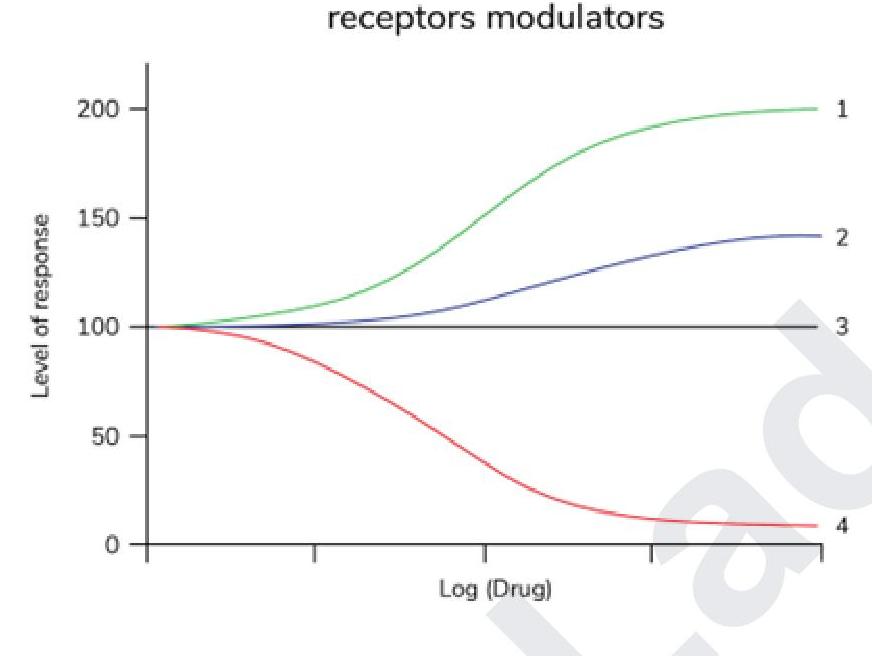
Which of the following statements is correct regarding the given graph?
Match the following antiarrhythmic drugs with their mechanism of action: | Mechanism of action | Drug | | :-- | :-- | | 1. Na+ channel blocker | A. Quinidine | | 2. K+ channel blocker | B. Digoxin | | 3. Na+K+ ATPase inhibitor | C. Esmolol | | 4. Beta-blocker | D. Ibutilide |
Treatment of choice for acute arsenic poisoning is:
Which of these is not a cardiac poison?
A child presents with complaints of fever, rash, body ache, and throat ache. He had a history of thorn prick injury a week back. What antibiotics would you give empirically to this child?
Match the following drugs with the targets of their actions: Drugs: A. Trastuzumab B. Infliximab C. Sirolimus D. Imatinib Targets: 1. BCR-ABL tyrosine kinase 2. mTOR 3. TNF alpha 4. HER2/neu
INI-CET 2022 - Pharmacology INI-CET Practice Questions and MCQs
Question 11: A man was brought to the emergency room after poisoning with an unknown substance. Muscarinic poisoning was suspected and he was treated for the same. What is the possible presenting feature which led to the diagnosis?
- A. Diuresis
- B. Bradycardia (Correct Answer)
- C. Mydriasis
- D. Muscle fasciculations
Explanation: ***Bradycardia*** - Muscarinic poisoning stimulates **parasympathetic nervous system** activity, leading to a decrease in heart rate. - This **bradycardia** is a classic sign of excessive muscarinic receptor activation, as seen with organophosphate or carbamate poisoning [1, 2].*Diuresis* - While muscarinic receptor activation can increase bladder detrusor contraction (leading to urinary urgency and frequency) [1, 2], **diuresis** (increased urine production) is not a primary or direct presenting feature of muscarinic poisoning. - Instead, the focus is on incontinence rather than simply increased urine output.*Mydriasis* - **Mydriasis** (pupil dilation) is associated with **anticholinergic poisoning**, which blocks muscarinic receptors. - Muscarinic poisoning, conversely, causes **miosis** (pupil constriction) due to excessive stimulation of muscarinic receptors in the iris sphincter muscle.*Muscle fasciculations* - **Muscle fasciculations** are a characteristic sign of **nicotinic receptor overstimulation**, not muscarinic [1, 3]. - While both nicotinic and muscarinic receptors are activated in organophosphate poisoning, fasciculations point to the **nicotinic effects** at the neuromuscular junction [1, 3].
Question 12: Which of the following statements is correct regarding the given graph?
- A. Drug 1 represents agonist and drug 2 represents inverse agonist
- B. Drug 3 represents agonist and drug 4 represents inverse agonist
- C. Drug 2 represents partial agonist and drug 3 represents inverse agonist
- D. Drug 1 represents agonist and drug 4 represents inverse agonist (Correct Answer)
Explanation: ***Drug 1 represents agonist and drug 4 represent inverse agonist*** - **Drug 1** demonstrates maximal efficacy, producing a **supraphysiologic response** above the baseline (100%), characteristic of an **agonist**. - **Drug 4** produces a response **below the baseline** (100%), indicating inhibition of constitutive receptor activity, which is the definition of an **inverse agonist**. *Drug 1 represents agonist and drug 2 represents inverse agonist* - While **Drug 1** is correctly identified as an **agonist** due to its maximal effect above baseline, **Drug 2** is a **partial agonist**, as it produces a submaximal effect above baseline but does not reach the full agonist's efficacy. - **Drug 2** does not reduce the baseline response, so it cannot be an inverse agonist. *Drug 3 represents agonist and drug 4 represents inverse agonist* - **Drug 3** maintains the **baseline response** (at 100%) regardless of concentration, indicating it is a **neutral antagonist** or has no effect, not an agonist. - **Drug 4** is correctly identified as an **inverse agonist** because it reduces the baseline receptor activity. *Drug 2 represents partial agonist and drug 3 represents inverse agonist* - **Drug 2** is correctly identified as a **partial agonist** as it produces an effect above baseline but less than a full agonist. - **Drug 3** is incorrect; it shows no change from baseline (100%), reflecting a **neutral antagonist** or inactive substance, not an inverse agonist which would decrease the baseline response.
Question 13: Match the following antiarrhythmic drugs with their mechanism of action: | Mechanism of action | Drug | | :-- | :-- | | 1. Na+ channel blocker | A. Quinidine | | 2. K+ channel blocker | B. Digoxin | | 3. Na+K+ ATPase inhibitor | C. Esmolol | | 4. Beta-blocker | D. Ibutilide |
- A. 1-D, 2-B, 3-A, 4-C
- B. 1-A, 2-D, 3-B, 4-C (Correct Answer)
- C. 1-A, 2-C, 3-D, 4-B
- D. 1-D, 2-C, 3-A, 4-B
Explanation: ***1-A, 2-D, 3-B, 4-C*** - **Quinidine** is a Class IA antiarrhythmic drug that primarily blocks **sodium channels**, prolonging the action potential duration and refractoriness. - **Ibutilide** is a Class III antiarrhythmic drug that blocks **potassium channels**, leading to delayed repolarization and increased effective refractory period. - **Digoxin** inhibits the **Na+/K+ ATPase pump**, increasing intracellular calcium and affecting AV nodal conduction. - **Esmolol** is a **beta-blocker** (Class II antiarrhythmic) that reduces heart rate and contractility by blocking β1-adrenergic receptors. *1-A, 2-C, 3-D, 4-B* - This option incorrectly matches **Esmolol** (a beta-blocker) with **K+ channel blocker** and **Ibutilide** (K+ channel blocker) with **Na+K+ ATPase inhibitor**. - It also incorrectly matches **Digoxin** (Na+K+ ATPase inhibitor) with **beta-blocker**. *1-D, 2-C, 3-A, 4-B* - This option incorrectly matches **Ibutilide** (K+ channel blocker) with **Na+ channel blocker** and incorrectly matches **Quinidine** (Na+ channel blocker) with **Na+K+ ATPase inhibitor**. - It also incorrectly matches **Digoxin** (Na+K+ ATPase inhibitor) with **beta-blocker**. *1-D, 2-B, 3-A, 4-C* - This option incorrectly matches **Ibutilide** (K+ channel blocker) with **Na+ channel blocker** and **Digoxin** (Na+K+ ATPase inhibitor) with **K+ channel blocker**. - It also incorrectly matches **Quinidine** (Na+ channel blocker) with **Na+K+ ATPase inhibitor**.
Question 14: Treatment of choice for acute arsenic poisoning is:
- A. Ipecac
- B. Dimercaprol (Correct Answer)
- C. Penicillamine
- D. Activated charcoal
Explanation: ***Dimercaprol*** - **Dimercaprol** (also known as British Anti-Lewisite, BAL) is a chelating agent used for **acute arsenic poisoning**. [1] - It works by binding to arsenic, forming a stable, non-toxic complex that can be excreted from the body. - Among the given options, **dimercaprol is the correct choice** for treating acute arsenic poisoning. - **Note:** While dimercaprol is effective, newer chelators like **DMSA (succimer)** and **DMPS (unithiol)** are now preferred in modern practice due to better safety profiles and efficacy, though they are not listed in the options. [1] *Ipecac* - **Ipecac syrup** induces vomiting and is generally **contraindicated** in poisonings with corrosives, hydrocarbons, or substances that can cause rapid central nervous system depression. - It is **not effective** for systemic poisonings like arsenic, where absorption has already occurred, and can cause complications like aspiration. - Ipecac is largely obsolete in modern toxicology practice. *Penicillamine* - **Penicillamine** is another chelating agent, primarily used for **copper poisoning** (e.g., Wilson's disease) and sometimes for lead poisoning. - While it has some chelating properties, it is **less effective** than dimercaprol for acute arsenic toxicity and can have more significant side effects. - It is **not the first-line treatment** for arsenic poisoning. *Activated charcoal* - **Activated charcoal** is effective for adsorbing many toxins in the gastrointestinal tract, preventing their absorption. - However, it has **poor affinity for heavy metals** like arsenic and is therefore **not recommended** as the primary treatment for arsenic poisoning. - It may have limited benefit only if given very early after ingestion, but chelation therapy is the definitive treatment.
Question 15: Which of these is not a cardiac poison?
- A. Aconite
- B. Atropa belladonna (Correct Answer)
- C. Cerbera thevetia
- D. Nicotiana tabacum
Explanation: ***Atropa belladonna*** - This plant primarily contains **atropine** and other **belladonna alkaloids**, which are **anticholinergic** and cause symptoms like dry mouth, dilated pupils, tachycardia, and hallucinations. - While it can cause *tachycardia*, its primary toxic effects are not directly on the cardiac muscle contractility or rhythmicity leading to a **"cardiac poison"** classification (e.g. arrhythmias or heart failure), but rather through autonomic nervous system modulation. *Aconite* - Aconite, derived from the **monkshood plant**, contains **aconitine**, a potent neurotoxin and cardiotoxin. - It causes severe **arrhythmias**, including ventricular fibrillation, which can be rapidly fatal by directly affecting **sodium channels** in myocardial cells. *Cerbera thevetia* - Commonly known as Yellow Oleander, it contains **cardiac glycosides** similar to digoxin. - These glycosides inhibit the **Na+/K+-ATPase pump** in cardiac myocytes, leading to increased intracellular calcium, enhanced contractility, and dose-dependent **arrhythmias** (bradycardia, heart blocks, ventricular arrhythmias). *Nicotiana tabacum* - Tobacco contains **nicotine**, which primarily acts on **nicotinic acetylcholine receptors**. - Acute poisoning can lead to initial stimulation followed by depression of the autonomic ganglia, causing a range of cardiac effects including **tachycardia**, **hypertension**, and **arrhythmias** due to sympathetic nervous system activation.
Question 16: A child presents with complaints of fever, rash, body ache, and throat ache. He had a history of thorn prick injury a week back. What antibiotics would you give empirically to this child?
- A. Amoxicillin+ clavulanate (Correct Answer)
- B. Ceftriaxone
- C. Vancomycin
- D. Meropenem
Explanation: ***Amoxicillin + clavulanate*** - This combination provides **broad-spectrum coverage** against common skin flora including **Staphylococcus aureus**, **Streptococcus species**, and **anaerobes** that can be introduced by thorn prick injuries. - The **beta-lactamase inhibitor (clavulanate)** extends coverage to beta-lactamase producing organisms commonly found in skin infections. - Covers **Streptococcus pyogenes** which could explain the throat ache, making it ideal for this child with both skin infection and pharyngitis symptoms. - Most appropriate **first-line empiric therapy** for pediatric skin and soft tissue infections with systemic symptoms. *Ceftriaxone* - While this **third-generation cephalosporin** has good coverage against many gram-negative bacteria and some gram-positive organisms including **MSSA (methicillin-sensitive S. aureus)**, it is typically **reserved for parenteral therapy** in more severe infections. - For this clinical scenario, amoxicillin-clavulanate is preferred because it provides better **beta-lactamase coverage**, can be given orally, and covers both aerobic and anaerobic organisms relevant to thorn prick injuries. - Would be considered if the patient required **hospitalization** or failed first-line therapy. *Vancomycin* - This antibiotic is primarily used for serious infections caused by **multi-drug resistant gram-positive bacteria**, particularly **methicillin-resistant Staphylococcus aureus (MRSA)**. - Given the history of a thorn prick without specific risk factors for MRSA (no prior MRSA infection, hospital exposure, or failed beta-lactam therapy), there is **no indication for empiric vancomycin use**. - Using vancomycin empirically without specific indication contributes to **antibiotic resistance** and is not guideline-recommended. *Meropenem* - A **carbapenem** antibiotic reserved for **severe, life-threatening infections** caused by multi-drug resistant organisms or in cases of **septic shock** with unknown etiology. - The clinical presentation does not suggest severe sepsis, necrotizing fasciitis, or resistant pathogen requiring such broad coverage. - Empiric use in this scenario would represent **inappropriate antimicrobial stewardship** and promote development of carbapenem-resistant organisms.
Question 17: Match the following drugs with the targets of their actions: Drugs: A. Trastuzumab B. Infliximab C. Sirolimus D. Imatinib Targets: 1. BCR-ABL tyrosine kinase 2. mTOR 3. TNF alpha 4. HER2/neu
- A. A-2, B-3, C-1, D-4
- B. A-3, B-4, C-2, D-1
- C. A-4, B-3, C-1, D-2
- D. A-4, B-3, C-2, D-1 (Correct Answer)
Explanation: ***Correct Answer: A-4, B-3, C-2, D-1*** - **Trastuzumab** (Herceptin) is a **monoclonal antibody** that targets the **HER2/neu receptor (4)** [1], [2], commonly overexpressed in certain breast cancers and gastric cancers. - **Infliximab** is another **monoclonal antibody** that specifically targets and neutralizes **TNF-alpha (3)**, an inflammatory cytokine, making it useful in treating autoimmune diseases like rheumatoid arthritis and Crohn's disease. - **Sirolimus** is an **immunosuppressant** drug that inhibits the mammalian target of rapamycin (**mTOR (2)**), a protein kinase involved in cell growth and proliferation, used in transplant medicine and as an anticancer agent. - **Imatinib** is a **tyrosine kinase inhibitor** that primarily targets the **BCR-ABL fusion protein (1)** [1], [2], which is characteristic of chronic myeloid leukemia. *Incorrect: A-2, B-3, C-1, D-4* - This option incorrectly matches Trastuzumab with mTOR and Sirolimus with BCR-ABL, which are not their primary targets. - Trastuzumab targets HER2/neu [1], [2], and Sirolimus targets mTOR. *Incorrect: A-3, B-4, C-2, D-1* - This option incorrectly matches Trastuzumab with TNF-alpha and Infliximab with HER2/neu. - Infliximab targets TNF-alpha, and Trastuzumab targets HER2/neu [1], [2]. *Incorrect: A-4, B-3, C-1, D-2* - This option incorrectly matches Sirolimus with BCR-ABL and Imatinib with mTOR. - Sirolimus inhibits mTOR, and Imatinib inhibits BCR-ABL [1], [2].