Biochemistry
1 questionsThe signal sequence in a type 2 membrane protein with N-terminal facing cytoplasm is located in?
INI-CET 2022 - Biochemistry INI-CET Practice Questions and MCQs
Question 81: The signal sequence in a type 2 membrane protein with N-terminal facing cytoplasm is located in?
- A. C-terminal
- B. Middle of protein (Correct Answer)
- C. Both N and C terminal
- D. N-terminal
Explanation: ***Middle of protein*** - For a type 2 membrane protein with the **N-terminal facing the cytoplasm**, the **start-transfer sequence** (which acts as a signal sequence) is found in the **middle of the protein**. - This **internal signal sequence** allows for membrane integration with the correct orientation, often functioning as a **transmembrane domain**. *C-terminal* - A C-terminal signal is typically seen in **Type I membrane proteins** where the **N-terminus is in the ER lumen** and the C-terminus is in the cytoplasm. - This orientation requires a **stop-transfer sequence** in the middle of the protein. *Both N and C terminal* - While some proteins may have multiple signal sequences, a single protein typically utilizes **one dominant signal** for its initial targeting and membrane insertion. - Having both an N-terminal and C-terminal primary signal for integration would lead to **conflicting targeting signals** for this specific type of protein. *N-terminal* - An N-terminal signal sequence is characteristic of **Type I membrane proteins** or **secreted proteins**, guiding them to the ER and often being cleaved. - In a **type 2 protein**, with the **N-terminus in the cytoplasm**, an N-terminal signal would result in the N-terminus entering the ER lumen, contradicting the given orientation.
Internal Medicine
3 questionsWhat is the most common site of abdominal tuberculosis?
A woman presents with altered sensorium, breathlessness, hypotension and bradycardia. Examination revealed non-pitting edema of the extremities. She has a long -standing history of weight gain, constipation, cold intolerance, and menorrhagia. What is the most likely diagnosis?
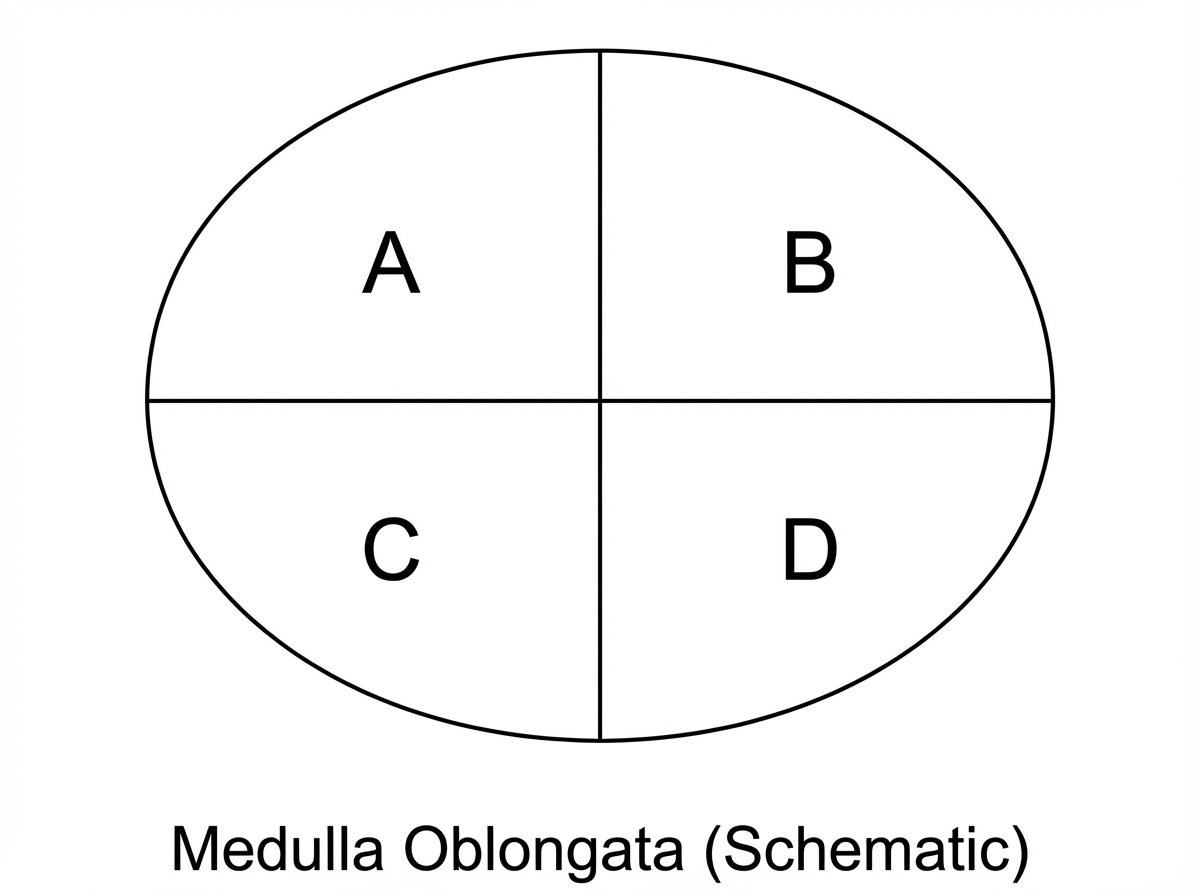
A patient presented with ipsilateral Horner's syndrome, ipsilateral loss of pain and temperature sensations in the face, vertigo with numbness and loss of sweating and dysarthria on the contralateral side. All these symptoms are caused due to a lesion in:
INI-CET 2022 - Internal Medicine INI-CET Practice Questions and MCQs
Question 81: What is the most common site of abdominal tuberculosis?
- A. Colon
- B. Small intestine
- C. Rectum
- D. Ileocecal junction (Correct Answer)
Explanation: ***Ileocecal junction*** - The **ileocecal junction** is the most common site for abdominal tuberculosis due to its rich lymphoid tissue (Peyer's patches) and physiological stasis. - Tuberculous infection at this site can lead to **mucosal ulceration**, stricture formation, and mass lesions. *Colon* - While the colon can be affected by abdominal tuberculosis, it is **less common** than the ileocecal region. - Colonic involvement often presents with symptoms such as abdominal pain, diarrhea, and weight loss. *Small intestine* - Though other parts of the small intestine can be involved, the **distal ileum** and its junction with the cecum are disproportionately affected. - Involvement of the jejunum and duodenum is less frequent. *Rectum* - **Rectal involvement** in abdominal tuberculosis is rare and typically occurs in conjunction with more extensive colonic or disseminated disease. - Symptoms may include tenesmus, rectal bleeding, or fistula formation.
Question 82: A woman presents with altered sensorium, breathlessness, hypotension and bradycardia. Examination revealed non-pitting edema of the extremities. She has a long -standing history of weight gain, constipation, cold intolerance, and menorrhagia. What is the most likely diagnosis?
- A. Myxedema coma (Correct Answer)
- B. Hyperthyroidism
- C. Cardiogenic shock
- D. Septic shock
Explanation: ***Myxedema coma*** - The constellation of **altered sensorium**, **hypotension**, **bradycardia**, and **non-pitting edema** in a patient with a history of **weight gain**, **constipation**, **cold intolerance**, and **menorrhagia** (symptoms of hypothyroidism) is highly suggestive of myxedema coma [2]. - This is an **extreme manifestation of severe, untreated hypothyroidism**, characterized by decompensation of multiple organ systems. *Hyperthyroidism* - Hyperthyroidism usually presents with symptoms like **tachycardia**, **tremors**, **weight loss**, and **heat intolerance** [1], [3], which are contrary to the patient's presentation. - It would not explain the **bradycardia**, **non-pitting edema**, or chronic symptoms like **constipation** and **cold intolerance**. *Cardiogenic shock* - While cardiogenic shock can cause **hypotension** and **altered sensorium**, it is typically characterized by signs of **cardiac dysfunction** such as elevated JVP, crackles, and often **tachycardia** (reflexive or primary), not bradycardia [4]. - It does not account for the **long-standing hypothyroid symptoms** like weight gain, constipation, and cold intolerance. *Septic shock* - Septic shock is primarily due to a severe infection, leading to **fever** (though hypothermia can occur in severe cases), **leukocytosis**, and signs of systemic inflammatory response (SIRS), which are not mentioned. - The patient's chronic symptoms are inconsistent with an acute infectious process as the primary cause of shock.
Question 83: A patient presented with ipsilateral Horner's syndrome, ipsilateral loss of pain and temperature sensations in the face, vertigo with numbness and loss of sweating and dysarthria on the contralateral side. All these symptoms are caused due to a lesion in:
- A. A and B
- B. B and D (Correct Answer)
- C. B, C, D
- D. A, B, C
Explanation: ***B and D*** - This complex of symptoms, including ipsilateral **Horner's syndrome**, ipsilateral facial **pain and temperature loss**, **vertigo**, and contralateral **pain and temperature loss** on the body, is characteristic of **Wallenberg syndrome**, also known as **lateral medullary syndrome**. - Wallenberg syndrome is caused by an infarction in the **vertebral artery** (dorsal portion) or its branch, the **posterior inferior cerebellar artery (PICA)**, which supplies the lateral medulla. *A and B* - This option refers to lesions in the **medial medulla**, which would present with completely different symptoms such as contralateral **hemiplegia**, contralateral **loss of proprioception**, and ipsilateral **tongue deviation**. - While both medulla, the distinct clinical presentations differentiate **medial from lateral medullary lesions**. *B, C, D* - This combination attempts to incorporate a lesion in the **medial medulla** (C) with the other relevant areas. - However, the symptom complex clearly points to **lateral medullary involvement**, and including the medial medulla would suggest a different or more extensive stroke. *A, B, C* - This option includes the **anterior spinal artery**, which primarily supplies the **medial medulla** and spinal cord, leading to distinct symptoms. - Involvement of the **anterior spinal artery** would result in motor deficits and loss of pain/temperature on the contralateral side, but would not typically cause **Horner's syndrome** or the intense **vertigo** seen in lateral medullary syndrome.
Pathology
1 questionsThe Hb is 5 g/dL and the reticulocyte count is 9%. What is the corrected reticulocyte count?
INI-CET 2022 - Pathology INI-CET Practice Questions and MCQs
Question 81: The Hb is 5 g/dL and the reticulocyte count is 9%. What is the corrected reticulocyte count?
- A. 5
- B. 3 (Correct Answer)
- C. 1.8
- D. 4.5
Explanation: ***3*** - The **corrected reticulocyte count (CRC)** is calculated to adjust for varying degrees of anemia, providing a more accurate assessment of bone marrow erythropoietic activity. The formula is: **CRC = observed reticulocyte % × (patient's HCT / normal HCT)**. - Assuming a normal hematocrit (HCT) of 45% and a direct hemoglobin to hematocrit conversion of 1:3 for 5 g/dL Hb (so HCT = 15%), then CRC = 9% × (15/45) = 9% × 1/3 = **3%**. *5* - This value is likely obtained by an **incorrect calculation** or by applying an inappropriate correction factor. - It does not properly account for the **severity of anemia** in the calculation of the corrected reticulocyte count [2]. *1.8* - This result may represent confusion with the **Reticulocyte Production Index (RPI)**, which further corrects for premature reticulocyte release by dividing CRC by a maturation time factor (typically 1.5-2 in severe anemia) [1]. - However, the question specifically asks for the **corrected reticulocyte count**, not the RPI, making this an inappropriate over-correction. *4.5* - This value might be a result of **dividing the observed reticulocyte count by a factor of 2**, which is not the standard correction for anemia. - It does not accurately reflect the **bone marrow's response** to the severe anemic state. **References:** [1] Cross SS. Underwood's Pathology: A Clinical Approach. 6th ed. Common Clinical Problems From Blood And Bone Marrow Disease, pp. 586-587. [2] Cross SS. Underwood's Pathology: A Clinical Approach. 6th ed. Common Clinical Problems From Blood And Bone Marrow Disease, pp. 590-591.
Physiology
4 questionsWhich among the following organs has the least arteriovenous oxygen difference?
Which of the following is the primary tissue dependent on insulin for glucose uptake?
What is the normal insensible water loss?
A woman must vomit whenever she eats spicy food. Arrange the sequence of events during vomiting. 1. LES is open and UES is closed 2. Strong contractions in the stomach 3. Inspiration against a closed glottis 4. Relaxation of the pyloric sphincter 5. LES opens and UES opens 6. Reverse peristalsis in the small intestine LES: Lower esophageal sphincter UES: Upper esophageal sphincter
INI-CET 2022 - Physiology INI-CET Practice Questions and MCQs
Question 81: Which among the following organs has the least arteriovenous oxygen difference?
- A. Liver
- B. Skin
- C. Kidney (Correct Answer)
- D. Brain
Explanation: ***Kidney*** - The **kidney** has the lowest arteriovenous oxygen difference among these organs because its metabolic activity, relative to its blood supply, is designed for filtration rather than high oxygen extraction for work. - A significant portion of the kidney's oxygen consumption is related to **active transport** and **reabsorption**, but its unusually high blood flow (about 20-25% of cardiac output) ensures that the oxygen content of venous blood remains high. *Liver* - The liver receives a **dual blood supply** (hepatic artery and portal vein) and is highly metabolically active due to its roles in synthesis, detoxification, and nutrient processing, leading to a substantial oxygen extraction and thus a larger arteriovenous oxygen difference. - It has a significant oxygen demand for its numerous physiological functions, resulting in a lower oxygen content in its venous outflow compared to arterial blood. *Skin* - Skin blood flow is highly variable and plays a crucial role in **thermoregulation** in addition to metabolic needs. - While its baseline metabolic rate is moderate, its oxygen extraction can vary, but generally, it has a larger arteriovenous oxygen difference due to the oxygen demand of its various cellular layers and structures. *Brain* - The **brain** has a consistently high metabolic rate and continuous oxygen demand, consuming about 20% of the body's total oxygen at rest. - This consistent and high demand for oxygen results in a relatively large arteriovenous oxygen difference as it extracts a significant portion of oxygen from the arterial blood.
Question 82: Which of the following is the primary tissue dependent on insulin for glucose uptake?
- A. Adipose tissue
- B. Brain
- C. Muscle (Correct Answer)
- D. Pancreas
Explanation: ***Muscle (Correct Answer)*** - **Skeletal muscle** is the **primary insulin-dependent tissue** for glucose uptake, accounting for approximately **80-90% of insulin-stimulated glucose disposal** in the postprandial state. - Insulin promotes the translocation of **GLUT4 transporters** to the cell membrane in muscle cells, enabling rapid and substantial glucose uptake. - This makes muscle the most quantitatively significant site for insulin-mediated glucose clearance from the bloodstream. *Adipose tissue (Incorrect)* - While **adipose tissue** does exhibit insulin-dependent glucose uptake via **GLUT4 transporters**, its contribution to overall glucose disposal is **much smaller** compared to skeletal muscle. - Glucose uptake in adipocytes is important for **lipogenesis** and triglyceride storage, but represents only a minor fraction of total body insulin-stimulated glucose uptake. *Brain (Incorrect)* - The **brain** has a constant, high glucose requirement but utilizes **insulin-independent** glucose uptake mechanisms, primarily through **GLUT1 and GLUT3 transporters**. - Glucose uptake in the brain is regulated by **blood glucose concentration gradients**, not by insulin signaling. - This ensures continuous glucose supply to the brain regardless of insulin levels. *Pancreas (Incorrect)* - The **pancreas**, particularly beta cells, employs **insulin-independent** glucose uptake via **GLUT1 and GLUT2 transporters**. - These transporters function as **glucose sensors**, allowing beta cells to detect blood glucose levels and regulate insulin secretion accordingly. - The pancreas produces insulin but does not depend on insulin for its own glucose uptake.
Question 83: What is the normal insensible water loss?
- A. 150 mL/hour
- B. 50 mL/hour (Correct Answer)
- C. 200 mL/hour
- D. 100 mL/hour
Explanation: ***50 mL/hour*** - **Insensible water loss** occurs primarily through the **skin** and **respiratory tract** and typically amounts to approximately 1200 mL per day in an adult. - Dividing 1200 mL by 24 hours yields an average of **50 mL/hour**, representing normal physiological fluid loss not readily measurable. *150 mL/hour* - This value represents a significantly **elevated rate** of insensible water loss, which would suggest a patient experiencing **fever**, **tachypnea**, or a **hot environment**. - A sustained loss at this rate would quickly lead to **dehydration** if not compensated for by increased fluid intake. *200 mL/hour* - This is an **extreme rate** of water loss, indicating a severe condition such as **severe burns** affecting a large body surface area, **heat stroke**, or profound **hyperventilation**. - Such a high rate of fluid loss would be a medical emergency requiring aggressive fluid resuscitation. *100 mL/hour* - This rate of insensible water loss is **double the normal physiological rate** and, while not as extreme as 150 or 200 mL/hour, still implies increased metabolic activity or environmental stress. - It could be seen in individuals with moderate fever, increased physical activity, or in warmer ambient temperatures, and could contribute to mild dehydration over time.
Question 84: A woman must vomit whenever she eats spicy food. Arrange the sequence of events during vomiting. 1. LES is open and UES is closed 2. Strong contractions in the stomach 3. Inspiration against a closed glottis 4. Relaxation of the pyloric sphincter 5. LES opens and UES opens 6. Reverse peristalsis in the small intestine LES: Lower esophageal sphincter UES: Upper esophageal sphincter
- A. 4,6,2,1,3,5
- B. 4,6,2,5,3,1
- C. 6,4,2,5,1,3
- D. 6,4,2,3,1,5 (Correct Answer)
Explanation: ***6,4,2,3,1,5*** - The correct sequence of vomiting begins with **reverse peristalsis in the small intestine (6)**, which propels intestinal contents retrograde toward the stomach. - The **pyloric sphincter then relaxes (4)**, allowing duodenal contents to enter the stomach and mix with gastric contents. - **Strong stomach contractions (2)** follow, building initial pressure within the gastric lumen. - **Deep inspiration against a closed glottis (3)** is critical—this generates high intra-abdominal and intrathoracic pressure (the essential expulsive force). - The **LES opens while UES remains closed (1)**, allowing gastric contents to move into the esophagus. - Finally, the **UES opens (5)**, permitting expulsion of contents through the mouth. *4,6,2,1,3,5* - Incorrect because **pyloric sphincter relaxation precedes reverse peristalsis**, which is physiologically backwards—intestinal contents must first move toward the stomach before the pylorus can allow them entry. - The positioning of glottis closure late in the sequence misrepresents when intra-abdominal pressure is generated. *4,6,2,5,3,1* - This sequence incorrectly places **both sphincters opening (5) before the critical pressure-generating step (3)**, which would result in premature expulsion without adequate force. - The inspiration against closed glottis must occur before final sphincter opening to create the necessary expulsive pressure. *6,4,2,5,1,3* - This option misorders the final events by having **both sphincters open (5) before adequate pressure generation (3)** and before the sequential LES opening (1). - The glottis closure step is positioned too late—it must precede sphincter opening to generate the high intra-abdominal pressure required for forceful expulsion.
Radiology
1 questionsWhich of the following findings are seen in a high-resolution CT scan of fungal pneumonia? 1. Interlobular septations 2. Peripheral wedge-shaped consolidation 3. Pleural effusion 4. Cavitatory lesions with surrounding ground glass opacities
INI-CET 2022 - Radiology INI-CET Practice Questions and MCQs
Question 81: Which of the following findings are seen in a high-resolution CT scan of fungal pneumonia? 1. Interlobular septations 2. Peripheral wedge-shaped consolidation 3. Pleural effusion 4. Cavitatory lesions with surrounding ground glass opacities
- A. 1,2,3
- B. 2,3,4
- C. 1,2,4 (Correct Answer)
- D. 1,3,4
Explanation: ***1,2,4*** - **Interlobular septations** and **peripheral wedge-shaped consolidations** are common findings due to the **vascular invasion** and **infarction** characteristic of fungal pneumonia. - **Cavitary lesions with surrounding ground-glass opacity**, also known as the **halo sign**, are highly suggestive of invasive fungal infections like aspergillosis. *1,2,3* - While interlobular septations and peripheral wedge-shaped consolidations are seen in fungal pneumonia, **pleural effusion** is less common and not a primary diagnostic feature. - The absence of the characteristic cavitary lesions with ground-glass opacities makes this option incomplete. *2,3,4* - This option correctly includes peripheral wedge-shaped consolidation and cavitary lesions with ground-glass opacity, but the inclusion of **pleural effusion** and exclusion of **interlobular septations** make it less accurate. - Interlobular septations are a significant indicator of **lymphatic involvement** as seen in fungal diseases. *1,3,4* - Although interlobular septations and cavitary lesions with ground-glass opacities are relevant, the presence of **pleural effusion** as a primary finding is less typical for fungal pneumonia. - The absence of **peripheral wedge-shaped consolidation**, which arises from vascular occlusion, makes this option less comprehensive.