Anatomy
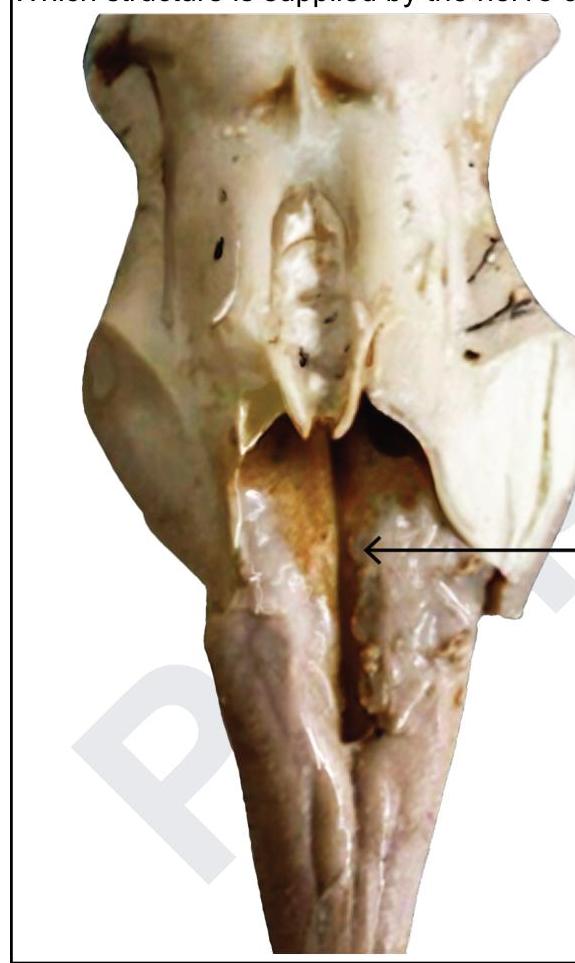
4 questionsArrange lung hilar structure from anterior to posterior:- 1. Primary bronchus 2. Bronchial artery 3. Pulmonary vein 4. Pulmonary artery
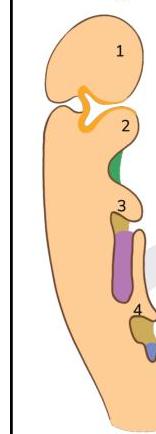
A child lacks thymus and inferior parathyroid glands. Defective development of which of the following structures is likely to be the cause?
Arrange the cells according to their positions from the basal layer towards the lumen in the seminiferous tubules:- 1. Spermatogonia 2. Primary spermatocyte 3. Spermatid 4. Spermatozoa
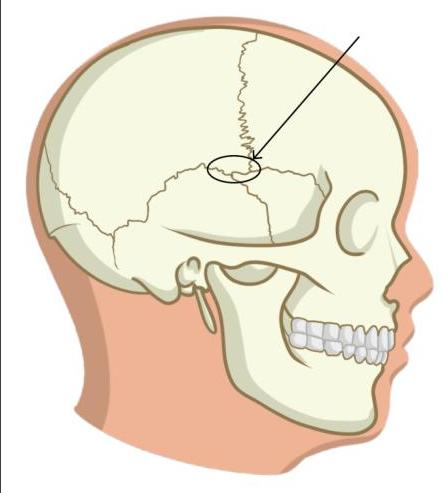
Identify the incorrect statement regarding the marked structure.
INI-CET 2022 - Anatomy INI-CET Practice Questions and MCQs
Question 21: Arrange lung hilar structure from anterior to posterior:- 1. Primary bronchus 2. Bronchial artery 3. Pulmonary vein 4. Pulmonary artery
- A. 4,3,2,1
- B. 3,4,1,2 (Correct Answer)
- C. 1,2,3,4
- D. 2,3,4,1
Explanation: ***3,4,1,2*** - This order represents the typical arrangement of major structures in the **lung hilum** from anterior to posterior: **pulmonary vein (most anterior)**, **pulmonary artery**, **primary bronchus**, and finally the **bronchial artery (most posterior)**. - The **pulmonary vein** is usually the most anterior structure, while the **bronchial artery** often runs along the posterior aspect of the bronchus [1]. *4,3,2,1* - This order incorrectly places the **pulmonary artery** as the most anterior structure, which is generally not the case in the hilum. - The **primary bronchus** is usually more posterior than the main pulmonary artery. *1,2,3,4* - This order is incorrect as it places the **primary bronchus** as the most anterior structure, which is anatomically inaccurate for the lung hilum. - The **pulmonary veins** are typically the most anterior hilar structures. *2,3,4,1* - This order incorrectly positions the **bronchial artery** as the most anterior component, while it is usually the most posterior or associated closely with the posterior aspect of the bronchus. - The **pulmonary vein** should be anterior to the pulmonary artery and bronchus.
Question 22: A child lacks thymus and inferior parathyroid glands. Defective development of which of the following structures is likely to be the cause?
- A. 2
- B. 4
- C. 1
- D. 3 (Correct Answer)
Explanation: ***Option 3 (Structure 3 - Third pharyngeal pouch)*** - Structure **3** represents the **third pharyngeal pouch**, which is the embryological origin of both the **thymus** and **inferior parathyroid glands**. - Defective development of the third pharyngeal pouch leads to **DiGeorge syndrome** (22q11.2 deletion syndrome), characterized by thymic hypoplasia/aplasia and hypoparathyroidism. - This explains the clinical presentation of absent thymus and inferior parathyroid glands. *Option 2 (Structure 2 - Second pharyngeal pouch)* - Structure **2** represents the **second pharyngeal pouch**. - This gives rise to the **palatine tonsils** and the **tonsillar fossa**. - Not related to thymus or parathyroid gland development. *Option 1 (Structure 1 - First pharyngeal pouch)* - Structure **1** represents the **first pharyngeal pouch**. - This develops into the **eustachian tube** (auditory tube) and **middle ear cavity** (tympanic cavity). - Not related to thymus or inferior parathyroid gland development. *Option 4 (Structure 4 - Fourth pharyngeal pouch)* - Structure **4** represents the **fourth pharyngeal pouch**. - This gives rise to the **superior parathyroid glands** (dorsal wing) and **ultimobranchial body** (ventral wing), which contributes parafollicular C cells to the thyroid gland. - Note: The inferior parathyroids (from 3rd pouch) migrate further caudally than superior parathyroids (from 4th pouch).
Question 23: Arrange the cells according to their positions from the basal layer towards the lumen in the seminiferous tubules:- 1. Spermatogonia 2. Primary spermatocyte 3. Spermatid 4. Spermatozoa
- A. 2,1,3,4
- B. 1,2,3,4 (Correct Answer)
- C. 1,3,2,4
- D. 4,3,2,1
Explanation: ***1,2,3,4*** - This sequence accurately represents the **developmental progression of male germ cells** from the basal lamina towards the lumen of the seminiferous tubule [1], [2]. - **Spermatogonia** are stem cells located near the basal lamina [1], which then differentiate into **primary spermatocytes**, followed by **spermatids**, and finally maturing into **spermatozoa** that are released into the lumen [2]. *2,1,3,4* - This order is incorrect because **primary spermatocytes** develop from spermatogonia [2], meaning spermatogonia should precede primary spermatocytes in the sequence. - The initial cell in the spermatogenic lineage is the **spermatogonium**, found at the base of the tubule [1]. *1,3,2,4* - This sequence is incorrect as **primary spermatocytes** undergo meiosis to form secondary spermatocytes, which then become spermatids [2]. - Therefore, **spermatids** develop *after* primary spermatocytes, not before them. *4,3,2,1* - This order is a reversal of the actual developmental process and spatial arrangement within the seminiferous tubule. - **Spermatozoa** are the most mature cells and are found closest to the lumen [1], while **spermatogonia** are located at the basal layer [1].
Question 24: Identify the incorrect statement regarding the marked structure.
- A. It is the meeting point of frontal, parietal, temporal and sphenoid bones.
- B. Accessory middle meningeal artery lies under this structure (Correct Answer)
- C. Blow to the lateral side of the skull injures the marked structure
- D. It corresponds to site of anterolateral fontanelle of fetal skull
Explanation: *It is the meeting point of frontal, parietal, temporal and sphenoid bones.* - The marked structure is the **pterion**, which is indeed the junction of the **frontal, parietal, temporal, and sphenoid bones**. - This statement is **correct**, as it accurately describes the anatomical composition of the pterion. ***Accessory middle meningeal artery lies under this structure*** - This is the **INCORRECT statement** and hence the correct answer. - The **middle meningeal artery** (not the accessory middle meningeal artery) runs in a groove deep to the pterion. - A fracture at the pterion can lacerate the **middle meningeal artery**, leading to an **epidural hematoma**. - The accessory middle meningeal artery is a separate vessel that does not typically lie under the pterion. *Blow to the lateral side of the skull injures the marked structure* - The pterion is the **thinnest part of the lateral wall of the skull**, making it vulnerable to fracture from a lateral blow. - Due to its thinness and underlying structures, trauma to this area is clinically significant. - This statement is **correct**. *It corresponds to site of anterolateral fontanelle of fetal skull* - The pterion in the adult skull corresponds to the former site of the **anterolateral (sphenoidal) fontanelle** in the fetal skull. - This fontanelle allows for skull molding during birth and brain growth postnatally. - This statement is **correct**.
Anesthesiology
1 questionsArrange the following anesthetic agents based on their potency Nitrous oxide Halothane Isoflurane Methoxyflurane
INI-CET 2022 - Anesthesiology INI-CET Practice Questions and MCQs
Question 21: Arrange the following anesthetic agents based on their potency Nitrous oxide Halothane Isoflurane Methoxyflurane
- A. Methoxyflurane > Halothane > Isoflurane > Nitrous oxide (Correct Answer)
- B. Methoxyflurane > Nitrous oxide > Halothane > Isoflurane
- C. Methoxyflurane > Isoflurane > Halothane > Nitrous oxide
- D. Halothane > Isoflurane > Nitrous oxide > Methoxyflurane
Explanation: ***Methoxyflurane > Halothane > Isoflurane > Nitrous oxide*** - Anesthetic potency is inversely related to its **MAC (Minimum Alveolar Concentration)** value. A lower MAC value indicates higher potency. - The MAC values for these agents are: Methoxyflurane (0.16%), Halothane (0.75%), Isoflurane (1.15%), and Nitrous oxide (104%), which directly corresponds to this order of potency. *Methoxyflurane > Nitrous oxide > Halothane > Isoflurane* - This order incorrectly places nitrous oxide as more potent than halothane and isoflurane. **Nitrous oxide** has a very high MAC (104%), indicating low potency. - **Halothane** and **isoflurane** have significantly lower MAC values (0.75% and 1.15%, respectively), making them much more potent than nitrous oxide. *Methoxyflurane > Isoflurane > Halothane > Nitrous oxide* - This order incorrectly places **isoflurane** as more potent than halothane. **Halothane** has a MAC of 0.75%, while **isoflurane** has a MAC of 1.15%. - Therefore, halothane is more potent than isoflurane, making this sequence incorrect. *Halothane > Isoflurane > Nitrous oxide > Methoxyflurane* - This order incorrectly places **halothane** as the most potent and **methoxyflurane** as the least potent among the listed agents. - **Methoxyflurane** has the lowest MAC (0.16%), making it the most potent, while **nitrous oxide** has the highest MAC (104%), making it the least potent.
Biochemistry
2 questionsWhich is the correct sequence of steps in isolating desirable protein using recombinant DNA technology? 1. Expression of protein and lysis of the bacterial cell 2. Incorporation of genes into bacteria 3. SDS PAGE 4. Protein elution 5. Column chromatography
In a patient with maple syrup urine disease, all of the following amino acids should be restricted in diet except?
INI-CET 2022 - Biochemistry INI-CET Practice Questions and MCQs
Question 21: Which is the correct sequence of steps in isolating desirable protein using recombinant DNA technology? 1. Expression of protein and lysis of the bacterial cell 2. Incorporation of genes into bacteria 3. SDS PAGE 4. Protein elution 5. Column chromatography
- A. 2,1,3,5,4 (Correct Answer)
- B. 2,4,5,3,1
- C. 1,2,4,3,5
- D. 1,5,2,4,3
Explanation: ***2,1,3,5,4*** - This sequence accurately reflects the typical order of operations in **recombinant protein isolation**: first, the gene is introduced into bacteria, then protein is expressed and cells lysed, followed by **SDS-PAGE as an intermediate quality check** to confirm protein expression before proceeding to purification steps (column chromatography and elution). - The process starts with gene incorporation, includes an analytical checkpoint after lysis, and ends with purified protein elution. *2,4,5,3,1* - This sequence is incorrect because **protein elution (4)** and **column chromatography (5)** are purification steps that occur *after* protein expression and cell lysis. - **Lysis (1)** cannot happen after elution, as cells must be lysed first to release the protein for purification. *1,2,4,3,5* - This sequence is incorrect because **expression and lysis (1)** must occur *after* the gene has been **incorporated into bacteria (2)** - the gene must be present before it can be expressed. - Additionally, **protein elution (4)** should follow **column chromatography (5)**, as elution is the step where protein is collected from the chromatography column. *1,5,2,4,3* - This sequence is incorrect because **incorporation of genes (2)** must be the first step - the gene needs to be in the bacteria before any expression, lysis, or purification can occur. - Starting with **expression and lysis (1)** before gene incorporation is impossible.
Question 22: In a patient with maple syrup urine disease, all of the following amino acids should be restricted in diet except?
- A. Methionine (Correct Answer)
- B. Isoleucine
- C. Leucine
- D. Valine
Explanation: ***Methionine*** - **Maple syrup urine disease (MSUD)** is a disorder affecting the metabolism of **branched-chain amino acids (BCAAs)**: leucine, isoleucine, and valine. - Therefore, methionine, which is not a BCAA, typically does not need to be restricted and is, in fact, an **essential amino acid** crucial for protein synthesis. *Isoleucine* - **Isoleucine** is a branched-chain amino acid (BCAA) whose metabolism is impaired in MSUD due to a deficiency in **branched-chain alpha-keto acid dehydrogenase complex**. - Accumulation of isoleucine and its corresponding alpha-keto acid is toxic and must be **restricted in the diet**. *Leucine* - **Leucine** is another branched-chain amino acid (BCAA) that cannot be properly metabolized in MSUD. - High levels of leucine and its metabolites are particularly **neurotoxic** and contribute to the characteristic neurological symptoms, necessitating strict dietary restriction. *Valine* - **Valine** is the third branched-chain amino acid (BCAA) whose breakdown is defective in MSUD. - Dietary restriction of valine is essential to prevent its accumulation, which can lead to metabolic crises and **developmental delays**.
Microbiology
1 questionsAffinity maturation of antibodies is because of _____ .
INI-CET 2022 - Microbiology INI-CET Practice Questions and MCQs
Question 21: Affinity maturation of antibodies is because of _____ .
- A. Gene rearrangements
- B. CD40
- C. Somatic hypermutation (Correct Answer)
- D. Differential mRNA processing
Explanation: ***Somatic hypermutation*** - **Somatic hypermutation** is a process that introduces point mutations in the **variable regions** of immunoglobulin genes, primarily in B cells. - These mutations lead to the production of B cells with slightly altered **antibody affinities**, allowing for selection of those with higher affinity for the antigen. *Gene rearrangements* - **Gene rearrangements**, specifically **V(D)J recombination**, are responsible for the initial diversity of antibody specificities in immature B cells. - This process determines the basic antigen-binding site but does not fine-tune the **affinity** after initial antigen exposure. *CD40* - **CD40** is a co-stimulatory molecule on B cells that binds to **CD40L** on T cells, crucial for B cell activation, **isotype switching**, and germinal center formation. - While essential for antibody responses and germinal center reactions where affinity maturation occurs, **CD40** itself does not directly cause the molecular changes that lead to affinity maturation. *Differential mRNA processing* - **Differential mRNA processing** (or alternative splicing) primarily controls the production of different protein isoforms from a single gene. - In the context of antibodies, it can determine whether a B cell produces **membrane-bound** or **secreted** forms of antibodies, but it does not enhance the antigen-binding affinity.
Pathology
1 questionsBest method for the detection of mutations with low allele frequency is:
INI-CET 2022 - Pathology INI-CET Practice Questions and MCQs
Question 21: Best method for the detection of mutations with low allele frequency is:
- A. FISH
- B. Droplet digital PCR (Correct Answer)
- C. Sanger sequencing
- D. Nested PCR
Explanation: ***Droplet digital PCR*** - **Droplet digital PCR (ddPCR)** offers superior sensitivity for detecting **low allele frequency mutations** by partitioning the sample into thousands of individual reactions. - This compartmentalization allows for the direct quantification of target DNA molecules without relying on a standard curve, making it highly accurate for rare mutation detection. *FISH* - **Fluorescence in situ hybridization (FISH)** primarily detects **chromosomal abnormalities** like translocations, deletions, or amplifications, rather than single-nucleotide variants or small indels with low allele frequencies [2]. - It visualizes genetic changes at a **cytogenetic level** on an intracellular basis, not typically for quantifying rare DNA mutations in a heterogeneous sample. *Sanger sequencing* - **Sanger sequencing** is the gold standard for **sequencing individual DNA fragments** but has a detection limit of around 15-20% for allele frequency, making it unsuitable for very low allele frequency mutations [1]. - It struggles to reliably detect minor alleles when they are present in a small proportion of the total DNA pool. *Nested PCR* - **Nested PCR** increases the sensitivity and specificity of amplification by using two sets of primers in a sequential manner but does not inherently provide the **quantification capability** or the same level of **low allele frequency detection** as ddPCR processes. - While sensitive for detecting target sequences, it is not designed for precise quantification of rare mutations in a background of wild-type sequences. **References:** [1] Kumar V, Abbas AK, et al.. Robbins and Cotran Pathologic Basis of Disease. 9th ed. Genetic Disorders, p. 185. [2] Kumar V, Abbas AK, et al.. Robbins and Cotran Pathologic Basis of Disease. 9th ed. Genetic Disorders, pp. 185-186.
Radiology
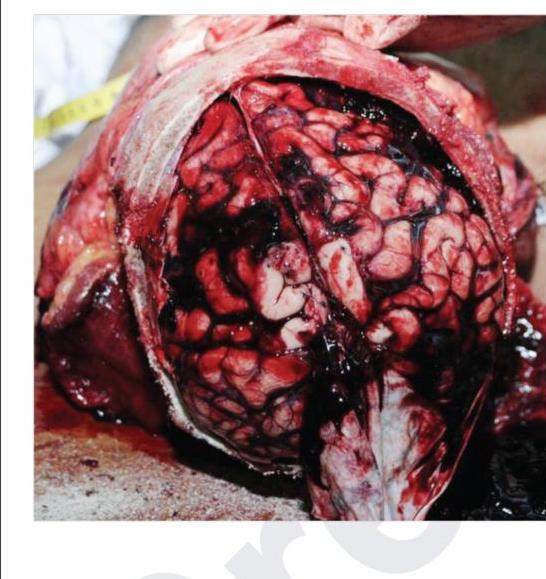
1 questionsBleeding as shown in the image is due to which of the following vessels?

INI-CET 2022 - Radiology INI-CET Practice Questions and MCQs
Question 21: Bleeding as shown in the image is due to which of the following vessels?
- A. Lenticulostriate artery
- B. Vertebral artery
- C. Bridging veins (Correct Answer)
- D. Middle meningeal artery
Explanation: ***Bridging veins*** - The image depicts a **subdural hemorrhage (subdural hematoma)**, a collection of blood between the dura mater and the arachnoid mater, typically appearing as a **crescent-shaped** hyperdensity that conforms to the brain surface. - This type of hemorrhage is caused by the tearing of **bridging veins** that traverse the subdural space, connecting the cerebral cortex to the dural venous sinuses. - Tearing of these veins occurs due to rapid acceleration-deceleration forces causing the brain to move relative to the dura, stretching and rupturing the veins. This is common in **head trauma**, especially in the elderly (due to brain atrophy increasing vein vulnerability) or infants. *Lenticulostriate artery* - Rupture of the lenticulostriate arteries (perforating branches of the middle cerebral artery) typically leads to **intraparenchymal hemorrhage**, specifically in the basal ganglia or internal capsule. - This type of bleeding is confined within the brain parenchyma, rather than collecting in the subdural space as seen in the image. - Associated with hypertensive hemorrhage. *Vertebral artery* - The vertebral arteries supply the posterior circulation of the brain, and their rupture can lead to **subarachnoid hemorrhage** (if a posterior circulation aneurysm ruptures) or **intraparenchymal bleeding** in the brainstem or cerebellum. - Bleeding from the vertebral artery is not associated with the subdural collection pattern shown in the image. *Middle meningeal artery* - The middle meningeal artery runs in the epidural space, and its rupture (often due to temporal bone fracture) causes an **epidural hematoma**. - An epidural hematoma is characterized by a **biconvex (lentiform) shape** on imaging and is situated between the dura mater and the skull, which is distinct from the **crescent-shaped** subdural collection shown. - Does not cross suture lines, unlike subdural hematomas which can extend over multiple lobes.