Anatomy
3 questionsWhat is the volume of the prostate in normal adult males?
Which ligament connects medial cuneiform to the base of the 2nd metatarsal?
Which structure is supplied by the nerve causing this elevation?

INI-CET 2022 - Anatomy INI-CET Practice Questions and MCQs
Question 11: What is the volume of the prostate in normal adult males?
- A. 50cc
- B. 75cc
- C. 100cc
- D. 20cc (Correct Answer)
Explanation: ***20cc*** - The normal prostate volume in adult males is typically **20 cubic centimeters (cc)** or grams, which is approximately the size of a walnut. - This volume is generally used as a baseline when assessing for conditions like **benign prostatic hyperplasia (BPH)** or prostate cancer, where an enlarged prostate is a key indicator [1]. *50cc* - A prostate volume of 50cc is considered **enlarged** and is often indicative of **benign prostatic hyperplasia (BPH)**, especially in older men [1]. - This volume would lead to symptoms of **lower urinary tract symptoms (LUTS)**, such as frequent urination or difficulty voiding, which are not characteristic of a normal prostate [1]. *75cc* - A prostate volume of 75cc represents a **significantly enlarged prostate**, well beyond the normal range. - Such a size would almost certainly be associated with **moderate to severe LUTS** and likely require medical intervention for BPH. *100cc* - A 100cc prostate is considered a **markedly enlarged prostate**, typically resulting in severe **urinary obstruction** and significant impact on quality of life. - This volume is far from normal and would usually necessitate treatment for **benign prostatic hyperplasia (BPH)**.
Question 12: Which ligament connects medial cuneiform to the base of the 2nd metatarsal?
- A. Chopart
- B. Deltoid
- C. Lisfranc (Correct Answer)
- D. Spring
Explanation: ***Lisfranc*** - The **Lisfranc ligament** specifically connects the medial cuneiform to the base of the second metatarsal, forming a crucial part of the **tarsometatarsal joint complex**. - Its strength and integrity are vital for **midfoot stability**, and injury to this ligament can lead to significant functional impairment. *Chopart* - The **Chopart joint** (transverse tarsal joint) involves the talonavicular and calcaneocuboid articulations. - While it is a significant midfoot joint, it does not directly connect the medial cuneiform to the second metatarsal. *Deltoid* - The **deltoid ligament** is located on the medial side of the ankle, connecting the tibia to the talus, calcaneus, and navicular bones. - It primarily provides stability to the **ankle joint** and is not involved in hindfoot-to-midfoot connections. *Spring* - The **spring ligament** (plantar calcaneonavicular ligament) connects the calcaneus to the navicular bone. - It plays a crucial role in supporting the **medial longitudinal arch** of the foot, but does not connect the cuneiform to the metatarsals.
Question 13: Which structure is supplied by the nerve causing this elevation?
- A. Risorius
- B. Masseter
- C. Lateral rectus
- D. Superior oblique (Correct Answer)
Explanation: ***Superior oblique*** - The **trochlear nerve (CN IV)** causes the elevation visible in the image at the **dorsal midbrain** level, supplying the **superior oblique muscle**. - This nerve is unique as it **decussates completely** and has the longest intracranial course, making it prone to injury. *Risorius* - The **risorius muscle** is innervated by the **facial nerve (CN VII)**, which exits at the **pontomedullary junction**. - This nerve does not cause elevations at the **dorsal midbrain** level where the arrow is pointing. *Masseter* - The **masseter muscle** is one of the muscles of mastication innervated by the **mandibular division of the trigeminal nerve (CN V)**. - The trigeminal nerve has its motor nucleus in the **pons**, not at the dorsal midbrain level where the elevation is visible in the image. *Lateral rectus* - The **lateral rectus muscle** is supplied by the **abducens nerve (CN VI)**, which exits at the **pontomedullary sulcus**. - The abducens nerve pathway does not create the elevation seen at the **dorsal midbrain** in this image.
Biochemistry
1 questionsCyclooxygenase plays a role in which pathway?
INI-CET 2022 - Biochemistry INI-CET Practice Questions and MCQs
Question 11: Cyclooxygenase plays a role in which pathway?
- A. Leukotriene
- B. Vitamin K
- C. Krebs cycle
- D. Prostaglandin (Correct Answer)
Explanation: ***Prostaglandin*** - **Cyclooxygenase (COX)** enzymes specifically catalyze the conversion of **arachidonic acid** into **prostaglandins**, **prostacyclins**, and **thromboxanes**. - This pathway is crucial for mediating **inflammation**, **fever**, and **pain** responses in the body. *Leukotriene* - **Leukotrienes** are synthesized via the **lipoxygenase** pathway, not the cyclooxygenase pathway. - They are primarily involved in **allergic reactions** and **asthma**, causing bronchoconstriction and increased vascular permeability. *Vitamin K* - **Vitamin K** is a fat-soluble vitamin essential for the synthesis of **blood clotting factors** and does not involve cyclooxygenase enzymes. - It acts as a cofactor for the enzyme **gamma-glutamyl carboxylase**. *Krebs cycle* - The **Krebs cycle (citric acid cycle)** is a central metabolic pathway for **cellular respiration**, producing ATP, NADH, and FADH2. - It takes place in the **mitochondria** and is involved in the breakdown of carbohydrates, fats, and proteins for energy, unrelated to cyclooxygenase.
Pathology
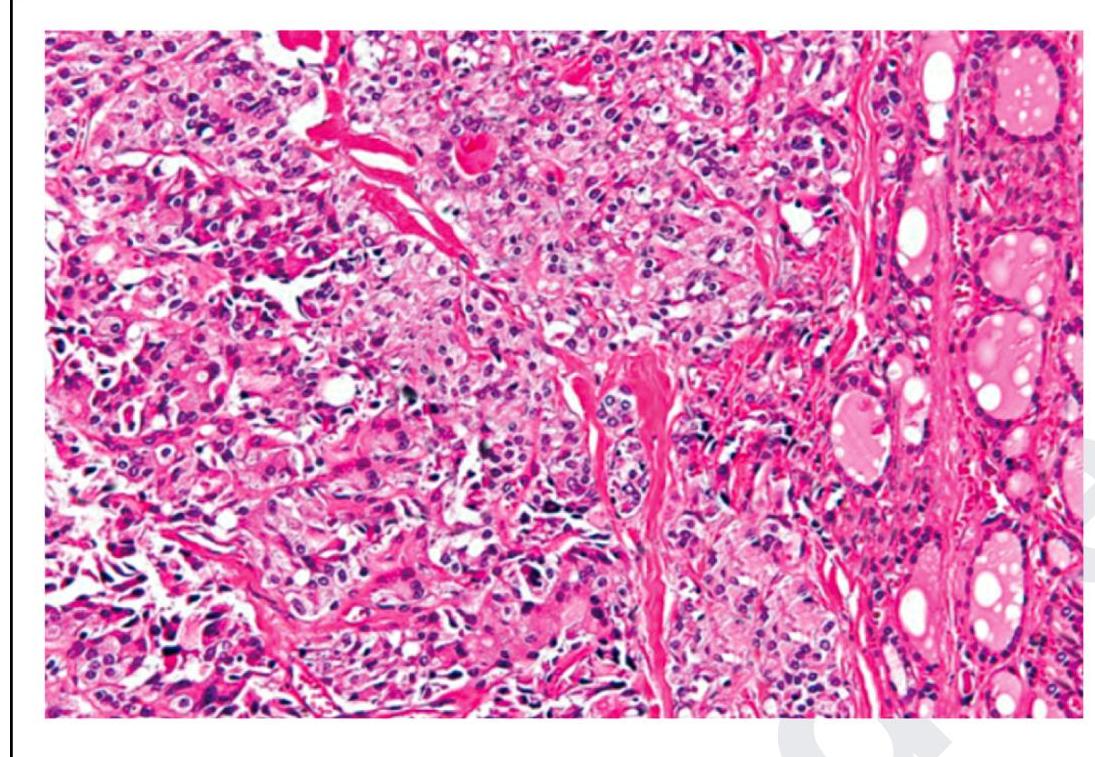
1 questionsThe following is a histopathological image of thyroid pathology. What is the diagnosis?
INI-CET 2022 - Pathology INI-CET Practice Questions and MCQs
Question 11: The following is a histopathological image of thyroid pathology. What is the diagnosis?
- A. Papillary carcinoma of thyroid
- B. Medullary carcinoma of thyroid (Correct Answer)
- C. Follicular carcinoma of thyroid
- D. Anaplastic carcinoma of thyroid
Explanation: ***Medullary carcinoma of thyroid*** - This image shows sheets and nests of **polygonal to spindle-shaped cells**, which are characteristic of medullary thyroid carcinoma, especially when mixed with an **amyloid stroma** (seen as amorphous eosinophilic material) [2]. - The presence of **neuroendocrine features** and the production of **calcitonin** are hallmarks of these C-cell tumors [1], [2]. *Papillary carcinoma of thyroid* - Characterized by **papillary architecture**, **ground-glass (Orphan Annie eye) nuclei**, nuclear grooves, and intranuclear cytoplasmic inclusions. - These features are not prominently seen in the provided image. *Follicular carcinoma of thyroid* - Defined by an invasive growth pattern of **well-differentiated follicular cells** forming follicles, with either capsular or vascular invasion [2]. - The image does not show classic follicular architectural patterns or clear evidence of invasion in the absence of a capsule. *Anaplastic carcinoma of thyroid* - This is a highly aggressive and undifferentiated tumor with **marked pleomorphism**, bizarre giant cells, and high mitotic activity [2]. - While there is some pleomorphism, the overall pattern and cellular morphology in the image are more consistent with medullary carcinoma than the extreme anaplasia. **References:** [1] Kumar V, Abbas AK, et al.. Robbins and Cotran Pathologic Basis of Disease. 9th ed. The Endocrine System, pp. 1102-1103. [2] Cross SS. Underwood's Pathology: A Clinical Approach. 6th ed. Common Clinical Problems From Liver And Biliary System Disease, pp. 428-431.
Pediatrics
1 questionsA 10-year-old boy presented with fatigue. Investigations revealed: Hemoglobin, 9 g/dL; MCV, 60 fL; MCH, 20 pg; and serum ferritin, 185 µg/L. The TLC was elevated and showed predominant lymphocytes and neutrophils. What is the likely diagnosis in this patient? **Normal values:** - Serum ferritin: 50-150 µg/L
INI-CET 2022 - Pediatrics INI-CET Practice Questions and MCQs
Question 11: A 10-year-old boy presented with fatigue. Investigations revealed: Hemoglobin, 9 g/dL; MCV, 60 fL; MCH, 20 pg; and serum ferritin, 185 µg/L. The TLC was elevated and showed predominant lymphocytes and neutrophils. What is the likely diagnosis in this patient? **Normal values:** - Serum ferritin: 50-150 µg/L
- A. Anemia of chronic disease
- B. Iron deficiency anemia
- C. Lead poisoning
- D. Beta thalassemia trait (Correct Answer)
Explanation: ***Beta thalassemia trait*** - The combination of **microcytic hypochromic anemia** (low MCV, MCH) with **normal to elevated ferritin** (185 µg/L is above the normal range of 50-150 µg/L) is highly suggestive of **beta thalassemia trait**, as iron stores are typically adequate or increased. - An elevated TLC with predominant lymphocytes and neutrophils is nonspecific but does not rule out thalassemia, as secondary infections or inflammatory processes can occur. *Anemia of chronic disease* - While anemia of chronic disease can cause **microcytic or normocytic anemia** and elevated ferritin (as ferritin is an acute phase reactant), the degree of **microcytosis** (MCV 60 fL) is more profound than typically seen in ACD. - ACD usually involves **inflammation or infection**, but the lab values provided more strongly point away from pure ACD. *Iron deficiency anemia* - **Iron deficiency anemia** is characterized by **microcytic hypochromic anemia** but would present with **low serum ferritin** levels, indicating depleted iron stores. - The patient's **elevated ferritin** (185 µg/L) rules out iron deficiency as the primary cause. *Lead poisoning* - **Lead poisoning** can cause **microcytic anemia** by interfering with heme synthesis, but it is typically associated with a **basophilic stippling** on peripheral blood smear and elevated blood lead levels. - It does not typically present with **elevated ferritin** as a classic feature, and the overall clinical picture is more consistent with a genetic hemoglobinopathy.
Pharmacology
3 questionsA patient who is on treatment for hyperlipidemia develops gallstones. What is the mechanism of action of the causative drug that was given to this patient?
Choose the correct options regarding the route of administration and bioavailability. A- Intravenous =1 B- 0.75< Oral <1 C-0.75 <IM ≤ 1 D- 0.75<SC ≤ 1 IM - Intramuscular SC- Subcutaneous
Which of the following is the most effective oral drug for smoking cessation?
INI-CET 2022 - Pharmacology INI-CET Practice Questions and MCQs
Question 11: A patient who is on treatment for hyperlipidemia develops gallstones. What is the mechanism of action of the causative drug that was given to this patient?
- A. Binds to deoxycholic acid
- B. Decreases VLDL
- C. Activates PPAR alpha (Correct Answer)
- D. Inhibits HMG CoA reductase
Explanation: ***Activates PPAR alpha*** * Activation of **PPAR alpha (Peroxisome Proliferator-Activated Receptor alpha)** by fibrates can lead to increased cholesterol secretion into bile [1]. * This increased biliary cholesterol saturation predisposes patients to **cholesterol gallstone** formation. *Decreases VLDL* * While fibrates do decrease **VLDL (Very Low-Density Lipoprotein)** production, this specific action is not the primary mechanism by which they cause gallstones [1]. * The reduction in VLDL is beneficial for triglyceride lowering, but the gallstone risk relates to cholesterol metabolism. *Binds to deoxycholic acid* * This mechanism is characteristic of **bile acid sequestrants** like cholestyramine, which bind to bile acids in the gut to prevent their reabsorption. * Bile acid sequestrants are not typically associated with an increased risk of gallstones; in fact, they can sometimes be used to reduce gallstones in specific contexts. *Inhibits HMG CoA reductase* * This is the mechanism of action for **statins**, which are highly effective in lowering LDL cholesterol by inhibiting the rate-limiting enzyme in cholesterol synthesis [2]. * Statins are not generally associated with an increased risk of gallstones; some studies even suggest a potential protective effect [3].
Question 12: Choose the correct options regarding the route of administration and bioavailability. A- Intravenous =1 B- 0.75< Oral <1 C-0.75 <IM ≤ 1 D- 0.75<SC ≤ 1 IM - Intramuscular SC- Subcutaneous
- A. A and D
- B. A and C
- C. A, C, D (Correct Answer)
- D. A, B, D
Explanation: ***A, C, D*** - Intravenous (IV) administration has **100% bioavailability** because the drug enters the systemic circulation directly, bypassing any absorption barriers. - Intramuscular (IM) and subcutaneous (SC) routes generally have **high bioavailability**, often between 75% and 100%, as drugs are absorbed directly into the bloodstream without first-pass metabolism. *A and D* - While options A and D are correct, this choice is incomplete as option C is also a correct statement regarding bioavailability. - IM administration typically results in high systemic bioavailability, similar to SC, making its exclusion here incorrect. *A and C* - While options A and C are correct, this choice is incomplete as option D is also a correct statement regarding bioavailability. - Subcutaneous administration also generally results in high bioavailability, as absorption tends to be complete. *A, B, D* - While options A and D are correct, option B is typically incorrect for oral bioavailability. - Oral bioavailability of many drugs is often less than 0.75 (75%) due to factors like **first-pass metabolism** and incomplete absorption in the gastrointestinal tract.
Question 13: Which of the following is the most effective oral drug for smoking cessation?
- A. Varenicline (Correct Answer)
- B. Bupropion
- C. Nortriptyline
- D. Nicotine gum
Explanation: ***Varenicline*** - **Varenicline** is a partial agonist at **α4β2 nicotinic acetylcholine receptors**, reducing the reward from smoking and alleviating withdrawal symptoms. - Clinical trials consistently demonstrate its superior efficacy compared to **bupropion** and **nicotine replacement therapy** in achieving long-term abstinence. - It is the **most effective FDA-approved oral medication** for smoking cessation with quit rates approximately 2-3 times higher than placebo. *Bupropion* - **Bupropion** is an antidepressant that acts as a **norepinephrine-dopamine reuptake inhibitor**, which can reduce cravings and withdrawal symptoms. - While effective, its efficacy is generally considered to be lower than that of **varenicline** for smoking cessation. - It is considered a **first-line alternative** for patients who cannot tolerate varenicline. *Nicotine gum* - **Nicotine gum** is an oral form of nicotine replacement therapy that delivers nicotine without the harmful chemicals of tobacco, helping to manage withdrawal symptoms. - It is effective but less successful than **varenicline** when used as monotherapy, though combination NRT approaches can improve outcomes. - Available in 2 mg and 4 mg strengths, with dosing based on smoking history. *Nortriptyline* - **Nortriptyline** is a tricyclic antidepressant that has shown some efficacy in reducing nicotine withdrawal symptoms, but its use is limited by its side effect profile. - It is considered a **second-line agent** for smoking cessation due to its lower efficacy and greater potential for adverse effects (anticholinergic, cardiac) compared to first-line options like **varenicline** and **bupropion**.
Physiology
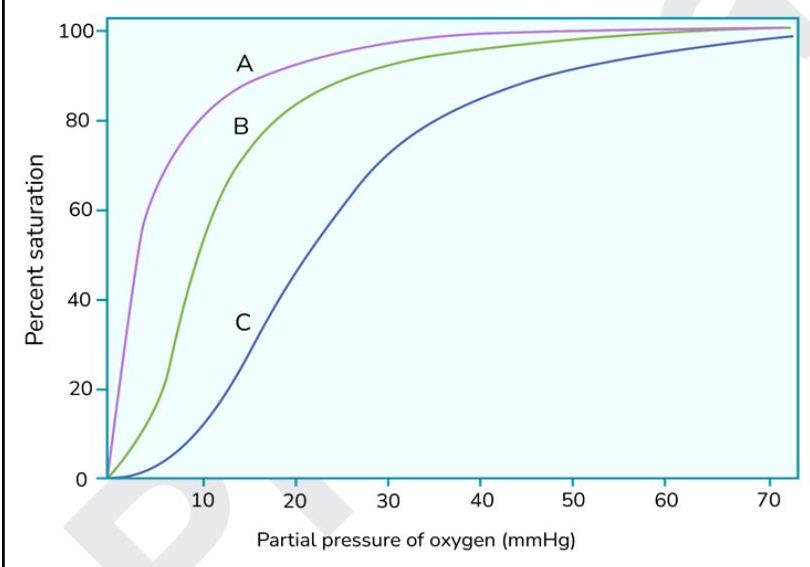
1 questionsThe graph below shows oxygen dissociation curves. What does the curve marked as 'A' indicate?

INI-CET 2022 - Physiology INI-CET Practice Questions and MCQs
Question 11: The graph below shows oxygen dissociation curves. What does the curve marked as 'A' indicate?
- A. Myoglobin (Correct Answer)
- B. Methemoglobin
- C. Carboxyhemoglobinemia
- D. Fetal hemoglobin
Explanation: ***Myoglobin*** - Curve A shows a **hyperbolic oxygen dissociation curve** which is characteristic of myoglobin, indicating high oxygen affinity even at low partial pressures. - Myoglobin has only one heme group, allowing it to bind a single oxygen molecule with high affinity to **store oxygen in muscles**. *Methemoglobin* - Methemoglobin has a **ferric (Fe3+) iron** in its heme group, which cannot bind oxygen, thus reducing the overall oxygen-carrying capacity. - It would typically cause a **left shift** of the remaining functional hemoglobin's dissociation curve due to increased oxygen affinity, but this isn't directly represented as curve A's primary characteristic. *Carboxyhemoglobinemia* - **Carbon monoxide (CO)** binds to hemoglobin with a much higher affinity than oxygen, forming carboxyhemoglobin. - This binding leads to a **left shift** in the oxygen dissociation curve of the remaining functional hemoglobin and a decreased oxygen-carrying capacity, but curve A represents a species with inherently higher oxygen affinity. *Fetal hemoglobin* - Fetal hemoglobin (HbF) has a **higher affinity for oxygen** than adult hemoglobin (HbA), which is represented by a **left-shifted sigmoidal curve** compared to adult hemoglobin. - While it has higher affinity, its curve is still **sigmoidal**, unlike the hyperbolic curve of myoglobin (A).