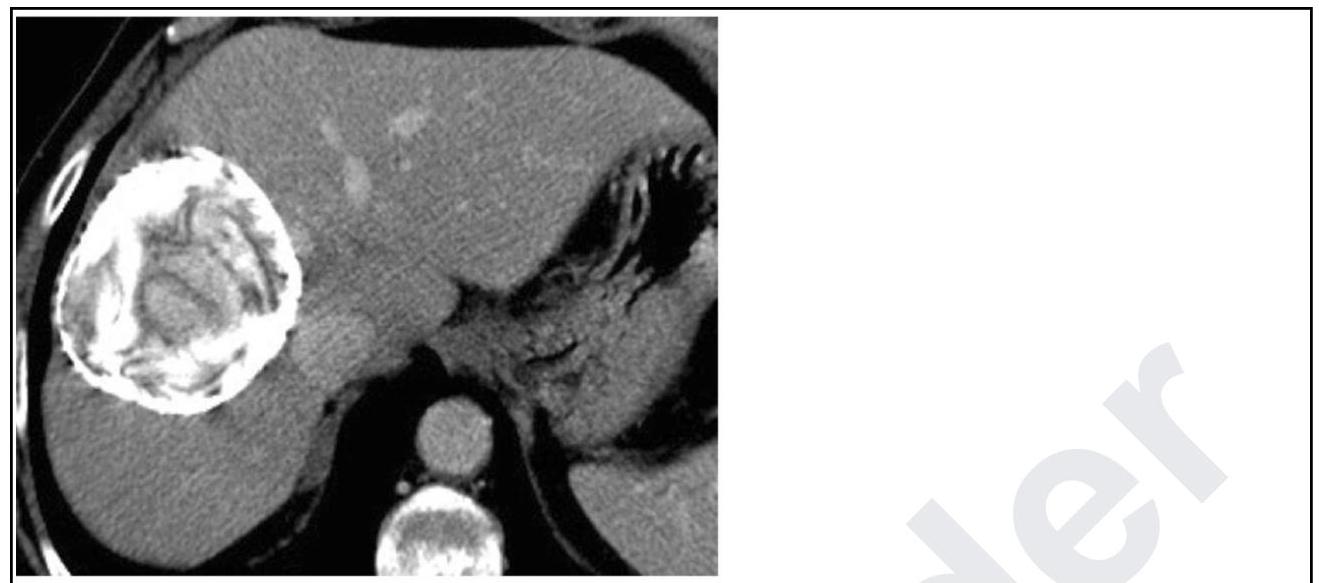
Anatomy
1 questionsFingerprint first develops in how many weeks of intrauterine life?
INI-CET 2022 - Anatomy INI-CET Practice Questions and MCQs
Question 101: Fingerprint first develops in how many weeks of intrauterine life?
- A. 20-24
- B. 12-16 (Correct Answer)
- C. 28-32
- D. 32-36
Explanation: ***12-16*** - **Fingerprint patterns**, specifically the **friction ridges** on the fingers, begin to form between 12 and 16 weeks of gestation. - This period marks the development of the **dermal papillae** and epidermal ridges that create the unique patterns. *20-24* - By 20-24 weeks, the fingerprint patterns are already **well-established** and clearly visible. - This stage is beyond the initial developmental period when the patterns first emerge. *28-32* - At 28-32 weeks, the fingerprint patterns are **fully formed** and permanent. - This timeframe is too late for the initial development of these unique dermal features. *32-36* - By 32-36 weeks, the fetus is nearing full term, and the **fingerprint morphology** is complete and stable. - The initial formation process has long since concluded before this stage.
Forensic Medicine
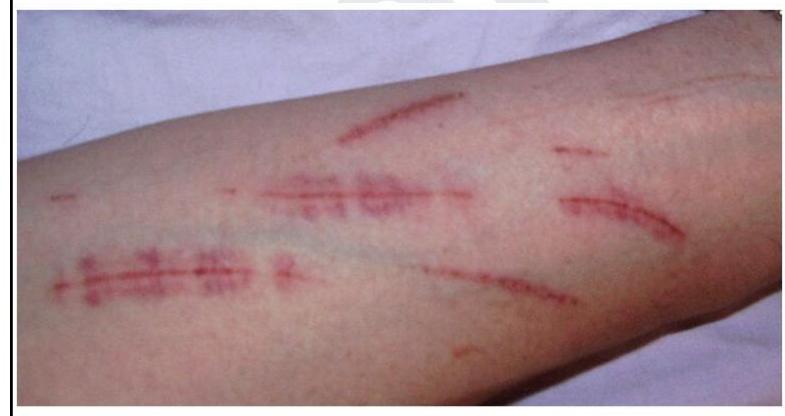
2 questionsPost-mortem examination of a patient reveals the following. What is this finding known as?
The dead body of a child was recovered from a river with froth around his mouth, which reappeared even after wiping it off. Which postmortem finding is not seen in this case?
INI-CET 2022 - Forensic Medicine INI-CET Practice Questions and MCQs
Question 101: Post-mortem examination of a patient reveals the following. What is this finding known as?
- A. Grazed abrasion
- B. Hesitation cuts (Correct Answer)
- C. Defense wounds
- D. Chop wounds
Explanation: ***Hesitation cuts*** - The image displays multiple, parallel or semi-parallel **superficial incised wounds**, often with varying depths, which are characteristic of **hesitation cuts** (also called hesitation marks or tentative cuts). - These cuts are frequently observed in cases of **suicide attempts** where the individual makes several tentative or trial cuts before making a more serious or fatal wound. - Typically found on **wrists, neck, or antecubital fossa** and run parallel to each other with progressively increasing depth. - The pattern of multiple superficial parallel cuts is **pathognomonic** of hesitation marks. *Grazed abrasion* - A **grazed abrasion** is a superficial injury where the epidermis is scraped off, typically caused by friction against a rough surface, resulting in a broad, irregular area of skin loss. - The injuries in the image are clearly distinct **incised wounds** (clean cuts), not broad areas of scraped or abraded skin. *Defense wounds* - **Defense wounds** are injuries sustained while attempting to ward off an attack, typically found on the **palmar surface of hands and forearms**. - These are usually deeper, irregular cuts from grabbing or blocking a weapon during homicidal assault. - The pattern in the image shows **organized, parallel, superficial cuts** in one location, inconsistent with defensive injuries sustained during a struggle. *Chop wounds* - **Chop wounds** are deep incised wounds caused by heavy cutting instruments like axes, cleavers, or machetes, often with underlying **bone injury**. - These are characterized by **deep tissue damage** with a wedge-shaped wound profile. - The wounds shown are **superficial and parallel**, not deep chopping injuries.
Question 102: The dead body of a child was recovered from a river with froth around his mouth, which reappeared even after wiping it off. Which postmortem finding is not seen in this case?
- A. High concentration of arsenic from shaft of hair (Correct Answer)
- B. Voluminous and ballooned out lungs
- C. Cadaveric spasm with mud in closed fist
- D. Paltauf's hemorrhage in sub pleura
Explanation: ***High concentration of arsenic from the shaft of hair*** - The presence of arsenic in hair is indicative of chronic **arsenic poisoning**, which is unrelated to drowning. - The scenario describes a body recovered from a river with froth, suggesting **drowning**, not poisoning. *Voluminous and ballooned out lungs* - This is a classic postmortem finding in drowning due to the aspiration of water and air trapping, leading to **pulmonary emphysema acquosum**. - The lungs appear large and distended, often with impressions of the ribs on their surfaces. *Cadaveric spasm with mud in a closed fist* - **Cadaveric spasm** (instantaneous rigor) can occur in cases of violent death, intense physical exertion, or emotional stress just before death, often seen in drowning victims. - Finding foreign material like mud or weeds clutched tightly in the hand is a significant indicator that the victim was **alive and struggling** in the water during submersion. *Paltauf's hemorrhage in subpleura* - **Paltauf's hemorrhages** are small, pinpoint hemorrhages found under the pleural surface (subpleural) and are a characteristic sign of drowning. - They result from the rupture of capillaries due to the sudden increase in intrathoracic pressure during the struggle to breathe underwater.
Obstetrics and Gynecology
1 questionsWhich of the following is not true about lupus nephritis in pregnancy?
INI-CET 2022 - Obstetrics and Gynecology INI-CET Practice Questions and MCQs
Question 101: Which of the following is not true about lupus nephritis in pregnancy?
- A. Ecosprin, methotrexate, cyclophosphamide, corticosteroids, azathioprine are safe in pregnancy (Correct Answer)
- B. Pregnancy to be planned once the disease has been quiescent for at least 6 months and there is no evidence of renal dysfunction
- C. High dose corticosteroids for lupus flare in pregnancy is safe
- D. Immunosuppression can be continued during pregnancy
Explanation: ***Ecosprin, methotrexate, cyclophosphamide, corticosteroids, azathioprine are safe in pregnancy*** - This statement is **incorrect** because **methotrexate** and **cyclophosphamide** are **contraindicated** in pregnancy due to their teratogenic effects, while **ecosprin (aspirin)** and some **corticosteroids** and **azathioprine** are generally considered relatively safe at appropriate doses. - The combination of **safe and unsafe drugs** within the same statement makes the entire statement untrue; a pregnant patient with lupus nephritis cannot safely take all listed medications. *Pregnancy to be planned once the disease has been quiescent for at least 6 months and there is no evidence of renal dysfunction* - This statement is **true** and represents a **standard recommendation** for managing lupus nephritis in pregnancy. Achieving disease quiescence for at least 6 months significantly reduces the risk of flares and adverse pregnancy outcomes. - Ensuring **absence of renal dysfunction** before conception is crucial to prevent complications like pre-eclampsia, worsening renal function, and prematurity. *High dose corticosteroids for lupus flare in pregnancy is safe* - This statement is **true**. High-dose corticosteroids, such as **prednisone** or **prednisolone**, are often used to manage lupus flares during pregnancy. - These corticosteroids are largely **inactivated by placental enzymes**, minimizing fetal exposure and making them relatively safe for the fetus, while effectively treating maternal disease. *Immunosuppression can be continued during pregnancy* - This statement is **true**. Certain immunosuppressants, like **azathioprine** and **calcineurin inhibitors**, are considered relatively safe and are often continued during pregnancy to prevent disease flares. - **Continuing safe immunosuppression** helps maintain disease control, which is essential for a successful pregnancy outcome in patients with lupus nephritis.
Pediatrics
3 questionsAdrenocorticotropic hormone is the drug of choice in which of the following conditions?
Which of the following cyanotic heart diseases cause increased pulmonary blood flow? 1. Ebstein anomaly 2. Tetralogy of Fallot 3. Transposition of the great arteries (TGA) 4. Total anomalous pulmonary venous communication (TAPVC) Select the correct combination:
An 11-year-old boy was brought to the outpatient clinic with intention tremor and poor scholastic performance. His sister has similar complaints. On examination, hepatomegaly is seen. The eye finding is shown in the image. What is the probable diagnosis?

INI-CET 2022 - Pediatrics INI-CET Practice Questions and MCQs
Question 101: Adrenocorticotropic hormone is the drug of choice in which of the following conditions?
- A. West syndrome (Correct Answer)
- B. Juvenile myoclonic epilepsy
- C. Rolandic epilepsy
- D. Lennox Gastaut syndrome
Explanation: ***West syndrome*** - **Adrenocorticotropic hormone (ACTH)** is considered the drug of choice for West syndrome, also known as infantile spasms, due to its efficacy in reducing spasm frequency and improving neurodevelopmental outcomes. - **Steroid therapy**, including ACTH, is thought to work by modulating cortisol levels and neurotransmitter activity, suppressing the abnormal brain activity characteristic of these seizures. *Juvenile myoclonic epilepsy* - The drug of choice for juvenile myoclonic epilepsy is typically **valproate**, or newer antiepileptic drugs like levetiracetam or lamotrigine, known for their efficacy against myoclonic seizures. - ACTH is not used in this condition, as it is generally effective for specific types of **epileptic encephalopathies** and not generalized idiopathic epilepsies like JME. *Rolandic epilepsy* - **Rolandic epilepsy** (benign epilepsy with centrotemporal spikes) often resolves spontaneously and may not require treatment, but if seizures are frequent, drugs like gabapentin or carbamazepine are used. - ACTH has no established role in the treatment of Rolandic epilepsy, which is a **focal idiopathic epilepsy** with a good prognosis. *Lennox Gastaut syndrome* - While a severe epileptic encephalopathy, the initial management for **Lennox-Gastaut syndrome** (LGS) typically involves a combination of antiepileptic drugs such as valproate, lamotrigine, clobazam, or rufinamide. - ACTH may be considered as an adjunctive treatment in refractory cases of LGS, but it is not the **first-line drug of choice**, unlike in West syndrome where it holds a primary role.
Question 102: Which of the following cyanotic heart diseases cause increased pulmonary blood flow? 1. Ebstein anomaly 2. Tetralogy of Fallot 3. Transposition of the great arteries (TGA) 4. Total anomalous pulmonary venous communication (TAPVC) Select the correct combination:
- A. 3,4 (Correct Answer)
- B. 1,2
- C. 2,4
- D. 1,4
Explanation: ***3,4 (TGA and TAPVC)*** - **Transposition of the great arteries (TGA)** involves two parallel circulations with the aorta arising from the right ventricle and pulmonary artery from the left ventricle. Mixing occurs through defects (ASD, VSD, or PDA), leading to **pulmonary overcirculation** as oxygenated blood recirculates through the lungs. - **Total anomalous pulmonary venous connection (TAPVC)** results in all pulmonary veins draining into the systemic venous circulation (typically right atrium). This causes **increased volume load on the right heart** and subsequently increased pulmonary blood flow, with obligatory mixing at the atrial level. *1,2 (Ebstein and ToF)* - Both conditions cause **decreased pulmonary blood flow**. - **Ebstein anomaly** involves apical displacement of the tricuspid valve with "atrialization" of the right ventricle, causing tricuspid regurgitation and right-to-left shunting through an ASD/PFO. - **Tetralogy of Fallot** features right ventricular outflow tract obstruction (pulmonary stenosis) as its defining feature, causing reduced pulmonary blood flow. *2,4* - Incorrect combination: **Tetralogy of Fallot causes decreased pulmonary blood flow** due to RVOT obstruction, not increased. *1,4* - Incorrect combination: **Ebstein anomaly causes decreased pulmonary blood flow**, not increased.
Question 103: An 11-year-old boy was brought to the outpatient clinic with intention tremor and poor scholastic performance. His sister has similar complaints. On examination, hepatomegaly is seen. The eye finding is shown in the image. What is the probable diagnosis?
- A. Glutaric aciduria
- B. Wilson's disease (Correct Answer)
- C. Hepatitis A
- D. Huntington's chorea
Explanation: ***Wilson's disease*** - The combination of **intention tremor**, **poor scholastic performance** (indicating neurological involvement), **hepatomegaly**, and the **eye finding** (Kayser-Fleischer ring seen in the image) points strongly to Wilson's disease. The sister having similar complaints suggests an **autosomal recessive** inheritance pattern, consistent with Wilson's disease. - The image shows **Kayser-Fleischer ring**, a golden-brown ring at the corneal limbus due to **copper deposition in Descemet's membrane**, which is pathognomonic for Wilson's disease with neurological involvement. - Wilson's disease is caused by mutations in the **ATP7B gene**, leading to impaired copper excretion and accumulation in the liver, brain, and cornea. *Glutaric aciduria* - This is a rare **autosomal recessive metabolic disorder** that primarily affects the brain, leading to **dystonia** and **developmental delay**. - While it can cause neurological symptoms, it typically does not present with **hepatomegaly** or **Kayser-Fleischer rings** as prominent features. *Hepatitis A* - **Hepatitis A** is an acute viral infection of the liver, causing symptoms like fever, fatigue, nausea, vomiting, and **jaundice**. - However, it typically does not cause **intention tremor**, **poor scholastic performance**, or have a familial pattern suggesting an inherited neurological disorder. It also does not cause Kayser-Fleischer rings. *Huntington's chorea* - **Huntington's chorea** is an **autosomal dominant neurodegenerative disorder** characterized by **chorea**, psychiatric symptoms, and cognitive decline, typically manifesting in adulthood. - It does not present with **hepatomegaly** or **Kayser-Fleischer rings** at this age and is not associated with the constellation of liver and neurological symptoms described.
Pharmacology
3 questionsTreatment of choice for acute arsenic poisoning is:
Which of these is not a cardiac poison?
A child presents with complaints of fever, rash, body ache, and throat ache. He had a history of thorn prick injury a week back. What antibiotics would you give empirically to this child?
INI-CET 2022 - Pharmacology INI-CET Practice Questions and MCQs
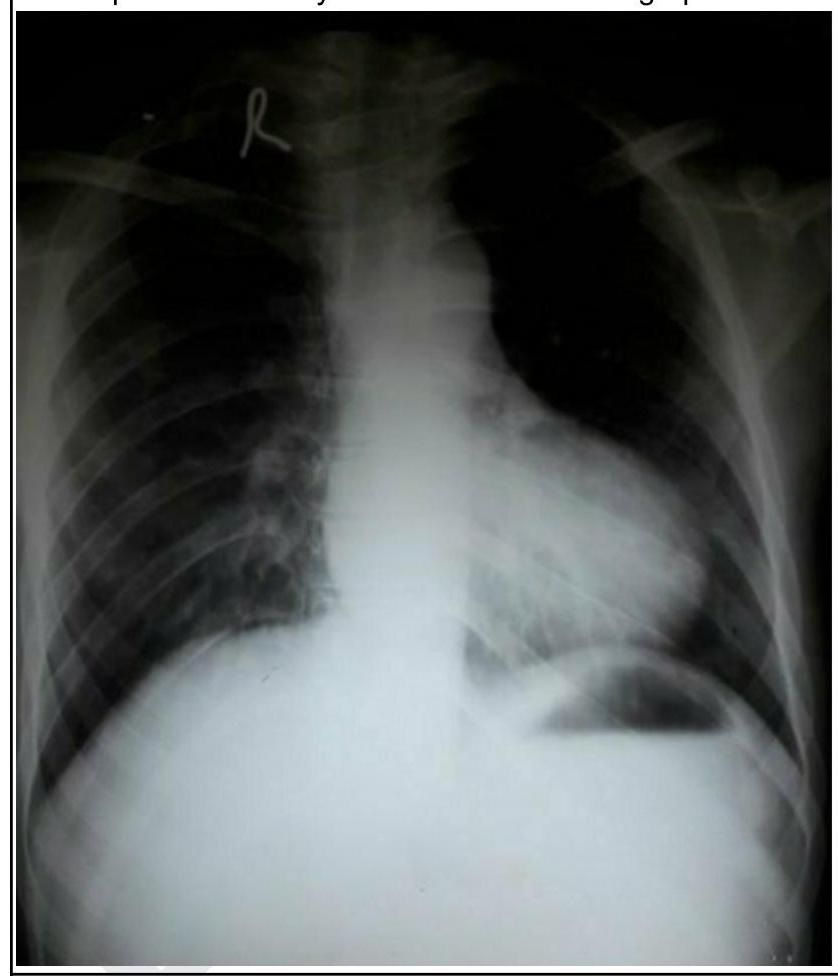
Question 101: Treatment of choice for acute arsenic poisoning is:
- A. Ipecac
- B. Dimercaprol (Correct Answer)
- C. Penicillamine
- D. Activated charcoal
Explanation: ***Dimercaprol*** - **Dimercaprol** (also known as British Anti-Lewisite, BAL) is a chelating agent used for **acute arsenic poisoning**. [1] - It works by binding to arsenic, forming a stable, non-toxic complex that can be excreted from the body. - Among the given options, **dimercaprol is the correct choice** for treating acute arsenic poisoning. - **Note:** While dimercaprol is effective, newer chelators like **DMSA (succimer)** and **DMPS (unithiol)** are now preferred in modern practice due to better safety profiles and efficacy, though they are not listed in the options. [1] *Ipecac* - **Ipecac syrup** induces vomiting and is generally **contraindicated** in poisonings with corrosives, hydrocarbons, or substances that can cause rapid central nervous system depression. - It is **not effective** for systemic poisonings like arsenic, where absorption has already occurred, and can cause complications like aspiration. - Ipecac is largely obsolete in modern toxicology practice. *Penicillamine* - **Penicillamine** is another chelating agent, primarily used for **copper poisoning** (e.g., Wilson's disease) and sometimes for lead poisoning. - While it has some chelating properties, it is **less effective** than dimercaprol for acute arsenic toxicity and can have more significant side effects. - It is **not the first-line treatment** for arsenic poisoning. *Activated charcoal* - **Activated charcoal** is effective for adsorbing many toxins in the gastrointestinal tract, preventing their absorption. - However, it has **poor affinity for heavy metals** like arsenic and is therefore **not recommended** as the primary treatment for arsenic poisoning. - It may have limited benefit only if given very early after ingestion, but chelation therapy is the definitive treatment.
Question 102: Which of these is not a cardiac poison?
- A. Aconite
- B. Atropa belladonna (Correct Answer)
- C. Cerbera thevetia
- D. Nicotiana tabacum
Explanation: ***Atropa belladonna*** - This plant primarily contains **atropine** and other **belladonna alkaloids**, which are **anticholinergic** and cause symptoms like dry mouth, dilated pupils, tachycardia, and hallucinations. - While it can cause *tachycardia*, its primary toxic effects are not directly on the cardiac muscle contractility or rhythmicity leading to a **"cardiac poison"** classification (e.g. arrhythmias or heart failure), but rather through autonomic nervous system modulation. *Aconite* - Aconite, derived from the **monkshood plant**, contains **aconitine**, a potent neurotoxin and cardiotoxin. - It causes severe **arrhythmias**, including ventricular fibrillation, which can be rapidly fatal by directly affecting **sodium channels** in myocardial cells. *Cerbera thevetia* - Commonly known as Yellow Oleander, it contains **cardiac glycosides** similar to digoxin. - These glycosides inhibit the **Na+/K+-ATPase pump** in cardiac myocytes, leading to increased intracellular calcium, enhanced contractility, and dose-dependent **arrhythmias** (bradycardia, heart blocks, ventricular arrhythmias). *Nicotiana tabacum* - Tobacco contains **nicotine**, which primarily acts on **nicotinic acetylcholine receptors**. - Acute poisoning can lead to initial stimulation followed by depression of the autonomic ganglia, causing a range of cardiac effects including **tachycardia**, **hypertension**, and **arrhythmias** due to sympathetic nervous system activation.
Question 103: A child presents with complaints of fever, rash, body ache, and throat ache. He had a history of thorn prick injury a week back. What antibiotics would you give empirically to this child?
- A. Amoxicillin+ clavulanate (Correct Answer)
- B. Ceftriaxone
- C. Vancomycin
- D. Meropenem
Explanation: ***Amoxicillin + clavulanate*** - This combination provides **broad-spectrum coverage** against common skin flora including **Staphylococcus aureus**, **Streptococcus species**, and **anaerobes** that can be introduced by thorn prick injuries. - The **beta-lactamase inhibitor (clavulanate)** extends coverage to beta-lactamase producing organisms commonly found in skin infections. - Covers **Streptococcus pyogenes** which could explain the throat ache, making it ideal for this child with both skin infection and pharyngitis symptoms. - Most appropriate **first-line empiric therapy** for pediatric skin and soft tissue infections with systemic symptoms. *Ceftriaxone* - While this **third-generation cephalosporin** has good coverage against many gram-negative bacteria and some gram-positive organisms including **MSSA (methicillin-sensitive S. aureus)**, it is typically **reserved for parenteral therapy** in more severe infections. - For this clinical scenario, amoxicillin-clavulanate is preferred because it provides better **beta-lactamase coverage**, can be given orally, and covers both aerobic and anaerobic organisms relevant to thorn prick injuries. - Would be considered if the patient required **hospitalization** or failed first-line therapy. *Vancomycin* - This antibiotic is primarily used for serious infections caused by **multi-drug resistant gram-positive bacteria**, particularly **methicillin-resistant Staphylococcus aureus (MRSA)**. - Given the history of a thorn prick without specific risk factors for MRSA (no prior MRSA infection, hospital exposure, or failed beta-lactam therapy), there is **no indication for empiric vancomycin use**. - Using vancomycin empirically without specific indication contributes to **antibiotic resistance** and is not guideline-recommended. *Meropenem* - A **carbapenem** antibiotic reserved for **severe, life-threatening infections** caused by multi-drug resistant organisms or in cases of **septic shock** with unknown etiology. - The clinical presentation does not suggest severe sepsis, necrotizing fasciitis, or resistant pathogen requiring such broad coverage. - Empiric use in this scenario would represent **inappropriate antimicrobial stewardship** and promote development of carbapenem-resistant organisms.