INI-CET 2022

157 Questions — Page 10 of 16

Anatomy

1 questions
Q91

Identify which of the following structure is a sebaceous gland:
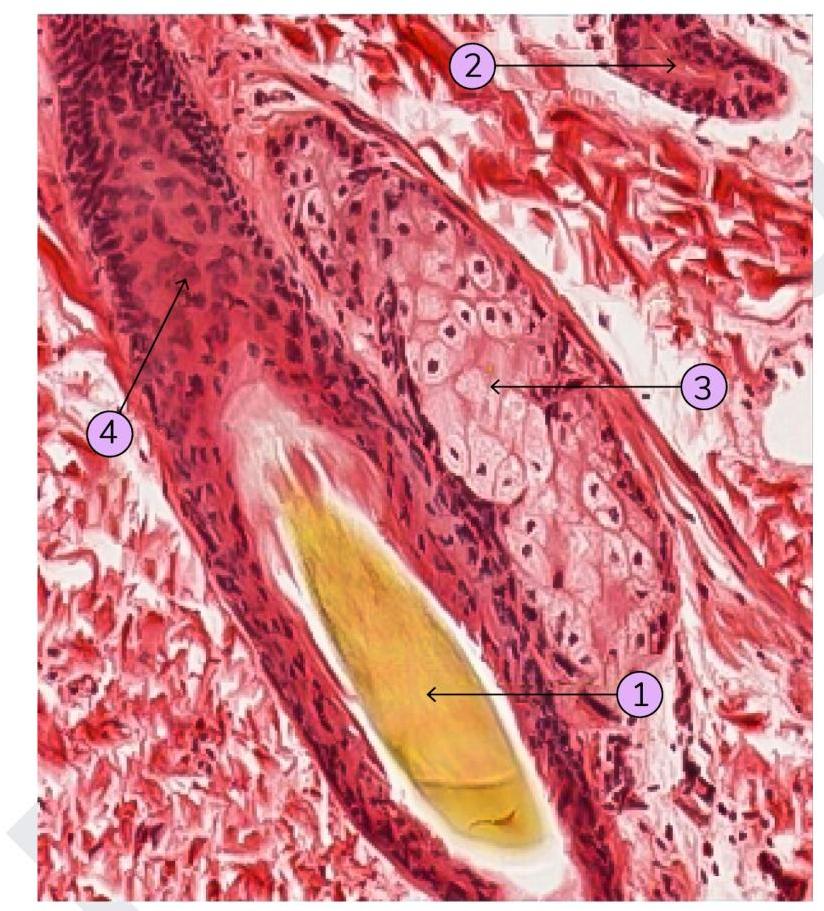
Image for question 91

Dermatology

2 questions
Q91

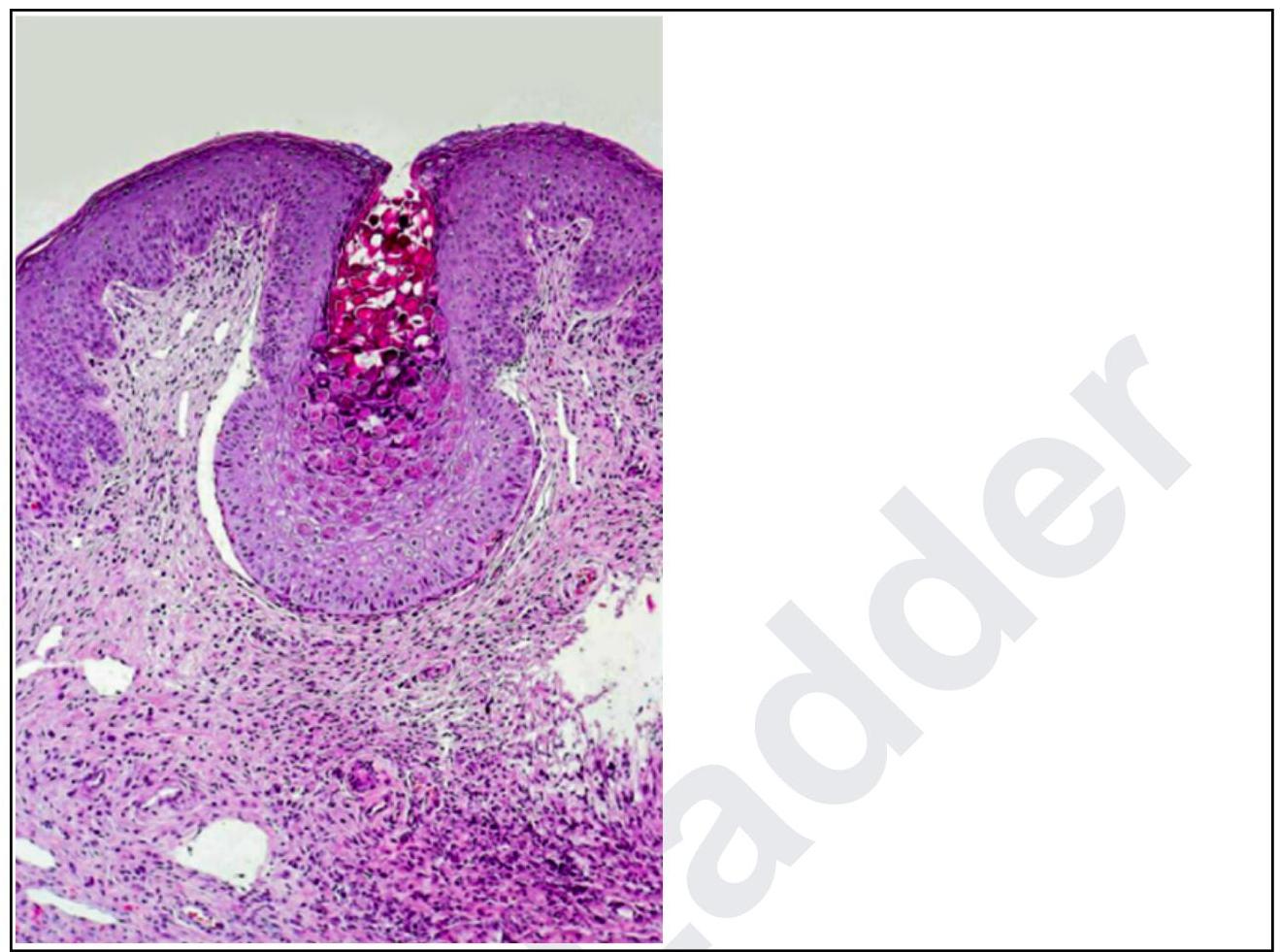
A woman presents with lesions on the inner thighs and peri-anal region. They are nodular, 4-6 mm in size and appear pale. The histopathological image shows multiple intracytoplasmic inclusion bodies consistent with Henderson-Patterson bodies. The diagnosis is:

Image for question 91
Q92

A 7-year-old child presents to the dermatology clinic with multiple small, painless, flesh-colored papules on the trunk and arms that have been present for 3 months. The lesions are 2-4 mm in diameter, dome-shaped with a smooth surface, and several have a characteristic central umbilication. The child is otherwise healthy and immunocompetent. The lesions are not pruritic and there is no associated lymphadenopathy. On closer examination, a white, cheesy material can be expressed from the central depression of some lesions. What is the most likely diagnosis?

Pathology

3 questions
Q91

Match the following cell types/patterns (Column A) with their associated malignancies (Column B): Column A (Cell types/patterns): a) Faggot cell b) Popcorn cell c) Starry sky pattern d) Cerebriform nuclei Column B (Associated malignancies): 1) Acute promyelocytic leukemia 2) Lymphocyte-predominant Hodgkin's lymphoma 3) Burkitt lymphoma 4) Sezary syndrome

Q92

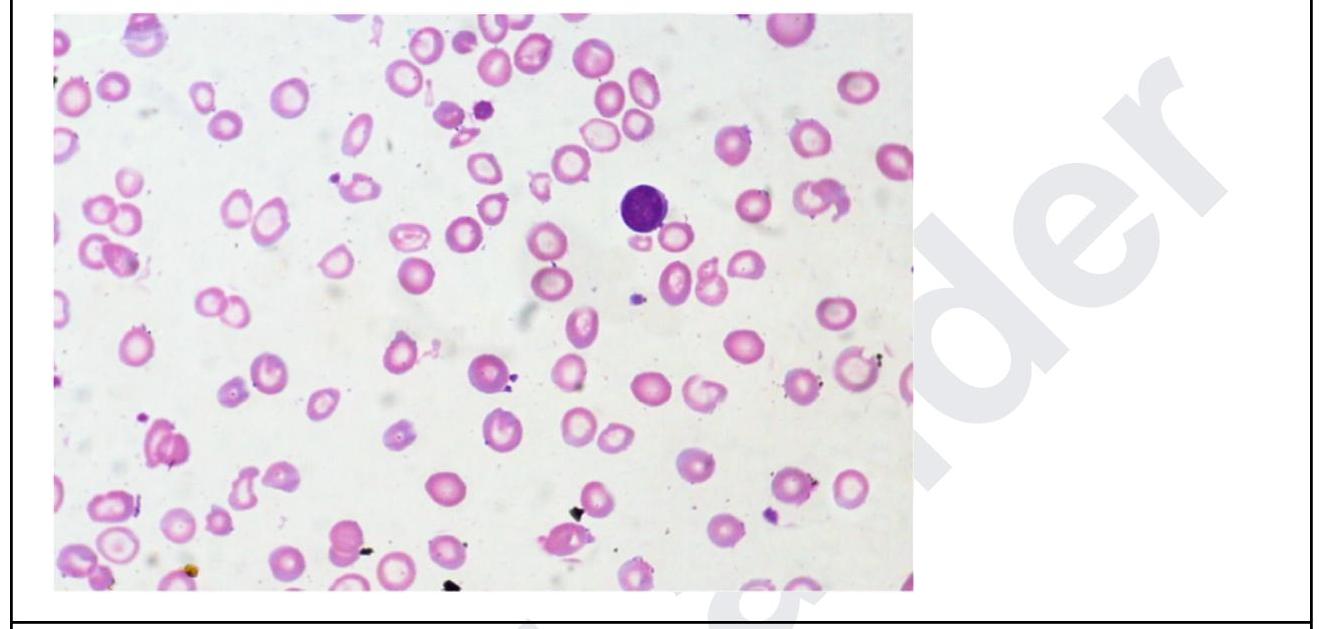
A 35 year old woman presents with fatigue. Investigations revealed the following: Hb, 5 g/dL; MCH, 24; low MCV; leukocytes, 11,000/ uL, and platelets, 5 lakhs. The peripheral smear is shown below. What is the diagnosis? Normal values: - Mean cell volume (MCV); 90 ± 8 fL - Mean cell Hb(MCH); 30 ± 3 pg

Image for question 92
Q93

Iron in tissues is stained by:

Pharmacology

2 questions
Q91

Which of the following statements is correct regarding the given graph?

Image for question 91
Q92

Match the following antiarrhythmic drugs with their mechanism of action: | Mechanism of action | Drug | | :-- | :-- | | 1. Na+ channel blocker | A. Quinidine | | 2. K+ channel blocker | B. Digoxin | | 3. Na+K+ ATPase inhibitor | C. Esmolol | | 4. Beta-blocker | D. Ibutilide |

Radiology

2 questions
Q91

A child presents with cyanosis. His chest radiograph is shown below. What is the diagnosis?

Image for question 91
Q92

Identify the condition based on the non-contrast CT scan of a patient given below.

Image for question 92