Community Medicine
2 questionsA new test in red line has been designed to diagnose a disease condition. The test is applied to both normal and diseased population, the graph of which is given below. Which of the following is correct regarding the test?

Which of the following vials can be used? (AIIMS Nov 2017)

INI-CET 2017 - Community Medicine INI-CET Practice Questions and MCQs
Question 81: A new test in red line has been designed to diagnose a disease condition. The test is applied to both normal and diseased population, the graph of which is given below. Which of the following is correct regarding the test?
- A. High sensitivity and high specificity
- B. High sensitivity and low specificity
- C. Low sensitivity and low specificity (Correct Answer)
- D. Low sensitivity and high specificity
Explanation: ***Low sensitivity and low specificity*** - In the provided graph, the **red line** curve (new test) for the healthy and diseased populations shows substantial **overlap**, meaning there is poor discrimination between the two groups. - A test with **low sensitivity** will miss many true positive cases (diseased individuals), and a test with **low specificity** will incorrectly identify many healthy individuals as diseased, both of which are indicated by the extensive overlap. *High sensitivity and high specificity* - This would be represented by two curves that are **well-separated**, with minimal overlap, allowing for clear distinction between healthy and diseased individuals. - Such a test would correctly identify most diseased individuals (**high sensitivity**) and most healthy individuals (**high specificity**). *High sensitivity and low specificity* - This would typically show a test that correctly identifies most diseased individuals (high true positive rate), but also incorrectly flags many healthy individuals as diseased (high false positive rate). - Graphically, this might appear as the diseased curve being mostly captured, but with significant spillover into the healthy range. *Low sensitivity and high specificity* - This scenario suggests a test that rarely misidentifies healthy individuals as diseased (low false positive rate), but also misses many diseased individuals (high false negative rate). - The healthy curve would be well-defined and distinct, but the diseased curve would significantly overlap with the healthy curve, indicating poor detection of disease.
Question 82: Which of the following vials can be used? (AIIMS Nov 2017)
- A. 1,2 can be used (Correct Answer)
- B. 3,4 can be used
- C. 1,2,3 can be used
- D. Only 1 can be used
Explanation: ***1,2 can be used*** - Vials 1 and 2 show the **inner square lighter than or equal in color to the outer circle** on the VVM, indicating the vaccine has been stored correctly and is safe to use. - The **Vaccine Vial Monitor (VVM)** is a time-temperature indicator that changes color irreversibly when exposed to excessive heat. - These vials are at **VVM Stage 1 or 2** (usable stages), confirming they have not been exposed to heat that would degrade vaccine potency. *3,4 can be used* - This is **INCORRECT** because both vials 3 and 4 show VVM indicators that have reached **discard point**. - Vial 3's VVM shows the **inner square darker than the outer circle**, indicating heat exposure (VVM Stage 3 or beyond). - Vial 4's VVM shows an even **darker inner square, nearly merged with the outer circle**, signifying severe heat damage. - **WHO/EPI guidelines** mandate discarding vaccines when VVM inner square becomes darker than outer circle. *1,2,3 can be used* - This is **INCORRECT** because vial 3 has crossed the **VVM discard point**. - The inner square in vial 3 is **darker than the outer circle**, indicating heat exposure that compromises vaccine efficacy. - Using heat-damaged vaccines leads to **immunization failure** and false sense of protection. *Only 1 can be used* - This is **INCORRECT** because vial 2 also shows a **safe VVM status** (inner square lighter than outer circle). - Both vials 1 and 2 are at usable VVM stages and can be administered safely. - There is **no visual difference** between the VVM status of vials 1 and 2 that would justify discarding vial 2.
Forensic Medicine
3 questionsThe following presentation is called:

A person was brought dead to the casualty and autopsy was performed to find the cause of death. Based on the autopsy findings shown in the image, what is the diagnosis?

An unconscious patient was brought to the casualty. ABG reveals metabolic acidosis with hypocalcemia. The urine specimen from this patient is shown below. Identify the substance:

INI-CET 2017 - Forensic Medicine INI-CET Practice Questions and MCQs
Question 81: The following presentation is called:
- A. Mycetoma (Correct Answer)
- B. Black foot disease
- C. Myrmecia
- D. Tinea pedis
Explanation: ***Mycetoma*** - The image displays a foot with **swelling, nodule formation, and draining sinuses** with visible grains, which is characteristic of mycetoma. - Mycetoma is a **chronic, progressive granulomatous disease** of the skin, subcutaneous tissue, fascia, and bone, often affecting the foot. *Black foot disease* - This is a form of **peripheral vascular disease** caused by **chronic arsenic poisoning**, typically leading to **gangrene** and eventually amputation. - The image does not show the typical features of **ischemia or gangrene** associated with Black foot disease. *Myrmecia* - This is a type of **wart or verruca** that is specifically characterized by a **plantar wart with a central core of black dots** (thrombosed capillaries). - The image shows a more widespread inflammatory process with nodules and sinuses, not a localized wart. *Tinea pedis* - Also known as **athlete's foot**, this is a **superficial fungal infection** of the skin of the foot, typically presenting with **scaling, itching, redness, and sometimes blisters**. - The clinical presentation in the image, with deep-seated nodules and draining sinuses, is not consistent with a superficial fungal infection.
Question 82: A person was brought dead to the casualty and autopsy was performed to find the cause of death. Based on the autopsy findings shown in the image, what is the diagnosis?
- A. Throttling
- B. Strangulation
- C. Ligature strangulation
- D. Hanging (Correct Answer)
Explanation: ***Hanging*** - The image shows **ligature marks on the neck**, consistent with hanging. Specifically, there is evidence of **fracture of the hyoid bone** and possibly other laryngeal cartilages (circled area), which are common findings in hanging, especially **judicial hanging** or cases with a significant drop. - The presence of the ligature mark **above the thyroid cartilage** and extending upwards towards the mastoid process is characteristic of hanging, creating an **oblique, upward-sloping** V-shaped or inverted U-shaped groove. - In hanging, the body weight acts as the constricting force, and the mark is typically **incomplete** on the side opposite to the suspension point. *Throttling* - Throttling involves **manual compression of the neck** by human hands. It typically leaves **finger marks** and **bruises** on the neck, often irregular and distributed over a wider area. - While hyoid bone fractures can occur in throttling, the distinct, continuous **ligature mark** and the specific position of injuries seen in the image are less typical for manual strangulation. *Strangulation (general)* - Strangulation refers to compression of the neck by a constricting force, which can be manual (throttling), ligature (ligature strangulation), or by hanging. Without further context, this term is too broad and non-specific. *Ligature strangulation* - Ligature strangulation differs from hanging in that the constricting force is applied around the neck by a ligature (rope, wire, cloth), but the body is **not suspended**. - This typically produces **horizontal or transverse ligature marks** that are more uniform and circumferential, unlike the **oblique, upward-sloping marks** characteristic of hanging. - The ligature mark in strangulation is usually **complete** around the neck and positioned lower, often at the level of the thyroid cartilage.
Question 83: An unconscious patient was brought to the casualty. ABG reveals metabolic acidosis with hypocalcemia. The urine specimen from this patient is shown below. Identify the substance:
- A. Ethylene glycol (Correct Answer)
- B. Methyl alcohol
- C. Formaldehyde
- D. Paraldehyde
Explanation: ***Ethylene glycol*** - The image shows **calcium oxalate crystals** (both monohydrate, "dumbbell" shapes, and dihydrate, "envelope" shapes), classical findings in **ethylene glycol poisoning**. - Ethylene glycol is metabolized into **oxalic acid**, which precipitates with calcium, leading to **hypocalcemia** and metabolic acidosis due to accumulating organic acids. *Methyl alcohol* - Methyl alcohol poisoning is characterized by metabolites like **formic acid**, causing severe **metabolic acidosis** and visual disturbances, but does not typically lead to calcium oxalate crystalluria. - While it causes profound acidosis, the diagnostic urine crystals seen in the image are not associated with methyl alcohol intoxication. *Formaldehyde* - Formaldehyde poisoning is generally due to ingestion or inhalation, leading to immediate toxicity, often with severe gastrointestinal and respiratory symptoms. - It does not typically metabolize into substances that form **calcium oxalate crystals** in the urine or cause hypocalcemia in this manner. *Paraldehyde* - Paraldehyde is an older sedative/hypnotic that can cause **metabolic acidosis** due to its metabolism into acetic acid, especially in large doses. - However, it does not lead to the formation of **calcium oxalate crystals** in the urine or associated hypocalcemia as seen in the image.
Microbiology
4 questionsWhich of the following parasite's life cycle is shown below?

Which of the following fits into the life cycle of the picture given below? (AIIMS May 2017)

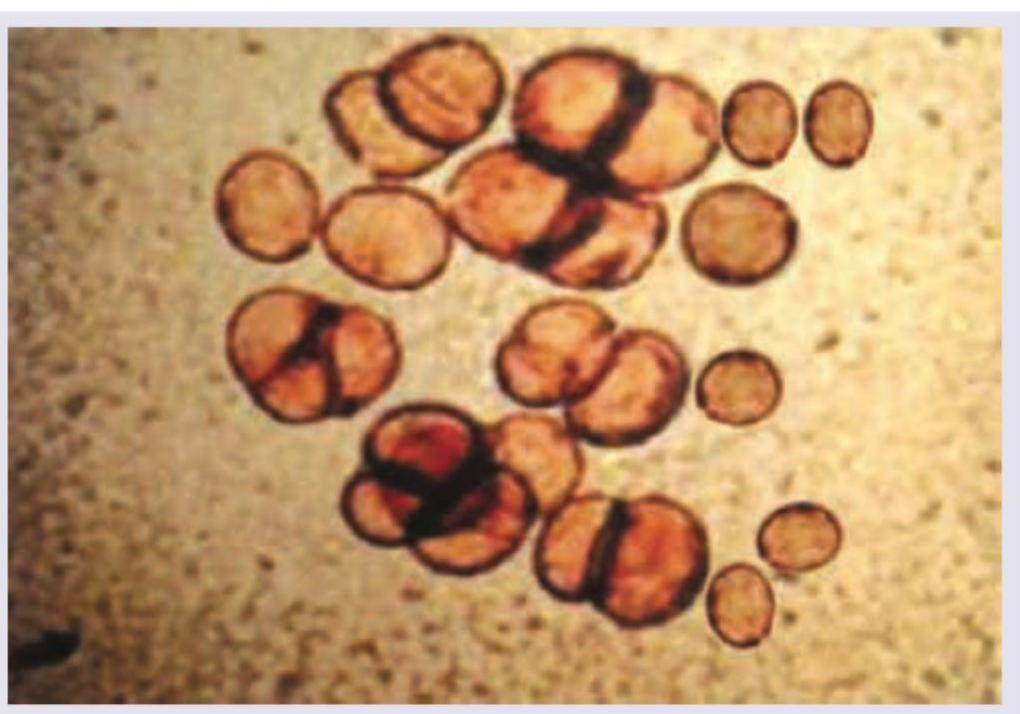
The image shown below shows egg of? (AIIMS May 2017)

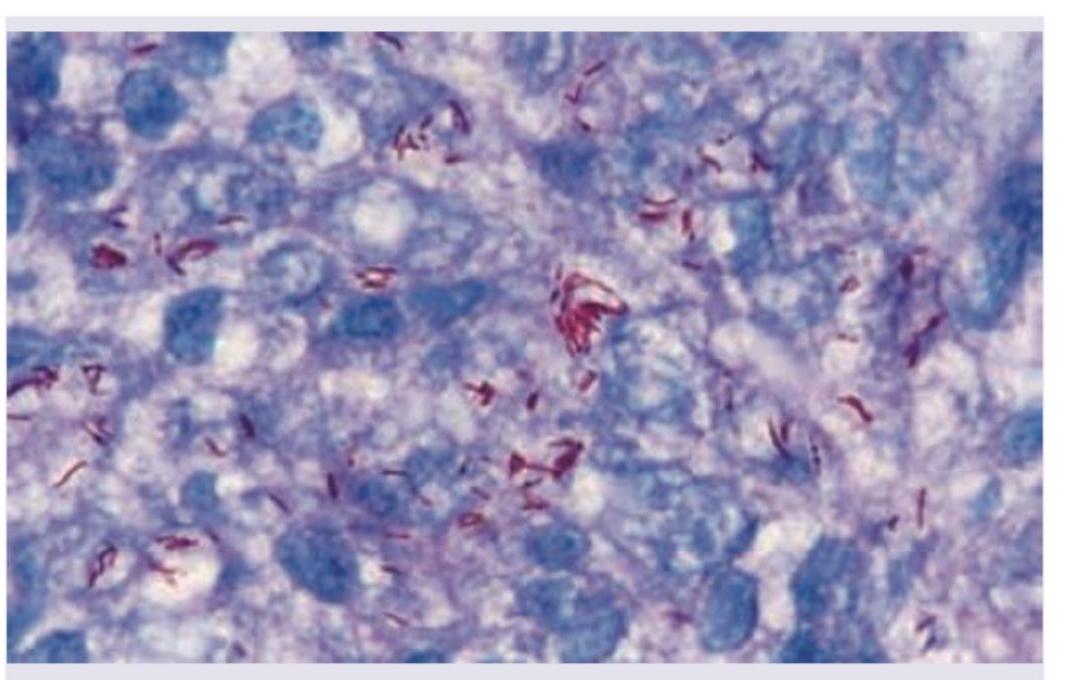
Identify the organism shown below. (AIIMS May 2017)

INI-CET 2017 - Microbiology INI-CET Practice Questions and MCQs
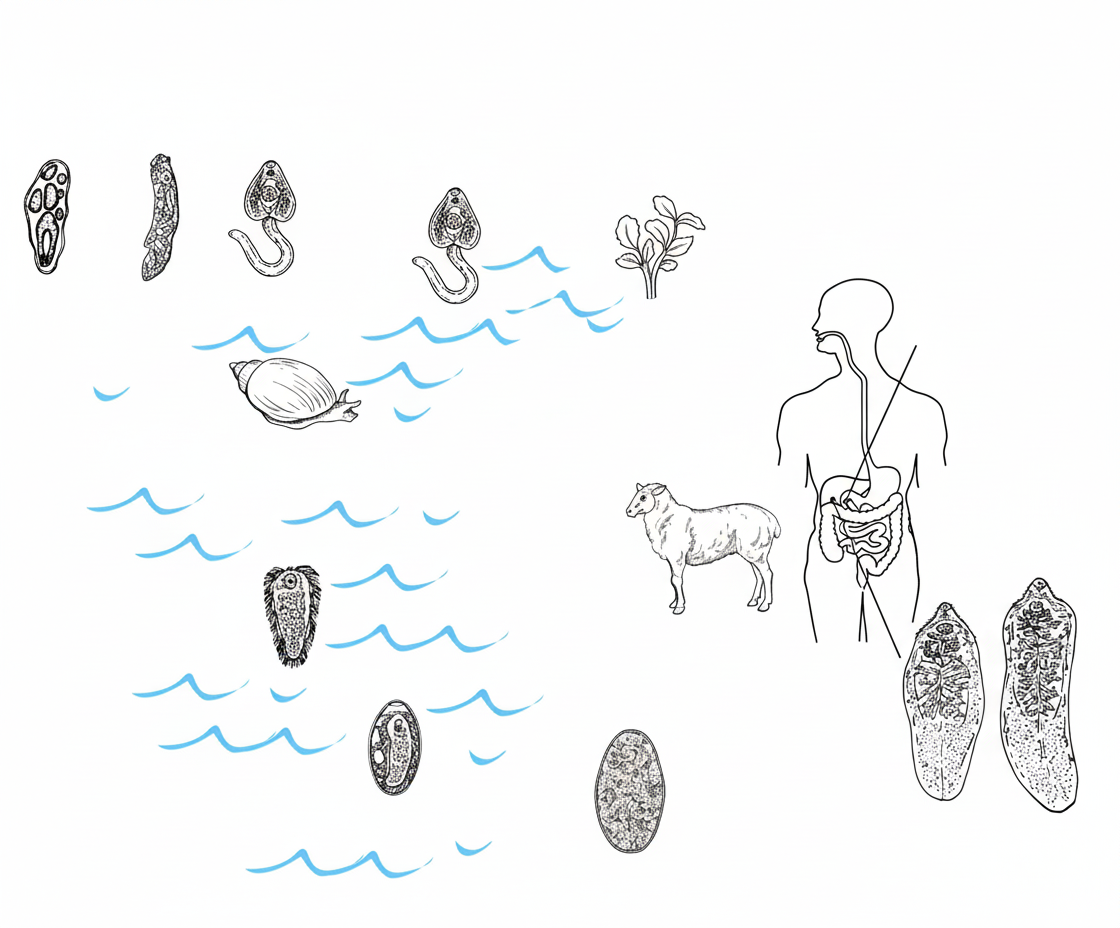
Question 81: Which of the following parasite's life cycle is shown below?
- A. Fasciola hepatica (Correct Answer)
- B. Clonorchis sinensis
- C. Paragonimus westermani
- D. Schistosoma japonicum
Explanation: ***Fasciola hepatica (Liver Fluke)*** - The diagram clearly illustrates the key stages of the Fasciola hepatica life cycle, including **encystation in the duodenum**, migration to the **liver**, and the presence of adult worms in the **bile duct** of humans and animals - The presence of **sheep and cattle** as definitive hosts, and the involvement of **freshwater snails** (Lymnaea species) as intermediate hosts, are characteristic features of *Fasciola hepatica* - **Eggs escaping in feces** into water where miracidia develop and infect snails, followed by cercaria forming **metacercaria on aquatic vegetation** (eaten by herbivores), is pathognomonic of this fluke *Clonorchis sinensis* - This is the **Chinese liver fluke** that also inhabits bile ducts, but uses **freshwater fish** (not vegetation) as the second intermediate host - Humans acquire infection by eating **raw or undercooked fish**, not vegetation *Paragonimus westermani* - This is the **lung fluke** found in the lungs (not liver/bile ducts) - Uses **freshwater crabs or crayfish** as second intermediate hosts - Life cycle does not involve grazing animals or vegetation *Schistosoma japonicum* - This is a **blood fluke** (not a liver fluke) causing schistosomiasis - Cercaria penetrate through **intact skin** (not ingested) - Adult worms live in **mesenteric veins**, not bile ducts - No metacercarial encysted stage on vegetation
Question 82: Which of the following fits into the life cycle of the picture given below? (AIIMS May 2017)
- A. Entamoeba histolytica (Correct Answer)
- B. Giardia lamblia
- C. Balantidium coli
- D. Entamoeba coli
Explanation: ***Entamoeba histolytica*** - The diagram illustrates the characteristic life cycle of *Entamoeba histolytica*, showing the **trophozoite** stage with pseudopodia, **binary fission**, **encystment** forming a protective cyst wall, and **excystation** producing metacystic amoebae. - Key identifying features include the **4-nucleate mature cyst** and the presence of **chromatoid bars** with rounded ends, which are pathognomonic for this parasite's life cycle. *Giardia lamblia* - This is a **flagellated protozoan** with a distinctive **pear-shaped trophozoite** containing two nuclei and eight flagella, completely different from the amoeboid forms shown. - The life cycle involves **binucleate cysts** and does not include pseudopodial movement or the amoeboid stages depicted in the diagram. *Balantidium coli* - This is a **ciliated protozoan** (the largest intestinal parasite) with a characteristic **kidney-shaped macronucleus** and numerous cilia for motility. - The trophozoite is **oval-shaped** with cilia covering the surface, lacking the pseudopodial extensions and amoeboid characteristics shown in the life cycle. *Entamoeba coli* - While also an amoeba, *E. coli* forms **8-nucleate mature cysts** (compared to 4-nucleate in *E. histolytica*) and has **chromatoid bars with splinter-like pointed ends**. - This non-pathogenic amoeba has a similar but distinct life cycle with different cyst morphology and nuclear characteristics than those depicted.
Question 83: The image shown below shows egg of? (AIIMS May 2017)
- A. A. duodenale
- B. E. vermicularis
- C. A. lumbricoides (Correct Answer)
- D. Strongyloides stercoralis
Explanation: ***A. lumbricoides*** - The image displays a **mammillated outer layer** and an **oval shape**, characteristic features of a fertilized *Ascaris lumbricoides* egg. - The internal content shows a **developing embryo** (morula stage), which is typical for newly passed *Ascaris* eggs. *A. duodenale* - The eggs of *Ancylostoma duodenale* (hookworm) are typically **oval or ellipsoidal**, have a **thin, transparent shell**, and contain a **segmented ovum** (usually 2-8 cells) when passed in stool. - They lack the distinctive **thick, mammillated outer layer** seen in the image. *E. vermicularis* - *Enterobius vermicularis* (pinworm) eggs are **D-shaped** or **asymmetrically ovoid**, with one side flattened. - They possess a **thin, smooth shell** and contain a **larva**, which distinguishes them from the egg shown. *Strongyloides stercoralis* - *Strongyloides stercoralis* eggs are rarely seen in stool samples because they usually **hatch within the intestine**, releasing **rhabditiform larvae**. - When present, they are **oval, thin-shelled**, and contain a **partially developed larva**.
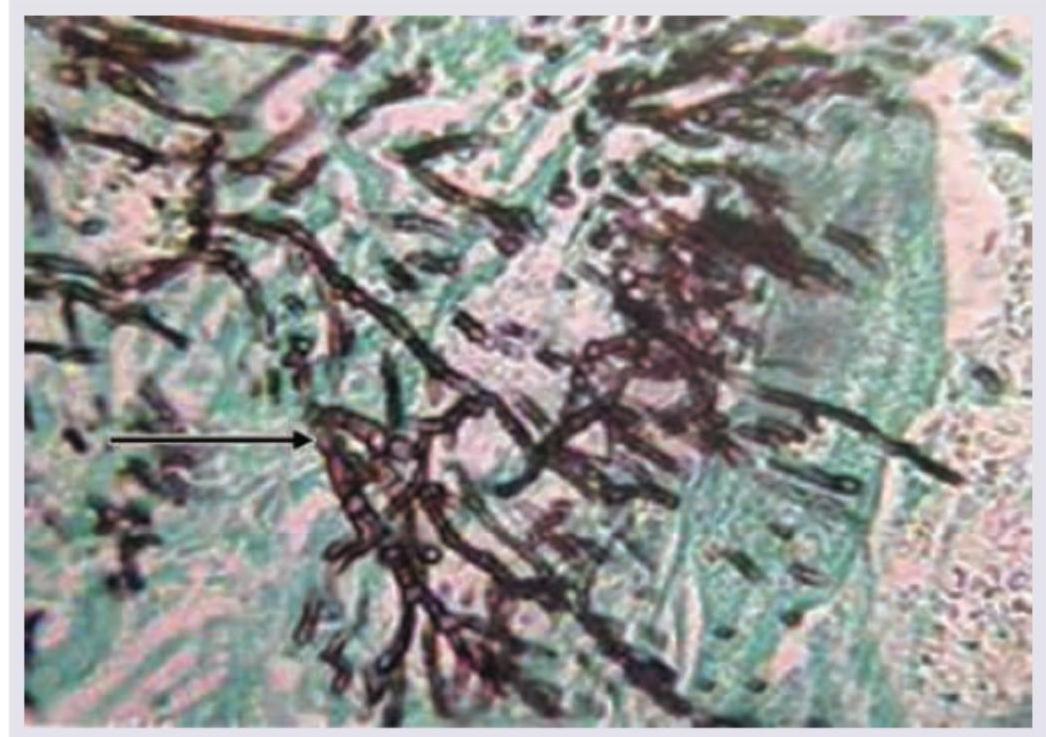
Question 84: Identify the organism shown below. (AIIMS May 2017)
- A. Nocardia (Correct Answer)
- B. Mycobacterium tuberculosis
- C. Mycobacterium leprae
- D. Actinomyces
Explanation: ***Nocardia*** - The image displays **branching, filamentous, gram-positive rods** that exhibit a **beaded appearance**, which is characteristic of *Nocardia* species. - *Nocardia* are **partially acid-fast** and can cause opportunistic infections, particularly in immunocompromised individuals. *Mycobacterium tuberculosis* - *Mycobacterium tuberculosis* appears as **rod-shaped bacilli** that are **strongly acid-fast** due to their high mycolic acid content, but they do not typically form the long, branching filaments seen in the image. - While they can form cords, these are not the extensive mycelial-like structures shown. *Mycobacterium leprae* - *Mycobacterium leprae* are **acid-fast bacilli** that typically appear in compact bundles ("globi") within host cells, not as branching filamentous structures. - This organism primarily causes leprosy and is difficult to culture in vitro. *Actinomyces* - *Actinomyces* species are also **branching, filamentous gram-positive bacteria**, but they are **not acid-fast**. - While they form characteristic "sulfur granules" in tissue, the image is a stain showing individual organisms, and the acid-fast appearance rules out *Actinomyces*.
Pathology
1 questionsThe following is a picture from scrapping of genital ulcer. Comment on the diagnosis. (AIIMS May 2017)

INI-CET 2017 - Pathology INI-CET Practice Questions and MCQs
Question 81: The following is a picture from scrapping of genital ulcer. Comment on the diagnosis. (AIIMS May 2017)
- A. Klebsiella granulomatosis
- B. Neisseria gonorrhoea
- C. Chlamydia trachomatis
- D. Treponema pallidum
- E. Haemophilus ducreyi (Correct Answer)
Explanation: ***Hemophilus ducreyi*** - *Hemophilus ducreyi* causes **chancroid**, characterized by painful genital ulcers with ragged, undermined borders and often associated with painful inguinal lymphadenopathy. - Microscopic examination of a smear from the ulcer typically shows **Gram-negative coccobacillary rods** arranged in "school of fish" or "railroad track" patterns. *Klebsiella granulomatosis* - *Klebsiella granulomatosis* (formerly *Calymmatobacterium granulomatis*) causes **donovanosis** (granuloma inguinale), which presents as painless, beefy red, friable ulcers [1]. - Diagnosis is made by identifying **Donovan bodies** (intracellular bipolar-staining rods) in tissue smears or biopsies [1]. *Neisseria gonorrhoea* - *Neisseria gonorrhoea* primarily causes **urethritis** in men and **cervicitis** in women, with purulent discharge. - While it can cause disseminated infection, it typically does not present as a primary genital ulcer. *Chlamydia trachomatis* - *Chlamydia trachomatis* causes **lymphogranuloma venereum (LGV)**, which initially presents as a transient, painless papule or ulcer, often unnoticed. - The characteristic feature of LGV is the subsequent development of **painful inguinal lymphadenopathy** (buboes) and proctitis. **References:** [1] Kumar V, Abbas AK, et al.. Robbins and Cotran Pathologic Basis of Disease. 9th ed. Infectious Diseases, pp. 378-379.