Anatomy
2 questionsAn intra-operative photograph of cortical mastoidectomy is shown. Identify the lateral semi-circular canal. (AIIMS Nov 2017)

Which of the following bones is the first one to ossify?

INI-CET 2017 - Anatomy INI-CET Practice Questions and MCQs
Question 61: An intra-operative photograph of cortical mastoidectomy is shown. Identify the lateral semi-circular canal. (AIIMS Nov 2017)
- A. A
- B. B
- C. C
- D. D (Correct Answer)
Explanation: ***Correct Option D*** - The diagram shows a simplified view of the temporal bone anatomy post-mastoidectomy, and 'D' clearly points to the position of the **lateral semicircular canal**. - During cortical mastoidectomy, the **lateral semicircular canal** is typically identified in the superior and posterior wall of the mastoid cavity, just above the aditus and facial nerve. - This is a critical landmark during mastoid surgery as injury to it can cause vertigo and hearing loss. *Incorrect Options A, B, and C* - These labels point to other anatomical structures visible in the mastoid cavity during cortical mastoidectomy, such as the tegmen tympani, facial nerve, sigmoid sinus, or other osseous landmarks. - Proper identification of the lateral semicircular canal is essential to avoid iatrogenic injury during surgery.
Question 62: Which of the following bones is the first one to ossify?
- A. A
- B. B
- C. C (Correct Answer)
- D. D
Explanation: ***C*** - The **capitate bone** is the first carpal bone to ossify, typically appearing around **1-3 months** of postnatal life. - As the largest carpal bone, its early ossification serves as an important radiological marker for assessing **skeletal maturity** in pediatric patients. *A* - The **scaphoid bone** ossifies much later, around **5-6 years** of age, making it one of the last carpal bones to develop. - Due to its **retrograde blood supply**, the scaphoid is particularly susceptible to **avascular necrosis** following fractures. *B* - The **trapezoid bone** typically begins ossification between **4-6 years** of age, significantly later than the capitate. - Located between the **trapezium and capitate**, it forms part of the distal carpal row and contributes to **index finger stability**. *D* - The **lunate bone** usually starts ossifying around **2-4 years** of age, making it the second carpal bone to ossify after the capitate. - The lunate is clinically significant as it's commonly affected by **Kienböck's disease** (avascular necrosis) and **perilunate dislocations**.
Dermatology
1 questionsA patient presents with ulcer on the side of the nose, as shown, which bleeds on itching. What is the diagnosis? (AIIMS Nov 2017)

INI-CET 2017 - Dermatology INI-CET Practice Questions and MCQs
Question 61: A patient presents with ulcer on the side of the nose, as shown, which bleeds on itching. What is the diagnosis? (AIIMS Nov 2017)
- A. Squamous cell carcinoma
- B. Basal cell carcinoma (Correct Answer)
- C. Marjolin ulcer
- D. Nevus
Explanation: ***Basal cell carcinoma*** - The image shows a **pearly appearance** with a **central ulceration** and **rolled borders**, which are classic clinical features of **nodular basal cell carcinoma**. - **Bleeding upon minor trauma or itching** (friability) is also a common characteristic of basal cell carcinoma, especially the ulcerated form. *Squamous cell carcinoma* - Squamous cell carcinoma typically presents as a **crusted, firm, red nodule** or a **patch with scales and ulceration**, often in sun-exposed areas. - While it can ulcerate and bleed, it usually lacks the distinct **pearly appearance and rolled borders** seen in basal cell carcinoma. *Marjolin ulcer* - A Marjolin ulcer is a **malignant degeneration of a chronic ulcer**, burn scar, or chronic inflammatory lesion, most commonly an aggressive squamous cell carcinoma. - It would present in the context of a **pre-existing long-standing lesion** or scar, which is not indicated here, and generally has a more irregular, indurated appearance. *Nevus* - A nevus (mole) is a benign growth of pigment-producing cells which typically presents as a **well-demarcated pigmented lesion**. - While some nevi can be raised or irregular, they generally do **not ulcerate spontaneously or bleed easily** on scratching unless traumatized, nor do they typically have the pearly, rolled borders of a basal cell carcinoma.
ENT
3 questionsWhich of the following is the diagnosis of the audiogram shown below?

The following image shows:

Identify the line shown in the given image:

INI-CET 2017 - ENT INI-CET Practice Questions and MCQs
Question 61: Which of the following is the diagnosis of the audiogram shown below?
- A. Otosclerosis
- B. Ototoxicity
- C. Meniere's disease
- D. Noise induced hearing loss (Correct Answer)
Explanation: ***Noise induced hearing loss*** - The audiogram shows a classic **'noise notch'**, characterized by a dip in hearing at **3000-6000 Hz**, with recovery at 8000 Hz, reflecting damage to hair cells in the cochlea from excessive noise exposure. - Both air conduction (solid line) and bone conduction (dashed line) thresholds are depressed in the same pattern, indicating a **sensorineural hearing loss**. *Otosclerosis* - Otosclerosis typically causes a **conductive hearing loss**, meaning air conduction thresholds would be significantly worse than bone conduction thresholds, showing an **air-bone gap**. - It often results in a characteristic **Carhart notch** (a dip at 2000 Hz) in bone conduction, but this audiogram shows sensorineural loss without a significant air-bone gap. *Ototoxicity* - Ototoxicity usually results in a **high-frequency sensorineural hearing loss**, often affecting frequencies above 4000 Hz first, and typically shows a more gradual, sloping loss rather than a sharp notch. - While it is sensorineural, the specific 'notch' pattern seen here is more characteristic of noise exposure. *Meniere's disease* - Meniere's disease classically presents with a **low-frequency sensorineural hearing loss** that can fluctuate, accompanied by **tinnitus, vertigo, and aural fullness**. - The audiogram does not show a low-frequency loss, nor does it typically present with a noise notch.
Question 62: The following image shows:
- A. Respiratory papillomatosis (Correct Answer)
- B. Vocal nodule
- C. Vocal polyp
- D. TB of vocal cords
Explanation: ***Respiratory papillomatosis*** - The image displays multiple **wart-like growths** on the vocal cords, characteristic of **respiratory papillomatosis**, which is caused by the **human papillomavirus (HPV)**. - These lesions often have an **irregular, cauliflower-like appearance** and can recur even after removal, making it a challenging condition to manage. *Vocal nodule* - Vocal nodules are typically **bilateral, symmetrical lesions** located at the junction of the anterior and middle thirds of the vocal cords. - They are usually **smooth, small, and whitish**, resulting from chronic vocal abuse, unlike the irregular and multiple growths seen in the image. *Vocal polyp* - Vocal polyps are typically **unilateral lesions** that can appear as sessile or pedunculated masses on a vocal cord. - They are often **larger than nodules** and may have a reddish or gelatinous appearance, but they usually occur singly, not as multiple diffuse growths like those pictured. *TB of vocal cords* - Tuberculosis of the vocal cords often presents with **ulcerative lesions**, granulomas, or diffuse inflammation, and may be accompanied by other signs of pulmonary TB. - The lesions caused by TB are generally **not papillomatous** or wart-like in nature, differentiating them from the appearance in the image.
Question 63: Identify the line shown in the given image:
- A. Ohngren's line
- B. Weber Ferguson line
- C. Donaldson line (Correct Answer)
- D. Frankfurt line
Explanation: ***Donaldson line*** - The image illustrates the posterior aspect of the petrous temporal bone, showing the relationship between the **facial nerve**, **posterior semicircular canal**, and the **endolymphatic sac**. - The dashed line directly passes superomedial to the **endolymphatic sac** and inferolateral to the **posterior semicircular canal**, which is characteristic of Donaldson's line, used as a surgical landmark. *Ohngren's line* - Ohngren's line is a radiological landmark used in the context of **maxillary sinus tumors**. - It runs from the **medial canthus of the eye** to the **angle of the mandible**, dividing the maxillary sinus. *Weber Ferguson line* - The Weber-Ferguson incision is a **facial incision** used for access to the **maxillary sinuses and midface**. - It is a surgical approach, not an anatomical line delineating internal structures. *Frankfurt line* - The Frankfurt horizontal plane, or Frankfurt line, is an **anthropometric landmark** used in craniometry and orthodontics. - It is defined by the superior border of the **external auditory meatus** and the inferior orbital rim.
General Medicine
1 questionsIn a patient of head injury, the following sign is noted on his handkerchief. Which is the next test to confirm the diagnosis? (AIIMS Nov 2017)

INI-CET 2017 - General Medicine INI-CET Practice Questions and MCQs
Question 61: In a patient of head injury, the following sign is noted on his handkerchief. Which is the next test to confirm the diagnosis? (AIIMS Nov 2017)
- A. Beta 2 micro-globulin
- B. Beta trace protein (Correct Answer)
- C. Beta amyloid
- D. Beta glucuronidase
Explanation: ***Beta trace protein*** - The image shows a "double ring" or "halo" sign, where blood spreads in a central area and is surrounded by a clear ring of fluid, indicating the presence of **cerebrospinal fluid (CSF) mixed with blood**. - **Beta trace protein (BTP)**, also known as protoprostaglandin D synthase, is a specific and sensitive marker for the detection of CSF leakage, differentiating it from other body fluids. *Beta 2 micro-globulin* - **Beta 2 micro-globulin** is a protein found on the surface of most nucleated cells and is elevated in various conditions like renal failure, inflammatory diseases, and lymphomas. - While it can be present in CSF, it is not a specific marker for CSF leakage and can be influenced by other factors. *Beta amyloid* - **Beta amyloid** is a protein primarily associated with Alzheimer's disease, forming plaques in the brain. - Its detection is used in the diagnosis and research of neurodegenerative disorders, not acute CSF leaks after head injury. *Beta glucuronidase* - **Beta glucuronidase** is a lysosomal enzyme found in various tissues and bodily fluids. - It is associated with conditions like bacterial vaginosis or urinary tract infections, and it is not a recognized marker for CSF leakage.
Ophthalmology
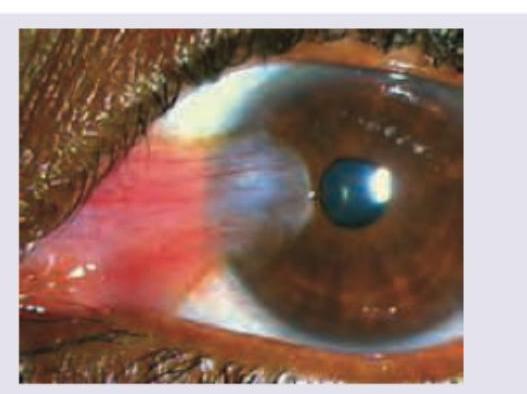
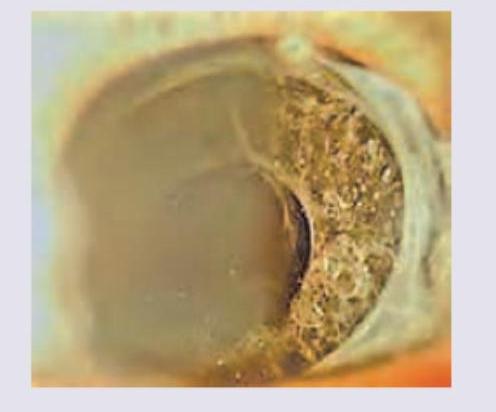
1 questionsA 60-year-old male underwent a cataract surgery. After 1 year he came with complaints of diminished vision and the finding shown in the image. Diagnosis is?

INI-CET 2017 - Ophthalmology INI-CET Practice Questions and MCQs
Question 61: A 60-year-old male underwent a cataract surgery. After 1 year he came with complaints of diminished vision and the finding shown in the image. Diagnosis is?
- A. Irvine-Gass syndrome
- B. After cataract (Correct Answer)
- C. UGH syndrome
- D. Endophthalmitis
Explanation: ***After cataract*** - The image depicts a **thickening and opacification of the posterior capsule** behind an intraocular lens, which is characteristic of after cataract (also known as **posterior capsular opacification** or PCO). - PCO is a common complication following cataract surgery, leading to **diminished vision** months to years after the initial procedure, consistent with the patient's presentation. *Irvine-Gass syndrome* - Irvine-Gass syndrome refers to **pseudophakic cystoid macular edema**, which causes diminished vision after cataract surgery due to fluid accumulation in the macula. - While it can cause vision loss post-cataract surgery, it is a retinal condition and does not present with the **posterior capsule opacification** seen in the image. *UGH syndrome* - UGH (Uveitis-Glaucoma-Hyphema) syndrome is a complication typically associated with poorly designed or positioned **intraocular lenses (IOLs)** that rub against uveal tissue. - It presents with **intraocular inflammation, elevated intraocular pressure, and recurrent hyphema**, none of which are directly suggested by the provided image or clinical details. *Endophthalmitis* - Endophthalmitis is a severe **intraocular infection** that typically occurs days to weeks after cataract surgery, presenting acutely with significant **pain, redness, and severe vision loss**. - The patient's presentation of diminished vision one year after surgery and the image showing a **fibrotic posterior capsule** are not consistent with the acute, infectious nature of endophthalmitis.
Orthopaedics
2 questionsWhat type of fracture is shown in X-ray of left shoulder?

A 4-year-old boy fell on outstretched hand. X- Ray is shown below. Which blood vessel is most commonly affected?

INI-CET 2017 - Orthopaedics INI-CET Practice Questions and MCQs
Question 61: What type of fracture is shown in X-ray of left shoulder?
- A. Neer classification grade 4
- B. Ideberg classification grade 4 (Correct Answer)
- C. Garden classification grade 3
- D. Schatzker classification grade 5
Explanation: ***Ideberg classification grade 4*** - The X-ray shows a **scapular fracture**, specifically involving the glenoid. Ideberg classification is used for **glenoid fractures**. - An Ideberg grade 4 fracture involves a **transverse fracture below the scapular notch**, separating the load-bearing part of the glenoid from the rest of the scapula, which appears consistent with the image. *Neer classification grade 4* - The **Neer classification** system is used for **proximal humerus fractures**, not scapular fractures. - A grade 4 Neer fracture involves **four part displacement** of the humeral head, greater tuberosity, lesser tuberosity, and humeral shaft. *Garden classification grade 3* - The **Garden classification** system is specifically used for **femoral neck fractures**, which are fractures of the hip. - A Garden grade 3 fracture represents a **complete, displaced fracture of the femoral neck**, distinct from the shoulder injury shown. *Schatzker classification grade 5* - The **Schatzker classification** system is used for **tibial plateau fractures**, which are fractures of the knee joint. - A Schatzker grade 5 fracture involves a **bicondylar fracture** of the tibial plateau, which is severe and impacts the knee, not the shoulder.
Question 62: A 4-year-old boy fell on outstretched hand. X- Ray is shown below. Which blood vessel is most commonly affected?
- A. Ulnar artery
- B. Radial artery (Correct Answer)
- C. Brachial artery
- D. Cubital vein
Explanation: ***Radial artery*** - The X-ray image shows a **supracondylar fracture of the humerus**, which is a common injury in children who fall on an outstretched hand. - While the **brachial artery** runs anterior to the humeral condyles and is the most commonly injured *major* vessel in supracondylar fractures, the **radial artery** is distal to this area and can be affected by subsequent complications like compartment syndrome or direct trauma from displaced fragments, and is a frequently assessed pulse in these injuries to monitor peripheral perfusion. *Ulnar artery* - The ulnar artery is less commonly affected in supracondylar humeral fractures compared to the brachial or radial arteries. - Its anatomical course protects it somewhat from direct trauma in typical fracture displacement patterns. *Brachial artery* - The **brachial artery** is indeed the most commonly injured *major* vessel in supracondylar fractures due to its close proximity to the distal humerus and its anterior course. - However, the question asks for the most commonly affected blood vessel *following* such an injury, and while direct injury to the brachial artery is a concern, assessment of the **radial artery** pulse is critical for evaluating distal perfusion and identifying potential complications like **compartment syndrome**, which affects blood flow through distal arteries like the radial artery. *Cubital vein* - Veins, including the cubital veins, are generally more pliable and less prone to severe injury or occlusion by bone fragments compared to arteries. - While venous compromise can occur, it is less common and less clinically significant in immediate assessment of these fractures compared to arterial injury.