Anesthesiology
1 questionsThe position of the patient as shown below is favored for which of the following conditions?

INI-CET 2017 - Anesthesiology INI-CET Practice Questions and MCQs
Question 51: The position of the patient as shown below is favored for which of the following conditions?
- A. CHF
- B. Air embolism
- C. Neurosurgery
- D. Raised ICP (Correct Answer)
Explanation: ***Raised ICT*** - The image depicts the patient in a **reverse Trendelenburg position** (head elevated). This position is often used to reduce **intracranial pressure (ICP)** by promoting venous drainage from the brain. - Elevating the head above the trunk aids in gravity-assisted drainage of cerebral venous blood and cerebrospinal fluid, thereby lowering ICP and preventing complications like brain herniation. *CHF* - Patients with **congestive heart failure (CHF)** often prefer a **Fowler's position** (sitting upright) to ease breathing and reduce pulmonary congestion, not the reverse Trendelenburg as shown. - Lying flat or with feet elevated in CHF can worsen dyspnea and increase cardiac workload due to increased venous return. *Air embolism* - For suspected **air embolism**, the patient is typically placed in the **Trendelenburg position** (head down, feet up) with a left lateral tilt to trap air in the right ventricle and prevent it from entering the pulmonary circulation. - This position helps prevent air from crossing into the left side of the heart thereby reducing the risk of systemic arterial air embolization. *Neurosurgery* - While neurosurgery often involves specific patient positioning, the depicted position isn't uniquely favored for neurosurgery in general. Positioning depends on the surgical site. - The **reverse Trendelenburg** is specifically used when reducing ICP is a primary goal during or after neurosurgical procedures, but not all neurosurgeries.
Dermatology
1 questionsThe image given below shows:

INI-CET 2017 - Dermatology INI-CET Practice Questions and MCQs
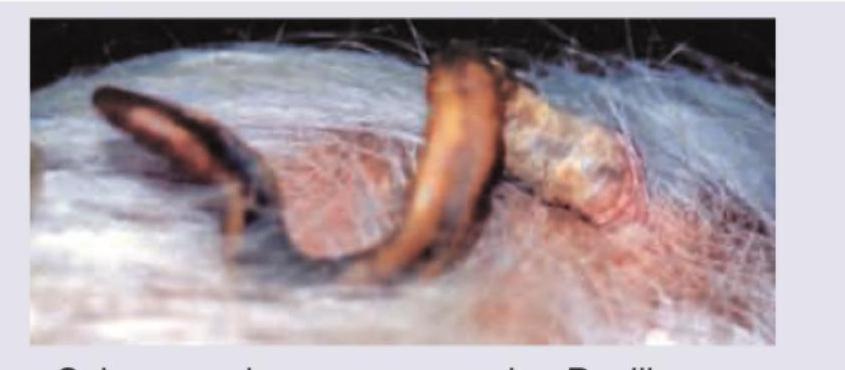
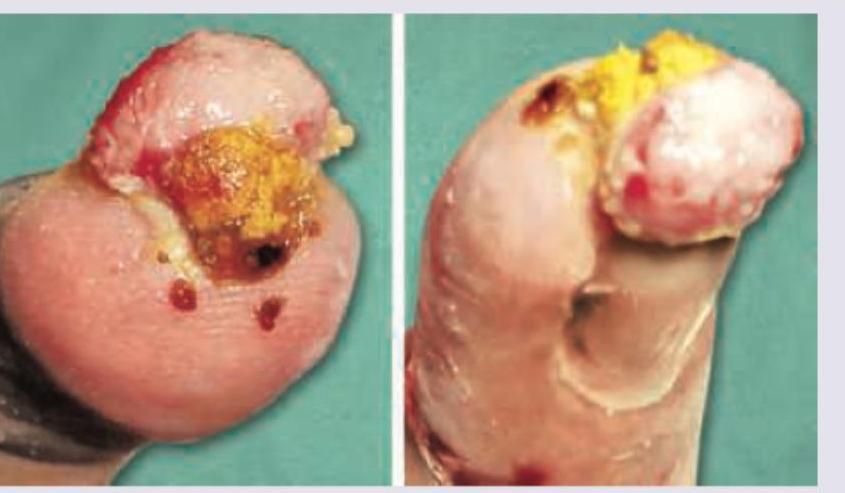
Question 51: The image given below shows:
- A. Cutaneous horn (Correct Answer)
- B. Papilloma
- C. Cock's peculiar tumor
- D. Glomus tumor
Explanation: ***Cutaneous horn (Cornu cutaneum)*** - The image distinctly shows an **exophytic, conical, or cylindrical lesion** composed of compact keratin, resembling an animal's horn, which is characteristic of a cutaneous horn. - A cutaneous horn is a **clinical descriptive term** for a keratinous projection and is NOT of sebaceous origin; it can arise from various underlying conditions including **seborrheic keratosis, viral warts, actinic keratosis**, or benign lesions. - Importantly, cutaneous horns can rarely **harbor squamous cell carcinoma** or other underlying skin cancers at their base (up to 20% have underlying malignancy), necessitating biopsy and histopathological examination. *Papilloma* - A papilloma is a general term for a **benign epithelial tumor** growing exophytically in a frond-like or papillary pattern, often softer and not typically forming such a dense, hardened projection. - While some papillomas can be keratotic, they usually lack the extreme **horn-like appearance** made of densely packed keratin seen in the image. *Cock's peculiar tumor* - Cock's peculiar tumor, also known as a **calcifying epithelioma of Malherbe** or **pilomatricoma**, is typically a firm, deep-seated nodule arising from hair matrix cells, often with a bluish or reddish hue. - It does not present as a **hard, projecting, horn-like accumulation of keratin** on the skin surface. *Glomus tumor* - A glomus tumor is a rare, **benign neurovascular tumor** typically found in the digits (especially subungual), characterized by exquisite pain, cold sensitivity, and often present as a small, reddish-blue nodule. - Its presentation is distinctly different from the **hyperkeratotic cutaneous projection** shown and does not form a horn-like structure.
Obstetrics and Gynecology
1 questionsA pregnant lady was admitted with diagnosis of PIH for monitoring and bed rest. When lying in supine position, which of the following complications is depicted in the image below?

INI-CET 2017 - Obstetrics and Gynecology INI-CET Practice Questions and MCQs
Question 51: A pregnant lady was admitted with diagnosis of PIH for monitoring and bed rest. When lying in supine position, which of the following complications is depicted in the image below?
- A. Abdominal aorta syndrome
- B. Supine venocaval syndrome (Correct Answer)
- C. Ascending aorta syndrome
- D. Superior vena cava syndrome
Explanation: ***Supine venocaval syndrome*** - The image depicts a pregnant woman lying in a **supine position**, where the **gravid uterus** compresses the **inferior vena cava (IVC)** and potentially the aorta against the vertebral column. - This compression of the IVC leads to reduced venous return to the heart, causing a drop in cardiac output and blood pressure, known as **supine venocaval syndrome** or **aortocaval compression syndrome**. *Abdominal aorta syndrome* - While the aorta can also be compressed in the supine position by the gravid uterus, symptoms primarily arise from **venous compression (IVC)** due to its lower pressure, which is more easily obstructed. - Significant symptoms solely from **aortic compression** are less common than those from IVC compression. *Ascending aorta syndrome* - The **ascending aorta** is located in the chest, not in the abdomen, and would not be compressed by the gravid uterus. - This condition generally refers to issues like ascending aortic aneurysm or dissection, unrelated to uterine compression. *Superior vena cava syndrome* - **Superior vena cava (SVC) syndrome** results from obstruction of the SVC, typically by **mediastinal tumors** or **thrombosis**. - The SVC is in the upper chest and is not affected by the gravid uterus in a supine position.
Ophthalmology
6 questionsIdentify the instrument used: (AIIMS Nov 2017)

Identify the FFA picture:

Identify the refractive error shown in the image:

A patient has the following presentation. After administration of an intravenous drug to the patient, in 6 minutes his symptoms have resolved. The diagnosis of the patient is:

What is the diagnosis?

A 60-year-old male underwent a cataract surgery. After 1 year he came with complaints of diminished vision and the finding shown in the image. Diagnosis is?

INI-CET 2017 - Ophthalmology INI-CET Practice Questions and MCQs
Question 51: Identify the instrument used: (AIIMS Nov 2017)
- A. Episiotomy scissors (Correct Answer)
- B. Dissection scissors
- C. Mayo scissors
- D. Metzenbaum scissors
Explanation: ***Episiotomy scissors*** - These scissors are characterized by their **blunt, angled tip** on one blade, which is designed to protect the fetal head during an episiotomy. - The image clearly shows this specific design, making them ideal for cutting soft tissues in a controlled manner without puncturing underlying structures. *Dissection scissors* - Dissection scissors typically have **sharp tips**, either straight or curved, and are used for cutting and separating tissues with precision. - They lack the blunt, angled tip characteristic of episiotomy scissors. *Mayo scissors* - **Mayo scissors** are heavy-duty scissors, typically used for cutting **fascia, sutures, and dense tissues**. - They often have straight or slightly curved blades without the protective blunt tip seen in episiotomy scissors. *Metzenbaum scissors* - **Metzenbaum scissors** are known for their **long handles and relatively short, delicate blades**, designed for cutting and dissecting fine, delicate tissues. - Their blades are typically slender and do not feature the angled, blunt tip of episiotomy scissors.
Question 52: Identify the FFA picture:
- A. NPDR (Correct Answer)
- B. PDR
- C. Familial dominant drusen
- D. Birdshot choroidopathy
Explanation: ***NPDR*** - The image shows areas of **capillary non-perfusion** (dark areas without visible blood flow) and **microaneurysms** (small bright dots due to damaged capillaries). These are characteristic findings of **Non-Proliferative Diabetic Retinopathy (NPDR)** on fluorescein angiography. - There is no evidence of neovascularization, which is the hallmark of proliferative diabetic retinopathy. *PDR* - **Proliferative Diabetic Retinopathy (PDR)** is characterized by the presence of **neovascularization** (new, abnormal blood vessel growth) on the retina or optic disc. - This image does not show any signs of neovascularization, which would appear as brightly fluorescing, tangled vessels. *Familial dominant drusen* - **Familial dominant drusen** are typically seen as yellow-white deposits under the retinal pigment epithelium and would manifest on FFA as **hyperfluorescent spots**, but usually with a different distribution and appearance than the microaneurysms seen here. - This image reflects widespread microvascular damage consistent with a retinal vascular disease, not primarily drusen. *Birdshot choroidopathy* - **Birdshot choroidopathy** is a chronic, bilateral posterior uveitis characterized by multiple, depigmented choroidal lesions (birdshot lesions). - On FFA, these lesions would typically show **hypofluorescence** in the early phases due to blocked choroidal fluorescence and possible late staining, which is not depicted in this image.
Question 53: Identify the refractive error shown in the image:
- A. Myopia
- B. Hypermetropia
- C. Astigmatism (Correct Answer)
- D. Presbyopia
Explanation: ***Astigmatism*** - The image shows that light rays from a single point source are **not focused at a single point** on the retina, but rather spread across multiple focal points or a line. This pattern is characteristic of **astigmatism**, where the eye's cornea or lens has an irregular curvature. - Specifically, rays 1 and 2 converge at one point, while rays 3 and 4 converge at a different point, indicating that the eye has different refractive powers along different meridians, which defines **astigmatism**. *Myopia* - In **myopia (nearsightedness)**, light rays from a distant object focus **in front of the retina**, not at multiple planes or lines as depicted. - Myopia would show all rays converging to a single point before reaching the retina, resulting in a blurry image. *Hypermetropia* - In **hypermetropia (farsightedness)**, light rays from a distant object focus **behind the retina**, assuming the eye is unaccommodated. - This condition would show the rays converging to a single point beyond the retinal plane, not divergent focal points within the eye. *Presbyopia* - **Presbyopia** is an age-related condition where the eye's **lens loses its flexibility**, making it difficult to focus on nearby objects. - It primarily affects near vision and does not typically involve the multiple focal points for distant vision as shown in the image.
Question 54: A patient has the following presentation. After administration of an intravenous drug to the patient, in 6 minutes his symptoms have resolved. The diagnosis of the patient is:
- A. Myasthenia gravis (Correct Answer)
- B. Sixth nerve palsy
- C. Third nerve palsy
- D. Tolosa-Hunt syndrome
Explanation: The question refers to an accompanying image (not provided in the text, but essential for context) showing a patient with **ptosis** (drooping eyelid) and possibly other ocular muscle weakness. The key information is that symptoms resolve within 6 minutes after administration of an intravenous drug. This rapid and complete resolution of symptoms following drug administration is highly characteristic of a specific condition and a specific diagnostic test. ***Myasthenia gravis*** - The rapid resolution of symptoms (ptosis and possibly other ocular muscle weakness) within 6 minutes after intravenous drug administration is the hallmark of a positive **Tensilon test**. - The **Tensilon test** involves injecting **edrophonium**, a short-acting acetylcholinesterase inhibitor, which temporarily increases acetylcholine at the neuromuscular junction, improving muscle strength in patients with **myasthenia gravis**. *Sixth nerve palsy* - Sixth nerve palsy (abducens nerve palsy) causes **diplopia** (double vision) and an inability to abduct the affected eye. - While symptoms may fluctuate or improve with treatment, they would not resolve completely in 6 minutes with a diagnostic agent like edrophonium. *Third nerve palsy* - Third nerve palsy (oculomotor nerve palsy) can cause **ptosis**, **diplopia**, and impairment of eye movements (inability to adduct, elevate, or depress the eye). - Nerve palsies are structural or neurological deficits that do not rapidly reverse with a cholinergic agonist like edrophonium. *Tolosa-Hunt syndrome* - Tolosa-Hunt syndrome is a rare inflammatory disorder characterized by **painful ophthalmoplegia** (paralysis of eye muscles), often affecting the third, fourth, and/or sixth cranial nerves. - It typically responds to corticosteroids, but symptoms would not resolve in 6 minutes with an intravenous drug, and the diagnostic approach is different.
Question 55: What is the diagnosis?
- A. Sixth nerve palsy
- B. Myasthenia gravis
- C. Third nerve palsy (Correct Answer)
- D. Tolosa-Hunt syndrome
Explanation: ***Third nerve palsy*** - The image shows **ptosis** (drooping of the eyelid) and **pupil dilation** with the eye deviated **down and out**, which are classic signs of a complete third nerve palsy. - The **oculomotor nerve (CN III)** innervates most extraocular muscles (**superior, medial, inferior recti, and inferior oblique**), the **levator palpebrae superioris**, and the **parasympathetic fibers to the pupillary constrictor muscle**. *Sixth nerve palsy* - A sixth nerve palsy (**abducens nerve**) would cause an inability to **abduct the eye** (move it outwards) leading to an **esotropia** (eye turned inward at rest) and **horizontal diplopia**, which is not depicted. - Symptoms primarily affect the **lateral rectus muscle**. *Myasthenia gravis* - Myasthenia gravis can cause **ptosis** and **diplopia**, but typically presents with **variable and fluctuating weakness** that worsens with fatigue. - It does not usually cause the fixed, specific pattern of strabismus and pupillary involvement seen in a severe third nerve palsy. *Tolosa-Hunt syndrome* - Tolosa-Hunt syndrome is a **painful ophthalmoplegia** caused by **non-specific inflammation** in the cavernous sinus or orbital apex. - While it can affect cranial nerves III, IV, V1, and VI, leading to **ophthalmoplegia** and **ptosis**, the defining feature is often **severe orbital pain**, which cannot be assessed from the image alone, and the specific constellation of symptoms in the image points more directly to a third nerve lesion rather than an inflammatory syndrome.
Question 56: A 60-year-old male underwent a cataract surgery. After 1 year he came with complaints of diminished vision and the finding shown in the image. Diagnosis is?
- A. 2nd nerve palsy
- B. 3rd nerve palsy
- C. 4th nerve palsy
- D. 6th nerve palsy (Correct Answer)
Explanation: ***6th nerve palsy*** - The image shows the **right eye** is unable to **abduct** (move outwards) when looking to the right, and is **adducted** (turned inwards) when looking straight ahead, which is characteristic of a **sixth cranial nerve (abducens) palsy**. - The abducens nerve innervates the **lateral rectus muscle**, which is responsible for abduction of the eye. Its paralysis causes the affected eye to deviate medially due to the unopposed action of the medial rectus muscle. *2nd nerve palsy* - **Second nerve (optic nerve) palsy** would primarily present with **vision loss** or field defects, not with abnormal eye movements. - The optic nerve transmits visual information from the eye to the brain and does not control ocular motility. *3rd nerve palsy* - **Third nerve (oculomotor) palsy** typically presents with **ptosis**, **dilated pupil**, and the eye positioned **down and out**. - This is because the oculomotor nerve innervates most extraocular muscles (medial, superior, inferior rectus, inferior oblique) and the levator palpebrae superioris, as well as pupillary constrictors. *4th nerve palsy* - **Fourth nerve (trochlear) palsy** affects the **superior oblique muscle**, leading to **vertical diplopia** and the eye being unable to move down and in. - Patients often compensate by **tilting their head** to the opposite shoulder.
Surgery
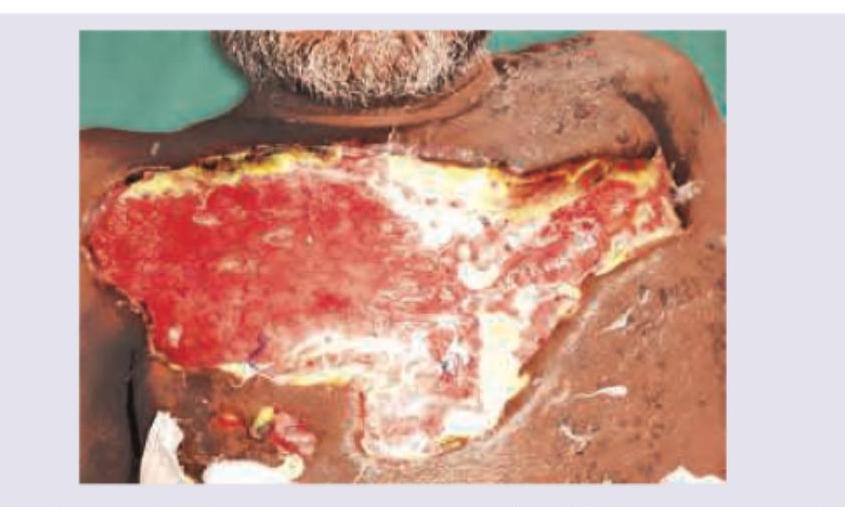
1 questionsAn HIV positive patient presents with symptoms of toxemia and foul smelling discharge from the lesion shown below. What is the diagnosis?
INI-CET 2017 - Surgery INI-CET Practice Questions and MCQs
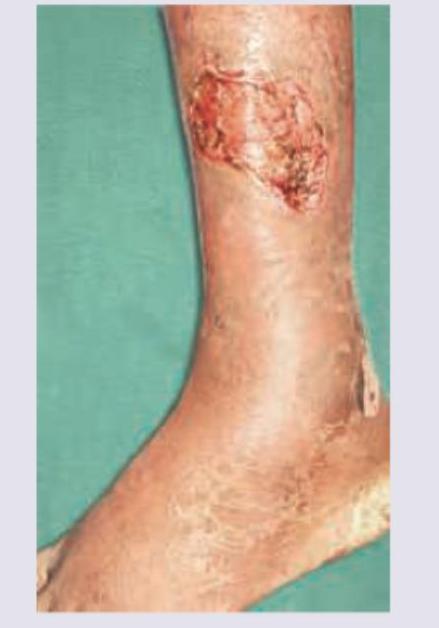
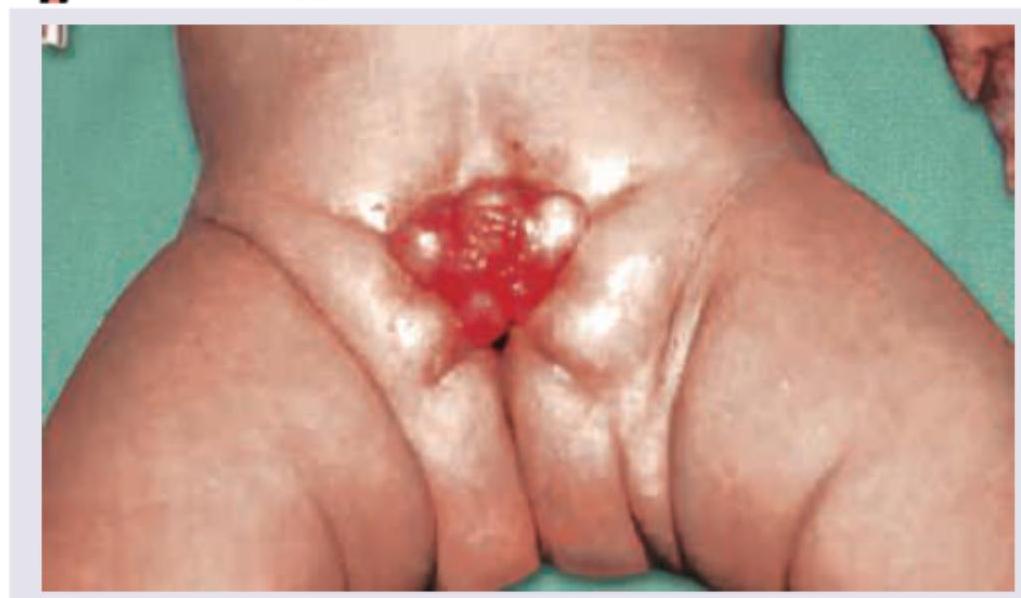
Question 51: An HIV positive patient presents with symptoms of toxemia and foul smelling discharge from the lesion shown below. What is the diagnosis?
- A. Trophic ulcer
- B. Pyogenic granuloma
- C. Martorell ulcer
- D. Necrotizing fasciitis (Correct Answer)
Explanation: ***Necrotizing fasciitis*** - The image shows an extensive, deep soft tissue infection with a large area of **tissue necrosis**, which is characteristic of necrotizing fasciitis. - The patient's **HIV-positive status** puts them at higher risk for severe infections, and the symptoms of **toxemia** and **foul-smelling discharge** further support this aggressive, rapidly spreading bacterial infection. *Trophic ulcer* - Trophic ulcers are typically caused by **neuropathic or vascular insufficiency**, leading to chronic, poorly healing wounds, often located on the lower limbs. - They do not usually present with the rapid onset, extensive tissue destruction, toxemia, and foul-smelling discharge seen here. *Pyogenic granuloma* - A pyogenic granuloma is a **benign vascular lesion** that typically presents as a small, red, rapidly growing, pedunculated or sessile papule, prone to bleeding. - It does not involve widespread tissue destruction, toxemia, or a foul-smelling discharge. *Martorell ulcer* - A Martorell ulcer (or ischemic hypertensive leg ulcer) is a **painful, full-thickness ulcer** typically located on the lateral aspect of the lower leg, associated with poorly controlled **hypertension and peripheral arterial disease**. - While it is an ulcer, it doesn't typically present with the broad, necrotizing appearance, toxemia, or foul-smelling discharge indicative of such a severe, spreading infection.