Anatomy
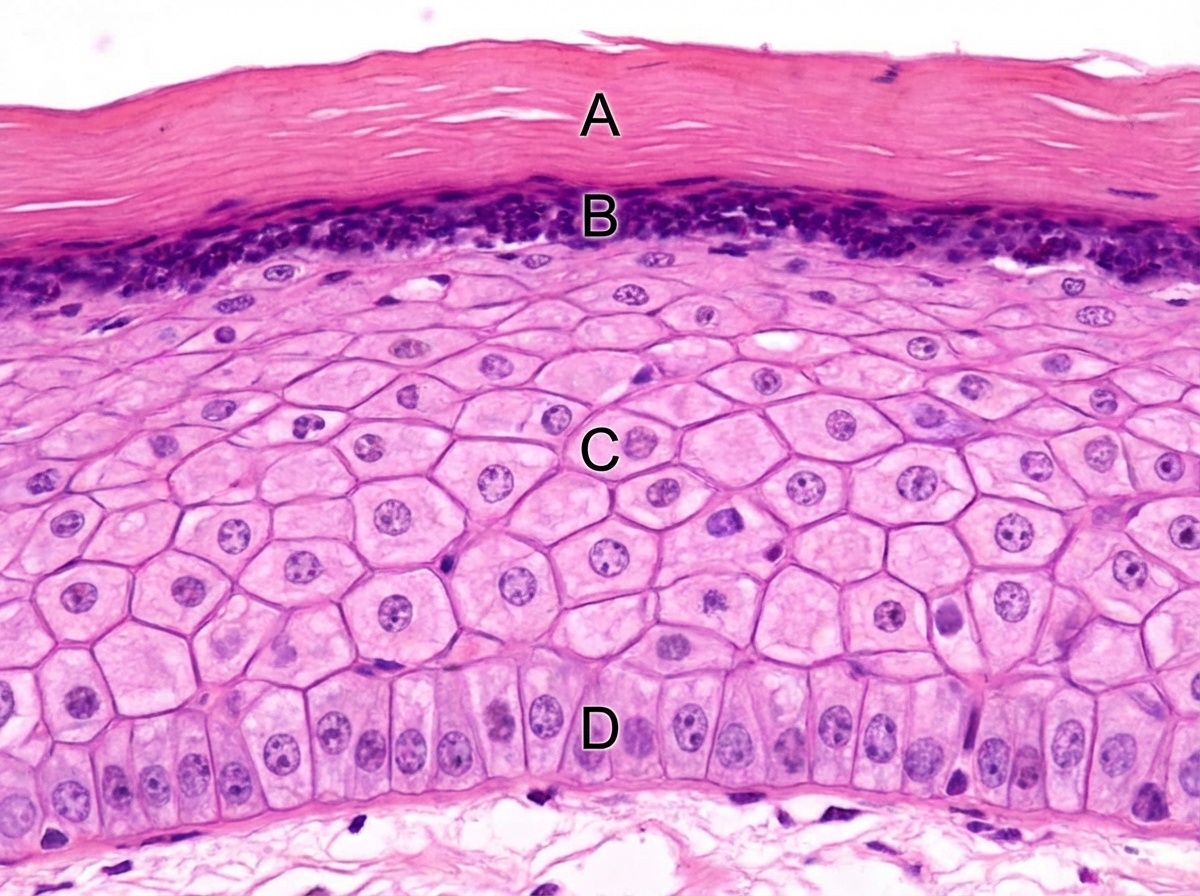
1 questionsWhich of the following layers has abundance of desmosomes? (AIIMS Nov 2017)
INI-CET 2017 - Anatomy INI-CET Practice Questions and MCQs
Question 31: Which of the following layers has abundance of desmosomes? (AIIMS Nov 2017)
- A. A
- B. B
- C. C (Correct Answer)
- D. D
Explanation: ***C*** - Layer C represents the **stratum spinosum** (prickle cell layer) of the epidermis, which is characterized by abundant **desmosomes**. - These desmosomes give the cells a **prickly appearance** when stained, as the cells shrink but the desmosomal attachments remain, pulling on the cell membranes. *A* - Layer A represents the **stratum corneum**, which is the outermost layer consisting of flattened, anucleated cells filled with **keratin**. - While desmosomes are present deeper in the epidermis, this layer is primarily involved in **protection** and shedding of dead cells. *B* - Layer B represents the **stratum granulosum**, characterized by cells containing **keratohyalin granules**. - These granules are precursors to keratin, and while desmosomes connect cells here, they are less prominent than in the stratum spinosum. *D* - Layer D represents the **stratum basale** (basal layer), which is the deepest epidermal layer of cuboidal or columnar cells. - These cells are responsible for **cell proliferation** and connect to the basement membrane via **hemidesmosomes**, and to each other via desmosomes, but not as abundantly as in the stratum spinosum.
Dermatology
5 questionsThe skin condition shown in the image is associated with?

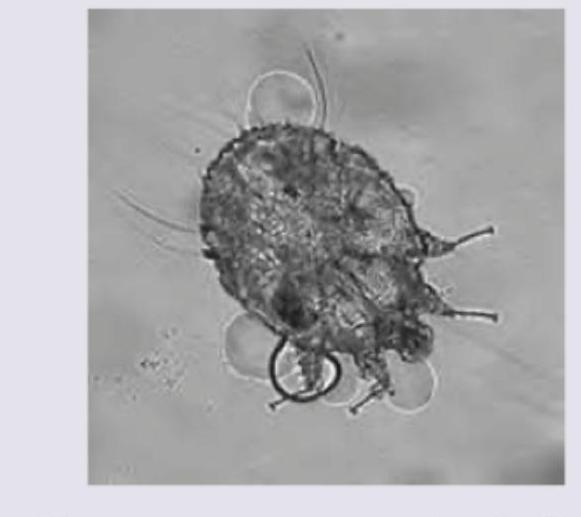
A middle-aged man came to you with itchy rash caused by the following organism. Identify the condition: (AIIMS Nov 2017)

Identify the condition which is present since birth: (AIIMS May 2017)

A child has been brought with the following scalp lesion with history of itching in scalp and hair loss for past 2 months. Which of the following is useful for diagnosis of this patient? (AIIMS May 2017)

The following patient presented to the OPD with history of hair loss. There was no erythema, scarring or scratching. Diagnosis is:

INI-CET 2017 - Dermatology INI-CET Practice Questions and MCQs
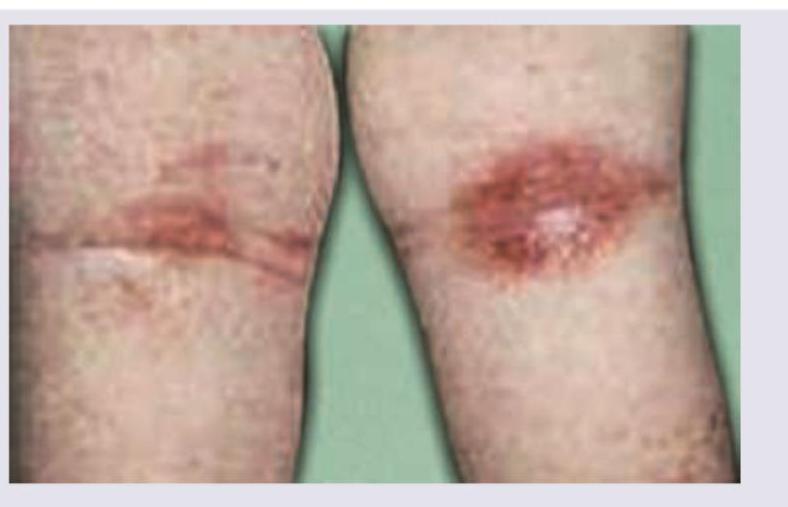
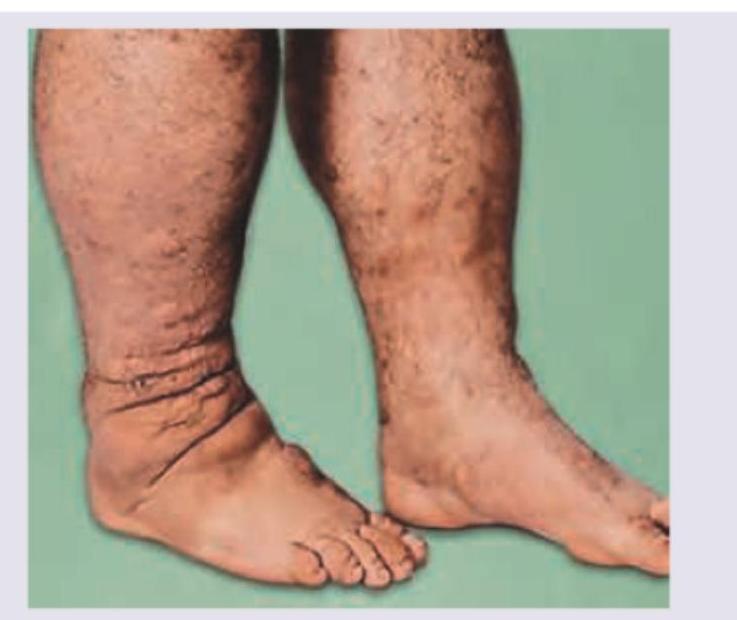
Question 31: The skin condition shown in the image is associated with?
- A. Diabetes mellitus (Correct Answer)
- B. Hypothyroidism
- C. Hyperthyroidism
- D. Sarcoidosis
Explanation: ***Diabetes mellitus*** - The image shows **diabetic dermopathy** (also known as "shin spots"), which presents as hyperpigmented, atrophic macules or papules, usually on the shins. This condition is a common cutaneous manifestation of **diabetes mellitus**. - Other dermatological conditions associated with diabetes include **necrobiosis lipoidica diabeticorum**, **acanthosis nigricans**, and **erythrasma**, which are important to recognize in patients with diabetes. *Hypothyroidism* - Hypothyroidism is associated with **myxedema**, which typically manifests as non-pitting edema, dry and coarse skin, and hair loss. - While it can cause skin changes, it does not typically present with the pigmented, atrophic lesions seen in the image. *Hyperthyroidism* - Hyperthyroidism can cause skin changes such as **pretibial myxedema** (a specific form of localized skin thickening, typically on the shins, that is often associated with Graves' disease) and warm, moist skin due to increased metabolism. - The lesions shown in the image are not consistent with the typical presentation of pretibial myxedema or other hyperthyroid skin manifestations. *Sarcoidosis* - Sarcoidosis can present with various skin lesions, including **erythema nodosum**, lupus pernio, plaques, and papules. - The skin changes seen in the image, characterized by small, atrophic, hyperpigmented macules, do not fit the typical pattern of cutaneous sarcoidosis.
Question 32: A middle-aged man came to you with itchy rash caused by the following organism. Identify the condition: (AIIMS Nov 2017)
- A. Insect bite reaction
- B. Scabies (Correct Answer)
- C. Pediculosis
- D. Tinea cruris
Explanation: ***Scabies*** - The image provided shows **Sarcoptes scabiei**, the scabies mite, which is the causative organism for scabies. - Scabies is characterized by an **intensely itchy rash**, often worse at night, and typical burrows in the skin. *Pediculosis* - Pediculosis is caused by lice (e.g., **Pediculus humanus** or **Pthirus pubis**), which are distinct in appearance from the mite shown. - While also causing an itchy rash, the morphology of the causative agent in the image does not match that of a louse. *Insect bite reaction* - An insect bite reaction is a broad term for inflammatory responses to bites from various insects, but the image specifically identifies the **causative organism**. - The organism shown is a mite, which can cause an insect bite reaction, but scabies is the specific condition caused by this particular mite. *Tinea cruris* - Tinea cruris is a **fungal infection** of the groin, commonly known as jock itch. - The image displays a **mite**, not a fungus, making Tinea cruris an incorrect diagnosis.
Question 33: Identify the condition which is present since birth: (AIIMS May 2017)
- A. Epidermal verrucous nevus
- B. Melano-acanthoma
- C. Malignant melanoma
- D. Congenital nevus (Correct Answer)
Explanation: **Correct: *Congenital nevus*** - A congenital nevus is a **melanocytic nevus** that is present at **birth** or appears shortly thereafter, characterized by a proliferation of **melanocytes** in the skin - These nevi can vary in size and appearance, often appearing as darkly pigmented, sometimes hairy patches - By definition, this is the condition present since birth as asked in the question *Incorrect: Epidermal verrucous nevus* - An **epidermal verrucous nevus** is a common **hamartoma of the epidermis** that can be present at birth or develop in early childhood, characterized by **verrucous** (wart-like) or ridge-like papules and plaques - While it can be congenital, its distinctive **verrucous texture** (wart-like appearance) differentiates it from the smooth, pigmented melanocytic lesion - Not the best answer as the question specifically asks for a condition present since birth, and congenital nevus is more definitively congenital *Incorrect: Melano-acanthoma* - **Melano-acanthoma** is a rare, benign, typically **pigmented lesion** that usually arises in older adults, often on the **trunk or face** - Its late-onset presentation (typically in adulthood) makes it unlikely to be present since birth - This is an acquired condition, not congenital *Incorrect: Malignant melanoma* - **Malignant melanoma** is a serious form of **skin cancer** that typically develops from pre-existing moles or new lesions, most commonly in adulthood - While congenital nevi can rarely undergo malignant transformation into melanoma, melanoma itself is generally not present at birth - Characterized by rapid changes in size, shape, or color (ABCDE criteria), which distinguishes it from stable congenital lesions
Question 34: A child has been brought with the following scalp lesion with history of itching in scalp and hair loss for past 2 months. Which of the following is useful for diagnosis of this patient? (AIIMS May 2017)
- A. Gram stain
- B. KOH mount (Correct Answer)
- C. Slit skin smear
- D. Tzanck smear
Explanation: ***KOH mount*** - The image shows a **patch of hair loss** with visible scaling on the scalp, along with a history of itching, which is highly suggestive of **tinea capitis (ringworm of the scalp)**. - A **KOH (potassium hydroxide) mount** is the most common and effective initial diagnostic test for fungal infections of the skin, hair, and nails, as it helps visualize fungal elements (hyphae and spores). *Gram stain* - **Gram stain** is primarily used to identify **bacterial infections** by differentiating bacteria based on their cell wall composition. - It is not useful for diagnosing **fungal infections** like tinea capitis. *Slit skin smear* - A **slit skin smear** is a diagnostic technique mainly used for the detection of **Mycobacterium leprae** in cases of **leprosy**. - It is not relevant for diagnosing common fungal scalp infections. *Tzanck smear* - A **Tzanck smear** is used to identify **multinucleated giant cells** and **acantholytic cells**, characteristic findings in **herpes simplex**, **varicella zoster**, and other blistering viral conditions. - This method is not used for the diagnosis of **fungal infections** of the scalp.
Question 35: The following patient presented to the OPD with history of hair loss. There was no erythema, scarring or scratching. Diagnosis is:
- A. Trichotillomania
- B. Alopecia areata (Correct Answer)
- C. Telogen effluvium
- D. Tinea infection
Explanation: ***Alopecia areata*** - The image shows **well-demarcated patches of hair loss** with no signs of inflammation or scarring, which is characteristic of alopecia areata. - This condition is an **autoimmune disorder** where the immune system attacks hair follicles, leading to patchy hair loss. - Classic presentation includes **smooth, round patches** with no erythema or scarring. *Trichotillomania* - This condition involves **compulsive hair pulling**, which typically results in **irregularly shaped patches of hair loss** with hairs of varying lengths. - Hair loss in trichotillomania often shows **broken hair shafts** and may be associated with signs of trauma or follicular damage. - The absence of scratching/pulling behavior and the well-defined patches make this less likely. *Telogen effluvium* - Telogen effluvium presents as **diffuse hair shedding** (increased shedding of resting phase hairs) rather than the distinct, localized patches seen in the image. - It usually follows a **stressful event** (e.g., illness, surgery, childbirth) and there's no visible inflammation or scarring. - Would not present as well-demarcated patches. *Tinea infection* - Tinea capitis (ringworm of the scalp) would typically present with **erythema, scaling, inflammation**, and sometimes pustules or kerion formation within the patches of hair loss. - The patches of hair loss in tinea infections often show **broken hairs** or "black dots" where hairs have broken off at the scalp surface. - The **absence of erythema** in this case rules out tinea infection.
Pathology
1 questionsA patient with symptomatic cholecystitis underwent a cholecystectomy. The following specimen was obtained. What is the diagnosis?

INI-CET 2017 - Pathology INI-CET Practice Questions and MCQs
Question 31: A patient with symptomatic cholecystitis underwent a cholecystectomy. The following specimen was obtained. What is the diagnosis?
- A. Gallbladder polyps (Correct Answer)
- B. Gallbladder cancer
- C. Cholesterolosis
- D. Adenomyomatosis
Explanation: ***Gallbladder polyps*** - The image likely shows multiple, small, sessile or pedunculated lesions projecting from the gallbladder mucosa, which are characteristic features of **gallbladder polyps**. - These polyps are often discovered incidentally during cholecystectomy for symptomatic cholecystitis [1][2], as they can sometimes cause symptoms or are found alongside other gallbladder pathologies. *Gallbladder cancer* - **Gallbladder cancer** typically presents as a single, large, irregular mass that infiltrates the gallbladder wall, often with evidence of invasion into surrounding tissues [3]. - While it can be associated with cholecystitis, the image described (multiple, small lesions) is not typical for advanced gallbladder carcinoma [3]. *Cholesterolosis* - **Cholesterolosis**, also known as "strawberry gallbladder," is characterized by the accumulation of cholesterol esters in the macrophages within the lamina propria, giving the mucosa a yellow, speckled appearance. - It does not typically present as distinct, projecting polyps but rather as diffuse mucosal changes. *Strawberry bladder* - **Strawberry bladder** is a colloquial term for **cholesterolosis** of the gallbladder, referring to its speckled, yellow-red appearance due to cholesterol deposits. - This condition involves diffuse mucosal changes rather than discrete polypoid lesions. **References:** [1] Kumar V, Abbas AK, et al.. Robbins and Cotran Pathologic Basis of Disease. 9th ed. Liver and Gallbladder, pp. 883-886. [2] Kumar V, Abbas AK, et al.. Robbins and Cotran Pathologic Basis of Disease. 9th ed. Liver and Gallbladder, pp. 883-884. [3] Kumar V, Abbas AK, et al.. Robbins and Cotran Pathologic Basis of Disease. 9th ed. Liver and Gallbladder, p. 886.
Surgery
3 questionsYou are asked to put a 22-gauge cannula in a patient. Which of the following cannula will you put?

A 30-year-old man presents with abdominal pain and fever for one day. He has history of diarrhea for last several months which contains blood. What is the diagnosis?

A 25-year-old patient presents with a neck swelling which moves with deglutition as shown below. Your diagnosis is?

INI-CET 2017 - Surgery INI-CET Practice Questions and MCQs
Question 31: You are asked to put a 22-gauge cannula in a patient. Which of the following cannula will you put?
- A. A
- B. C (Correct Answer)
- C. D
- D. B
Explanation: ***C*** - This cannula is blue, which correlates to a **22-gauge** size according to standard color-coding for IV cannulas. - A **22-gauge** cannula matches the specific requirement in the question and is generally used for patients with fragile veins, pediatric patients, or for slow infusions. *A* - This cannula is green, typically indicating an **18-gauge** size. - An 18-gauge cannula provides a larger bore for faster fluid administration but is **too large** for the 22-gauge requirement specified. *B* - This cannula is pink, which corresponds to a **20-gauge** size according to standard color-coding. - A 20-gauge cannula is commonly used for routine infusions but is **larger than the requested 22-gauge** size. *D* - This cannula is yellow, indicating a **24-gauge** size, the smallest common size. - A 24-gauge cannula is **smaller than the requested 22-gauge** and is primarily reserved for very fragile veins and infants.
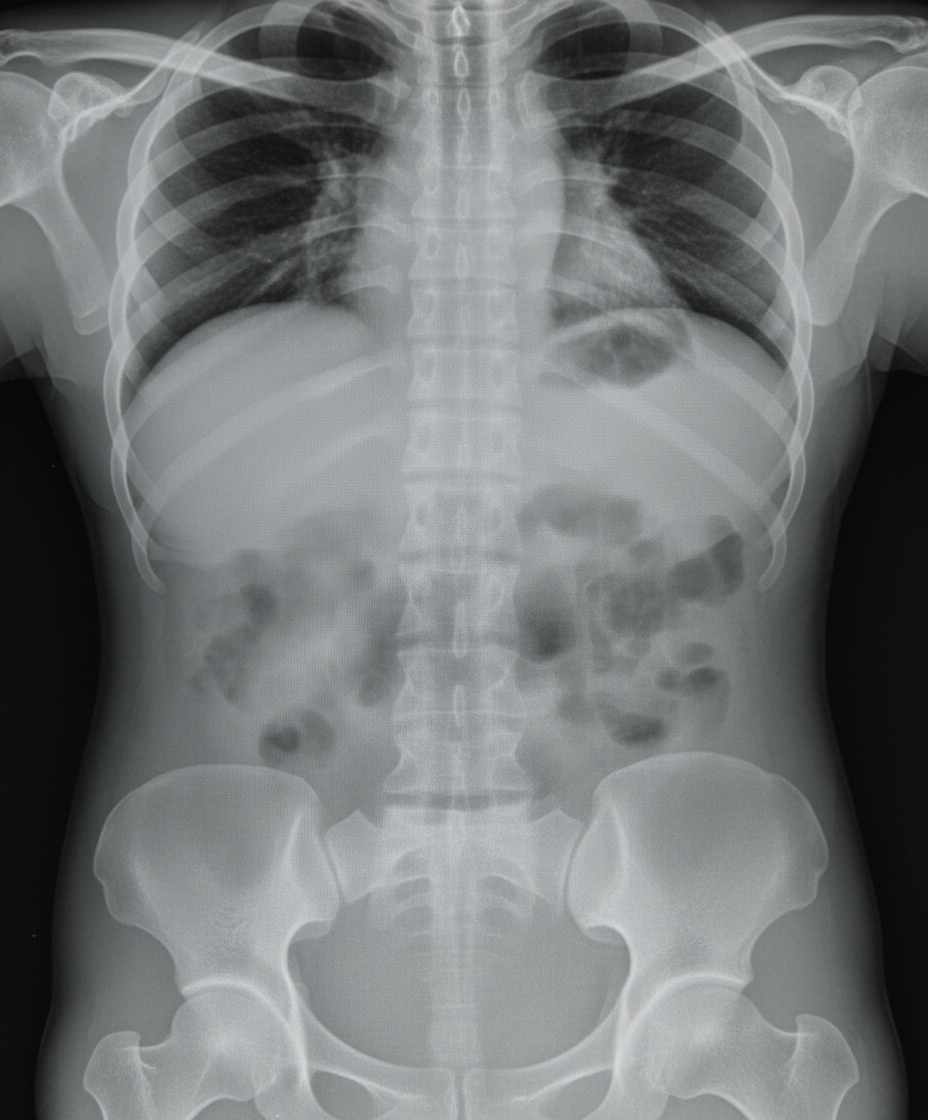
Question 32: A 30-year-old man presents with abdominal pain and fever for one day. He has history of diarrhea for last several months which contains blood. What is the diagnosis?
- A. Pneumatosis intestinalis
- B. Toxic megacolon (Correct Answer)
- C. Cecal volvulus
- D. Intestinal perforation
- E. Fulminant colitis
Explanation: ***Toxic megacolon*** - The patient's history of **bloody diarrhea** for several months, followed by acute abdominal pain and fever, is highly suggestive of **inflammatory bowel disease (IBD)**, which is a common underlying cause of toxic megacolon. - The imaging shows **colonic dilatation (megacolon)**, supporting the diagnosis of toxic megacolon, an acute severe complication of inflammatory conditions of the colon. - Toxic megacolon is defined as **total or segmental colonic dilatation >6 cm** with systemic toxicity in the setting of severe colitis. *Pneumatosis intestinalis* - This condition is characterized by the presence of **gas in the bowel wall** and doesn't typically present with the specific history of chronic bloody diarrhea and acute fever leading to megacolon. - While it can occur in severe inflammatory conditions, the primary features of the clinical vignette and image point more directly to toxic megacolon. *Cecal volvulus* - A cecal volvulus would primarily present with features of **bowel obstruction**, often acute in onset, and typically not with a long history of bloody diarrhea directly preceding the acute event. - Imaging for cecal volvulus would show a **distended, air-filled cecum** often displaced from its normal anatomical position, which is not the predominant finding here. *Intestinal perforation* - Intestinal perforation would cause severe, acute abdominal pain, usually with signs of **peritonitis** and would typically show **free air under the diaphragm** on upright radiographs. - While chronic IBD can lead to perforation, the image primarily demonstrates colonic dilatation rather than obvious free air, and the initial diagnosis is toxic megacolon which can precede perforation. *Fulminant colitis* - While this patient does have severe colitis as the underlying condition, the presence of **marked colonic dilatation (>6 cm)** with systemic toxicity specifically defines toxic megacolon. - Fulminant colitis refers to **severe inflammation without the megacolon component**, with patients having >10 bloody stools per day, continuous bleeding, and systemic toxicity. - The imaging findings of significant colonic dilatation distinguish toxic megacolon from fulminant colitis.
Question 33: A 25-year-old patient presents with a neck swelling which moves with deglutition as shown below. Your diagnosis is?
- A. Thyroglossal cyst (Correct Answer)
- B. Brachial cyst
- C. Cystic hygroma
- D. Cervical lymphadenopathy
- E. Dermoid cyst
Explanation: ***Thyroglossal cyst*** - A **thyroglossal duct cyst** is a common congenital neck mass that typically presents in the midline of the neck. - The classic characteristic feature is its **movement with deglutition** (swallowing) and often with protrusion of the tongue, due to its attachment to the hyoid bone and remnants of the thyroglossal duct. *Brachial cyst* - **Branchial cleft cysts** are usually located laterally in the neck, anterior to the sternocleidomastoid muscle, and do not typically move with deglutition. - They are remnants of the branchial arches failing to involute completely. *Cystic hygroma* - A **cystic hygroma** is a type of lymphangioma, commonly found in the posterior triangle of the neck or axilla. - It is typically a soft, compressible, and ill-defined mass that does not move with deglutition. *Cervical lymphadenopathy* - **Cervical lymphadenopathy** involves enlarged lymph nodes, which can be firm or tender depending on the cause (e.g., infection, malignancy). - While they are common in the neck, they are generally not mobile with deglutition unless they are very superficial and freely movable, but they do not typically have the same characteristic movement as a thyroglossal cyst. *Dermoid cyst* - A **dermoid cyst** is another congenital midline neck mass that can present in the submental region. - Unlike thyroglossal cysts, dermoid cysts do not move with deglutition or tongue protrusion as they are not attached to the hyoid bone. - They are typically non-tender, doughy masses that may contain hair, sebum, and skin elements.